
Masters National Bank Open WTA
Coco Gauff Overcomes Veronika Kudermetova in a Grueling Comeback at Montréal
Coco Gauff fought back from a set and break down to defeat Veronika Kudermetova in Montréal.

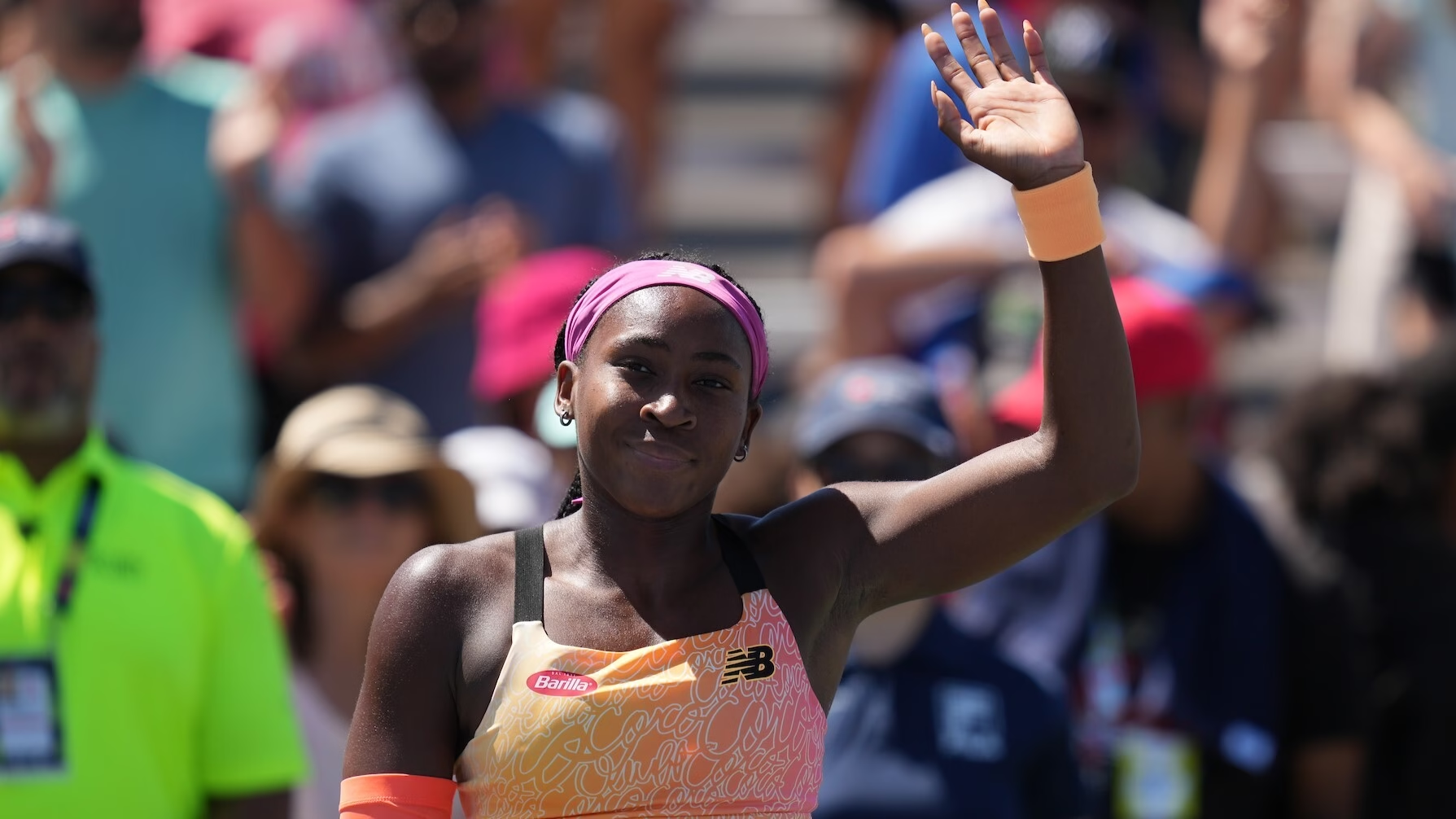
Top-seeded Coco Gauff showcased resilience and fighting spirit at the Omnium Banque Nationale in Montréal, overcoming Veronika Kudermetova in a dramatic three-set match lasting two hours and 32 minutes. Gauff, who faced adversity after losing the first set 4-6 and trailing 1-3 in the second, managed a determined turnaround to win 4-6, 7-5, 6-2.
Since her second Grand Slam triumph at Roland Garros last month, Gauff has encountered challenges with consistency. However, her competitive edge emerged when it mattered most on Centre Court. Ranked No. 2 in the WTA standings, Gauff had demonstrated strong form earlier in the season, including a notable victory over world No. 1 Aryna Sabalenka on clay. Yet, she struggled on grass, exiting Wimbledon early, and nearly faced defeat at the US Open start, only to prevail against Danielle Collins in a third-set tiebreak.
Despite being favored, given her head-to-head advantage over Kudermetova, who has dropped to No. 40 from a career-high No. 9, Gauff was challenged early. Kudermetova quickly gained a lead, taking the opening set and initiating a break advantage in the second. Gauff’s refusal to falter was clear as she saved critical break points and shifted momentum with a notable forehand return to equalize in the second set.
The defining moments came during the ninth game of the second set, where Gauff withstood two break points to move closer to a decider. She then pressured Kudermetova, who faltered at set point. Riding this wave, Gauff dominated early in the third set, gaining a 3-0 lead, before finishing the match with authority to secure her place in the next round at the National Bank Open.




ATP BNP Paribas Open Masters
Alcaraz Favored, Sinner Chases Redemption as Indian Wells Draw Takes Shape
Alcaraz is the favorite at Indian Wells; Sinner seeks to close the gap while others threaten in ’26
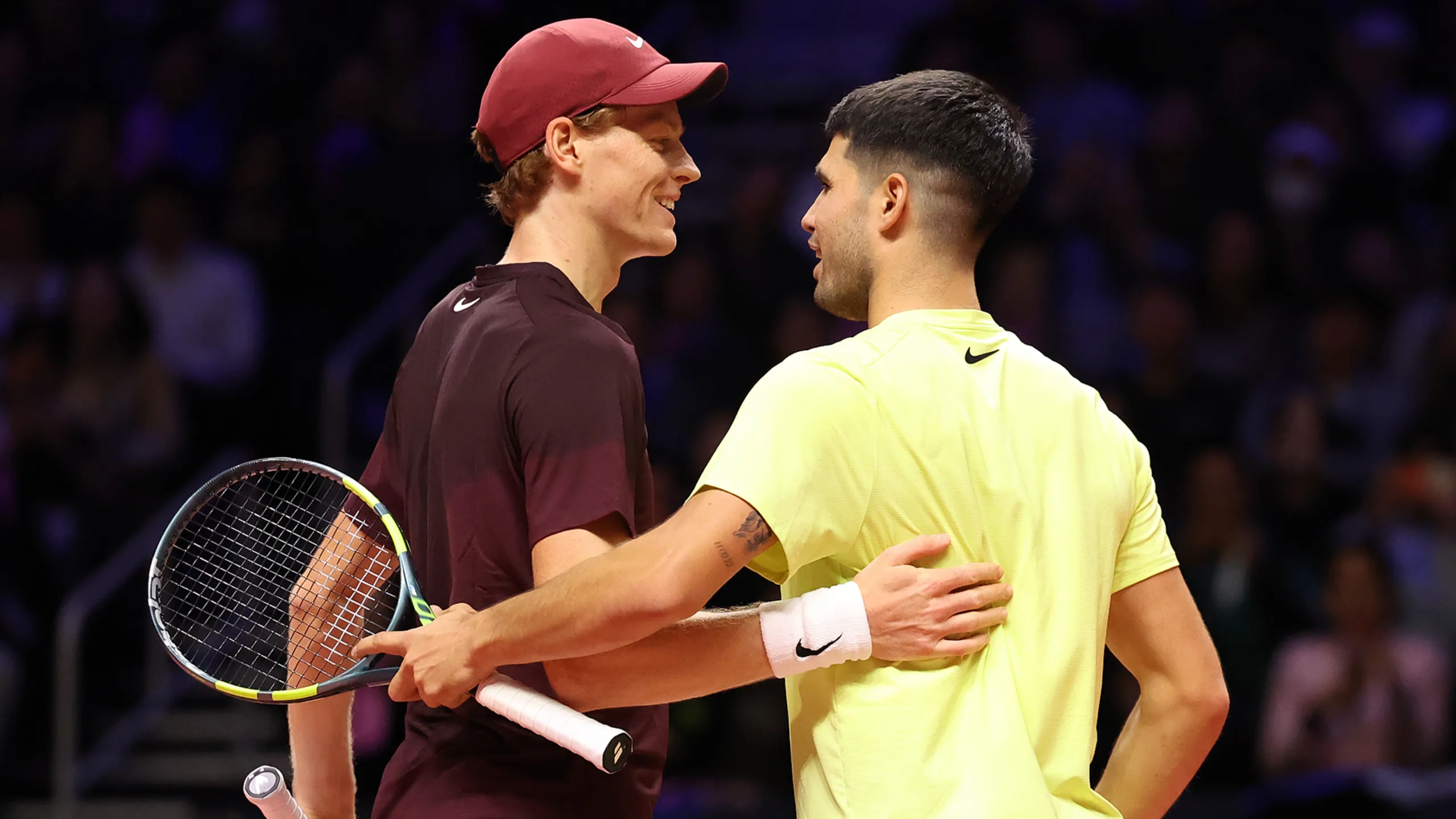
For much of the past three seasons Carlos Alcaraz and Jannik Sinner have been the default top two when both enter the same event. They arrive at the BNP Paribas Open as the top seeds again, but the dynamic feels altered. Alcaraz, a two-time champion at Indian Wells, arrives as the favorite after winning the US Open and the Australian Open and an unblemished 12-0 start to 2026. Sinner remains the challenger; he has never reached the semi at this event and is the underdog in this pairing.
Everything has been coming up Carlitos. He’s 12-0 in 2026, and 27-1 at the last four majors. In his quarter the most obvious threats are Alex De Minaur, Alexander Bublik, Casper Ruud and Botic van de Zandschulp. De Minaur sits as the No. 2 seed in that section but is 0-6 against Alcaraz. Bublik and others have upset players here before, though none has reached a quarter to set up a meeting with Alcaraz. Wild Card: Michael Zheng. The New Jersey native and Columbia University senior takes on Arthur Cazeaux of France. First-round match to watch: Grigor Dimitrov vs. Terence Atmane. Quarterfinal: Alcaraz vs. De Minaur. Semifinalist: Alcaraz.
Novak Djokovic is in the field after a delayed announcement and will complicate the draw while he remains in the tournament. A four-time Indian Wells champion, he has not passed the fourth round in his last five attempts, dating back to 2017. Daniil Medvedev is coming off a Dubai title but faces travel uncertainty: he is stuck in Dubai due to the war in Iran. If he arrives, he should be a contender. Returning champion Jack Draper is also in the mix as he works back from an upper arm injury. Quarterfinal: Medvedev vs. Cerundolo. Semifinalist: Medvedev.
The Zverev-Musetti quarter looks open, with Félix Auger-Aliassime and Frances Tiafoe among the contenders. First-round matches to watch include Alexei Popyrin vs. Jenson Brooksby and Matteo Berrettini vs. Adrian Mannarino. In Sinner’s section he will be favored over most opponents, but Ben Shelton looms as a potential quarterfinal test. First-round match with 2019 vibes: Stefanos Tsitsipas vs. Denis Shapovalov. Quarterfinal: Sinner vs. Shelton. Semifinalist: Sinner.
Player Who Could Use a Win: Joao Fonseca. He’s 1-3 in 2026.
BNP Paribas Open Masters Player News
Can Aryna Sabalenka Return and Claim Her First BNP Paribas Open Title?
Sabalenka returns after a long break and must navigate a stacked BNP Paribas Open draw in 2026. Now.
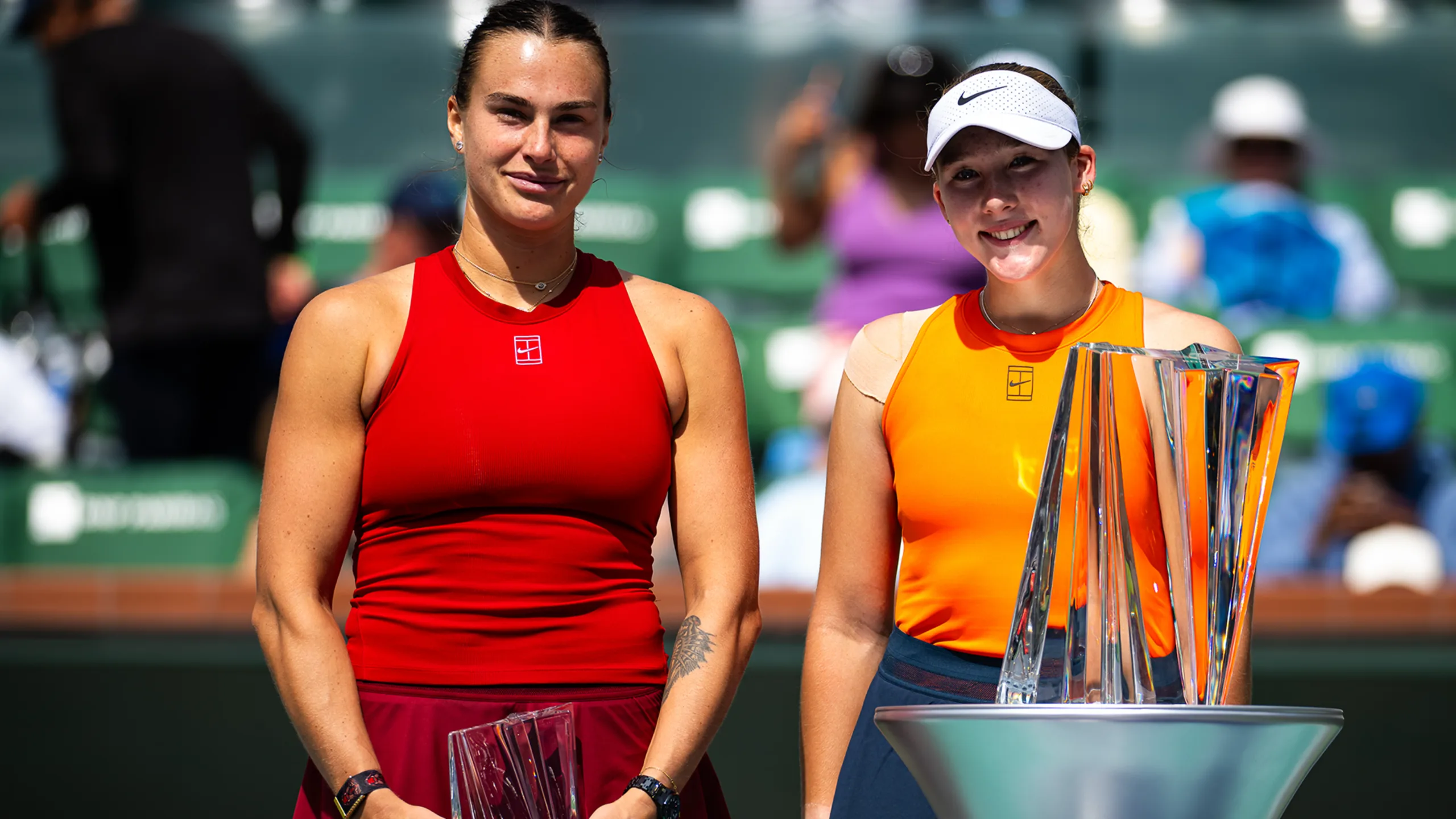
Aryna Sabalenka arrives at the BNP Paribas Open after a lengthy break, last competing in the Australian Open final. She skipped all of February and has not played since Melbourne. Sabalenka has never won Indian Wells but reached the final in two of the last three years, so expectations will be high even after the layoff.
Her early section offers a manageable path to regain rhythm. The first seeded opponent she could meet is Maya Joint, who has struggled to start 2026 and is 2-7 with four consecutive first-round losses. After that is Iva Jovic, the teen Sabalenka dismissed 6-3, 6-0 in Australia. A fourth-round meeting with Naomi Osaka is possible; they have not faced since the 2018 US Open. The quarter could feature Amanda Anisimova or Victoria Mboko. Anisimova is a question mark: she has mostly maintained Top 5 form in 2026 but is only 7-6 at Indian Wells and has not gone past the second round there since 2021.
Notable projected matches: Jovic vs. Sloane Stephens in round two, Anisimova vs. Emma Raducanu in round three. Projected quarterfinal: Sabalenka vs. Anisimova. Projected semifinalist: Sabalenka.
Alex Eala, seeded 21st, will open against Zhang Shuai or Dayana Yastremska. The 20-year-old Philippines native remains popular after her 2025 Miami breakout. If she advances she could face Coco Gauff. Gauff, playing in the United States for the first time in 2026, arrives with serving concerns and is defending fourth-round points from last year. Other seeds in that quarter include Eala, Shnaider, Noskova, Alexandrova, Tauson, Wang Xinyu, and Paolini. A first-round Gauff vs. Bianca Andreescu matchup is possible. Sleeper: Linda Noskova. Projected quarterfinal: Gauff vs. Paolini. Projected semifinalist: Gauff.
Jessica Pegula sits in the same section as Australian Open champion Elena Rybakina, who has beaten Pegula in their last three meetings, including the Melbourne semifinal. Pegula has been playing with growing assurance but is just 8-7 at Indian Wells. Projected quarterfinal: Rybakina vs. Pegula. Projected semifinalist: Pegula. Emma Navarro is listed as a player who could use a win.
Iga Swiatek is a two-time Indian Wells champion but has not won an individual title yet in 2026. She has a team win in the United Cup, skipped Dubai, and will need to find form. Potential opponents include Maria Sakkari, Karolina Muchova, Zheng Qinwen, Mirra Andreeva, and Elena Svitolina. Muchova won Doha, and Svitolina is 15-3 in 2026. Wild card Jen Brady opens against Antonia Ruzic. Projected quarterfinal: Swiatek vs. Svitolina. Projected semifinalist: Swiatek.
ATP BNP Paribas Open Masters
Djokovic Drawn into Alcaraz Half at 2026 BNP Paribas Open; Sinner Faces Tough Road
Djokovic joins Alcaraz in Indian Wells half; Sinner could meet Ben Shelton in projected quarter. Now
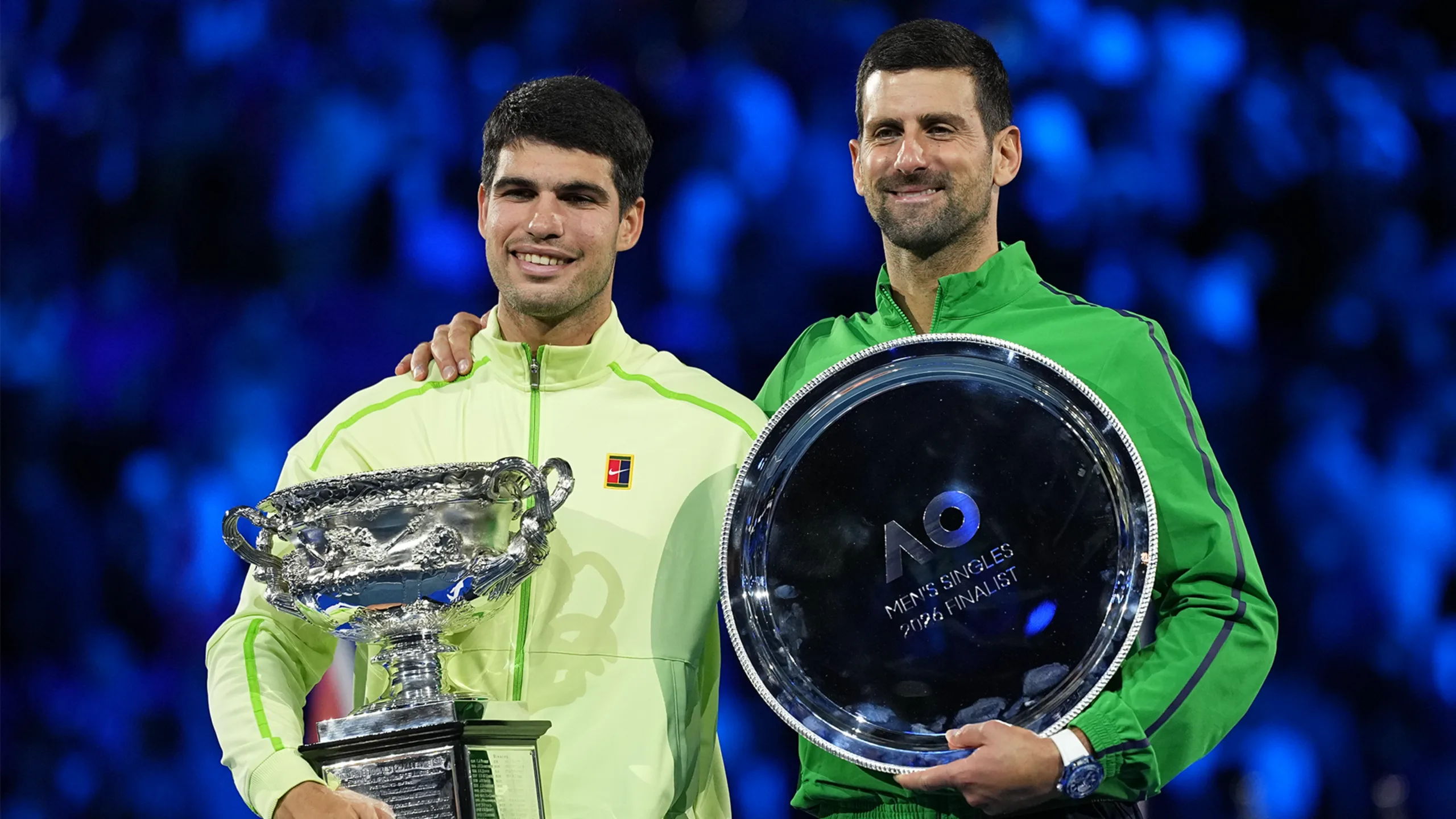
The 2026 BNP Paribas Open men’s draw sets the stage for potentially high-profile matchups as No. 3 seed Novak Djokovic has been placed in the same half as world No. 1 Carlos Alcaraz. That alignment opens the possibility of a rematch of the Australian Open final in the semifinals in Indian Wells.
A 24-time Grand Slam champion, Djokovic arrived in 2026 chasing an all-time record-breaking 25th major after finishing runner-up in Melbourne. He is drawn in the same quarter as top-ranked American Taylor Fritz, a former Indian Wells champion and this year’s No. 7 seed, and will face defending champion Jack Draper in a projected fourth-round clash. Draper, the No. 14 seed, enjoyed a breakthrough run in Tennis Paradise 12 months ago to win his first Masters 1000 title and then reached a second Masters final at the Madrid Open two months later. An arm injury has limited his schedule since last summer. Following a return to action at Davis Cup, Draper, who missed both last year’s US Open and this year’s Australian Open, played solid tennis at the Dubai Duty Free Tennis Championships.
Alcaraz arrives at Indian Wells unbeaten in 2026. The Spaniard followed his Australian Open victory, which made him the youngest man to complete the Career Grand Slam, with a title run in Doha and is in form heading into Tennis Paradise. His section of the draw includes Arthur Rinderknech and Valentin Vacherot, with former world No. 2 Casper Ruud projected as his fourth-round opponent.
The bottom half places No. 2 seed Jannik Sinner in a position to reset after surprising losses in Melbourne and Doha. Sinner lost his Australian Open title to Djokovic in a five-set semifinal and then was upset by Jakub Mensik at the Qatar ExxonMobil Open. Seeded No. 8, Ben Shelton is the projected quarterfinal opponent for Sinner. Shelton fell to Sinner in the Australian Open quarterfinals, a loss that increased Sinner’s head-to-head lead to 0-1 versus the American. Shelton proved his Masters 1000 credentials last summer by winning the National Bank Open in Toronto and arrives at the Indian Wells Tennis Garden fresh off a title at the ATX Open in Dallas.

Alcaraz and Sinner Headline 2026 Laureus Nominations; Sabalenka, Fonseca and Anisimova Also Recognized

Ivanisevic and Arthur Fils Begin a Trial Partnership with High Stakes

Andreescu’s 7.0 Reset at Indian Wells; Korda Riding Momentum After Delray Beach

Alcaraz Confronts On‑court Microphones During US Open Practice Ahead of Opelka Match

Raducanu Arrives at US Open With Momentum After Strong Hard‑Court Swing

Cervara: Ending an eight‑year partnership with Medvedev was necessary to change the energy
-
 ATPAustralian OpenGrand Slam2 months ago
Australian Open announces record A$111.5 million prize pool for 2026
-
 ATPUnited CupWTA2 months ago
Hurkacz edges Zverev in straight sets in United Cup return
-

 ATPPlayer NewsWTA2 months ago
Vesnina rejects claim that podcast aired unapproved Kudermetova anecdote about Rune