Masters National Bank Open WTA
Victoria Mboko Shines with Breakthrough Win Over Coco Gauff at Canadian Open
Victoria Mboko records a career-best win over Coco Gauff at the Canadian Open, surging up the rankings.

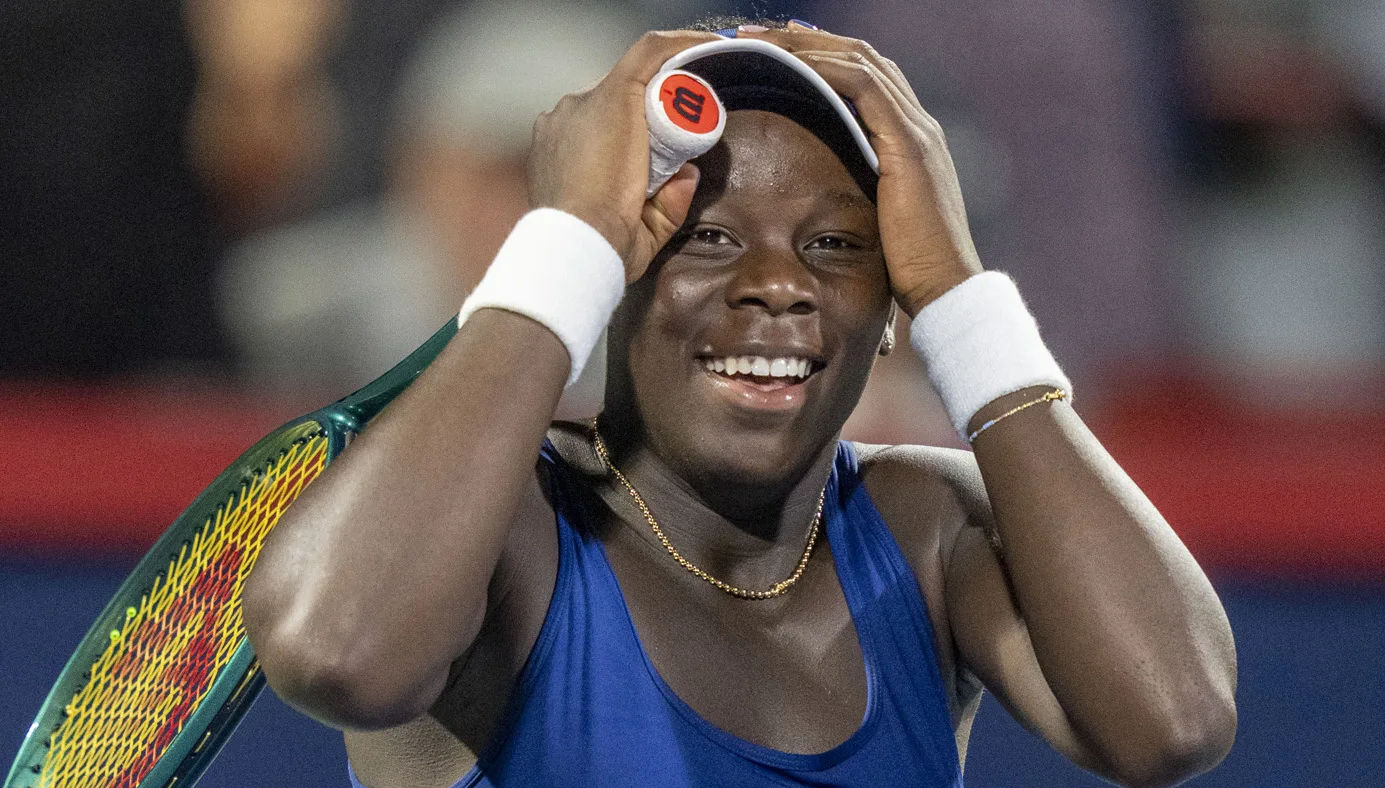
Victoria Mboko staged a remarkable upset at the 2025 Canadian Open, overpowering top seed Coco Gauff in the round of 16. The 18-year-old Canadian wildcard claimed a 6-1, 6-4 victory in just 62 minutes, marking the biggest win of her budding career.
Mboko’s dominance was evident early on as she broke two-time Grand Slam champion Gauff three times to seize the first set in 26 minutes. In the second set, the youngster showcased resilience by saving four break points in the seventh game. She delivered the decisive break when Gauff served to stay in the match at 4-5.
Mboko’s serving was a key factor in her victory, winning 79% of first serve points and 62% on second serve, while saving all five break points she faced. Conversely, Gauff struggled with her serve, landing just 43% of first serves and winning only 44% of points on her second serve, along with hitting six double faults in this match.
Gauff’s unforced errors numbered 23 in the match, hampering her rhythm especially on the forehand side.
On playing amid strong home support, Mboko commented, “Every day they’ve been coming to all my matches and supporting me a lot. I couldn’t be more grateful. I’ve never really had so many people cheering for me in a tournament, especially a WTA tournament. This is kind of the only tournament Canada has, WTA tournament. To have that kind of support at a tournament like this, it’s amazing. I couldn’t be more grateful, and I think it’s so cool that so many Canadians get to come and support me.”
Reflecting on Gauff’s errors, Mboko said, “Well, I mean, nothing really crosses my mind just because, I mean, that’s the game. People make errors. It happens. I make errors too. So I was just really focused on myself and what I had to do. I didn’t really focus as much as what she was doing in the match because I just wanted to play as solid of a game as I possibly could. I just wanted to do what I was supposed to do in the match and hope for the best.”
Starting the tournament ranked No. 85, Mboko’s results have propelled her up 30 spots to an expected career-high No. 55 in the live WTA rankings. She will next face world No. 51 Jessica Bouzas Maneiro in the quarterfinals, with a victory likely to break her into the top 50.




China Open
Keys misses Beijing as China Open withdrawals climb
Keys withdraws from Beijing as the China Open withdrawal list rises to nine.
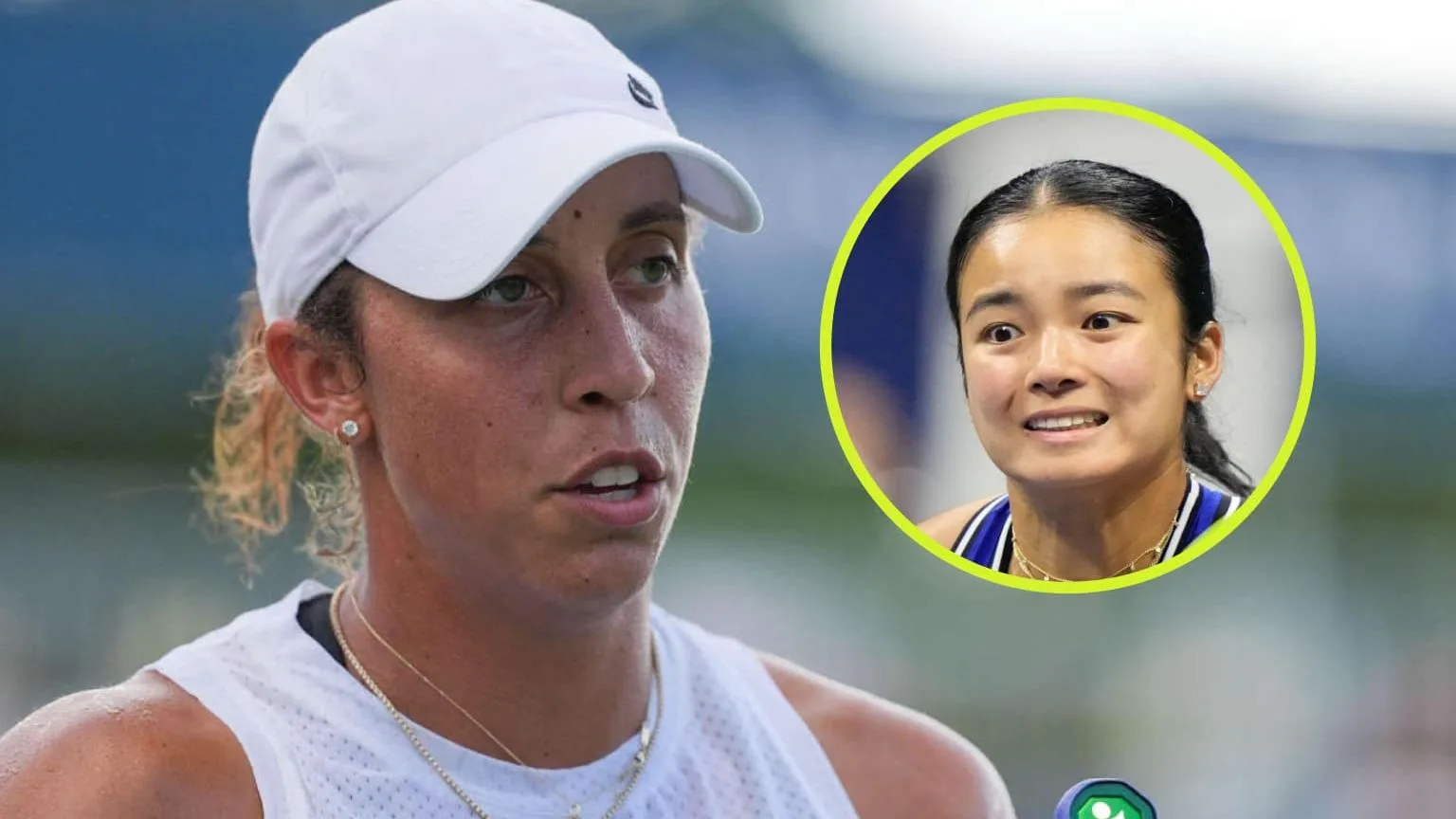
Madison Keys will not appear at the China Open, taking the tournament’s withdrawal count to nine.
The former Australian Open champion has had a difficult period since the US Open, where she let a 5-0 final-set lead against Qinwen Zheng disappear in the third round. In the aftermath, the 31-year-old was emotional in her post-match press conference and said she has been dealing with a longer-running struggle.
Keys told reporters, “I just feel like I’ve kind of been struggling for a while now, and I feel like I was able to kind of play through it for a bit. I’m sure everyone could kind of see that I was struggling a little bit, but inside it felt probably even bigger than that.
“Some weeks are easier than others, and this week is obviously one of the harder ones just because you care so much. Yeah, I’m going to have to make some sort of changes.”
She also pushed back on pregnancy speculation, saying, “I f people could stop assuming and or asking me if I am pregnant, that would be super fun. That’s like the number one comment I keep getting, post US Open.”
Keys has been replaced in Beijing by Paula Badosa. The WTA 1000 event begins on 30 September and still includes Elena Rybakina, Aryna Sabalenka, Jessica Pegula, Coco Gauff, Mirra Andreeva, Linda Noskova and Iga Swiatek.
Alex Eala has also withdrawn because of a clash with the Asian Games. She is seeking a WTA exemption so she can represent the Philippines at the competition in Japan, which runs from 27 September to 3 October. If she does not receive it, she faces a fine and points penalty.
McCartney Kessler has ended her 2026 season early after what she called a “physically demanding” campaign. She plans to step back, let her body “heal”, and return in 2027.
Rybakina’s Achilles issue remains another concern. It has already ruled her out of the Billie Jean King Cup Finals this week, although she has not withdrawn from the China Open.
Cincinnati Open
Gauff backed over Sabalenka in US Open title debate
Isner and Croft back Gauff over Sabalenka for the US Open title race this year.
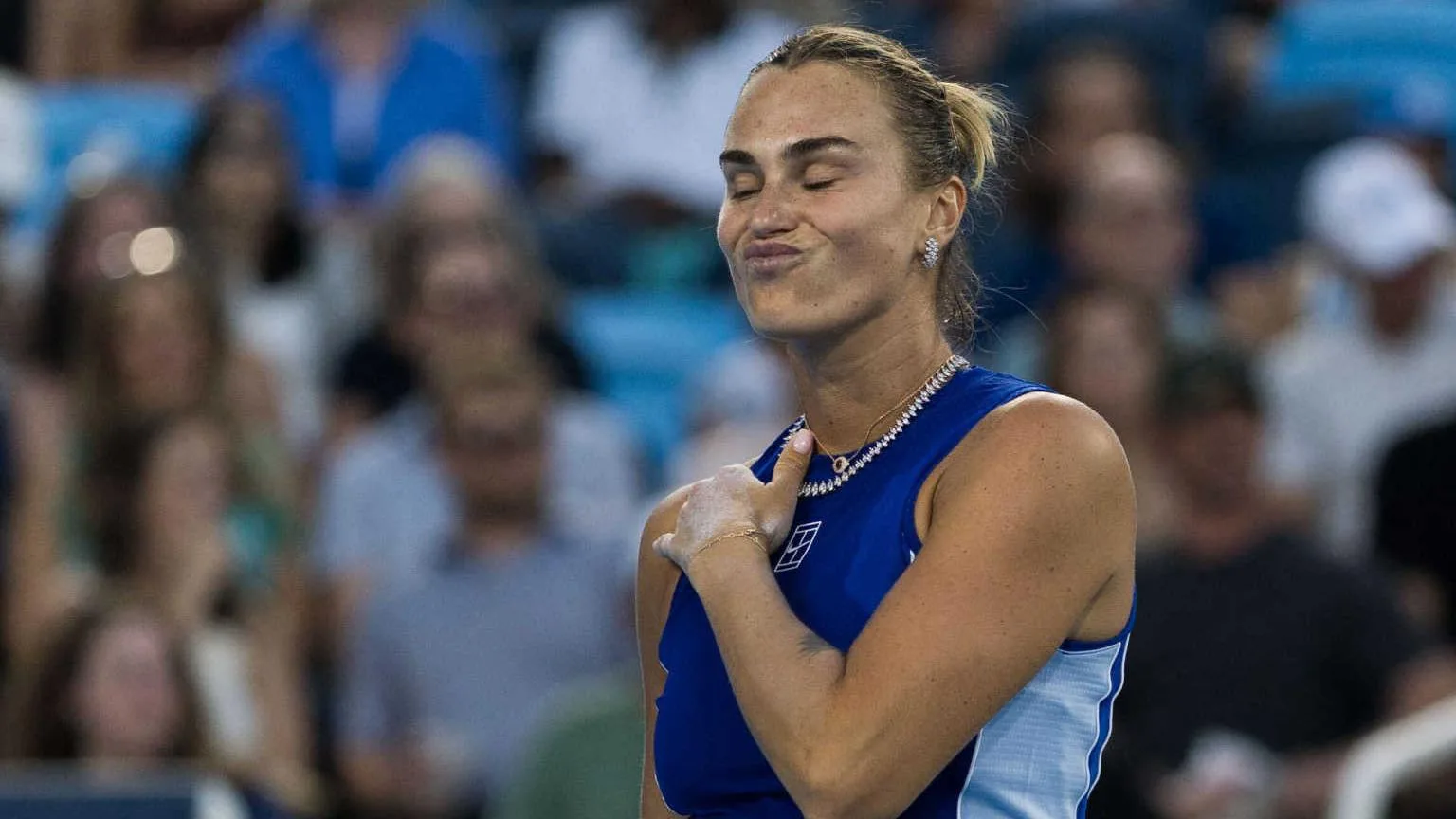
John Isner and Annabel Croft have both leaned away from world No 1 Aryna Sabalenka in the race for the US Open women’s singles crown, instead naming former champion Coco Gauff as the player to beat.
Sabalenka has arrived in New York after a difficult stretch, with only one semi-final from her last six tournaments, that run coming at the Berlin Open. A year ago, though, she lifted the US Open trophy for a second straight time after defeating Amanda Anisimova 6-3, 7-6(3) in the final.
This time, the Belarusian begins against Camila Osorio, while Anna Kalinskaya and Iga Swiatek sit elsewhere in her quarter of the draw. Her recent results have also allowed Elena Rybakina to cut into the lead, with the gap now down to 434 points in the live WTA rankings.
Isner, speaking on a recent episode of the Nothing Major podcast, said Gauff should be viewed as the favourite even if the betting markets point elsewhere. He and co-host Steve Johnson both highlighted the American’s form, which includes a run to the semi-finals of the Canadian Open and then a title in Cincinnati two weeks later.
“I really think she is [the favourite],” said Isner about Gauff.
“I think Sabalenka is the betting favourite, but last year Coco went into the US Open with not a lot of confidence and a lot of serve issues. That stuff has seemingly been put to rest right now.
“Her first and second round matches last year in New York were the most tension-filled matches that you could possibly imagine.
“She is coming into this one with a lot more confidence, so for me it is Coco Gauff that is the favourite.”
Johnson echoed that view, stressing the depth of the field while still placing Gauff near the top of it.
“Back in the spring, when Aryna Sabalenka completed the ‘Sunshine Double’ by winning at Indian Wells and the Miami Open, she was just so dominant,” Croft told The Times.
But the former British No 1 said recent defeats had affected Sabalenka’s presence on court, arguing that the aura around her has diminished. Croft also pointed to Gauff’s improved forehand and serve, along with her straight-sets win over Jessica Pegula in the Cincinnati final, as reasons to favour the American in New York.
Cincinnati Open
Coco Gauff’s serve work pays off as Cincinnati win lifts US Open outlook
Gauff’s serve doubts eased in Cincinnati, giving her confidence before the US Open.
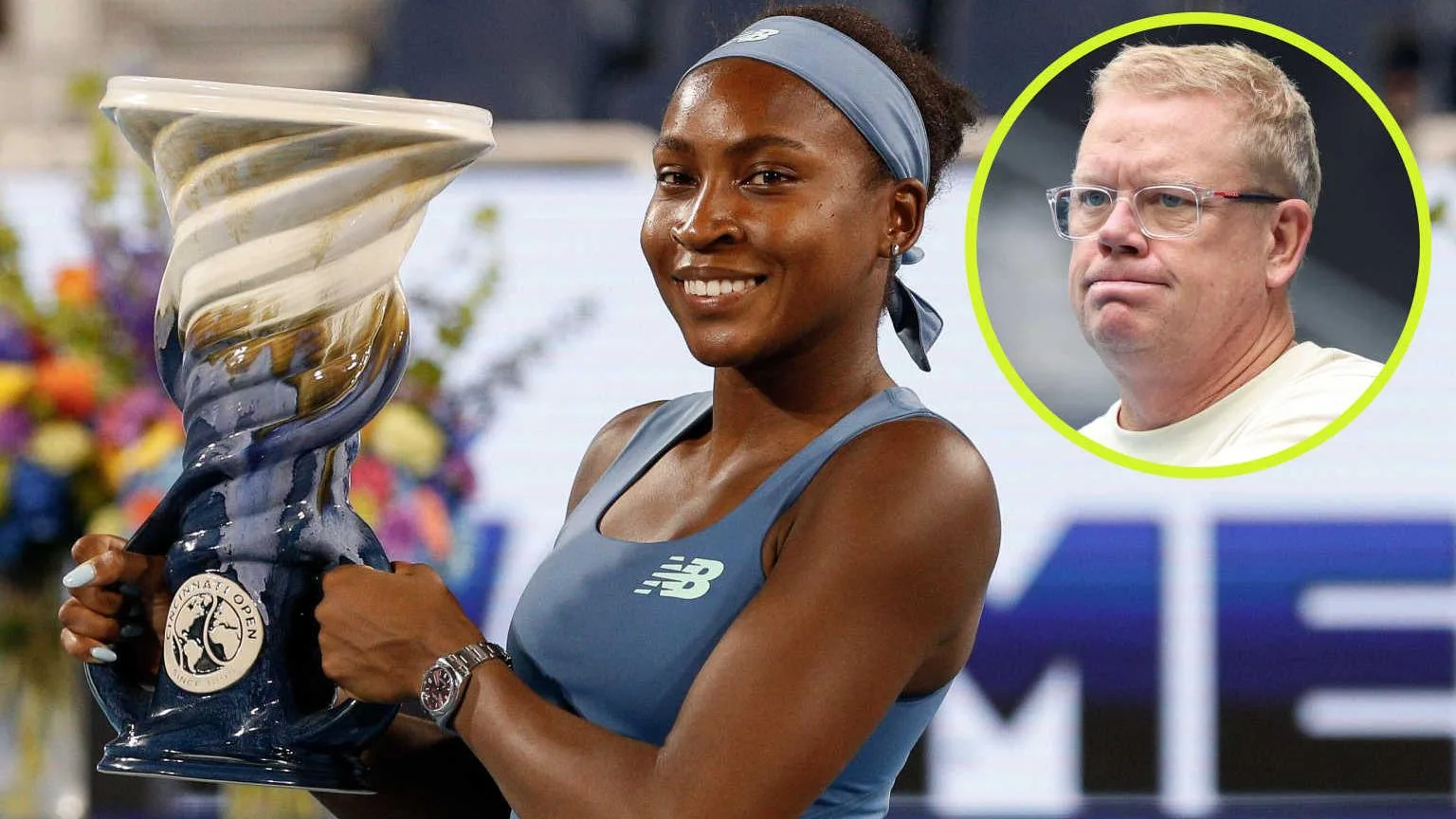
Just more than half a year ago, Coco Gauff was openly questioning whether the serve changes she had been making were helping at all. By the time she reached the Cincinnati Open final, the picture looked very different, with the American finding clarity and confidence at the right time before the US Open.
Gauff’s serve has been one of the most closely watched parts of her game, and the issue came into sharp focus during her Dubai Tennis Championships semi-final against Elina Svitolina in February. After dropping the first set, she double faulted at 2-2 [15-15] in the second and turned to biomechanics coach Gavin MacMillan with clear frustration: “I’ve been doing everything you’ve wanted for the last six months, and it’s gotten not better at all, bro.”
MacMillan had joined her team before the 2025 US Open with the specific aim of improving that area of her game. At the time, Gauff felt the work was not producing results. That changed in Cincinnati, where there was little reason to discuss the serve after she beat Jessica Pegula 6-2, 6-4 in the final and committed only one double fault across the match.
In comments to WTATennis.com, the two-time Grand Slam champion acknowledged how difficult that Dubai moment had been, while also stressing that the work is moving in the right direction.
“That was a tough moment for me, and I felt bad after I said it, but they’re understanding people [laughing]. They knew it was out a frustration, but that was a tough moment because I was like, ‘Bro, we’ve been working on it and it’s not getting better.’
“It was getting better, honestly, but it just didn’t feel like it in that moment. After the match, my coach said ‘No, you’re in the right track,’ especially JC [Faurel] because he’s been with me through the worst of my serve, and now he’s on the better half, better side of it.
“He says the double faults aren’t the same. Obviously they’re still double faults, but he’s like ‘You’re just improving.’ That gave me a good confidence that one day I will find it, and I feel now, I know that I can find it even if I throw two or something in a game. I know that I’m capable of finding Plan A again and at some point in the match.”
Twelve months ago, Gauff was in a far less comfortable place, losing in the first round at Wimbledon before making the decision to replace Matt Daly, who had joined her team in September 2024 and later guided her to the 2025 French Open title, with MacMillan. There was no immediate turnaround, as she then fell in the fourth round at the US Open.
This year feels different. Speaking after her Cincinnati victory in Ohio, she said: “I think last year, I was just frustrated with my game and I felt like I was declining. It’s not something any player wants to feel”
“You always want to feel like you’re getting better or, at the worst, just plateauing. So last year I was in a weird predicament. I made sudden decisions that most people probably wouldn’t do before a Slam, but I think it was worth it. I feel like it’s night and day where I am from last year to now.”

Zverev Arrives at Laver Cup With Europe’s Title Bid in Focus

Alex Eala opens Singapore challenge against Prozorova as ranking gains loom

Zverev’s breakthrough season rewrites a long-running story

Raducanu Arrives at US Open With Momentum After Strong Hard‑Court Swing

Maestrelli Triumphs in Bergamo, Claims Challenger Title and Career‑High Ranking