Analytics & Stats ATP
Alcaraz Cuts Into Sinner’s Lead After Tough Win Over Rublev in Cincinnati
Alcaraz edged Rublev 6-3 4-6 7-5 to reach Cincinnati semi-finals and narrow Sinner’s ranking lead. Now.

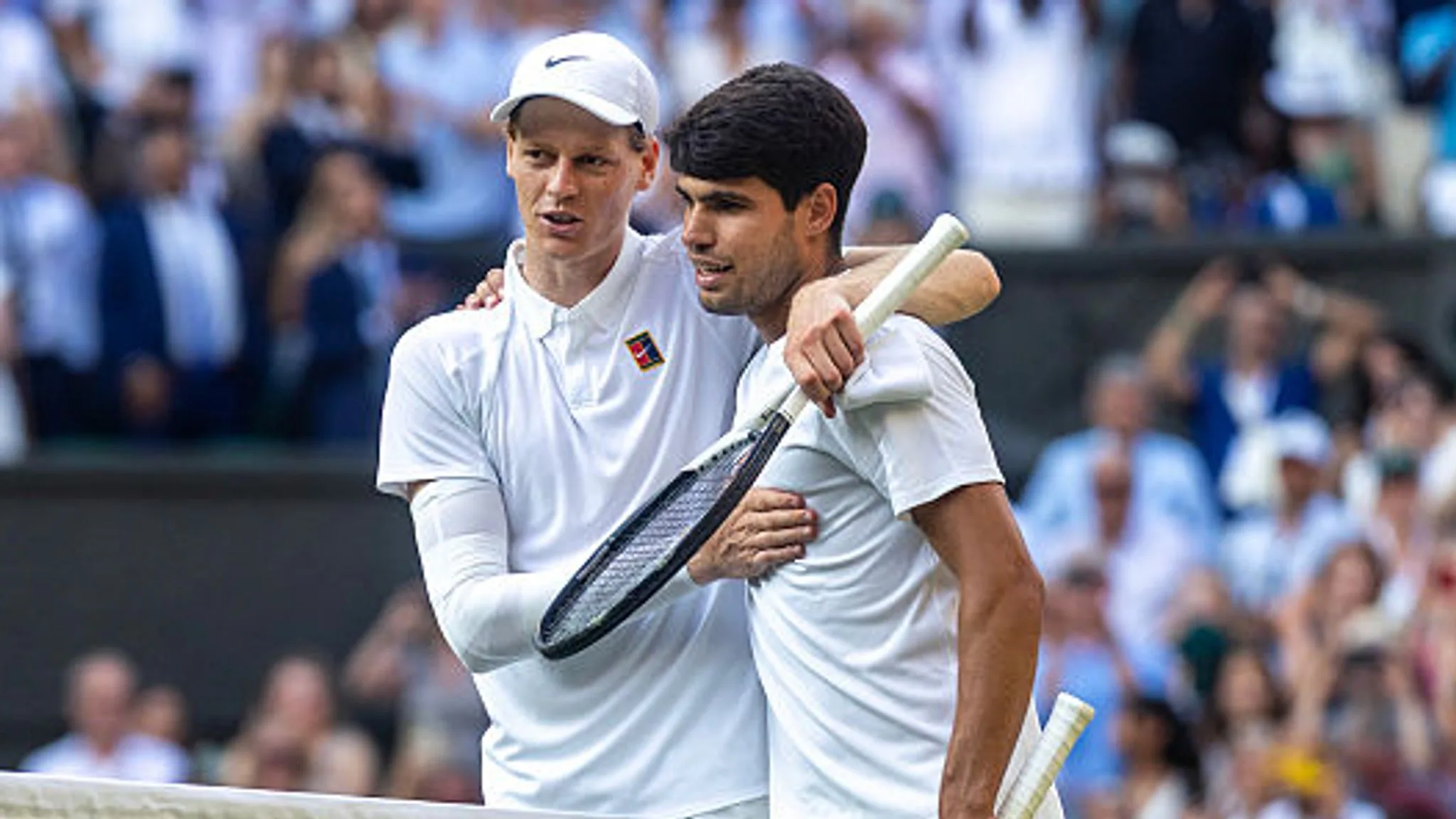
Carlos Alcaraz suffered a late scare but advanced to the Cincinnati Open semi-finals by edging Andrey Rublev 6-3, 4-6, 7-5. The victory marked Alcaraz’s 12th ATP Masters 1000 semi-final and moved him closer in the race for the top ranking.
The result has immediate implications for the ATP points race. Alcaraz added 400 ranking points this week and can add another 600 if he wins the title in Cincinnati. He is currently more than 2,000 ranking points behind Jannik Sinner, who is defending champion in Cincinnati and also at the US Open. Sinner is defending 2,500 ranking points across those two events, and failure to win both would dent his total. By contrast, Alcaraz is defending just 60 points after early exits in Cincinnati and at last year’s US Open, giving him scope to close the gap.
On-court, Rublev mounted a stern challenge. The Russian produced an impressive second set, breaking back at 5-3 when Alcaraz was serving for the set. Rublev’s style and power put Alcaraz under repeated pressure, but the Spaniard produced decisive moments late in the match. Alcaraz broke again when Rublev committed two double faults in the final game, including one on the last point.
“I maintained positive thoughts all the time, even though I lost focus a few times during the second set,” said Alcaraz.
“Playing someone like Andrey, when you lose focus on two or three points, it [can] cost you the set or almost the match. I just stayed strong mentally and that’s what I’m most proud of.
“It’s just [about] accepting the moment, accepting that I am playing a third set, accepting that it’s going to be a really tough battle, and I love that.
“It was extreme conditions, but I just love playing in front of this energy. I am just really happy to live these kinds of experiences, so I just remind myself of that in these moments.”
Alcaraz produced moments of authoritative tennis, his forehand and movement rescuing him on multiple occasions, yet there were lapses in concentration from the 22-year-old. If he meets Sinner in the Cincinnati final on Monday, Alcaraz will need to lift his level again, but he has made a clear start toward his stated desire to close the gap and finish the year as No 1.





Analytics & Stats ATP Tour
Zverev Arrives at Laver Cup With Europe’s Title Bid in Focus
Zverev arrives at the Laver Cup with Team Europe aiming to reclaim the trophy in London.
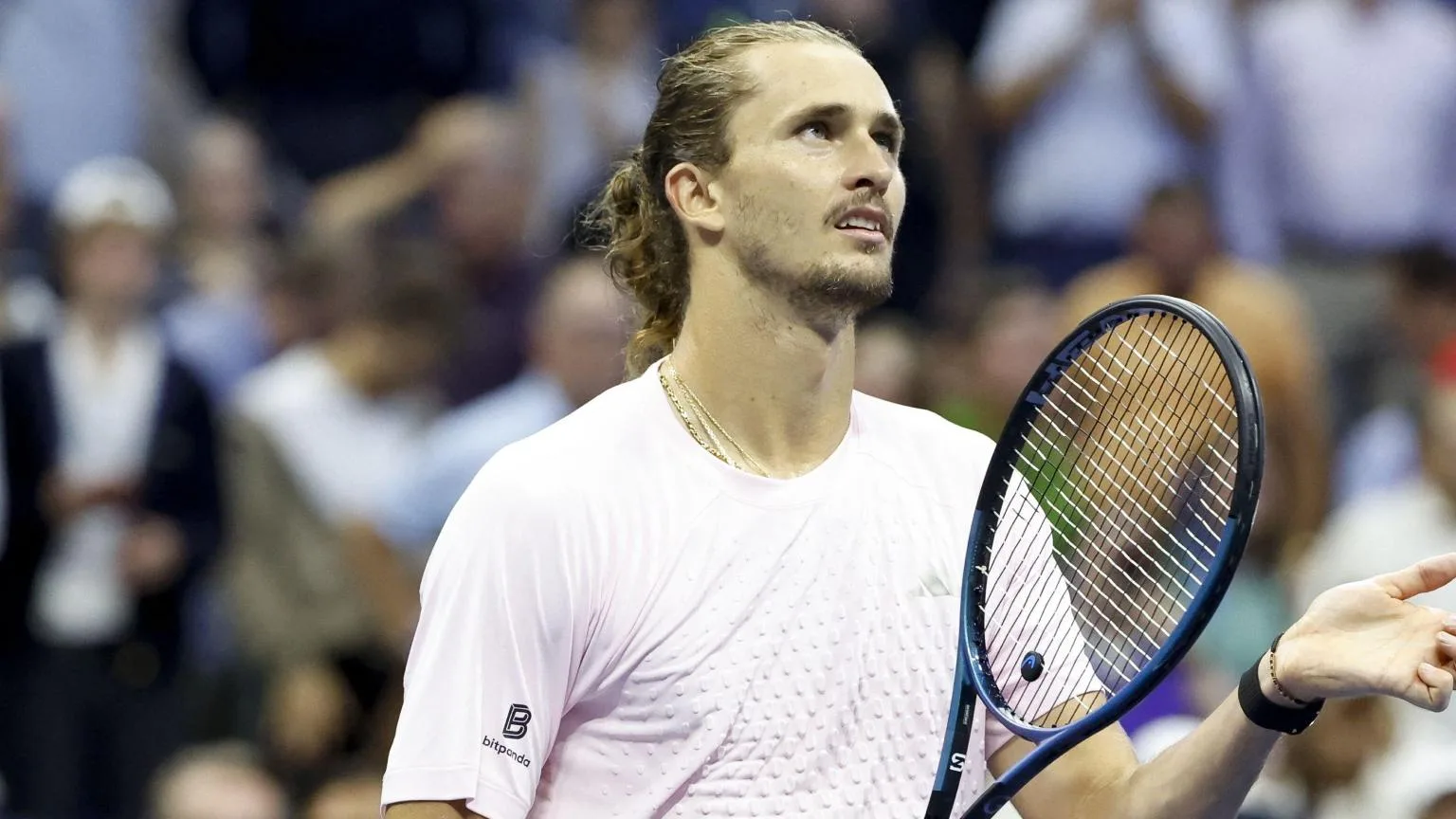
Alexander Zverev has already reached the Laver Cup as he continues a packed 2026 season, and his attention has quickly shifted to Team Europe’s attempt to reclaim the trophy.
The German has been a constant presence on the men’s tour this year, a run that has helped him take advantage of injuries to Carlos Alcaraz and Jannik Sinner. That consistency has also carried him to the biggest results of his career, with Zverev winning Roland Garros and the US Open to claim his first two Grand Slam titles. He is now close to Sinner’s world No 1 ranking.
For the moment, though, the Laver Cup is the immediate target. Team Europe were beaten by Team World at the 2025 event in San Francisco, and Zverev is determined to help put things right.
He has long been one of the event’s most familiar figures, and he explained why the format continues to appeal to him while practicing at the tournament.
Speaking during his practice sessions at the tournament, Zverev said: “I love the competition. I’ve been part of all the European teams that have won the Laver Cup.
“Of course, we want to bring the Laver Cup back to Europe and try to win it. I think we have the best players in the world here. It’s special to be on a team with them and to build a strong team. We will do everything to win this weekend.”
His record at the event helps explain that attachment. Since the Laver Cup began in 2017, Zverev has made seven appearances, more than any other player. He has won the competition five times, more than anyone else, and also owns the most singles wins, the most singles points and the most points overall.
Zverev’s career Laver Cup record stands at 9-7, a 56% winning rate. Over the years, he has shared the team environment with players such as Roger Federer and Carlos Alcaraz, and has beaten Frances Tiafoe and Milos Raonic in singles.
This year, he will line up alongside Alcaraz, Rafael Jodar, Casper Ruud, Jakub Mensik, and Flavio Cobolli under Yannick Noah and Tim Henman. Their opponents will be Team World, coached by Andre Agassi and Pat Rafter, with Taylor Fritz, Alex de Minaur, Learner Tien, Brandon Nakashima, Alexander Bublik, and Francisco Cerundolo in the squad.
The tournament is scheduled for The O2 Arena in London from September 25th to 27th, with singles and doubles matches spread across the weekend.
Analytics & Stats
US Open app deepens fan access to serve data and live match analysis
Live serve data, match tracking and AI tools are changing how fans follow the US Open this year.
Tennis followers are getting a closer look at the US Open this year, with instant data giving the viewing experience a far more detailed edge.
Elite players have long depended on extensive statistics to shape their match plans, with opponent analysis now a central part of preparation. What was once reserved for teams and coaches is increasingly being pushed toward the wider audience, and IBM has taken that expansion further at the US Open.
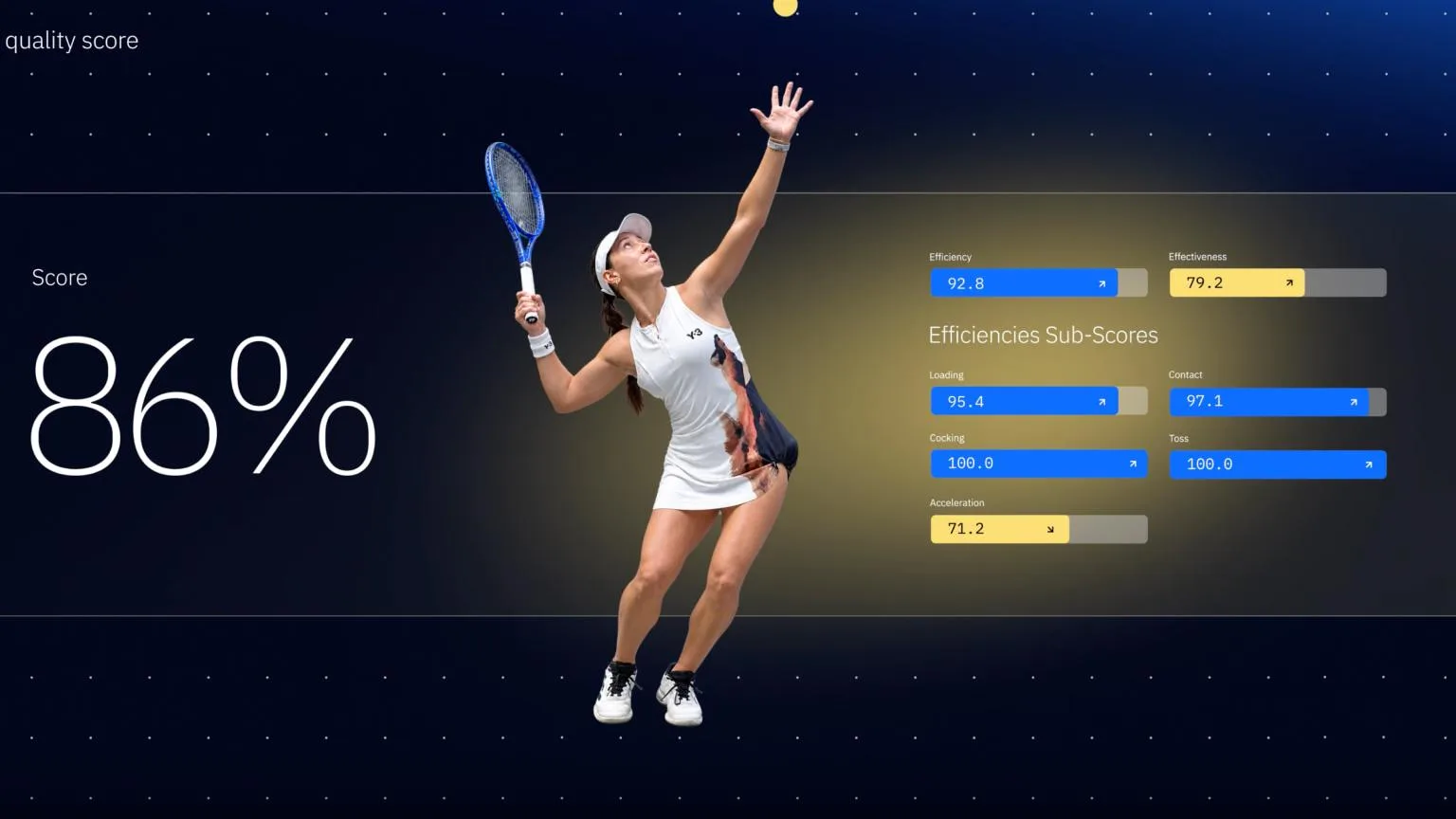
Through the official US Open app, fans watching at Flushing Meadows or around the world on TV can now use live data to read matches in greater depth. One of the main additions is a new Serve Quality metric, designed to give viewers a more technical understanding of serving performance.
The tool is available across all 254 singles matches at this year’s US Open. It uses advanced limb-tracking technology developed with IBM Bob to analyse the mechanics of every serve, recording 21 data points across the body and racquet 50 times per second. From wrist flex to the transfer of energy from a player’s legs through the torso, the system captures a huge volume of detail, producing roughly 1.2 billion data points across the tournament.
Fans can follow serving efficiency, accuracy, consistency and ball toss through a live stream of information that explains what separates one serve from another. The app also includes a ‘likelihood to win’ tracker, which reflects the changing stages of a match, while ‘Match Chat’ offers another way for users to engage with the action.
Former ATP Tour player turned TV commentator Sam Querrey described how heavily the sport now leans on information. “The data has gotten so much more aggressive for all athletes in the last couple years.” He added: “As a player, I can’t think about 15 to 20 different things if I’m returning or serving. That’s where the coach comes in. If there’s data that they can look at that’s obvious, they can then give that to the player, and the player can kind of go with those three or four bullet points.”
These developments are not limited to tennis, but the sport is clearly part of a wider shift in how fans experience matches. With AI technology continuing to develop, this kind of live analysis appears set to become an even bigger part of viewing in the years ahead.
Analytics & Stats Media
Kyle Edmund weighs in on the injury toll in tennis
Kyle Edmund discusses why tennis injuries keep rising, pointing to physical demands and balls.
Former British No 1 Kyle Edmund has spoken about the possible reasons behind tennis’s mounting injury problems in an interview with Tennis365.
The issue has been impossible to ignore across both tours in 2026, with players repeatedly forced out of major events. Before Wimbledon’s main draw even began, 18 players had withdrawn across the men’s and women’s entry lists. Among those who have already spent extended periods sidelined in recent months are Carlos Alcaraz, Jack Draper, Emma Raducanu, Victoria Mboko and Lorenzo Musetti.
Edmund knows the physical strain of the sport as well as anyone. He retired in August 2025 at the age of 30 after a career interrupted by serious injury setbacks, and he said the modern game places a greater load on players than it did in the past.
“I think there’s no doubt the game is more physical, certainly being on the tour and speaking to ex-players… the demands, the way people are moving is physical,” said Edmund, who achieved a career-high ranking of world No 14
He also pointed to the packed schedule and the structure of the season as major contributors to the strain on bodies.
“There’s chat about the calendar, more days at the tournaments, the extended Masters events. [There’s] probably less downtime between the tournaments, so you don’t have time to do physical blocks to build your body up throughout the year. You’re very much maintaining.
“So apart from the off-season, you’re just maintaining throughout the year, and to maintain and do training where you’re just, not trying to increase your fitness, but just cope with the demands for 11 months of the year, can be a challenge.”
Edmund, who reached the semi-finals at the 2018 Australian Open, added that the balls used on tour may also be linked to more arm and wrist problems.
“There’s another thing: the balls. I don’t have stats with the balls, but the arm injuries, the wrist injuries… I had a wrist injury at the back end of my career. I never had any wrist injuries before… I don’t what that was,” said the two-time ATP Tour title winner.
“I was obviously coming back from a knee injury, so it might’ve just been I wasn’t ready for the demands of playing match after match.”
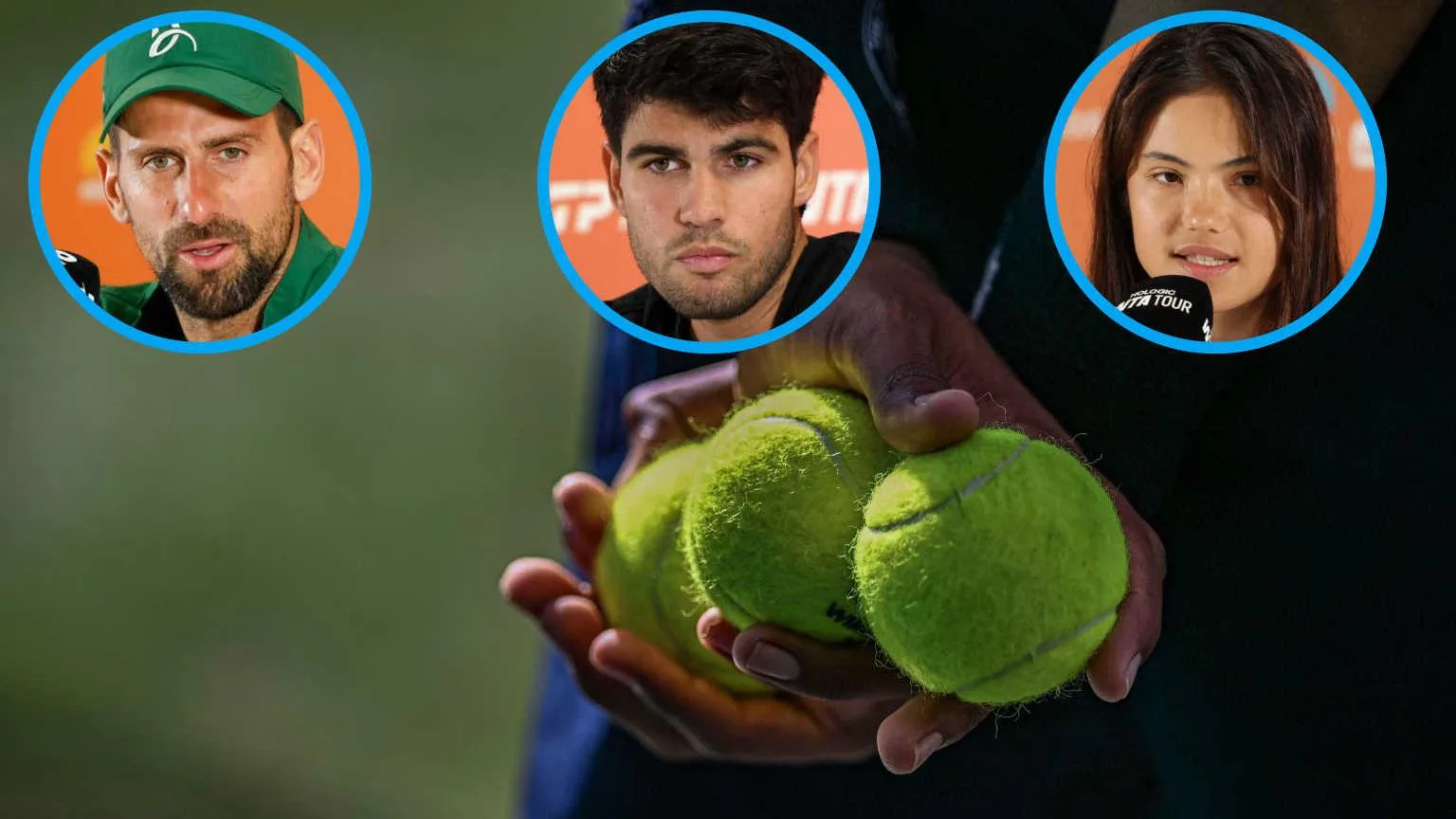
His view is echoed by several leading names. Novak Djokovic, Daniil Medvedev, Alcaraz and Raducanu have all complained about the balls used on the tours in recent years, with Djokovic saying: “That’s probably the biggest difference I can notice, compared to maybe 10, 15 years ago. It’s the balls.”
In February 2025, Alcaraz said: “I think last year there were many injuries, many players with elbow or shoulder issues. It needs to change. I know they will change it.
“Every week, practically every week, we have different balls, different conditions, so it’s complicated to adapt to them.”

Zverev Arrives at Laver Cup With Europe’s Title Bid in Focus

Alex Eala opens Singapore challenge against Prozorova as ranking gains loom

Zverev’s breakthrough season rewrites a long-running story

Raducanu Arrives at US Open With Momentum After Strong Hard‑Court Swing

Maestrelli Triumphs in Bergamo, Claims Challenger Title and Career‑High Ranking