Grand Slam US Open WTA
Gauff Prevails After Nearly Three-Hour Test, Converts Crucial Second Serve
Gauff closed a 2:57 opening match with a pressure second serve, edging Tomljanovic 6-3, 6-7, 7-5….

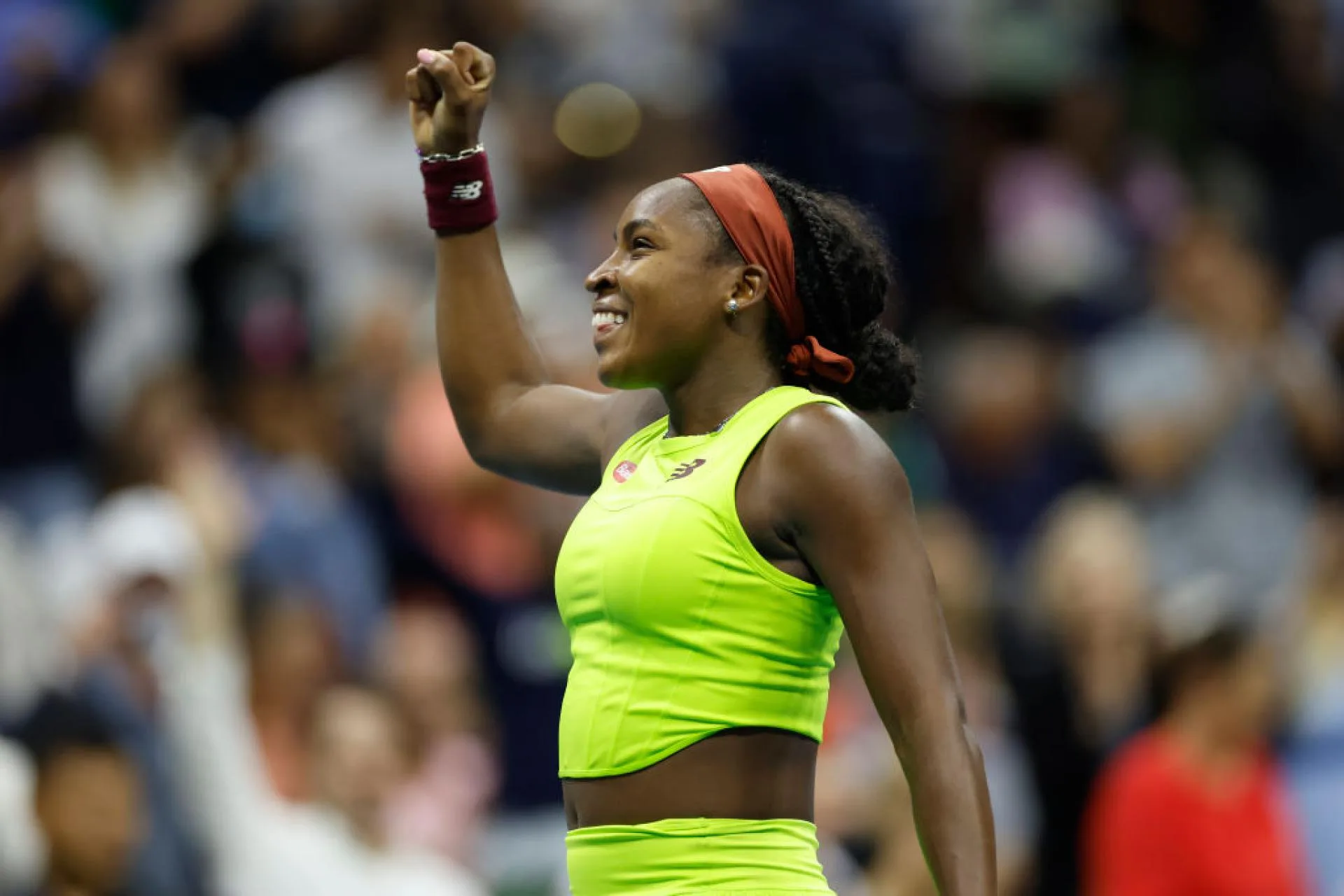
Coco Gauff closed a physically draining first-round match by landing a pressure second serve at 30-30 and finishing with a down-the-line backhand at match point. The score was 6-3, 6-7 (2), 7-5 after a contest that lasted two hours and 57 minutes and featured long, rapid-fire rallies.
Serve adjustments were a subplot throughout the match. Gauff had sought coaching specifically to address her second serve and to avoid surrendering matches with double faults. She entered the contest having double faulted 10 times in the match, including twice when serving for the win at 5-4 earlier, yet she also made 60 percent of her first serves and won two-thirds of those points. At 30-30 in the final game, she produced the decisive second serve and then forced an error from Ajla Tomljanovic on a forehand attempt.
“It’s been really tough,” Gauff said of the turbo-renovations she’s been trying to make to her serve. “Mentally exhausting, but I’m trying.”
Tomljanovic pushed the match deep with flat, penetrating groundstrokes and found rhythm late in the second set. The Australian finished with 12 winners and 56 errors. Gauff added 29 winners and 59 errors. Between them they combined for 17 double faults and 14 service breaks.
“I was trying to push her back, and she was standing on top of the baseline,” Gauff said.
There were multiple swings of momentum. Gauff came within two points of winning in the second set and had several opportunities in the third to move ahead by two breaks, but Tomljanovic saved those chances until the closing stages. “I had chances for it to be straight sets, but Ajla was tough,” Gauff said. “I had chances to go up double break so many times, I was just, like, eventually one of these is going to go my way.”
“It wasn’t the best, but I’m happy to get through to the next round,” she said. The match ended when Gauff’s backhand pass found its mark, the same shot she executed two years earlier on this court to clinch a title.




ATP Tour News Grand Slam
Roddick criticises Atmane over trainer confrontation at US Open
Roddick condemns Atmane after a heated exchange with the trainer at the US Open.
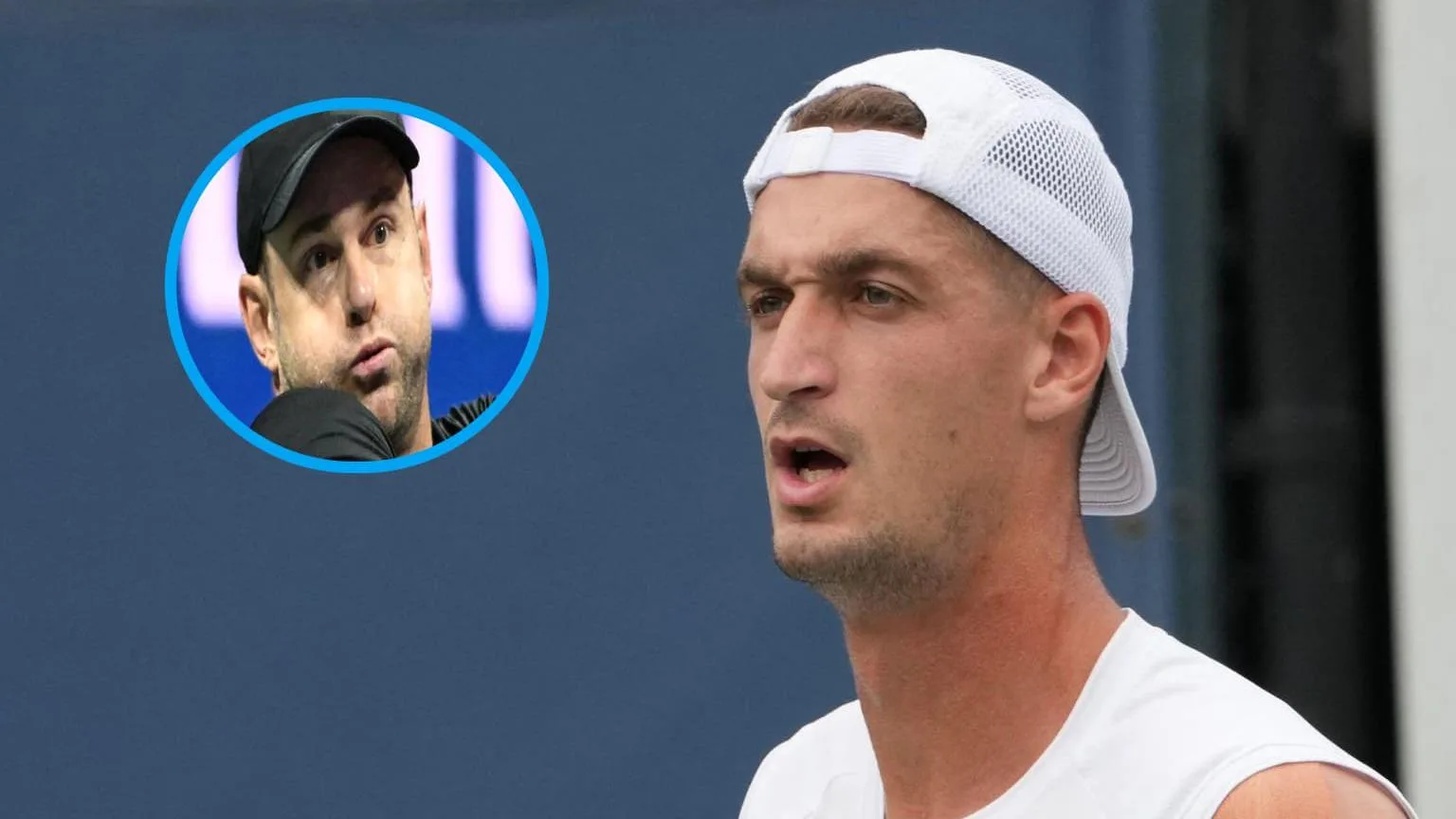
Andy Roddick has taken issue with Terence Atmane after the Frenchman clashed with the trainer during his first-round defeat to Jaume Munar at the US Open.
Atmane’s difficult record in the majors continued on Sunday, when he fell in five sets after a match that swung sharply in both directions. The 24-year-old was two sets ahead before cramping began to affect him in the third set. Munar responded by taking the next two sets, and then, early in the fifth, Atmane called for the trainer again as fatigue set in.
Although he had already received treatment for his leg earlier in the contest, the trainer did not come back at 2-1 down in the decider, apparently because the issue was viewed as cramping. Players are not allowed a medical timeout for muscle cramping, though treatment can still be given during changeovers or set breaks. Atmane reacted angrily and asked if the physio was “stupid”.
Munar stayed composed and completed a 6-7 (5), 3-6, 6-1, 7-6 (4), 7-5 victory after around five hours on court. Roddick, the 2003 US Open champion, then weighed in and drew a line between frustration at umpires and abuse directed at trainers.
He said on the latest episode of Served, “Like, you get an umpire, they’re not your livelihood. They’re not there for you late. They’re not there till two in the morning, adding three hours to their day. Like, I’ve snapped at an umpire.
“So I’m not going to say you can’t say anything to anyone because that’s completely hypocritical by me, right? I’ve showed the worst side of myself on court. Trainers are untouchable. They’re untouchable. You know, it’d be like saying that to your doctor. They hustle. They’re away from their families. They travel.”
Roddick also said he knows Atmane and his team well, but felt this crossed a line. “If I saw Atmane… And I like Atmane socially. I’m in his section of the locker room. Always great. I’ve talked to him and his coach ( Guillaume Peyre) this week. I really, really like him,” he added.
“And if I saw him, a piece of unwanted advice, potentially, would be, ‘Dude, you can’t say that to trainers’. They’re like the holy grail of the fabric of the tour. I thought that was a bad moment.
“Hopefully, he’ll realise that, you know. And I don’t know if he needs to apologise. But just maybe know that that’s not the one. I feel pretty strongly about that. So it was drama.”
ATP Tour News Grand Slam
Rusedski urges patience after Djokovic’s early US Open exit
Rusedski says Djokovic’s slump is recent and urges patience after his painful US Open defeat.
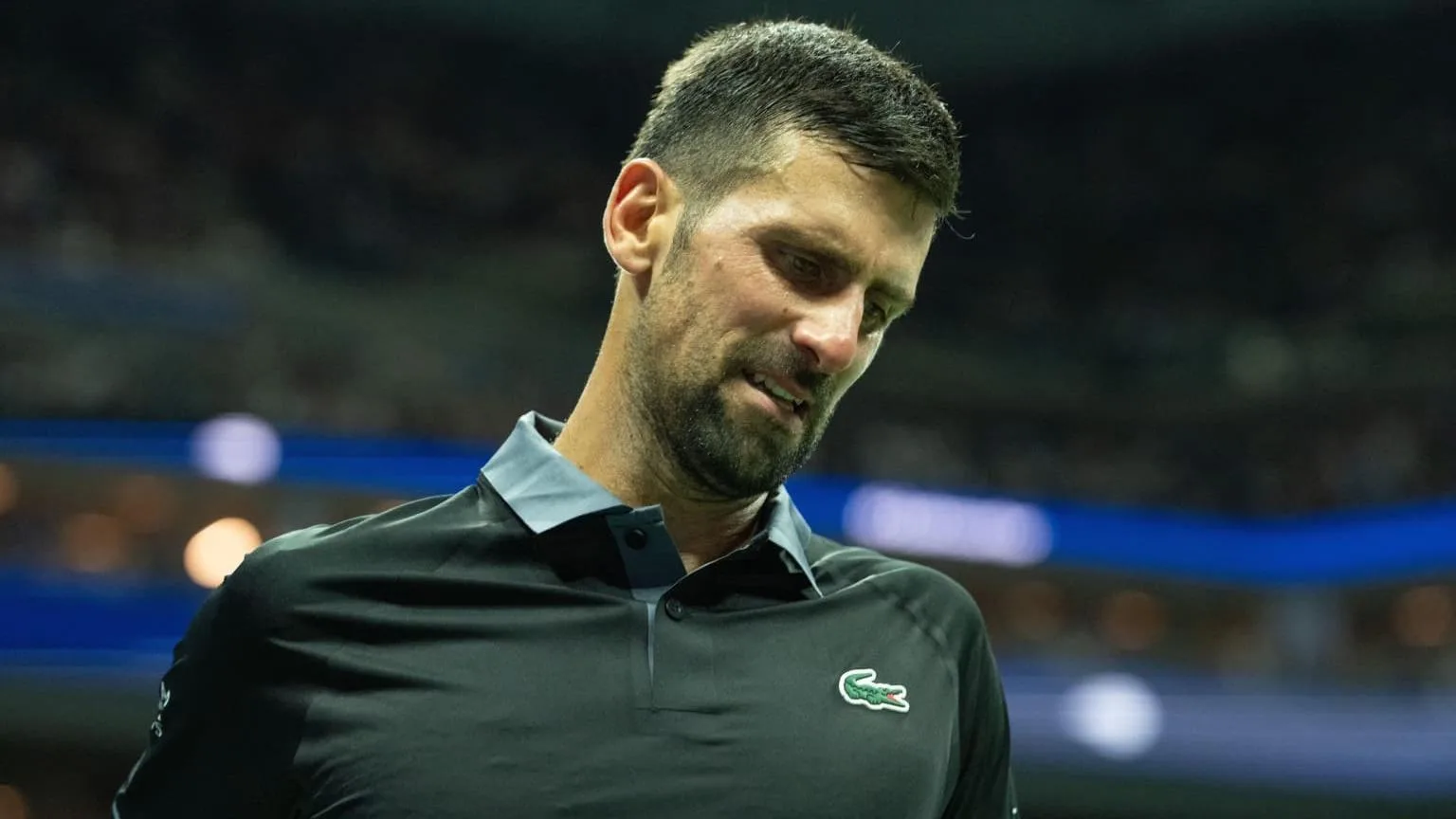
Greg Rusedski has urged observers not to rule out Novak Djokovic after the Serbian endured his earliest Grand Slam departure in two decades.
The 39-year-old was beaten in five sets by Mariano Navone on Sunday, a match that left him visibly distressed on Arthur Ashe Stadium as he fought back tears and vomited into a bin while his body seemed to give way.
Djokovic entered the US Open among the leading contenders for the title. With world No 1 Jannik Sinner sidelined by injury and Carlos Alcaraz only just returning from a wrist issue, the 24-time major winner had strong reason to believe the draw could open up for him. Instead, the Argentine held firm to win 7-6 (7-5) 5-7 4-6 6-2 6-1.
Afterward, Djokovic gave a sobering account of the physical problems he has been managing. “I think it was obvious that it was an awful feeling for me on the court,” said the fourth seed. “It’s something that I’ve been carrying, unfortunately, pretty much every match this year: vomiting, throwing up, a serious issue there.
More US Open News
ATP Rankings: How many points did Novak Djokovic drop at US Open, how much prize money did he earn?
All 21 withdrawals from 2026 US Open as three-time Grand Slam finalist joins growing list
“Then my whole body starts to collapse, cramping and pain. The back just gave up in the end, and shoulder, and I couldn’t close it out.”
Djokovic added, “ I don’t know [how I can solve the problem]. I don’t want to go into too much detail right now. I’m just trying to understand what’s going on and how much longer I can keep going like this.”
Rusedski pointed to Djokovic’s run to the Australian Open final, where he beat Sinner, and his place in the Wimbledon semi-finals as reasons for restraint. Speaking on Off Court, he argued that two straight defeats, in Cincinnati and at the US Open, should not define the bigger picture.
He said on Off Court, “Well, we’ve only seen the deterioration really this US Open and in Cincinnati. Wimbledon, we didn’t see anything. He still made the semis. In the heat in Australia, he made the finals.
“So you’re talking about this deterioration. It’s all relative, isn’t it? It’s only been the last few weeks since Wimbledon. Most people’s careers would have been set up for life. Finals of Australia, semis of Wimbledon. That’s a pretty good season for most human beings. So let’s not write him off quite yet.
“And if the body still allows him to do what he needs out there, let’s keep him in the game as long as, as long as he can be there. So that’s the balance. Will he physically be able to sustain and will he be satisfied going out earlier at the very biggest events in the world? This is a little bit of a shock.
“It’s a bad draw for him as well, the opening round. We talked about it in the lead up to the US Open saying he was in a tough section and we all knew he had a difficult opener, especially having had no form from Cincinnati and losing early.”
Rusedski also suggested that Djokovic’s reduced schedule may be part of the issue. At the same time, he noted that the depth across the game has become far more demanding, especially from the first round onward.
“I think the issue is, two out of three sets, no problem. But if you look at his preparation, he’s not being able to get enough matches. And you know, when [Roger] Federer was at his peak, he played 12 tournaments a year, but he’d win seven of those tournaments. Novak nowadays, the depth is a lot stronger,” he said.
“So if you look like from say three to 20, it’s probably slightly weaker, but then you go from 10 to 100 and the depth is brutal. So from the first round, you’ve got to show up. If you’re not at your best from the beginning, it makes life much more difficult.
“The question for me is, if he plays more two out of three set tournaments, that’s going to get him great preparation for the slams. So it’s a chicken and egg. Will the body allow him to play those matches and those tournaments?
“So let’s see if he can get it back. And as he said, if he plays two or three set matches, there’s still tournaments he can win and he can still win more events. And he still loves the love he’s getting from the fans.”
Grand Slam
US Open opens with Djokovic shock, Eala momentum and McEnroe backlash
Djokovic’s shock exit, Eala’s rise and McEnroe criticism headline a striking US Open opening.
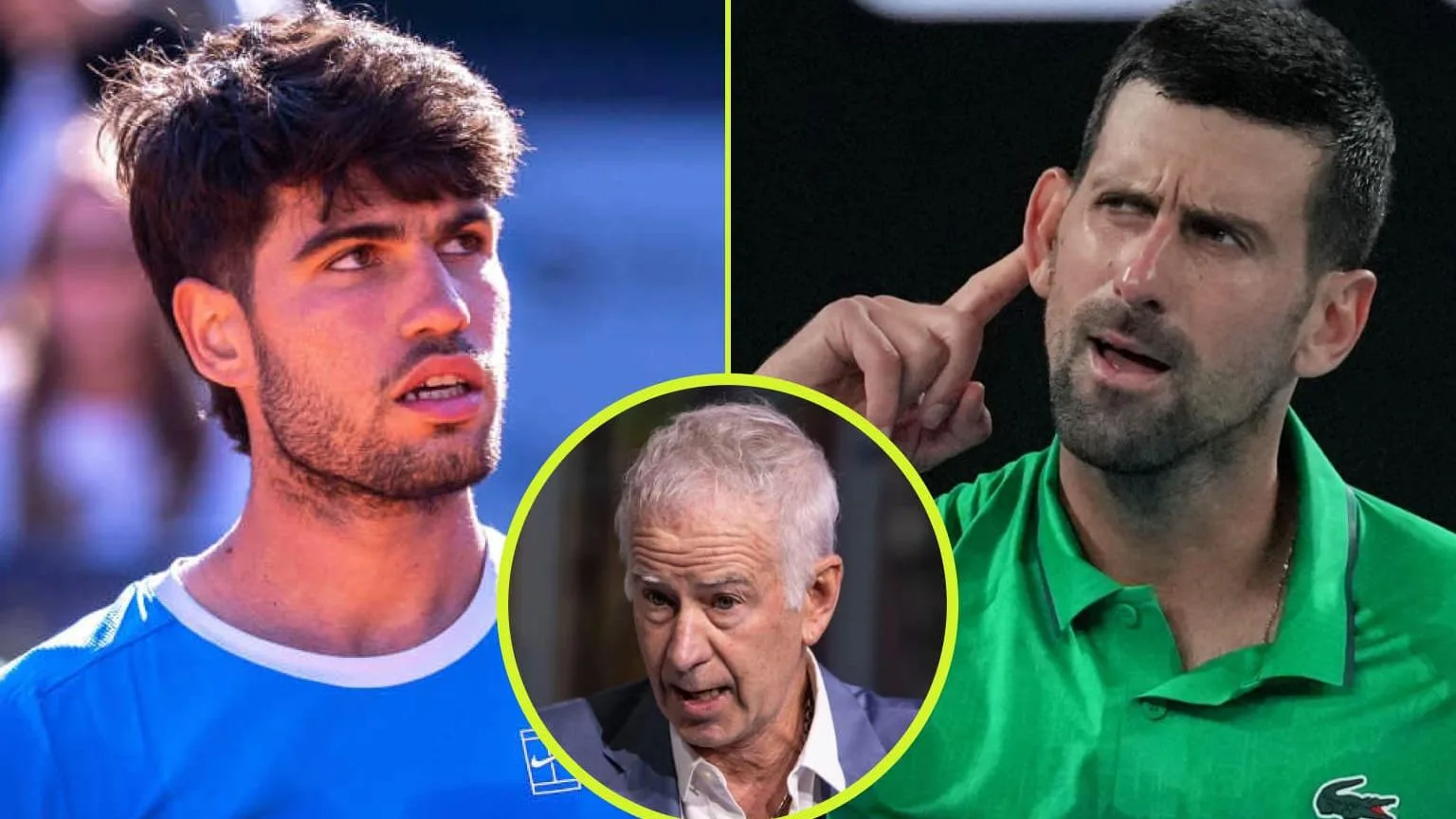
The final Grand Slam of 2026 has started with plenty to talk about, even before the main draw settled into rhythm. Roger Federer’s return to Flushing Meadows for an exhibition alongside Andy Roddick, John McEnroe and Andre Agassi added early theatre, while Karolina Muchova and Jakub Mensik captured the US Open mixed doubles title. Carlos Alcaraz also featured in the event, partnering Serena Williams.
Away from the celebratory moments, Stan Wawrinka’s entry into the tournament became a concern after he initially missed out on a wildcard, only to receive one later following an injury withdrawal. That sequence raised questions that could not be brushed aside.
The biggest on-court headline, though, came from Novak Djokovic’s surprise first-round defeat. Mariano Navone pushed through in five sets to hand the 39-year-old his first opening-round major exit since 2006. Djokovic was visibly shaken and later described the physical problems he has been battling. He said, “ It’s something that I have been carrying pretty much every match this year – vomiting, throwing up. And then my whole body starts to collapse basically, cramping and pain – the back just gave up in the end and shoulder, and I couldn’t close it out.”
Asked whether he had learned more about the issue, he added: “I don’t know [how I can solve the problem]. I don’t want to go into too much detail right now. I’m just trying to understand what’s going on and how much longer I can keep going like this.”
Alex Eala also continued to dominate the conversation. The 21-year-old has surged into the top 20 and drawn huge attention, with Andy Roddick saying she is “creating a movement”. Annabel Croft went further, saying Eala is building an “aura” that makes opponents take notice.
John McEnroe then faced criticism after his remarks following Navone’s win were judged by many to be disrespectful.
Elsewhere, Jessica Pegula advanced, Daniil Medvedev won comfortably, Luca Van Assche beat Cameron Norrie, Barbora Krejcikova lost, and Venus Williams fell to Sofia Kenin as rain interrupted several matches.

Alex Eala backed as a US Open dark horse after strong rise in 2026

Sabalenka Pushes Back After US Open Opening Win Over Osorio

Alcaraz returns with victory, doubts and a standout look at the US Open

Alcaraz Confronts On‑court Microphones During US Open Practice Ahead of Opelka Match

Raducanu Arrives at US Open With Momentum After Strong Hard‑Court Swing