Player News Tennis Coaching WTA
Abramowicz answers criticism over her role in Swiatek’s team
Abramowicz says she follows Swiatek’s requests as scrutiny grows over their professional distance…

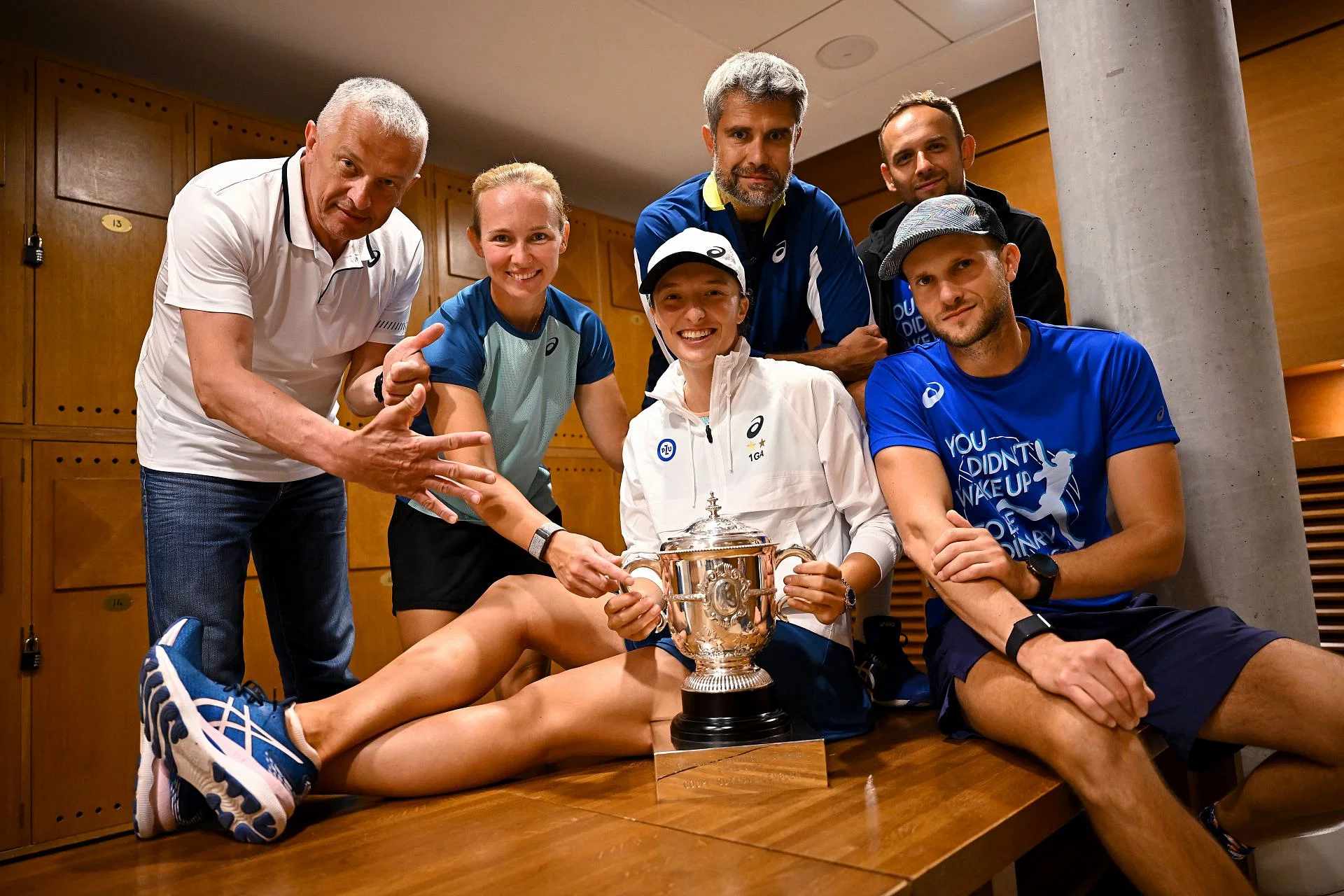
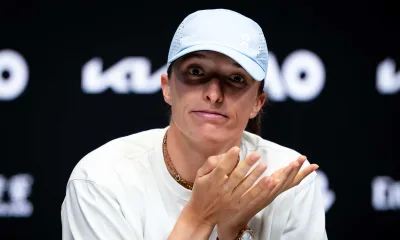
Daria Abramowicz has addressed criticism of her relationship with Iga Swiatek after questions were raised about professional boundaries. The psychologist has worked with Swiatek since February 2019, when the player was 17 and ranked just inside the top 150 on the WTA Tour.
Abramowicz has been credited with helping Swiatek develop into a leading player of her generation. The 24-year-old has won 24 titles, including six Grand Slams, and has spent 125 weeks at world No 1. Swiatek has publicly acknowledged Abramowicz’s influence before, saying the psychologist made her “smarter” and boosted her confidence during her maiden major run at the 2020 French Open.
Their partnership came under scrutiny earlier this year amid a difficult run of form for Swiatek and criticism of on-court behaviour. During the Indian Wells semi-final loss to Mirra Andreeva in March, Swiatek appeared to hit a ball toward her team, close to a ball boy, while Abramowicz was observed shouting from the stands.
A clinical voice raised concerns about the pair’s professional distance. “If we were to look at this relationship only and exclusively from the point of view of strictly psychological workshop, then it is indeed a disturbed relationship, in which certain boundaries of professional distance between the psychologist and the client are crossed,” Nowicki told Interia Sport. “Unfortunately, most errors in perception occur when emotions are aroused. Regardless of whether these are positive or negative emotions, then we make errors in the accuracy of observation.”
Swiatek defended her team ahead of the French Open. “Daria is a constant source of support for me, someone I trust,” she said. “In fact, I trust my entire team, and I want people around to know that.
“This is my team – I decide who’s in it. The recent media pressure doesn’t create space for calm and focused work. On the contrary it creates additional, unnecessary stress.”
In a longer interview on the Polish podcast Break Point, Abramowicz explained her approach and the choices she makes at the athlete’s request. Furjan asked whether she had considered sitting separately from Swiatek’s coaches: “Didn’t you ever want to move a little away from [Wim] Fissette or [Tomasz] Wiktorowski, to the third or fourth row? Because in my opinion, that could resolve these tensions.”
Abramowicz replied: “But I do what is expected of me, what the athlete I work with asks me to do. And let’s move from that.
“If a player wants to have her own team, and if she wants us to, for example, not smile in the box, or cheer after every point, but rather look focused and be very meticulous, for example, or if she said before the match, ‘I need a lot of energy from you today, so I need a lot of “jazda” (a Polish word meaning let’s go), and so on, then we’ll do it.
“And of course, I talked to Iga about it. Of course I do: ‘Do you want us to make any changes? Or maybe I shouldn’t, for example, do you want me to skip a trip?’ And I repeat again: I do what the athlete expects of me.”




1000 BNP Paribas Open WTA Player News
Gauff retires with left arm issue; Eala moves through at BNP Paribas Open
Gauff retired with a left arm issue while trailing Eala 6-2, 2-0; Eala advances at Indian Wells Sun
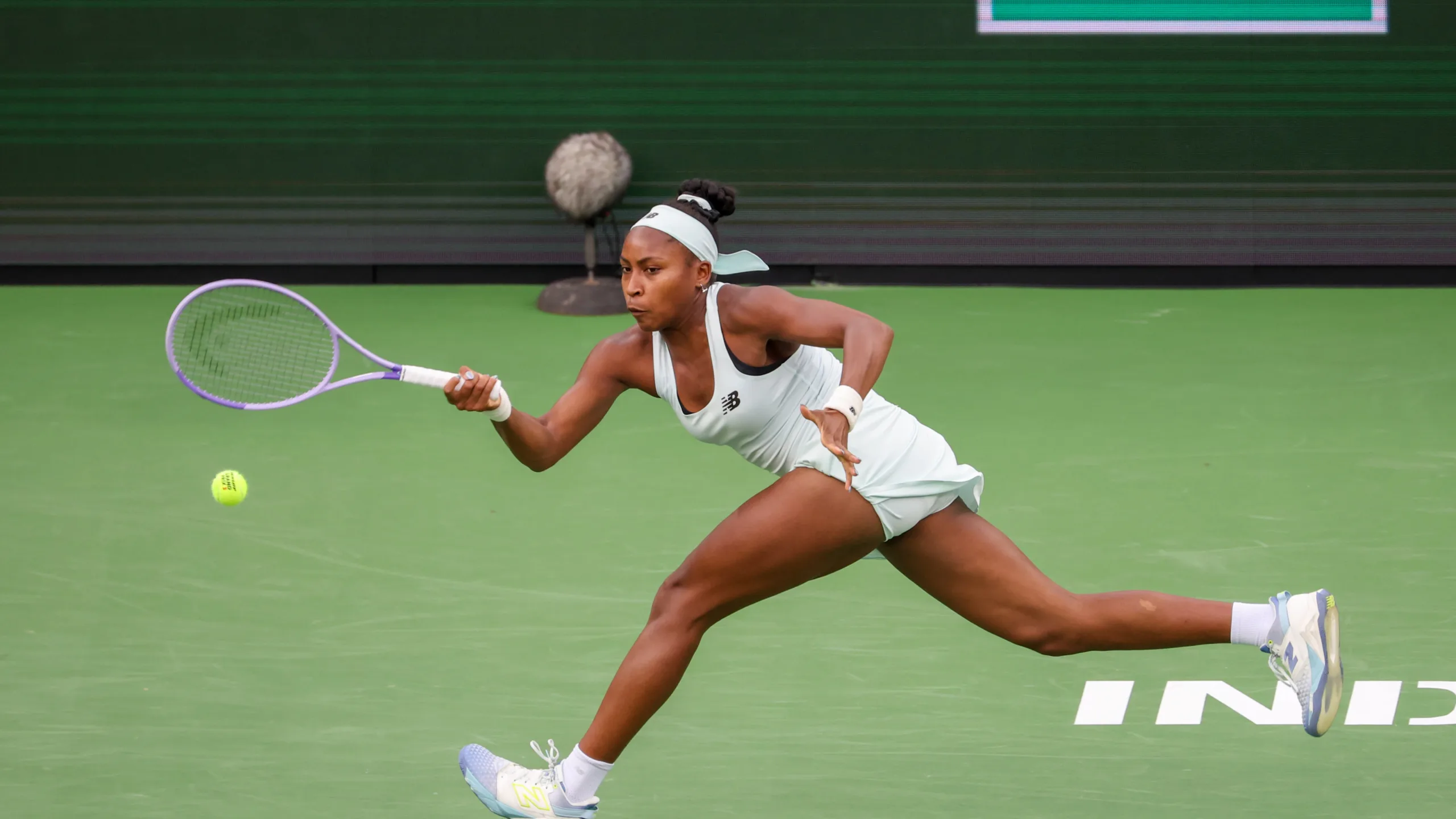
Coco Gauff was forced to leave the court for the second time in her professional career when a left arm problem ended her third-round match at the BNP Paribas Open. It was the first retirement for Gauff since the 2022 Cincinnati Open.
Struggling with the left arm on Sunday, Gauff retired while trailing Alexandra Eala 6-2, 2-0. The world No. 4 took a medical timeout before the final game of the opening set but chose not to continue after her opponent converted her fifth break of the night.
The retirement handed Alexandra Eala the victory and progression to the next round of the BNP Paribas Open. The match unfolded differently than their most recent meeting, when Gauff recorded a 6-0, 6-2 win over Eala en route to her first Dubai semifinal.
This stoppage underscored the toll a recurring physical problem can take during a tournament. The timing of the medical timeout late in the opening set followed by a quick end early in the second set highlighted how the left arm issue affected Gauff’s ability to sustain her game.
For Eala, the match provided a direct route into the later stages of the event. For Gauff, the outcome represented only the second retirement of her career and a reminder that recovery will determine her immediate plans. The scoreline, the medical timeout and the decision not to continue are the central facts from a third-round contest that ended before its natural conclusion.
1000 BNP Paribas Open WTA Player News
Coco Gauff retires with left arm issue, Alexandra Eala advances at BNP Paribas Open
Gauff retired with a left arm issue trailing Alexandra Eala 6-2, 2-0 at the BNP Paribas Open Sunday.
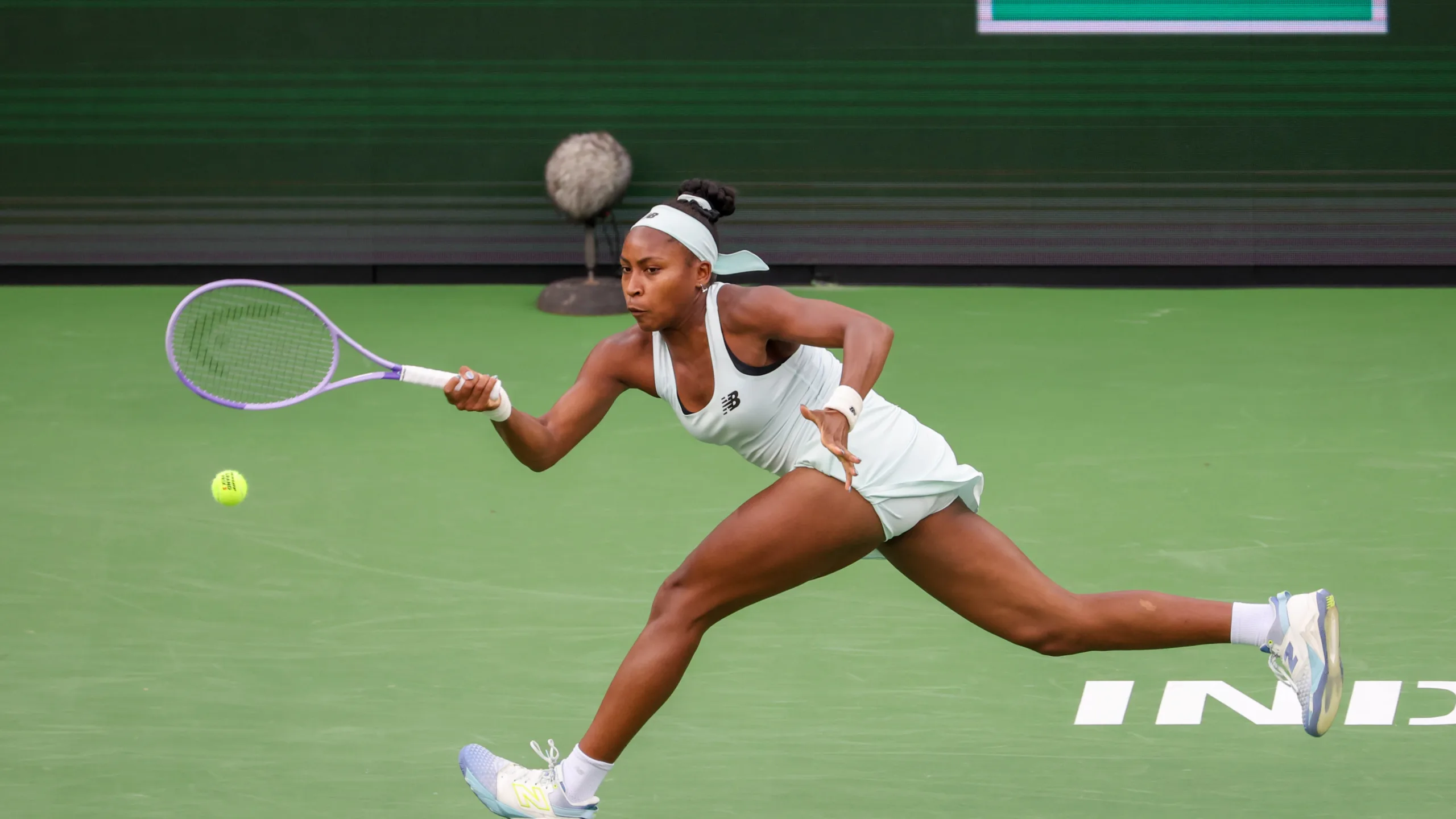
For the second time in her career, and the first since the 2022 Cincinnati Open, Coco Gauff was unable to finish a WTA match because of injury. The world No. 3 struggled with a left arm problem during the players’ third-round meeting at the BNP Paribas Open.
Struggling with a left arm issue on Sunday, Gauff retired while trailing Alexandra Eala 6-2, 2-0. The world No. 4 took a medical timeout before the final game of the opening set but decided not to force the issue any further after her opponent converted her fifth break of the night.
The retirement handed Alexandra Eala the victory and a spot into the next round of the BNP Paribas Open. For Gauff, the match marked only the second retirement of her professional career and served as a reminder of the care required when a player is hampered by a recurring physical issue.
The two had met recently with a very different outcome. In her previous tournament appearance, Gauff posted a 6-0, 6-2 victory over Eala en route to her first Dubai semifinal. That result contrasted sharply with the events at Indian Wells, where the left arm complaint ended the third-round contest prematurely.
Both the scoreline and the timing — a medical timeout late in the opening set followed by retirement early in the second — underline the impact the injury had on Gauff’s ability to continue. Alexandra Eala advances, while Gauff will leave the BNP Paribas Open with the second retirement on her career record and questions about her immediate playing schedule and recovery.
Analytics & Stats Dubai Duty Free Tennis Championships Player News
When the Serve Fails: Coco Gauff’s Ongoing Double-Fault Challenge
Gauff’s serving problems in Dubai exposed a long-running double-fault issue and search for fixes….
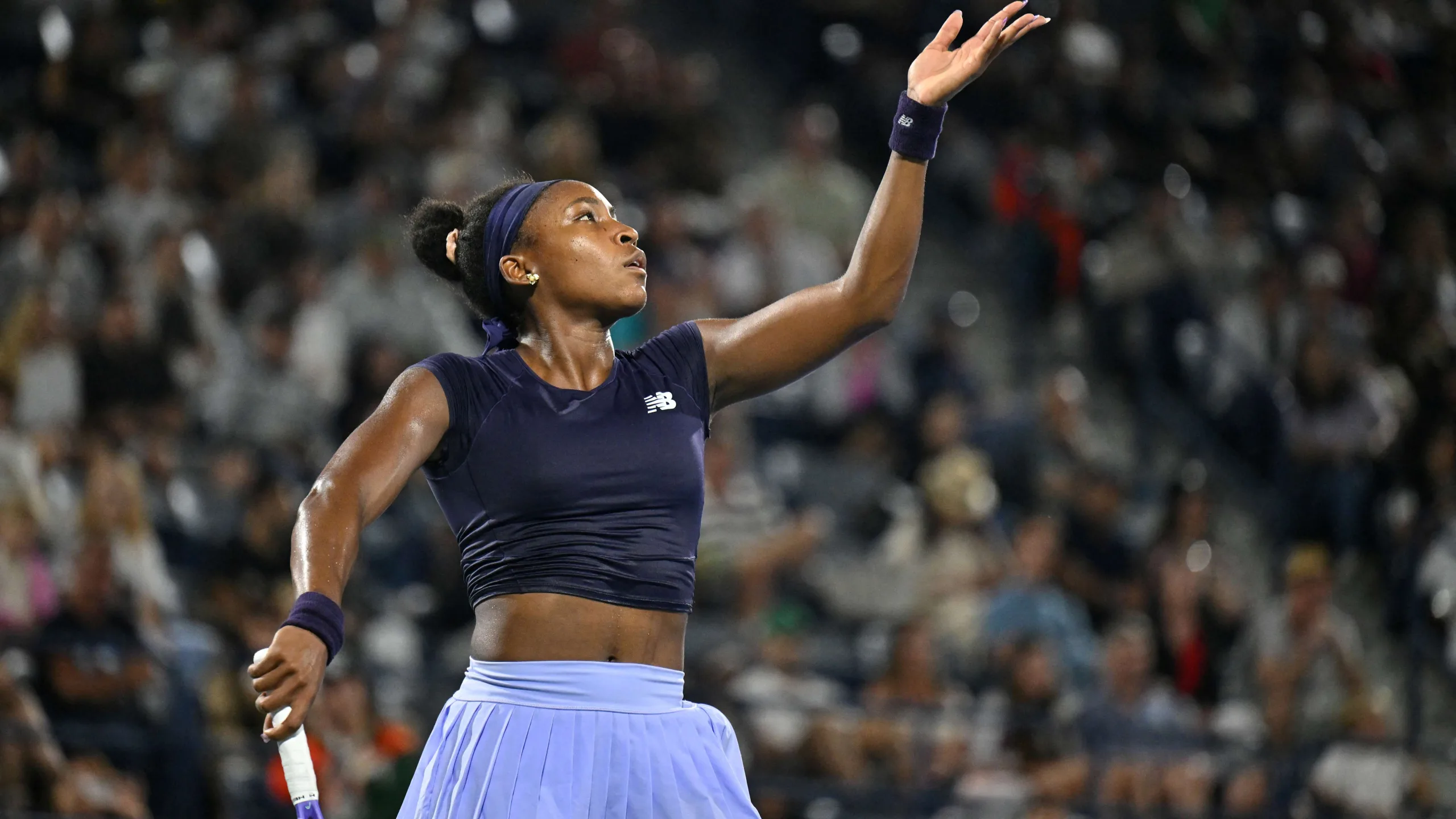
In a Dubai semifinal against Elina Svitolina, Coco Gauff’s frustration boiled into a rare on-court outburst. At 2-2, 15-all in the second set, a double fault prompted Gauff to stride toward her guest box and Gavin MacMillan, the biomechanics guru who joined her team last summer, and say, “I’ve been doing everything you’ve wanted for the last six months, and it’s gotten not better at all, bro.”
The moment underscored a persistent issue. For more than two years Gauff has led the WTA in double faults by a wide margin. Last summer she struck 23 double faults against Danielle Collins and 14 against Veronika Kudermetova on her way to the round of 16 in Montreal. In 2023 she hit 219 double faults and ranked 18th on the tour for that stat. In 2024 she leapt to 430, and she recorded 431 the following year.
Where the problem begins is debated. Is it a bio-mechanical flaw that can be adjusted, or a mental block commonly referred to as the yips? Brad Gilbert, who coached Gauff for 14 months ending in late 2024, offered perspective: “Coco, to me, is more resilient than a lot of those people,” and added, “Even with the serve issues, she still won the French. She still won two majors. She’s still finished in the Top 3 in the world. I feel like if you got the yips, this mental thing, your ranking is dropping, and fast.”
Analyst Rennae Stubbs sees a largely mechanical problem: “I think [her problem], it’s 90 percent mechanical and 10 percent mental,” she wrote. “The problem is that the 10 percent becomes 50 percent once the serve starts going off, because bad technique breaks down under pressure.
“There are so many mechanical issues with Coco’s serve that it’s really difficult to change at this point, but I do think it’s possible. I know Gavin is trying his best.”
Jimmy Arias recalled his own serving anxieties: “She should come talk to me,” he said. “I got the yips near the end of my career. I got so anxious serving that my right hip flew open too early, making it hard to hit a good second serve. I knew what the problem was, but I couldn’t stop it, even though I kept closing my serving stance more and more, until I looked like (John) McEnroe.”
Paul Annacone urged perspective and suggested a different focus: “No doubles, yet she was still annoyed at her serving,” he said. “What she said to MacMillan shows that she’s got baggage, she sees the serve as a big issue. But let’s be honest. How many majors has she won with, quote, unquote, a bad serve? Is it really bad? It’s not great, but so what?” He proposed “reprogramming her vision,” aiming for serving strategy over sheer power.
Experts differ on fixes, but all underscore that the problem is both technical and psychological. As Arias put it, “The most mystifying thing about all of this is how good Coco is in spite of everything.”

Zverev Arrives at Laver Cup With Europe’s Title Bid in Focus

Alex Eala opens Singapore challenge against Prozorova as ranking gains loom

Zverev’s breakthrough season rewrites a long-running story

Raducanu Arrives at US Open With Momentum After Strong Hard‑Court Swing

Alcaraz Confronts On‑court Microphones During US Open Practice Ahead of Opelka Match