
Player News US Open WTA
Taylor Townsend’s Return: From a USTA Rebuff to a Round-of-16 Run at the Open
Thirteen years after a USTA wild-card denial, Taylor Townsend has found her rhythm at the Open now..

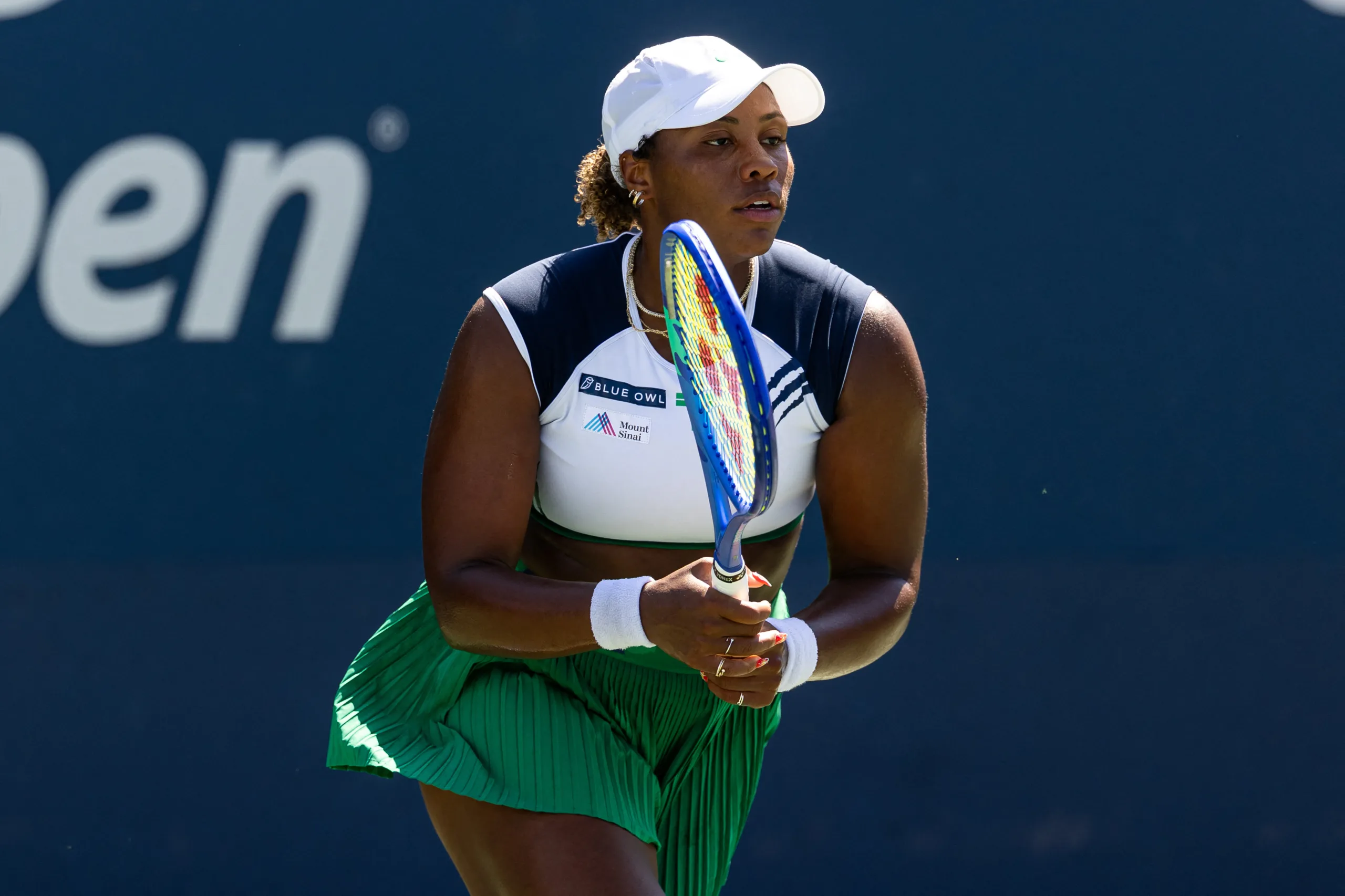
Taylor Townsend has turned a long, stop-start career into a striking return to the later stages of a major. The 29-year-old Chicago native, who won the junior Australian Open at 15 in 2012 and became the first American in 30 years to finish a season No. 1 in the girls’ rankings, beat No. 5 seed Mirra Andreeva 7-5, 6-2 to reach the round of 16.
“I wasn’t searching for anything, I wasn’t looking, trying to find answers,” Townsend said after the victory. “I had all the answers in here.”
Townsend’s path has been uneven. In 2012 the USTA told her to sit out both the US Open girls’ and women’s events because of her weight. Since then she has climbed into the Top 100 and fallen out of the Top 300 multiple times. She has reinvented herself, though, as a top-level doubles player: she is a two-time Grand Slam doubles champion and reached the mixed final last year with Donald Young. “Standing here today with Donald means the world to me because he’s been in my life forever,” she said.
Against Andreeva, Townsend kept control when her opponent threatened a second-set comeback, selecting when to attack and finishing key points. “I’m a totally different person than I was in 2019, and I think that that showed,” Townsend said of the match. “I was so confident and so sure of myself and what I was doing and how I was executing, that it didn’t matter if I hit the back fence, hit the bottom of the net, it didn’t matter. I just kept going.”
The crowd in Arthur Ashe Stadium rallied behind her after a confrontation earlier in the tournament with Jelena Ostapenko, who had criticized Townsend’s behavior during a warm-up. Townsend said she did not know if Ostapenko’s comments had “racial overtones.”—”that’s something she can speak on.” “If my son were to see this interaction, how would he view it? I think he would be proud of the way that I handled the situation.” Ostapenko issued an apology on Saturday.
Townsend now faces Barbora Krejcikova on Sunday, a player who won their only previous match in 2017. “That’s what’s really cool about tennis in these moments—you’re able to reflect and look even at the mannerisms and how I carried myself then and now, you’ll be able to see it’s a different woman.”




1000 BNP Paribas Open WTA Player News
Gauff retires with left arm issue; Eala moves through at BNP Paribas Open
Gauff retired with a left arm issue while trailing Eala 6-2, 2-0; Eala advances at Indian Wells Sun
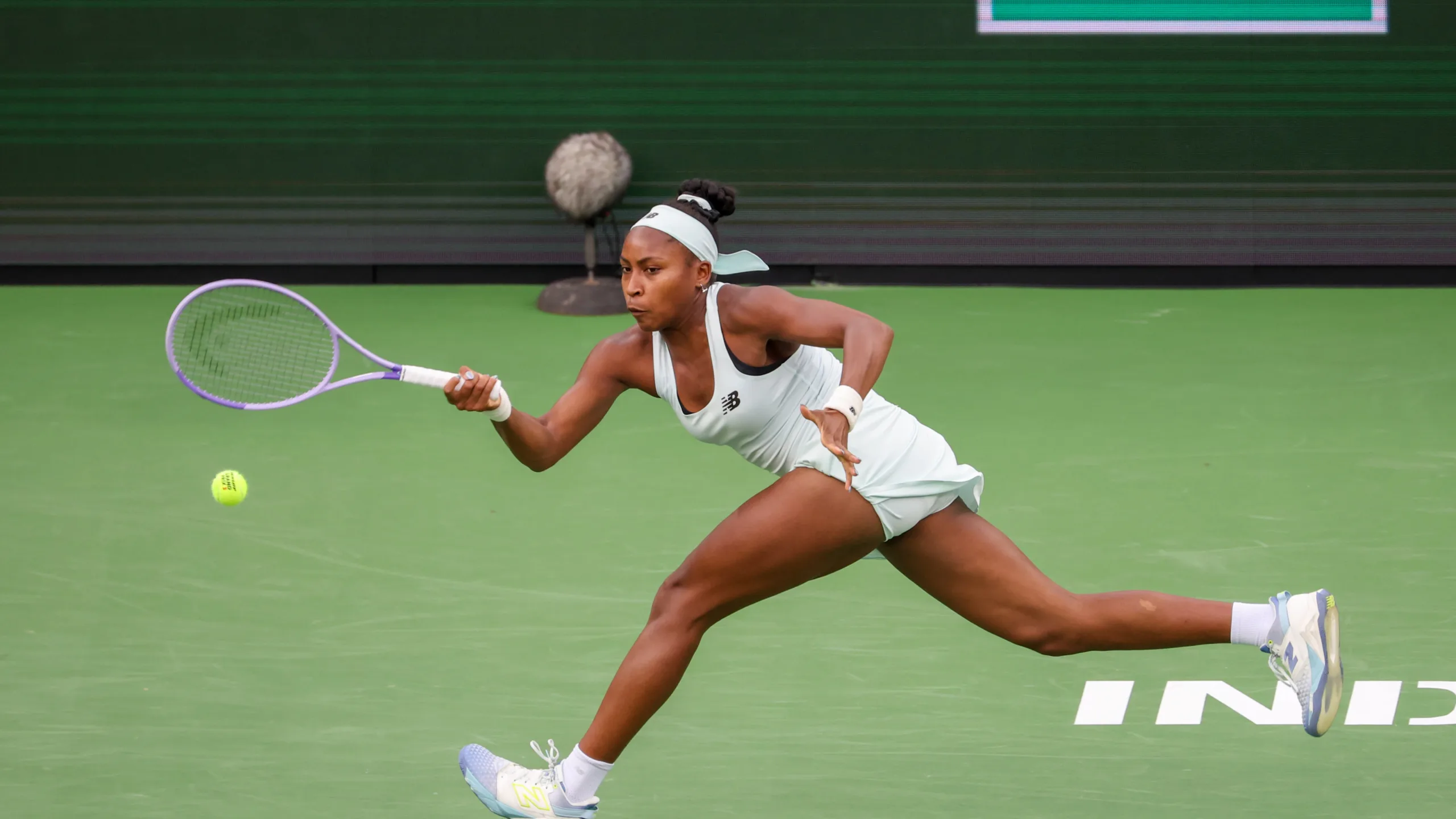
Coco Gauff was forced to leave the court for the second time in her professional career when a left arm problem ended her third-round match at the BNP Paribas Open. It was the first retirement for Gauff since the 2022 Cincinnati Open.
Struggling with the left arm on Sunday, Gauff retired while trailing Alexandra Eala 6-2, 2-0. The world No. 4 took a medical timeout before the final game of the opening set but chose not to continue after her opponent converted her fifth break of the night.
The retirement handed Alexandra Eala the victory and progression to the next round of the BNP Paribas Open. The match unfolded differently than their most recent meeting, when Gauff recorded a 6-0, 6-2 win over Eala en route to her first Dubai semifinal.
This stoppage underscored the toll a recurring physical problem can take during a tournament. The timing of the medical timeout late in the opening set followed by a quick end early in the second set highlighted how the left arm issue affected Gauff’s ability to sustain her game.
For Eala, the match provided a direct route into the later stages of the event. For Gauff, the outcome represented only the second retirement of her career and a reminder that recovery will determine her immediate plans. The scoreline, the medical timeout and the decision not to continue are the central facts from a third-round contest that ended before its natural conclusion.
1000 BNP Paribas Open WTA Player News
Coco Gauff retires with left arm issue, Alexandra Eala advances at BNP Paribas Open
Gauff retired with a left arm issue trailing Alexandra Eala 6-2, 2-0 at the BNP Paribas Open Sunday.
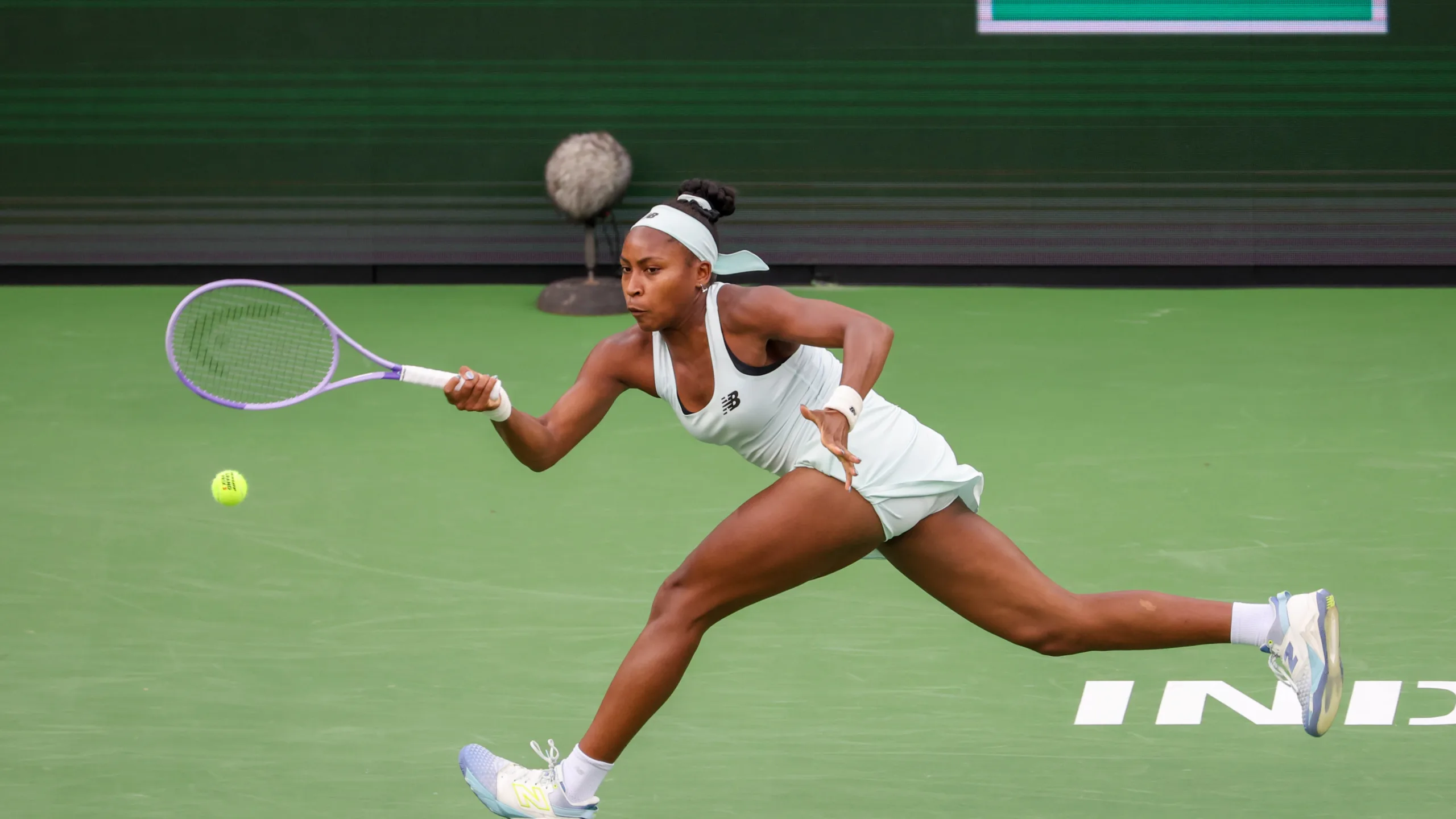
For the second time in her career, and the first since the 2022 Cincinnati Open, Coco Gauff was unable to finish a WTA match because of injury. The world No. 3 struggled with a left arm problem during the players’ third-round meeting at the BNP Paribas Open.
Struggling with a left arm issue on Sunday, Gauff retired while trailing Alexandra Eala 6-2, 2-0. The world No. 4 took a medical timeout before the final game of the opening set but decided not to force the issue any further after her opponent converted her fifth break of the night.
The retirement handed Alexandra Eala the victory and a spot into the next round of the BNP Paribas Open. For Gauff, the match marked only the second retirement of her professional career and served as a reminder of the care required when a player is hampered by a recurring physical issue.
The two had met recently with a very different outcome. In her previous tournament appearance, Gauff posted a 6-0, 6-2 victory over Eala en route to her first Dubai semifinal. That result contrasted sharply with the events at Indian Wells, where the left arm complaint ended the third-round contest prematurely.
Both the scoreline and the timing — a medical timeout late in the opening set followed by retirement early in the second — underline the impact the injury had on Gauff’s ability to continue. Alexandra Eala advances, while Gauff will leave the BNP Paribas Open with the second retirement on her career record and questions about her immediate playing schedule and recovery.
Analytics & Stats Dubai Duty Free Tennis Championships Player News
When the Serve Fails: Coco Gauff’s Ongoing Double-Fault Challenge
Gauff’s serving problems in Dubai exposed a long-running double-fault issue and search for fixes….
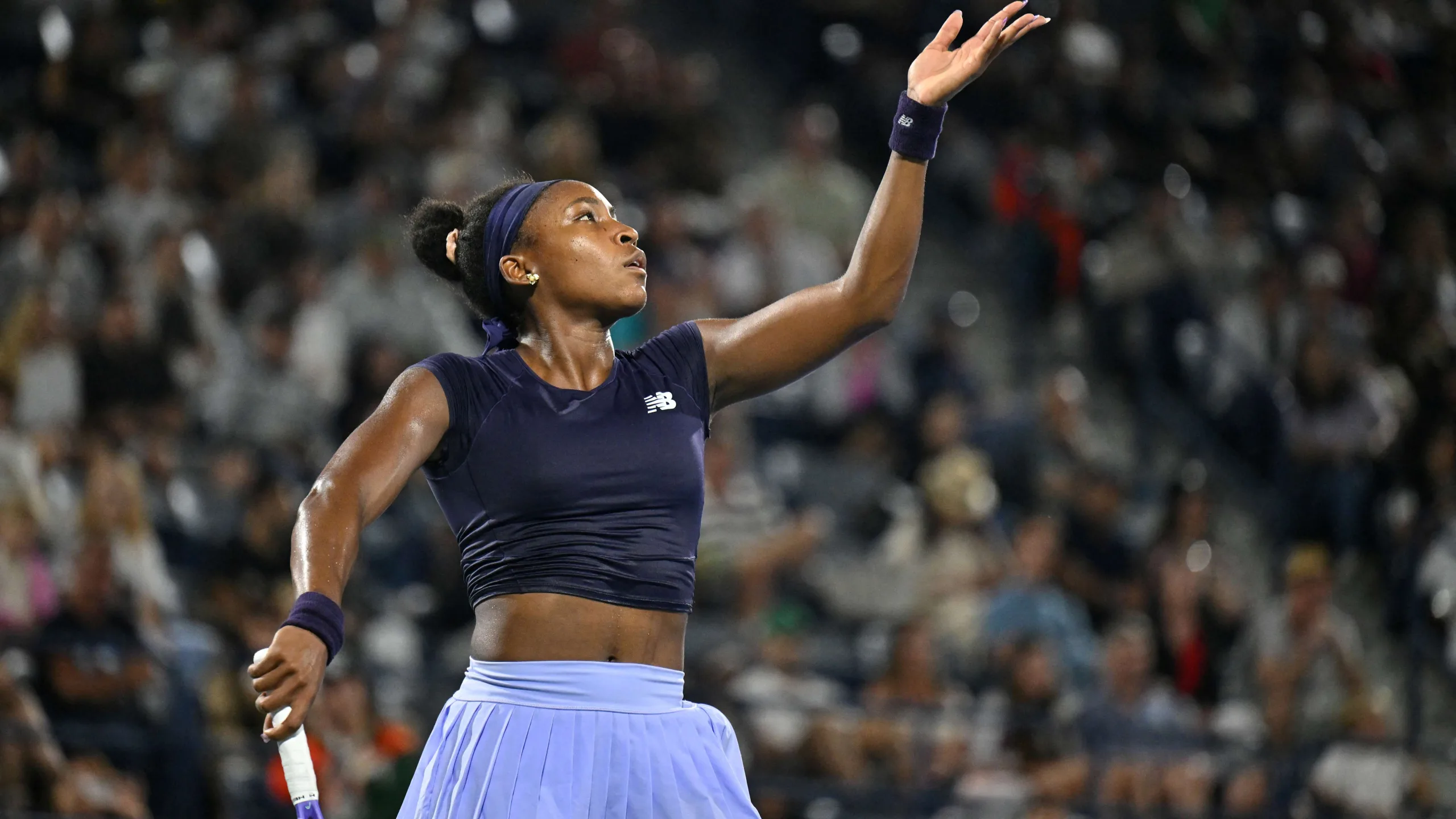
In a Dubai semifinal against Elina Svitolina, Coco Gauff’s frustration boiled into a rare on-court outburst. At 2-2, 15-all in the second set, a double fault prompted Gauff to stride toward her guest box and Gavin MacMillan, the biomechanics guru who joined her team last summer, and say, “I’ve been doing everything you’ve wanted for the last six months, and it’s gotten not better at all, bro.”
The moment underscored a persistent issue. For more than two years Gauff has led the WTA in double faults by a wide margin. Last summer she struck 23 double faults against Danielle Collins and 14 against Veronika Kudermetova on her way to the round of 16 in Montreal. In 2023 she hit 219 double faults and ranked 18th on the tour for that stat. In 2024 she leapt to 430, and she recorded 431 the following year.
Where the problem begins is debated. Is it a bio-mechanical flaw that can be adjusted, or a mental block commonly referred to as the yips? Brad Gilbert, who coached Gauff for 14 months ending in late 2024, offered perspective: “Coco, to me, is more resilient than a lot of those people,” and added, “Even with the serve issues, she still won the French. She still won two majors. She’s still finished in the Top 3 in the world. I feel like if you got the yips, this mental thing, your ranking is dropping, and fast.”
Analyst Rennae Stubbs sees a largely mechanical problem: “I think [her problem], it’s 90 percent mechanical and 10 percent mental,” she wrote. “The problem is that the 10 percent becomes 50 percent once the serve starts going off, because bad technique breaks down under pressure.
“There are so many mechanical issues with Coco’s serve that it’s really difficult to change at this point, but I do think it’s possible. I know Gavin is trying his best.”
Jimmy Arias recalled his own serving anxieties: “She should come talk to me,” he said. “I got the yips near the end of my career. I got so anxious serving that my right hip flew open too early, making it hard to hit a good second serve. I knew what the problem was, but I couldn’t stop it, even though I kept closing my serving stance more and more, until I looked like (John) McEnroe.”
Paul Annacone urged perspective and suggested a different focus: “No doubles, yet she was still annoyed at her serving,” he said. “What she said to MacMillan shows that she’s got baggage, she sees the serve as a big issue. But let’s be honest. How many majors has she won with, quote, unquote, a bad serve? Is it really bad? It’s not great, but so what?” He proposed “reprogramming her vision,” aiming for serving strategy over sheer power.
Experts differ on fixes, but all underscore that the problem is both technical and psychological. As Arias put it, “The most mystifying thing about all of this is how good Coco is in spite of everything.”

Draper’s route back takes an unexpected detour before the US Open

Tsitsipas’ Gstaad win strengthens call to move on from Apostolos

Holger Rune’s return comes with injury caution and a new racket question

Alcaraz Confronts On‑court Microphones During US Open Practice Ahead of Opelka Match

Raducanu Arrives at US Open With Momentum After Strong Hard‑Court Swing

Cervara: Ending an eight‑year partnership with Medvedev was necessary to change the energy
-
 ATPFrench OpenGrand Slam2 months ago
Moise Kouame Breaks Through at Roland Garros, Channels Djokovic in Win Over Marin Cilic
-
 ATPFrench OpenGrand Slam2 months ago
Arthur Fils withdraws from Roland Garros before opener with Stan Wawrinka
-
 ATPFrench OpenGrand Slam2 months ago
Casper Ruud endures heat and cramps to prevail in five sets at Roland Garros