Grand Slam US Open WTA
Osaka Downs Gauff to Reach First Grand Slam Quarterfinal Since 2021
Osaka beat Gauff 6-3, 6-2 to reach her first Grand Slam quarterfinal since the 2021 Australian Open.

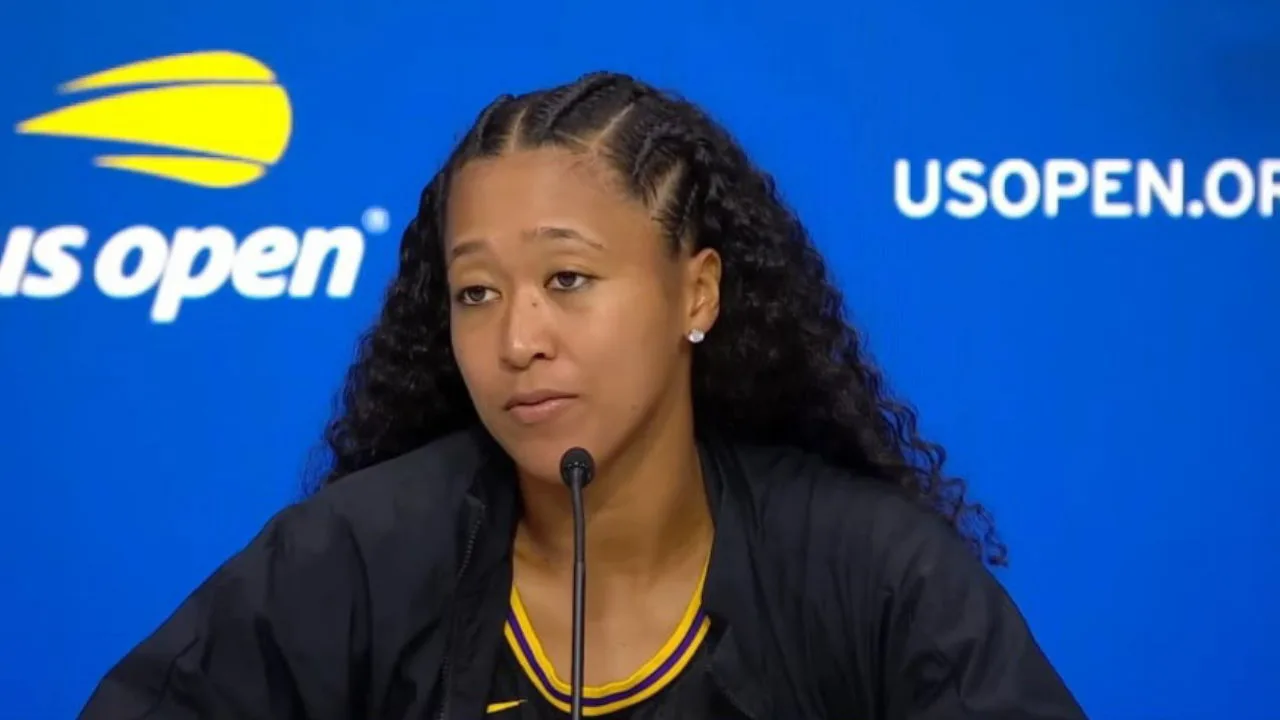
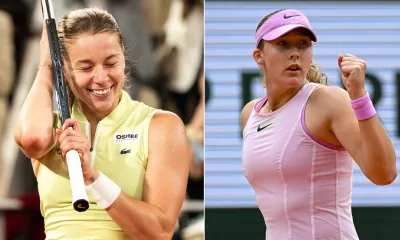
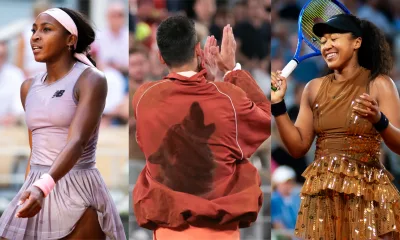
Naomi Osaka continued her comeback from maternity leave with a decisive victory over Coco Gauff at the 2025 US Open, defeating the No. 3 seed 6-3, 6-2 in one hour and four minutes on Arthur Ashe Stadium. Making her eighth major appearance since giving birth to daughter Shai in 2023, Osaka recorded her first Top 3 win since the 2019 China Open (d. Ashleigh Barty) and advanced to her first Grand Slam quarterfinal since the 2021 Australian Open.
The No. 23-seeded Osaka has long shown an ability to lift her level in the latter stages of majors; she is 12-0 once she reaches the last eight of a major. The match rekindled memories of their 2019 US Open meeting, when a then-15-year-old Gauff produced a viral third-round performance. Gauff still leads the head-to-head 3-2, and their most recent encounter came last fall at the China Open, where Osaka retired with injury after splitting sets.
Osaka arrived in New York after a revitalizing summer under coach Tomasz Wiktorowski, reaching her first WTA 1000 final since 2022 at the Omnium Banque Nationale in Montréal and entering the tournament among the Top 32 seeds. She dropped only one set in the first week, including a close win over No. 15 seed Daria Kasatkina.
Gauff arrived with questions about her serve after a recurrence of serving yips and multiple matches with double-digit double faults during the US Open swing. She adjusted her team, adding biomechanic coach Gavin MacMillan. After early struggles against Ajla Tomljanovic and Donna Vekic, Gauff produced a stronger performance against No. 28 Magdalena Frech to reach the second week for a fourth straight year.
On Monday, Osaka took control early, bookending the opening set with breaks and forcing errors from Gauff. Osaka won the first 15 first-serve points through the first set and a half, and capitalized when Gauff committed a fifth double fault in the sixth game of the second set. A netted forehand from Gauff handed Osaka her first match point, and a final forehand error sealed the win. Osaka entered the stadium flanked by a growing army of custom Labubus.




Grand Slam Grand Slam,Tennis News
Sabalenka’s Slam Outlook Questioned After A Mixed 2026 Run
Sabalenka’s major future is debated after rivals and coaches question her mental strength.
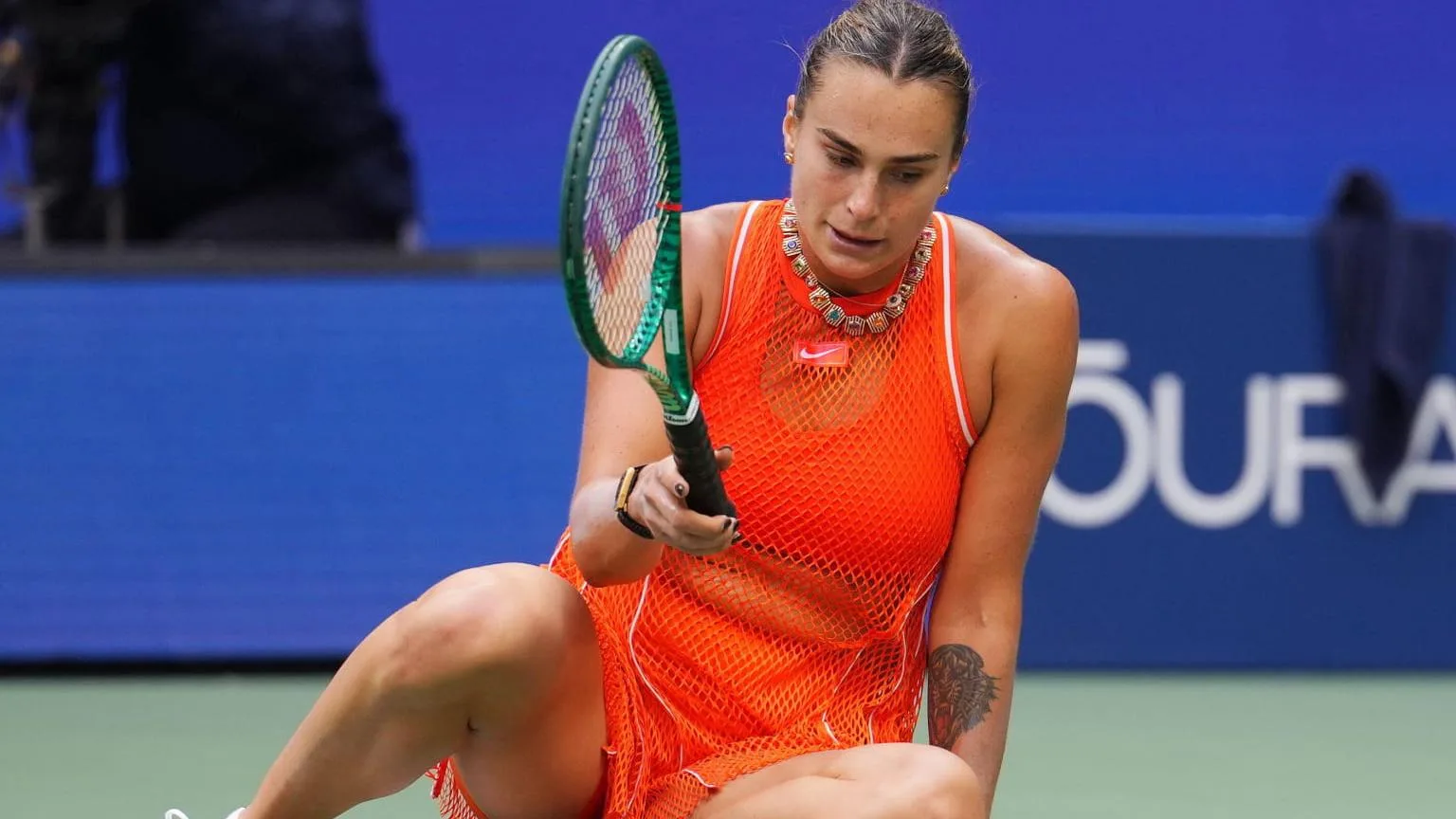
Aryna Sabalenka’s ability to keep adding to her Grand Slam total is being questioned, with one view suggesting rivals have started to solve her game.
Caitlin Thompson, co-host of The Rennae Stubbs Tennis Podcast and founder of Racquet magazine, argued that the former world No. 1 may be heading in the wrong direction after finishing her first season without a major title since 2022. In her assessment, Sabalenka has looked increasingly exposed in the biggest moments and could struggle to improve on her four Slam trophies without meaningful adjustments.
On the podcast, Thompson said, “I don’t think Sabalenka is going to get any more. I think she’s in decline. I think everyone else has sort of figured her out, so she’s revealed that she’s very vulnerable in tough moments.
“You know who is not? Coco Gauff. She might not win all the matches and get to all the finals, but you know she’s going to fight you to the death.”
Serena Williams’ coach, Stubbs, was surprised by that opinion and believes Sabalenka can still add to her Slam haul. Even so, Thompson pointed to the world No. 2’s recent record in major finals and noted that she was one set away from winning the US Open.
She also highlighted Sabalenka’s loss to Jessica Pegula in Berlin in June, where the final set went 6-0, as an example of the mental strain she sees in key matches. That concern remained despite Sabalenka’s convincing semi-final win over Pegula at Flushing Meadows.
Thompson added, “The capitulation of it [the Pegula loss]. There’s a weird thing going on with her mentally that I think is more telling and troubling than when she had the yips, or the semi-final blockage from a couple of years ago that she finally pushed through to ascend. I think she has got to make major changes.”
The discussion around her mentality is not new. Patrick Mouratoglou has also said Sabalenka must handle her emotions better if she is to reclaim the top ranking and add to her major count. He suggested she could learn from Elena Rybakina, whose composed approach has beaten Sabalenka in two major finals this year and removed her from world No. 1.
ATP Tour News Grand Slam
Swiatek team keeps WTA Finals outlook in perspective
Swiatek’s coach says missing the WTA Finals would not be the end of the world.
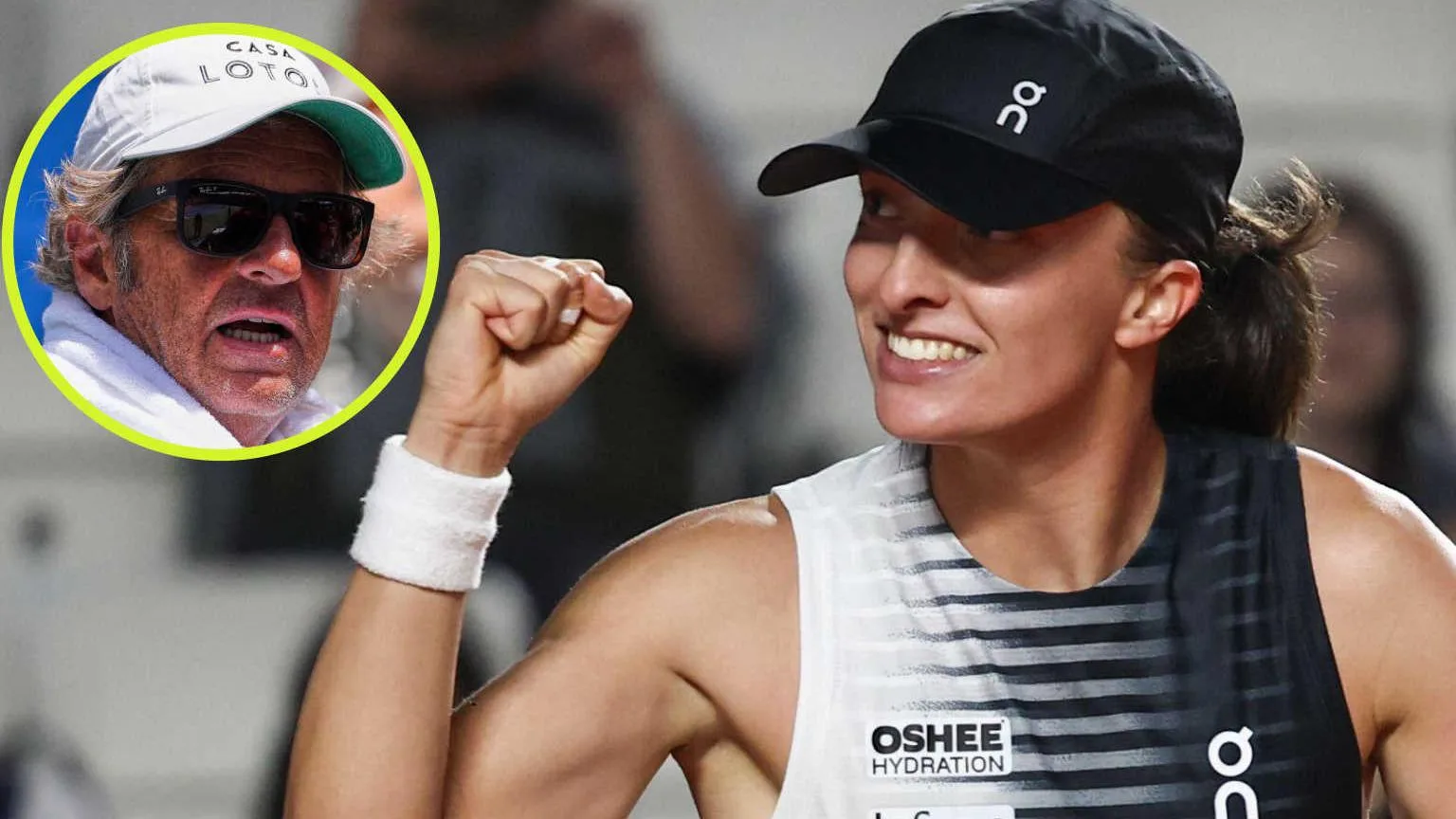
Iga Swiatek’s coach has played down the alarm around her place in the WTA Tour Finals picture, saying missing the event would not be the “end of the world” for the Pole.
The 25-year-old is moving toward her most difficult season since 2021, when she finished ninth in the rankings after appearing at the WTA Finals for the first time. Heading into the Asian Swing, she sits in that same position, but she is 10th in the Race and trails eighth-placed Linda Noskova by almost 700 points.
Her US Open campaign ended with a painful collapse against Qinwen Zheng, as Swiatek let a 5-0 first-set lead slip before going out in the fourth round in New York. She is now set to compete in Beijing and Wuhan as she tries to close the points gap and keep her season alive for the year-end event.
Francisco Roig, who joined her team in April, was relaxed about the situation. He told Radio Zet, “It’s definitely still a long way off, but yes, it’s our goal. However, if we don’t achieve it, it won’t be the end of the world. We’ll have a little more time to prepare as best we can for next season.
“Iga [Swiatek] and I talked about the WTA Finals. The point is, if we perform well in the two upcoming tournaments, we could still [qualify] depending on our opponents’ results. That’s why we want to try to achieve the best results possible without thinking about the WTA Finals.”
Roig, Rafael Nadal’s former coach, has not yet overseen a seamless run with Swiatek. Since they began working together, she has not advanced beyond the fourth round at the three majors, with the Canadian Open title in August standing out as the clearest positive.
Even so, Roig said he has seen encouraging progress, especially in cutting unforced errors and sharpening the forehand. “Above all, she made fewer mistakes. The first rule in tennis is not to make them. I’m sure that when Iga wasn’t advancing, she often lost. It wasn’t like the other player was beating her. We were the ones losing.
“What does this mean? Iga made mistakes too often on her first serve. She tried too hard when she didn’t need to. But Iga is Iga. She has to try. But in my opinion, sometimes she wants it too much. Opponents should be trying to play against her, and she doesn’t have to do it every time.
“She needs to play more solidly. And in Toronto, she improved dramatically in this regard, and she also hit better-quality balls. Her forehand had a better shape, and she played better angles on her backhand. This allowed her to extend each rally, and she later found easier balls to attack instead of trying to attack from more difficult positions.
“Fewer errors when serving high-quality balls yields a lot in tennis. With less effort, and without having to get to the ball so quickly. Sometimes Iga tries to get to the ball too quickly, and then she blocks her movement. We still need to improve all these things, and many more, but that’s the foundation.”
Grand Slam
Pegula questions Grand Slam format as late-night US Open debate lingers
Pegula discusses Grand Slam changes as US Open late-night finishes continue to spark debate.
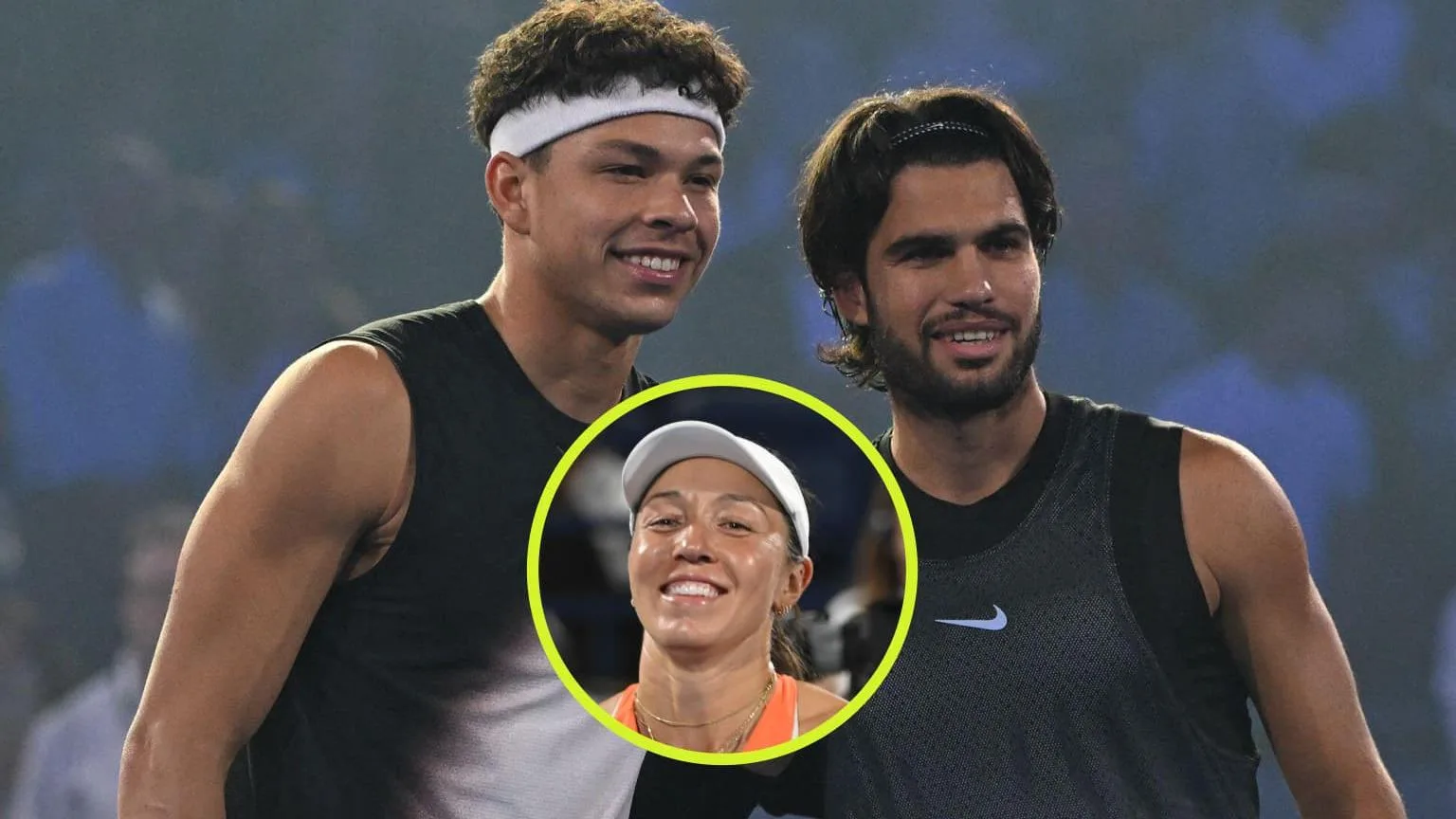
Jessica Pegula has weighed in on how men’s Grand Slam tennis could be adjusted, though she admits the problem of matches running deep into the night is not easy to solve.
The discussion has intensified after the US Open drew heavy criticism for several finishes in the early hours, most notably Ben Shelton’s five-set victory over Carlos Alcaraz. That quarter-final lasted close to five hours and did not end until 3.33am, with Arthur Ashe Stadium notably less than half full by the close.
United States Tennis Association CEO Craig Tiley has said he intends to keep two matches, one men’s and one women’s, in the night session at Flushing Meadows next year. His view is that until a workable answer exists, the complaints amount to noise. Speaking to Sky Sports, he said, “I hear from a lot of people that it finishes too late and then I say, okay, and your suggestion is? I don’t get anything. You can’t control the length of the match.
“While it feels really late, the reality is you’ve got to go and look at the data, But that being said, no one wants to finish at 3.30am in the morning, although the rest of the world in the daytime saw a pretty amazing match.
“We really like the two days and two nights. Two full sessions and you get a women’s match and a great men’s match, and that’s what our fans are telling us. They can come out and see three, four, five hours of entertainment and if it goes really long like the other night, that’s a great sporting ticket so I will keep it.”
Pegula, a US Open semi-finalist, suggested easing the load earlier in the tournament, but said her idea would not have prevented the Shelton-Alcaraz problem. On The Player’s Box Podcast, she said, “I don’t know what the answer is. My theory with five sets has always been they should just play five sets from maybe the quarters on, but that wouldn’t have solved that problem that day.
“I still think that they should play two out of three until the quarters and then switch it to three out of five. But would that fix the problem, no?”
Pegula and Madison Keys also pushed back against other proposed rule changes, including no-ad scoring and removing let cords on serves. Pegula said, “No ad, I hate no ad. I hope we never go to no ad. Don’t play lets, that’s stupid. Why do you want to win a point like that [if it trickles over the net]?” Keys added, “Don’t play lets. Don’t play the let out. It’s not like it’s saving endless amounts of time.”
The US Open night session starts at 7pm, with some calling for a 6pm start. Organisers, however, want fuller stadiums and believe 7pm gives local workers enough time to arrive after work. For now, the issue remains unresolved.

Zverev Arrives at Laver Cup With Europe’s Title Bid in Focus

Alex Eala opens Singapore challenge against Prozorova as ranking gains loom

Zverev’s breakthrough season rewrites a long-running story

Raducanu Arrives at US Open With Momentum After Strong Hard‑Court Swing

Maestrelli Triumphs in Bergamo, Claims Challenger Title and Career‑High Ranking