Equipment Tennis Coaching
Six underrated racquets that combine thoughtful design with dependable performance
Six overlooked racquets that share high-end design traits and deliver controlled, usable performances.

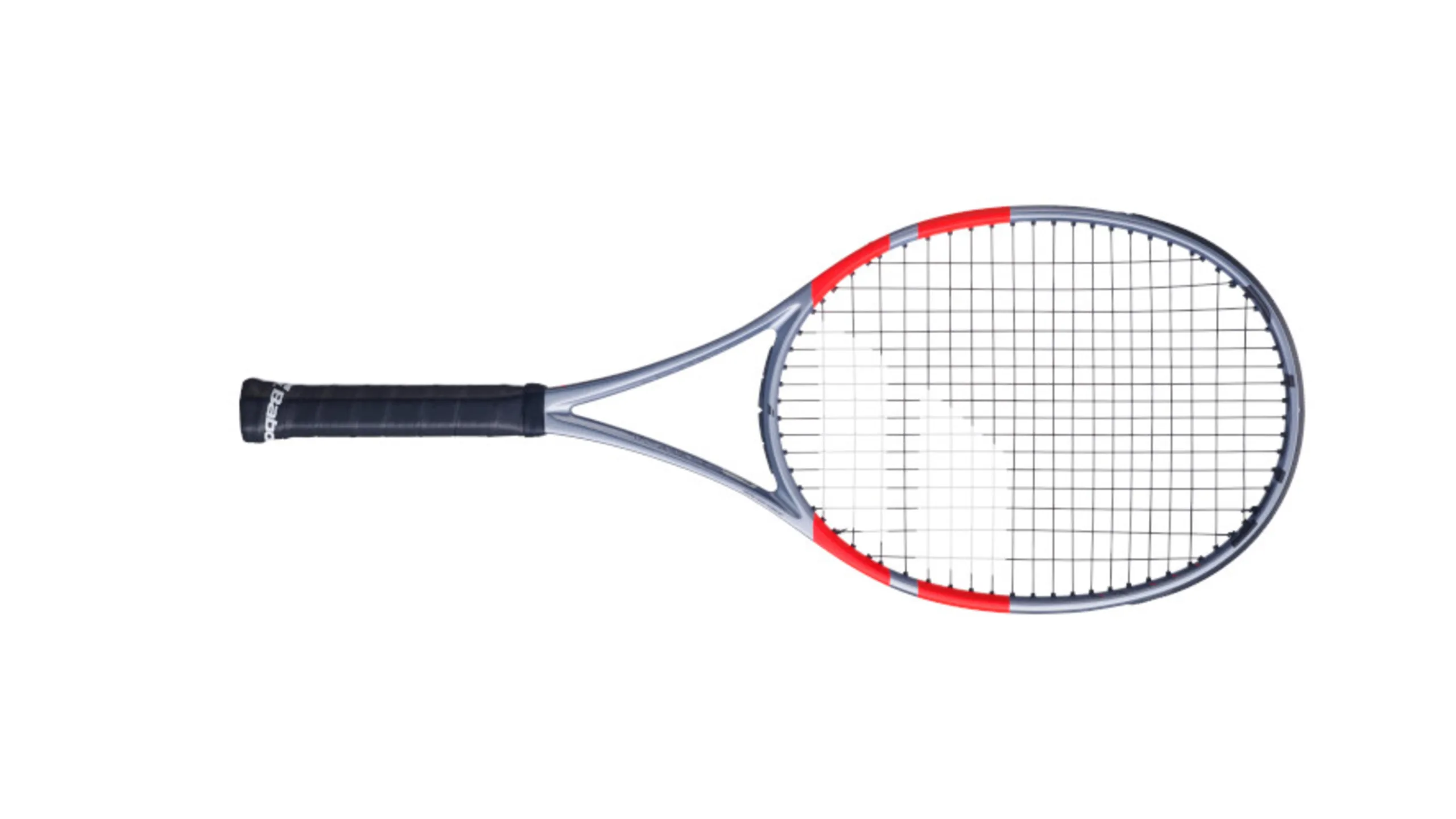
Manufacturers often reserve the loudest marketing for a few headline models. Here are six lesser-promoted racquets that borrow much of the same DNA and deliver useful performance for players who value control, feel and playability.
Babolat Pure Strike 100 (16×20)
This entry to the Pure Strike line favors temperate response over raw power. A conservative string pattern, a low RA rating (61) and a light swingweight (319) give it a softer, classic feel that differs from typical Babolat models. It is plush and accurate for strategic all-court players, though more advanced hitters may add weight to generate and handle heavier shots. The frame is presented in a sharp carbon grey cosmetic.
Dunlop CX 400 Tour
Despite the Tour label and control positioning, this frame is approachable. It produces pace and depth with modest effort while offering greater command than many similarly spec’d racquets. The balance of firm yet comfortable response and well-rounded playability lets players attack from all areas of the court. Power and spin are slightly restrained compared with some rivals, and a limited-edition cosmetic nods to the classic Max 200G.
Tecnifibre T-Fight 300
A new spec in the T-Fight family, the 300 pairs a 100 square-inch head with a 300g weight. The racquet is lively and highly maneuverable, with foam filling in the frame creating a crisp, clean feel at contact. It offers more assistance than a pure control frame without becoming overpowering. The constant beam is not overly stiff or thick, and the model is available in standard white or a special blue “ID” colorway.
Volkl Vostra V9 (305g)
The new Vostra V9 mold sits between the V8 and V10 lines. An extra cross string and a thinner beam increase control and versatility relative to the V8, while a larger head size and slightly thicker beam make it more user friendly than the V10. The result is a predictable, forgiving frame that provides enough pop to finish points or escape trouble without becoming hard to manage.
Wilson RF 01
Though Roger Federer is associated with the RF 01 Pro, the lighter RF 01 has broader appeal. Federer’s design emphasis on rapid acceleration shows in the tapered beam that helps generate pace and spin from a conservatively spaced string bed and a relatively small sweet spot. Directional control and feel on clean contact are strong, and the racquet excels when played on the front foot by experienced, all-court players.
Yonex EZONE 98 Tour
The EZONE 98 Tour appears on this list by name as another under-the-radar option worth noting.

Equipment Media
Topps Graphite Debut Brings Joao Fonseca Rookie Cards; NetPro Moves on Iva Jovic
Topps Graphite launches Joao Fonseca rookie cards; NetPro Iva Jovic autographs and jerseys sell out.
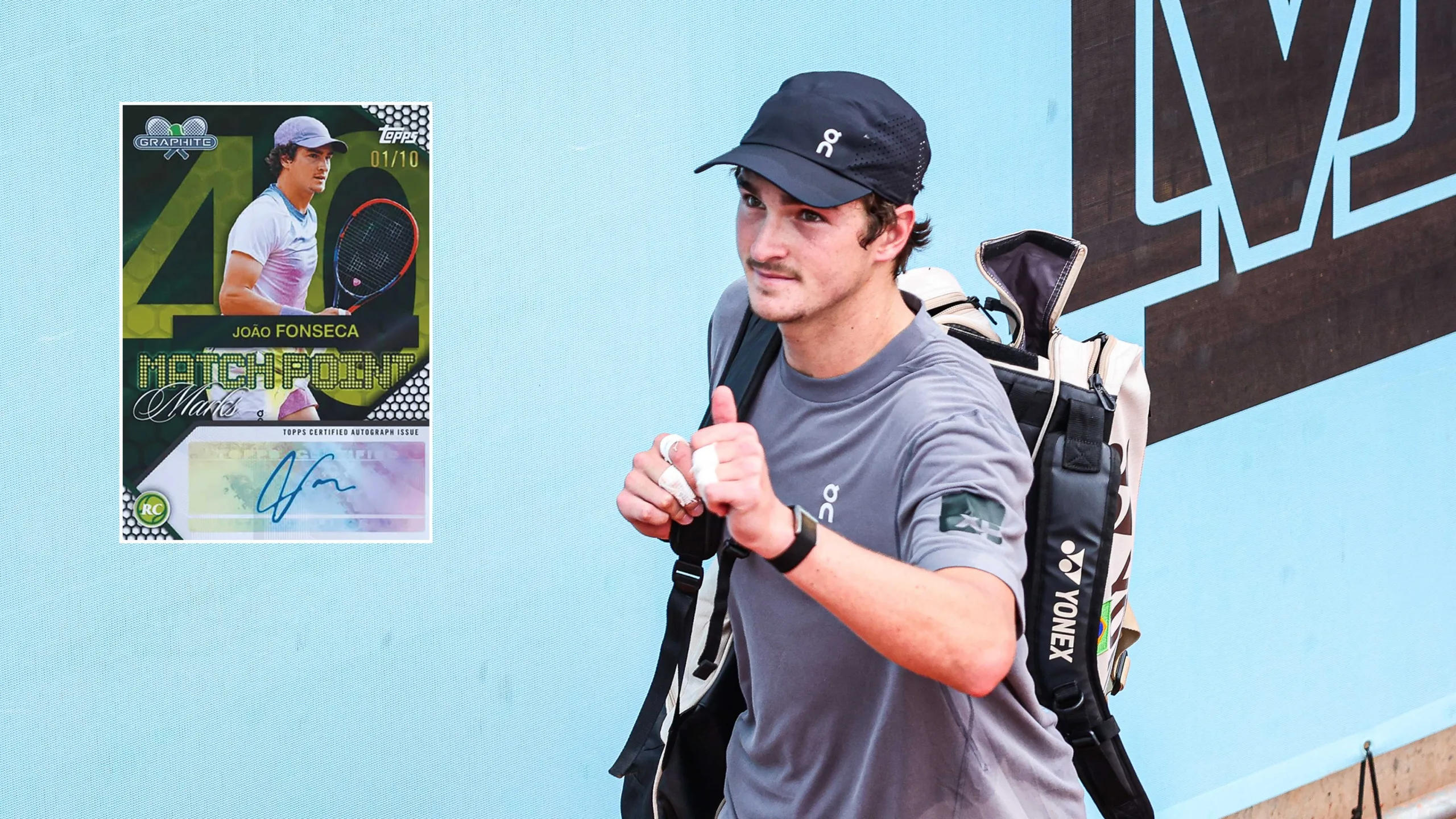
Collectors received their first licensed Joao Fonseca cards with the release of 2026 Topps Graphite Tennis on Friday. Fonseca appears across eight different prints in the product: a base rookie and seven inserts. Among the most collectible pieces are five Red Crystalline Refractor 1/1 parallels, including his first autograph in the “Match Point Marks” series.
The 19-year-old is also represented in three super short prints, described in the line as case hits, including the series’ “Mirrored” unveiling. Other rookies included in the release are McCartney Kessler, Talia Gibson, Dino Prizmic, Nishesh Basavareddy and Zeynep Sonmez. It remains unclear whether rising standouts Rafael Jodar and Lilli Tagger will appear in Topps’ Q3 and Q4 2026 releases of Chrome and Royalty or be held for the following year.
On the same day, NetPro issued its first tennis product since bringing Carlos Alcaraz to the card market in August 2022. The company offered a new slate of Iva Jovic cards; Jovic had her rookie release in a pair of 2025 Topps products (Chrome and Sapphire) that were delayed until February and March of this year. Within 25 minutes of going live, every autograph (her first “on-card” offering) and jersey card available for purchase had sold out.
Prices for those variations ranged from $75 to $800. NetPro also listed four 1/1 cards and opened its inbox for offers on those items. The simultaneous activity from a long-established brand and an independent issuer highlighted a busy day in the tennis card market as collectors reacted to fresh rookie material and scarce parallels.
Equipment Finals Grand Slam
Sabalenka debuts Wilson Blade v10 and reflects on pressure, regret and grief in Esquire profile
World No. 1 Aryna Sabalenka debuts a Wilson Blade v10, discusses grief, regrets and lessons. Read on
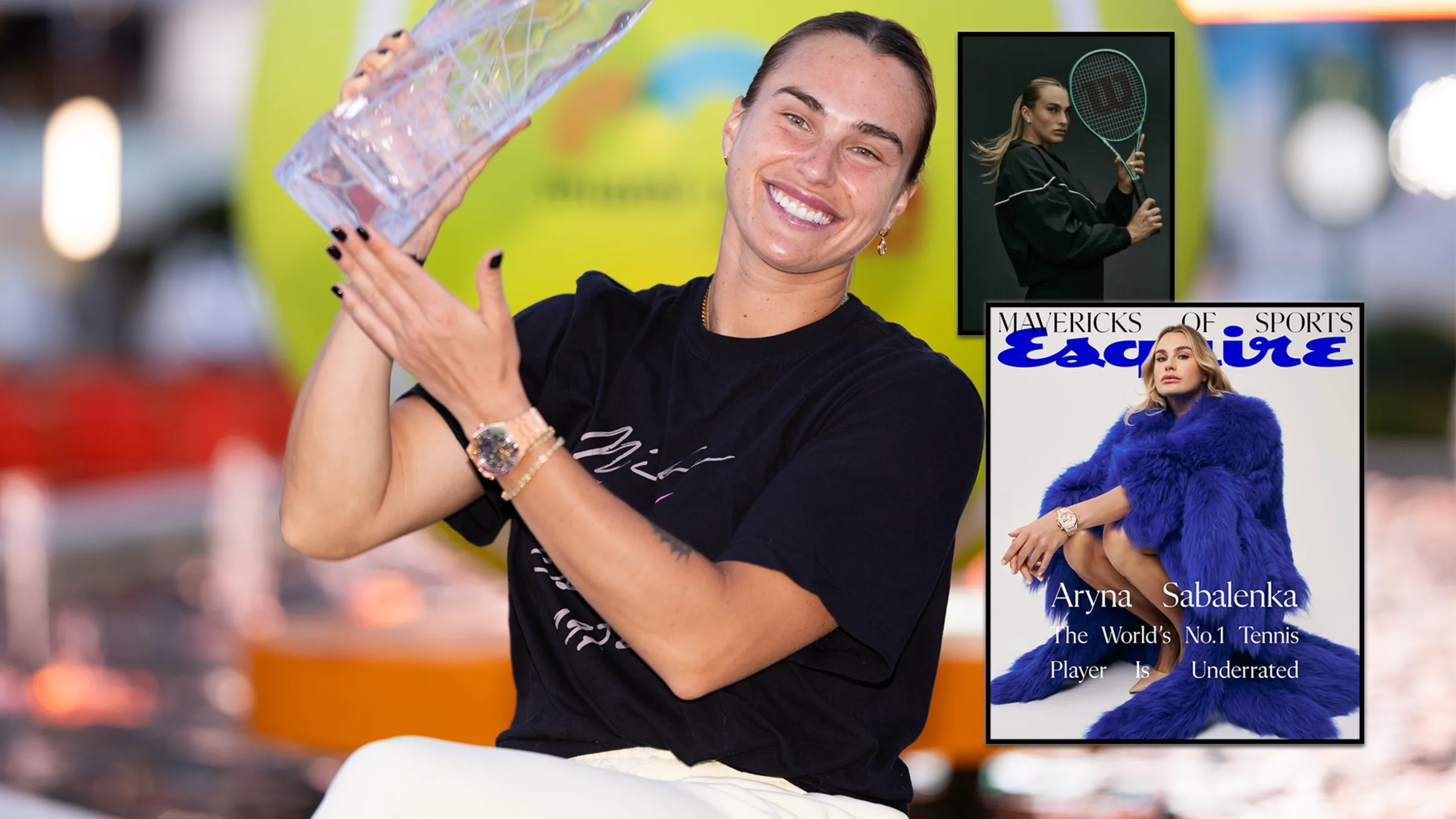
Fans missing Aryna Sabalenka at the Porsche Tennis Grand Prix have been met with a steady stream of new material from the world No. 1. Sabalenka unveiled her new racquet and posed for a fashion-forward Esquire cover shoot while speaking with editor-in-chief Michael Sebastian.
The Wilson advertisement for the Blade v10 carries a simple declaration: “Pressure is power,” a line that echoed Sabalenka’s 2026 run. A four-time Grand Slam champion, the 27-year-old rebounded from an Australian Open final loss to Elena Rybakina by completing the Sunshine Double, taking back-to-back titles at the BNP Paribas Open and the Miami Open. In Miami she avenged the Australian Open defeat to Rybakina in straight sets.
Asked how she might have lived her life outside tennis, she said she would be a “boxer or a model,” and in the Esquire conversation she addressed mistakes and hard lessons.
“I have a lot of regrets. I think we all do,” she told editor-in-chief Michael Sebastian. “Mistakes make us better people. It’s tough to be the person without regrets and mistakes. You better stay away from those people.”
Sabalenka also revisited a difficult moment after the Roland Garros final, when she was hesitant to immediately praise Coco Gauff following a three-set defeat. “I have to take my time after the match before I go to the press conference when I lose the match, because when you do it straightaway, you’re still that emotional person,” said Sabalenka. The two players later smoothed things over and recorded conciliatory TikToks.
Beyond on-court swings, Sabalenka spoke about personal loss. She has carried the grief of losing her father in 2019 and urged emotional honesty. “It’s important to grieve, to cry, to go through the emotions,” she said. “Never hold it inside, because it’ll destroy you from the inside.”
Analytics & Stats Equipment
Monica Puig on Wearables: Embrace the Data, Let Teams Manage the Noise
Monica Puig says players should accept wearable data while letting teams manage the details. Indeed.
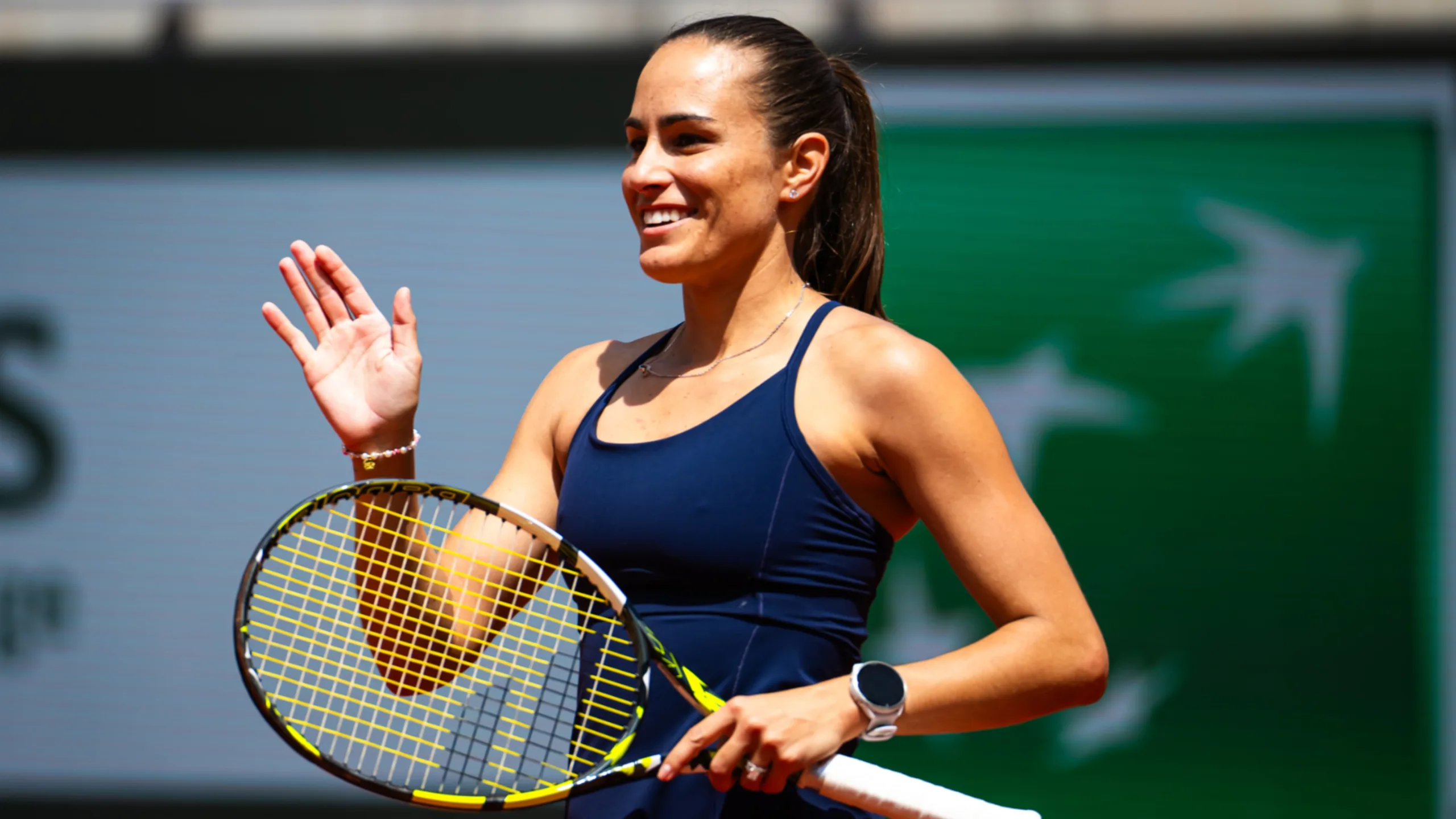
Monica Puig has approached performance from many angles: an Olympic gold medalist who built her game on relentless athleticism and “Pica Power,” a player who retired in 2022 and then turned to marathons, triathlons and IRONMAN events. Now an analyst and self-described tech enthusiast, she has tested WHOOP, Garmin and COROS while training and recovering.
“I’ve tried it all!”
Her experience with continuous tracking shaped how she used the information. “I did wear the WHOOP for a while, but that was back before you could wear it on a match court. I know there’s been some back and forth about whether you can at certain tournaments.
I would wear the WHOOP, but I wouldn’t take the information for myself. My fitness trainer was the one who had the app on his phone and had my WHOOP paired to his phone…” Puig said she handed data to the people charged with her body care to avoid letting numbers skew her mindset.
“It’s a fine line. If you’re really responsible with the information that you receive you can kind of just treat it as it is, which is a number…
If you’re the type of player who gets a little bit too obsessed with the numbers, hand it off to your team, like I did, and have them kind of make the adjustments. Let someone else take care of it, then you just kind of go along for the ride.
Because the numbers are very good for certain things, but there are also metrics that don’t really help you.”
On the measures she found most valuable, Puig emphasized recovery and early illness detection. “Knowing your fatigue levels… I thought WHOOP was really great with this knowing when you’re getting sick. And showing you how the body reacts differently, whether you drink or not, whether you hydrated enough, whether you had a heavy meal or not—all those things can play a part into your recovery.”
She supports allowing devices in matches so teams can analyze how an athlete responds under pressure. “Absolutely. I think it’s really essential, because you can also see the way that your body handles itself in a pressure situation. Your body reacts differently from a match that you win in an hours, versus a match that could go for three hours. And obviously it reacts differently in a match than in practice.
There are so many different factors, and I think nowadays having the information helps you prepare. There’s no reason why it should be concealed from players.
It’s not like the player is looking at that information when they’re playing. It’s not like your coach is going to be saying, ‘Oh my gosh your heart rate is X! You need to get it down to Y!’”
She added that showing biometric data in competition has precedent. “I would love that, and I think the WTA did do that when WHOOP was first a partner (back in 2021).
I’ve seen it in golf a couple of times, where it would show a golfer’s heart rate before they teed off. Then you would be like, OK the heart rate is maybe at 130. They’re feeling the stress. Or if the heart rate was in the 90s, OK they’re feeling alright.”

Zverev Arrives at Laver Cup With Europe’s Title Bid in Focus

Alex Eala opens Singapore challenge against Prozorova as ranking gains loom

Zverev’s breakthrough season rewrites a long-running story

Raducanu Arrives at US Open With Momentum After Strong Hard‑Court Swing

Maestrelli Triumphs in Bergamo, Claims Challenger Title and Career‑High Ranking