ATP Player News WTA
Different Roads, Same Peak: How Collins, Navarro and Paul Built Top-10 Careers
Three American players, three distinct paths to former Top 10 status and how each handles on-court challenges.

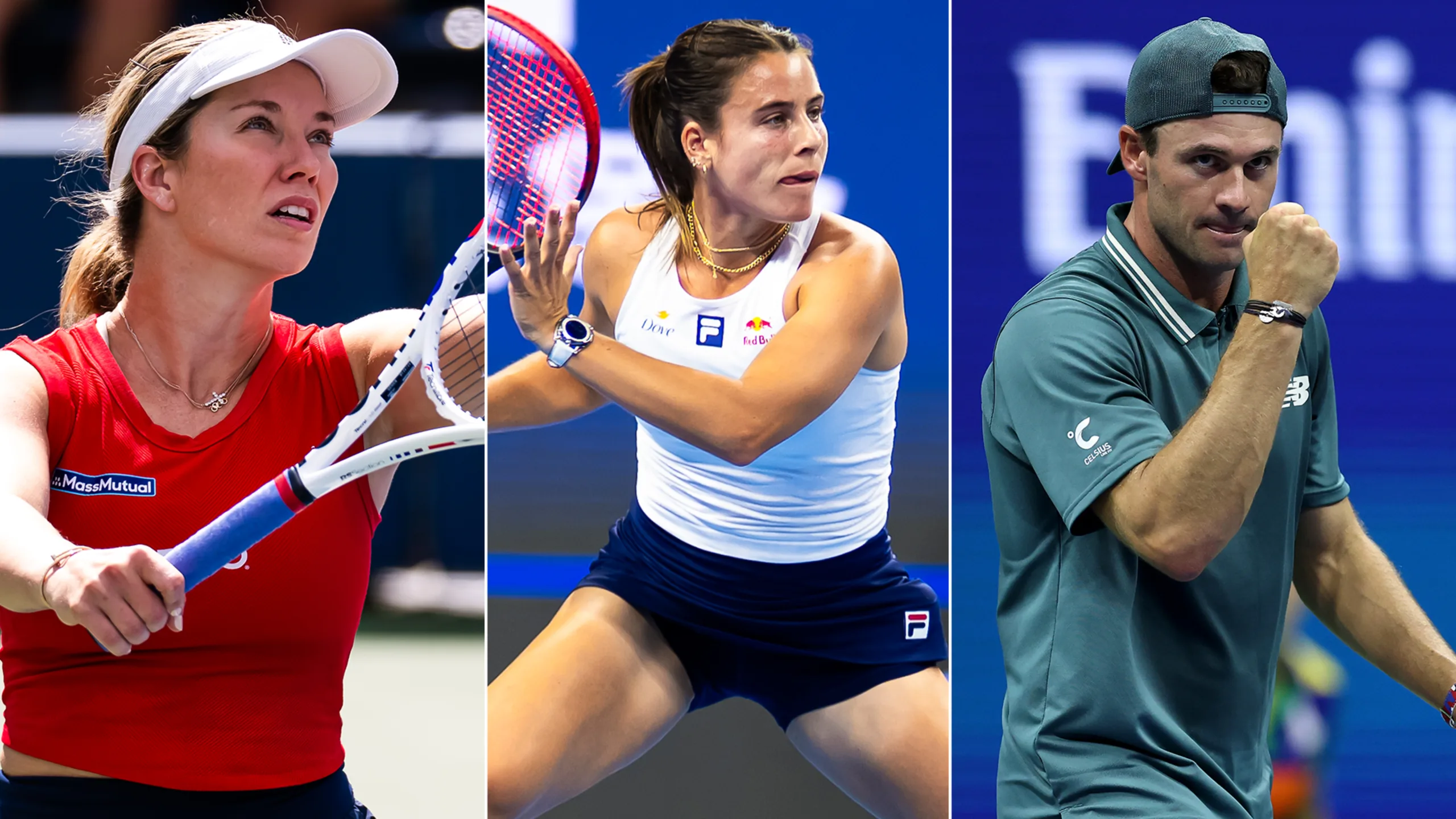
The recent generation of American players shows there is no single blueprint to reach the top. Danielle Collins, Emma Navarro and Tommy Paul are former Top 10 players whose careers illustrate contrasting routes to elite status and different ways of solving on-court problems.
Collins arrived at the professional game without a notable junior resume and chose college before breaking through. Her résumé includes a runner-up finish at the 2022 Australian Open, two titles last spring including her first at WTA 1000 level, and the longest winning streak of her career. Those peaks came amid extended spells of injuries and health challenges that forced her to be flexible and adapt to how she was feeling.
On her own approach she said, “What makes a great player a great player is their ability to change their patterns before their opponent starts reading those patterns … I try to always be unpredictable,” and, “I go off my feelings, for sure. I take what my coach says and I just decide how I’m going to appy it, but at the end of the day, you don’t really have that much time to think out there.”
Navarro, Collins’ Billie Jean King Cup teammate, followed a different path. She reached three girls’ major finals in 2019, also chose college before turning pro, and prefers a steadier, habitual game plan. She described her method: “I think you have to find the balance a little bit between trusting what you do, and not changing that up too soon just because something isn’t working in the first two or three games,” and, “I like to keep what I do pretty consistent, and make a couple of tweaks here and there based on who I’m playing and how they play.”
Navarro added, “I pride myself a lot on my ability to problem-solve and adjust when needed…when things get tough, I tend to get very inward-facing, so I’m learning how to trust myself through thick and thin.”
Paul occupies a middle ground. A former Roland Garros junior champion, he required nearly a decade after that junior success to find sustained results in the men’s game. Off court he focuses on his own development; in matches he concentrates on opponents and adjustments. “For me, I just like going out and competing, no matter the match or the points on the line,” he said. “It’s very rare that Plan A works every time,” and, “You’re always adjusting something whether it’s your serve, where you’re standing on return, how much you’re coming to net,” he says. “You’re always adjusting … there’s no sport that Plan A works every time. You always have to adjust.”
Their stories are the subject of Matchup Mindset, a 15-episode series that examines how players think, prepare and find edges in matches. Together Collins, Navarro and Paul demonstrate that different temperaments and processes can produce the same outcome: a place among the sport’s best.






ATP
Sinner’s serve numbers reveal a mixed picture despite his dominance
Sinner’s serve stats show elite power, but his first-serve percentage still leaves room for growth.
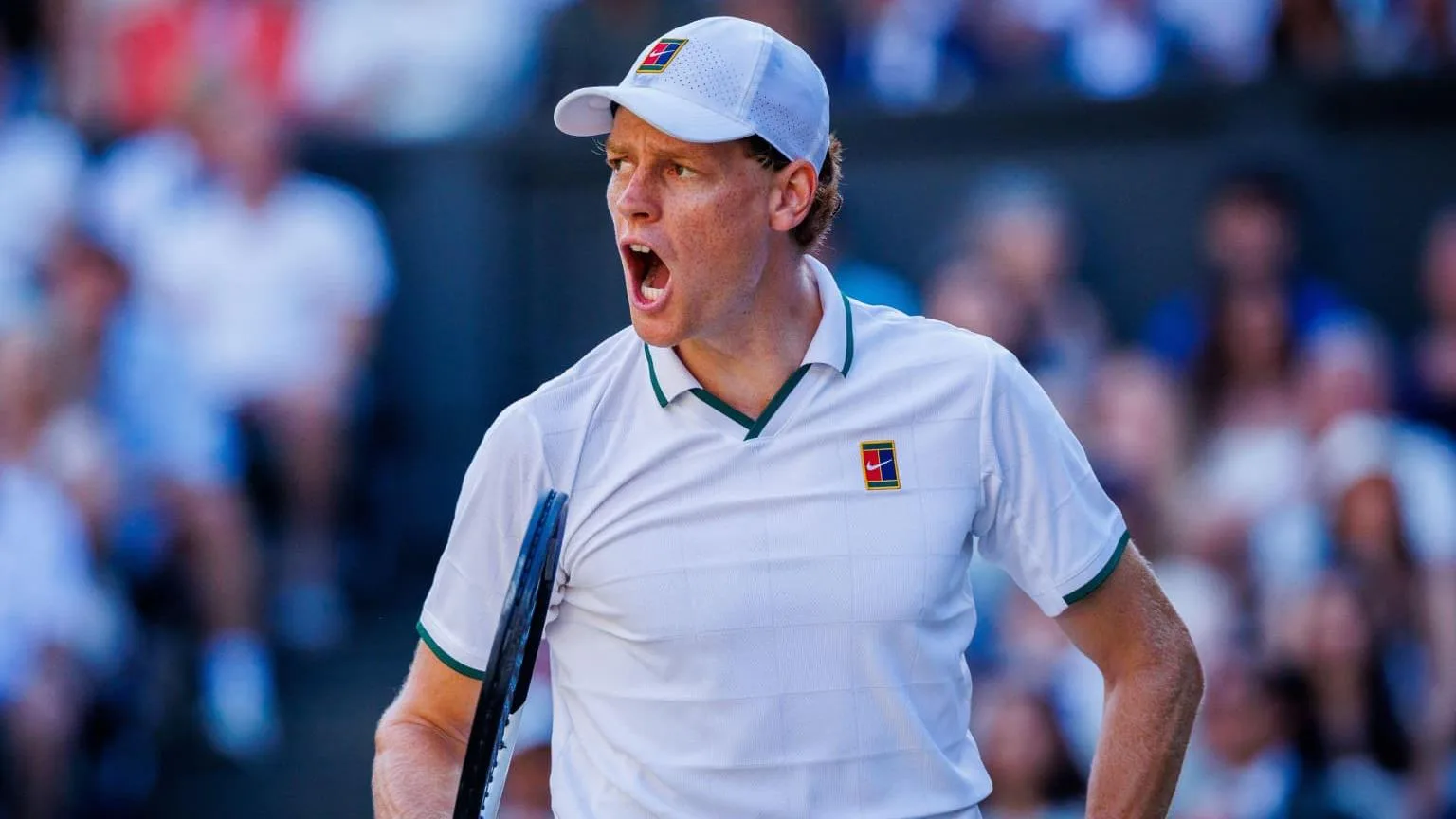
Jannik Sinner’s serve has long been viewed as a major part of his rise to the top of the men’s game, yet the numbers from the past year tell a more complicated story.
The world No 1 adjusted his service motion shortly before he began establishing himself as a leading force on the ATP Tour, and that weapon stood out again when he defended his Wimbledon title earlier this month.
After losing the US Open final to Carlos Alcaraz last September, Sinner made it clear that he wanted more variety and consistency on serve. His own words at the time showed how deliberate that change was:
“I can say that I’m gonna become a better tennis player and I’m gonna change a couple of things on the serve, just small things, but, they can make big differences and then we see how it goes,” said Sinner. after that defeat against Alcaraz in New York.
“I’m looking forward to play these matches again, something new is now that I’m not No 1 anymore. Now you chase, it’s different.
“Maybe I will lose some matches from now on, but I will try to do some changes, trying to be a bit more unpredictable as a player and because I think that’s what I have to do, trying to become a better tennis player.”
Even with his strong recent run, the ATP Tour figures for the last 12 months show that there is still work to be done in one area. Sinner ranks 35th in first serve percentage at 63.8%, well behind Alexander Zverev, who leads the list at 72.5%.
The Italian, however, is far more dominant once the first serve lands. He leads the tour in service points won at 80.9%, just ahead of Reilly Opelka on 80.8% and Taylor Fritz on 79.7%.
He also tops service games won at 92.9%, underlining how difficult he is to break. Opelka follows on 90.6%, with Ben Shelton third at 90.4% and Alcaraz at 89.9%.
One remaining area is ace production. Sinner is 27th in that category with an average of 8.2 per match, while Opelka leads with 18.5, followed by Giovanni Mpetshi Perricard on 15.1 and Fritz on 14.1.
ATP
Sinner climbs to No 4 on all-time prize money list after Wimbledon defence
Sinner’s Wimbledon defence lifts him to No 4 on the all-time prize money list in 2026.
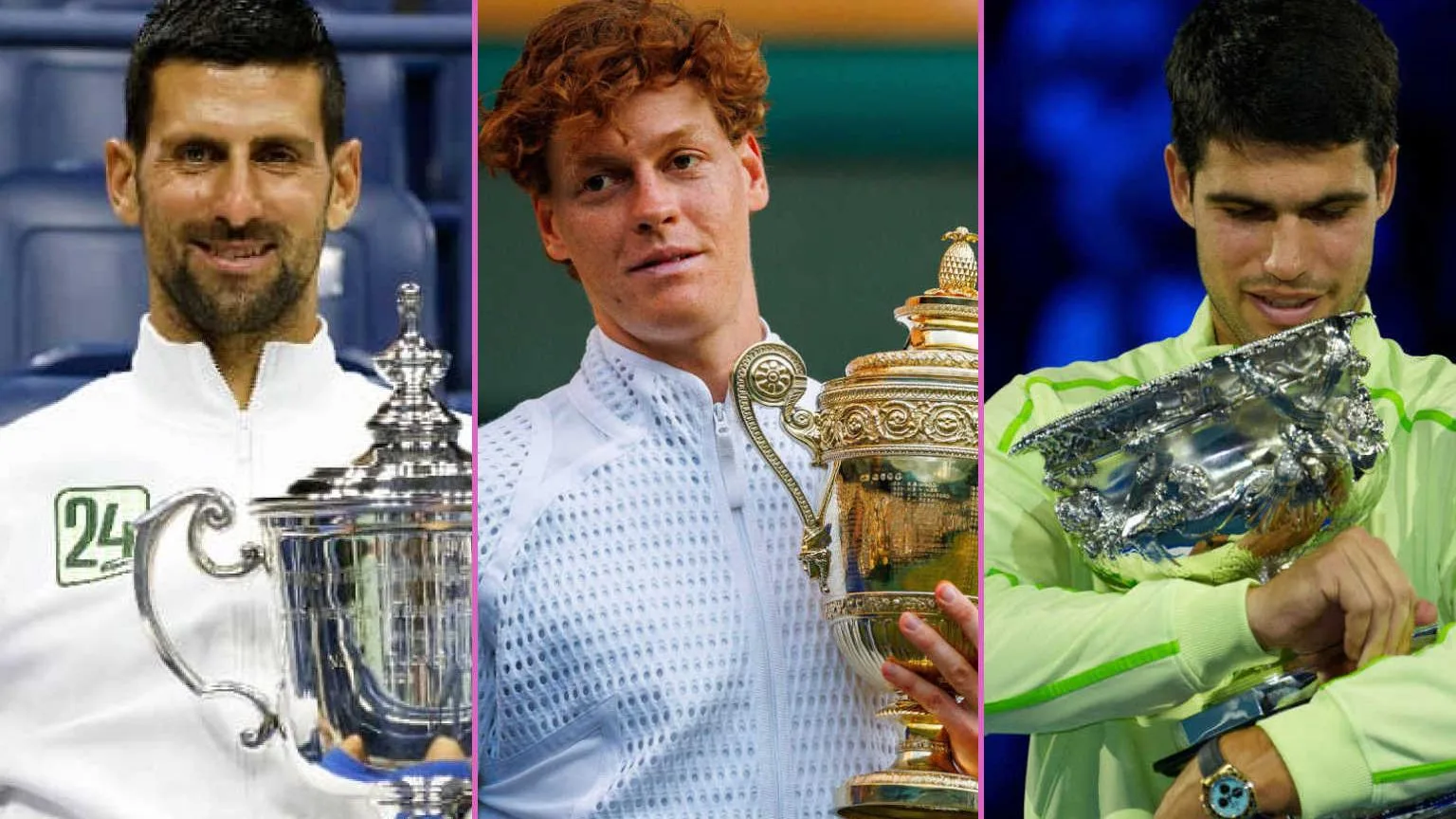
Jannik Sinner’s successful Wimbledon title defence brought more than another major trophy. It also lifted the Italian to No 4 on the all-time career prize money list.
Before Wimbledon 2026, Sinner sat at No 6, with Novak Djokovic, Rafael Nadal and Roger Federer occupying the top three spots and Alexander Zverev and Carlos Alcaraz positioned above him. Zverev had recently passed both Alcaraz and Sinner after his French Open run, but the order shifted again once Sinner collected $4,830,756 (£3,600,000) for his latest Wimbledon triumph.
That result leaves Sinner close to becoming only the fourth player to move beyond $70m in career prize money. He has already earned $11,620,364 in 2026 and is on track to break the $20m barrier for the first time in a season.
His rise has been rapid. Last year, he took in $19,120,641, a total that included a record $5,071,000 for winning the ATP Finals undefeated. He finished second on the 2025 earnings list behind Alcaraz, who made $21,354,778, after leading the way in 2024 with $19,735,703.
At the end of the 2024 season, Sinner stood on $37,238,688. Since the start of the 2025 campaign, he has added another $32,347,873. From just $36 in prize money in his first professional year, he now sits on $69,586,561.
Zverev is fifth with $68,392,312, while Alcaraz is on $64,997,598 after not adding to his tally since April because of injury. Andy Murray has fallen to No 7 on $64,687,542, with Daniil Medvedev eighth on $52,192,594. Djokovic, Sinner, Zverev, Alcaraz and Medvedev are the only active players to have passed $40m.
Djokovic remains far ahead in first place with $194,656,816, including $3,000,801 earned in 2026. Nadal is second on $134,946,100 and Federer third on $130,594,339.
ATP French Open Grand Slam
Auger-Aliassime Reaches Career-High No. 4 After Breakthrough at Roland Garros
Auger-Aliassime rises to No. 4 after best Roland Garros run, tying second-highest Canadian rank. Now
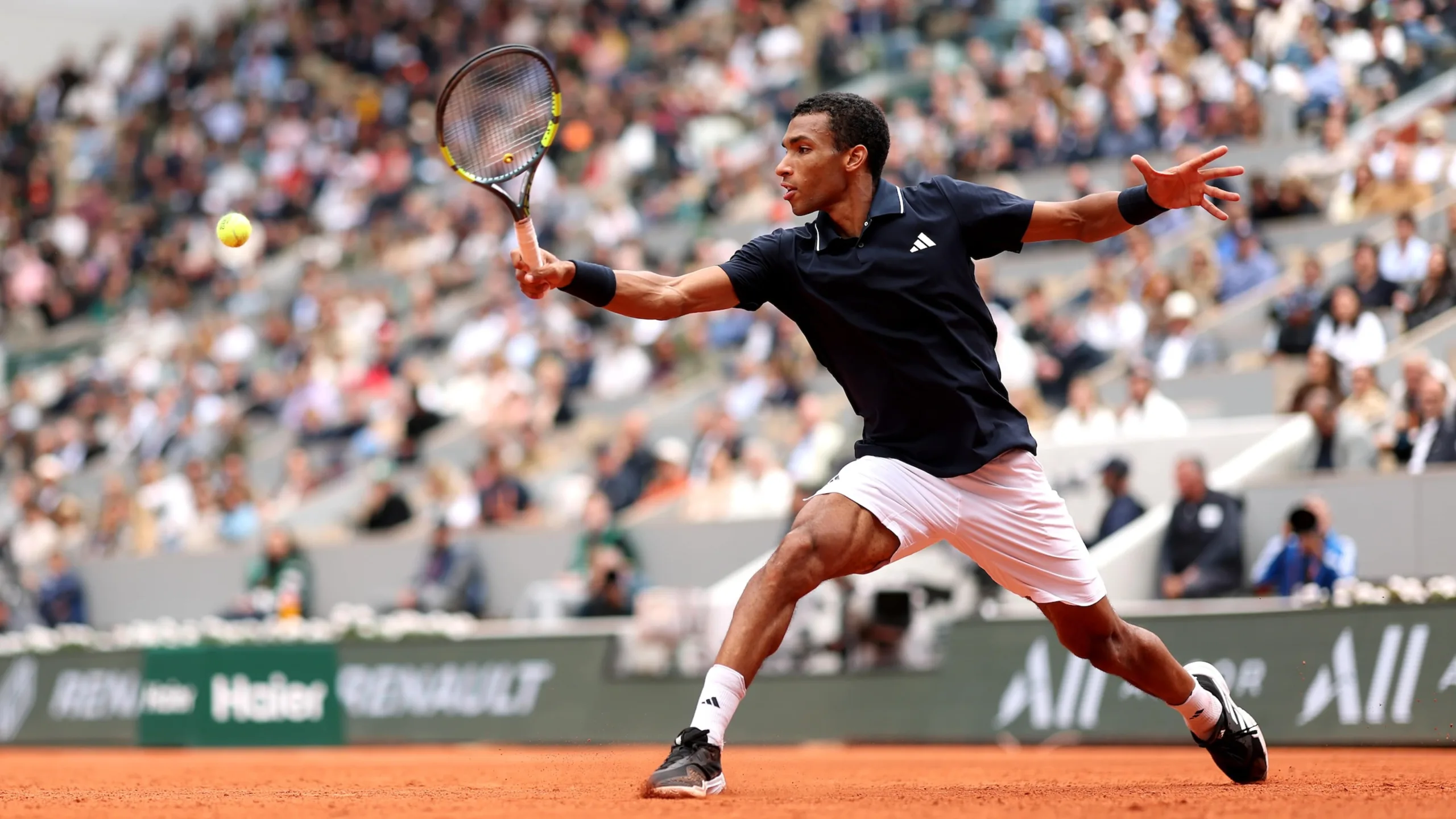
Felix Auger-Aliassime moved to a career-high No. 4 in the ATP rankings following his deepest run at Roland Garros, where the 25-year-old reached the quarterfinals for the first time before losing to eventual finalist Flavio Cobolli. The result completed a personal Grand Slam milestone: having previously reached the quarterfinals or better at the Australian Open, Wimbledon and the US Open, he became the first Canadian man to reach the quarterfinals or better at all four majors in his career.
The rise from No. 6 to No. 4 surpasses his prior best of No. 5 and places him tied for the second-highest-ranked Canadian in ATP or WTA rankings history. The only other Canadians to reach the top four are Milos Raonic and Bianca Andreescu. Raonic went as high as No. 3 in 2016, following his run to the Wimbledon final that year, and Andreescu peaked at No. 4 in 2019 after winning the US Open.
Canadian tennis has seen seven players reach the top 10 in either ATP or WTA history, with official rankings available since 1973 for the ATP and 1975 for the WTA.
Auger-Aliassime still has ground to cover to move higher in the standings. He is 2,865 points behind the current world No. 3, Alexander Zverev, with the rankings showing Zverev at 7,305 points and Auger-Aliassime at 4,440.
The Canadian will shift his focus to grass. He begins his grass-court season this week at the ATP 250 event in ‘s-Hertogenbosch, entering as the No. 1 seed. After a first-round bye he will open against either Hubert Hurkacz or Marton Fucsovics.
The new ranking reflects a season of important progress for Auger-Aliassime and cements his place among the highest-ranked Canadians in modern tennis history.

Zverev Arrives at Laver Cup With Europe’s Title Bid in Focus

Alex Eala opens Singapore challenge against Prozorova as ranking gains loom

Zverev’s breakthrough season rewrites a long-running story

Raducanu Arrives at US Open With Momentum After Strong Hard‑Court Swing

Maestrelli Triumphs in Bergamo, Claims Challenger Title and Career‑High Ranking