Player News WTA WTA 500
Leylah Fernandez: small stature, big resilience and a late-season WTA 500 surprise
Fernandez has faced questions about size and consistency but produced a surprising late-season title

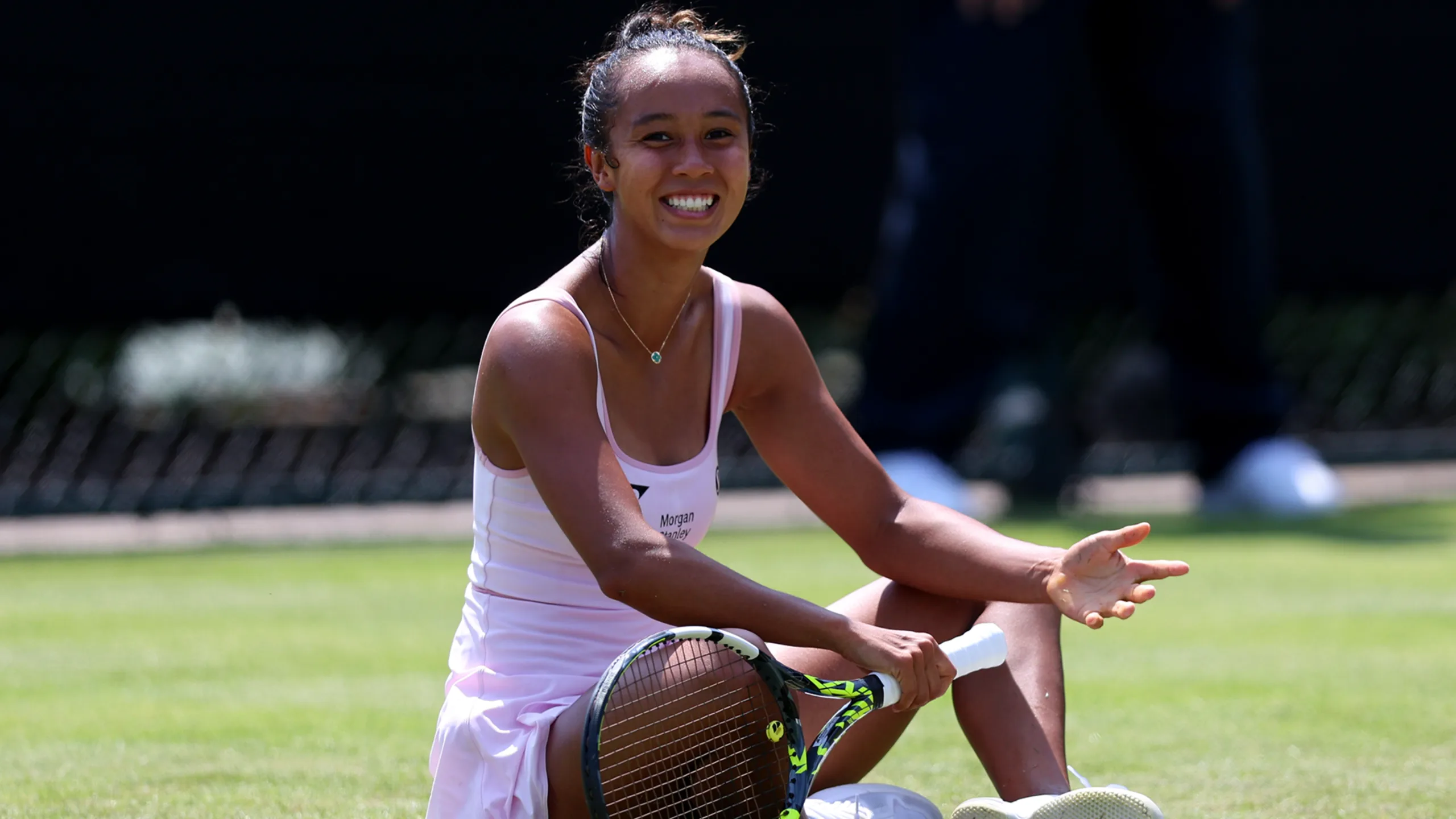
At 5-foot-5, Leylah Fernandez has long been an easy player to underestimate. As a junior she was cut from a Canadian national junior development program in Québec because, in the words of her father and coach Jorge, “tiny.” That early setback and an emotional run to the 2021 US Open final, where she lost to Emma Raducanu, helped define a career of sharp highs and frustrating slumps.
Now 23, Fernandez has carved out longevity in a game increasingly tilted toward bigger hitters. She kept an aggressive schedule this year and spent time inside the Top 20, remaining a threat simply because she mixes craft with competitiveness.
Form has not been linear. Between Indian Wells and the end of Roland Garros she went 3-7. That sequence included a WTA 125 event where she beat a player ranked 348th, then lost to Alikasandra Sasnovich, who was ranked outside the Top 100. The slide halted on grass in mid-June at Nottingham when she recorded back-to-back wins for the first time since February. She won only two more matches on grass, but a startling run followed on hard courts.
At the WTA 500 in Washington, DC, Fernandez rattled off five straight victories, upsetting top seed Jessica Pegula and No. 3 seed Elena Rybkina to capture the title. It was a performance few anticipated.
Fernandez’s game is built on mobility, willingness to press forward on or near the baseline, and the ability to retrieve. She wields a surprisingly powerful forehand and uses a sliced backhand to vary pace and court position. The serve, particularly the second delivery, remains her chief weakness. Given her age and the natural advantage enjoyed by left-handers, improving the serve, even without adding bulk, could help her handle power returners more often.
Whatever the technical adjustments, Fernandez’s most reliable assets have been grit and stamina. Those traits, combined with her craft, mean she will continue to unsettle purer power players and produce flashes of inspiration.

1000 BNP Paribas Open WTA Player News
Gauff retires with left arm issue; Eala moves through at BNP Paribas Open
Gauff retired with a left arm issue while trailing Eala 6-2, 2-0; Eala advances at Indian Wells Sun
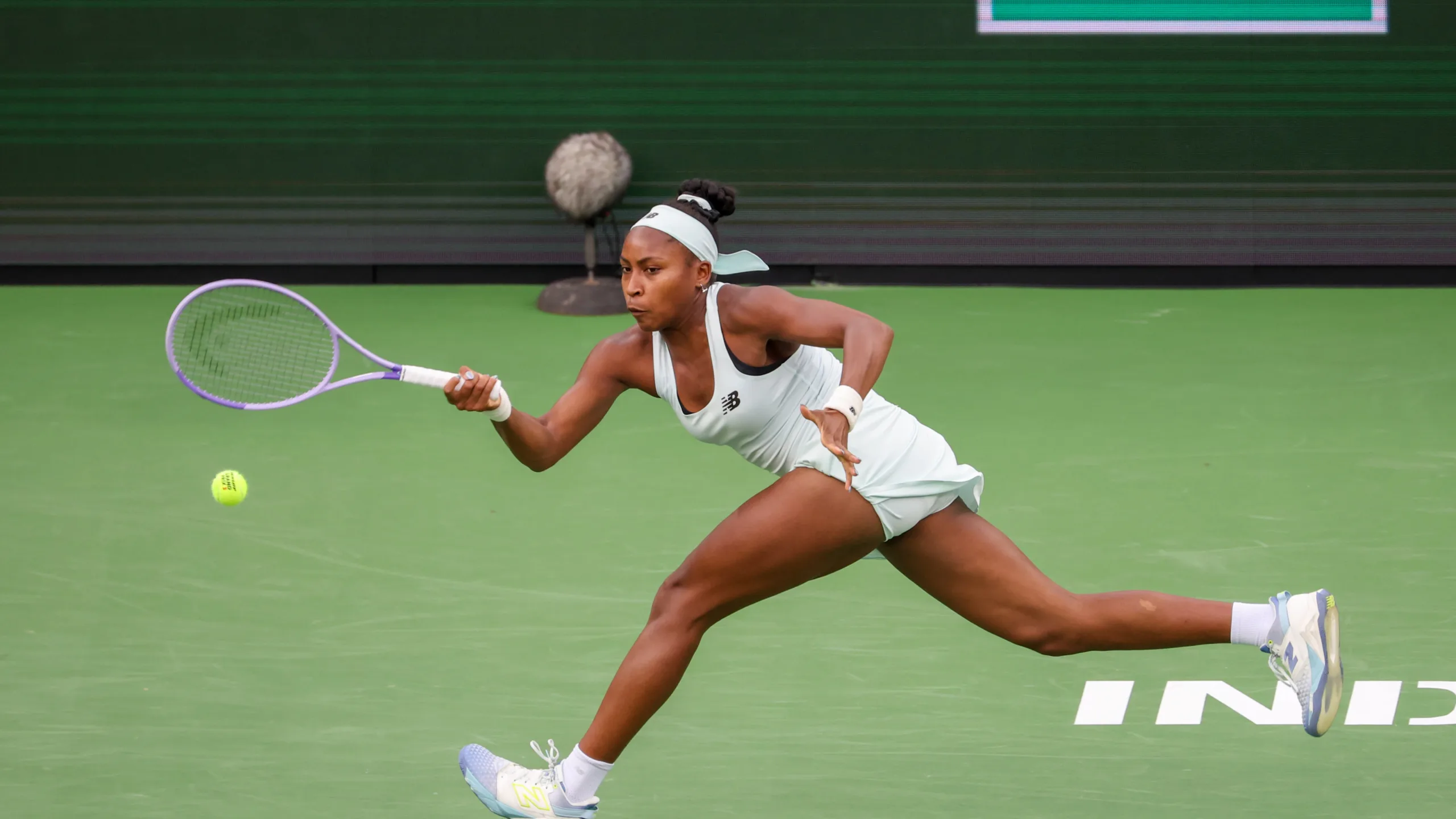
Coco Gauff was forced to leave the court for the second time in her professional career when a left arm problem ended her third-round match at the BNP Paribas Open. It was the first retirement for Gauff since the 2022 Cincinnati Open.
Struggling with the left arm on Sunday, Gauff retired while trailing Alexandra Eala 6-2, 2-0. The world No. 4 took a medical timeout before the final game of the opening set but chose not to continue after her opponent converted her fifth break of the night.
The retirement handed Alexandra Eala the victory and progression to the next round of the BNP Paribas Open. The match unfolded differently than their most recent meeting, when Gauff recorded a 6-0, 6-2 win over Eala en route to her first Dubai semifinal.
This stoppage underscored the toll a recurring physical problem can take during a tournament. The timing of the medical timeout late in the opening set followed by a quick end early in the second set highlighted how the left arm issue affected Gauff’s ability to sustain her game.
For Eala, the match provided a direct route into the later stages of the event. For Gauff, the outcome represented only the second retirement of her career and a reminder that recovery will determine her immediate plans. The scoreline, the medical timeout and the decision not to continue are the central facts from a third-round contest that ended before its natural conclusion.
1000 BNP Paribas Open WTA Player News
Coco Gauff retires with left arm issue, Alexandra Eala advances at BNP Paribas Open
Gauff retired with a left arm issue trailing Alexandra Eala 6-2, 2-0 at the BNP Paribas Open Sunday.
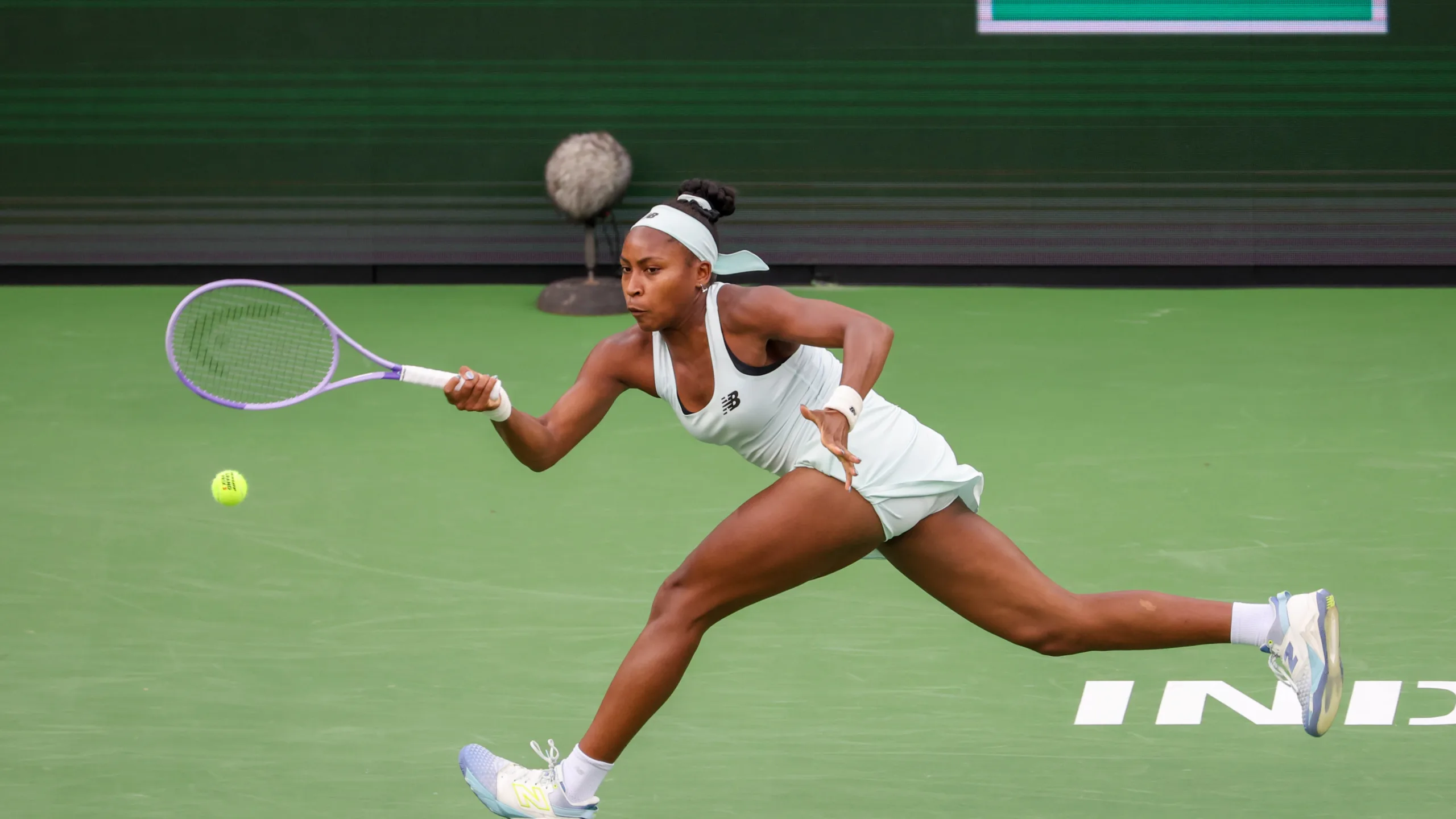
For the second time in her career, and the first since the 2022 Cincinnati Open, Coco Gauff was unable to finish a WTA match because of injury. The world No. 3 struggled with a left arm problem during the players’ third-round meeting at the BNP Paribas Open.
Struggling with a left arm issue on Sunday, Gauff retired while trailing Alexandra Eala 6-2, 2-0. The world No. 4 took a medical timeout before the final game of the opening set but decided not to force the issue any further after her opponent converted her fifth break of the night.
The retirement handed Alexandra Eala the victory and a spot into the next round of the BNP Paribas Open. For Gauff, the match marked only the second retirement of her professional career and served as a reminder of the care required when a player is hampered by a recurring physical issue.
The two had met recently with a very different outcome. In her previous tournament appearance, Gauff posted a 6-0, 6-2 victory over Eala en route to her first Dubai semifinal. That result contrasted sharply with the events at Indian Wells, where the left arm complaint ended the third-round contest prematurely.
Both the scoreline and the timing — a medical timeout late in the opening set followed by retirement early in the second — underline the impact the injury had on Gauff’s ability to continue. Alexandra Eala advances, while Gauff will leave the BNP Paribas Open with the second retirement on her career record and questions about her immediate playing schedule and recovery.
Analytics & Stats Dubai Duty Free Tennis Championships Player News
When the Serve Fails: Coco Gauff’s Ongoing Double-Fault Challenge
Gauff’s serving problems in Dubai exposed a long-running double-fault issue and search for fixes….
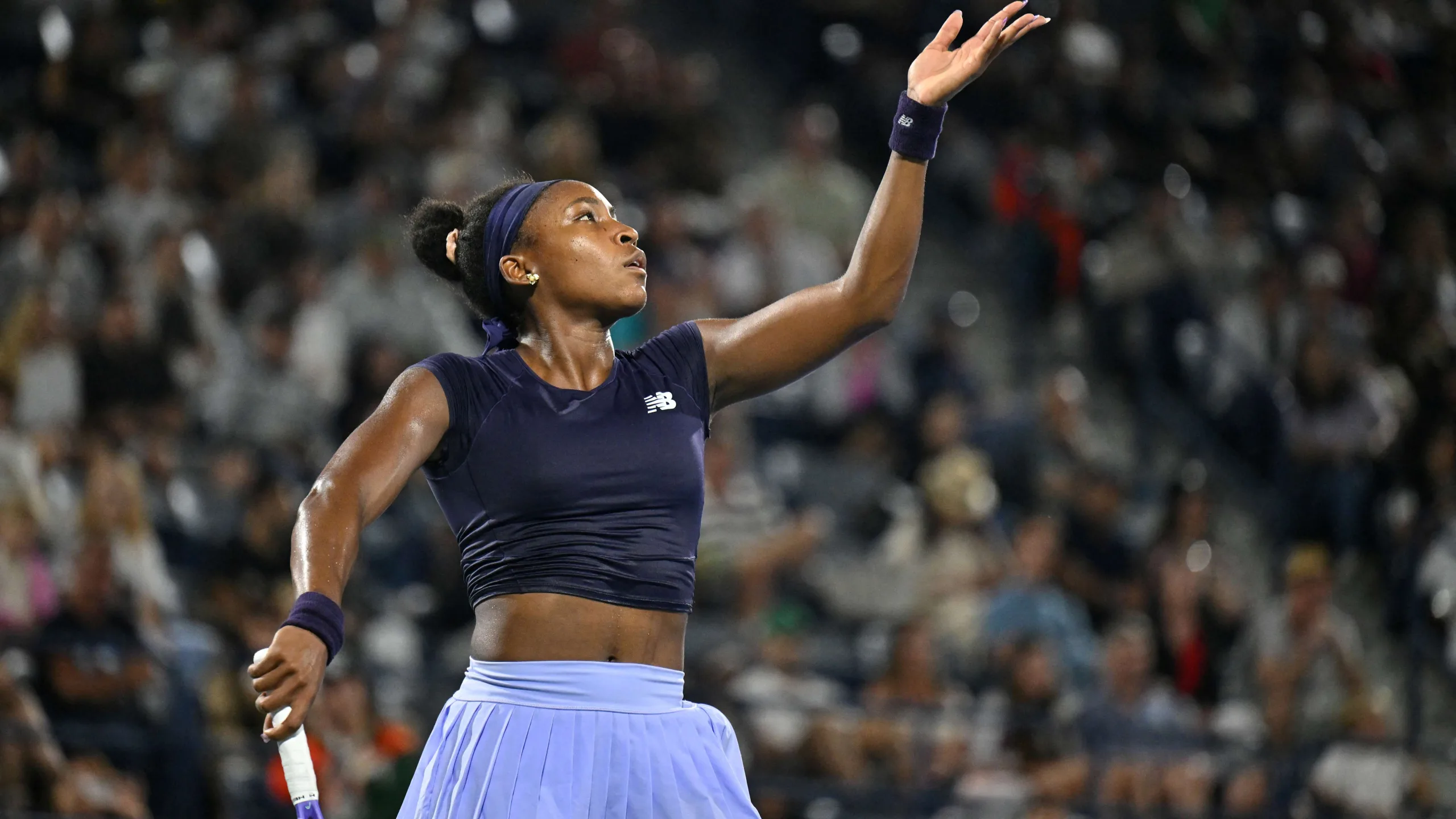
In a Dubai semifinal against Elina Svitolina, Coco Gauff’s frustration boiled into a rare on-court outburst. At 2-2, 15-all in the second set, a double fault prompted Gauff to stride toward her guest box and Gavin MacMillan, the biomechanics guru who joined her team last summer, and say, “I’ve been doing everything you’ve wanted for the last six months, and it’s gotten not better at all, bro.”
The moment underscored a persistent issue. For more than two years Gauff has led the WTA in double faults by a wide margin. Last summer she struck 23 double faults against Danielle Collins and 14 against Veronika Kudermetova on her way to the round of 16 in Montreal. In 2023 she hit 219 double faults and ranked 18th on the tour for that stat. In 2024 she leapt to 430, and she recorded 431 the following year.
Where the problem begins is debated. Is it a bio-mechanical flaw that can be adjusted, or a mental block commonly referred to as the yips? Brad Gilbert, who coached Gauff for 14 months ending in late 2024, offered perspective: “Coco, to me, is more resilient than a lot of those people,” and added, “Even with the serve issues, she still won the French. She still won two majors. She’s still finished in the Top 3 in the world. I feel like if you got the yips, this mental thing, your ranking is dropping, and fast.”
Analyst Rennae Stubbs sees a largely mechanical problem: “I think [her problem], it’s 90 percent mechanical and 10 percent mental,” she wrote. “The problem is that the 10 percent becomes 50 percent once the serve starts going off, because bad technique breaks down under pressure.
“There are so many mechanical issues with Coco’s serve that it’s really difficult to change at this point, but I do think it’s possible. I know Gavin is trying his best.”
Jimmy Arias recalled his own serving anxieties: “She should come talk to me,” he said. “I got the yips near the end of my career. I got so anxious serving that my right hip flew open too early, making it hard to hit a good second serve. I knew what the problem was, but I couldn’t stop it, even though I kept closing my serving stance more and more, until I looked like (John) McEnroe.”
Paul Annacone urged perspective and suggested a different focus: “No doubles, yet she was still annoyed at her serving,” he said. “What she said to MacMillan shows that she’s got baggage, she sees the serve as a big issue. But let’s be honest. How many majors has she won with, quote, unquote, a bad serve? Is it really bad? It’s not great, but so what?” He proposed “reprogramming her vision,” aiming for serving strategy over sheer power.
Experts differ on fixes, but all underscore that the problem is both technical and psychological. As Arias put it, “The most mystifying thing about all of this is how good Coco is in spite of everything.”

Rusedski urges patience after Djokovic’s early US Open exit

US Open opens with Djokovic shock, Eala momentum and McEnroe backlash

Atmane’s US Open loss sparks debate over cramp treatment and medical timeouts

Alcaraz Confronts On‑court Microphones During US Open Practice Ahead of Opelka Match

Raducanu Arrives at US Open With Momentum After Strong Hard‑Court Swing