
Governing Bodies ITF Player News
Tennis Kenya accepts mistake after viral W35 wildcard performance
Tennis Kenya says a wildcard for Hajar Abdelkader was wrongly granted after a viral 37-minute match.

Tennis Kenya has acknowledged an error in awarding a main-draw wildcard after video of Hajar Abdelkader’s performance at an ITF W35 event drew widespread attention.
The 21-year-old Egyptian lost her first-round match 6-0, 6-0 in 37 minutes, winning three points. The match footage showed persistent serving problems, including 20 double faults, and at one point she appeared to need direction on where to stand to serve.
Tennis Kenya, which is hosting the W35 tournament, issued a statement addressing concerns about the decision to grant the wildcard. The organization’s statement said it was “aware of concerns” raised about Abdelkader’s participation.
“In hindsight, Tennis Kenya acknowledges that this wildcard should not have been granted. The federation has taken note of this experience and will ensure that such an extremely rare occurrence never happens again,” it said in a statement Thursday.
The federation explained the circumstances that produced the available slot. “The slot became available following a short notice withdrawal by the originally awarded main draw wildcard recipient, who opted into the qualifying draw,” the statement said. “At the time, Ms Abdelkader was the only other player who had requested a wildcard, and the decision was taken on the information provided and in the interest of maintaining a full and balanced draw while supporting the development of tennis in Africa.”
Tennis Kenya added that the wildcard had been issued based on information provided by the player. “In this instance, Ms Abdelkader indicated that she had an appropriate level of competitive playing experience, and the wildcard was issued based on the information provided.”
The federation indicated it will use this episode to review procedures around discretionary entries. The match has prompted debate about wildcard standards and the balance between developing regional players and preserving competitive integrity at professional events.

Australian Open Governing Bodies Player News
Craig Tiley Named USTA Chief Executive as U.S. Tennis Participation Climbs
USTA names Craig Tiley CEO as U.S. tennis reaches 27.3 million players and targets 35 million. goal.
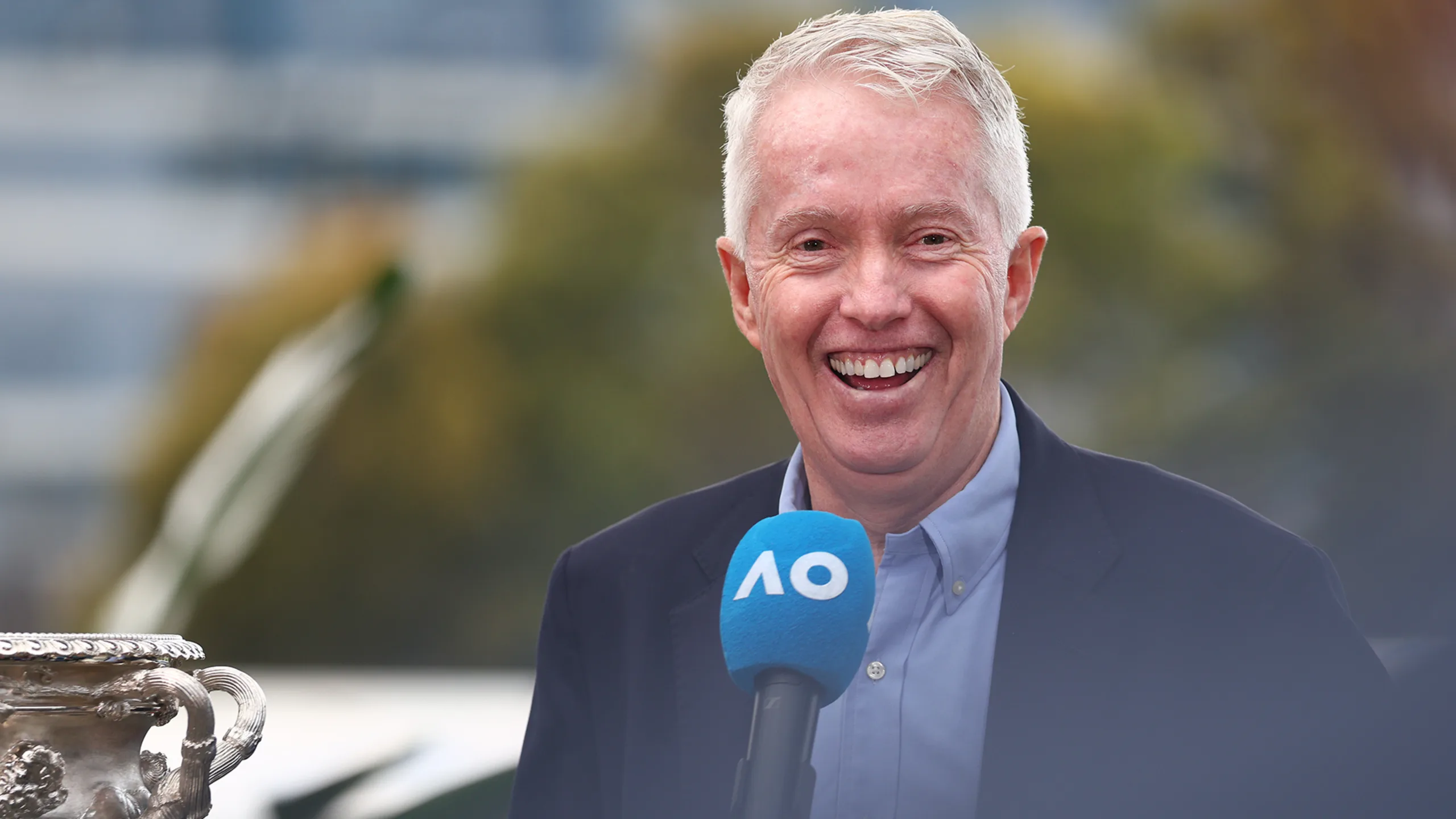
The United States Tennis Association has appointed Craig Tiley as its next Chief Executive Officer. Tiley leaves a 13-year tenure as Chief Executive of Tennis Australia and more than a decade as the Australian Open Tournament Director, a role he held since 2006.
Tiley returns to American tennis after a long history in the U.S. collegiate game. As Head Coach of the University of Illinois men’s team from 1994 to 2005 he guided the squad to a perfect 32–0 season and the 2003 NCAA Division I National Championship. He was twice named the Wilson/ITA Division I National Coach of the Year and is an inductee of the ITA Men’s Collegiate Tennis Hall of Fame.
He assumes leadership of the USTA while the organization advances a stated mission of “Growing tennis to inspire healthier people and communities everywhere” and pursues a goal of reaching 35 million players in the United States by 2035. Participation in the U.S. rose to 27.3 million players in 2025, marking a sixth consecutive year of growth. Since 2019 tennis in America has expanded by 54 percent, adding nearly 10 million players, with recent increases attributed to more play occasions, stronger player retention and rising participation by women and communities of color.
“From the very beginning of this process, our top priority was identifying the right leader to accelerate participation growth and help us achieve our goal of reaching 35 million players by 2035,” said USTA Board Chair and interim Co-CEO Brian Vahaly.
“Craig brings a rare combination of global credibility at the highest level of the sport and a proven commitment to growing the game at the grassroots. That balance is exactly what this moment requires. As we look to fully leverage the power of the US Open as a platform for inspiration and growth, Craig’s leadership and understanding of the entire tennis ecosystem will be invaluable. We are excited to build on our current momentum of six consecutive years of participation growth, and we are confident he is the right leader to guide American tennis into its next chapter.”
Tiley acknowledged the appointment: “I am truly honored to step into the role of CEO of the USTA later this year,” Tiley said in a press release provided by the USTA. “I’ve long admired the organization’s leadership in growing the game across the United States and the extraordinary success of the US Open. Tennis has shaped my life—personally and professionally—and having begun my tennis journey in the U.S. as an NCAA championship coach, this opportunity feels like a full-circle moment. I’m excited to return to American tennis and to work alongside our leadership locally and nationally to continue building the sport’s reach, impact, and future.”
At Tennis Australia, Tiley oversaw notable participation gains: tennis became the nation’s second most participated sport, growth of 8.3 percent in 2025, tripling of online court bookings over five years, 30 percent overall participation growth in five years, a 44 percent increase in coach membership and a 60 percent rise in female coaches to 33 percent of the coaching workforce. “Leading this team has been the privilege of my life. I am incredibly proud that Tennis Australia is now recognised globally as the player’s partner and the benchmark for the sport, events and entertainment,” Tiley said in a press release provided by Tennis Australia.
“Under Craig’s leadership, participation and engagement with our sport has gone from strength to strength,” said Tennis Australia Chair Chris Harrop. “Tennis is very much front of mind for many Australians—from the Hot Shots program and social tennis through to club and competitive play, and the excitement of recent innovations like the One Point Slam. ]
1000 Governing Bodies Player News
Pegula to chair WTA council as tour wrestles with an overloaded calendar
Pegula chairs new WTA council to tackle an overloaded calendar and mandatory-event tensions. in 2026.
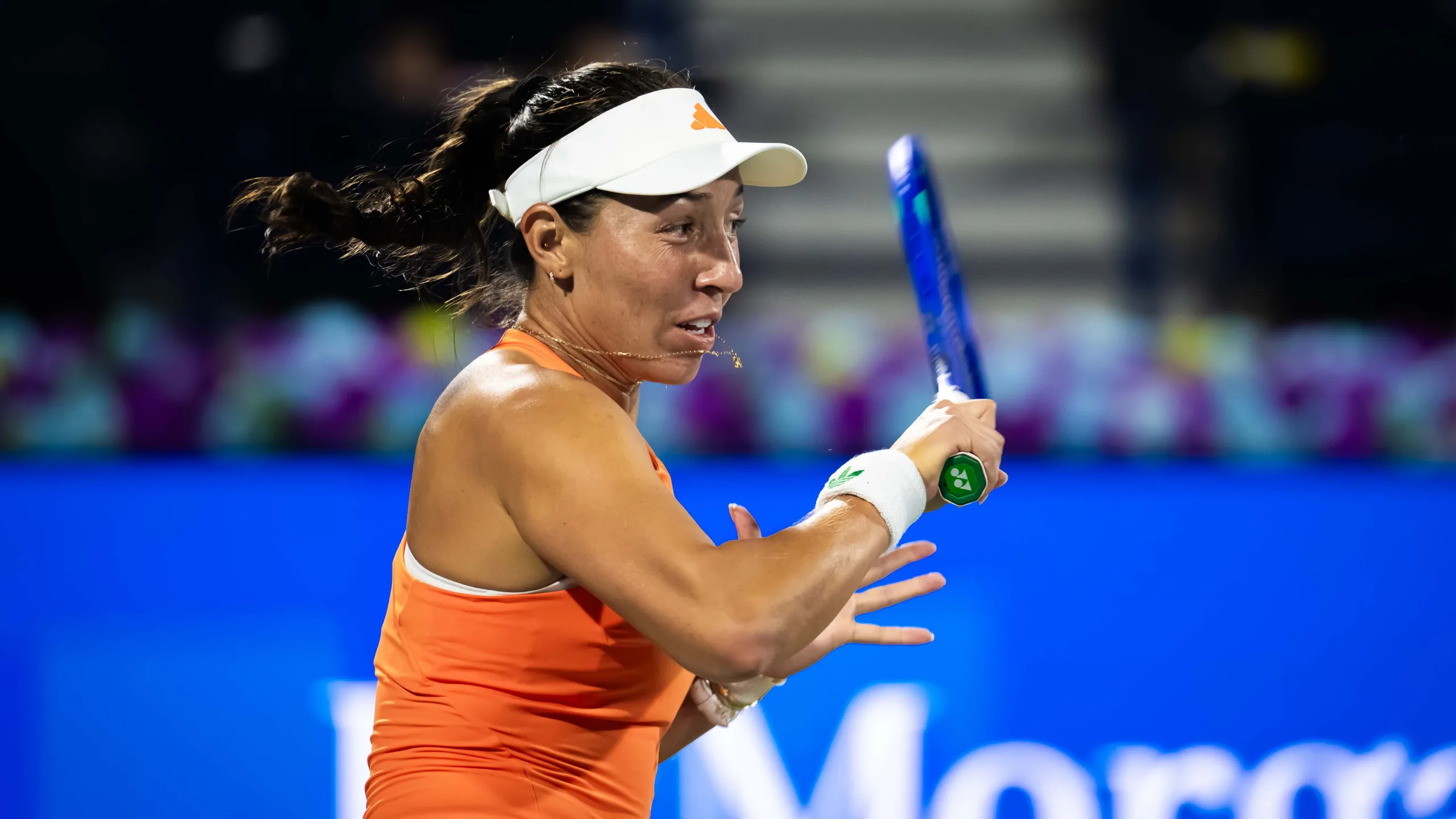
Jessica Pegula has been named chair of a newly formed, 13-member WTA panel, the Tour Architecture Council, tasked with reviewing the women’s calendar and the tour rules that govern mandatory participation. Pegula, a six-year veteran of the Player Council and the No. 4 seed who went on to win Dubai, now leads a group charged with preparing recommendations for the WTA Board.
The issue that prompted the council is familiar: top players withdrawing from mandatory events. At the Dubai WTA 1000, five of the game’s leading draws, led by Aryna Sabalenka and Iga Swiatek, withdrew before the tournament began, and many more later withdrew or retired from matches. “I can’t knock any player that wants to make that decision for themselves,” Pegula told The National in Dubai, referring to the rule-defying withdrawals. Seeded No. 4, Pegula added, “At the end of the day, we play a lot, we play a full schedule, we play 10, 11 months out of the year sometimes. And I think right now we’re living in an age where the priority is always staying healthy mentally and physically, and you never know where a player is at with that.”
The debate sharpened after Dubai tournament director Salah Tahlak suggested current sanctions on withdrawals were insufficient and proposed stripping ranking points as a penalty. Within days, WTA chair Valerie Camillo published a notice announcing formation of the TAC, which will develop “actionable recommendations for consideration by the WTA Board that can be implemented as soon as the 2027 season. The Council will focus first on areas where the WTA has direct authority to drive change, while also identifying longer-term opportunities that will require broader coordination across the sport.”
Observers say the problem is structural. The WTA operates two mandatory 1000-level tournaments in the Middle East, Doha and Dubai, held in succession beginning a week after the Australian Open. Those events and others paid to secure 1000-grade status, helping the WTA build a roster of 10 top-tier 1000 events, one more than the ATP. Doha finalists Victoria Mboko and Karolina Muchova were among the six stars who opted out before or during Dubai.
“Let’s get all the issues on the table, which I assume this group is going to try to do, and let’s address them and try and come up with a better mouse trap, because the current mouse trap is not catching the mice. So it’s not doing anything. It’s not keeping anybody. It’s not serving the tournaments well, it’s not serving the players well.” Pam Shriver
The council will also confront how back-to-back 1000s, extended majors and a prize-money arms race shape player choices. If Pegula’s role is extensive, it will test how a Top 5 player balances leadership duties and on-court goals. “If her role will be to just run the meeting, I think it could be a great experience,” Shriver said. “But obviously it’s really hard to do the [actual] work if you’re juggling and trying to maintain Top 5 status.”
1000 Dubai Duty Free Tennis Championships Governing Bodies
Pegula to chair WTA Tour Architecture Council tasked with calendar reform
Pegula to lead WTA Tour Architecture Council with goal of calendar changes implementable by 2027. ASAP
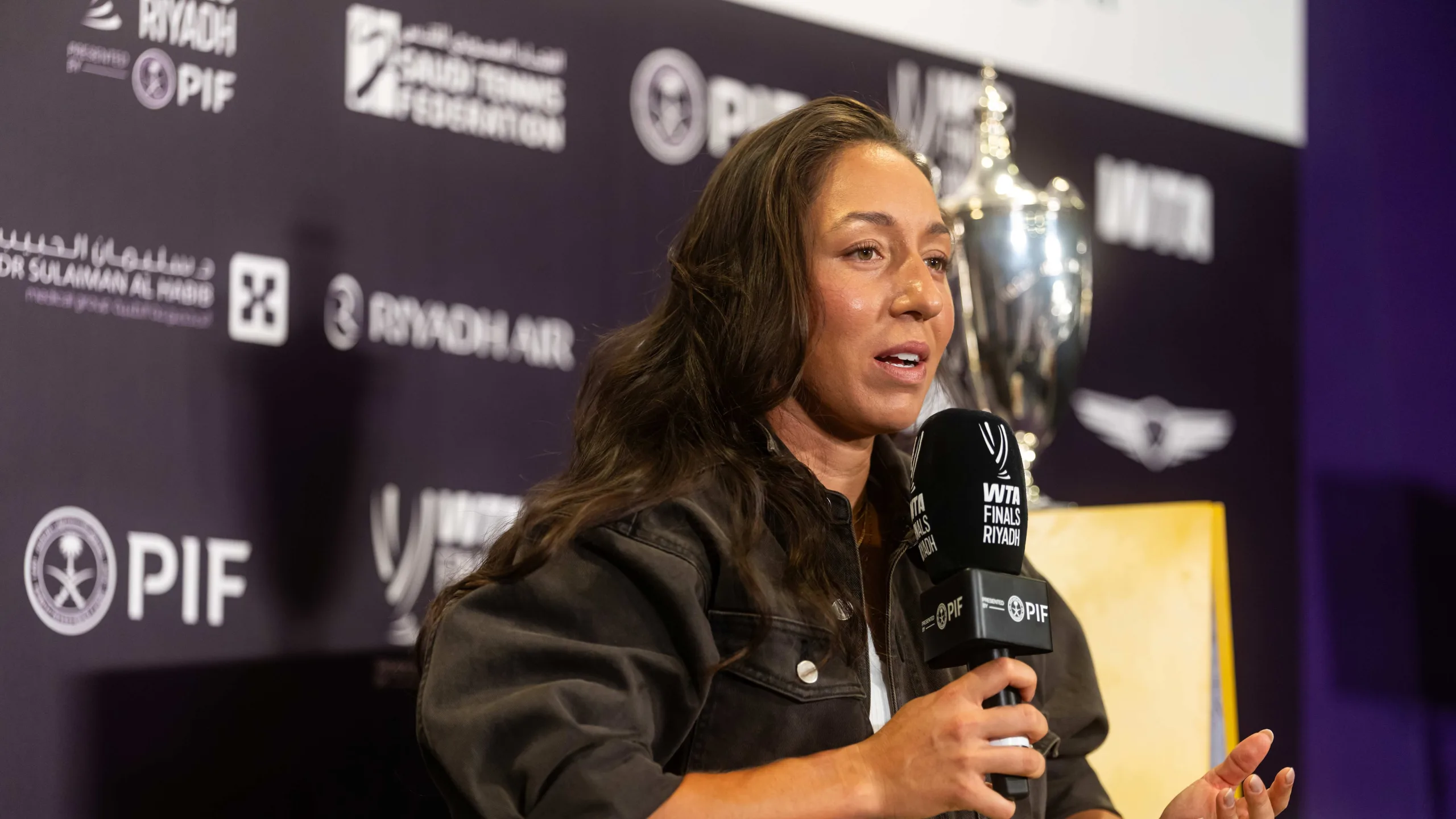
A new WTA working group will examine the Tour calendar and seek changes that could be introduced for the 2027 season. The Tour Architecture Council was announced by WTA Chair Valerie Camillo after a run of high-profile withdrawals and mid-match retirements at the back-to-back WTA 1000 events in the Middle East.
Last week, world No. 1 Aryna Sabalenka and No. 2 Iga Swiatek withdrew from the Dubai Duty Free Tennis Championships. Their absences came as eight other players also pulled out citing injury, illness and schedule changes, while four more players, including top seed Elena Rybakina, retired mid-match in Dubai. A separate report noted that GI Illness forces world No. 3 Elena Rybakina to retire against lucky loser Ruzic in Dubai.
In a letter to players and tournament partners titled ‘A Stronger Framework for Women’s Tennis,’ Camillo set out the council’s purpose and timetable. “It’s important we take a fresh, collaborative look at how to best preserve the high-quality competition that builds value for tournaments and provides an unparalleled experience for fans,” she wrote.
“Over my first 90 days, there has been a clear sentiment across the Tour that the current calendar does not feel sustainable for players given the physical, professional and personal pressures of competing at the highest level…
“For this reason, today I am establishing the Tour Architecture Council, a representative working group convened by the WTA to develop meaningful improvements to the calendar, commitments and other core elements of the Tour framework.”
The 13-person council will include players from several nations, tournament leaders from the Americas, Europe and Asia, WTA senior leadership including Camillo and WTA CEO Portia Archer, and experts in Tour operations. World No. 5 Jessica Pegula will chair the group and lead discussions intended to reflect a wide range of player experiences.
Pegula, who also serves on the WTA Player Council, explained the initiative to press in Dubai. “I know that the schedule is very tough, and it’s not easy,” she told The National’s Reem Abulleil. “I think at some point in the year, if you do have a few good results, some weeks unfortunately do become a little bit of a sacrifice if you’re thinking long term. I can’t knock any player that wants to make that decision for themselves.”
“At the end of the day, we play a lot. We play a full schedule, we play 10, 11 months out of the year sometimes,” Pegula added. “And I think right now we’re living in an age where the priority is always staying healthy mentally and physically, and you never know where a player is at with that.
“Even if they’ve been winning matches, you don’t know if they’ve been dealing with an injury throughout that whole time or not. And that’s where you see people, especially top players, be a little bit more choosy with that schedule until maybe it changes in the future.”
The council’s initial work will target areas where the WTA has direct authority, while also identifying longer-term matters that require wider coordination across the sport.

From Fans to Contenders: Iva Jovic and Learner Tien’s Indian Wells Homecoming

Sabalenka in Gucci: front row at Gucci’s Fall 2026 show ahead of BNP Paribas Open

Gauff vs. Pegula: Who Arrives in Better Shape for Indian Wells 2026?

Alcaraz Confronts On‑court Microphones During US Open Practice Ahead of Opelka Match

Raducanu Arrives at US Open With Momentum After Strong Hard‑Court Swing

Cervara: Ending an eight‑year partnership with Medvedev was necessary to change the energy
-
 ATPAustralian OpenGrand Slam2 months ago
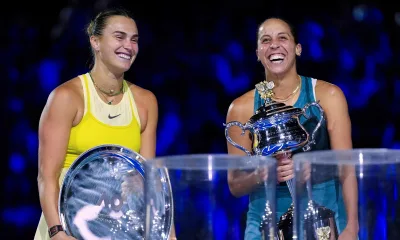
Australian Open announces record A$111.5 million prize pool for 2026
-
 ATPUnited CupWTA2 months ago
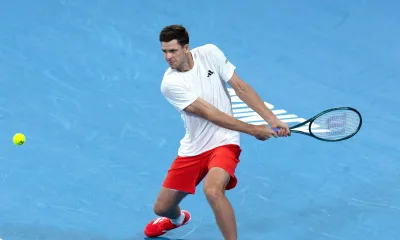
Hurkacz edges Zverev in straight sets in United Cup return
-

 ATPPlayer NewsWTA2 months ago
Vesnina rejects claim that podcast aired unapproved Kudermetova anecdote about Rune