Australian Open Australian Open women's draw Grand Slam
Alycia Parks weathers vocal Court 6 crowd to overcome Alexandra Eala in three sets
Parks steadied after a tense opening set to defeat Alexandra Eala in front of a vocal Court 6 crowd.


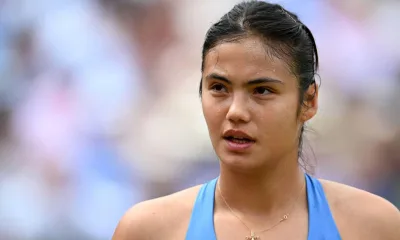
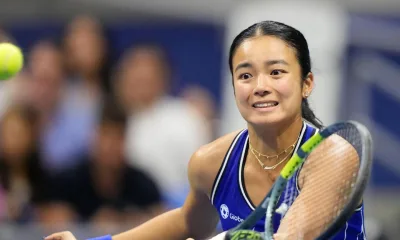
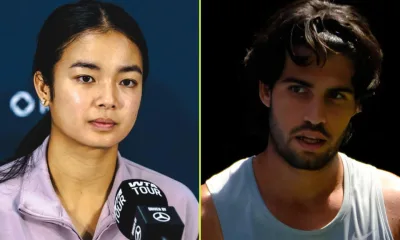
Alycia Parks recovered from a lopsided opening set to defeat Alexandra Eala, 0-6, 6-3, 6-2, on a packed Court 6 where a standing-room only contingent of Filipino fans created a charged atmosphere. The big-serving American steadied after early nerves and closed out the match in three sets.
“That’s one of the things that makes a loss like today a little bit harder is I know a lot of people were rooting for me,” the 20-year-old Filipina No. 1 said in her post-match press conference. Eala arrived at the tournament on the back of a breakthrough 2025 season when she stunned world No. 2 Iga Swiatek en route to the Miami Open semifinals, and she was the first from her country to win a Grand Slam main draw match at the US Open last summer.
Eala dominated the first set, blanking Parks, but the American regrouped and used her power game to shift the momentum. “It was very difficult,” a smiling Parks said after the match. “It was like, I was expecting it, but I wasn’t. She definitely has a good crowd. I was just telling myself to stay in the zone and that I got to do what I got to do.”
Parks, who made a notable run at this tournament in 2024 when she reached the third round against Coco Gauff, has battled consistency since that breakthrough. The early crowd reaction visibly rattled her—she netted two overheads in her opening service game and was broken—but she found rhythm as the match progressed.
“It definitely wasn’t the worst,” she said of the crowd’s general decorum, “but in between first and second serves and the clapping when you miss, that’s just something I had to ignore and get used to the whole match.” Parks also cited experience in hostile environments at Roland Garros as a factor in her ability to finish the match. “I don’t know what my record is with crowds that are against me, but it definitely puts a fire under me!” she laughed. “I would say I’m good when crowds are against me.”
Eala noted the week had been intense, with large turnout even at practice sessions. “I didn’t expect that many people to be there,” said Eala. “So it’s a learning process, like anything.
Her online presence is even greater; a video of her pre-tournament press conference boasts views in the six figures, dwarfing those of even the likes of Carlos Alcaraz and Jannik Sinner. “I like to think that I have a following for a reason. I like to think that the impact that I’ve had and the platform that I’ve built has a positive effect on a certain demographic and my demographic.
“Yeah so, I mean, I guess this is one of the moments that I can reflect on what this means for Philippine tennis. I’m the only Filipina in the draw this year. I’m the only Filipina that’s ever been in the draw, I think. So there are positives to take away.”





Australian Open Grand Slam
Sabalenka fined after US Open final outburst as Williams sisters avoid media sanction
Sabalenka was fined for her US Open final conduct, while the Williams sisters escaped sanction.
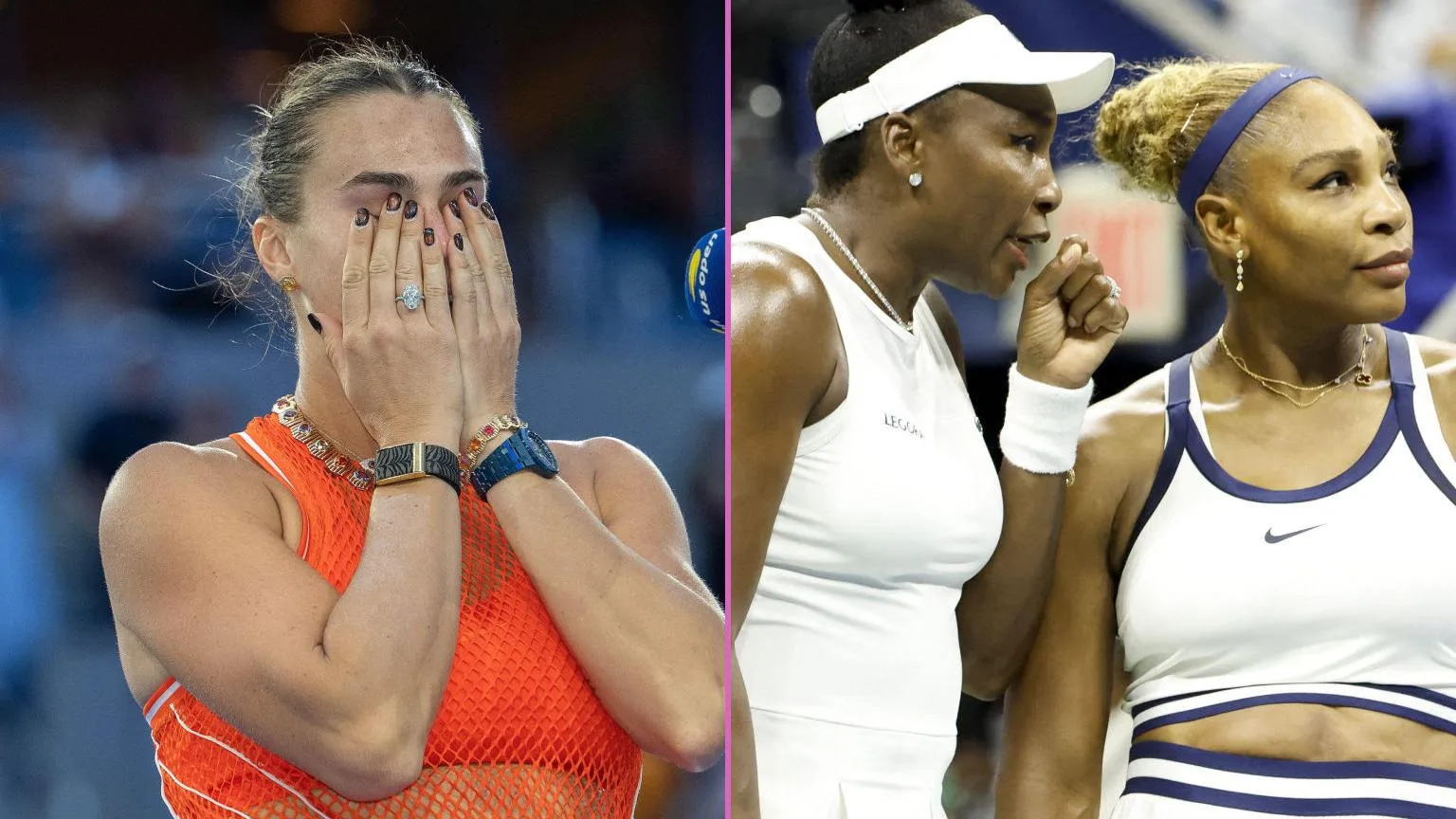
Aryna Sabalenka’s frustration in the US Open final has led to a fine, while organisers did not penalise Venus and Serena Williams for missing a post-match press conference.
Sabalenka, a four-time Grand Slam champion, struggled to contain her emotions throughout the match against Elena Rybakina and repeatedly showed her anger during and after the three-set defeat. Her most costly moment came after she was broken in the opening set following a double fault, when she hit a ball into the Arthur Ashe Stadium crowd and received a code violation.
That breach has now brought a $7,500 fine from the United States Tennis Association. The penalty is modest compared with the $2,800,000 cheque she collected for finishing runner-up. Her reaction did not end there. She later struck another ball toward the back of the court and came close to hitting a cameraman.
After the match, and after the customary handshake with Rybakina, Sabalenka went back to her bench and smashed her racket several times. She also told a cameraman to “f*** off” while waiting for the post-match presentation ceremony to begin. Even so, the only sanction imposed on her was for the code violation.
The Williams sisters, meanwhile, avoided punishment after declining to speak to the media following their first-round doubles loss. Venus and Serena entered the event via wildcard, with Serena appearing at Flushing Meadows for the first time since 2022, but they were beaten in three sets by Chan Hao-ching and Maya Joint.
Although press conferences are mandatory at majors, the pair were not fined. The USTA’s statement after the match simply read, “Serena and Venus Williams will not be available for press tonight.”
Elsewhere, Luisina Giovannini received the largest fine of the tournament, a $20,000 penalty after her opening qualifying match was judged below standards. Corentin Moutet was the only player to be fined twice.
1000 Australian Open
Croft says Sabalenka’s attitude undermined her in the US Open final
Croft said Sabalenka’s negativity and frustration shaped the US Open final.
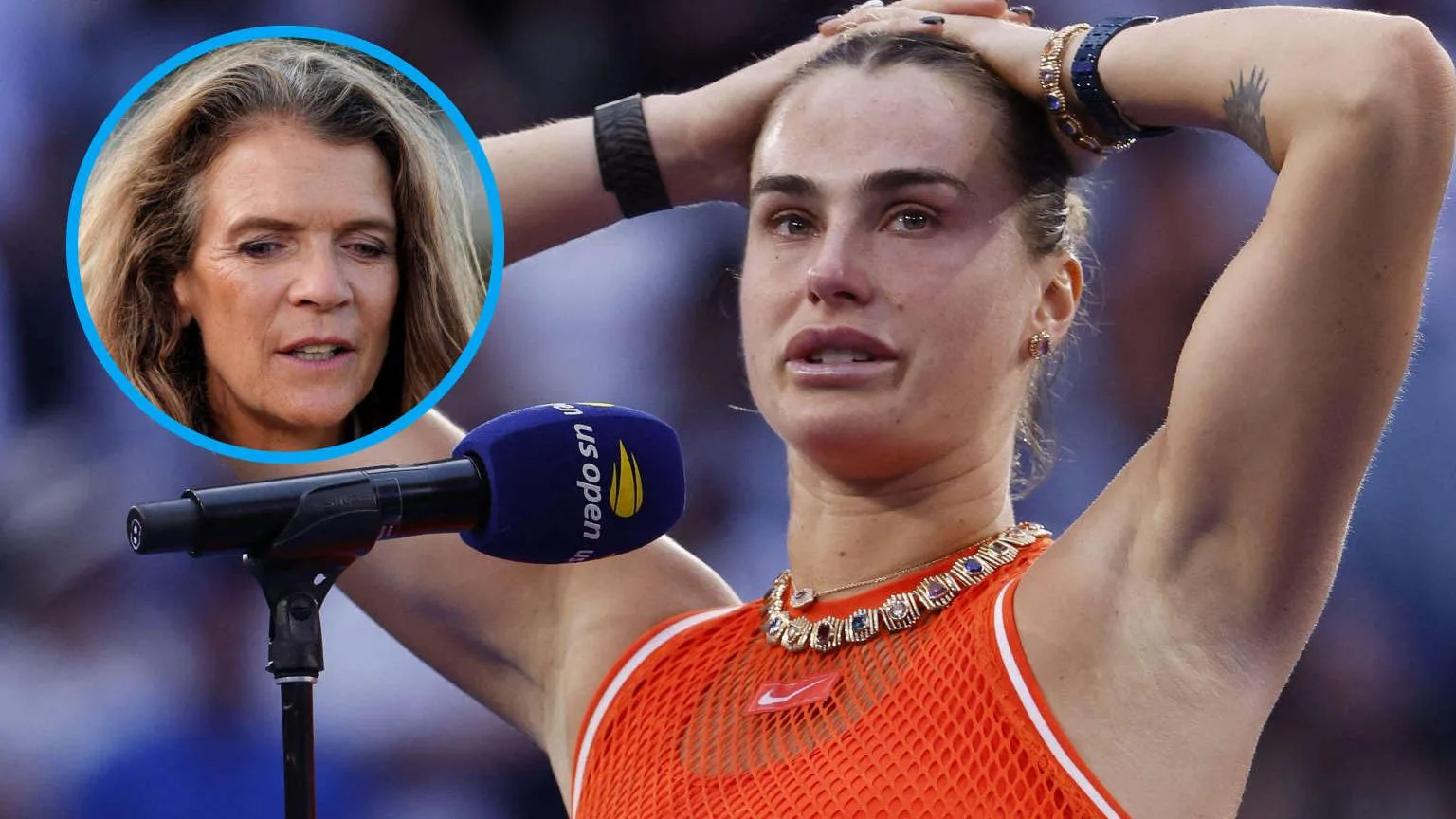
Aryna Sabalenka’s defeat to Elena Rybakina in the US Open final was framed by Annabel Croft as a case of self-inflicted damage, with the former British No 1 arguing that Sabalenka’s negativity and lack of respect for her opponent’s level proved costly.
Sabalenka had carried into the match an impressive recent record in New York. She had lost only once at Flushing Meadows over the previous three years, and that lone defeat came against Coco Gauff in the 2023 final. She then won the title in 2024 and 2025 and was chasing a third straight crown, a feat only two women have managed before.
The opening set shifted the momentum. Sabalenka saved three break points in game three, but was broken two games later and Rybakina served out the set. The outgoing world No 1 improved in the second, and a late break in game 13 forced a decider, but Rybakina seized control again with breaks in games three and seven to complete a 6-4, 5-7, 6-2 win.
Croft, speaking on BBC Radio 5 Live, said: “It was extraordinary to witness because she had been very negative on herself with her body language in that first set and suddenly the emotions got the better of her,” Croft said on BBC Radio 5 Live.
“I felt like that really contributed to her going down in that first set. She was beating herself.”
Sabalenka’s frustration was plain to see. At one point she smashed a ball into the Arthur Ashe Stadium crowd, then threw her racket into the air after the loss was sealed before smashing it again when she returned to her bench.
She will be replaced at No 1 in the WTA Rankings by Rybakina on Monday. During the on-court interviews, Sabalenka said: “That’s the last thing I want to do right now is give a speech, but I’ll try my very best.”
After she gathered herself, she added: “Obviously I’m disappointed but I want to congratulate Elena on an incredible year and incredible results. Well-deserved. Enjoy it. Have fun tonight, tomorrow and the end of the season so I can win some titles.”
Croft remained unimpressed, adding: “I think what happened was the minute she started to not respect the level of tennis her opponent was playing, she couldn’t handle it at all.
“You have to respect what they’re putting out there and applaud it but then find ways to dig in and find another way to compete with them.
“It was almost like throwing the toys out of the pram today.”
ATP Tour Australian Open
Australian Open’s future format debate gathers pace after Abdo remarks
Abdo’s remarks have reignited the Grand Slam format debate in Melbourne.
The Australian Open has spent recent years embracing change, and its crowds have continued to rise year after year.
One of the clearest examples came in Melbourne this season with the introduction of the One Point Slam, a one-point contest that matched professional players with amateurs and became one of the tournament’s most discussed features. The event also welcomed Roger Federer back to the venue for the first time since retirement and staged a number of exhibition matches. Even so, further alterations could still be on the horizon for 2027.
New Tennis Australia chief executive Andrew Abdo, who has replaced Craig Tiley, has floated the possibility of significant changes to the scoring structure at the Melbourne event.
“Maybe in the future, Slams at the different rounds, or at different lengths of duration, maybe we’re not playing best-of-five all the way through, maybe the point scoring system changes,” said Abdo.
That suggestion has already drawn criticism from fans on social media, many of whom remain strongly attached to the sport’s traditions.
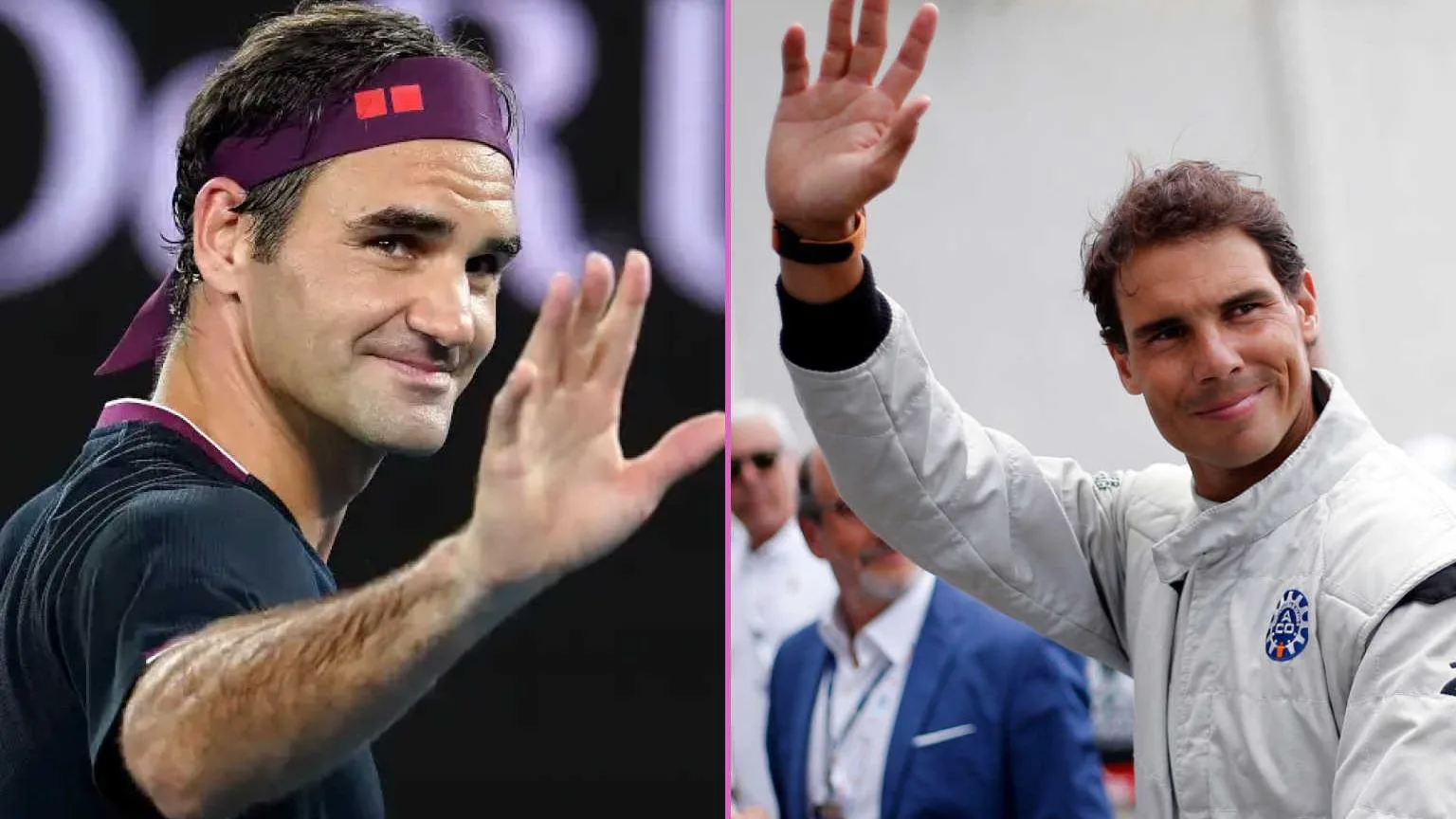
The debate is not new. Roger Federer and Rafael Nadal both defended best-of-five-set matches at the majors, with Nadal saying in 2020: “I mean, winning Grand Slam, playing best-of-three demand to the player something else, no? Stronger mentally, stronger physically, be solid for such a long time and for such a long two weeks. So I really believe that’s the right thing to do.”
Federer was equally firm. “It won’t happen, the best of three stuff,” said the Swiss icon. “The tradition of tennis is having best-of-five at the majors and that will remain. Those who want best-of-three don’t really have the best interests of tennis at heart.”
There has also been support for change from other leading players. Novak Djokovic said in 2020: “I am more of a proponent of best-of-three sets everywhere. You asked me why. I just feel that we have enough tournaments, enough matches during the year.
“We have the longest season of all sports, any sport in the world. Tennis has the longest season from January 1 to end of November. Literally every single week you have tournament somewhere.”
If such a shift does arrive in 2027, Djokovic could be one of the main beneficiaries. He has already been pushed through several five-set Grand Slam matches this year, including against Joao Fonseca and Felix Auger-Aliassime, and those contests have left the 24-time Grand Slam champion heavily drained.

Zverev Arrives at Laver Cup With Europe’s Title Bid in Focus

Alex Eala opens Singapore challenge against Prozorova as ranking gains loom

Zverev’s breakthrough season rewrites a long-running story

Raducanu Arrives at US Open With Momentum After Strong Hard‑Court Swing

Maestrelli Triumphs in Bergamo, Claims Challenger Title and Career‑High Ranking