
ATP Australian Open Grand Slam
Fritz cites short off-season and knee recovery for sluggish start at Australian Open
Fritz advanced in four sets, blamed a four-week off-season and gave an update on his knee.

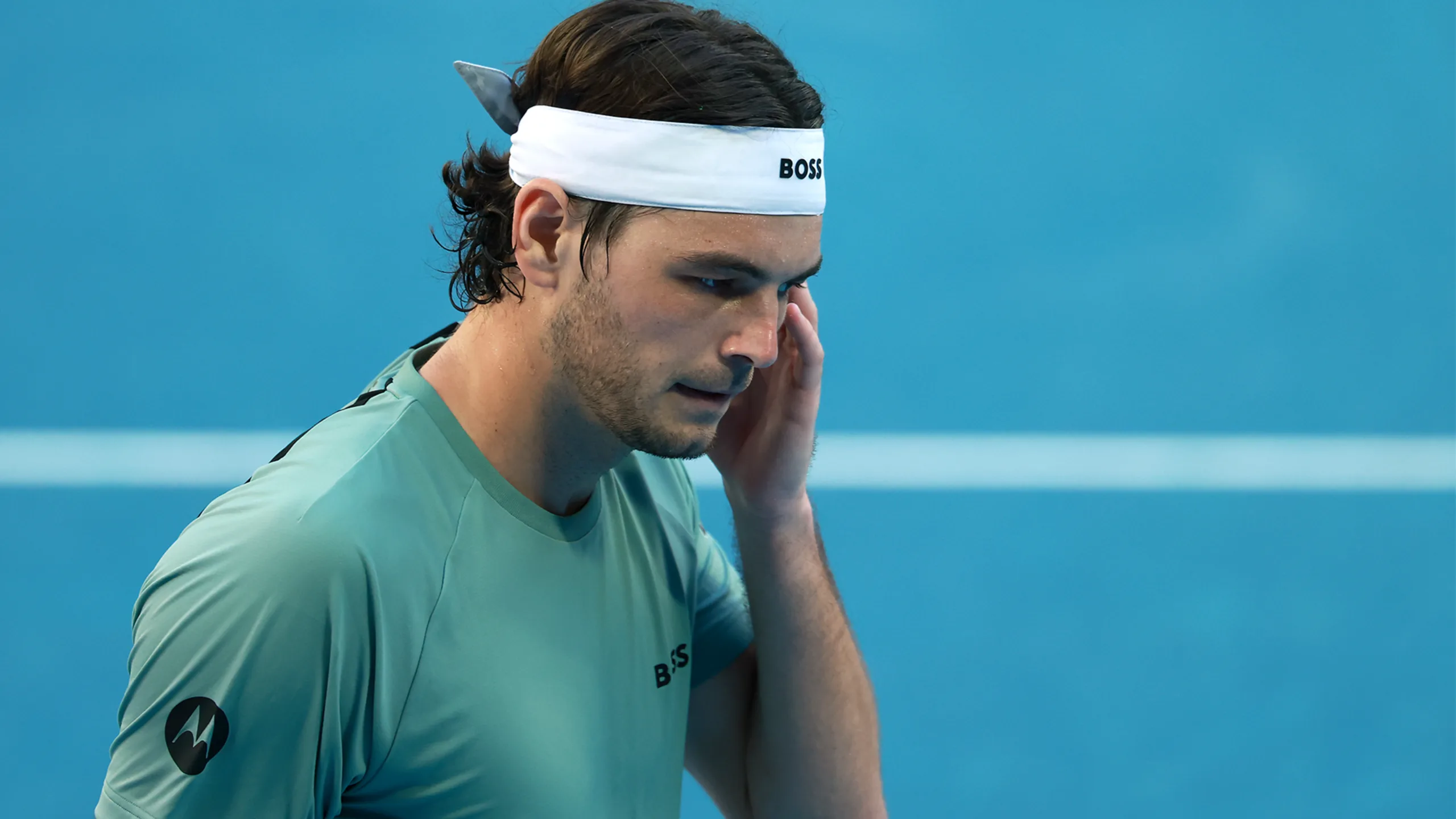
Taylor Fritz opened the season carrying a knee issue and suggested the brief off-season is contributing to a spate of early injuries at the Australian Open. He moved into the second round with a 7-6 (5), 5-7, 6-1, 6-3 victory over Valentin Royer but acknowledged he did not arrive at full strength.
“Maybe the season is too long, I don’t know,” Fritz said sarcastically after advancing past Valentin Royer, 7-6 (5), 5-7, 6-1, 6-3. “Maybe four weeks isn’t enough to fully get healthy of all injuries.
“You know, it is what it is. You know, I think I laid a lot of groundwork in the off-season to get healthy. But at the same time the off-season is so short, you need to be like training hard in the off-season or else you come into the year feeling like you’ve not played enough matches or had enough time on court, which is very much how I feel.
“Yeah, I mean, it’s tough when, you know, we have an off-season that kind of forces you where you have to be healthy in it to train or else you’re kind of in a bad spot to start the season. It’s not the best situation.”
Fritz, the No. 9 seed, said he played more freely after the second set and that the match length tested his fitness after a United Cup campaign in which the knee was visibly affected.
“When I came out for the third, I was just much more calm and relaxed and my mind was just working a lot more clearly,” the No. 9 seed said in his post-match press conference. “I felt like just my decision-making was so much better.
“I knew what shots to hit. I wasn’t, like, going over in my head as I’m hitting a shot what I should do like I was the first two sets. I just felt very, like, calm and confident. I really felt like myself the last two sets.”
On his physical status ahead of a second-round meeting with Vit Kopriva, Fritz gave a cautious update.
“There’s been some pretty big improvements in my knee,” Fritz confirmed. “That was the goal to start feeling that about a little over two months into this, the program of strengthening the tendon. But, you know, I’m way better than I expected to be after how I felt my first week or so in Australia. Yeah, I didn’t expect to be able to play, I guess, the physicality and the length of the match I played today and actually not have my knee feel like awful right now. It’s really promising.
“But unfortunately, there were some other injuries that popped up this week kind of when I was getting ready, which sucks. I don’t want to get into it too much. I might talk about it after the tournament. But I’m kind of just having to feel it as I go because it’s something I’ve dealt with before, so I, you know, am familiar with it.”
Fritz also described a familiar off-court ritual with fellow Americans during the event. “It makes sense in Australia, because it’s like we start the year, there’s some time before the tournament,” Fritz said. “You know, a lot of us haven’t seen each other because of off-season and stuff like that. So, you know, we always do it here.
“I don’t have every American guy’s number. And there’s new guys that come up. So, I put six or seven of the guys in the group chat, and everyone is invited. I’m getting the big table.”




ATP Masters Miami Open
Sinner Moves Past Federer to Third in Masters 1000 Winning Percentage
Jannik Sinner moved past Roger Federer to third in Masters 1000 win percentage after Miami win. Tue.
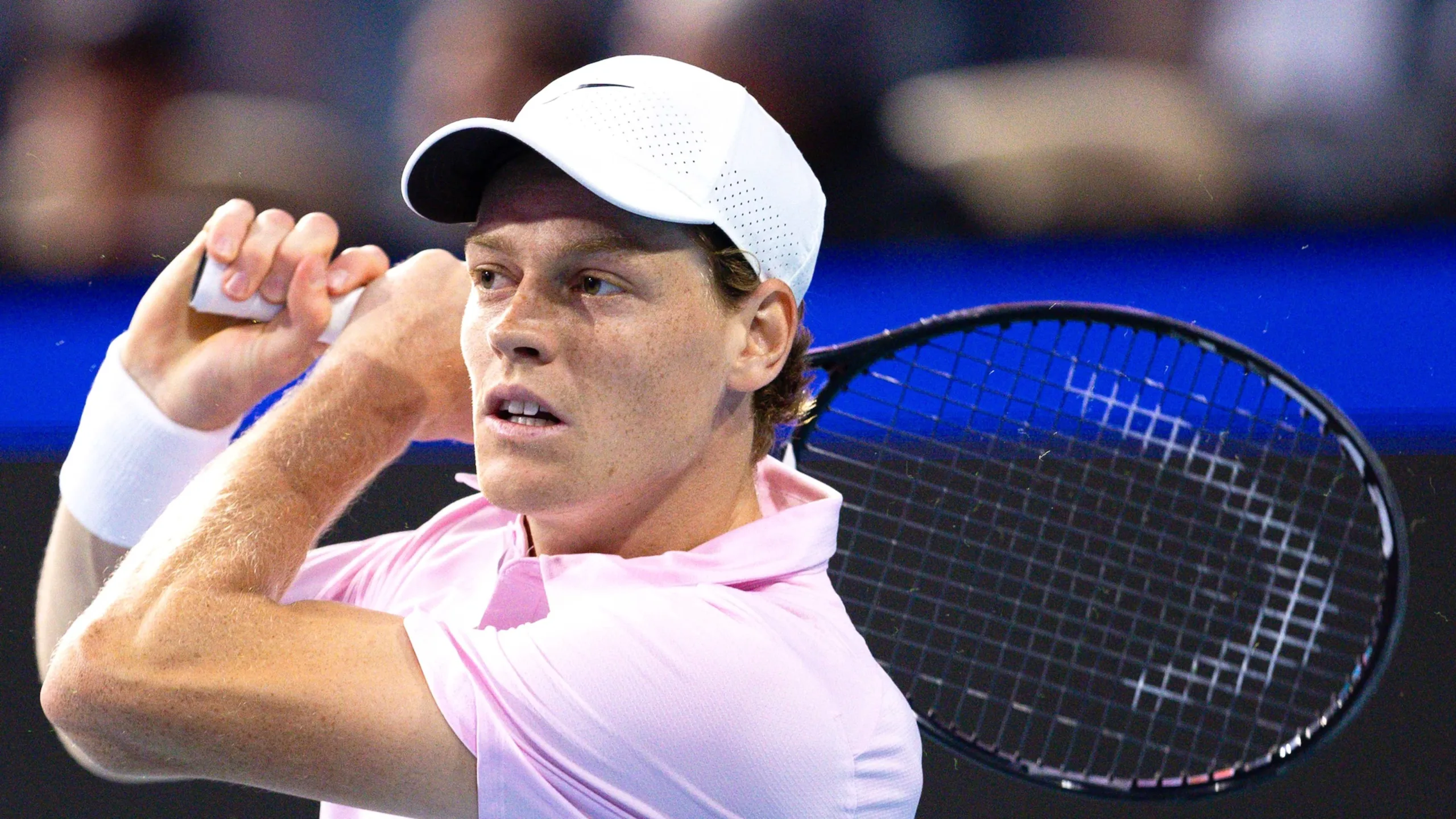
Jannik Sinner added another statistical milestone to his season by moving ahead of Roger Federer for the third-best career winning percentage in Masters 1000 events. The list, which dates back to 1990, now places Sinner behind only Rafael Nadal and Novak Djokovic.
The shift came after Sinner beat Alex Michelsen 7-5, 7-6 (4) in the fourth round of the Miami Open on Tuesday. Less than 24 hours earlier he had set a separate Masters 1000 mark by breaking the record for most consecutive sets won at those events.
Sinner entered Miami at No. 5 on the all-time Masters 1000 winning percentage list. The sequence of results around the third round altered the standings: Carlos Alcaraz fell out of the spot ahead of Sinner after losing his third-round match, and Sinner’s third-round victory moved him to .7786, immediately behind Federer.
With the fourth-round victory over Michelsen, Sinner improved his career Masters 1000 winning percentage to .7803 and passed Federer for third place. According to the current standings, he cannot rise higher than third on the list even if he wins the Miami Open.
The rapid progression up the Masters 1000 winning-percentage list has come alongside Sinner’s other form lines at these events this season, reinforcing his consistency at the highest level of the tour’s Masters series. The milestones underline a sustained run of results in tournaments that have been tracked since 1990 and place Sinner among the sport’s most efficient performers at the Masters 1000 level.
ATP Masters Miami Open
Lehecka’s aggression topples Fritz in three sets to reach Miami Open quarters
Lehecka leaned into aggression, serving 10 aces and advancing past Taylor Fritz in Miami in QF run.
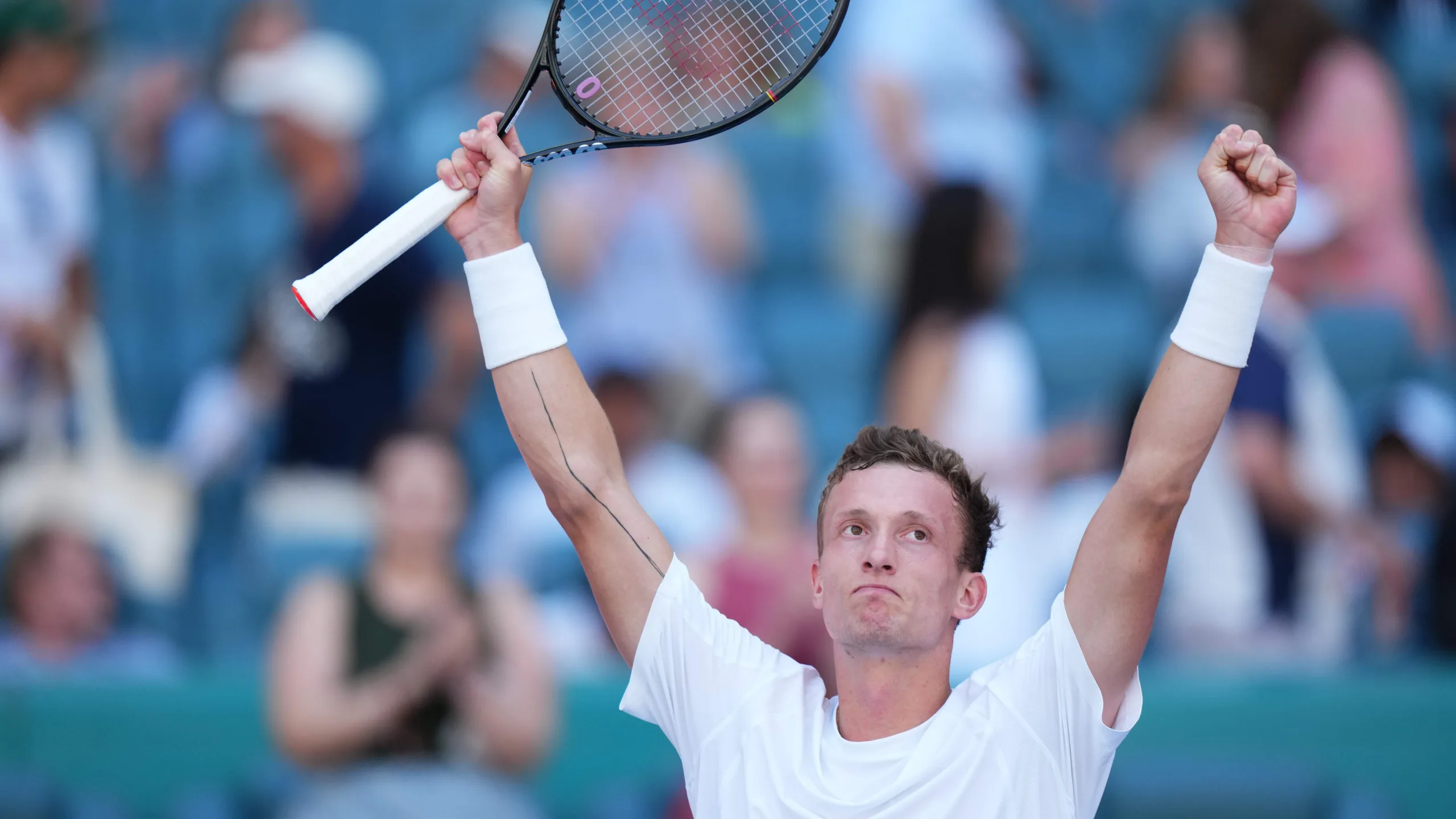
Jiri Lehecka leaned on aggression and timely serving to beat Taylor Fritz 6-4, 6-7 (2), 6-2 and advance to the Miami Open quarterfinals. The No. 21 seed served 10 aces, saved all five break points he faced and closed out the victory in just under two and a half hours.
“I kind of felt that in the second set, I gave Taylor a little bit more time to play how he wants to,” the No. 21 seed told Prakash Amritraj. “I wasn’t feeling great, didn’t create that many chances.
“So, that’s why I needed to improve this in the third set, to be more aggressive from the return and finish points at the net.”
Lehecka’s win ended a matchup that Fritz had previously led 4-1 in their head-to-head. The American entered the fourth-round clash as the No. 6 seed but has struggled physically in recent months and had weighed an extended break from the game coming into the Masters 1000 event. Still, Fritz forced a deciding set after winning a second-set tiebreak.
“Against a player like he is, I really need to bring my ‘A’ game,” said Lehecka, who had never been past the third round in three previous main-draw appearances in Miami. “I need to serve well and I can’t give him any chance to feel comfortable on court. So, that’s what I was trying to do. Of course, it’s impossible to hold it the whole match, but I was close.”
Lehecka will meet Spanish qualifier Martin Landaluce in the last eight. The 20-year-old reached the quarterfinals by winning a third straight set to end No. 32 seed Sebastian Korda’s run, a day after Korda stunned world No. 1 Carlos Alcaraz in three sets.
“It gave me a signal to change something,” Lehecka said of the setback. “I needed to be a little bit more aggressive. Against a guy like him, who is serving incredibly, his return is one of the best on tour. I kind of feel that he can absorb the fast balls easily. At the same time, he can create the power by himself. Sometimes, when you play someone like Taylor, you feel like this guy has answers for everything. That’s what I didn’t want to feel today, and that’s why I was focusing more on the openings of the points. It worked well.”
“You always need to stay in the present, which is so easy to say, but when you’re on the court and the opponent plays well, you’re not feeling great and it’s the biggest challenge!” said Lehecka. “Today, I think my game helped me a little bit to feel good on court.”
ATP Masters Miami Open
Three Miami Open Quarterfinals to Watch: Muchova-Mboko, Michelsen-Sinner, Gauff-Bencic
Muchova vs Mboko, Michelsen vs Sinner, and Gauff vs Bencic: three must-see Miami Open quarterfinals.
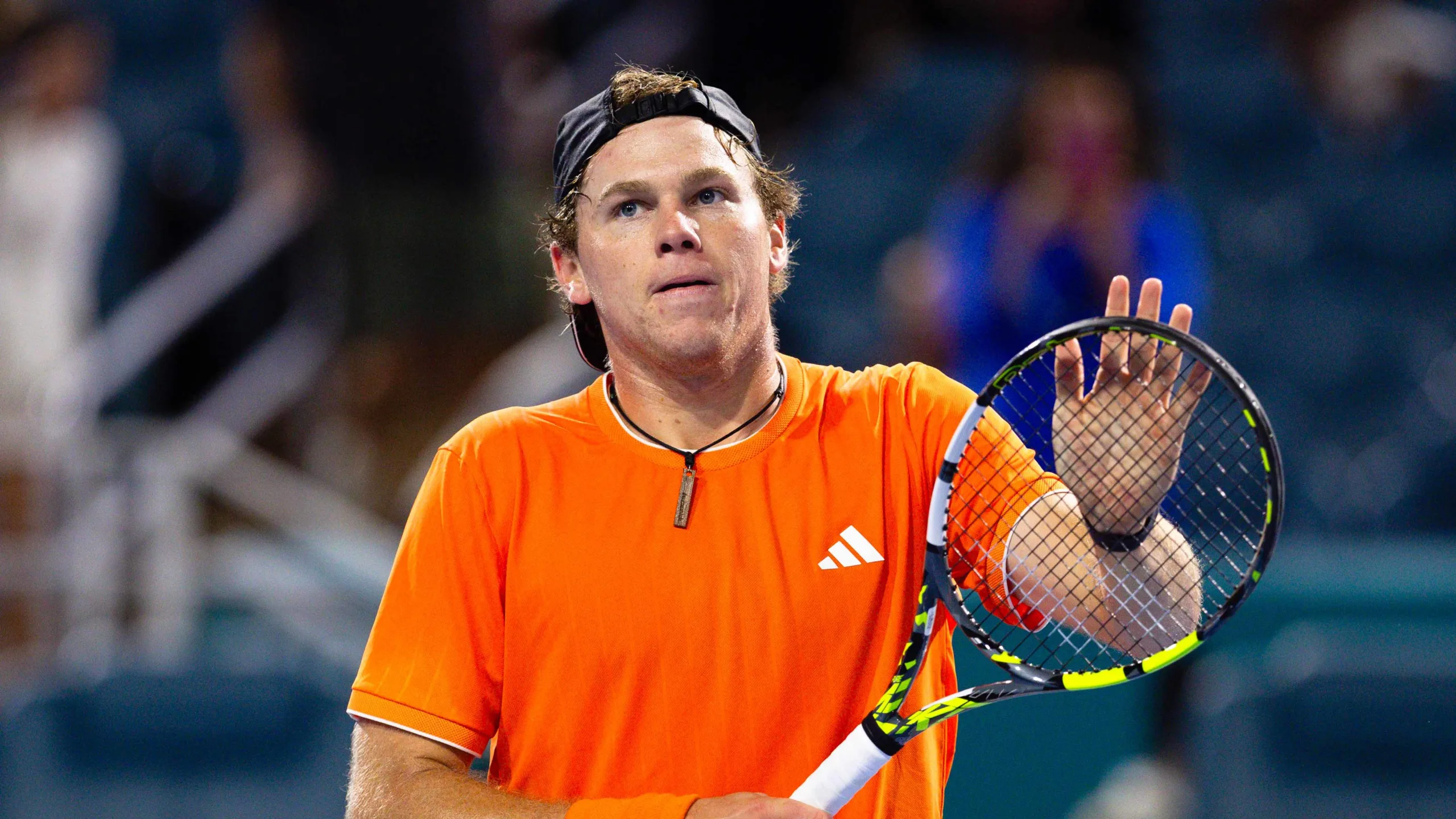
This day’s slate at the Miami Open centers on three intriguing quarterfinals that promise contrasting styles and storylines.
Karolina Muchova arrives off a 6-0, 6-2 win over Alex Eala, but Victoria Mboko is hardly an easy draw. “I just know it’s going to be very tough,” Mboko says of facing Muchova. Mboko lost to Muchova in the Doha final last month, 6-4, 7-5, yet she brings credentials of her own: she is ranked five spots higher (No. 9 to 14), reached the Indian Wells quarterfinals where she fell in two tight sets to Aryna Sabalenka, and recently beat Mirra Andreeva in three sets. Mboko’s game currently leans on groundstroke pace and foot speed; her stated objective is to extract more free points from her serve. “Hopefully I can kind of just work with my game and just see what patterns I could do, or whatever I can do to try to gain more free points,” Mboko says. Muchova has more variety to deploy, but she can be overpowered, as Iga Swiatek showed with a 6-2, 6-0 victory at Indian Wells. Winner: Mboko
On the men’s side, Sebastian Korda recently stunned Carlos Alcaraz, and Alex Michelsen will attempt a similar leap when he meets Jannik Sinner. The 21-year-old Californian has shown signs of growth: a Brisbane semifinal to start the year, three wins at Indian Wells including over Taylor Fritz, and two tight Miami wins, over Norrie and Tabilo, both 6-4 in the third. Michelsen has lost twice to Sinner; their first meeting in Cincinnati in 2024 finished 6-4, 7-5 and was closer than the score suggests, while a month later at the US Open Sinner lost just six games in three sets. Sinner is chasing his first Sunshine Double and is a three-time Miami finalist. The 6’4″ Michelsen brings more serve heat than Sinner’s recent opponents. Sinner is the favorite, but Michelsen is maturing and the crowd could matter. Winner: Sinner
Coco Gauff reaches her first Miami quarterfinal in seven appearances after three three-set wins over unseeded opponents. “There’s always that extra layer,” Gauff says of playing in South Florida, where she grew up and still lives. “You just see familiar faces in the crowd. You don’t want to disappoint them.” Her opponent, Belinda Bencic, is a counter-puncher; the two met four times in 2025 with Gauff winning three, two of them in three sets, and Bencic taking the Indian Wells rematch 6-4 in the third. Expect long points and momentum swings.

Sinner Moves Past Federer to Third in Masters 1000 Winning Percentage

Lehecka’s aggression topples Fritz in three sets to reach Miami Open quarters

Three Miami Open Quarterfinals to Watch: Muchova-Mboko, Michelsen-Sinner, Gauff-Bencic

Alcaraz Confronts On‑court Microphones During US Open Practice Ahead of Opelka Match

Raducanu Arrives at US Open With Momentum After Strong Hard‑Court Swing

Cervara: Ending an eight‑year partnership with Medvedev was necessary to change the energy
-
 ATPAustralian OpenGrand Slam2 months ago
Medvedev says he will not underestimate Learner Tien as their Australian Open rivalry resumes
-
 ATPAustralian OpenGrand Slam2 months ago
Offseason Focus: How Eliot Spizzirri’s Boca Raton block set up his Australian Open breakthrough
-
 ATPAustralian OpenGrand Slam2 months ago
Jakub Mensik withdraws with abdominal injury, Novak Djokovic advances at Australian Open