Australian Open Australian Open women's draw Grand Slam
Madison Keys: grounded champion defending her Australian Open crown
Madison Keys, 30, defending Australian Open champion, advanced to the third round, 6-1, 7-5. always.

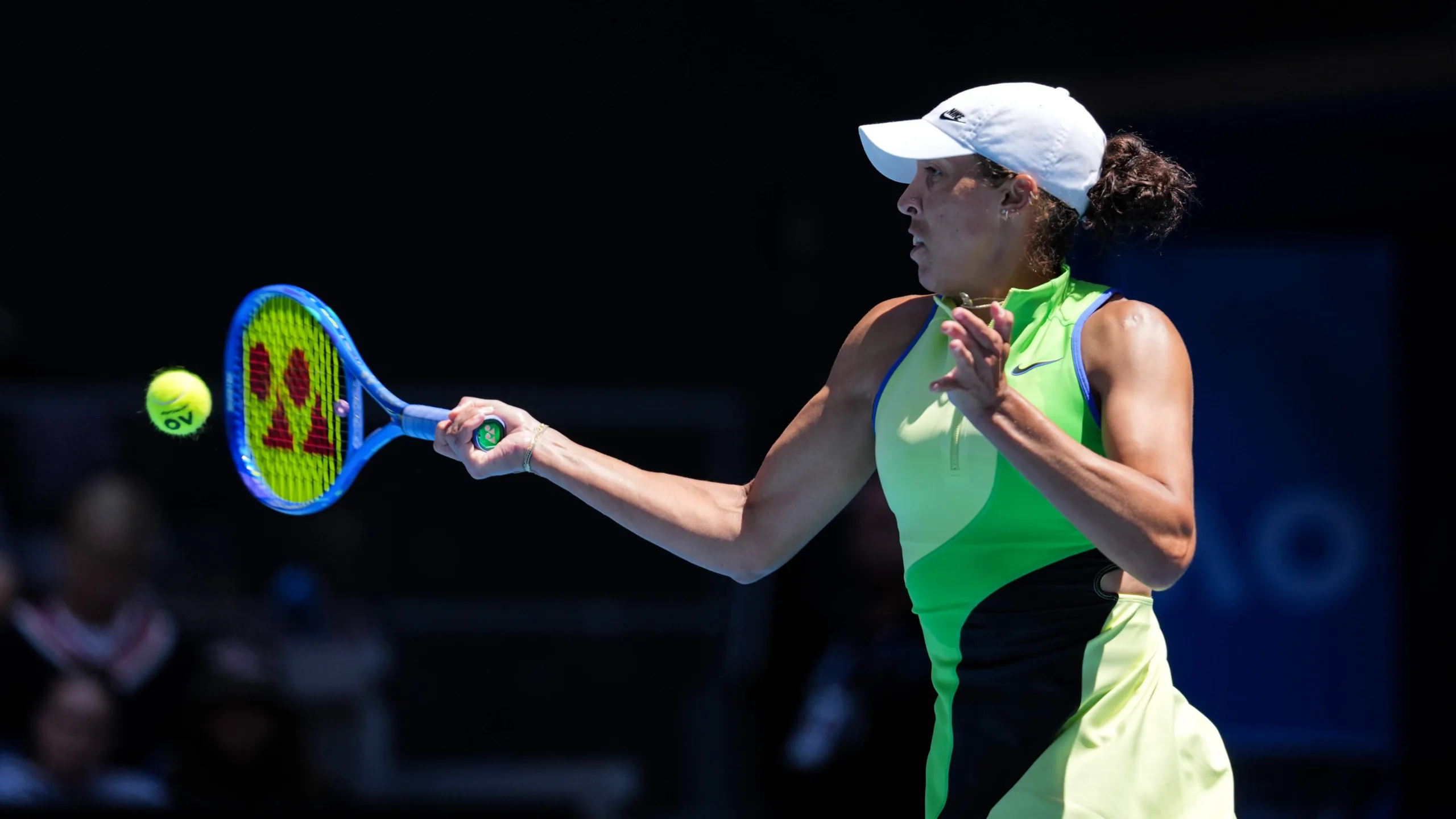
Madison Keys closed a long chapter last year when she won the Australian Open, ending a decade of chasing a Grand Slam singles title. In the months since, fans and fellow players have asked how the victory has changed her life. “It’s funny, everyone keeps asking me that,” Keys told reporters a few days ago, before launching her campaign to defend the title. “It hasn’t changed that much, other than I have a really cool trophy at home.
“I also have a lot of people that come up to tell me that my winning made them cry. It’s just really been cool as an athlete to have had that impact [because] I’ve always tried to be very open and honest with everything that goes on in the sport. I kind of do my part of humanizing this part of the sport.”
Now 30 and ranked No. 9, Keys has evolved from an early prodigy into a Grand Slam champion known for a thunderous forehand and a commitment to well-being. She remains averse to celebrity culture and has focused much of her energy off court on the anti-bullying foundation she started in 2020, Kindness Wins.
Keys advanced to the third round of the Australian Open with a 6-1, 7-5 victory over compatriot Ashlyn Krueger and is set to face Karolina Pliskova. “I started really well,” Keys said in her post-match interview. “Obviously. I was expecting Ashleigh to raise her level, which she did. I was just really happy that I was able to stay gritty and stay in that second set and be able to get out of it with a straight-sets win.”
She has been an outspoken advocate for mental-health support in the sport. “It’s been incredibly helpful to me,” she said in a news conference. “I’ve tried sports psychologists in the past, but for me just everything being so focused on just the sport and just tennis was not as helpful as I needed it to be.
I think really going to someone and kind of looking at my overall life, and kind of how that was influencing how I felt on the court, probably made the biggest difference.
Marriage to fellow pro Bjorn Fratangelo in November of 2024 has also helped bring balance. “My husband has threatened that if I try to renovate any more parts of our house, I will be thrown out. I think it’s been 18 months of construction at our house. He’s asked me to at least take a year break, which I feel is fair.” She called traveling with her husband instead of solo “absolutely amazing.”
On player welfare she said, “I am more concerned about wanting these Slams to put it (money) towards player welfare [than just prize money],” she said in Melbourne.“I think the tours obviously do that, (with) our healthcare, pension and all that. I mean, at the end of the day, I think we’re all partners, and we all need each other.”
Reflecting on last year, Keys recalled keeping her focus point by point. “I kind of kept telling myself, ‘Just try to get the next point,’” Keys said after saving match point against Swiatek at the Australian Open. She added, “You just kind of have moments in your career where things just are going right. And that’s kind of how it felt for a couple of weeks,” she said. “It’s easy to look back and kind of romanticize it. I played unbelievable tennis, but everyone likes to remind me that I lost more games than anyone in history while winning a Grand Slam.” She wryly added, “So obviously there was some room for improvement there.”



Australian Open
Tiley says Australian Open still has room for change after USTA move
Tiley outlines fresh Australian Open ideas and renews debate over women’s best-of-five
Craig Tiley has stepped into his new position as CEO of the United States Tennis Association, but he is still looking back at the Australian Open with ideas for change.
Tiley ended his long spell at Tennis Australia last week before beginning work with the USTA. The South African had served as Tennis Australia’s chief executive since 2013, after taking on the Australian Open tournament director role in 2006. He first joined Tennis Australia in 2005 as director of player development.
On his first day in the USTA job, Tiley said: “The USTA has created a great platform to inspire further growth in tennis participation.
“We want to work with everyone within the tennis family to grow the sport beyond what anyone thought possible.”
While his attention now turns toward the 2026 US Open, Tiley has also argued that the season’s opening Grand Slam in Melbourne still offers “plenty of opportunity” for development.
Speaking on the Australian Open’s The Sit-Down podcast, he outlined the kind of start he would prefer for the event: “If I had my choice for the Australian Open, I would be starting with a blockbuster night on Saturday night, maybe the former champions opening up.
“Then I’d be going into a full day on Sunday and then giving the players enough rest because it’s three out of five sets. I’d have the women playing three out of five sets from the quarters onwards.
“Every day would be a festival, a minimum of 100,000 people a day for 21 straight days. All the other channels we have, like in music and food, really elevate those and lift those up.
“It rivals with the four weeks of Olympics once every four years pretty easily, so there’s plenty of opportunity.”
This is not the first time Tiley has publicly raised the idea of best-of-five sets for women’s Grand Slam matches. During the 2026 Australian Open, he told AAP: “It’s something we should put on the agenda and start talking to the players about it because there’s some matches in those last rounds which would have been fascinating had they been three out of five sets.
“Now I don’t know whether the players would want to do it or not, but it is something we need to consider on the women’s side.”
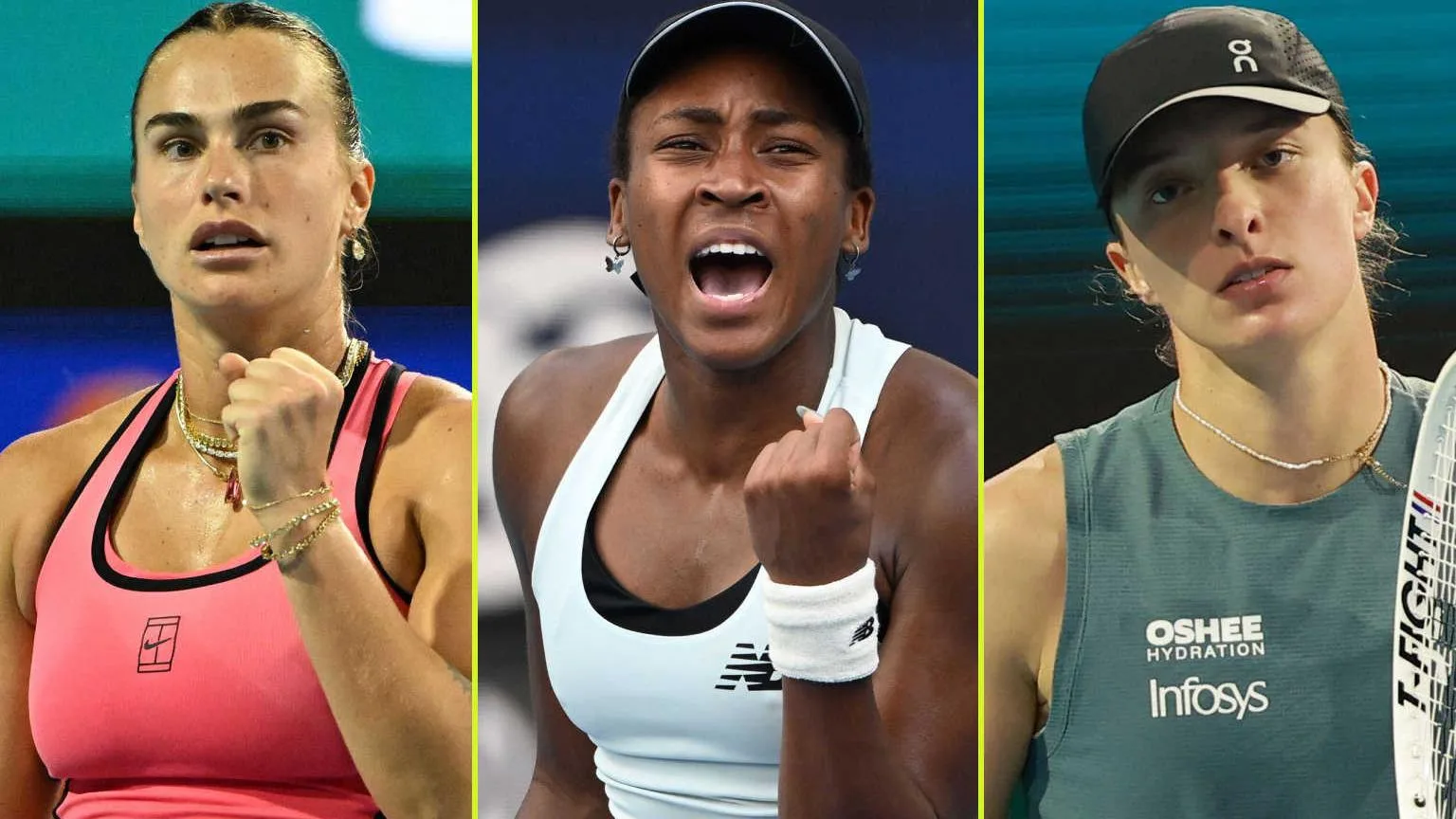
Several leading players have already made their preference clear. Iga Swiatek, Coco Gauff, Elena Rybakina and Amanda Anisimova all said in February that they would rather keep the current best-of-three format.
At the Qatar Open, Swiatek said: “I think with the world right now that is kind of, like, speeding up, I don’t really think it makes sense for us to play such long matches. Especially when I think it would be tough to keep the quality up throughout the whole match.”
Gauff added: “I like the way two-out-of-three is. I think best-of-five wouldn’t be terrible, but I don’t know. I feel indifferent towards the question, honestly.
“I like the way it is right now. Two-out-of-three feels right. I can be home at a good time. I feel like best-of-five we’re going to be out there until 5:00 a.m. like every day.”
Aryna Sabalenka, meanwhile, has supported the change, saying in March: “Let’s do that. Yeah, let’s do that. I feel like I would have probably more Grand Slams.
“I feel like physically I’m really strong, and I’m pretty confident that my body can handle that. So let’s do it.”
Australian Open Australian Open WTA Grand Slam
Carson Branstine criticizes inequality in tennis, calling the situation “the fact I’m not exaggerating is diabolical”
Branstine used TikTok to call out scheduling, medical and anti-doping inequalities in tennis season
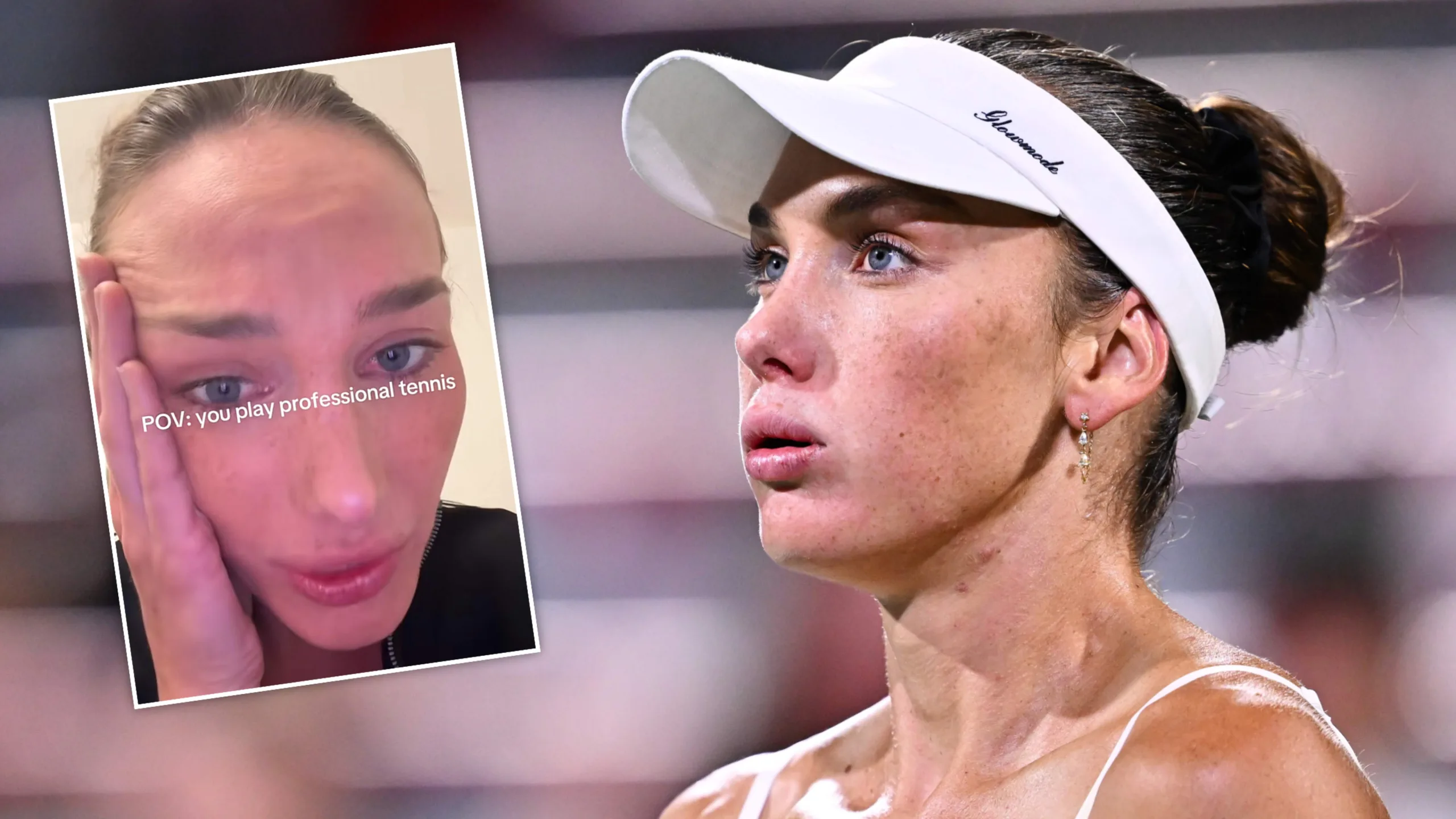
Carson Branstine has used social media to lay out a blunt critique of life for many professional players, even while sidelined by injury. The 25-year-old Canadian filmed a TikTok titled “POV: you play professional tennis” that sketches the realities faced by lower-ranked competitors.
Branstine, whose career-high ranking is No. 172, frames the clip as a series of mock conversations with tennis officials that expose costs and compromises beneath the tour’s surface. In the video she quips, “Merry Christmas! Your flight’s today. That’s your Christmas present,” and then adds, “But, like, you have to pay for it.” She follows with another exchange: “You can’t afford a coach?” and “That really sucks… I can’t help you.”
The most forceful section addresses perceived inconsistencies in anti-doping outcomes. “I mean, yeah she failed a drug test, but she’s No. 1 in the world,” Branstine says. “We need her to play…
“But, like, the other girl who is ranked No. 300 who (ate) contaminated meat? We’re just going to ban her for four years. We don’t need her.” She captioned the post, “the fact I’m not exaggerating is diabolical.” Branstine later clarified in the comments: “not referring to any specific players… it’s an example that has happened many times with different players.”
The video’s examples echo public outcomes that drew scrutiny: Iga Swiatek accepted a one-month suspension in late 2024 after low levels of trimetazidine were traced to a contaminated supplement, while Tara Moore received a four-year ban in 2025 after a positive test she has argued came from contaminated meat.
Branstine’s post also highlights the financial and medical precarity players can face. She recounts the consequences of injury: “So sorry about your injury! You’re not going to make a single dollar for eight months,” and notes the difficulty of obtaining support: “You must be crazy for thinking we would cover your medical bills from the tournament we hosted you at!
“Yeah, we have insurance, but it’s the most expensive insurance ever, of course.”
Branstine broke through in 2025 while funding her career partly through modeling, is enrolled at Texas A&M and qualified for the Wimbledon main draw in 2025. She opened the 2026 season in Australia, winning a first-round qualifying match at the Australian Open before retiring injured against Daria Snigur with a shoulder issue and has not returned to competition since.
ATP Australian Open French Open
Episode 17: Placing Arthur Fils’ Forehand and a Wide‑Ranging Chat with Marcos Baghdatis
The Big T: ranking Arthur Fils’ forehand, Marcos Baghdatis interview and Roland Garros expectations.
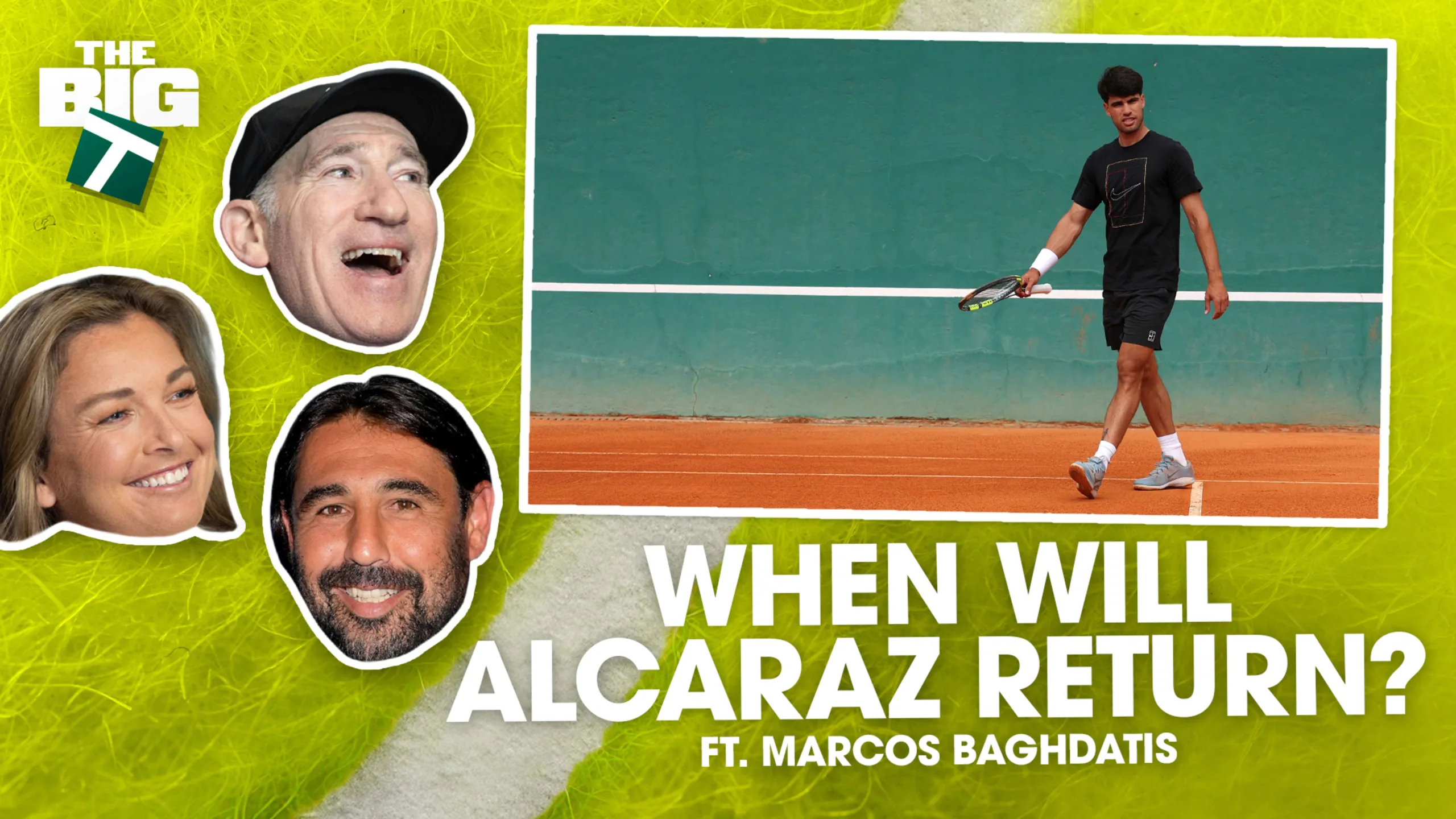
Episode 17 of The Big T focuses on two clear threads: the debate over Arthur Fils’ forehand and a reflective interview with Marcos Baghdatis. The show opened a conversation that began with a simple question posed on social media: “Is @ArthurFils FH the best in the men’s tennis game right now? @_markpetchey” Brad Gilbert replied that Fils’ “fearhand” is massive, while still favoring Jannik Sinner and Carlos Alcaraz. That exchange led to a co-host debate with Coco Vandeweghe (48:00) about the top forehands on tour. “I think it’s definitely top three,” said Vandeweghe. Gilbert placed Joao Fonseca in his top three and slotted Fils fourth. Both offered honorable mentions: Coco went with Jakub Mensik; BG with Jiri Lehecka. As Vandeweghe noted, “The players from Czechia have such weight of shot, because they play on fast courts and need to get that depth really quickly,” says Vandeweghe, “and it’s a flatter ball that pushes you further and further back.”
The episode also revisited Marcos Baghdatis’ peak years and his transition to developing young players. Twenty years ago at the Australian Open Baghdatis reached the final during an era dominated by Roger Federer. The show reminded listeners that “Federer won all his Slam finals in four sets, over Rafael Nadal (Wimbledon), Andy Roddick (US Open) and…Marcos Baghdatis (Australian Open).” Baghdatis reflected on his own ambitions: “I wanted to be No. 1 in the world. I wanted to push myself more … I was not patient enough. Marcos Baghdatis” (15:30). His career-high reached No. 8; he finished 2006 ranked 12th. The interview covered career records against the era’s top players (1-7 vs Federer, 1-9 vs Nadal, 0-8 vs Novak Djokovic) and his current role as tournament director of the IMG Future Stars Tournament, helping prepare the next generation.
Looking ahead to Roland Garros, the hosts discussed the vacancy created by Alcaraz being sidelined through Madrid and potentially Roland Garros. Gilbert placed Djokovic first despite limited clay this season: “First, at 39 years young, I would still go—with no playing in him [on clay this season]—Djoker,” says Gilbert. He listed Alexander Zverev second and Fils third, while Coco offered Ben Shelton as an honorable mention following his Munich win. To share your top three forehands for men’s and women’s tennis, email thebigt@tennischannel.com [thebigt@tennischannel.com], or call 844-678-BIGT. New episodes drop every Wednesday.

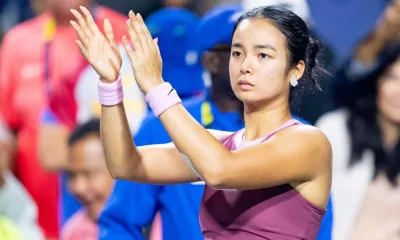
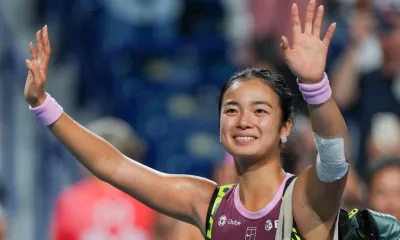
Eala advances in Cincinnati after Ruse retirement, and now faces Anisimova

Tirante stuns Djokovic in Cincinnati as Serbian exits in second round

Eala keeps momentum rolling with Cincinnati win as her profile continues to rise

Alcaraz Confronts On‑court Microphones During US Open Practice Ahead of Opelka Match

Raducanu Arrives at US Open With Momentum After Strong Hard‑Court Swing