
Australian Open Australian Open WTA Grand Slam
Anisimova Confronts Social Media Backlash After Reaching Australian Open Quarterfinals
Anisimova addresses online controversies after beating Wang Xinyu to reach Australian Open quarters.

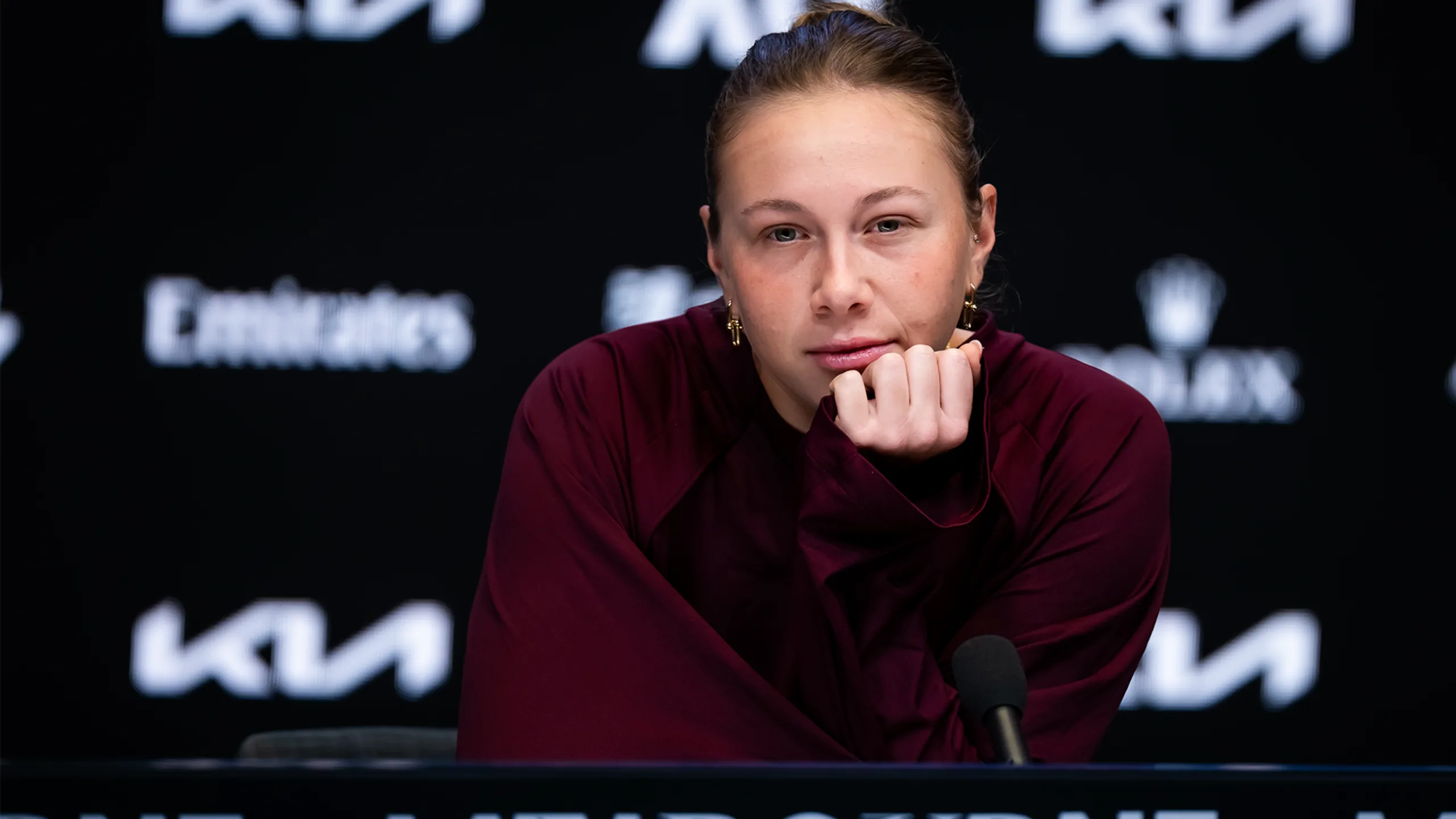
Amanda Anisimova spent her postmatch press conference addressing a week of online controversies after advancing to the Australian Open quarterfinals with a victory over Wang Xinyu.
“I feel like the Internet, it’s tough. It comes with the job, which is something I’ve learned to get used to,” Anisimova said after the win that moved the No. 4 seed into the last eight in Melbourne for the first time. “There are definitely days where it bothers me a little bit, and I tell myself it’s okay to get upset or frustrated, because at the end of the day, I’m human. But yeah, I mean, it can be pretty difficult. It’s not worth so much of my energy and time. That’s something that I’ve learned to get used to.”
The 24-year-old faced two flashpoints early in the tournament: she declined to answer a question about U.S. politics and a misleading clip circulated suggesting she struck a ball kid. She explained her earlier refusal by saying, “In my other press conference…I didn’t want to answer a question that was obviously intended for just, like, a headline and clickbait. That was my right. It had nothing to do with my political views or anything like that.”
Asked to clarify the political speculation, she said, “The fact that people assume they know my stance on certain important topics is just wrong, and it’s not factual.”
Responding to the doctored video, Anisimova wrote and then deleted a tweet and reiterated in person, “I didn’t even hit the ballkid,” confirmed Anisimova, who would have been defaulted from the tournament if she had. “You couldn’t even see it in the clip.”
“People are always saying something. Yeah, people just love talking about stuff that’s not even about the tennis.”
On court, Anisimova has been definitive, yet to drop a set at the tournament. She has now reached the quarterfinals or better at all four majors, having reached the finals of the last two at Wimbledon and the US Open. Her victory over Wang guaranteed at least one American woman in the semifinals by setting up a match with No. 6 seed Jessica Pegula.
“We’ve always had some great matches,” Anisimova said of Pegula. “It’s funny enough, I played her twice in the exhibitions in the pre-season. But yeah, I mean, she’s such a great player. I really like her game. I’m sure it’s going to be a tough battle again. We always, you know, really go for our shots when we play against each other. I feel like we always have really long rallies.”




Australian Open BNP Paribas Open Player News
Sabalenka in Gucci: front row at Gucci’s Fall 2026 show ahead of BNP Paribas Open
Aryna Sabalenka sat front row at Gucci’s Fall 2026 show in Milan and called the event “breathtaking”.
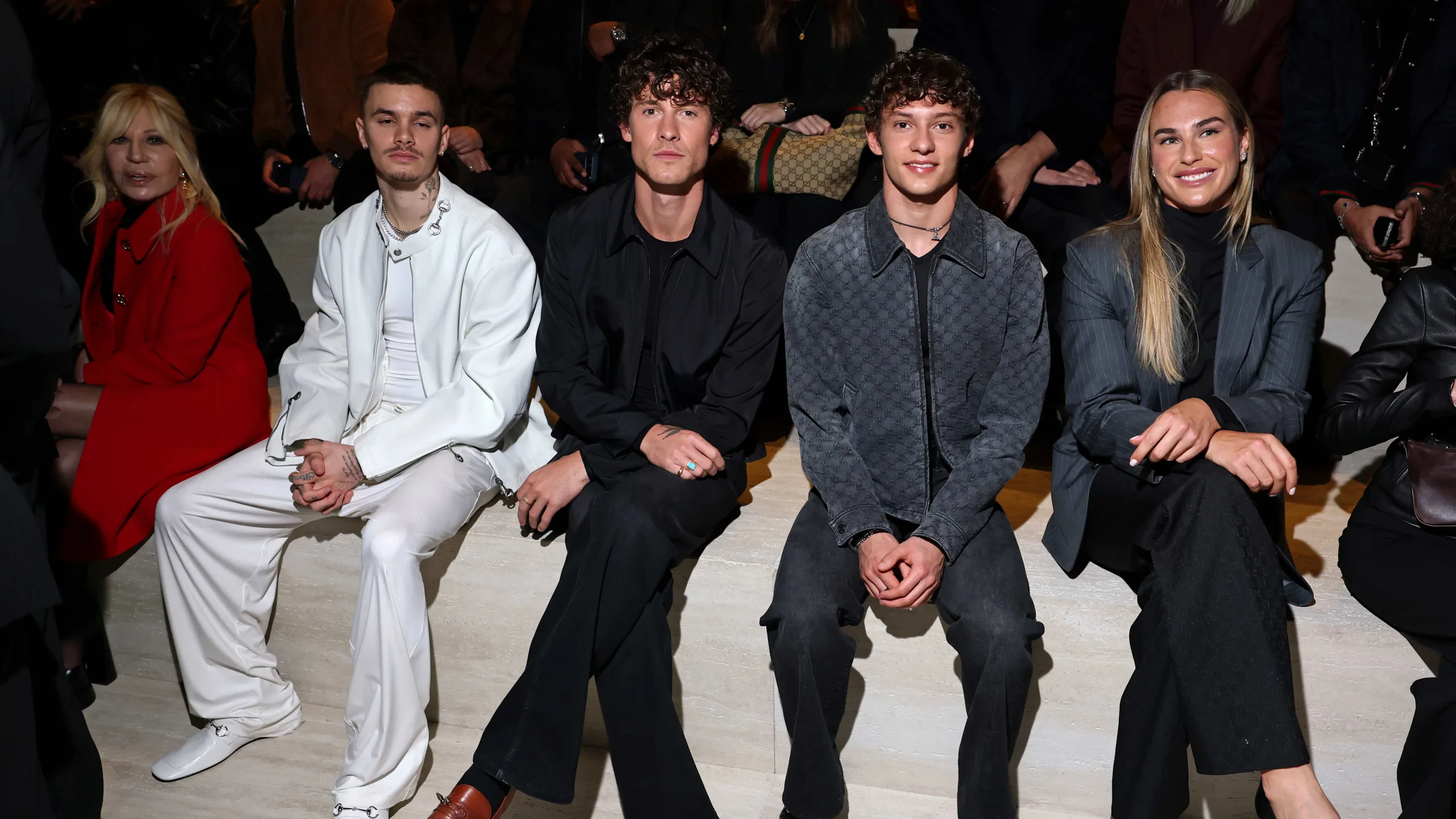
World No. 1 Aryna Sabalenka spent part of the week in Milan, attending Gucci’s “Primavera” Fall 2026 show as she prepares to return to competition at the BNP Paribas Open. The appearance followed her unveiling as a global ambassador for Gucci during the Australian Open in January.
Sabalenka sat front row at the show alongside fashion figures and entertainers including Donatella Versace, Romeo Beckham, Shawn Mendes and Andrea Kimi Antonelli. She wore head-to-toe Gucci, pairing a sleek black turtleneck with a striped blazer for the presentation of what Marie Claire reported was the debut of a new creative vision from the brand’s creative director Denma.
Recapping the day on social media, Sabalenka called the show “breathtaking” and said she was “grateful to have witnessed such a defining moment.” She continued to share looks across the week, writing in another post that she was “throwing ‘fits [outfits].” In that post she modeled a fur coat that drew a reaction from her partner, Georgios Frangulis. “Oh wow,” he wrote in the comments, as retired WTA pro Elena Vesnina dubbed her a “queen.”
Sabalenka has spoken openly about the significance of the partnership she revealed in Melbourne. She said the collaboration “means the world.” “They’re bold. They’re elegant. They’re super cool,” she gushed in Melbourne. “I feel like it’s a perfect fit, the collaboration. I don’t know. I’m the happiest person on earth right now. I couldn’t dream a few months ago that I’ll join the best brand. Right now I’m just super happy.”
The Milan appearance offered a brief cultural interlude before Sabalenka returns to the tour schedule at the BNP Paribas Open. © 2026 Daniele Venturelli
Australian Open Grand Slam Player News
Naomi Osaka on legacy, motherhood and the aims she still has for her career
Osaka reflects on legacy, motherhood, fashion and tennis, and hopes to make the sport more inclusive
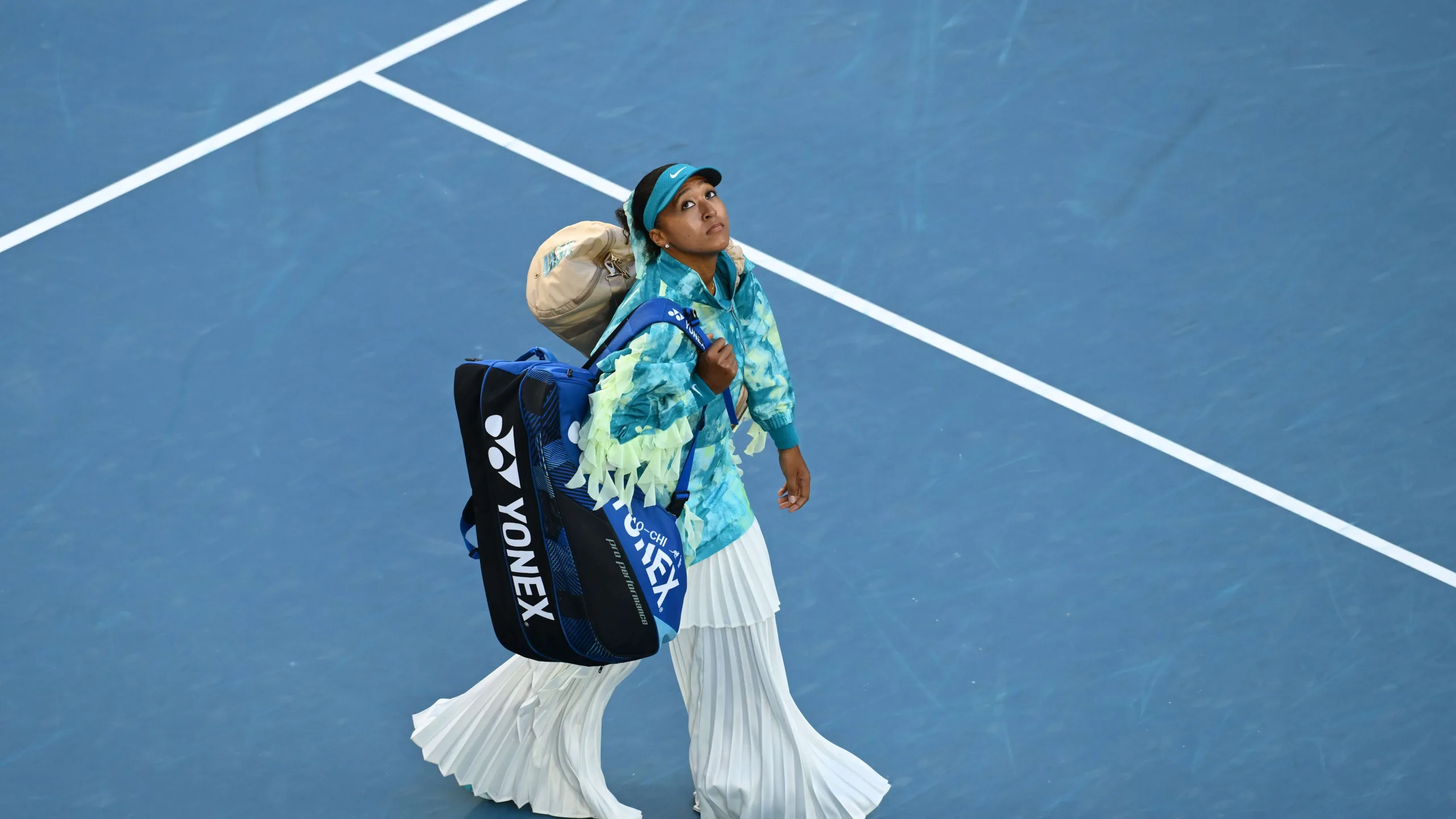
Naomi Osaka used a recent Hypebeast digital cover to reflect on the arc of her career and the priorities that have shifted since becoming a parent. The four-time Grand Slam singles champion discussed fashion, off-court interests and the ways tennis has changed since she first arrived on tour, but much of the feature turned to how she hopes to be remembered.
Osaka, who acknowledged a “love-hate relationship” with the sport, said the birth of her daughter, Shai, in 2023 reframed what success means to her. “When I was young, success meant winning every match,” she says. “Now it’s just being healthy, being able to play matches, seeing my daughter smile.”
The former world No. 1 described a broader aspiration: to leave the game more welcoming for those who feel different. “I would hope my legacy is that I’m someone who made it easier for the generation after,” she adds. “And also someone that made it easy for the people that are different or unique.
“For me, with my background being Japanese and Haitian and American, I’ve just always been considered different. And growing up, playing with the Japanese flag, but not looking fully Japanese, it just made me aware of being a little different from everyone else. I was always kind of OK with it and I realized that for some people, it’s tough to accept that.
“I realized there are always a few black sheep in the bunch and just hope that they know that it’s cool to be different and unique. Those are things that make you, you and it’s something that should be embraced rather than something that should be shamed.”
Osaka also addressed present ambitions. She told the magazine that it “suck[ed]” she got injured during this year’s Australian Open, a major she has won twice, and made clear she hopes to capture at least one more Grand Slam before stepping away. “[T]hat would be a very big goal I’d love to set for myself, which I think is possible,” she says, while leaving open the possibility of future involvement in the sport under selective terms.
Australian Open Governing Bodies Player News
Craig Tiley Named USTA Chief Executive as U.S. Tennis Participation Climbs
USTA names Craig Tiley CEO as U.S. tennis reaches 27.3 million players and targets 35 million. goal.
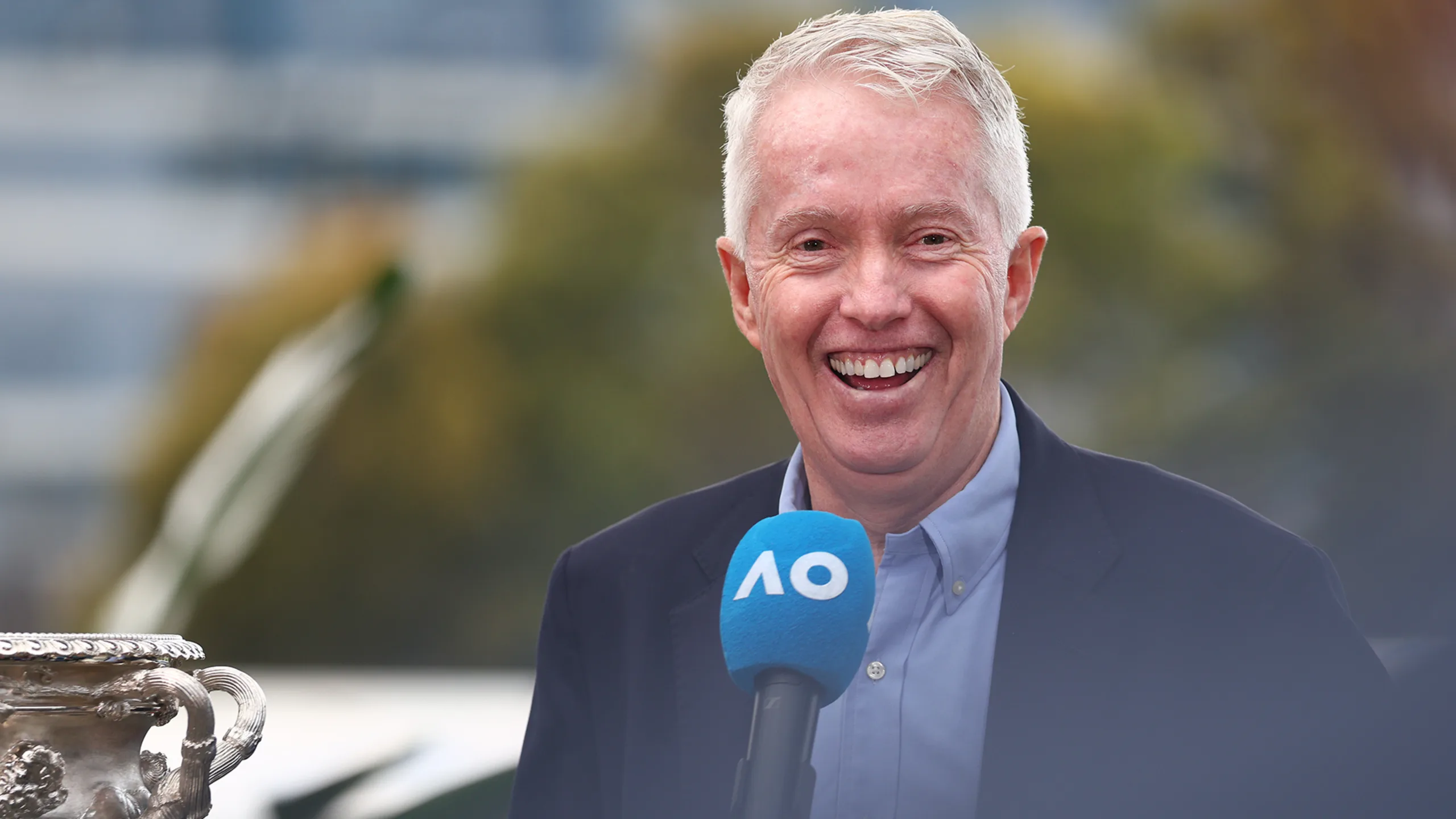
The United States Tennis Association has appointed Craig Tiley as its next Chief Executive Officer. Tiley leaves a 13-year tenure as Chief Executive of Tennis Australia and more than a decade as the Australian Open Tournament Director, a role he held since 2006.
Tiley returns to American tennis after a long history in the U.S. collegiate game. As Head Coach of the University of Illinois men’s team from 1994 to 2005 he guided the squad to a perfect 32–0 season and the 2003 NCAA Division I National Championship. He was twice named the Wilson/ITA Division I National Coach of the Year and is an inductee of the ITA Men’s Collegiate Tennis Hall of Fame.
He assumes leadership of the USTA while the organization advances a stated mission of “Growing tennis to inspire healthier people and communities everywhere” and pursues a goal of reaching 35 million players in the United States by 2035. Participation in the U.S. rose to 27.3 million players in 2025, marking a sixth consecutive year of growth. Since 2019 tennis in America has expanded by 54 percent, adding nearly 10 million players, with recent increases attributed to more play occasions, stronger player retention and rising participation by women and communities of color.
“From the very beginning of this process, our top priority was identifying the right leader to accelerate participation growth and help us achieve our goal of reaching 35 million players by 2035,” said USTA Board Chair and interim Co-CEO Brian Vahaly.
“Craig brings a rare combination of global credibility at the highest level of the sport and a proven commitment to growing the game at the grassroots. That balance is exactly what this moment requires. As we look to fully leverage the power of the US Open as a platform for inspiration and growth, Craig’s leadership and understanding of the entire tennis ecosystem will be invaluable. We are excited to build on our current momentum of six consecutive years of participation growth, and we are confident he is the right leader to guide American tennis into its next chapter.”
Tiley acknowledged the appointment: “I am truly honored to step into the role of CEO of the USTA later this year,” Tiley said in a press release provided by the USTA. “I’ve long admired the organization’s leadership in growing the game across the United States and the extraordinary success of the US Open. Tennis has shaped my life—personally and professionally—and having begun my tennis journey in the U.S. as an NCAA championship coach, this opportunity feels like a full-circle moment. I’m excited to return to American tennis and to work alongside our leadership locally and nationally to continue building the sport’s reach, impact, and future.”
At Tennis Australia, Tiley oversaw notable participation gains: tennis became the nation’s second most participated sport, growth of 8.3 percent in 2025, tripling of online court bookings over five years, 30 percent overall participation growth in five years, a 44 percent increase in coach membership and a 60 percent rise in female coaches to 33 percent of the coaching workforce. “Leading this team has been the privilege of my life. I am incredibly proud that Tennis Australia is now recognised globally as the player’s partner and the benchmark for the sport, events and entertainment,” Tiley said in a press release provided by Tennis Australia.
“Under Craig’s leadership, participation and engagement with our sport has gone from strength to strength,” said Tennis Australia Chair Chris Harrop. “Tennis is very much front of mind for many Australians—from the Hot Shots program and social tennis through to club and competitive play, and the excitement of recent innovations like the One Point Slam. ]

Medvedev weathers travel woes to rally past Rei Sakamoto at Miami Open

Tommy Paul’s Camo, Collabs and the Quiet Work of Returning to Form

Auger-Aliassime notches 200th hard-court win in straight-sets Miami opener

Alcaraz Confronts On‑court Microphones During US Open Practice Ahead of Opelka Match

Raducanu Arrives at US Open With Momentum After Strong Hard‑Court Swing

Cervara: Ending an eight‑year partnership with Medvedev was necessary to change the energy
-
 ATPAustralian OpenGrand Slam2 months ago
Medvedev says he will not underestimate Learner Tien as their Australian Open rivalry resumes
-
 ATPAustralian OpenGrand Slam1 month ago
Offseason Focus: How Eliot Spizzirri’s Boca Raton block set up his Australian Open breakthrough
-
 ATPAustralian OpenGrand Slam2 months ago
Jakub Mensik withdraws with abdominal injury, Novak Djokovic advances at Australian Open