
Australian Open 2026 Australian Open WTA Grand Slam
Sabalenka vs Rybakina: Power and serve set for Australian Open final
Sabalenka and Rybakina square off in a power final; both serve and hit with relentless force in 2026.

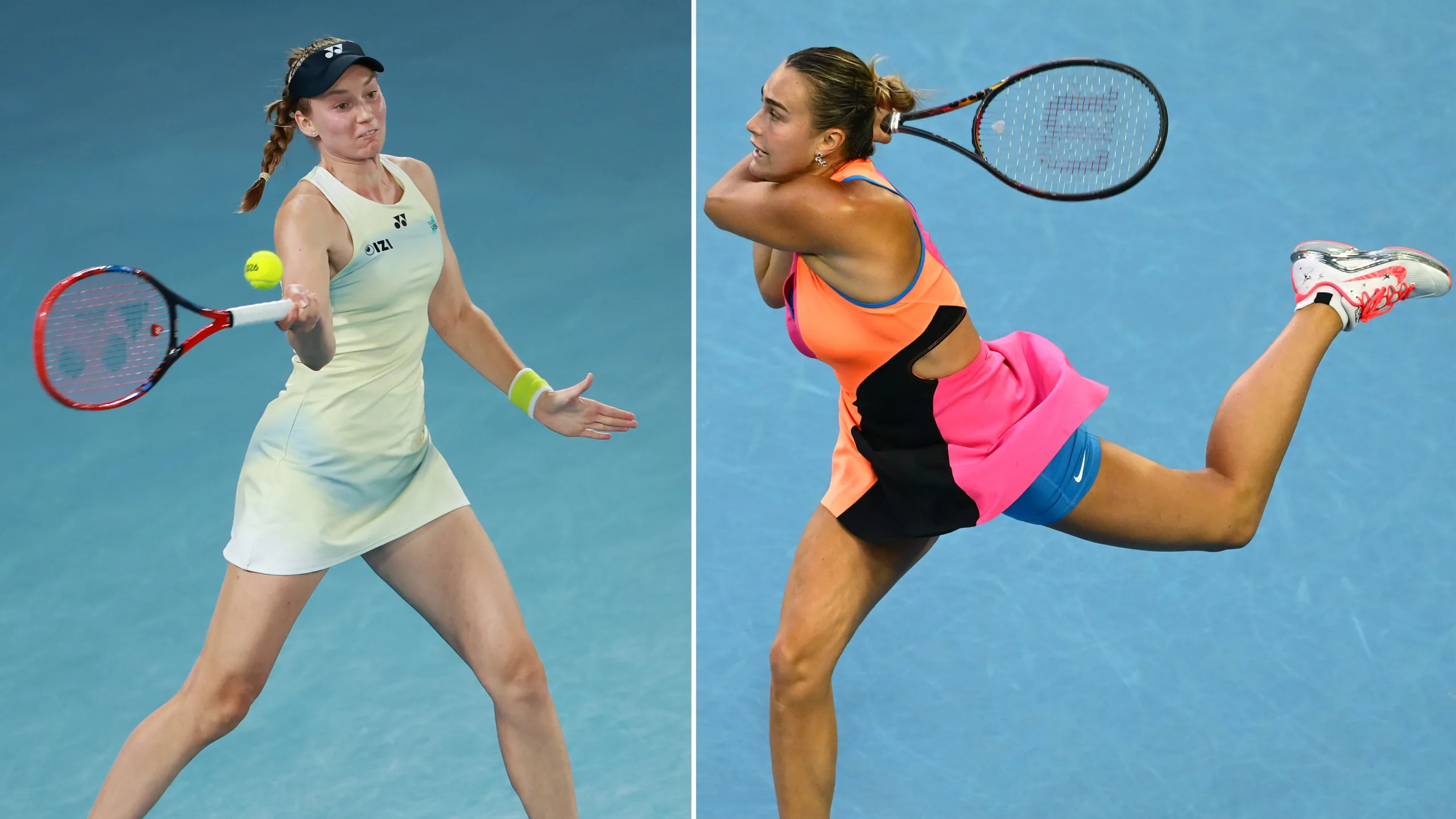
Aryna Sabalenka enters the Australian Open final as the top seed, carrying a run of dominance across Brisbane and Melbourne. She has played 22 sets this season and won them all, and she arrives at a fourth consecutive final at this major with confidence in her preparation.
There was a moment of controversy in Sabalenka’s semifinal when she received a hindrance call after an especially extended, two-note grunt. Her reaction to chair umpire Louise Engzell was blunt and revealing: “She really—how do I say in a nice way? She really pissed me off, and it’s actually help me and benefit my game,” Sabalenka said of chair umpire Louise Engzell. “I was more aggressive. I was not happy with the call, and it really helped me to get that game.” Sabalenka won that game and closed out a 6-2, 6-3 victory over Elina Svitolina.
“I feel good about my tennis,” Sabalenka says. “I feel like everything that I have been working during the preseason is working. I’m happy with that, and I’m just taking it one day at a time.”
I actually know what was wrong in all of those finals that I played and I lost. Aryna Sabalenka
She has reached five of the last six Grand Slam finals but is 4-3 in major title matches and has struggled at times with emotion under pressure, including a defeat to Madison Keys in a 7-5 third set in Rod Laver Arena last year. Sabalenka says she has adjusted her mentality: “I feel like those frustration were coming from not agreeing [with] what’s going on in the moment, and right now my mentality is like, I’m ready to do whatever, whatever is going to be in that finals, I’m ready to go out there and fight with what I have and do everything I can. I think when I have this mentality, I play my best tennis.”
Elena Rybakina arrives also without dropping a set in six matches, including a 7-5, 6-1 quarterfinal over Iga Swiatek and a 6-3, 7-6 (9) win over Jessica Pegula in the semifinals. “I started this tournament maybe not at my best form, but throughout the tournament it improved, and I played better each match. Elena Rybakina”
They have met 14 times, Sabalenka leading 8-6, and split their last four matches 2-2. Both are six feet tall with big serves and heavy hitting. The match may come down to serve, return and which player executes the first forehand in rallies. One practical difference could be Sabalenka’s heavier, safer forehand, while Rybakina’s forehand showed signs of strain late in her semifinal, giving Pegula a target to exploit.




Australian Open 2026 Grand Slam Qatar TotalEnergies Open
Rybakina says she ‘knew the road’ after second major as she arrives in Doha
After her Australian Open victory, Elena Rybakina said she ‘knew the road’ back to major success….
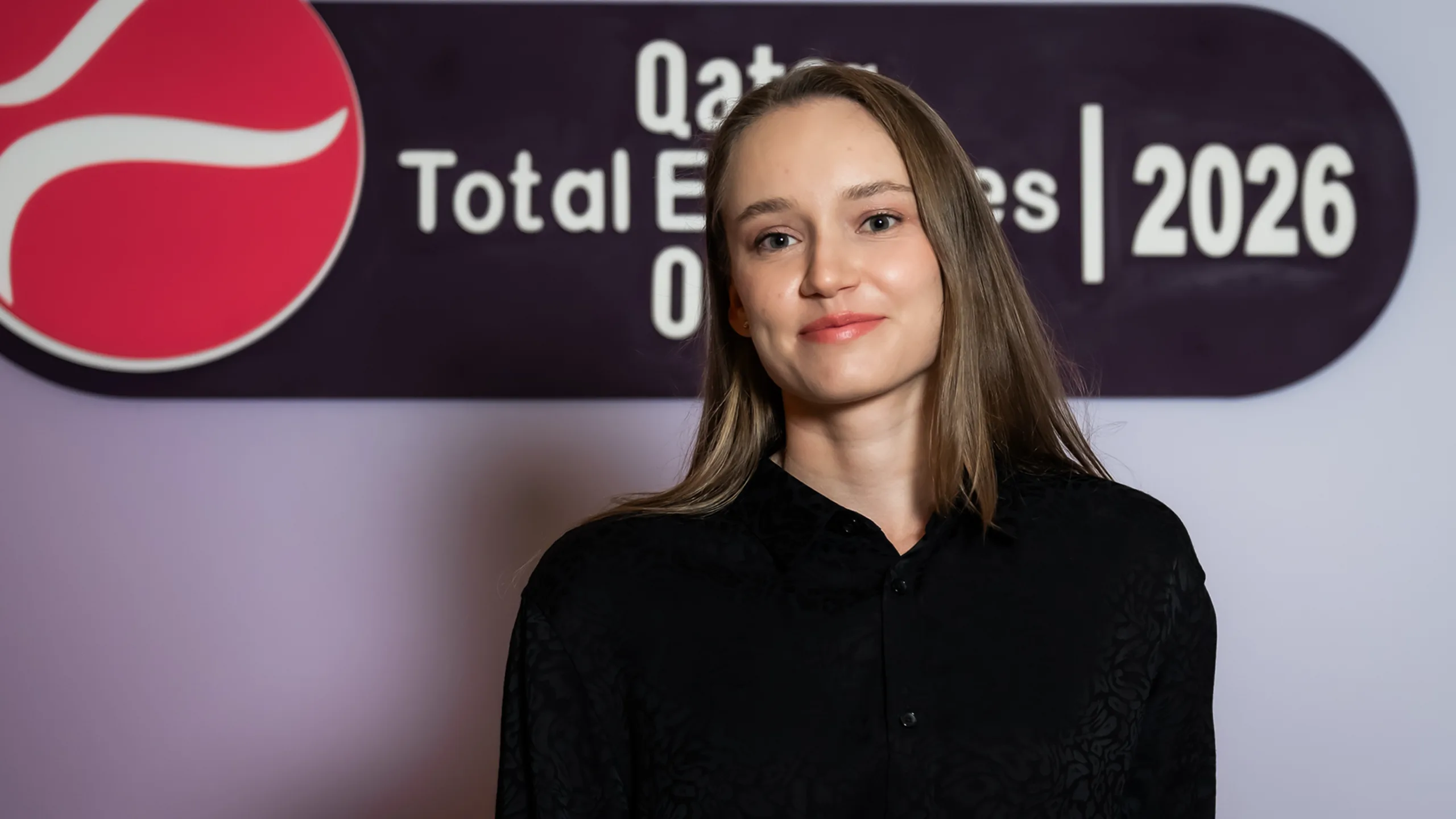
Elena Rybakina arrived in Doha carrying the momentum of a second major title and a clear sense that the path to further success was familiar.
“I kind of knew the road,” Rybakina said at the Qatar TotalEnergies Open after her title run at the 2026 Australian Open. Her victory in Melbourne, achieved despite arriving with a cold, included wins over both No. 1 Aryna Sabalenka and No. 2 Iga Swiatek and returned her to No. 3 in the WTA rankings.
The world No. 3 traced that confidence back to her first Grand Slam triumph at the 2022 Wimbledon Championships and the complicated aftermath of that win. Awarded no ranking points after the All England Club’s decision to ban Russian and Belarusian players, Rybakina noted the odd sense of not feeling fully recognised in the weeks that followed.
“I feel like actually I’m not the Wimbledon champion,” she said at the 2022 US Open. “I didn’t get this feeling to be No. 2 or actually achieve, because it’s still different treatment when you are Top 10 or Top 20. Even with the win of Wimbledon, it’s kind of different feeling.”
Reflecting on the two Slams, she added: “At Wimbledon, it was really not expected. I think I wasn’t really prepared that well,” and, of the Australian Open, “It was a lot of emotions, different ones, in Australia. I feel like it’s more of a job. I try to really prepare for each match differently. If I have time, we celebrate, but if we don’t, there’s a lot of tournaments ahead.”
Sitting atop the Race to the WTA Finals standings, Rybakina welcomed the security that comes with a major and a high ranking. “It’s a big advantage,” smiled Rybakina, who won the tournament last year after qualifying under the wire in the fall. The tour guarantees entry to major champions who finish the year inside the Top 20, effectively putting her on course for the season-ending championships in Riyadh.
Hopefully, this week can be as good as in Australia. But if not, we still have so many tournaments ahead… Elena Rybakina
A former finalist in Doha, she declined an extended break and emphasised process over pressure. “We’ll see how I’m going to feel here and how the matches will go,” said Rybakina, who is the No. 2 seed in Doha. “It’s good practice no matter what. We’ll still try to work on some things with the team. I don’t put too much pressure or expectations, that’s for sure. But I definitely want to do well and we’ll see how it’s going to go day by day.”
ATP Australian Open 2026 Grand Slam
Alcaraz, 22, Becomes Youngest Man to Complete Career Grand Slam After Australian Open Win
Alcaraz, 22, beat Novak Djokovic to win the Australian Open and becomes the youngest Career Slam. now!
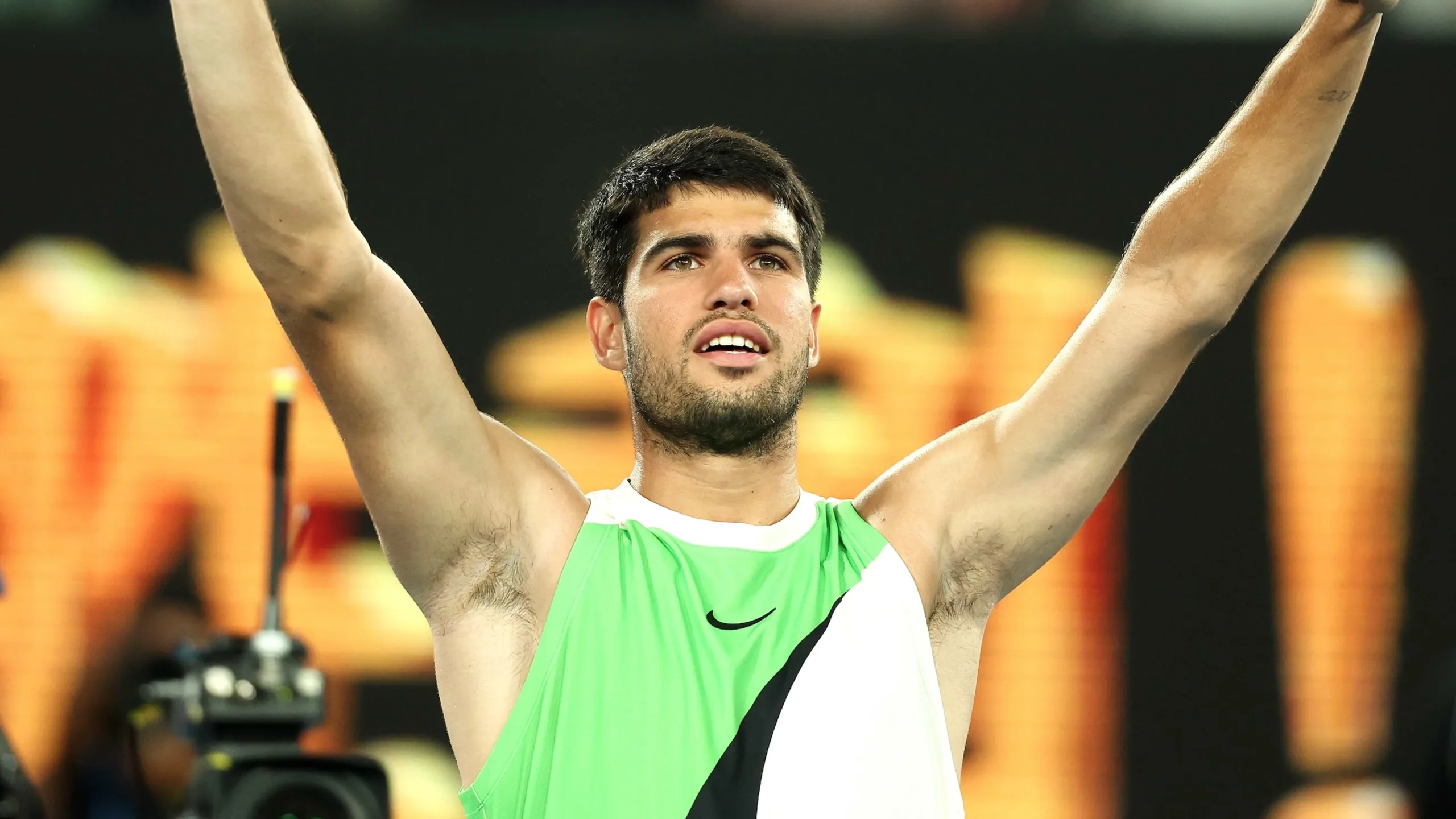
Carlos Alcaraz added the final piece to an already remarkable résumé by winning his first Australian Open title and, in the process, becoming the youngest man in tennis history to complete the Career Grand Slam.
The 22-year-old Spaniard defeated Novak Djokovic 2-6, 6-2, 6-3, 7-5 to claim the title. He had previously won the other three majors, twice each, and the victory in Melbourne sealed a milestone few players reach across a career.
Alcaraz’s achievement rewrote a long-standing record. The previous mark dated to 1938, when Don Budge, a slightly older 22 at the time, completed his set at Roland Garros. That span of nearly nine decades underlines how rare it is for a player so young to secure every Grand Slam.
The final in Melbourne showcased a resilient Alcaraz who recovered after dropping the first set 2-6. He responded with consecutive set wins and closed the match in four, producing the only Australian Open title that had been missing from his collection.
Beyond the immediate headline, the result confirms what the tournament results already suggested: Alcaraz has established himself among the elite of the sport by mastering all four major championships. Completing the Career Grand Slam at 22 will be a defining record in his rapid rise.
The significance of the moment is clear when placed against the history of the game. Few players have collected each major even once, and doing so at such a young age places Alcaraz in rare company. The Australian Open victory completes a set of accomplishments that, until now, the record books credited to much earlier generations.
For Alcaraz, the win in Melbourne is both a major title and a historical landmark, the final major he needed to finish a career sweep of the Grand Slams.
Australian Open 2026 Australian Open WTA Grand Slam
A two-word cue changed the Australian Open final: Rybakina rallies to win
Vukov’s two-word cue, “More energy,” sparked Rybakina’s comeback to claim the Australian Open. Today
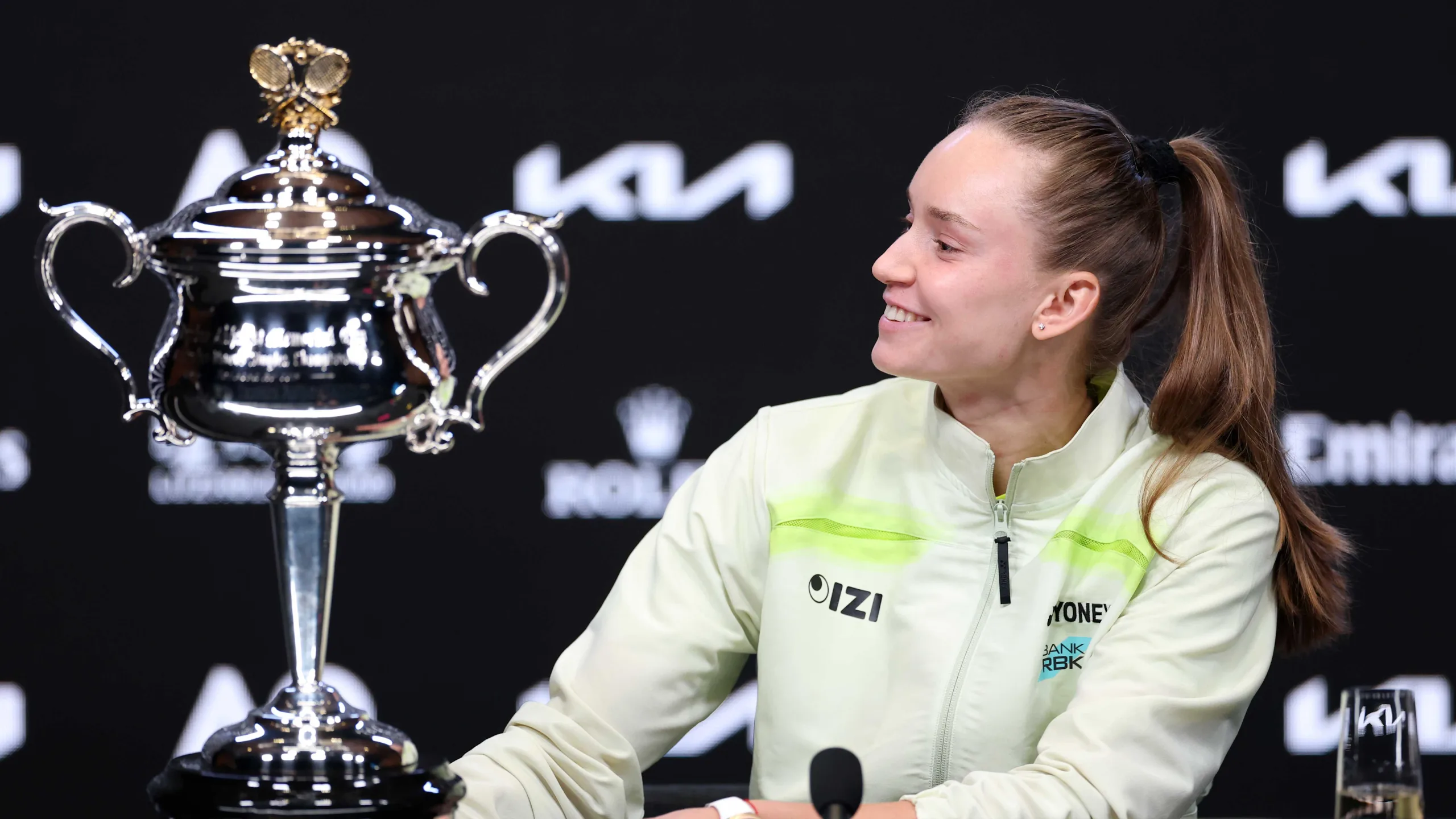
Elena Rybakina’s comeback in the Australian Open final began with a two-word instruction from her coach, Stefano Vukov. “More energy.” The Croatian’s brief command arrived when Rybakina was serving at 0-3 in the third set against Aryna Sabalenka and, by the match’s end, looked decisive.
The Kazakh had started aggressively, breaking in the opening game and dictating play with pace and depth. But as the second set reached 4-4 she began to show nerves, glanced toward her camp and was broken at 4-5. Her slide continued into the third as Sabalenka pushed to a 3-0 lead with heavy hitting and backhand winners.
After Vukov’s words, Rybakina’s tennis shifted. She served an ace at 40-30, held, then broke back for 2-3 and began to reclaim initiative. She moved forward more, hit with greater intent and forced abrupt momentum swings in rallies. “I’m happy that being down, I was able to calm myself down, not being frustrated anymore, and just focus on each point,” she said of the turnaround.
There were two critical moments that might have halted Rybakina’s run. Serving at 2-3 she faced a break point but held when Sabalenka missed a crosscourt attempt. In the next game Sabalenka, serving at 3-3 and down 15-40, saved one break with a service winner but then sent a forehand into the net on the next chance. Sabalenka finally showed visible frustration and slammed her racquet.
At 4-3 Rybakina held with a service winner. Serving for the title at 5-4 she produced a service winner at 30-30 and then an ace to seal the championship. “It’s incredible achievement,” Rybakina said of her second major title. “Super happy and proud. It was really tough battle. I didn’t expect to turn it around. Got some opportunities.”
Sabalenka reflected on the match with mixed feeling. On the one hand she joked that her coaches were trying “to avoid and escape me because they see that it’s not really healthy to be around me right now.” On the other, she said, “I don’t know if I have any regrets. Maybe I should have tried to be more aggressive on my serve, knowing that I have a break and put pressure on her, but she played incredible.”
Rybakina will return to a career-high No. 3 and is within striking distance of overtaking Iga Swiatek for No. 2 during February’s Middle East swing. “I have big goals,” says Rybakina, who will move up to No. 3 on Monday. “I’m going to keep on working. Let’s see what’s going to happen.”

Medvedev weathers travel woes to rally past Rei Sakamoto at Miami Open

Tommy Paul’s Camo, Collabs and the Quiet Work of Returning to Form

Auger-Aliassime notches 200th hard-court win in straight-sets Miami opener

Alcaraz Confronts On‑court Microphones During US Open Practice Ahead of Opelka Match

Raducanu Arrives at US Open With Momentum After Strong Hard‑Court Swing

Cervara: Ending an eight‑year partnership with Medvedev was necessary to change the energy
-
 ATPAustralian OpenGrand Slam2 months ago
Medvedev says he will not underestimate Learner Tien as their Australian Open rivalry resumes
-
 ATPAustralian OpenGrand Slam1 month ago
Offseason Focus: How Eliot Spizzirri’s Boca Raton block set up his Australian Open breakthrough
-
 ATPAustralian OpenGrand Slam2 months ago
Jakub Mensik withdraws with abdominal injury, Novak Djokovic advances at Australian Open