Australian Open Player News Qatar TotalEnergies Open
Daria Kasatkina credits Winter Olympics for spark in Doha comeback
Kasatkina finds form in Doha after Winter Olympics inspiration and back-to-back wins in Doha return.


Former world No. 8 Daria Kasatkina said watching the Winter Olympic Games helped her rediscover the consistency that had been missing through a difficult start to 2026. At the Qatar TotalEnergies Open she won back-to-back matches for the first time since August, following a straight-sets win over Elena-Gabriela Ruse and a 6-4, 6-0 victory over No. 16 seed Elise Mertens.
“Obviously, I’m watching figure skating. That’s pretty obvious,” Kasatkina said in a nod to longtime girlfriend and former Olympian Natalia Zabiiako. The 28-year-old admitted the Down Under swing after adopting the Aussie flag produced just one win in three tournaments, including a first-round exit at the Australian Open.
“I didn’t feel very nervous or extra pressure during the Aussie swing,” Kasatkina insisted on Tuesday. But she also accepted the ups and downs of a prolonged recovery. As she put it, “nothing is forever,” and the progress she showed in Doha feels encouraging.
“For a long time, I didn’t feel like this on the tennis court,” she said after defeating Mertens, 6-4, 6-0. “It’s something I was looking for over the past few months.
“It’s more the feeling of the results I’m getting after the work I’ve done for the past few months,” she added later. “When I say a few months, I mean over the last five-six months. Tennis is a difficult sport because sometimes you can get results straightaway, and other times you can wait much longer for them to come.
“I hope this is the first sign of my job paying off, but I don’t want to be super excited and think I’m finally back. There’s a lot still to work on, but I hope it’s just the beginning.”
Off court, Kasatkina has been following partner Zabiiako’s high-profile same-sex partnership with Gabriella Papadakis. A co-creator of Kasatkina’s What The Vlog YouTube channel, Zabiiako’s emotional performances have drawn wide attention.
“Natasha is enjoying it so much because unfortunately, she cannot get the same feeling on ice with me!” Kasatkina said with a laugh. “She needed someone a little bit better. Honestly, seeing her in her habitat is amazing. She’s really enjoying it and I can see how good she feels on the ice.
“Skating with someone like Gabriella is amazing and the results are very good, as well. I’m really happy for her and hopefully they can continue to do some stuff together because it looks beautiful.”
Kasatkina said she and Zabiiako plan to watch the Olympic-themed hockey drama Heated Rivalry and described her own progress on the ice as gradual. “I am often on the ice!” said the Aussie. “Not on the level I want to, but it’s like in tennis: one day’s better, one day’s worse. It depends on the ice, depends on the skates. But I really like it. It’s something about, when you learn something new, it’s good for your head. The only thing is that it’s a bit dangerous, so I have to be really careful. I might not care about my body as much if I wasn’t a professional athlete, and I would probably go on the ice by myself more often without the support.
“I’m still a little bit scared on the ice, so I’m always searching for something to hold onto so I don’t fall! So, my progress is stuck a little bit. Still, little by little, I’m improving.”
She joked about winter sport options. “Honestly, the Winter Olympic sports are dangerous!” she joked. “They’re either dangerous or boring!” Kasatkina also reflected on temperament on court: “On the tennis court, I think I’m just pretty much stuck in an Eastern Europe mentality,” sighed Kasatkina, who could face top seed Iga Swiatek in the third round. “It’s difficult to change because it’s coming from when I was a kid. This is something probably I have to keep going with, adding some positive Aussie stuff in there. But in life, it’s definitely the best approach ever. I’m trying to get it more and more.
“The tennis court is a bit different because of all the pressure and emotions involved. You need to really know how to manage them.”




Australian Open Grand Slam
Sabalenka fined after US Open final outburst as Williams sisters avoid media sanction
Sabalenka was fined for her US Open final conduct, while the Williams sisters escaped sanction.
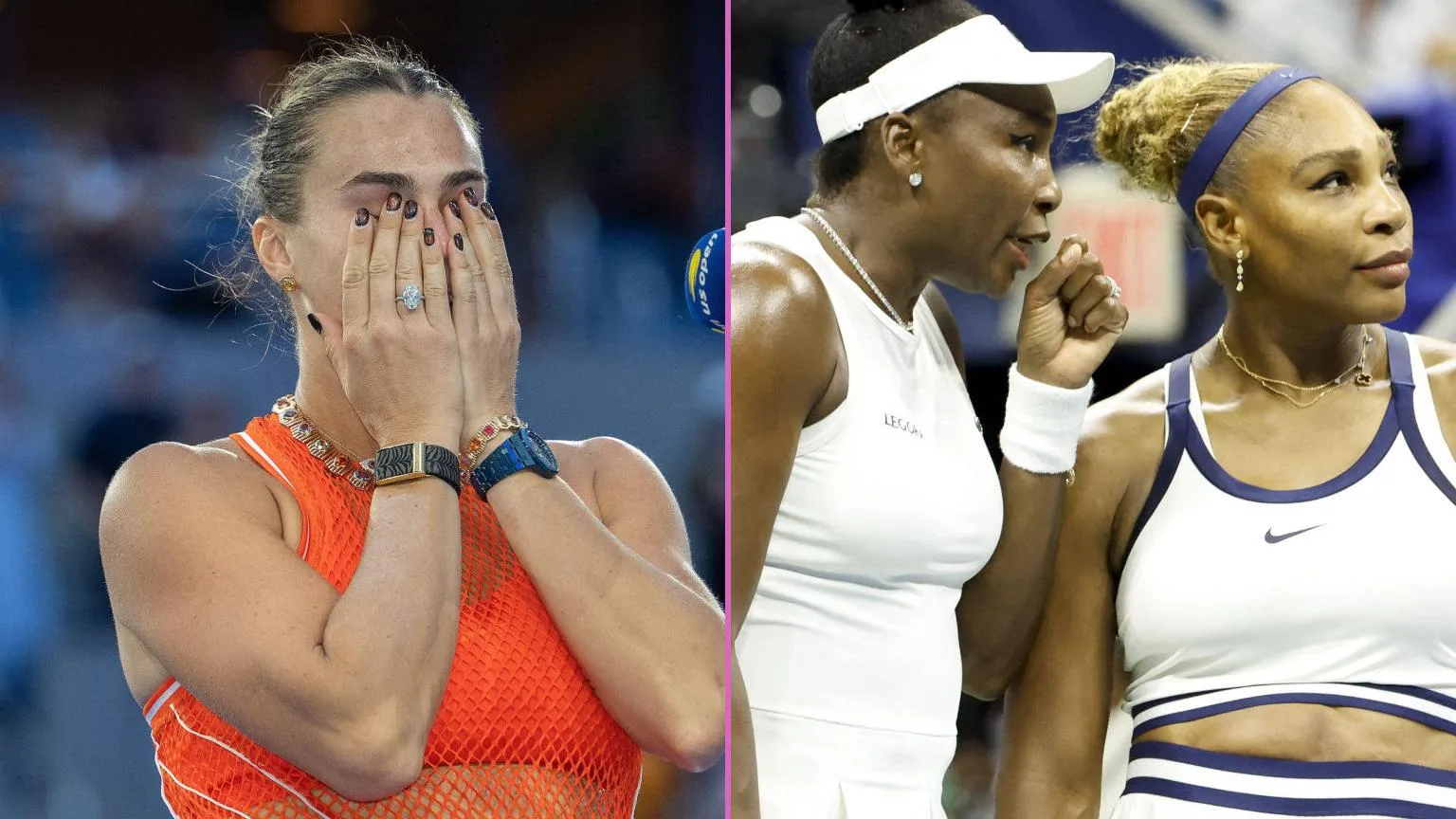
Aryna Sabalenka’s frustration in the US Open final has led to a fine, while organisers did not penalise Venus and Serena Williams for missing a post-match press conference.
Sabalenka, a four-time Grand Slam champion, struggled to contain her emotions throughout the match against Elena Rybakina and repeatedly showed her anger during and after the three-set defeat. Her most costly moment came after she was broken in the opening set following a double fault, when she hit a ball into the Arthur Ashe Stadium crowd and received a code violation.
That breach has now brought a $7,500 fine from the United States Tennis Association. The penalty is modest compared with the $2,800,000 cheque she collected for finishing runner-up. Her reaction did not end there. She later struck another ball toward the back of the court and came close to hitting a cameraman.
After the match, and after the customary handshake with Rybakina, Sabalenka went back to her bench and smashed her racket several times. She also told a cameraman to “f*** off” while waiting for the post-match presentation ceremony to begin. Even so, the only sanction imposed on her was for the code violation.
The Williams sisters, meanwhile, avoided punishment after declining to speak to the media following their first-round doubles loss. Venus and Serena entered the event via wildcard, with Serena appearing at Flushing Meadows for the first time since 2022, but they were beaten in three sets by Chan Hao-ching and Maya Joint.
Although press conferences are mandatory at majors, the pair were not fined. The USTA’s statement after the match simply read, “Serena and Venus Williams will not be available for press tonight.”
Elsewhere, Luisina Giovannini received the largest fine of the tournament, a $20,000 penalty after her opening qualifying match was judged below standards. Corentin Moutet was the only player to be fined twice.
1000 Australian Open
Croft says Sabalenka’s attitude undermined her in the US Open final
Croft said Sabalenka’s negativity and frustration shaped the US Open final.
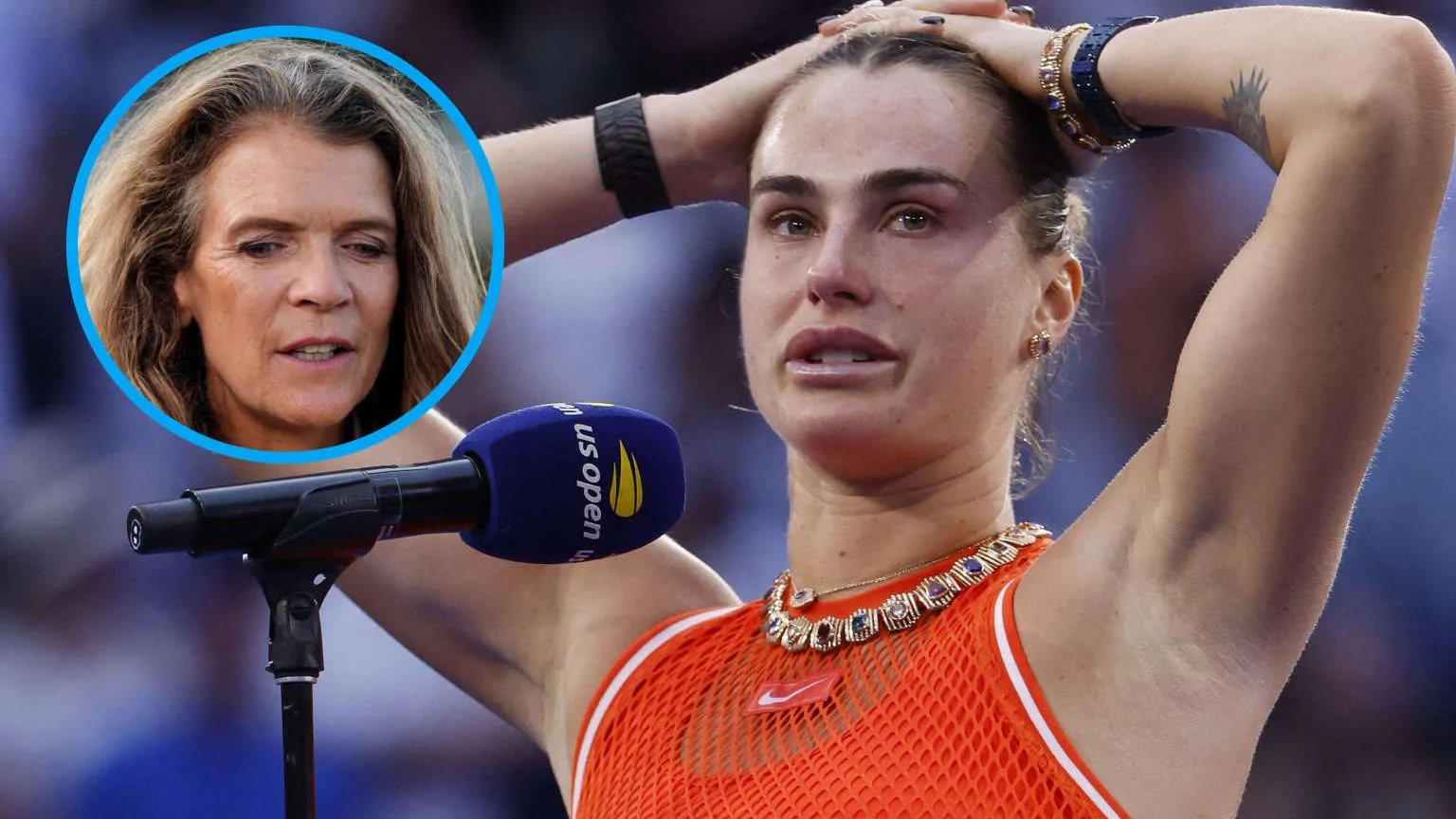
Aryna Sabalenka’s defeat to Elena Rybakina in the US Open final was framed by Annabel Croft as a case of self-inflicted damage, with the former British No 1 arguing that Sabalenka’s negativity and lack of respect for her opponent’s level proved costly.
Sabalenka had carried into the match an impressive recent record in New York. She had lost only once at Flushing Meadows over the previous three years, and that lone defeat came against Coco Gauff in the 2023 final. She then won the title in 2024 and 2025 and was chasing a third straight crown, a feat only two women have managed before.
The opening set shifted the momentum. Sabalenka saved three break points in game three, but was broken two games later and Rybakina served out the set. The outgoing world No 1 improved in the second, and a late break in game 13 forced a decider, but Rybakina seized control again with breaks in games three and seven to complete a 6-4, 5-7, 6-2 win.
Croft, speaking on BBC Radio 5 Live, said: “It was extraordinary to witness because she had been very negative on herself with her body language in that first set and suddenly the emotions got the better of her,” Croft said on BBC Radio 5 Live.
“I felt like that really contributed to her going down in that first set. She was beating herself.”
Sabalenka’s frustration was plain to see. At one point she smashed a ball into the Arthur Ashe Stadium crowd, then threw her racket into the air after the loss was sealed before smashing it again when she returned to her bench.
She will be replaced at No 1 in the WTA Rankings by Rybakina on Monday. During the on-court interviews, Sabalenka said: “That’s the last thing I want to do right now is give a speech, but I’ll try my very best.”
After she gathered herself, she added: “Obviously I’m disappointed but I want to congratulate Elena on an incredible year and incredible results. Well-deserved. Enjoy it. Have fun tonight, tomorrow and the end of the season so I can win some titles.”
Croft remained unimpressed, adding: “I think what happened was the minute she started to not respect the level of tennis her opponent was playing, she couldn’t handle it at all.
“You have to respect what they’re putting out there and applaud it but then find ways to dig in and find another way to compete with them.
“It was almost like throwing the toys out of the pram today.”
ATP Tour Australian Open
Australian Open’s future format debate gathers pace after Abdo remarks
Abdo’s remarks have reignited the Grand Slam format debate in Melbourne.
The Australian Open has spent recent years embracing change, and its crowds have continued to rise year after year.
One of the clearest examples came in Melbourne this season with the introduction of the One Point Slam, a one-point contest that matched professional players with amateurs and became one of the tournament’s most discussed features. The event also welcomed Roger Federer back to the venue for the first time since retirement and staged a number of exhibition matches. Even so, further alterations could still be on the horizon for 2027.
New Tennis Australia chief executive Andrew Abdo, who has replaced Craig Tiley, has floated the possibility of significant changes to the scoring structure at the Melbourne event.
“Maybe in the future, Slams at the different rounds, or at different lengths of duration, maybe we’re not playing best-of-five all the way through, maybe the point scoring system changes,” said Abdo.
That suggestion has already drawn criticism from fans on social media, many of whom remain strongly attached to the sport’s traditions.
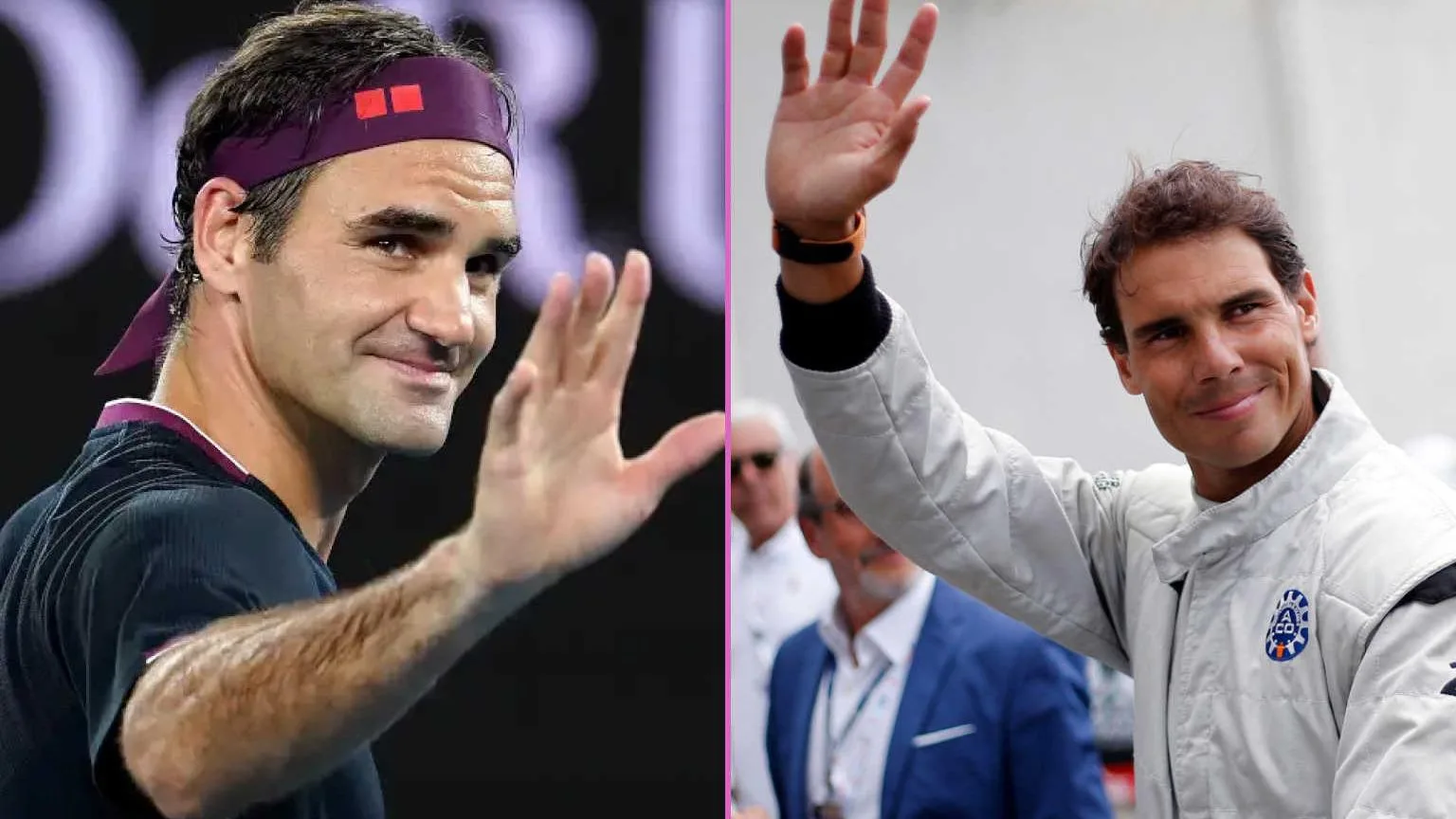
The debate is not new. Roger Federer and Rafael Nadal both defended best-of-five-set matches at the majors, with Nadal saying in 2020: “I mean, winning Grand Slam, playing best-of-three demand to the player something else, no? Stronger mentally, stronger physically, be solid for such a long time and for such a long two weeks. So I really believe that’s the right thing to do.”
Federer was equally firm. “It won’t happen, the best of three stuff,” said the Swiss icon. “The tradition of tennis is having best-of-five at the majors and that will remain. Those who want best-of-three don’t really have the best interests of tennis at heart.”
There has also been support for change from other leading players. Novak Djokovic said in 2020: “I am more of a proponent of best-of-three sets everywhere. You asked me why. I just feel that we have enough tournaments, enough matches during the year.
“We have the longest season of all sports, any sport in the world. Tennis has the longest season from January 1 to end of November. Literally every single week you have tournament somewhere.”
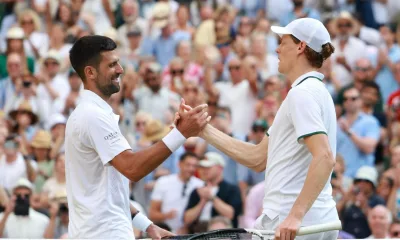
If such a shift does arrive in 2027, Djokovic could be one of the main beneficiaries. He has already been pushed through several five-set Grand Slam matches this year, including against Joao Fonseca and Felix Auger-Aliassime, and those contests have left the 24-time Grand Slam champion heavily drained.

Zverev Arrives at Laver Cup With Europe’s Title Bid in Focus

Alex Eala opens Singapore challenge against Prozorova as ranking gains loom

Zverev’s breakthrough season rewrites a long-running story

Raducanu Arrives at US Open With Momentum After Strong Hard‑Court Swing

Maestrelli Triumphs in Bergamo, Claims Challenger Title and Career‑High Ranking