
ATP ATP 250 Nexo Dallas Open
Dallas Open quarterfinal preview: Fritz vs. Korda and three other matchups
Fritz and Korda meet in Dallas as three Americans remain; previews of all four quarterfinals. 2026.


Taylor Fritz faces Sebastian Korda in one of the headline quarterfinals at the Dallas Open as the tournament narrows to just three Americans: Fritz, Ben Shelton and Korda.
Fritz’s 2026 has been interrupted by knee trouble. Tendinitis in his right knee flared at the Australian Open against Lorenzo Musetti and again during a tight opening match with Marcos Giron in Dallas. He followed that with a 6-3, 6-4 victory over Brandon Nakashima on Wednesday and praised the rhythm he found on court. “Coming off the match from the other night, I got a lot of rhythm,” Fritz said. “I had a bit more time, I felt like I could really attack more…I felt like I was hitting the ball great.” If his knee holds and he continues to see the ball, his serve and forehand give him a clear edge.
Korda’s career has been repeatedly disrupted by injury. He missed four months last year with a stress fracture to his right shin and was forced to retire at the US Open with back and hip pain. “It’s about starting up the machine again and trying to win some ugly matches,” Korda told Bolavip in October. He lost his openers in Adelaide and Melbourne to start the year but followed that with five wins to reach a Challenger final in San Diego. In Dallas he eliminated Frances Tiafoe 7-5, 6-1, dropping just four points on his first serve in that match.
Fritz leads their head-to-head 3-1 and they are 1-1 on hard courts. Based on rankings (Fritz No. 7, Korda No. 53) Fritz is the favorite, though Korda arrives with momentum and motivation. Winner: Fritz
Marin Cilic, 37, meets 22-year-old Pinnington Jones. Cilic beat Learner Tien this week, while the 5’11, 181st-ranked Pinnington Jones advanced through two qualifying and two main-draw matches. Winner: Cilic
Miomir Kecmanovic and Ben Shelton have never met. Both come in off three-set wins; Kecmanovic handled Tommy Paul and was especially strong in the final set. Shelton will look to use his serve, forehand and home support to disrupt Kecmanovic’s rhythm. Winner: Shelton


ATP ATP 250 Fayez Sarofim & Co. U.S. Men’s Clay Court Championship
Tommy Paul Looks to Reset on Clay After Miami Heartbreak
Tommy Paul arrives in Houston after a brutal Miami loss, seeking clay comfort and a fresh start 2026
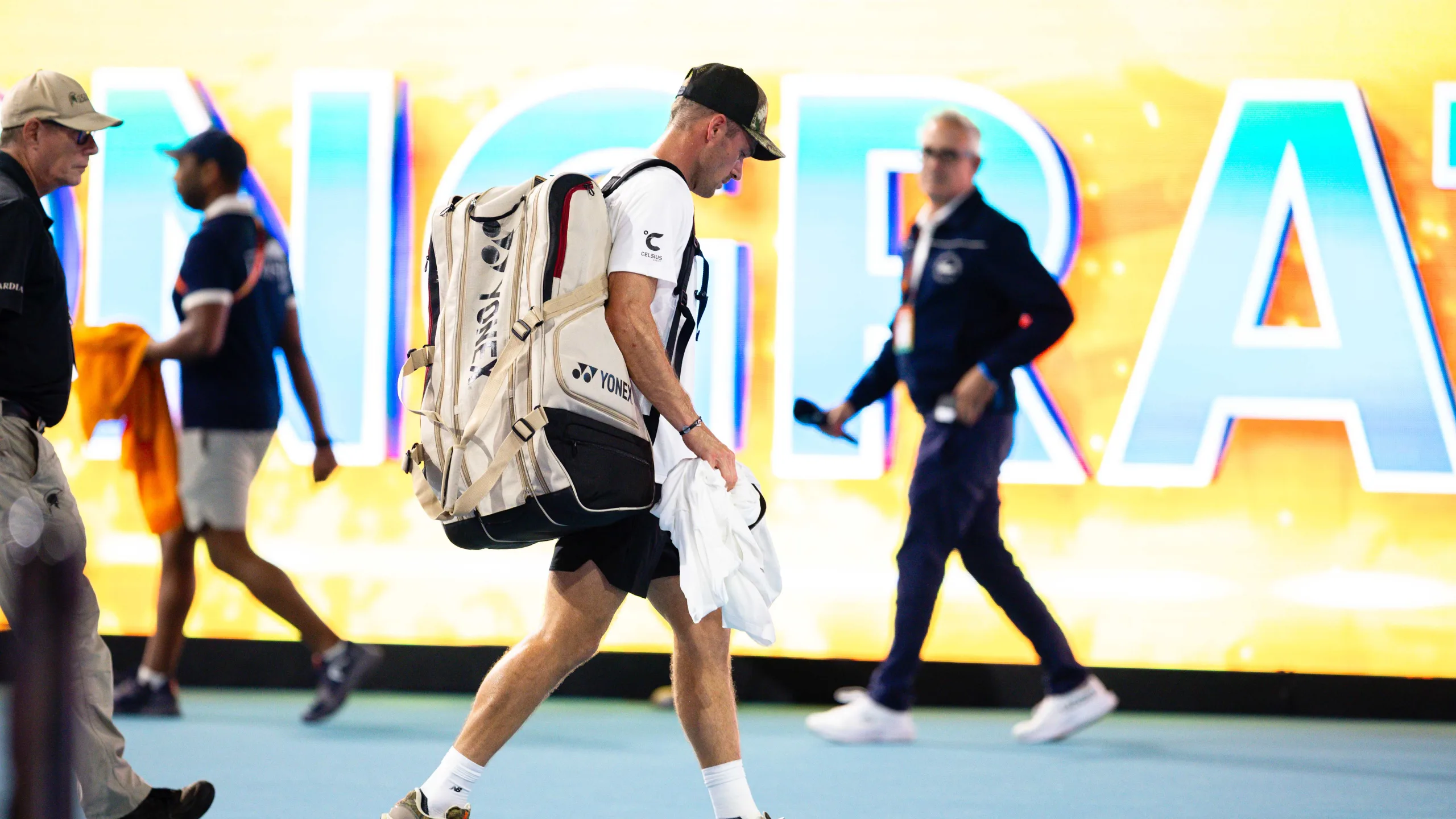
“I’m very much a week-to-week kind of guy,” Tommy Paul tells me, and for his sake, that’s a good thing.
Paul arrived in Houston after an exhausting Miami quarterfinal, where he held all 18 of his service games, won 115 points to his opponent’s 114 and fashioned four consecutive match points before falling, 6-7 (3), 7-6 (4), 7-6 (6). The match lasted two hours and 49 minutes and produced no breaks of serve; the only break point for Arthur Fils was a match point at 5-6 in the third set.
“You’ve got to have amnesia,” said Frances Tiafoe, Paul’s practice partner. “Any week can kind of turn the page to then do something great.”
Paul skipped media in Miami but spoke about the match in Houston: “I mean, I think we both played pretty well. I think I put myself in a pretty good position there at the end of the match. Obviously, he started playing pretty aggressive when he got down a few match points. I think he kind of got the mindset of, ‘All right, back’s against the wall, I’m just gonna go for it now.’ And it worked out for him, and sometimes that’s how it goes.”
In the deciding tiebreak Paul led 6-2. Fils saved the first match point with a blistering backhand and converted defense into offense to save the second. Paul overcooked a forehand on a later match point, and an unreturned Fils serve swung momentum.
“I can’t blame myself too much,” reflected Paul. “I don’t think I played too many of the points, the match points, poorly, Just tennis, you know. It’s one of those sports that you only get a couple of opportunities sometimes, and sometimes you don’t do anything wrong.
“I mean, I got to sleep in my own bed that night, which is something that we don’t normally get. So I got that at least.”
Paul prefers to play the U.S. Men’s Clay Court Championship and stayed closer to home before his European swing. He grew up playing clay until he was 13 and recorded his first clay-court win at River Oaks. The 28-year-old reached the Roland Garros quarterfinals last year and won an Olympic bronze medal in doubles on clay.
Paul’s first match in Houston is against Adolfo Daniel Vallejo, who beat Zachary Svajda 6-1, 6-4. “He’s going to be an unbelievable test,” said Vallejo of Paul. “I know he plays really good on clay.”
“I mean, I would love to finish a year back in the Top 10, where I got last year for a hot second. (Paul was inside the Top 10 for seven weeks during 2025, and as high as No. 8.) But I mean, to do that, you gotta win a lot of matches, you gotta win a lot of big matches.”
“Everyone has their goals for the year, but I’m very focused on this week right now,” says Paul. “And if I can do well this week, carrying momentum. ]
ATP ATP 250 Fayez Sarofim & Co. U.S. Men’s Clay Court Championship
McDonald eliminates defending champion Brooksby in opening round
McDonald upset Brooksby in the U.S. Men’s Clay Court first round, closing out in straight sets. win
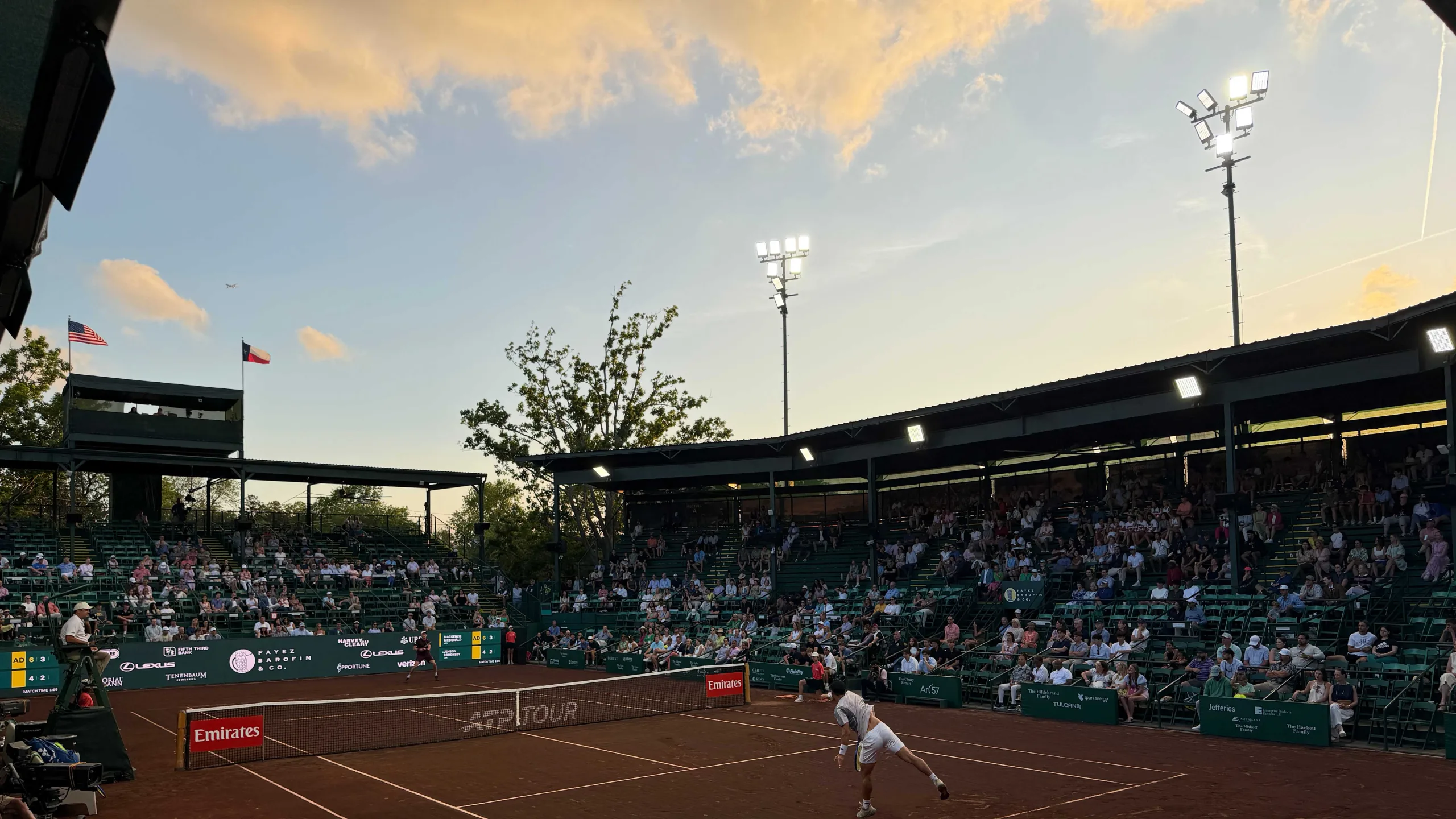
Mackenzie McDonald advanced past defending champion Jenson Brooksby in the first round of the U.S. Men’s Clay Court Championship, closing the match in straight sets after a late scare.
Brooksby saved his third match point on a net cord, a moment that recalled last year’s dramatic run when he saved five match points before lifting the trophy. McDonald, though, tightened his game when it mattered and finished the victory without needing an insurance break to seal the result.
McDonald was strong on return, winning 10 of 16 second-serve return points and converting three of five break points. Brooksby struggled with his consistency, striking 30 unforced errors and failing to convert any of his four break opportunities.
“I’ve practiced with him a lot—he’s the king of coming back from match points,” said McDonald. “He definitely has that reputation.” McDonald led 6-4, 5-2 when the match closed out, and he described the insurance break as helpful. “It was nice I had that insurance break,” said McDonald, but it was “pretty key” to close it out in straights.
Both players arrived at River Oaks seeking momentum. Brooksby, ranked 41st, began the day 4-7 on the season. McDonald, ranked 125th, entered the event 8-8 overall and 1-3 at tour level. Each is returning to competition after extended absences: Brooksby from a since-overturned suspension and McDonald from multiple injuries.
“I’ve had one good season…I’m not going to give up,” McDonald said after the victory. “That’s where you want to be, that’s where you want to play, that’s where the money’s at, points.” He has long maintained that availability matters. “If I’m healthy, I think I’m doing pretty good, because I think my results are gonna speak for myself.”
On a night when Brooksby could not find his best tennis, McDonald’s serve returns and timely breaks were decisive and sent him through to the next round.
ATP ATP 250 Fayez Sarofim & Co. U.S. Men’s Clay Court Championship
Learner Tien leans on Michael Chang’s clay-court guidance as Houston support swells
Learner Tien leans on Michael Chang’s guidance and Houston’s Vietnamese community for support. nearby.

Qualifying weekend at the U.S. Men’s Clay Court Championship set attendance records, and practice courts were busy into the evening. Ben Shelton continued to work in the stadium while Learner Tien spent extra time on Court 4 trading slides and points with Tommy Paul. Fans remained courtside to watch the 20-year-old work through groundstrokes, slices and drop shots.
A Californian of Vietnamese descent, Tien has risen to 21st in the world and has drawn added attention in Houston, home to a large Vietnamese-American population of roughly 150,000 people. “I actually noticed it last year,” Tien said about that local support. The crowd has taken to the young player during a breakout stretch on tour.
Tien has been working with Michael Chang since last summer. Chang, who won Roland Garros as a 17-year-old in 1989, is now 54 and focused on helping Tien adapt to clay. “I have full faith in everything he tells me, and everything he wants me to do,” says Tien. Chang spent time Sunday sharpening Tien’s lefty forehand, two-handed backhand, slices and drop shots. “The way he communicates and the way I communicate are pretty similar, and so I feel like I receive information from him very well,” Tien says.
Working together has affected Tien beyond technique. “My self-belief has grown a lot since we started working together,” he began. “I think part of that is just having success and doing better. I wasn’t someone that struggled with that before in the past—I always had a lot of faith and belief in myself. But I would say that has really grown, since we started working together.” His 2025 season included a 36-24 record, a fourth-round run at the Australian Open, a Next Gen ATP Finals title, a first Grand Slam quarterfinal in Melbourne where he took Alexander Zverev to a fourth-set tiebreaker before capitulating, a semifinal at Delray Beach and a quarterfinal at Indian Wells.
Tien arrives in Houston as the No. 3 seed. He already owns wins over Shelton and Frances Tiafoe, the tournament’s top two seeds, and his victory over Shelton was his second in two tries. He will begin doubles on Monday with Alex Michelsen. “Win or lose, and whether it’s a good week or a bad week, whether I go deep or I lose first round, it’s always very encouraging, energy always kind of remains the same,” Tien says of his mentor.
As evening fell, fans who waited behind a rope were rewarded when Tien stopped by to sign and chat — a brief exchange that mirrored the extra time he hopes will pay off on court.

Tommy Paul Looks to Reset on Clay After Miami Heartbreak

McDonald eliminates defending champion Brooksby in opening round

Bencic pushes back on criticism of Gauff’s serve at Charleston Media Day

Alcaraz Confronts On‑court Microphones During US Open Practice Ahead of Opelka Match

Raducanu Arrives at US Open With Momentum After Strong Hard‑Court Swing

Cervara: Ending an eight‑year partnership with Medvedev was necessary to change the energy
-
 ATPAustralian OpenGrand Slam2 months ago
Offseason Focus: How Eliot Spizzirri’s Boca Raton block set up his Australian Open breakthrough
-

 Australian Open 2026Grand SlamQatar TotalEnergies Open2 months ago
Rybakina says she ‘knew the road’ after second major as she arrives in Doha
-
 ATPAustralian OpenGrand Slam2 months ago
Zverev criticizes medical timeout as Alcaraz endures cramp episode in Australian Open semifinal