
ATP ATP 250 Qatar ExxonMobil Open
Arthur Fils brings Goran Ivanisevic in on trial as comeback gathers pace
Fils adds Goran Ivanisevic on a trial basis as he returns from a seven-month back layoff in Doha now

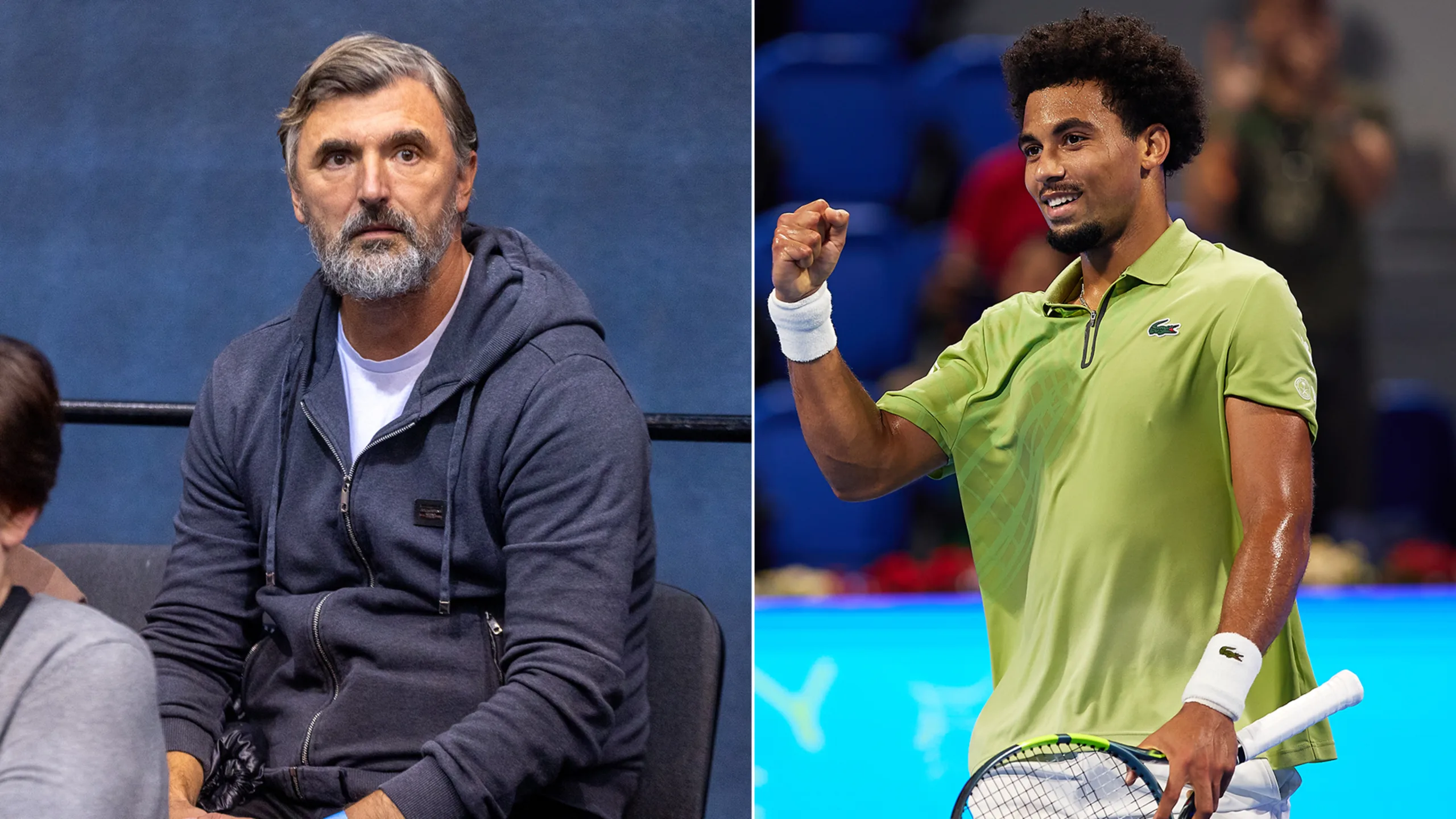
Arthur Fils has added former Wimbledon champion Goran Ivanisevic to his coaching group on a trial basis as he pushes through a comeback from a long-term back problem. The move, announced during the Qatar ExxonMobil Open, pairs the Frenchman with a coach whose playing and coaching record Fils has praised and described as a “hell of a champion”.
Fils, a former world No. 14, missed seven months after Roland Garros last season because of an aggravated back issue he has carried since his youth. He returned to competition earlier this month in Montpellier and reached the quarterfinals, then improved on that showing in Doha with a victory over No. 8 seed Jiri Lehecka.
With the upset of Lehecka, Fils has advanced to the semifinals, where he will meet No. 6 seed Jakub Mensik. A win would put him into his first final since he lifted the trophy in Tokyo in October of 2024. Mensik reached the last four after upsetting world No. 2 Jannik Sinner in the quarterfinals.
Ivanisevic arrives at Fils’s camp after a year that saw short coaching stints with two high-profile players. After ending a six-year partnership with Novak Djokovic, Ivanisevic worked with Elena Rybakina on a trial basis near the end of 2024, but that collaboration ended by the time the 2025 Australian Open concluded when Rybakina reinstated Stefano Vukov, who had been suspended by the WTA during a Code of Conduct investigation.
Later in 2025, Ivanisevic joined Stefanos Tsitsipas after Roland Garros, but the pair parted ways by Wimbledon. The Croat insisted there was no “bad blood” between them despite public criticism of Tsitsipas’s fitness.
Fils’s decision to trial Ivanisevic reflects a search for experienced guidance as he aims to rebuild form and fitness in 2026. The Doha run offers an early test of that partnership and a chance for Fils to convert recent momentum into his first final since Tokyo.




ATP Masters Monte Carlo
Vacherot upsets Musetti on Monte‑Carlo center court; clay game ‘ready to roll’
Vacherot halted Musetti 7-6(6), 7-5 on Court Rainier III and said his clay game is ‘ready to roll’.
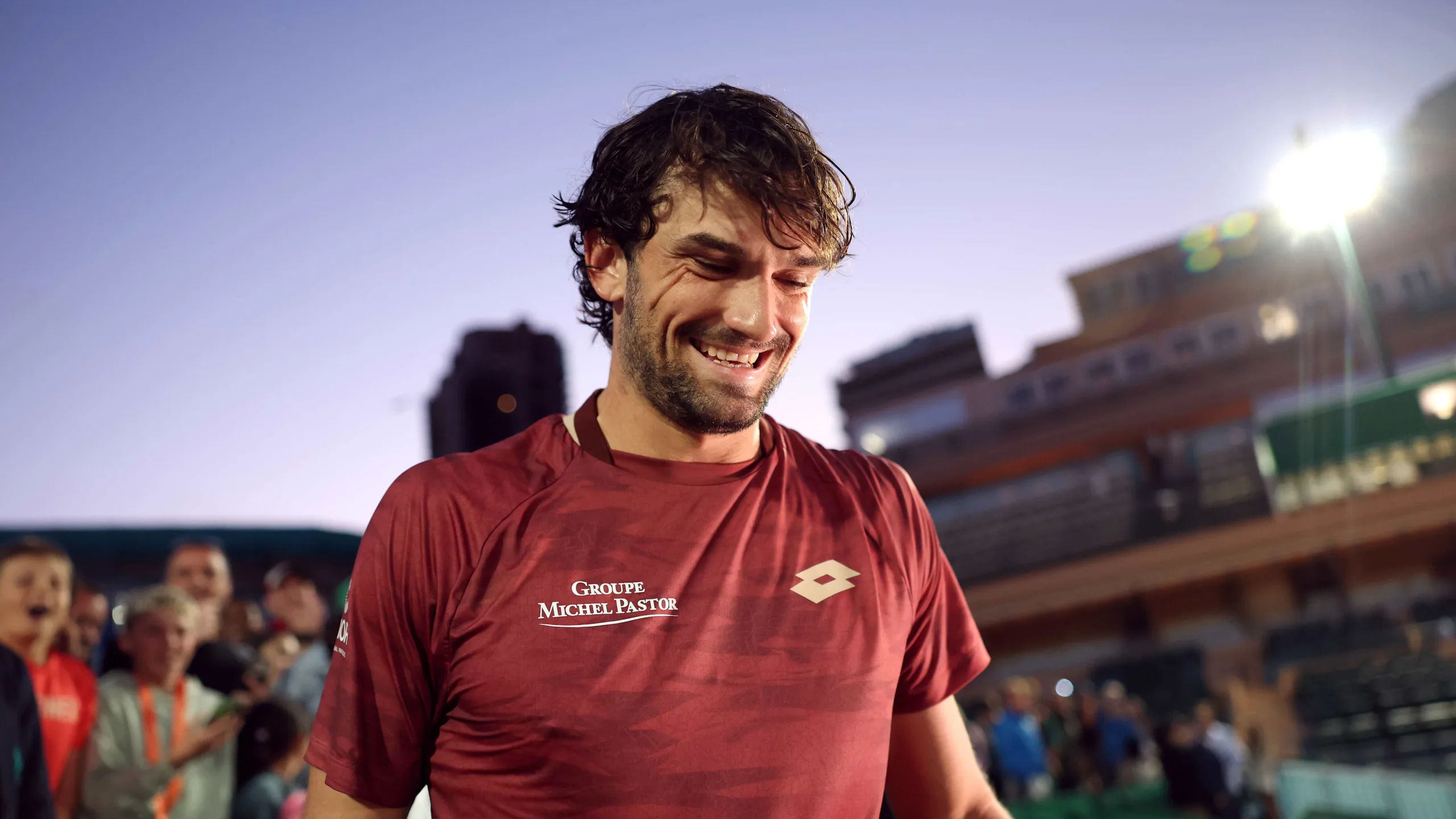
Valentin Vacherot produced the biggest clay-court win of his career when he defeated Lorenzo Musetti 7-6 (6), 7-5 on Court Rainier III at the Rolex Monte-Carlo Masters. After surviving a deciding set in his opening match against Juan Manuel Cerundolo, the 27-year-old found another gear in front of a familiar home crowd.
Having seen three set points slip away before saving one of his own, Vacherot held firm to close out the straight-sets victory. The 27-year-old admitted to ATP Media’s Colin Fleming afterwards that “I didn’t deserve to win the tiebreak”, though he delivered when it mattered to topple last year’s runner-up.
The win marked Vacherot’s first Top 5 victory of the season and his first at clay since his upset of Novak Djokovic during last October’s Shanghai Rolex Masters run. “If someone had told me that my first Top 5 win of the season would be here in the night session on this center court I’ve been hitting on since I’m six years, (I’d say) nothing can beat that,” he said.
He added context on his relationship with the surface: “Maybe people don’t know that I love clay. I grew up playing here before going to college where I learned to play on hard. I needed a set and a half to get on it in the first round. Now my clay-court game is back and ready to roll.”
Musetti entered the event seeking his first win since the Australian Open, where he retired up two sets on Djokovic in the quarterfinals with an upper right leg injury. He lost his Indian Wells opener and later withdrew from the Miami Open with a right arm issue. In 2025, the Italian converted his Monte Carlo run into semifinal appearances at Madrid, Rome and Roland Garros.
Vacherot now moves into third-round play and will face Hubert Hurkacz on Thursday. The Pole ended a seven-match losing streak by eliminating 15th seed Luciano Darderi in the first round and followed that with a 6-2, 6-3 victory over Fabian Marozsan today.
ATP Masters Monte Carlo
Alcaraz opens Monte Carlo defense, downplays No. 1 fight and plans a custom catamaran
Alcaraz starts Monte Carlo title defense, discusses clay, No. 1 outlook, a custom yacht order. Soon.

Carlos Alcaraz began his bid to defend the Monte Carlo crown with a straight-set win over Sebastian Baez, signaling the start of a busy clay season he described as “Two long months ahead, but exciting ones.” Last year he compiled a 22-1 run on European clay that began with his maiden triumph at the Rolex Monte-Carlo Masters. This week he opened his title defense with a 6-1, 6-3 victory against Baez.
The 22-year-old, a six-time major champion, made clear how much clay means to him in conversation with Prakash Amritraj on a non-match day Wednesday. “I enjoy so much playing on clay. I miss it so much. For me, that’s the most important thing,” he said.
Alcaraz also addressed his standing at the top of the rankings. He is tied with Jannik Sinner at 66 weeks as world No. 1, but he accepts that the position may not remain his for long after Sinner closed the gap with a Sunshine Double sweep and could challenge to reclaim the spot as early as next Monday. “The No. 1 spot is not in my mind,” he asserted. “As I said yesterday, sooner or later, I’m gonna lose it because Jannik has some tournaments he doesn’t defend (points) at all and I have a lot to defend. So I will try to just focus on my tennis, to be good on the court.”
Off the court, Alcaraz has indulged his interest in the sea. Images from the Miami Open showed him aboard a Sunreef Catamaran, and he has ordered his own custom Ultima 88 from the same builder. “Mine, they’re gonna build it. It’s going to take one year, one year and a half. So I’m super excited about it,” he said, adding that the water helps him unwind: “During the sea, everything is chill. My thing to disconnect from everything.”
When Tommy Paul expressed interest in joining, Alcaraz laughed about the invitation and the terms. “I saw Tommy Paul saying like…” Amritraj replied, “He wants to get on there,” and Alcaraz finished the thought: “I better invite him. I will for sure,” and “But I’ll tell him you’re gonna take me out for fishing. Half and half, I’m gonna make a deal with him.”
ATP Masters Monte Carlo
Berrettini hands Medvedev 6-0, 6-0 defeat at Monte Carlo
Berrettini routed Medvedev 6-0, 6-0 in Monte Carlo, a 49-minute double bagel over a Top 10 foe. fast.
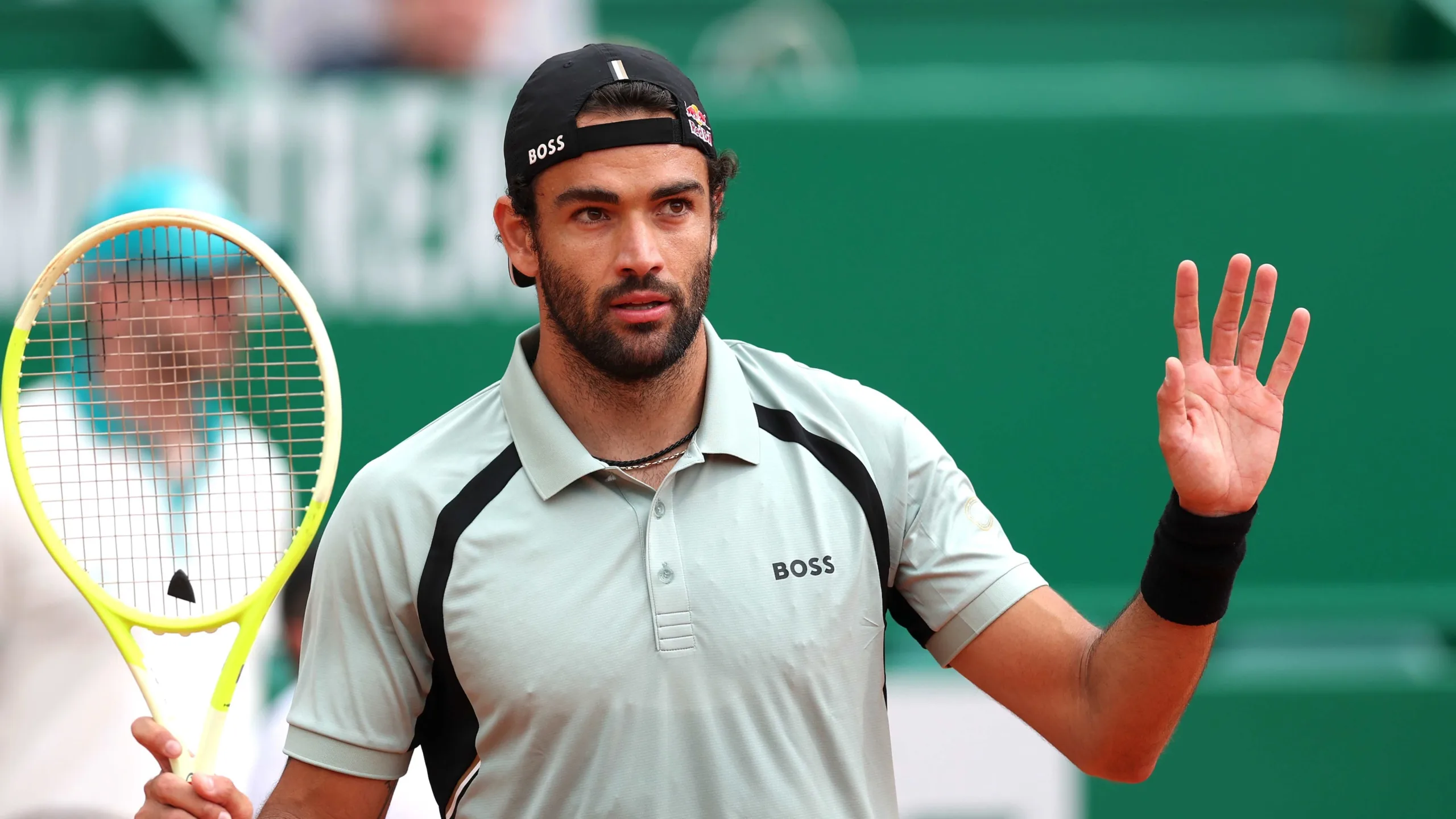
Matteo Berrettini produced a stunning performance in a second-round match at the Rolex Monte Carlo Masters, dismissing Daniil Medvedev 6-0, 6-0 in just 49 minutes. The result was Berrettini’s first victory over the world No. 10 and marked a dramatic reversal of their previous head-to-head history.
Before Wednesday, Medvedev had won all three of their earlier meetings. Those matches were played on hard courts, and clay produced a very different outcome. Berrettini dominated from the start, offering no margin for error and delivering a complete match that left Medvedev unable to win a game.
The scoreline places Berrettini in a very exclusive company. He became only the third man this century to hand a Top 10 opponent a double bagel and the fifth man in ATP rankings history, dating back to 1973, to achieve that feat. The rarity of a 6-0, 6-0 result against a current Top 10 player underlines how exceptional the performance was.
Beyond the headline score, the match will be remembered for its brevity and the way surface and circumstance shifted the balance between two players who had previously met only on a different surface. For Berrettini, the victory is notable both for the manner of the win and for ending a personal losing streak against Medvedev. For Medvedev, it stands as an abrupt and emphatic reversal in a rivalry that had previously gone in his favor on hard courts.
The result will reverberate through the draw at the Monte Carlo event, where Berrettini advances with a rare and emphatic statement. Statistical and historical context will follow, but the immediate fact is simple: Berrettini routed Medvedev 6-0, 6-0 in 49 minutes, a double bagel against a Top 10 opponent.

Ostapenko confronts heckler, rallies to beat Alexandra Eala at Linz

Vacherot upsets Musetti on Monte‑Carlo center court; clay game ‘ready to roll’

Alcaraz opens Monte Carlo defense, downplays No. 1 fight and plans a custom catamaran

Alcaraz Confronts On‑court Microphones During US Open Practice Ahead of Opelka Match

Raducanu Arrives at US Open With Momentum After Strong Hard‑Court Swing

Cervara: Ending an eight‑year partnership with Medvedev was necessary to change the energy
-

 Australian Open 2026Grand SlamQatar TotalEnergies Open2 months ago
Rybakina says she ‘knew the road’ after second major as she arrives in Doha
-
 500Player NewsQatar TotalEnergies Open2 months ago
Coco Gauff: reading Wuthering Heights, Doha plans and a Super Bowl halftime tease
-
 500Player NewsQatar TotalEnergies Open2 months ago
Swiatek Tops Polish Family Feud List, Talks Preparation for Qatar Return