
Analytics & Stats Dubai Duty Free Tennis Championships Player News
When the Serve Fails: Coco Gauff’s Ongoing Double-Fault Challenge
Gauff’s serving problems in Dubai exposed a long-running double-fault issue and search for fixes….

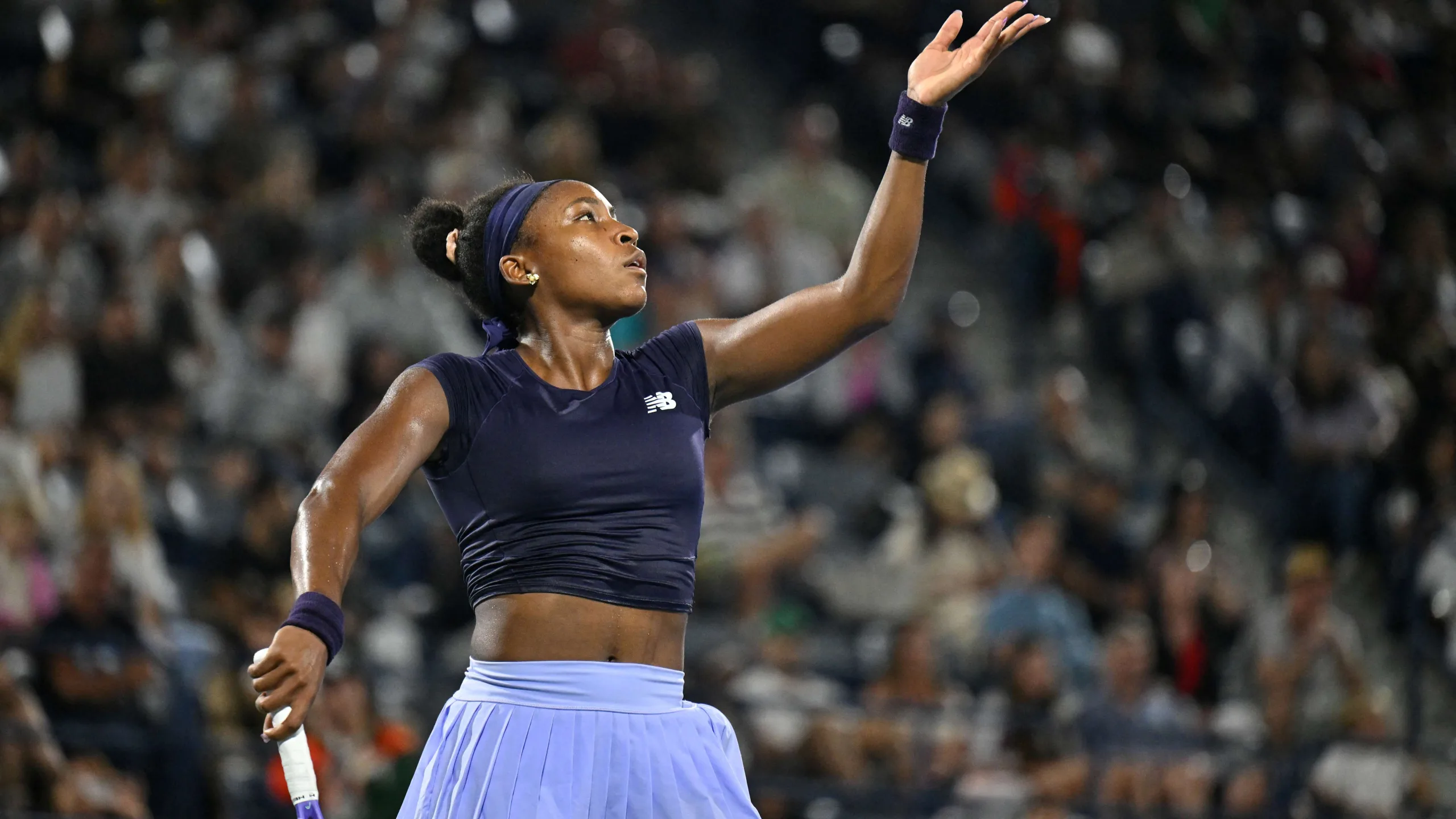
In a Dubai semifinal against Elina Svitolina, Coco Gauff’s frustration boiled into a rare on-court outburst. At 2-2, 15-all in the second set, a double fault prompted Gauff to stride toward her guest box and Gavin MacMillan, the biomechanics guru who joined her team last summer, and say, “I’ve been doing everything you’ve wanted for the last six months, and it’s gotten not better at all, bro.”
The moment underscored a persistent issue. For more than two years Gauff has led the WTA in double faults by a wide margin. Last summer she struck 23 double faults against Danielle Collins and 14 against Veronika Kudermetova on her way to the round of 16 in Montreal. In 2023 she hit 219 double faults and ranked 18th on the tour for that stat. In 2024 she leapt to 430, and she recorded 431 the following year.
Where the problem begins is debated. Is it a bio-mechanical flaw that can be adjusted, or a mental block commonly referred to as the yips? Brad Gilbert, who coached Gauff for 14 months ending in late 2024, offered perspective: “Coco, to me, is more resilient than a lot of those people,” and added, “Even with the serve issues, she still won the French. She still won two majors. She’s still finished in the Top 3 in the world. I feel like if you got the yips, this mental thing, your ranking is dropping, and fast.”
Analyst Rennae Stubbs sees a largely mechanical problem: “I think [her problem], it’s 90 percent mechanical and 10 percent mental,” she wrote. “The problem is that the 10 percent becomes 50 percent once the serve starts going off, because bad technique breaks down under pressure.
“There are so many mechanical issues with Coco’s serve that it’s really difficult to change at this point, but I do think it’s possible. I know Gavin is trying his best.”
Jimmy Arias recalled his own serving anxieties: “She should come talk to me,” he said. “I got the yips near the end of my career. I got so anxious serving that my right hip flew open too early, making it hard to hit a good second serve. I knew what the problem was, but I couldn’t stop it, even though I kept closing my serving stance more and more, until I looked like (John) McEnroe.”
Paul Annacone urged perspective and suggested a different focus: “No doubles, yet she was still annoyed at her serving,” he said. “What she said to MacMillan shows that she’s got baggage, she sees the serve as a big issue. But let’s be honest. How many majors has she won with, quote, unquote, a bad serve? Is it really bad? It’s not great, but so what?” He proposed “reprogramming her vision,” aiming for serving strategy over sheer power.
Experts differ on fixes, but all underscore that the problem is both technical and psychological. As Arias put it, “The most mystifying thing about all of this is how good Coco is in spite of everything.”



500 Analytics & Stats Player News
Sabalenka Marks 80 Weeks At WTA No. 1 As Rankings Shift After Merida and Austin
Sabalenka begins her 80th week at WTA No. 1; rankings shift after Merida, Austin and ATP events now.
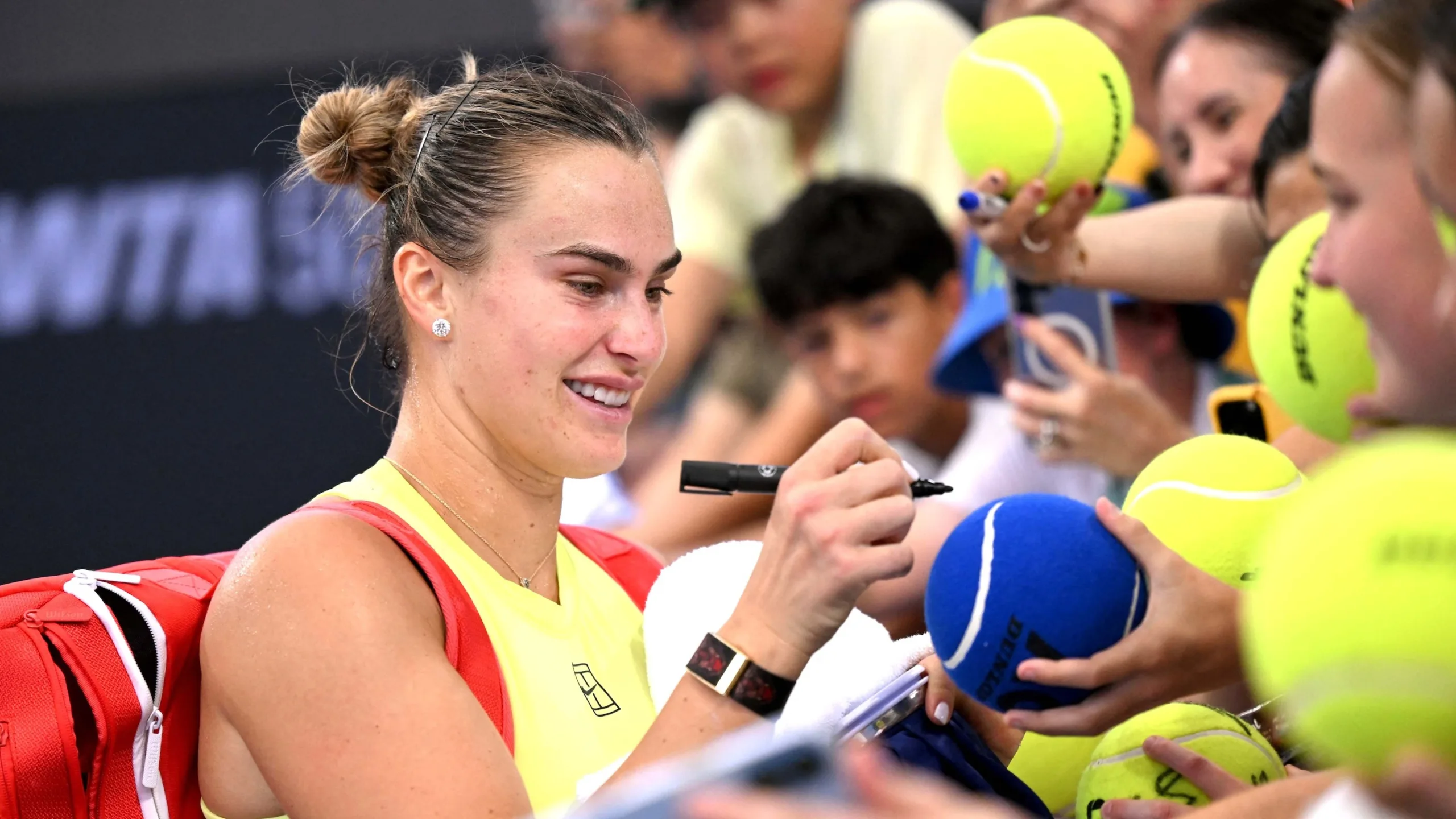
Aryna Sabalenka begins her 80th career week as the WTA No. 1, a milestone that places the four-time major champion among an elite group in the sport’s ranking history. She is the 11th player to reach 80 weeks at the top since the WTA rankings began in 1975, and only the sixth woman to do so this century alongside Martina Hingis, Serena Williams, Justine Henin, Ashleigh Barty and Iga Swiatek.
Sabalenka’s advantage at the summit has in fact inched higher over the last month despite not competing since the Australian Open. A month ago she led Iga Swiatek by 3,012 points (10,990 to 7,978); the current gap reads 3,087 points (10,675 to 7,588). She will keep the No. 1 position through Indian Wells, where she is defending 650 points from a runner-up finish last year. The top ranking could be contested in Miami, where she defends 1,000 points as the reigning champion.
Last week’s WTA events produced significant upward movement in the rankings. Cristina Bucsa, who captured her first WTA title in Merida, climbed from No. 63 to No. 31 and eclipsed her prior career high of No. 50. Runner-up Magdalena Frech moved from No. 57 to No. 36. Victoria Jimenez Kasintseva entered the Top 100 for the first time, advancing from No. 122 to No. 97 after reaching the quarterfinals in Merida as a qualifier.
In Austin, Peyton Stearns claimed her second WTA title and rose from No. 62 to No. 48. Taylor Townsend, the finalist at the WTA 250 event and making her first WTA semifinal and final of her career, returned to the Top 100 for the first time since last summer, moving from No. 119 to No. 87.
On the ATP side, Flavio Cobolli recorded a notable rise to No. 15 after winning the ATP 500 in Acapulco, surpassing his previous best of No. 17. Jakub Mensik continued his steady climb: he reached No. 13 after a Doha semifinal and moved to No. 12 following a Dubai quarterfinal.
Analytics & Stats Player News Tennis Coaching
Gauff leans into topspin and pace with a simple mantra: trust and accelerate
Gauff trusts more racquet-head speed, using topspin and pace to improve her serve and forehand more.
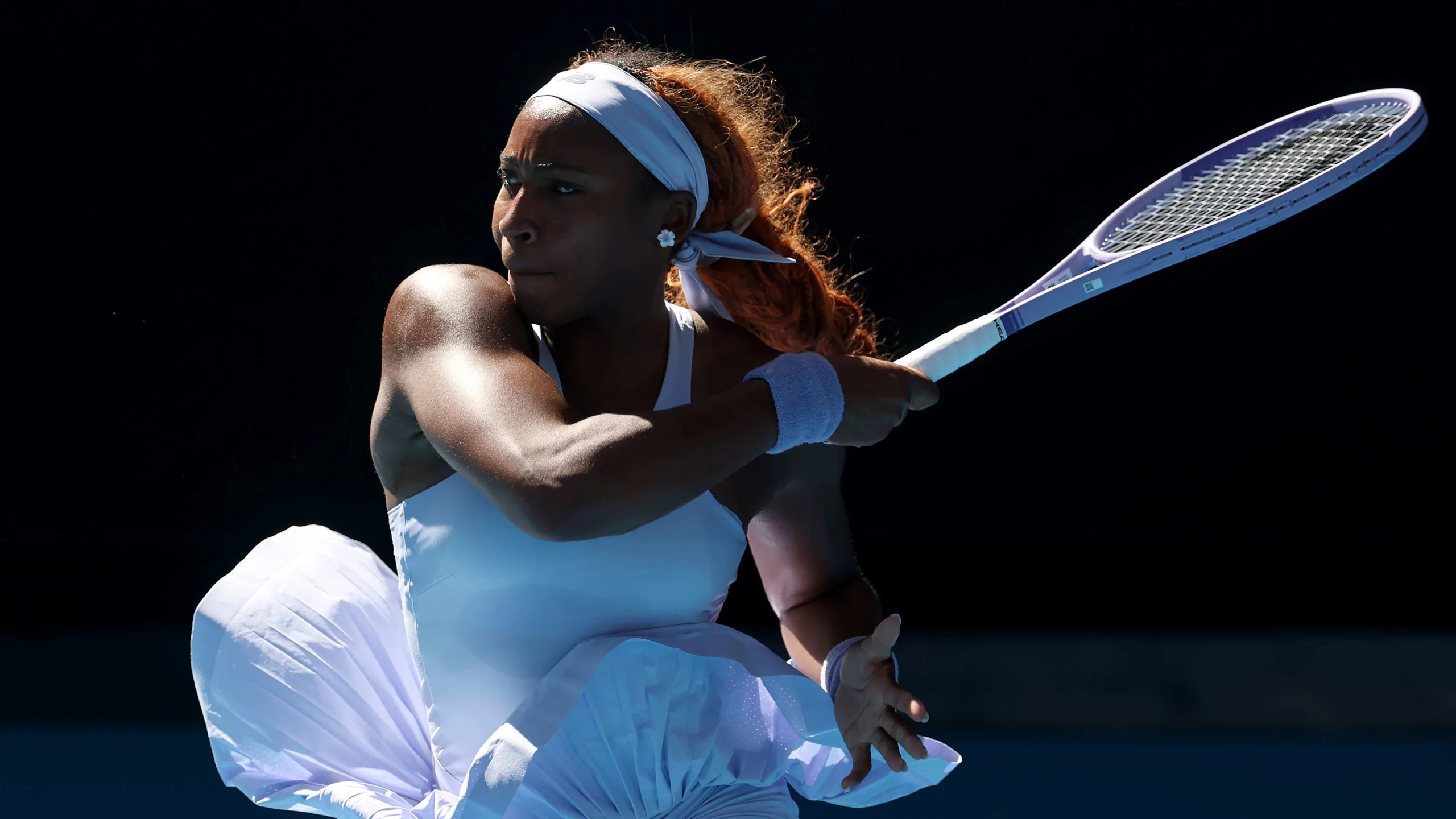
For nearly the first hour of her second-round match on Friday, Coco Gauff watched Hailey Baptiste play the way Gauff has been trying to play. Baptiste, a longtime junior friend ranked 67 spots behind Gauff and with 11 fewer titles, captured the first set 6-3 by snapping serves into the corners and following them with inside-out forehands struck with pace and heavy topspin.
“She was dictating a lot, especially on her forehand side,” Gauff said of that opening set. “I was just trying my best to neutralize that.”
Gauff’s path back was not to outgun Baptiste in raw power. “I thought I served better in the second and third set, got more first serves in,” she said, and, “Overall I think just trying to put her on the back foot and not me being on the back foot.” She lost the opening set but answered with a 6-0 second set and closed 3-6, 6-0, 6-3.
Gauff entered the match less smooth in certain areas: she hit her serve five m.p.h. slower, produced 12 fewer winners and committed six more double faults than her opponent. Still, she turned it by running, cutting her unforced errors to 22 against Baptiste’s 38, attacking with her backhand and winning 83 percent of her first-serve points. At a tense 30-30 late in the third, she finished a rally with an inside-out forehand winner.
She accepts that the serve and forehand will be inspected and insists progress is gradual. “I think at this point I have the right motion,” Gauff said after beating Baptiste. “I feel like I’m working on the right things. Now it’s just trying to, I guess, erase old demons and actually do it.” “There was moments today I was definitely nervous, and I felt like I’m getting better with each match dealing with that on those pressure moments.”
As one legendary player put it: “Racquet-head speed is your friend.” Gauff has rediscovered that topspin and faster racquet-head speed can coexist. “For me, I just felt like I had to hit flatter to hit bigger,” she says. “I’ve always thought for some reason in my head that hitting shape was more defensive, and I realized that you can be really offensive and aggressive hitting with shape,” says Gauff, using “shape” to mean spin and arc. The biggest change for Gauff in 2026, she says, is “just trusting and accelerating.” She will next face Grand Slam finalist Karolina Muchova, with the potential third-round meeting against Mirra Andreeva awaiting the winner.
Analytics & Stats Player News WTA
Anisimova Enters WTA Top 3 and Becomes the New American No. 1
Amanda Anisimova rises to No. 3 in the WTA rankings and becomes the top American player. ©Prange2025
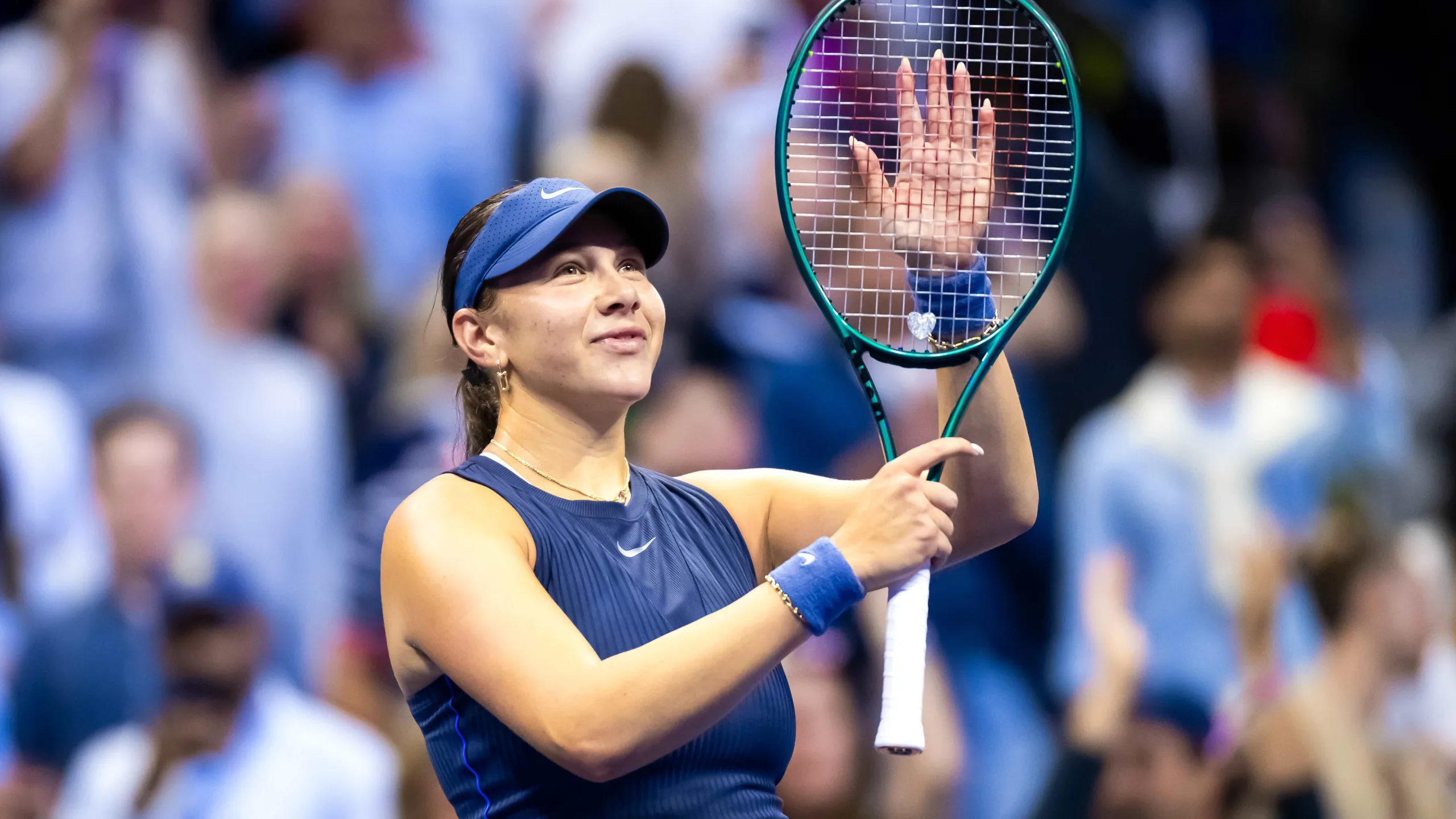
Amanda Anisimova rises to a career-high No. 3 in the latest WTA rankings, marking her first appearance inside the Top 3 and establishing her as the top-ranked American player. She moves up from No. 4 while Coco Gauff drops from No. 3 to No. 4, a swap driven by this week’s points adjustments.
There were no tournaments last week, but points from Week 1 of 2025 have dropped off the rankings. Anisimova remains on 6,287 ranking points. Gauff’s total falls from 6,763 to 6,273 after last year’s United Cup results are removed. The net effect places Anisimova ahead of Gauff and makes her the highest-ranked American on either the ATP or WTA lists; Gauff is now the second-highest-ranked American.
Anisimova’s climb carries additional historical notes. She becomes just the third player born in the 2000s to reach the Top 3 in WTA history, and the fifth player born in that decade to achieve a Top 3 ranking across either the WTA or ATP. She is also the 15th American woman to reach the Top 3 since WTA rankings began in 1975. For context, 11 American men have reached the Top 3 since ATP rankings were introduced in 1973.
Other notable ranking changes this week include Linda Noskova moving from No. 13 to a personal best of No. 12. Clara Tauson slips from No. 12 to No. 14; Noskova lost her second match in Brisbane a year ago while Tauson won the Auckland title at the same time last season. Cristina Bucsa makes her Top 50 debut, rising from No. 51 to No. 50. Anastasia Potapova drops from No. 50 to No. 55; Bucsa lost in the first round in Brisbane last year while Potapova reached the third round.
© 2025 Robert Prange

Swiatek Marks 250 Weeks Inside the WTA Top 10 as Indian Wells Third-Round Match Looms

Alexandra Eala advances at BNP Paribas Open after Coco Gauff retires

Joao Fonseca Advances to Indian Wells Round of 16 with Convincing Win over Tommy Paul

Alcaraz Confronts On‑court Microphones During US Open Practice Ahead of Opelka Match

Raducanu Arrives at US Open With Momentum After Strong Hard‑Court Swing

Cervara: Ending an eight‑year partnership with Medvedev was necessary to change the energy
-
 ATPAustralian OpenGrand Slam1 month ago
Medvedev says he will not underestimate Learner Tien as their Australian Open rivalry resumes
-
 Australian OpenGrand SlamPlayer News2 months ago
Zheng Qinwen Withdraws From 2026 Australian Open After Ongoing Injury Issues
-
 Australian OpenBrisbane InternationalPlayer News2 months ago
Sabalenka debuts surf-inspired Nike dress ahead of Australian Open