
ATP ATP 250 Fayez Sarofim & Co. U.S. Men’s Clay Court Championship
Net Play Paid Off for Paul and Shelton on River Oaks Clay
Tommy Paul and Ben Shelton relied on net play at River Oaks, each winning 80% percent of net points.

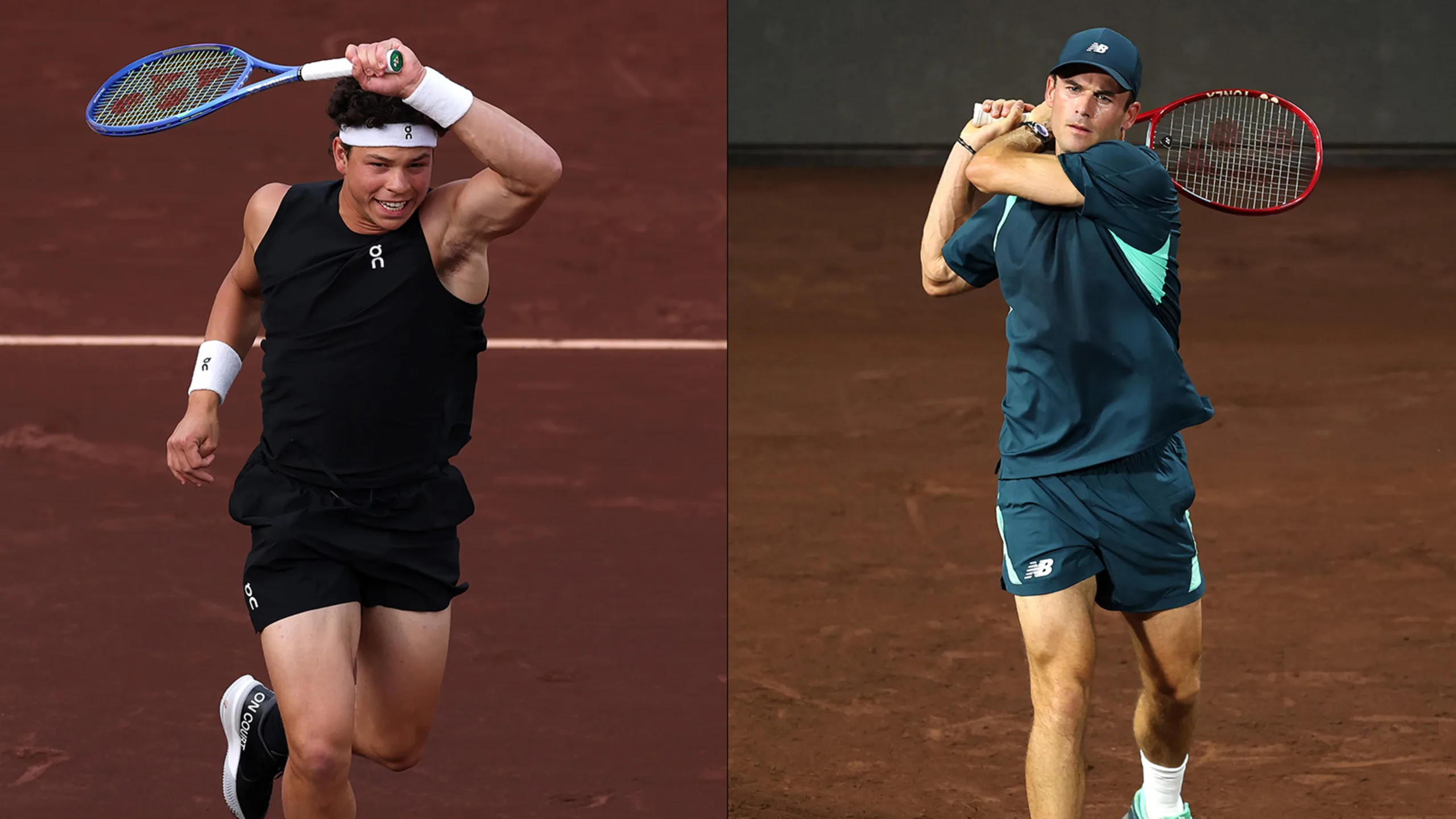
Tommy Paul returned to winning form Wednesday night at the U.S. Men’s Clay Court Championship, grinding through a 2 hours and 24 minutes match to overcome Adolfo Daniel Vallejo 3-6, 6-4, 6-4. The 21st-ranked 28-year-old had arrived in Houston fresh from a painful Miami loss, where he “squandered four consecutive match points in a three-tiebreaker thriller.”
Paul made an intentional tactical shift on the slower red clay at River Oaks Country Club, attacking the net more than is typical for clay. When he came forward he was rewarded, winning 28 of 35 net points, an 80 percent clip. “Should’ve come to the net more,” he told press after the match. “That was the one thing I was thinking the whole time—how do I get to net.”
His calm under pressure showed late. After losing serve at 4-3 in the deciding set, he did not panic. “It might sound silly, but I kind of felt like, even though I got broken there, I felt a little bit under control,” he said. “I felt like I was still going to find a way to win that match.”
Earlier the same evening Ben Shelton advanced with a straight-sets victory over Zhizhen Zhang, 7-6 (5), 7-6 (3). Shelton said the surface allowed him to move forward more than usual. “It’s actually an easier surface to serve and volley on for me than any other tournament on the calendar,” he said. Shelton came to the net only five times but won 80 percent of those net points. He served 21 aces; Zhang hit 12.
Shelton kept his composure even when trailing in the first-set tiebreaker. “One mini break is nothing to be scared of,” he said afterward.
For both Americans, an assertive net approach produced tangible returns on a surface that often rewards baseline endurance. For one week at River Oaks the net has proved a productive option.




ATP ATP 250 Fayez Sarofim & Co. U.S. Men’s Clay Court Championship
Etcheverry weathers wind and Alex Bolt’s slice to advance in Houston
Etcheverry survived wind and Alex Bolt’s slices to win 6-7(5), 6-0, 6-3 at Houston. River Oaks 2023.
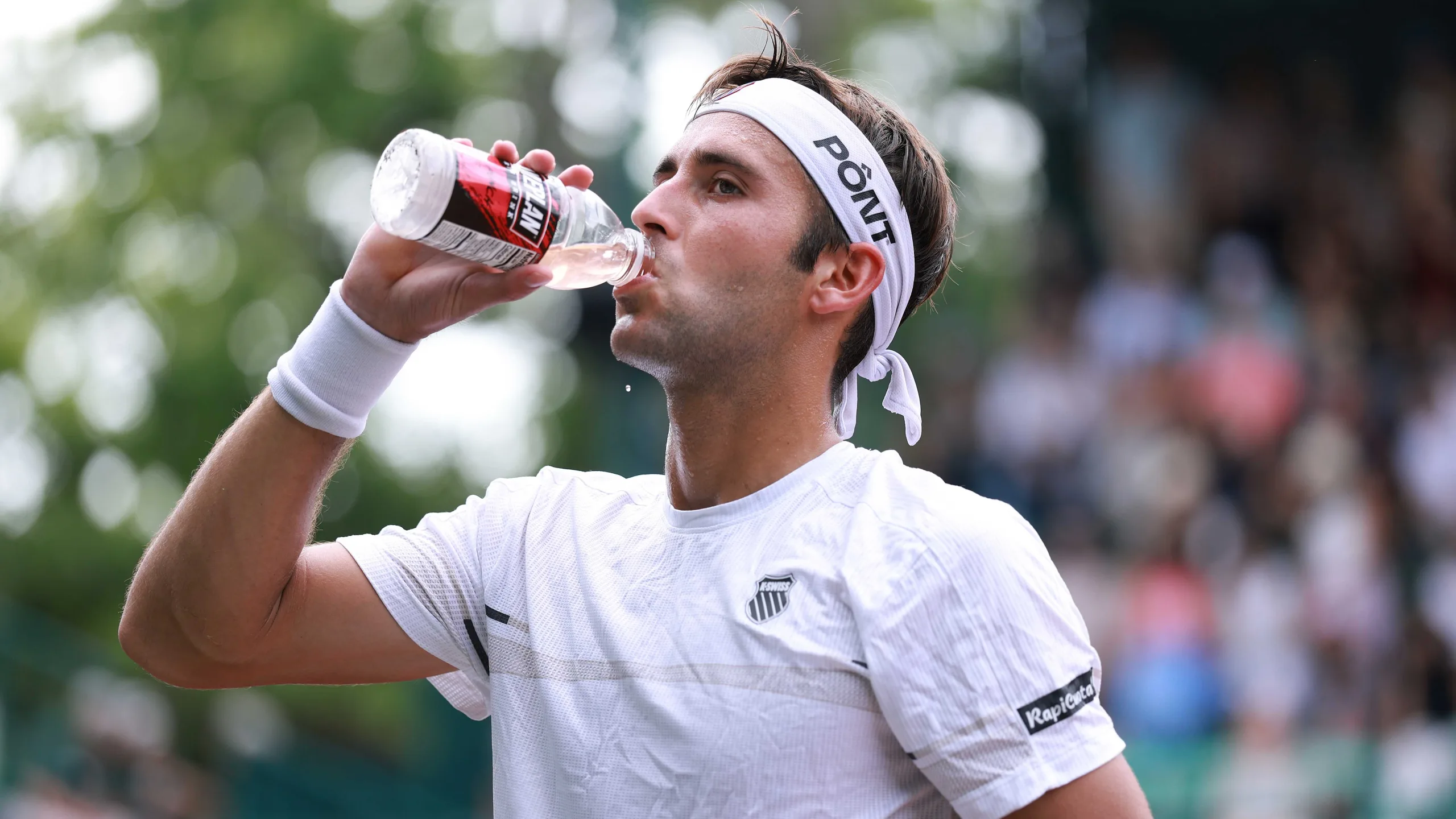
Tomas Martin Etcheverry survived an awkward start and unreliable conditions to reach the next round at the U.S. Men’s Clay Court Championship, edging qualifier Alex Bolt in three sets. The result reflected a clash between a heavy-hitting clay specialist and a low-risk, slice-oriented southpaw who found the conditions to his liking early.
Of this year’s field, Etcheverry entered with the most career clay-court wins, 56, while Bolt came in with none. Bolt, a 165th-ranked qualifier and the oldest player in the draw at 33, used an unusual, disruptive style and constant slice to keep the 26-year-old Argentine off balance. Etcheverry, who was runner-up at River Oaks Country Club in 2023 and captured his first tour title earlier this year at the ATP 500 in Rio de Janeiro, struggled at times to impose his game.
“Tough, tough conditions, said Etcheverry. “The ball moves a lot when I toss for the serve, and also for the rallies. Sometimes, was crazy. You just put the ball in the middle, I didn’t take any risk.”
Bolt broke through qualifying with two three-set victories and then defeated Wu Yibing in the main draw for his first career tour win on clay. He pushed Etcheverry to a tiebreak in the opening set, which Bolt claimed, but Etcheverry responded emphatically with a 6-0 second set. From there he held serve reliably while applying pressure until Bolt faltered at 3-4 in the decider. Etcheverry closed out the match 6-7 (5), 6-0, 6-3.
Etcheverry noted Bolt’s net tendency and slice: “Lot of slice, came to the net,” said Etcheverry. “He did a good job today.” The victory highlighted Etcheverry’s ability to adapt when wind and variety threatened to slow his rhythm.
ATP Masters Miami Open
Lehecka’s Miami Final: Serve, Net Rushes and the Next Step in a Long Climb
Lehecka pushed Sinner in Miami, displaying dangerous serve and net game; proof of progress. Year2026
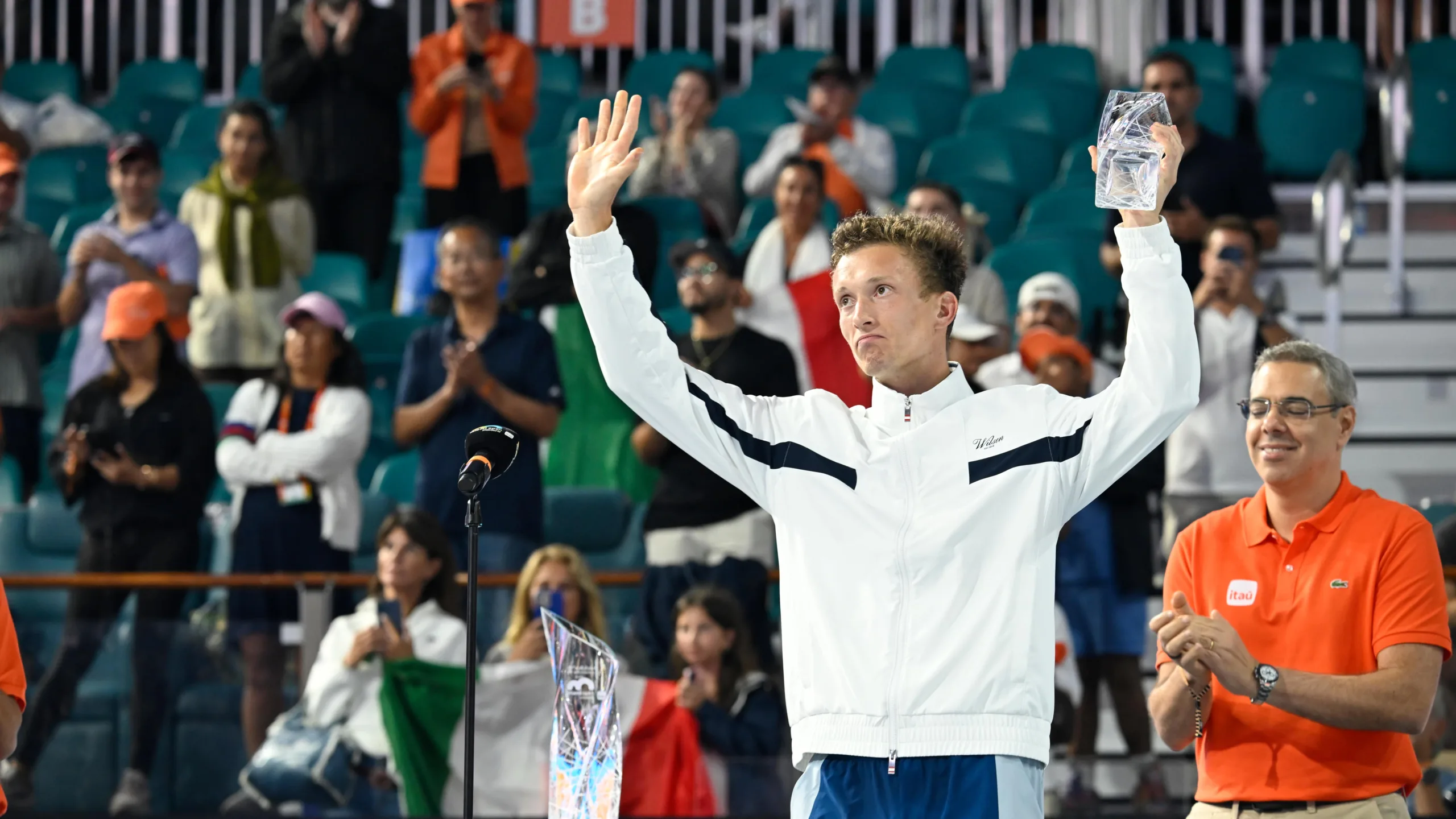
Jiri Lehecka arrived at the Miami Open as an underdog who refused to hide. The 24-year-old Czech produced a run that collided with Jannik Sinner’s all-court power in a final decided 6-2, 6-4. The scoreline does not fully capture the quality of hitting from both men or the narrow margins that separated them.
Sinner supplied the only two breaks Lehecka suffered all week, and the Italian converted two of 11 break points in the championship match. Before the final, Lehecka had faced just nine break points in the entire tournament. Nobody was able to break his serve until Sinner’s decisive combination of serving and returning. Lehecka still pressed: he came to the net 21 times and won 15 of those points, repeatedly testing Sinner’s passing shots on the quick Hard Rock Stadium court.
Lehecka’s path included wins over Taylor Fritz and Arthur Fils, with only Fritz taking a set from him. His game is built on heavy serving, the forehand plus-one, aggressive returns and angled volleys. That blend carried him to a career-best run, yet the final exposed the incremental gains still required to topple the very best.
“I came here not in good form, and I was able to come back to the tennis I want to play,” he said during the trophy presentation. “It’s never easy to stand here after losing a final like that, but if I need to lose against someone it’s you, Jannik.”
Lehecka’s progress has not been linear. He fractured a vertebra at the Madrid Masters, retiring from a Masters 1000 semifinal and missing two majors and the Olympic Games, which he called “painful.” He climbed to a career-high No. 16 by last September but was set back early this year by a strained ankle ligament. On the hard courts he admitted, “I wasn’t really happy with sliding on the hard court. I was little bit scared. [When] you are running for drop shot, you just need to go there 100%, convinced that you are going to win that point-not thinking about whether you should go there 100% or not.”
After the final he acknowledged Sinner’s resilience: “I think it show[ed] how great a player Jannik is, how he was able to come back in a crucial moment and how he was able to help himself with the serve,” adding that he had “probably” only a single chance to put a return into play. “Matches like today against these guys are showing me that there is still big, big, big room for improvement,” he said. “I played, in my opinion, very good tournament here. I was very satisfied with my game. But today I again saw that there is still somewhere to go, and that I will really need to keep improving more and more.”
ATP BNP Paribas Open Masters
Confessional Cart: Players Explain Why Tennis Is Seen as the Sexiest Sport
Players on ‘Confessional Cart’ at the BNP Paribas Open debated why tennis is the sexiest sport. Now.
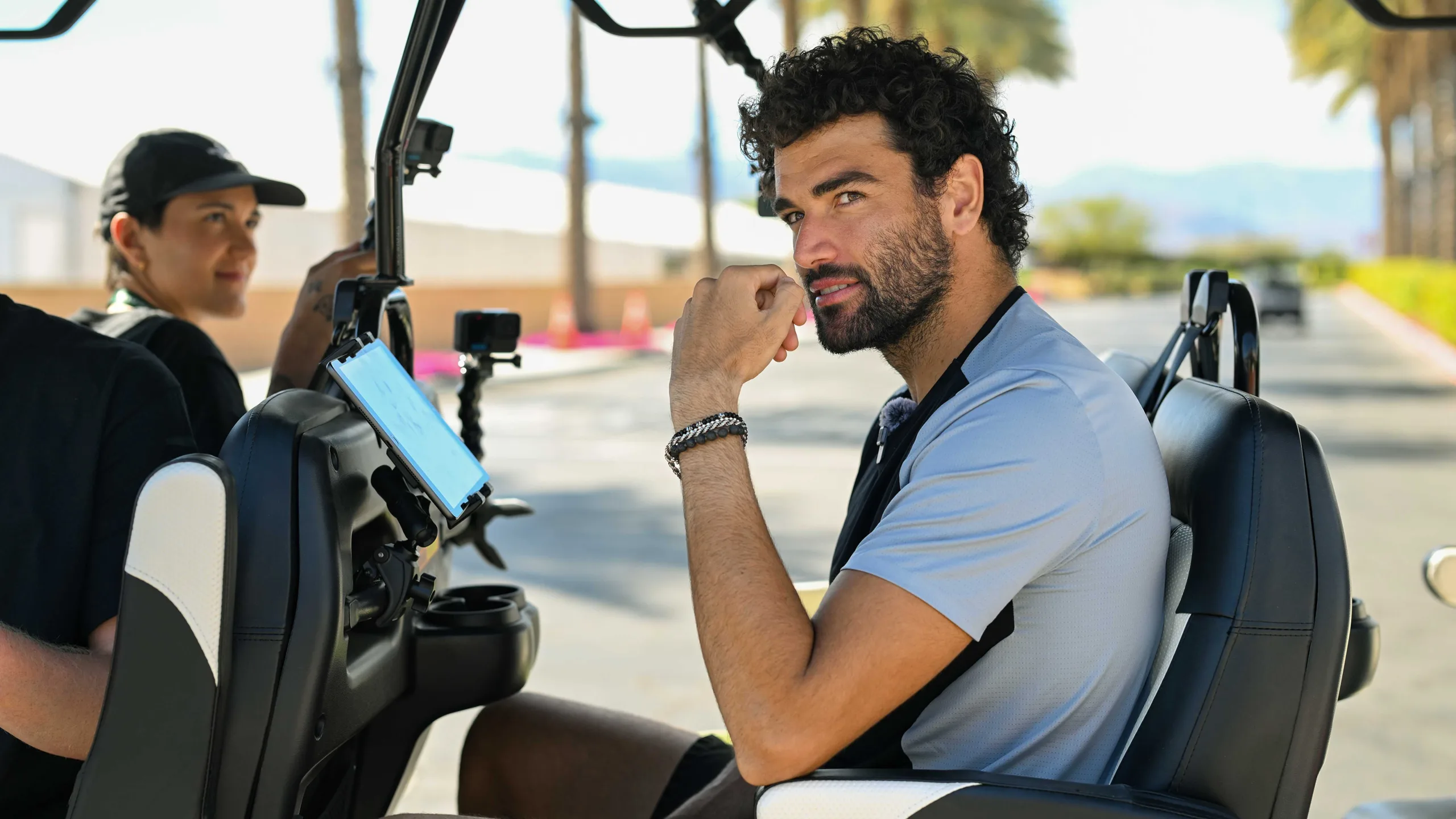
The short-form series “Confessional Cart” returned at the BNP Paribas Open with a roster of ATP and WTA players answering offbeat questions during rides back to the locker rooms. One recurring topic across the season was a light but pointed debate: what makes tennis the sexiest sport?
Atheistically and technically, I think it’s very nice to look at,” responded Casper Ruud. “I’ve seen tons of pictures of Roger being compared to like a ballerina or dancer.
Sights and sounds factored heavily in other players’ replies. “Because of grunts, because of muscles. And for sure, because of outfits,” felt Marta Kostyuk. The theme of attire returned in another voice: “We wear nice outfits. And it’s subtle, not too revealing but still kind of classy,” added Ajla Tomljanovic.
Beyond visuals, several players pointed to the raw emotion that the sport produces. Said Chris Eubanks, “The grunting, the emotion, the passion. I think it’s just the best all around sport when you combine men and women.” His comment captured a common throughline: tennis is experienced as a mixture of athletic display and personal intensity.
The conversation also leaned into the physicality and effort on display. “There is a lot of grunting and a lot of sweating. It’s one against one or sometimes two against two,” laughed Matteo Berrettini. “Cut that, cut that.”
The topic earned a concise endorsement from a fellow player. Tommy Paul asserted, “Matteo Berrettini. That’s why it’s the sexiest sport.”
Across brief segments on the series, players offered overlapping reasons: form, sound, clothing choices and emotional intensity. The format allowed candid, often humorous takes that do not arise in standard media sessions, and the BNP Paribas Open setting provided the backdrop for those informal conversations.

Net Play Paid Off for Paul and Shelton on River Oaks Clay

Pegula on green clay, confidence and finding her edge in Charleston

Etcheverry weathers wind and Alex Bolt’s slice to advance in Houston

Alcaraz Confronts On‑court Microphones During US Open Practice Ahead of Opelka Match

Raducanu Arrives at US Open With Momentum After Strong Hard‑Court Swing

Cervara: Ending an eight‑year partnership with Medvedev was necessary to change the energy
-
 ATPAustralian OpenGrand Slam2 months ago
Offseason Focus: How Eliot Spizzirri’s Boca Raton block set up his Australian Open breakthrough
-
 Australian Open 2026Grand SlamQatar TotalEnergies Open2 months ago
Rybakina says she ‘knew the road’ after second major as she arrives in Doha
-
 ATPAustralian OpenGrand Slam2 months ago
How Carlos Alcaraz’s 2026 Australian Open victory changed his career ledger