College Tennis
From Shelter to Scholar Athlete: Mariia Vainshtein’s Journey from Ukraine to the Bronx Courts
Displaced by war, a Ukrainian teen found refuge in U.S. schools, courts and a path to college next.

When Russian bombs drove the family from Odesa in 2022, Mariia Vainshtein’s life narrowed to one urgent need: survival. Her mother, Anzhelika Kotlyantseva, remembers her first impression of the United States in a single word. “Safety.”
Kotlyantseva left her husband behind because men were forbidden from leaving Ukraine. “We left my husband and I didn’t know when I might see him again, or if I’d see him again,” says Kotlyanstseva, who was an elementary school teacher in Ukraine. “I left my house, and it took me four days to get here. Once I was here, I felt safety for me and my daughters.” The family traveled through Moldova, Romania and Turkey before arriving in the Mill Basin neighborhood of Brooklyn.
For 13-year-old Mariia, the invasion upended school and routine. She recalled asking a teacher about the possibility of war. “She said she didn’t think a war was going to start, because she knows history,” Vainshtein says. “I was scared for my life—like, what if a bomb is going to drop on my house?” Mariia says. “But I was also scared for my future, because I understood there wouldn’t be one in Ukraine after the war.”
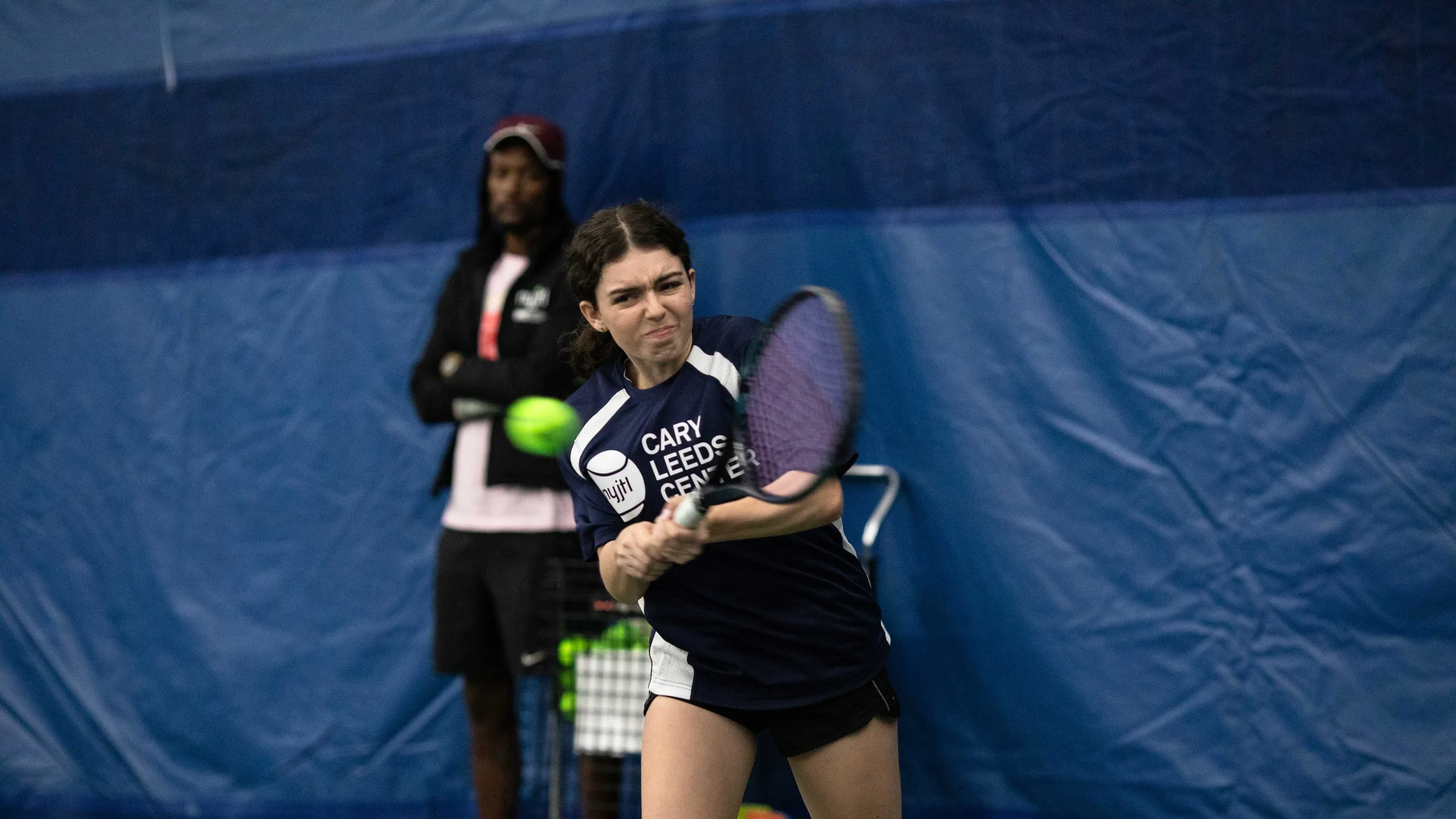
Tennis, prescribed years earlier to help her focus her eyes, became a refuge in a new country where she initially found school and language barriers isolating. “It was very lonely here at first,” she says. “I was just hanging out with my mom and my aunt and their friends.” Faced with advice to return to Ukraine to learn English, Mariia responded, “That’s crazy. I can’t go back to Ukraine. There’s a war on.” Instead she gravitated to the Bronx, to the Cary Leeds Center and the Scholar Athlete Program run by New York Junior Tennis and Learning.
Cary Leeds provided free tennis and academic instruction at its 22-court facility and roughly 100 enrollees as of 2026. “I see how her thoughts change,” Mariia’s mother, Anzhelika, says. “They help kids to believe in themselves and grow.” Mariia credits the program and her coaches with improving both technique and purpose. “Before I just used to hit the ball, and that’s it,” she says. “No mental game behind it. Now I’m thinking about it more than I used to.”
Her coach, Rob Cizek, noted progress. “She’s a pretty stubborn player,” Cizek says. “She likes to take the ball early. When I met her, she didn’t put much thought into who she’s playing and how to make them uncomfortable. Now she’s developing other strokes, adding variety, adding some slice and spin to her second serve.”
A senior at James Madison High School, Vainshtein led the girls’ tennis team to its first Public School Athletic League title in 46 years and hopes to play in college next year. She also placed on a team that finished second in New York State’s We the People competition. “I’m really good with American history because everything is so connected and so straightforward,” she says. “It’s never changed. There’s just one constitution the whole time.” For Mariia’s mother, safety was the priority; Cary Leeds has helped turn survival into opportunity.




College Tennis
Noah Rubin on the long road from junior promise to the grind of pro tennis
Noah Rubin reflects on junior promise, college choices, tour costs and unforgettable matches.
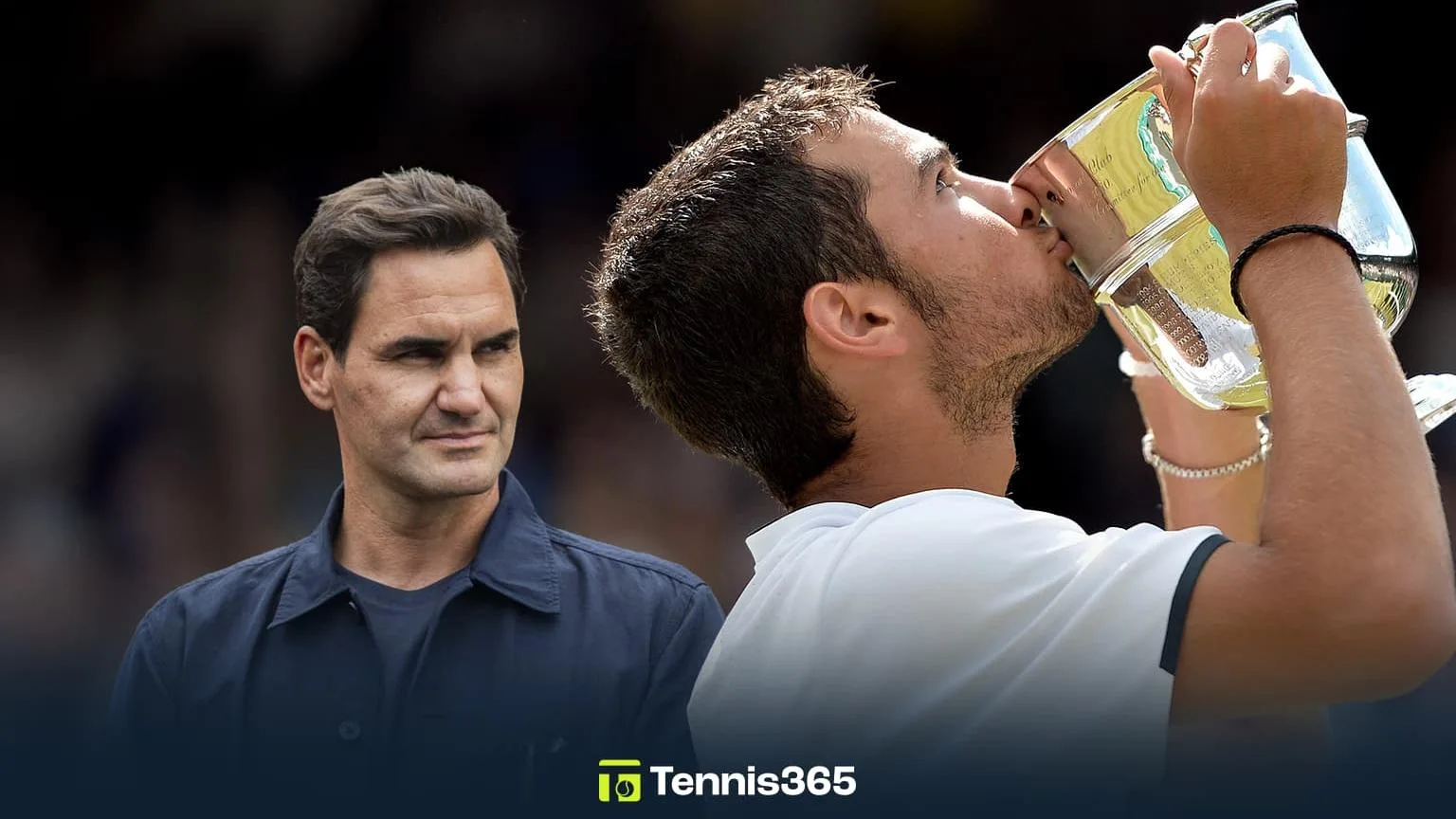
“It’s cool to play Wimbledon, but that’s four minutes out of the year. It’s easy to forget the countless nights by yourself, the times when you thought you were a failure.”
Noah Rubin was once viewed as a major American prospect. At 15, John McEnroe described him as the “most talented player we’ve come across” at his Academy on Randall’s Island in Manhattan.
The Long Island native later reached No. 1 in the United States among juniors, rose to sixth in the junior world rankings and captured the 2014 Wimbledon Boys’ singles title at 18. Rubin also said there was pressure around that rise, even if he did not always feel it directly.
“There was a decent amount of pressure. I don’t know if I felt it. I was playing pretty well, had a good junior career,” he told Tennis365. “I definitely felt the weight of New York.
“But it was that conversation of, ‘You’re not this 6ft 8in guy that’s taking it on’; I’m grinding through, I’m trying to hold my emotional standard to a very high level. And that correlated to being the face of the John McEnroe Tennis Academy.”
That profile increased after he beat Stefan Kozlov in the first all-American final at Wimbledon since 1977, in front of 10,000 spectators on No 1 Court. Yet even that path nearly slipped away. Rubin said he had already reached a career-high ranking years before his junior Wimbledon win, and had stopped playing junior events early.
He recalled hesitating over whether to turn pro, before McEnroe pushed him and his father to enter the Grand Slams at the end of his junior career. After the French Open, he qualified, lost in the second round to Quentin Halys, and initially decided he would not go to Wimbledon. McEnroe persuaded him otherwise, and Rubin travelled to London 24 hours before his first-round qualifying match.
Rubin chose college tennis instead of turning professional right away, earning a scholarship at Wake Forest University and later receiving a wildcard into the 2014 US Open, where he lost in the first round to Federico Delbonis. He said the decision came in a different era, before NIL money changed the college landscape.
He turned pro in June 2015, won the Charlottesville Challenger later that year and earned a place in the 2016 Australian Open, where he upset 17th seed Benoit Paire before exiting in the second round. The financial burden of life on tour, he said, was substantial, especially with travel, equipment, recovery and support staff.
Rubin reached a career-high of 125 in October 2018, but by then he was worn down. Still, some memories remained vivid, including a second-round meeting with Roger Federer at the 2017 Australian Open. He pushed Federer hard, held two set points and came away with one of his defining experiences.
Now 30, Rubin has stepped away from the tour, though he has reflected carefully on what he would change. He also said he is occasionally mentoring Jack Kennedy, and that the younger player appears ready to commit fully. For Rubin, the best moments were not always the biggest results, but the strange and unforgettable scenes that tennis gave him along the way.
ATP Tour College Tennis
Wawrinka left without US Open farewell as wildcard list passes him by
Wawrinka’s US Open wildcard snub means no Grand Slam farewell in New York for the veteran.
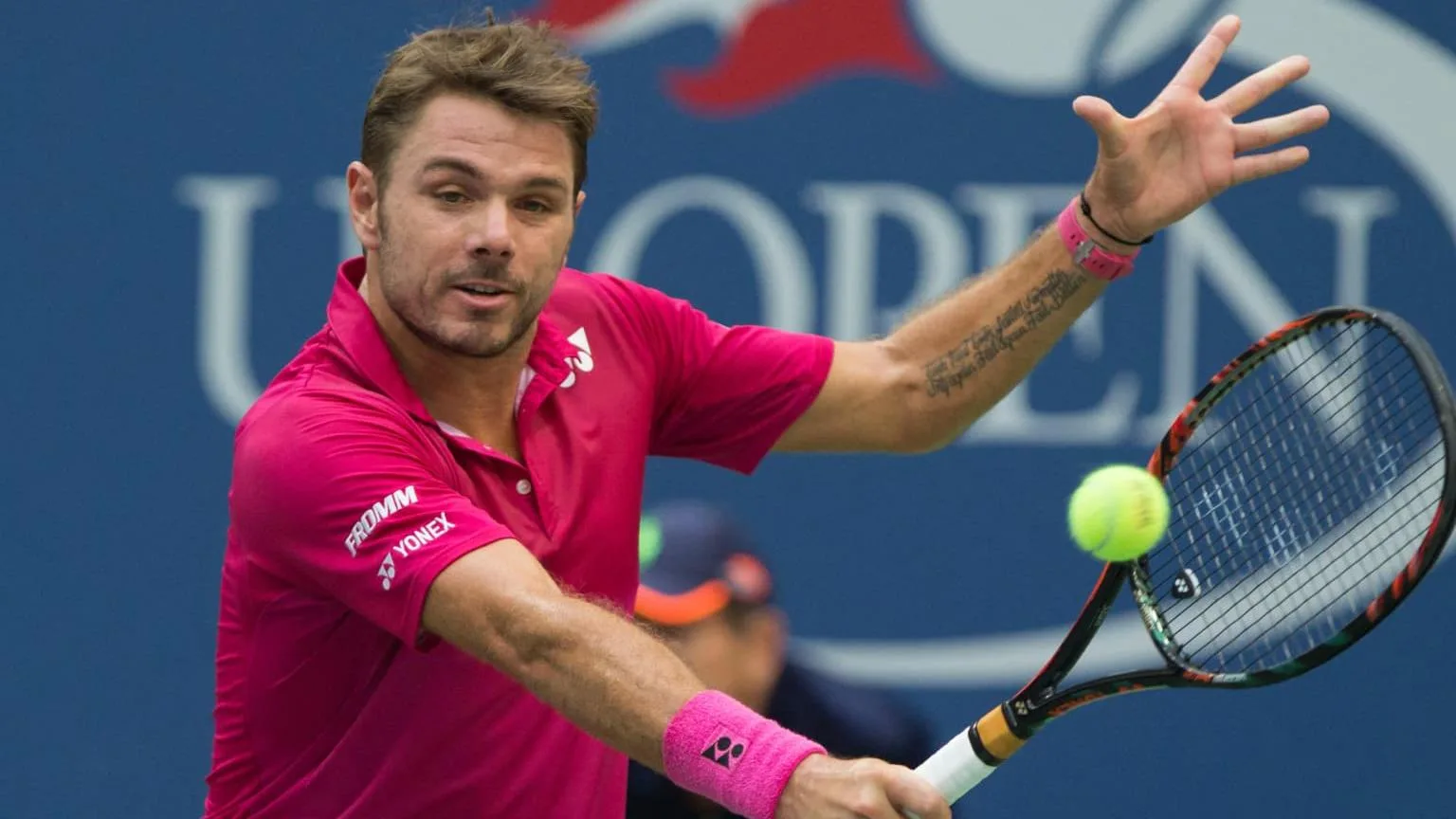
Stan Wawrinka’s career is nearing its end, but the closing stretch will not include the Grand Slam farewell many believed he had earned.
After more than 20 years in the sport, Wawrinka can point to a career defined by major titles in Australia in 2014, Paris in 2015 and New York in 2016. In hindsight, he was not far from the career Grand Slam after reaching the Wimbledon quarter-finals 11 years ago.
The problem for the 41-year-old is that the last of those three major victories came at the US Open, and nearly a decade after beating Novak Djokovic in four sets for that title, he has not been invited back to Flushing Meadows for one final appearance.
US Open organisers confirmed their final men’s singles wildcard list over the weekend, and Wawrinka was not on it. The recipients were Michael Zheng, J.J. Wolf, Sebastian Gorzny, Jack Kennedy, Gael Monfils, Dane Sweeny, Darwin Blanch and Patrick Kypson.
Wildcard decisions rarely follow a simple formula. Players from the host country tend to take most of the spots, while others can be granted entry after injury absences or at the end of a career. Monfils fits that pattern. Wawrinka, despite having three more major titles than the Frenchman, does not.
The rankings comparison only sharpened the debate. Wawrinka is 127th, Monfils is 307th, and Wawrinka would have needed to be much closer to the top 100 for direct entry. Both players are retiring at the end of this year, yet only one will play another Grand Slam.
Patrick Kypson’s place on the list also drew attention. He is nearly 27, sits just 11 ranking spots above Wawrinka and has a career-high ranking of 89th. That has prompted questions over why US Open officials viewed him as the stronger wildcard candidate.
Ben Rothenberg reported that Wawrinka requested a wildcard and the United States Tennis Association appears to have turned him down. He will not enter qualifying, which means his Grand Slam career will end without a final match in New York.
Rothenberg tweeted, “If tennis authorities wanted to prevent this, btw, it would be very easy to make a golf-esque rule that provided exemptions on an entry list for former champions within a certain ranking, in addition to existing wild card allotments. But that hasn’t happened.”
Wawrinka has not spoken publicly. His ATP Tour record this season stands at seven wins and 15 losses, and he has also spent time on the Challenger circuit. Venus Williams, by contrast, has lost 14 matches in a row yet continues to receive wildcards and will play the women’s singles first round. The contrast has only intensified the feeling that Wawrinka has been denied one last chance.
ATP Tour College Tennis
Shelton and Roddick laud Jodar as Montreal run puts record within reach
Shelton and Roddick praise Jodar as Montreal results put a top-10 record in sight.
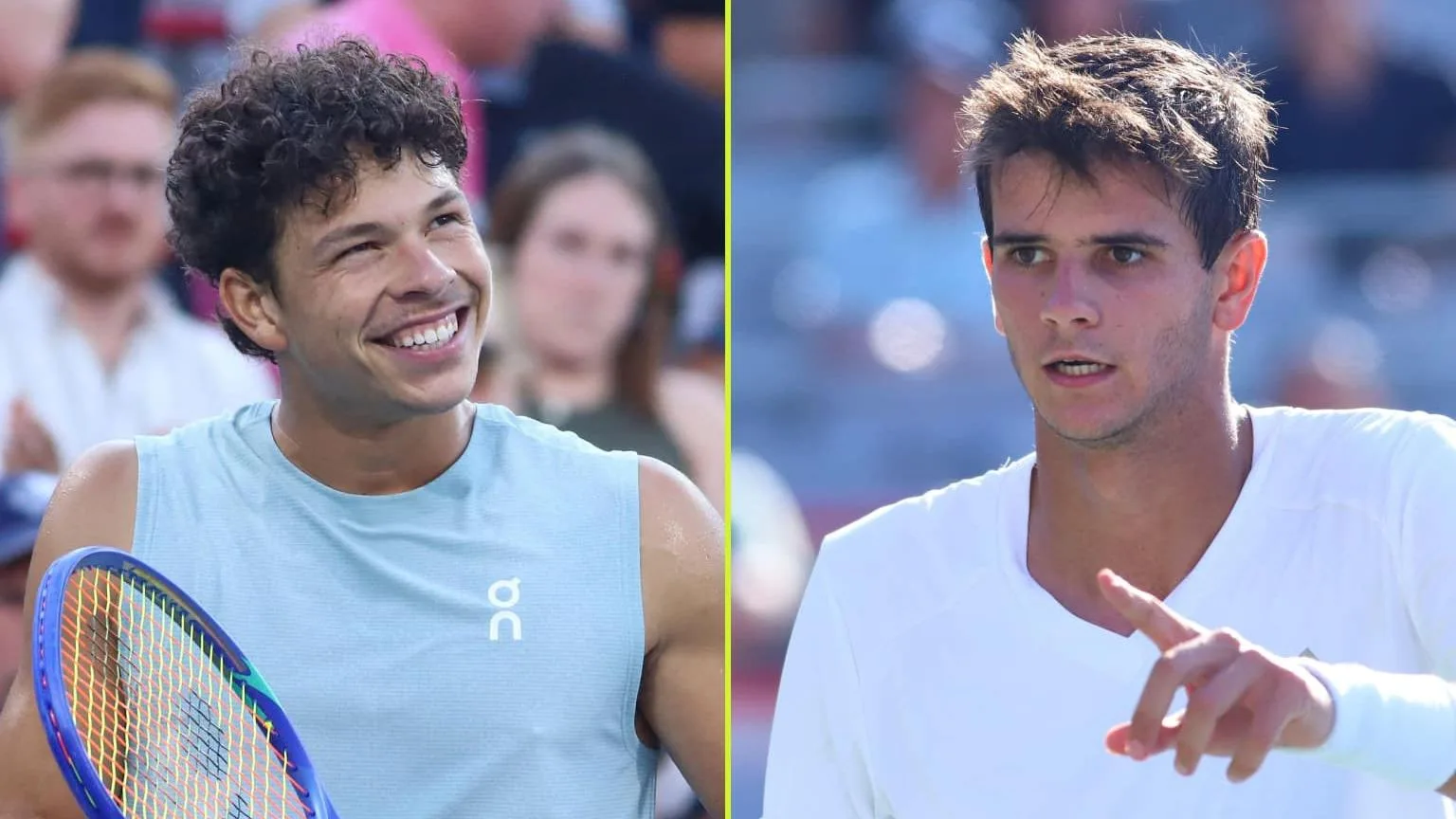
Ben Shelton and Andy Roddick have both taken notice of Rafael Jodar’s rapid surge during the Canadian Open in Montreal.
After the 19-year-old beat Arthur Fils in straight sets on Tuesday, the Spaniard moved into the semi-finals in Montreal for the first time and climbed to 11th in the ATP Tour rankings. He is also seventh in the ATP Race, and one more win over Brandon Nakashima would move him even closer to a striking milestone.
Should Jodar go on to win that semi-final, he could set a new mark for the shortest span between entering the top 100 and breaking into the top 10. Boris Becker currently owns that record, having done it at 18 in 1985 in 210 days. Jodar would top that if Shelton does not defeat fellow American Learner Tien in the other semi-final. If every result falls the Spaniard’s way, the timeline would be a remarkable 140 days. Jodar only turned professional full-time last December.
Shelton, however, remains intent on defending his Canadian Open title. If he and Jodar end up meeting in the final, the American could still block the record by beating him later this week.
Shelton knows something about a fast rise himself. After leaving the University of Florida in 2022, he enjoyed an excellent first full season on tour, reaching the quarter-finals of the 2023 Australian Open and the semi-finals of that year’s US Open. He finished the year at world No 17, yet he readily acknowledged that Jodar may already be on a sharper path.
In his post-match press conference, he said, “I’ve been super impressed with Rafa the way that he’s come out on tour. I didn’t expect there to be another college guy within three years who was 500 in the world and then top 20 within a year.
“He’s probably going to be top 10 and outdo me, or what I did in 2023. I think that he’s got a great game, complete game, good athlete, forehand, backhand, return, up there with the best in the world.
“I was super entertained all three times by him and Arthur’s matchups this year. And they’re hitting the ball incredibly from the baseline. So I’m super happy for him, and yeah, excited to see his trajectory and what he does in the next 18 months.”
Roddick was similarly effusive. On the latest episode of Served, the former world No 1 said, “Jodar is a badass. He just wins every week. Jodar is going to make the World Tour Finals. He is good every single week.”
Shelton, for his part, arrives in strong form after beating French Open semi-finalist Jakub Mensik 6-3, 6-1 in the quarter-finals. He has not dropped a set all week, which means Jodar would have to be fully alert if they meet in the final. First, though, both players still have to get there.

Zverev Arrives at Laver Cup With Europe’s Title Bid in Focus

Alex Eala opens Singapore challenge against Prozorova as ranking gains loom

Zverev’s breakthrough season rewrites a long-running story

Raducanu Arrives at US Open With Momentum After Strong Hard‑Court Swing

Maestrelli Triumphs in Bergamo, Claims Challenger Title and Career‑High Ranking