
ATP Masters Monte Carlo
Alcaraz Moves Past Murray into Fifth on All-Time Prize Money List After Monte Carlo
Alcaraz’s Monte Carlo runner-up pushed his career earnings past Andy Murray into fifth all-time. Now

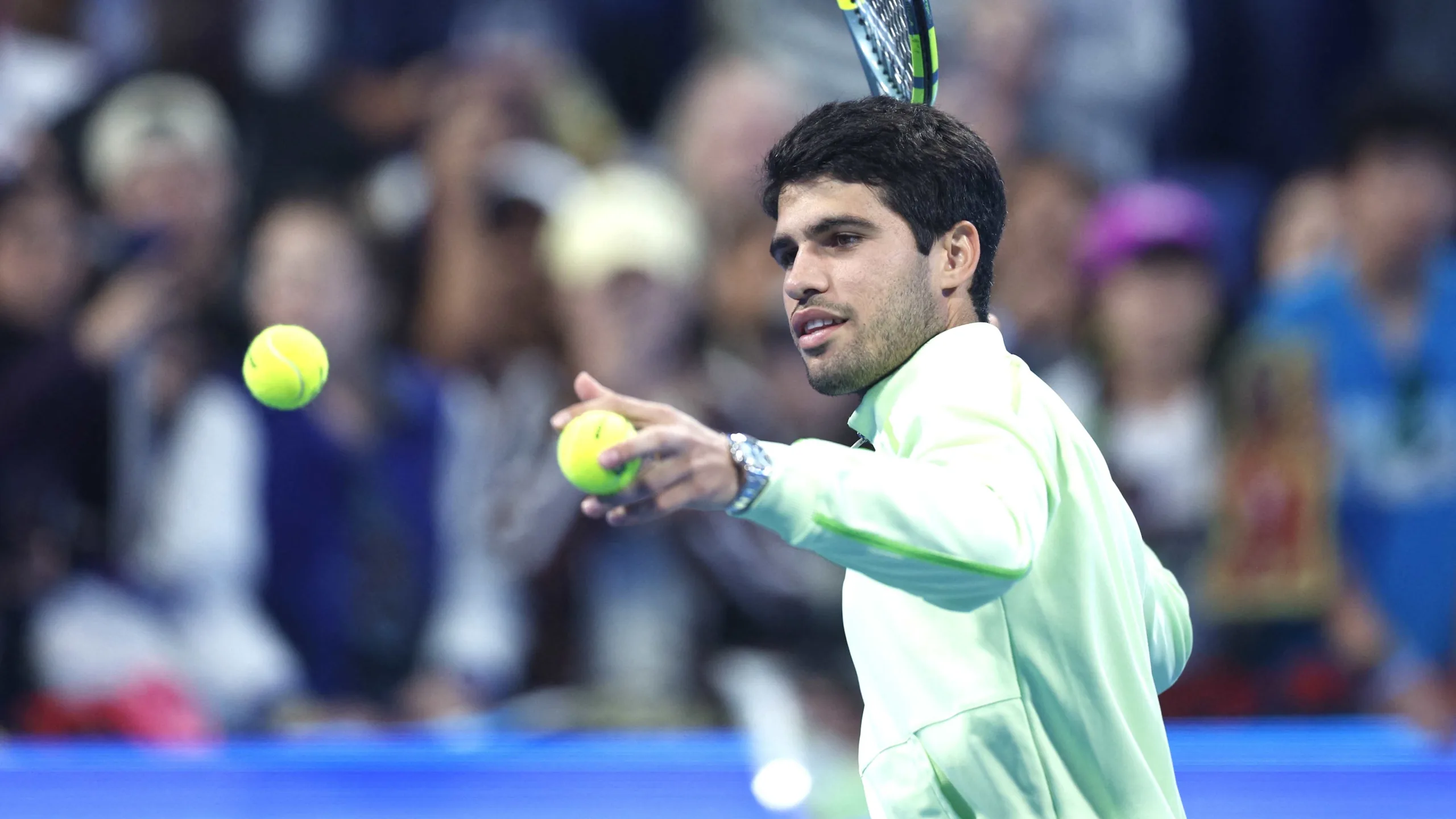
Carlos Alcaraz added another statistical milestone to an already notable week at Monte Carlo. The 22-year-old did not lift the trophy but reached his 10th Masters 1000 final and his 20th “big” final, achievements that underline his rapid ascent.
The runner-up cheque from Monte Carlo increased Alcaraz’s career prize money from $64,336,028 to $64,948,871. That total surpasses Andy Murray’s $64,687,542 and places Alcaraz fifth on the all-time combined ATP and WTA career earnings list.
Only four players remain ahead of him on that list: Novak Djokovic, Rafael Nadal, Roger Federer and Serena Williams. The move up the earnings list is a reminder of how quickly Alcaraz has accumulated high-level results and earnings at a young age.
The Monte Carlo final also reshuffled the next tier of the earnings rankings. Jannik Sinner, the player who defeated Alcaraz in the championship match, climbed from No. 8 to No. 7 on the same list. That rise came as Sinner passed Alexander Zverev, the man he beat in the semifinals the previous week.
Taken together, the results in Monte Carlo provided both players with tangible rewards: Sinner with a jump in the career-money standings and Alcaraz with two notable final appearances added to his résumé and a clear move past a long-established peer. The figures reflect only prize-money totals and are presented as combined ATP and WTA career earnings.



ATP ATP 500 BMW Open
Shelton returns to BMW Open in good health, seeking another deep run in Munich
Shelton returns to Munich as the 2025 finalist, fit and aiming to improve on clay, and chase leaders.
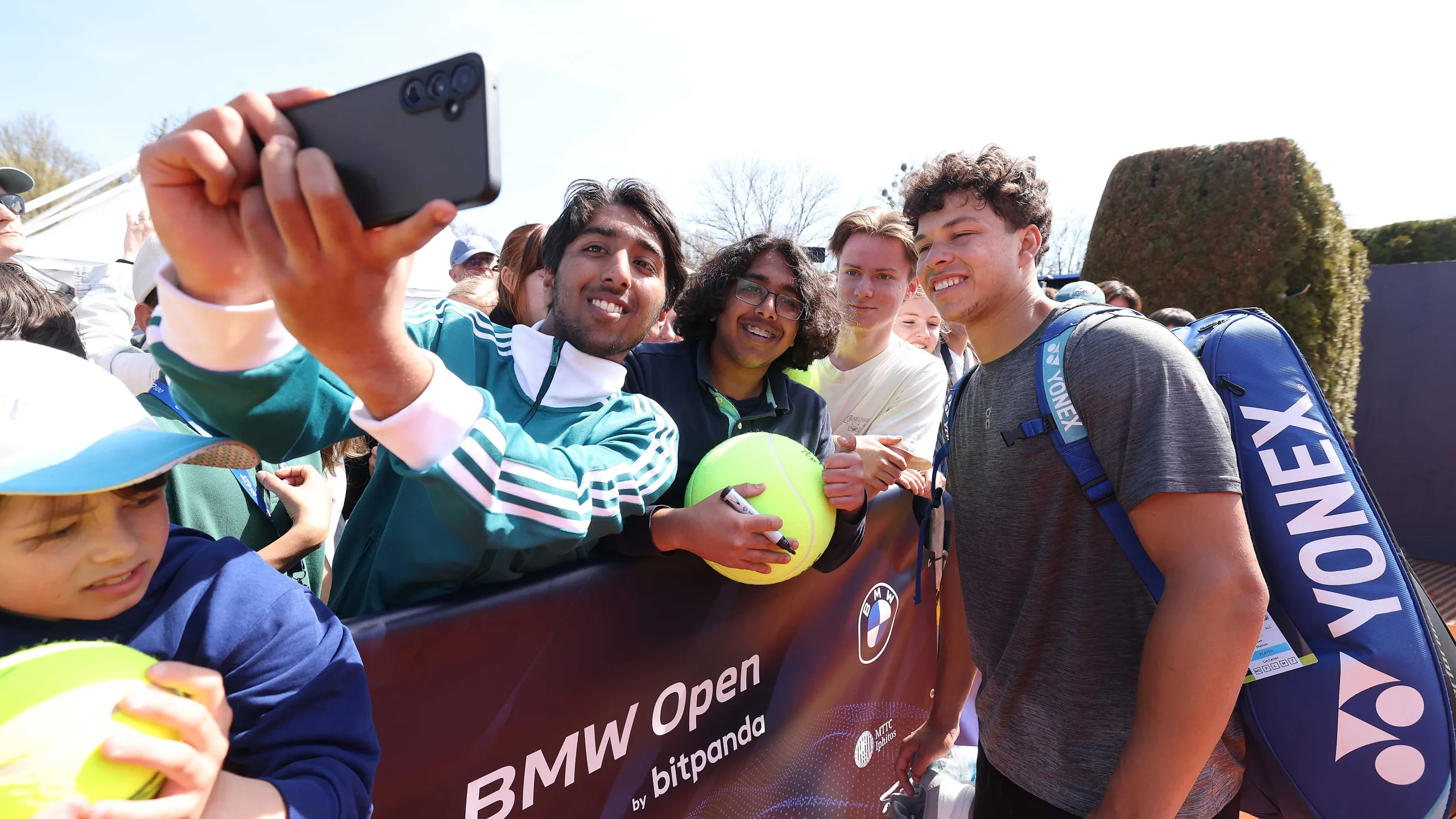
The 2026 BMW Open by Bitpanda opened under sunny skies at the MTTC Iphitos in Munich, and among the headline names back in the Bavarian capital is Ben Shelton. The 23-year-old American, last year’s finalist and the tournament’s No. 2 seed, started the week with a three-set victory over Emilio Nava on Monday.
“I am really happy to be back,” Shelton said after the match. “For me the most memorable part of last year’s tournament was that I should have lost in the first round. We had a lot of tight matches. It was a crazy tournament run last year and to end up in the final was pretty cool. Hopefully, I can have another great run this week.”
Shelton spoke warmly of the event and the crowd, noting recent changes made by organisers. “I like playing here—not that much when it’s cold—but this is a great tournament. I like the conditions,” he said. “They have made so many improvements over the last 12 months. The tournament is very well attended, with a lot of enthusiastic fans, pretty much more than at any other ATP 500 event. The courts are always packed—even during the qualifying. I enjoy the atmosphere.”
On court conditions and preparation, he offered a pragmatic view. “I played in all kinds of conditions here. I played when it was cool and when it was warm. I have some experience with that. Obviously, the court is not as bouncy when it is cool but there are just little adjustments you have to make.”
Shelton also made time to enjoy the city’s sporting life. “There are a lot of sports fans in the city. We went to a Bayern Munich football game last year, which was a lot of fun. I want to try to do it on Wednesday as well when they have their second leg of the Champions League quarterfinal. I hope it works out.”
Recovering from a 2025 injury, he confirmed his readiness. “I am at 100 percent. There are no aftereffects. I am just enjoying being healthy and playing tennis,” the world No. 8 stated.
I still need much more time to spend on clay to be at the highest level, especially with movement. This is the most important aspect on clay. Ben Shelton
Shelton moved to 19-17 in tour-level matches on clay following Monday’s victory over Nava. On the challenge of closing the gap on the sport’s leading figures he said, “It’s an amazing challenge. A few years ago, I would never have thought that I would be a Top 10 player in the world with a career-high No. 5. It’s always great for me to have people out in front, who are doing better than me to be able to chase after something. It motivates me every day. I am looking forward to continuing to improve my game and catch up with those guys.”
ATP Challenger Tour Monza Challenger
Collignon sharpens by treating Challenger pressure as match practice
Collignon has kept intensity claimed two Challenger titles this season and sharpened his match game.
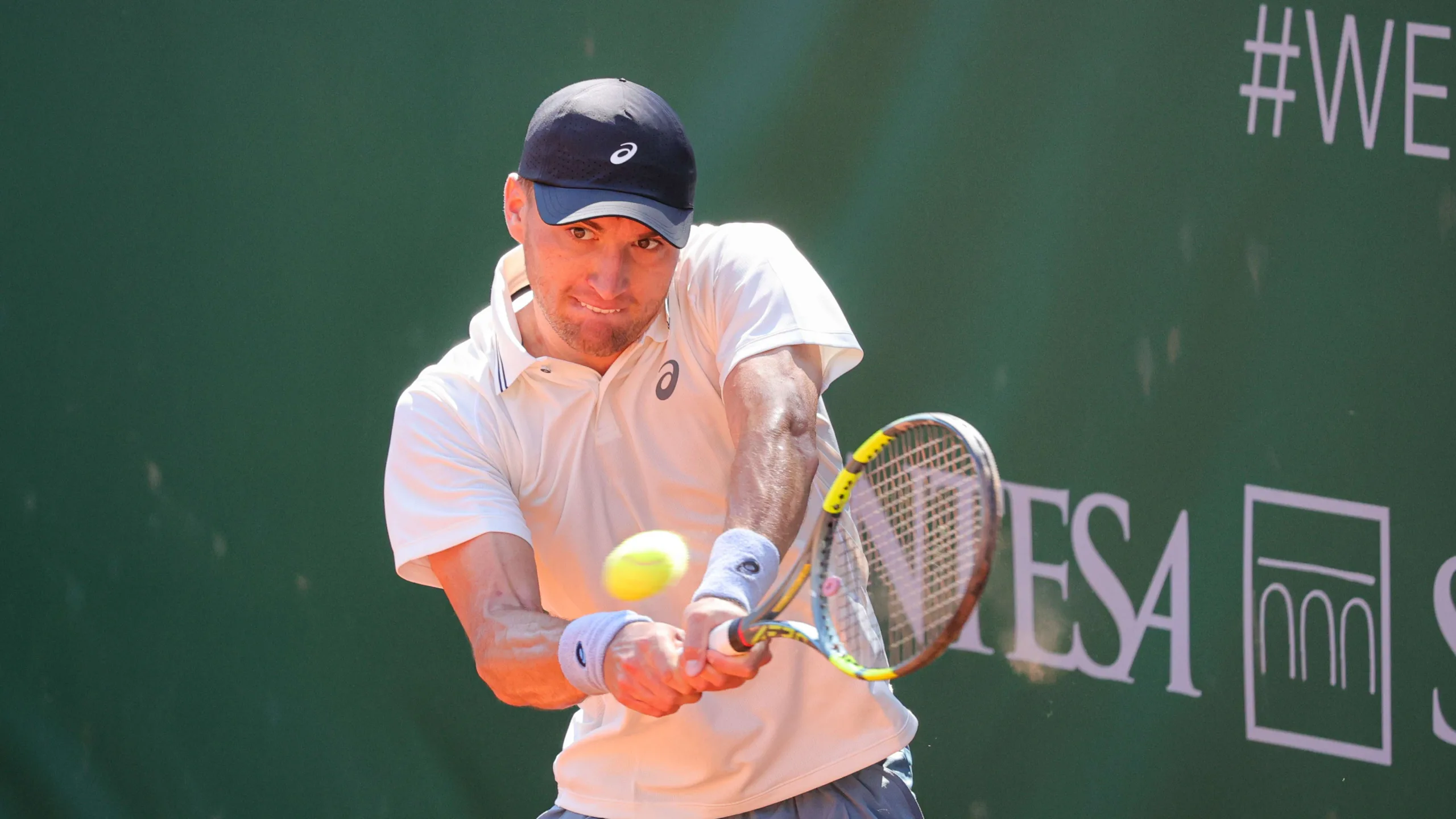
Raphael Collignon has turned a string of Challenger successes into a structured preparation for bigger stages.
The 24-year-old has been the No. 1 seed at two Challenger events this year and won both. In February he successfully retained his title in Pau. This week he completed a run in Monza without dropping a set, finishing with straight-set victories over Martin Landaluce and Dino Prizmic. The results have helped the world No. 68 refine the parts of his game he wants ready for Grand Slams.
At the BNP Paribas Open Collignon welcomed the chance to hit with a top player and focused on the intensity of that practice. “You see what he’s doing in training, you are very close to him. And you see what he tries to do, always puts pressure on you,” he said. “Every point counts. Tries to goes forward, not just putting in the volley. Trying to practice like he’s playing a match to be ready.”
After losing his inaugural main-draw match to Joao Fonseca, Collignon found momentum again in Miami. He saved a match point to defeat Grigor Dimitrov for the second time this season and then knocked out 14th-ranked Flavio Cobolli, bringing him to 4-2 against Top 20 opponents.
“I’m a guy who doesn’t like to lose. I try to fight every ball, this is my mentality,” he said. “I will never lose the intensity. That’s why I think I’m playing good.”
Collignon has alternated between tour-level events and the ATP Challenger Tour across his past six tournaments, with a Davis Cup appearance for his country included. He sees being top seed at Challengers as a specific test. “When you are ranked like me, you can be first seeded. You can try to figure out the pressure more because everybody is thinking you’re gonna win everything. It’s a good exercise on the court,” Collignon shared. “The Challenger Tour is a very good circuit. The level there is very high.”
Born in Rochester, Minn. shortly before his family’s relocation to Belgium, Collignon is closing in on a full set of major main-draw debuts with Roland Garros approaching. Off court he also enjoys fashion shoots and magazine work. “I like the pictures. I did a very famous magazine in Belgium,” he says of his experience with Le Vif. “I like to post something of myself with good clothes. I do it with pleasure.”
ATP Masters Miami Open
Data-Driven Preparation: How Analytics Are Reshaping Match Prep on Tour
Players are turning to serve maps, shot-by-shot dashboards and wearable data to sharpen match plans.
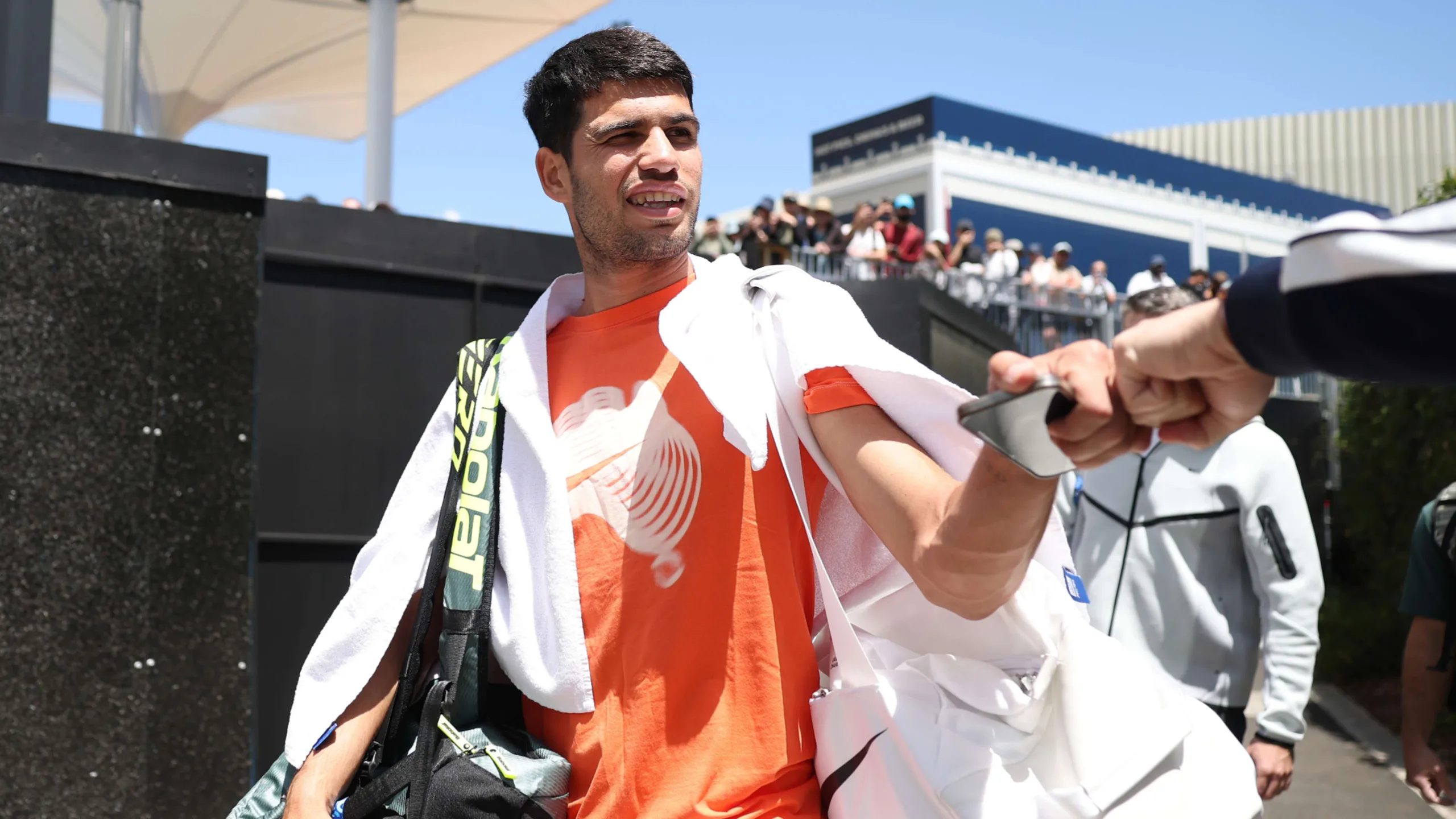
When Jakub Mensik was a junior his father Michal built a simple analytics platform to log serves, returns, plus-one shots and court zones. “You would be surprised!” Mensik joked in Miami. That homemade scouting helped him move from juniors into the early professional ranks. “I’m not saying my father did it better,” Mensik smiled. “But yeah, when I was a junior and basically starting to play pros, that was one of the most basic and necessary things that I needed.”
Today those basic ideas have grown into far more advanced systems. ATP Tennis IQ, relaunched and upgraded after new investment, aims to broaden access to high-quality performance data for players on the ATP Tour. “One of the things we’re most proud of with ATP Tennis IQ Powered by PIF is putting high quality data insights into the hands of more players—enabling easy access to information that can genuinely impact their careers,” said Ross Hutchins, the ATP’s Chief Sporting Officer. “Working with PIF has accelerated that progress—scaling faster, supporting more players, and delivering one of the biggest technological step changes in the sport.”
The platform offers serve patterns, rally lengths, shot placement graphics, shot quality metrics and integrated wearable data for physical measures. A point-by-point video analysis tool is in development and Challenger and doubles coverage are planned. Coaches and players suggest new features; a serve-speed-by-placement breakdown is expected later this year.
Serve maps are the most-viewed section. “From a tennis perspective that makes super sense. Basically 70% of the rallies are zero to four (shots), so that means it’s serve, return, one or two strokes, and that’s it,” he said. “(Knowing the opponent’s) serve placement makes it easier, because in tennis the serve is the only stroke that you can take your time and really think about where you will go. When you have the advantage over the opponent of knowing which side is weaker for him, then you just simply go where it’s most effective for you.”
Players vary in how deep they dive into numbers. “I trust (the stats) a lot,” she said. “Numbers can’t lie, right? I rely on that (information) a lot and I keep it in my mind when I play. A lot of times, in the key moments, it makes a big difference.” “I have a separate service that I use,” the American explained. “I’m not the one reading the stats. My coaches are… It’s not something I like to get down all the way into the details in, because I feel like it can overcomplicate things in my head.
“Something I pay attention to more so especially where my opponents like to serve I think is the most stat thing I like to know before I go on court.”
Former Olympic gold medalist Monica Puig offered a caution: “It’s a fine line. If you’re really responsible with the information that you receive you can kind of just treat it as it is, which is a number,” and “If you’re the type of player who gets a little bit too obsessed with the numbers, hand it off to your team, like I did, and have them kind of make the adjustments. Then you just kind of go along for the ride.”
Film study still matters. “After the match, I definitely looked at all the film I possibly could,” Quinn said of his loss to Carlos Alcaraz in Barcelona last year. “Just watching what Alcaraz does with a tennis ball is pretty special…
“And it’s funny, watching the film and seeing how it actually looks, versus how I felt playing the match. It’s a really good assistant coach, basically, being able to look over film and stuff.”
Looking ahead, teams are exploring AI-assisted scouting and real-time tools, but the sport’s competitive core remains human.

Shelton returns to BMW Open in good health, seeking another deep run in Munich

Collignon sharpens by treating Challenger pressure as match practice

Data-Driven Preparation: How Analytics Are Reshaping Match Prep on Tour

Alcaraz Confronts On‑court Microphones During US Open Practice Ahead of Opelka Match

Raducanu Arrives at US Open With Momentum After Strong Hard‑Court Swing

Cervara: Ending an eight‑year partnership with Medvedev was necessary to change the energy
-
 1000Player NewsQatar TotalEnergies Open2 months ago
Victoria Mboko Poised to Reach WTA Top 10 After Doha Final Berth
-
 Australian OpenBrisbane InternationalPlayer News2 months ago
Destanee Aiava to retire after 2026 season, condemns tennis culture in open letter
-

 ATPGrand SlamPlayer News1 month ago
Alcaraz and Sinner Headline 2026 Laureus Nominations; Sabalenka, Fonseca and Anisimova Also Recognized