Madrid Open Masters
Madrid draw sets up Sabalenka–Rybakina showdown as clay season builds
Sabalenka defends Madrid crown; Rybakina, world No 2, arrives after Stuttgart clay title win in 2026.

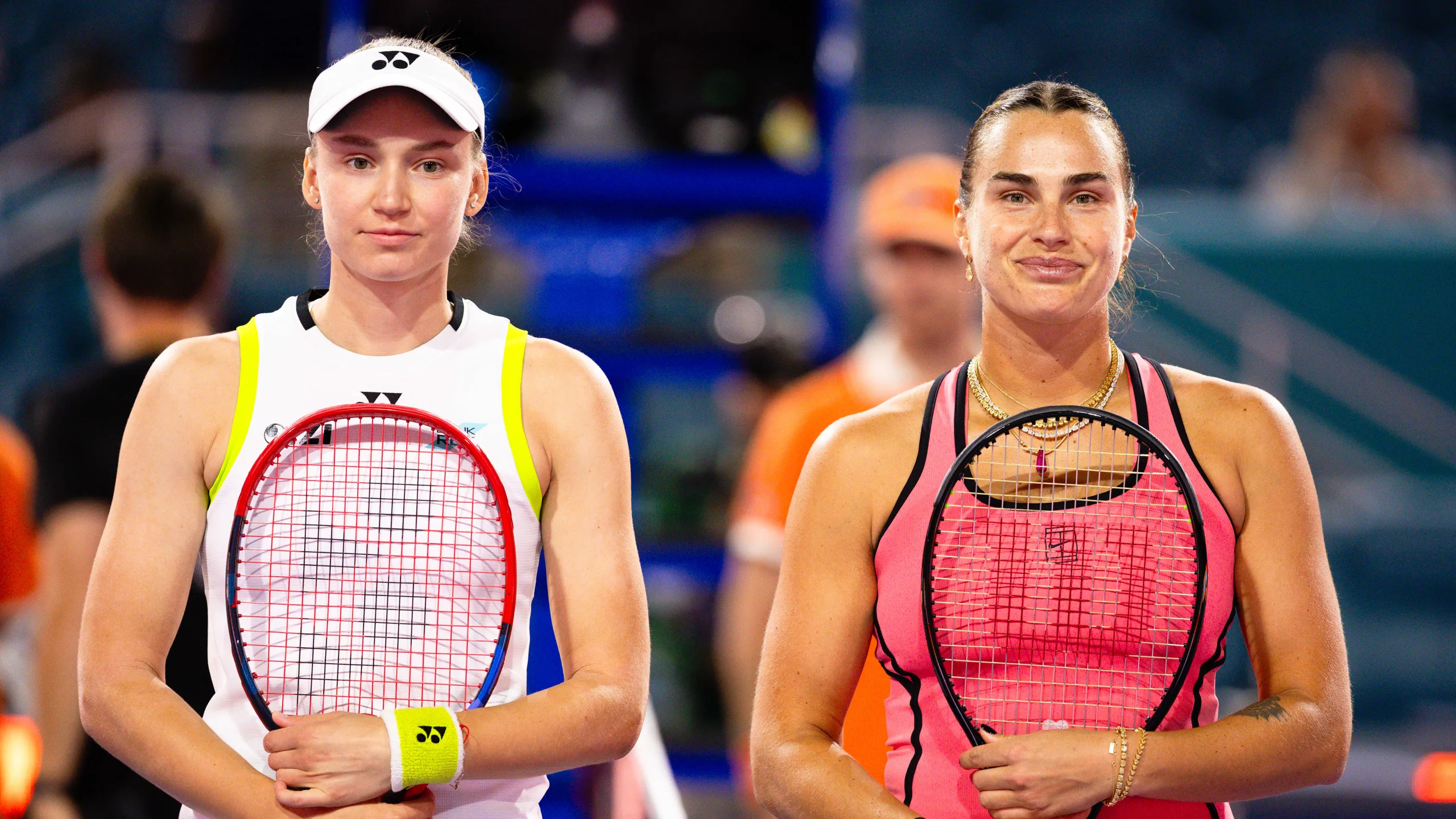
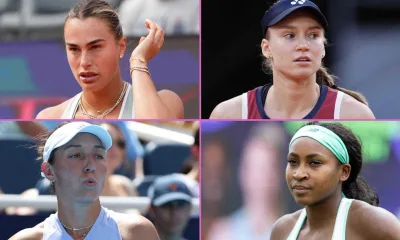
The Mutua Madrid Open women’s draw promises an early storyline for clay: top seed Aryna Sabalenka, the defending champion at the Caja Magica, and No. 2 Elena Rybakina are positioned on a path toward another high-stakes final in 2026.
Rybakina arrives fresh from claiming her first clay title of the season at the Porsche Tennis Grand Prix in Stuttgart last week. The rise to world No. 2 places her on a collision course with Sabalenka, the world No. 1. Their most recent meetings have favored the top seed, though their recent hard-court encounters produced split results: Rybakina won the Australian Open and Sabalenka took the BNP Paribas Open after saving a match point. Sabalenka also bested Rybakina at the Miami Open.
Sabalenka, a three-time winner in Madrid who has won the tournament every odd year since 2021, opens against either Peyton Stearns or 2025 Roland Garros semifinalist Loïs Boisson. A projected fourth-round match could pit her against Naomi Osaka or No. 23 Marie Bouzkova, who captured a clay title in Bogota earlier this month.
No. 4 seed Iga Swiatek anchors the top half with Sabalenka. The 2024 Madrid champion is seeking momentum after a surprise loss to Mirra Andreeva in Stuttgart. Swiatek is competing in just her second tournament since hiring coach Francisco Roig and could meet Daria Kasatkina in her opening match. Her projected fourth-round opponents include Leylah Fernandez or Iva Jovic, with a potential quarterfinal rematch against Andreeva or a meeting with No. 7 seed Elina Svitolina, who defeated Swiatek at the BNP Paribas Open.
Rybakina’s half features early tests as well. She opens against Elena-Gabriela Ruse or Antonia Ruzic and may face Zheng Qinwen, Jelena Ostapenko, and Madison Keys on the way to a first Madrid final. The bottom half contains three Top 8 Americans: No. 6 Amanda Anisimova, No. 3 Coco Gauff and No. 5 Jessica Pegula. Anisimova could meet Rybakina in the quarters. Gauff shares a quarter with Pegula, who won the Credit One Charleston Open on green clay this month. Early-round opponents for those Americans include Dayana Yastremska, Solana Sierra, Oksana Selekhmeteva, Taylor Townsend and Katie Boulter.




1000 Italian Open Madrid Open
After Madrid and Rome, Kostyuk and Svitolina Carry Joy and Responsibility into Paris
Two Ukrainian champions, Kostyuk and Svitolina, balanced title joy with the burden of war at clay…
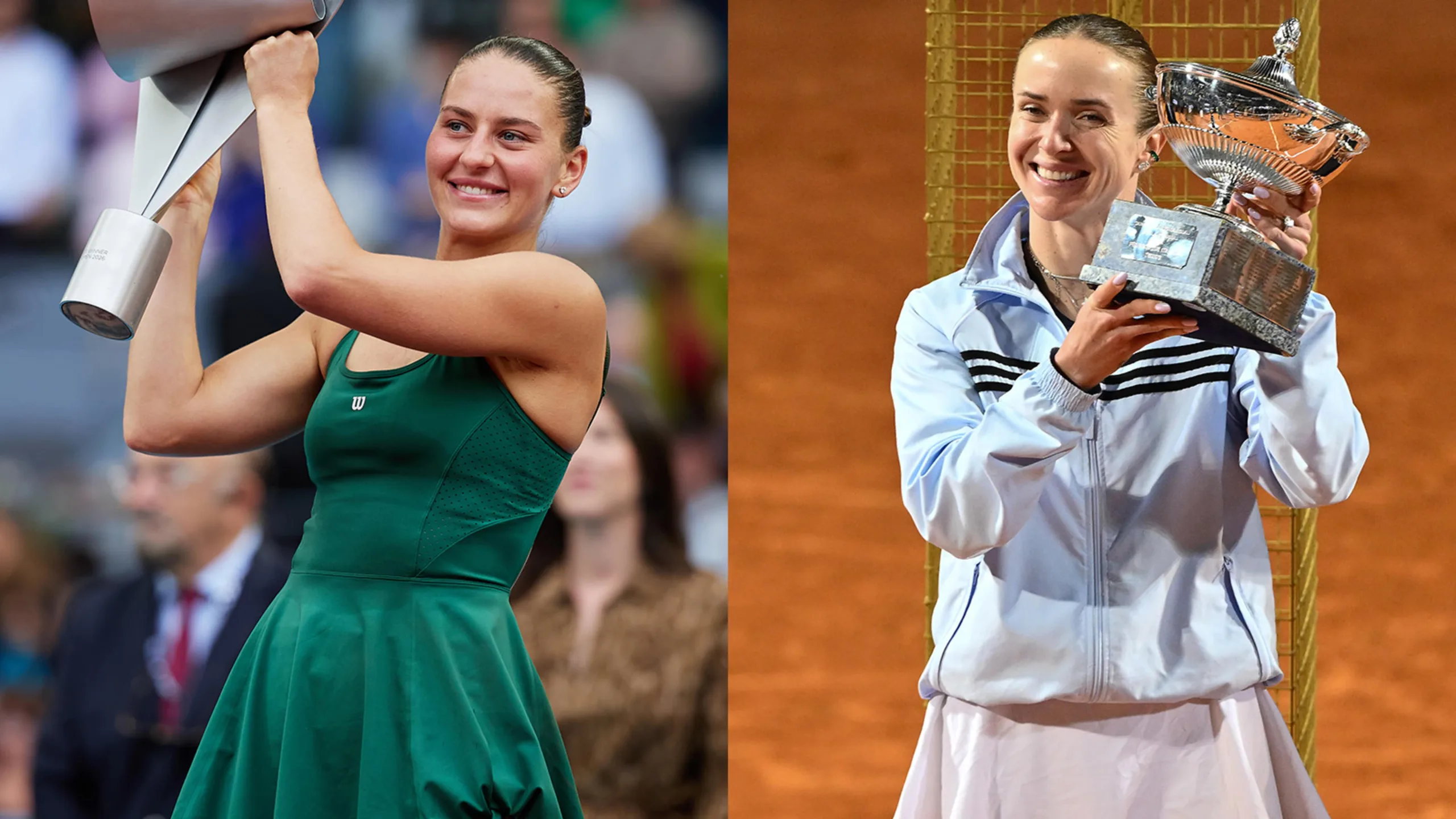
Marta Kostyuk and Elina Svitolina turned May’s clay swing into a study in contrasting elation and quiet resolve. Kostyuk celebrated her first WTA 1000 in Madrid with an audacious backflip. Two weeks later Svitolina won her third Italian Open, closing out Coco Gauff in the final, flinging her racquet, raising her arms and smiling in disbelief eight years after her last Rome title.
Those scenes of release came with reminders of a harder reality. Both players are from Ukraine and have spoken openly about supporting their country. Even as they climbed new career highs, civilians in Ukraine were being hit by renewed missile strikes. A few minutes after her trophy twirl Svitolina finished her speech this way:
I want to thank all the people back in Ukraine that have been supporting me, watching at night, being in the bomb shelters.
“It’s been really heavy for the past couple of weeks for Ukraine, and I want to thank you for all the support, and I feel all the love.”
Before Kostyuk’s backflip came her decision to bypass the handshake with Mirra Andreeva, mirroring the wider practice among Ukrainian players toward most Russian and Belarusian opponents. In her victory comments she thanked “all of my opponents” rather than singling out Andreeva. Asked about the long-running conflict, Kostyuk reinforced her stance: “For me, that doesn’t change,” Kostyuk said.
The pair are part of a deep Ukrainian contingent now counting seven players in the Top 100: Svitolina (No. 7), Kostyuk (15), Dayana Yastremska (45), Yulia Starodubtseva (54), Oleksandra Oliynykova (66), Anhelina Kalinina (89) and Daria Snigur (95). Oliynykova drew headlines earlier this year after accusing several tour-mates of “participating in Russian propaganda,” and she has since climbed from No. 96 to a career-high ranking.
On court the women have also improved. Kostyuk’s season form has been strong, and she has addressed mental hurdles that once undermined consistency. “I was living for many years in that state of everyone expecting big results from me,” Kostyuk said in Madrid. “I’ve tried to change that narrative in my head. And that worked, because, you just, you’re more consistent, you just go out there, you do your job, you don’t have like emotional attachment to it. Whether you win or lose, you just keep working and keep becoming a better person and a player, and that’s it.”
Svitolina changed her physical approach and surged through a tough Rome draw, and reflected on it succinctly: “This one is I think one of the toughest draws that I had in a tournament,” Svitolina said. “I’m very proud of the way that I’ve been handling myself and handling the nerves and being consistent.”
ATP Madrid Open Masters
Fonseca adjusts to fresh pressure as Rafael Jodar’s surge reshapes the field
Fonseca confronts fresh pressure as Jodar’s meteoric ascent and Madrid result redraws the spotlight.
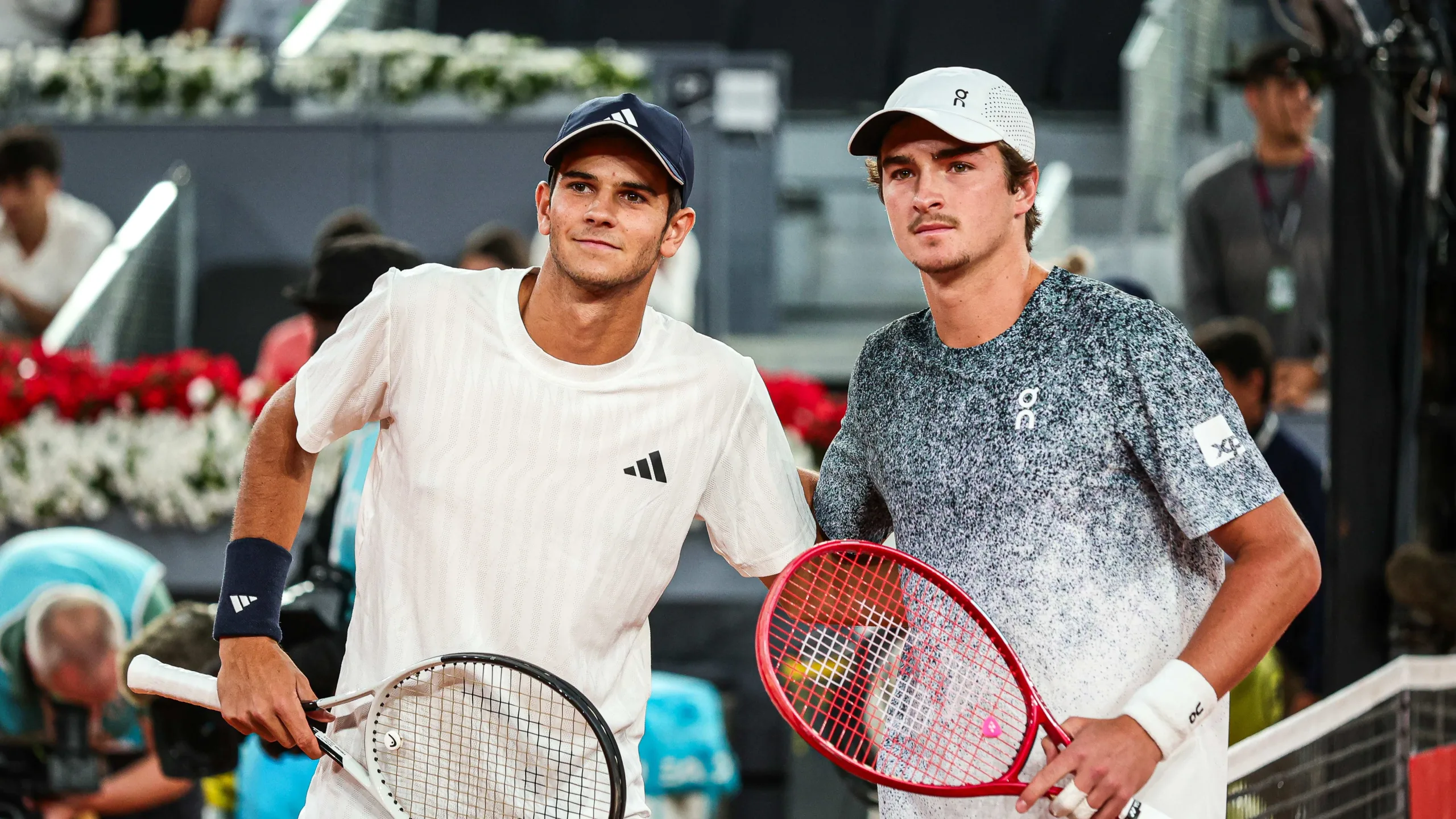
Two teenagers whose careers have tracked close together have suddenly tilted the ATP conversation. Joao Fonseca, once the unquestioned beneficiary of rising hype, is confronting a new dynamic as Rafael Jodar, 19, charges into the spotlight.
Jodar vaulted from a Jan. 1 ranking of No. 165 to his current No. 29, won his first ATP Tour title and beat Fonseca in the third round at Madrid. That win left Jodar one spot above Fonseca on the rankings computer, a small but telling indicator of momentum.
Fonseca has struggled with a lingering back injury and a sophomore wobble this season yet remains focused on improvement. “I’m young and doing great, but to reach my dream, I need to focus on my routine, my day by day,” Fonseca told the ATP’s media team a year ago in May. He has tried to temper expectations as well: “I would be happy if, well, if I make good results, if I play good matches. Even if I lose. . . My mentality now, [is] that I need to [see] every match as an opportunity to learn.”
The two players share striking parallels. Both were born a month apart in 2006, each won one junior Grand Slam at the US Open (Fonseca in 2023, Jodar in 2024) and both received recruitment to the University of Virginia. Fonseca skipped freshman orientation and turned pro; Jodar played one season at UVA, posting a 19-3 singles record and helping the Cavaliers to the NCAA quarterfinals.
Fonseca’s form has been uneven in 2026. He lost in the first round of the Australian Open to Eliot Spizzirri, won only one match across the Buenos Aires and Rio spring events, then recovered some rhythm with three wins at Indian Wells. His clay season has been solid if unspectacular. After the Madrid match he smashed a racquet for the first time in ATP play, apologized on social media and described the reaction as the “Jodar effect,” or, as he put it more simply, “pressure.”
Respect between them is genuine. “He possesses all the qualities to become an extraordinary player,” Fonseca said after their meeting, and Jodar returned the sentiment: “He’s a very young player, a great player. So, yeah, I wish him the best of luck for the rest of the season and for his career.” Fonseca remains steady in outlook: “Everyone has their time,” Fonseca said in Monte-Carlo. “My time will come. I’m doing great… (Let’s) keep with this routine, keep with this mentality to work quietly and hard. But yeah, I think the expectations are going to come.”
1000 Italian Open Madrid Open
Andreeva reaches 50 WTA 1000 wins with Rome victory, cements red‑clay form at 19
Andreeva hit 50 WTA 1000 wins with a Rome victory, extending a stellar clay season at 19 in Rome 26.
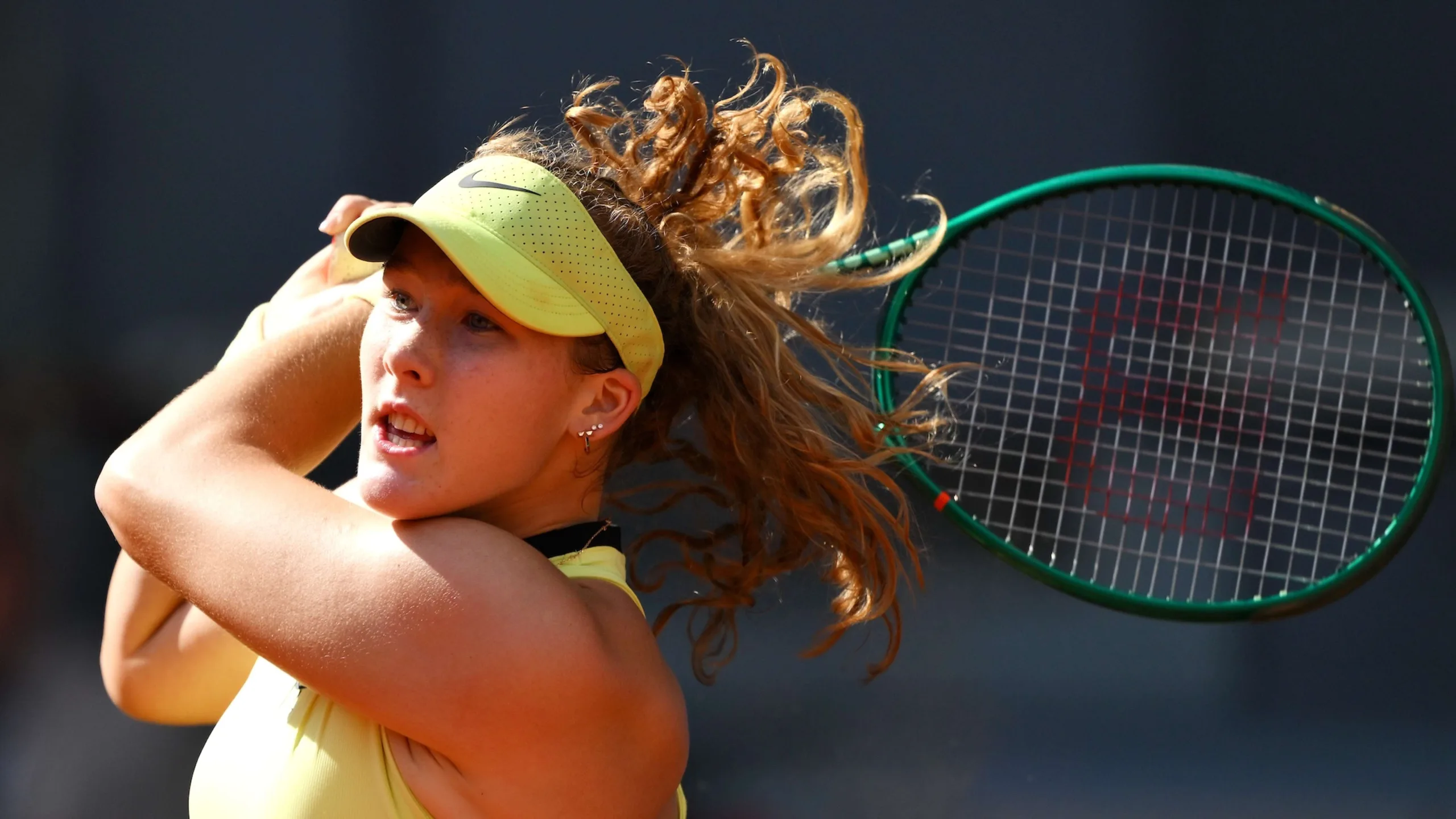
Mirra Andreeva marked a significant career milestone in Rome, recording the 50th WTA 1000 victory of her young career with a 6-1, 4-6, 6-0 third-round win over Viktorija Golubic. The result arrived as the No. 8 seed continued an eye-catching clay campaign that has her 14-2 on the surface this season.
Andreeva, who only just turned 19 years old 10 days ago, has translated that clay form into deep runs and a title this spring. Her results this season include the Linz title, a semifinal in Stuttgart and a final appearance in Madrid last week. The Italian Open win advances her to at least the fourth round in Rome and leaves her one victory short of her 10th WTA 1000 quarterfinal.
The WTA 1000 tier has been a strong suit for Andreeva. She already owns two WTA 1000 titles from Dubai and Indian Wells last year and reached her third WTA 1000 final in Madrid the previous week. Across her career she has compiled 116 tour-level wins, with 81 coming at Grand Slams or WTA 1000 events. That total breaks down to a 31-12 record at the majors and now 50-21 at WTA 1000 tournaments. At other tour-level events she is 35-16.
Standing between the No. 8 seed and that 10th quarterfinal will be No. 21-seeded Elise Mertens. Earlier in the day Mertens fought past No. 9 seed and defending champion Jasmine Paolini, who she beat 4-6, 7-6 (5), 6-3 after saving three match points down 6-5 in the second set. Paolini will now dip out of the Top 10 for the first time in almost two years, since she first broke into the elite after reaching the first Grand Slam final of her career at Roland Garros in 2024.

Zverev Arrives at Laver Cup With Europe’s Title Bid in Focus

Alex Eala opens Singapore challenge against Prozorova as ranking gains loom

Zverev’s breakthrough season rewrites a long-running story

Raducanu Arrives at US Open With Momentum After Strong Hard‑Court Swing

Alcaraz Confronts On‑court Microphones During US Open Practice Ahead of Opelka Match