1000 Madrid Open
Baptiste’s Momentum: A Career Week at the Madrid Open
Baptiste’s steady rise exploded in Madrid: a first WTA 1000 semifinal and a win over world No. 1….

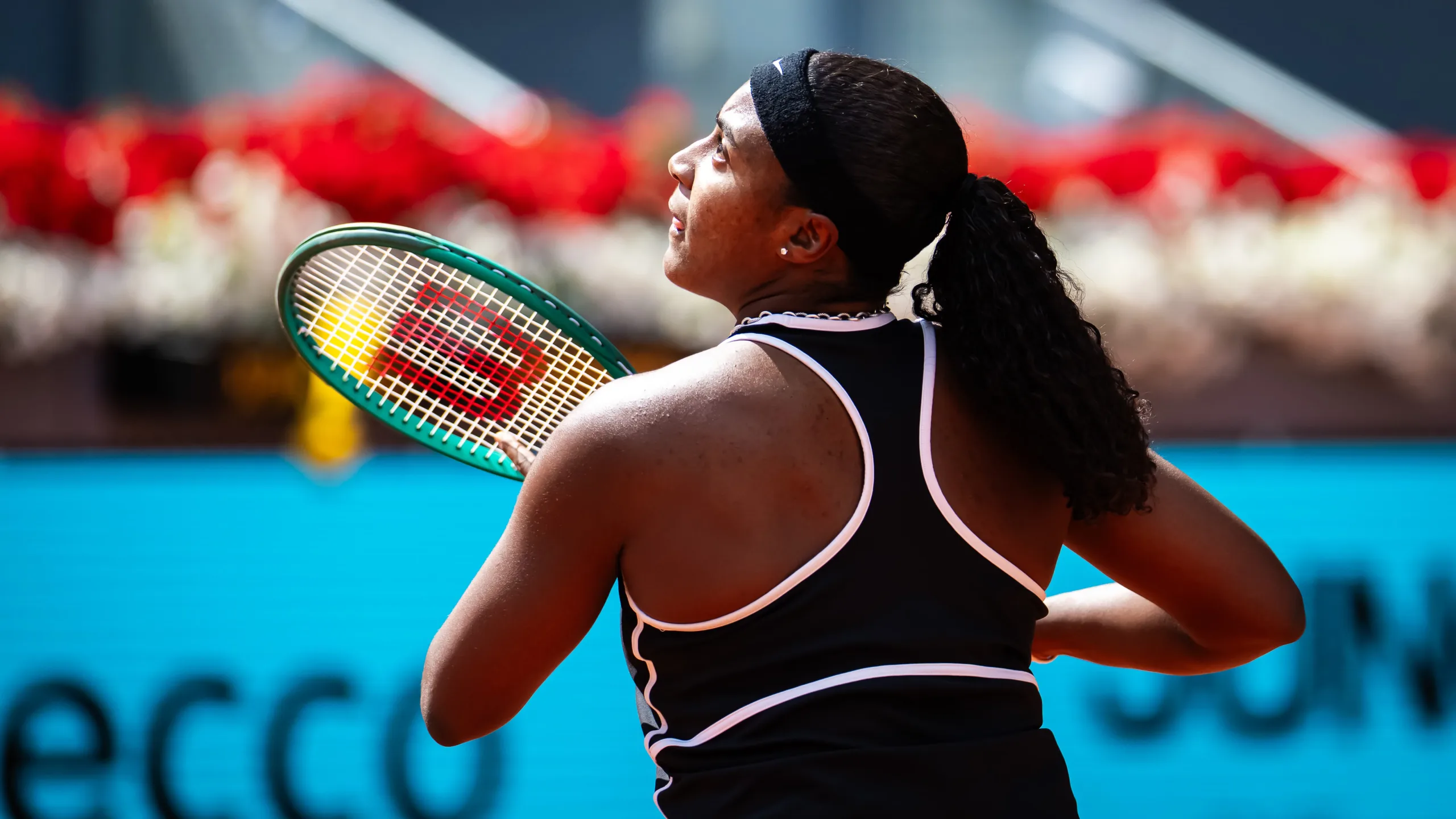
Franklin Tiafoe’s simple instruction arrived at a decisive moment: “Breath and believe, breathe and believe.” With that line in her ear and the steady presence of coach Will Woodall, Hailey Baptiste turned a gradual rise into a sudden surge at the Madrid Open.
The 24-year-old reached her first WTA 1000 semifinal and stunned the tour with a victory over Aryna Sabalenka, saving six match points to register her first win over a world No. 1. Earlier in the draw she defeated eighth-ranked Jasmine Paolini and 11th-ranked Belinda Bencic, a sequence that underlined how far her game has come.
Baptiste’s progress has been methodical. She closed seasons at 166, 131, 92 and 61, and since January she has nearly cut that again to No. 32. Her style mirrors that arc: unhurried, efficient and thoughtful. She can strike as hard as any player, but she prefers to build points with a kick serve or a slice backhand before finishing.
“I just like to be creative on court,” Baptiste says. “I grew up playing with boys pretty much my whole youth. My coaches kind of coached me to play a little bit more like a guy.” “Obviously it helps me, I think. Girls don’t love the kick serve and the slice.”
Her parents and the USTA played key roles early on. “He couldn’t keep doing it,” Baptiste said of her father’s patience. “He didn’t love it as much as I did.” She began at the JTCC in College Park at 9 and moved to the national training center in Orlando at 15. “The USTA had a huge, huge impact on me,” she said. “Without them, I wouldn’t be where I am.” One coach in particular, Jamea Jackson, also helped: “She got my head screwed on straight, explaining what it’s like to be a professional. She started transitioning me into that mindset.”
Baptiste spent stretches on tour without a coach, learning to process losses alone. “Lose a match, didn’t really have anyone to talk to afterwards,” Baptiste said of those days. “Had to do the whole [post-match] debrief process by myself. You just learn things about yourself and about the game. I think it gave me confidence.”
She fought back again in the semifinal against Mirra Andreeva, saving a match point and reaching 3-5 in the second set before falling in a tight tiebreaker. “I decided to stop fighting myself,” Baptiste said. “I want to say, ‘Oh, it’s so hard, you don’t understand what I’m feeling.’ But at the end of the day, it’s just a decision.” “Either you get over it, or you sit in that feeling, and sitting in that feeling has gotten me nowhere.”
Madrid showed Baptiste can challenge the elite and argues she belongs in the U.S. contender conversation alongside Coco Gauff and Amanda Anisimova.




1000
Alcaraz comeback caution grows as US Open plans remain uncertain
Alcaraz steps up practice, but Greg Rusedski warns rushing back for New York would be a big risk.
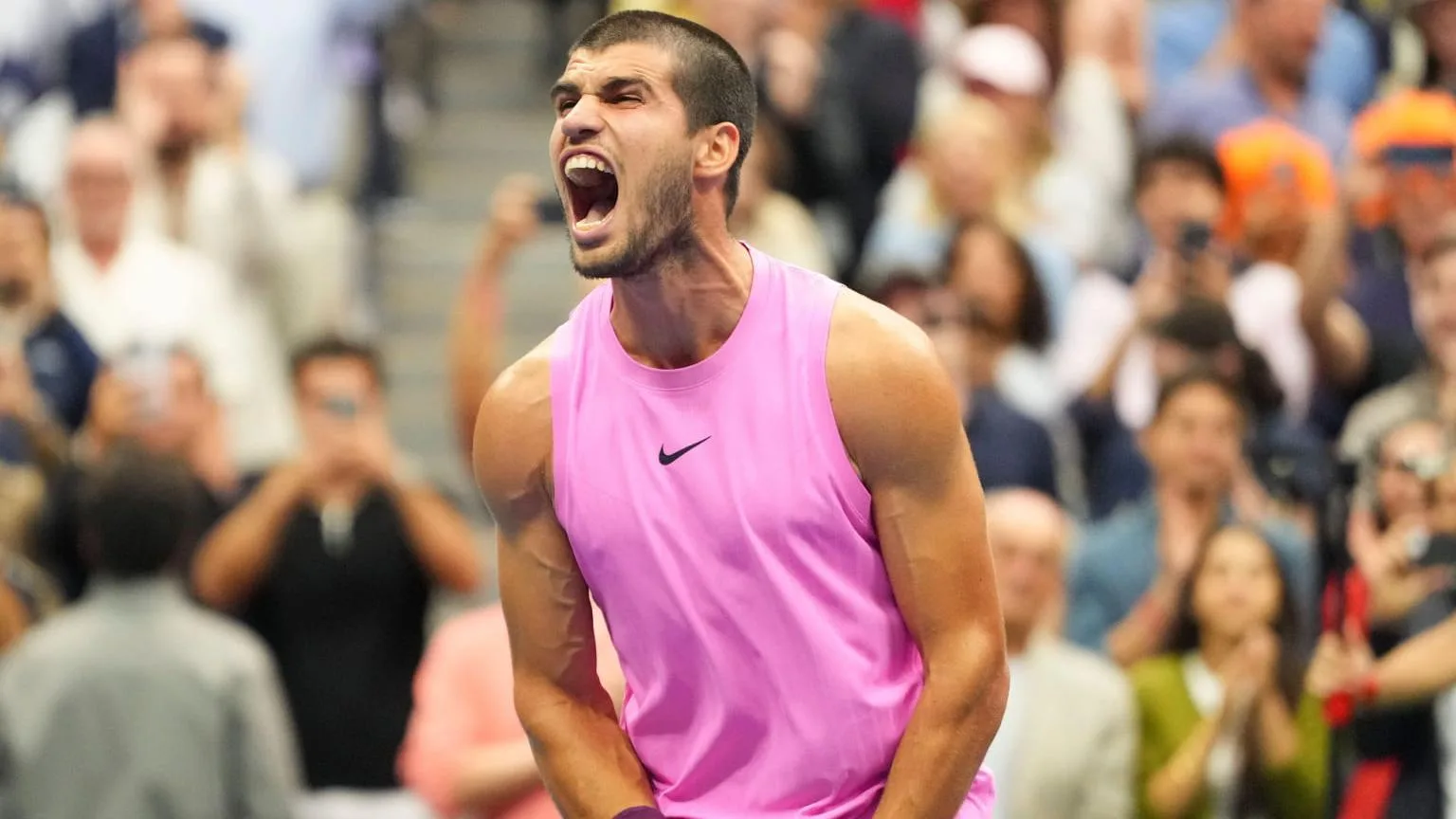
Carlos Alcaraz is reportedly increasing the intensity of his practice work before the US Open, but he has also been advised not to hurry back in time for New York.
The defending champion has not played a competitive match since the wrist injury he suffered at the Barcelona Open in April. He then withdrew from this week’s Cincinnati Masters, saying he was not ready to return.
Although social media has shown him hitting with more force on court, a first match back in a best-of-five-set Grand Slam would represent a major test. That is the main reason former British No 1 Greg Rusedski believes caution should remain the priority.
“I think it’s a big risk. I think you’ve got to come out of a two-out-of-three-set match to start because it’s one thing to practice, it’s another thing to play a match,” said Rusedski on the next edition of his podcast, which will be released on Monday.
He added that match pressure changes everything. “The adrenaline in the body, going hell for leather, you always go up with your tennis about an extra five, ten per cent from what you do in practice, no matter how hard you train.
“Plus, there’s the nerves and the expectation. You’re not gonna bounce back and come in with a three-out-of-five set match. I would be shocked if he plays the US Open. To me, he had to play Cincinnati to have a chance to go to the Open.
“So I would be surprised. After the US Open, I think possibly we might see him back, or maybe not even till next year.
“He’s not going to make the mistake with his risk. He doesn’t want to risk it. So I don’t see him still playing at the US Open, even though we’re seeing a lot of progress in his comeback.”
Rusedski also raised questions over Jannik Sinner after the Italian withdrew from the Cincinnati Masters because of a knee problem.
“Well, if he’s not in New York early in the week before the tournament starts, I don’t see him playing,” he added.
He said the situation could leave the men’s event wide open, while also stressing the strain of the tour. “But health is your wealth, and these guys have to take the time. It just shows you how physical the tour is. Because Sinner looked like the guy who’s never going to break down, and he’s the one who’s having a knee problem now.
“I just want to stop talking about injuries. Come on. Let’s stop the injuries. Let’s all get healthy. Let’s get everybody back on board.”
1000
Djokovic’s Cincinnati setback raises fresh questions over his future
Djokovic’s Cincinnati defeat renewed doubts about his fitness, his future, and another Grand Slam run.
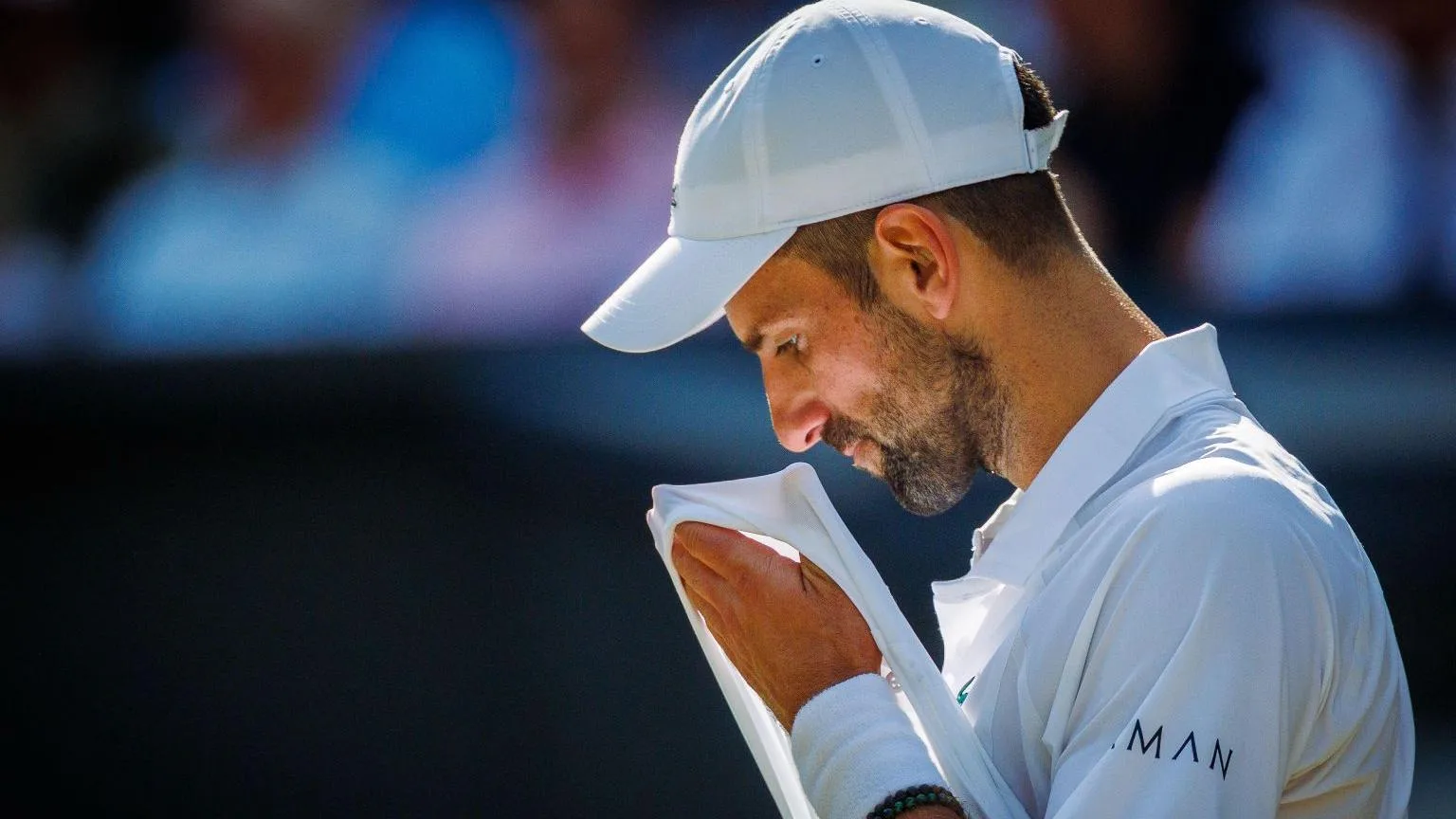
Novak Djokovic’s latest match against Argentina’s Thiago Agustin Tirante offered another stark reminder of the physical challenge he is trying to manage as he extends his career. Midway through the contest, Djokovic turned to his team, and it was plain he was struggling to find answers to an issue that has troubled him for some time.
At 39, Djokovic is still producing a level that few players could match, especially against opponents often close to half his age. His durability and commitment have been central to his decision to keep playing into his 40th year, and his results over the past couple of seasons have supported that choice.
But injuries are only part of the story. The Serbian has also continued to battle problems when heat and humidity rise, and those conditions again exposed a vulnerability that can shape the biggest matches. He would likely have beaten Tirante comfortably had he not suffered that physical collapse in the daytime heat in Cincinnati.
After the defeat, Djokovic was candid about how he felt, saying: “It was not an enjoyable match for me, for sure,” he said after his latest defeat. “The way I felt… Not the first and I guess not the last time, but it is what it is.”
He later described a health issue that has affected him for the past couple of years, adding: “It’s just a condition that I have, health-wise, that has been bothering me for the past couple of years. A lot of issues, especially when it is humid and it is hot.
“I did anticipate it, but there are all these things, like nerves and everything involved that make it worse, and that’s what happened.”
Djokovic also indicated he was unsure whether he would return to the Cincinnati Open, a notable shift from his usual parting line about coming back next year. As he continues to chase a 25th Grand Slam title, physical problems and the form of Jannik Sinner and Carlos Alcaraz keep narrowing the path. At this stage, Djokovic may need several factors to align before another major breakthrough becomes possible.
1000
Eala’s packed run raises questions as US Open nears
Alex Eala’s rapid rise comes with a punishing schedule and fresh concerns before the US Open.
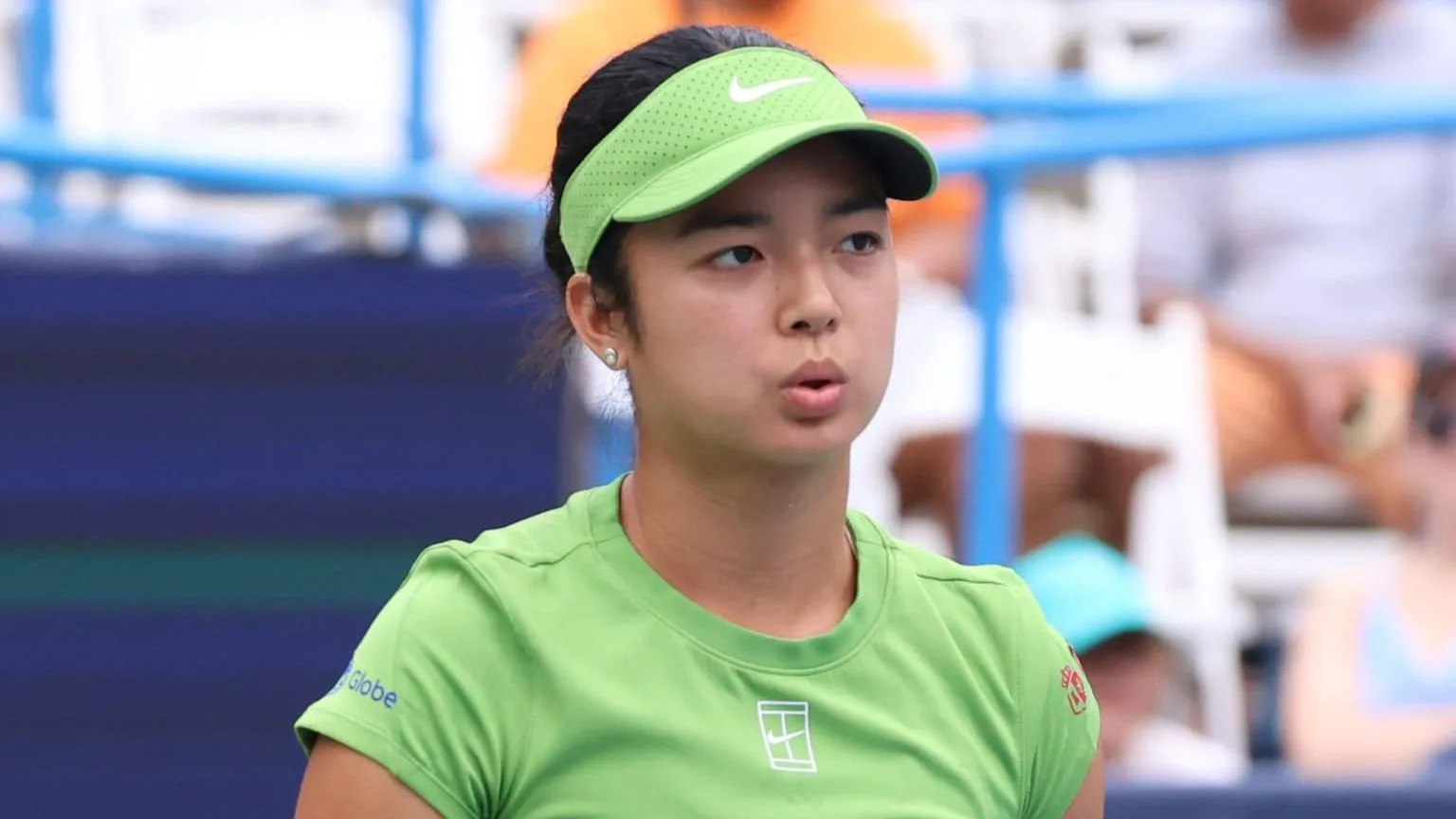
Alex Eala has been one of the busiest players on the WTA Tour this summer, with her results on grass and in the early stages of the North American hardcourt swing drawing plenty of attention. The 21-year-old first lifted a Challenger trophy in Birmingham, then carried that momentum into a run to the semi finals of the Berlin Open and the fourth round of Wimbledon.
Her form only improved after that. Eala claimed her first WTA title at the Washington Open before adding a round of 16 appearance at the Canadian Open. Those results have confirmed her rise, but they have also led to growing concern about how much tennis she has already played.
The workload is only increasing. Eala has played more than anyone else on the WTA Tour, and there is little sign of that easing as she heads into the Cincinnati Open and the final Grand Slam of the season. She has also been confirmed for an exhibition match during US Open opening week, adding another commitment to an already crowded stretch.
Eala will face her friend Iva Jovic in the tournament’s ‘Stars of the Open’, set for 6pm on Thursday, August 27 at the Arthur Ashe Stadium. At the same time, she is due to compete in the US Open Mixed Doubles alongside Felix Auger-Aliassime at the start of opening week.
That leaves very little room for recovery or preparation. If Eala were to reach the second week at the US Open, she would effectively be playing eight straight weeks of tennis dating back to the Washington Open. For any player, that is a demanding schedule, and it is difficult to ignore the risk attached to such a heavy load.
There is also no immediate respite after New York, with Eala already entered for the Singapore Open in September during the WTA Tour’s Asian swing. Her rise has been impressive, but the question now is how long this pace can last.

Alcaraz comeback caution grows as US Open plans remain uncertain

Williams’ latest loss raises renewed debate over wild cards

Djokovic’s Cincinnati setback raises fresh questions over his future

Alcaraz Confronts On‑court Microphones During US Open Practice Ahead of Opelka Match

Raducanu Arrives at US Open With Momentum After Strong Hard‑Court Swing