French Open Grand Slam
Chwalinska’s inventive clay game carries her into the Roland Garros quarterfinals
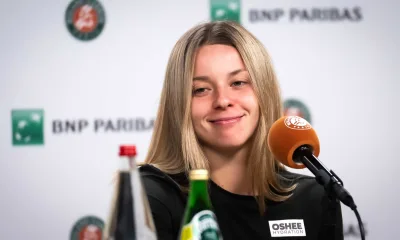
Maja Chwalinska used varied spins and slices to turn a surprise run into Roland Garros quarterfinal.

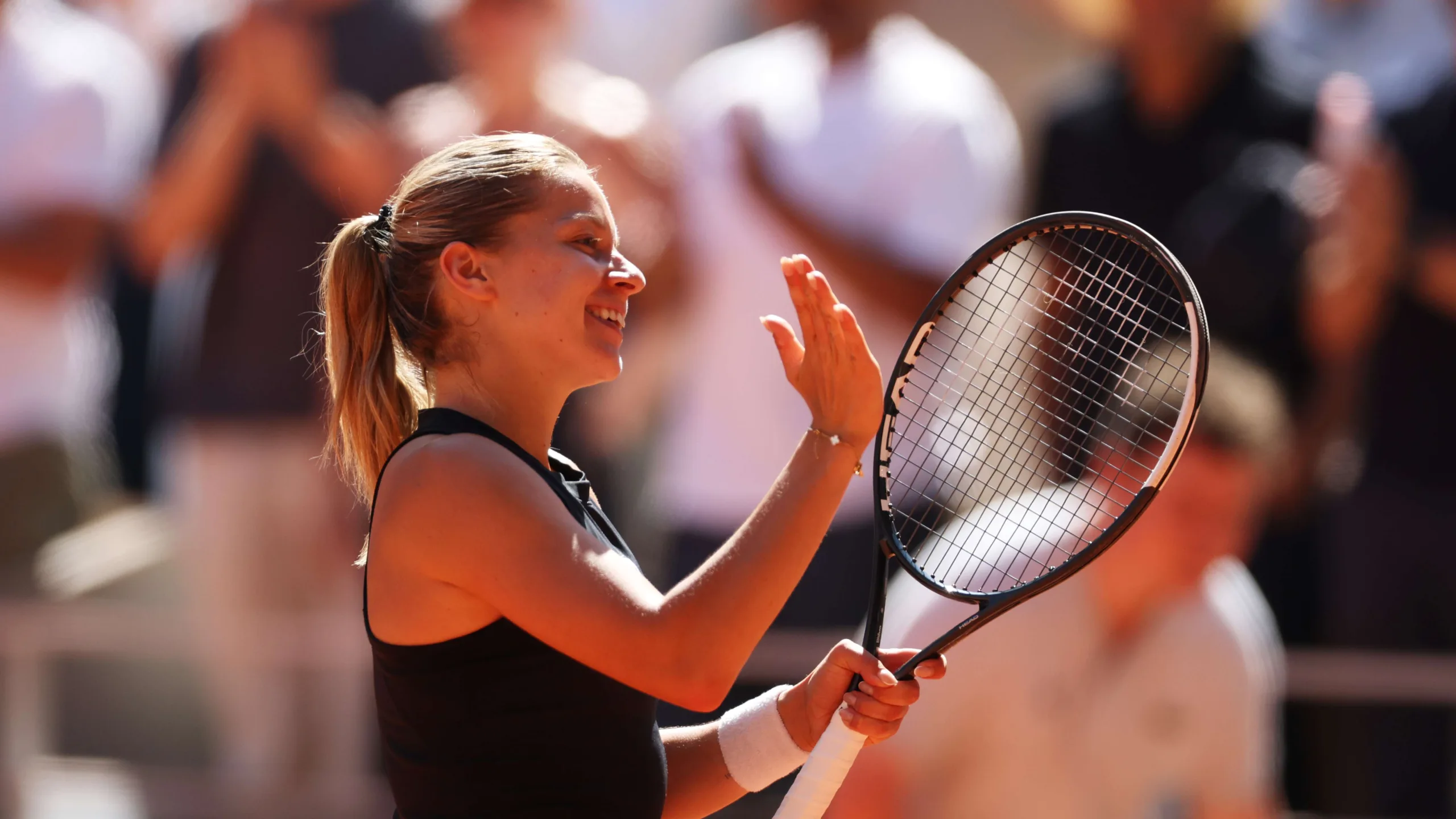
Court Philippe Chatrier grew restless as Diane Parry threatened a comeback, but Maja Chwalinska steadied herself and closed the match with composed variety. Leading 6-3, 2-2, Chwalinska faced a break point when Parry ripped a forehand to the corner. The 5-foot-5 lefty, whose spinny serve does not produce many free points, responded with tactical precision.
“This is what they’ve been waiting for,” Mary Joe Fernandez said of the French audience. “She’s so close to finding the formula,” Mark Petchey said of Parry.
Chwalinska, pronounced, roughly, “waleenska,” saved that break point by landing a high ball to Parry’s one-handed backhand and forcing an error. She then shifted through a range of strokes: inventive two-handed backhand chips and curving slices crosscourt, delicate drop shots that landed inches from the net, and high, heavy forehands that kept Parry off balance. She mixed pace and spin on nearly every exchange and cut her errors to just four in the second set. Chwalinska did not drop another game and finished with a 6-3, 6-2 victory to reach her first Grand Slam quarterfinal.
“It’s definitely a big surprise for me,” Chwalinska said of her run. Coming to Paris, she was ranked 114th and had to qualify for the main draw. She acknowledged the constraints of her game and the adjustments she has made: “I know that I’m playing different tennis, than most of the girls on tour. I don’t have the [physicality] to play strong, so I need to develop a different kind of weapons for myself. I definitely played differently, and I think it helps me a lot against these players.”
Her return to form follows a break from the sport in 2021 and a more forgiving mindset after she came back in 2022. “I’m not as strict with myself,” she said. “I don’t punish myself. I try to control my monologue. Before, when I hit a bad forehand, I would tell myself, ‘I suck, I really suck.’ Easy things to say, but when you repeat them, it gets really overwhelming.”
She laughed about practical realities in Paris: “You guys know we get the check after the tournament.” Chwalinska is 24-9 this year, has had promising 125-level results in 2026 and will break into the Top 100 next week. On Wednesday she will face 24th-ranked Anna Kalinskaya; the pair have never met. Her run is a reminder that second chances on tour can still produce new breakthroughs.




ATP Tour French Open
Zverev admits nerves as French Open favourite status caught him off guard
Zverev says he hid his nerves when the French Open suddenly came within reach.
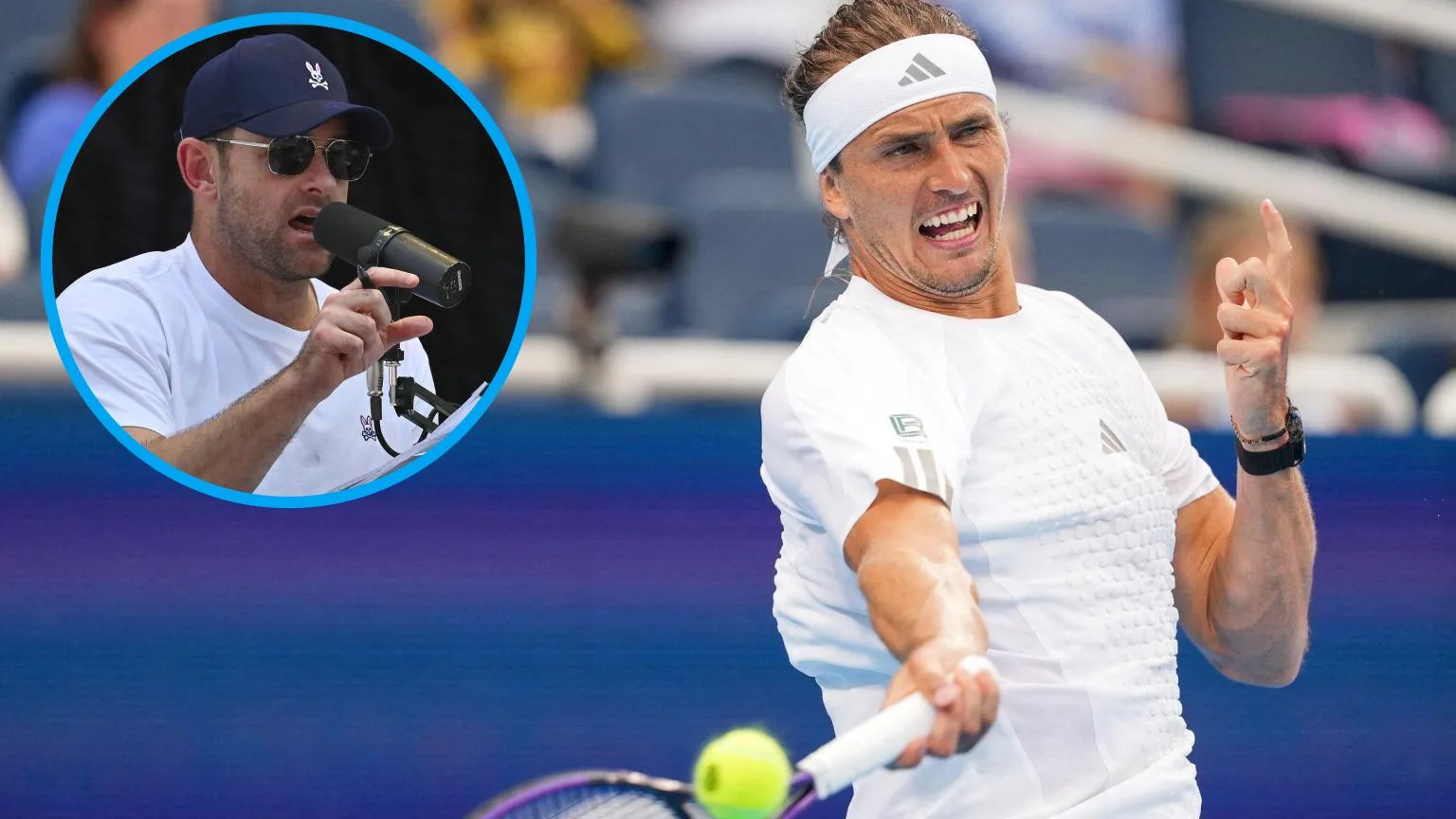
Alexander Zverev has admitted that the pressure of suddenly being the man to beat at the French Open left him far less calm than he appeared.
With Carlos Alcaraz sidelined by injury and Jannik Sinner knocked out in the second round, the world No 3 found himself installed as the favourite in Paris. On the surface, Zverev kept his composure. In private, he says the reality was very different.
The German has long carried the burden of not having won a Grand Slam title, a storyline that only sharpened as the Big Three era faded and Carlos Alcaraz and Sinner emerged as the new standard-bearers. For a stretch, it looked as though Zverev might again be left behind by the sport’s biggest prizes. Instead, the draw opened up in his favour, and he now admits he was not nearly as relaxed as he pretended.
“I was s***ting my pants for two weeks,” he joked with Andy Roddick on his Served podcast. “Sorry for the language.
“But no, it’s the truth. I mean, every single day in the press conference, somebody was asking me about it, and like, what do you expect me to say? I was like, you expect me to say yes? I’m nervous. I can’t sleep at night. I’m not eating.
“I was like, no, it doesn’t affect me. It’s, it’s fine. It’s just another tournament. Don’t win the French Open, probably kill myself. It’s the worst thing that could happen.
“So I was lying to everyone. I was lying to myself as well.”
Zverev also said Roddick had already spoken to him last year about handling that kind of expectation, drawing from his own experience of dealing with the late-career presence of Rafa and Roger.
“We had a phone call for about probably an hour and a half in in December, where I talked to you about you being in a similar position where the only difference was you won the U.S. Open early on in your career, but you were in a similar position with obviously Rafa and and Roger throughout the later stage of your career.
“I was like, how do you deal with it? What do you do? How do you try to wait for your chances? And there was a clear path for me in my game. What I needed to improve to win a Grand Slam. There was a clear path for me be able to compete with those guys and beat them eventually.
“Of course I’m very happy that I did it at the French Open because, of course, at my age, I’m 29 years old. You don’t know if you’re ever going to get a chance again. You don’t know if you’re ever going to do it, and I’m happy that I did it.”
ATP French Open Grand Slam
Auger-Aliassime Reaches Career-High No. 4 After Breakthrough at Roland Garros
Auger-Aliassime rises to No. 4 after best Roland Garros run, tying second-highest Canadian rank. Now
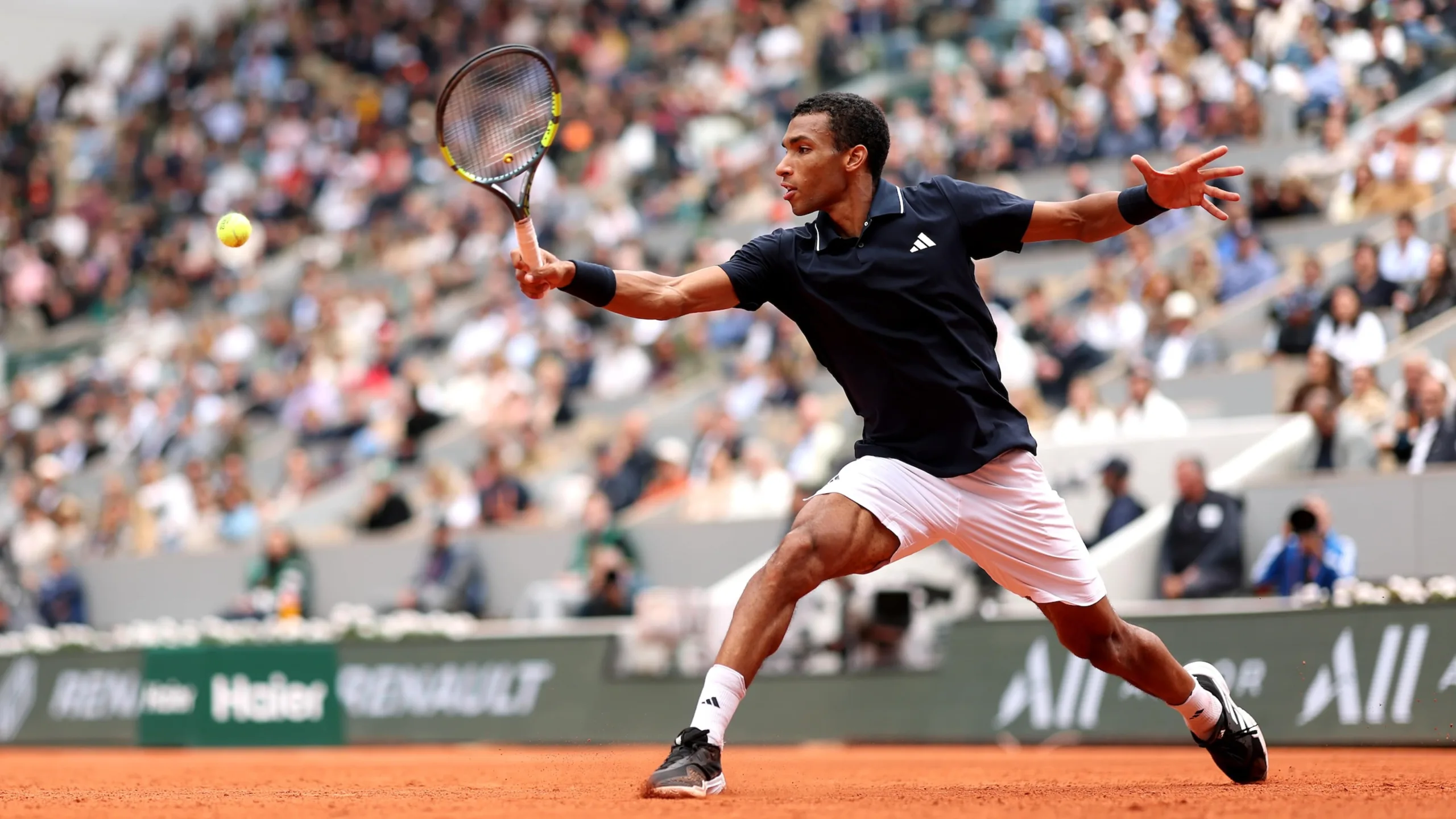
Felix Auger-Aliassime moved to a career-high No. 4 in the ATP rankings following his deepest run at Roland Garros, where the 25-year-old reached the quarterfinals for the first time before losing to eventual finalist Flavio Cobolli. The result completed a personal Grand Slam milestone: having previously reached the quarterfinals or better at the Australian Open, Wimbledon and the US Open, he became the first Canadian man to reach the quarterfinals or better at all four majors in his career.
The rise from No. 6 to No. 4 surpasses his prior best of No. 5 and places him tied for the second-highest-ranked Canadian in ATP or WTA rankings history. The only other Canadians to reach the top four are Milos Raonic and Bianca Andreescu. Raonic went as high as No. 3 in 2016, following his run to the Wimbledon final that year, and Andreescu peaked at No. 4 in 2019 after winning the US Open.
Canadian tennis has seen seven players reach the top 10 in either ATP or WTA history, with official rankings available since 1973 for the ATP and 1975 for the WTA.
Auger-Aliassime still has ground to cover to move higher in the standings. He is 2,865 points behind the current world No. 3, Alexander Zverev, with the rankings showing Zverev at 7,305 points and Auger-Aliassime at 4,440.
The Canadian will shift his focus to grass. He begins his grass-court season this week at the ATP 250 event in ‘s-Hertogenbosch, entering as the No. 1 seed. After a first-round bye he will open against either Hubert Hurkacz or Marton Fucsovics.
The new ranking reflects a season of important progress for Auger-Aliassime and cements his place among the highest-ranked Canadians in modern tennis history.
ATP French Open Grand Slam
Flavio Cobolli’s Roland Garros run vaults him into ATP Top 10
Flavio Cobolli entered the ATP Top 10 after his first Grand Slam final at Roland Garros. New ranking
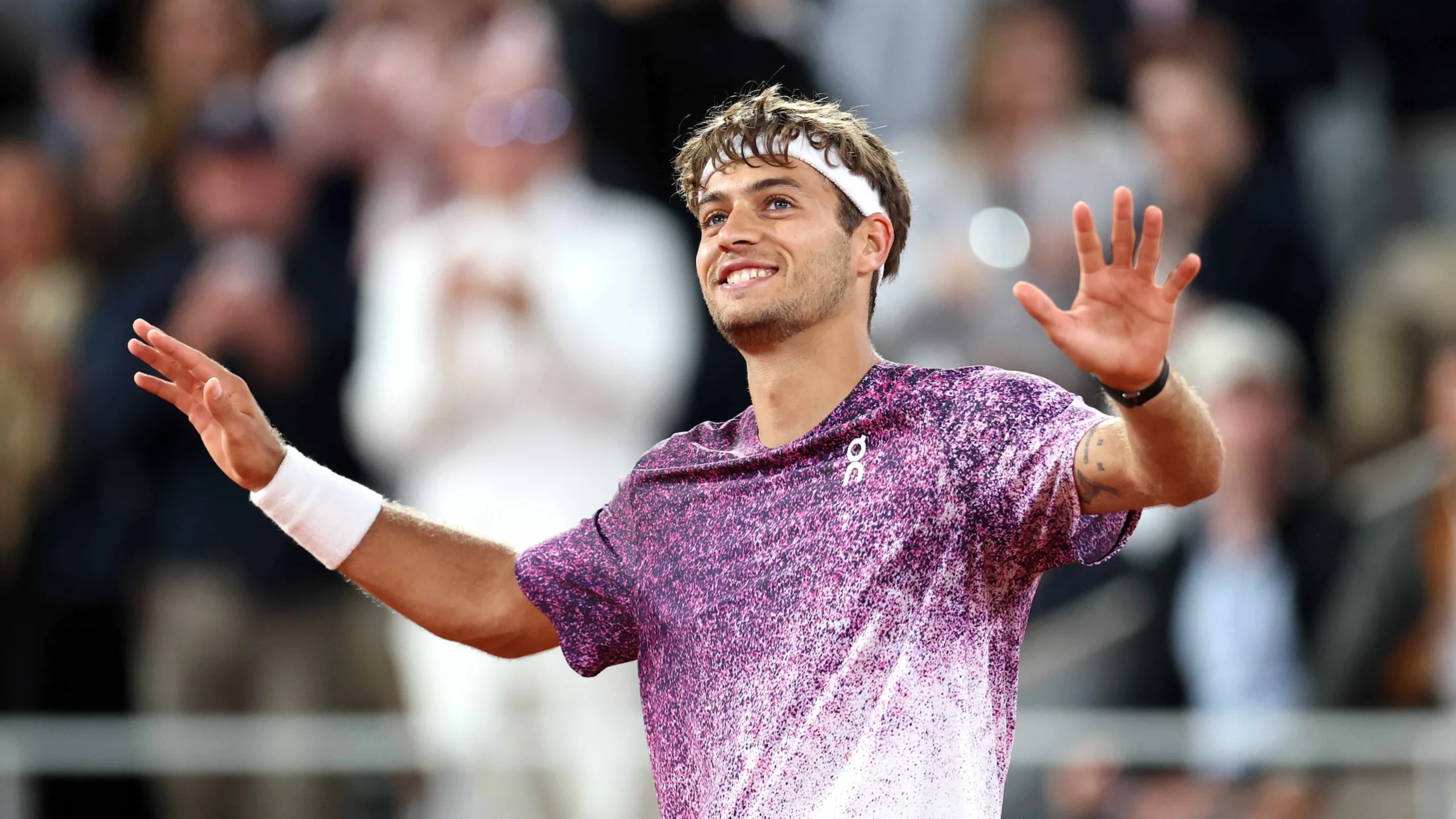
Flavio Cobolli’s breakthrough at Roland Garros produced a major ranking milestone. The 24-year-old reached his first Grand Slam semifinal and final in Paris and, despite losing the title match to Alexander Zverev in a five-set battle, climbed from No. 14 to No. 10 in the latest ATP rankings, marking his Top 10 debut.
Cobolli is the seventh Italian to enter the ATP Top 10 since the rankings began in 1973. He is also only the second Italian man in the past 50 years to contest the Roland Garros final, joining last year’s runner-up, Jannik Sinner. Born in 2002, Cobolli is the fifth man born in 2002 or later to reach the Top 10, following Carlos Alcaraz and Holger Rune, who were both born in 2003, and Lorenzo Musetti and Ben Shelton, who were both born in 2002.
The route to the final carried complicated circumstances. Cobolli advanced to the title match after countryman Matteo Arnaldi withdrew before their semifinal due to illness. Cobolli reflected on the day with mixed emotions: “When [Arnaldi] came to me almost one hour ago, I almost cried,” he said. “It’s something that you don’t expect at all. I was ready to play this match. When he came, I was completely sad for him.
“But at the same time, of course I’m really happy for the result that I reached this week. My dad also came to me right before him, and we had a big hug together with the whole team for achieving the Top 10. Every time that I make the best ranking, we all together have a big hug. We did the same routine as always.
“Yeah, now I’m sad and happy at the same time.”
Arnaldi, 25, leaps from No. 104 to No. 34 after reaching his first Grand Slam semifinal, moving to within four spots of his 2024 career-high of No. 30. Matteo Berrettini also recorded a significant rise, moving from No. 105 to No. 48 after reaching his first Grand Slam quarterfinal since 2022 on the terre battue. For the former No. 6, it was his first appearance at Roland Garros since 2021, following four years marked by injury and illness withdrawals.

US Open opens with Djokovic shock, Eala momentum and McEnroe backlash

Atmane’s US Open loss sparks debate over cramp treatment and medical timeouts

McEnroe criticised after comments following Navone’s Djokovic upset

Alcaraz Confronts On‑court Microphones During US Open Practice Ahead of Opelka Match

Raducanu Arrives at US Open With Momentum After Strong Hard‑Court Swing