ATP Tour
Withdrawals in Canada renew debate over tennis scheduling
Sinner, Djokovic withdrawals renew debate over Canada, Masters scheduling, and player health.

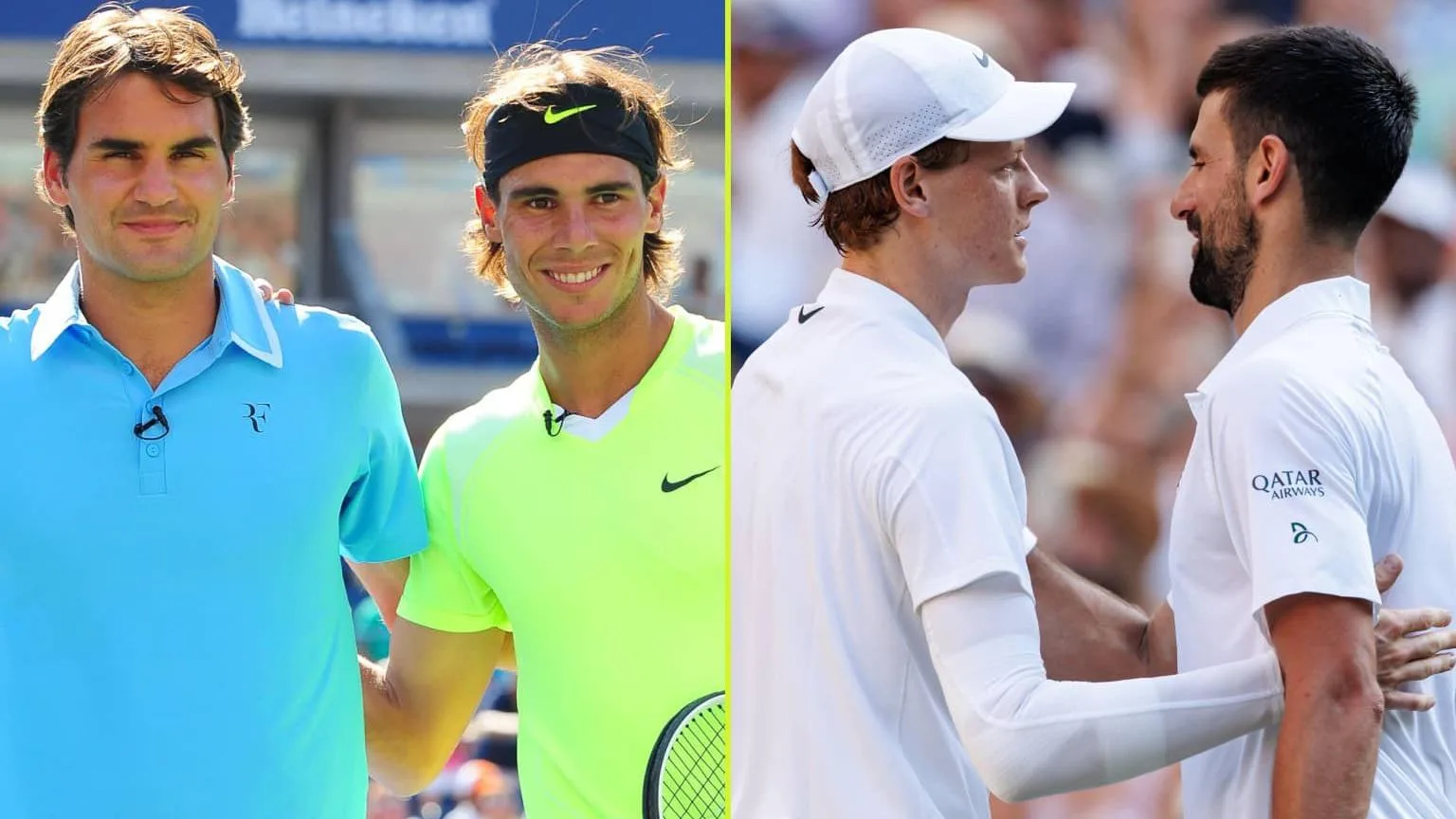
Jannik Sinner and Novak Djokovic pulling out of the Canadian Open has reignited discussion about whether tennis’ calendar has become too punishing. Sinner, the world No 1, said he withdrew from Montreal to protect his health. Djokovic has opted out as he continues to focus on the slams while approaching 40, and Carlos Alcaraz remains sidelined with a wrist injury.
Canadian Open tournament director Valerie Tetreault responded to the high-profile absences by acknowledging the strain on players while also calling attention to a wider issue. She said, “We respect their decisions and understand that, with such a demanding schedule, players’ health must remain the priority. That said, we believe the frequency of these last-minute withdrawals in the last few years raises a broader issue for our sport.
“Masters 1000 events are among the flagship tournaments on the tour, and fans rightfully expect to see the world’s best compete. We are already in discussions with the ATP to ensure this matter receives serious consideration.”
The event used to sit in a different part of the season, with a two-week gap between Wimbledon and the Canadian Masters. Even then, many leading players still appeared. Now there is a three-week break after SW19, yet the field again lacks several of the sport’s biggest names.
Tennis content creator Gill Gross argued that the absence of top stars at this tournament is not only about the modern extended Masters format. He noted that Roger Federer and Rafael Nadal had already been missing Canada regularly, especially later in their careers. Federer skipped the event seven times between 2012 and 2021, Nadal played there five times between 2012 and 2024, and Djokovic has not played the Canadian Masters since 2018.
Gross said on his YouTube channel, “Everyone on my Twitter feed, basically in unison, all said the same thing when this news dropped, when Sinner and Djokovic pulled out on the same day. They all said, ‘Damn you extended two-week Masters 1000s, you’ve ruined it. You’ve ruined this event’. Look, I get it.
“I understand why that was the reaction. I am not a defender of the format. I have covered the flaws, the drawbacks when it comes to the format on the show many, many, many times. But we’ve got a short-term memory here, don’t we?
“Because last year, the Canada Masters became an expanded event for the first time, a two-week event, really 12, 13-day event. So let’s go back before then and examine the participation at the Canada Masters among the top players.
“ Roger Federer, after 2011, played Canada how many times? Twice. This was Nadal’s best hardcourt event. He sometimes prioritised it over Cincinnati. How many times after 2011, when both of these were one-week events, how many times after 2011 did Nadal actually play both? Three times.
“When’s the last time Djokovic played Canada? 2018. He’s won 11 slams since 2018.He hasn’t played Canada. So I get the reaction to be mad at the expanded Masters 1000s for players skipping out of this event. That’s actually not it in this case.”
Gross said the issue also reflects how the Big Three managed their careers and bodies, offering a template for future elite players. He added that Canada remains in a difficult place on the calendar, and that problem is not new.
“Now, I understand there’s an age difference in some of these cases where Sinner is mid-20s. And if you look at Djokovic not playing Canada since 2018, you’re looking at a more advanced age Djokovic in that particular sample size.
“But I also think that the big three, how long they played and how diligent they were about taking care of their bodies, I think they set a bit of an example for the future elite players in the sport for how maybe it should be done, how important it is to make sure that you’re not overextending your physicality and prioritising majors as they did so clearly.
“I think there was a bit of an example set. So I feel horrible for Canada, the National Bank Open. But this isn’t the expanded Masters fault. It has always been in a bad calendar spot. Always. This is not new.
“Let’s have a memory. And last year it was even worse because there was only two weeks between Wimbledon and the start of Canada. And this year, because of the way the calendar shook out, there was actually that extra week.
“So it was three weeks. And for that reason, they [the tournament organisers] were expecting to have better luck this year than they did last year. Not the case, unfortunate. I feel sorry for the locals at these events. I feel sorry for the people involved with these events. It’s not great.”






ATP Tour ATP Tour News
Alcaraz leads Europe into Laver Cup bid with strong record over Team World
Alcaraz leads Europe in London, carrying an 18-1 record against Team World players.
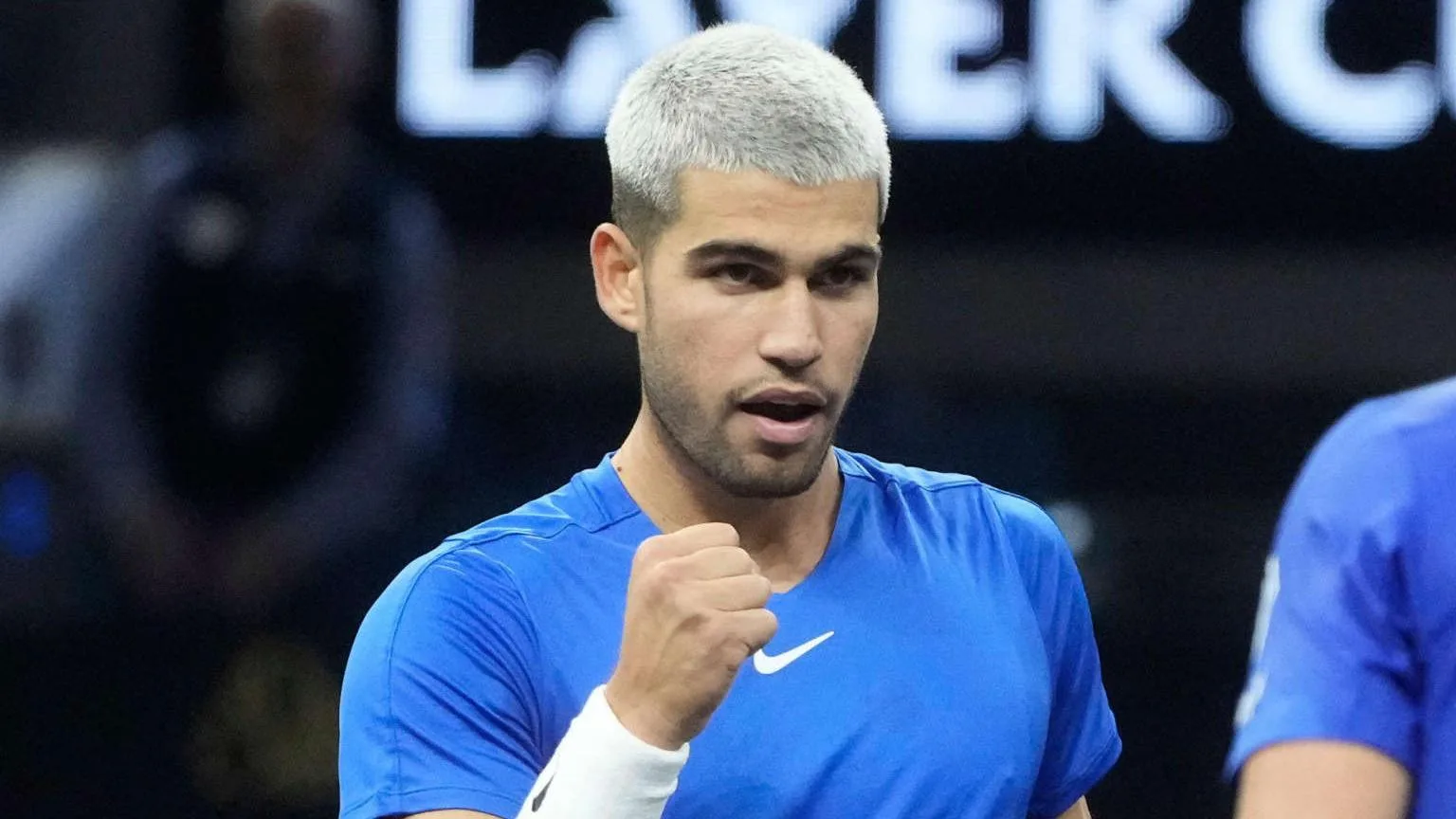
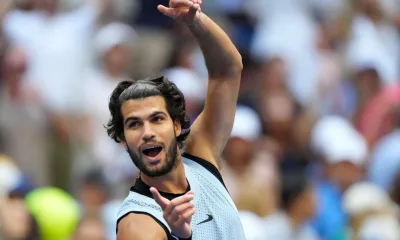
Carlos Alcaraz will front Team Europe at the 2026 Laver Cup as the side attempts to take back the trophy, with Team World aware of how difficult the matchup has been for every member of their squad.
“We will do everything possible to bring the title back to Europe. We failed last year, so we’ll do everything we can to reclaim the trophy,” the world No 3 said after arriving in London for the ninth edition of the event.
Alcaraz is set to line up alongside world No 2 and two-time Grand Slam winner Alexander Zverev, Flavio Cobolli, Rafael Jodar, Jakub Mensik and Casper Ruud.
Team World will be represented by Alex de Minaur, Taylor Fritz, Learner Tien, Brandon Nakashima, Alexander Bublik and Francisco Cerundolo at the O2 Arena.
Last season in San Francisco, Team World won the event 15-9 for their fourth title in five years. Even so, Team Europe still hold the overall edge in the rivalry, leading 5-3.
For Alcaraz, this will be his third Laver Cup appearance, and his record in the competition remains strong. He has lost only one singles match, and across the ATP Tour he holds a commanding head-to-head advantage over all six Team World players.
In his 2024 debut, the Spaniard beat Ben Shelton and Fritz. A year later, Fritz defeated him before Alcaraz responded by beating Cerundolo to finish with a 3-1 record.
Against the six Team World players combined, Alcaraz has played 19 matches and lost only once, leaving him with an 18-1 record. That lone defeat came against Fritz at the 2025 tournament.
His head-to-heads show the same pattern. He leads Fritz 5-1, de Minaur 6-0, Cerundolo 4-0, Nakashima 2-0 and Bublik 1-0. He has not yet played Tien.
Team World may at least draw some encouragement from Alcaraz’s most recent defeat, which came against Ben Shelton at the US Open in four sets. Shelton was initially due to play in London, but withdrew after a demanding spell that included a runner-up finish at the US Open a fortnight ago and a Davis Cup tie against the Czech Republic last week.
ATP Tour ATP Tour News
Taylor Fritz on the strain of a heavy calendar: missing mandatory events brings a real cost
Taylor Fritz says tennis’ packed calendar leaves players with little choice and real penalties.
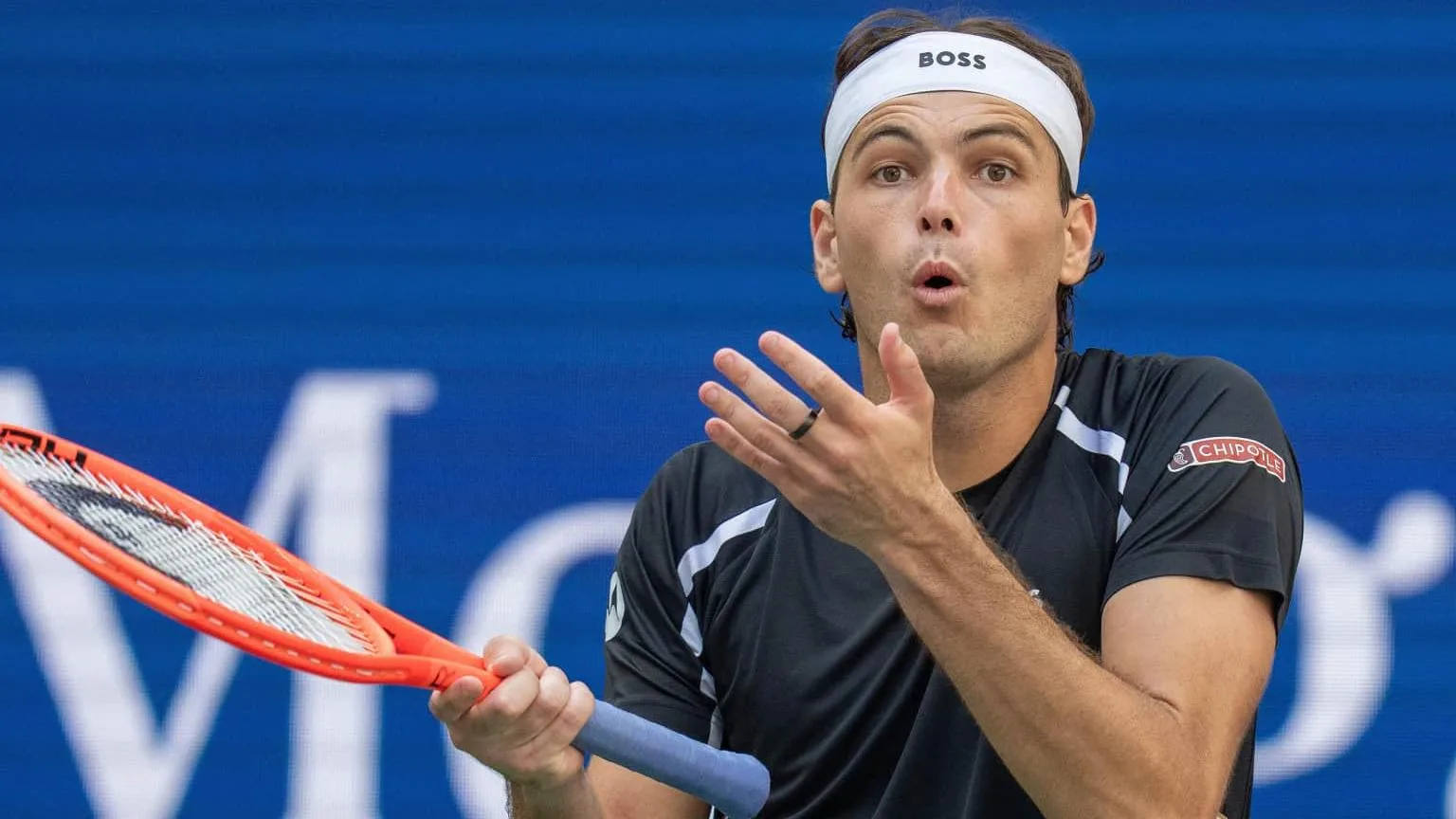
Taylor Fritz has given a clear picture of how difficult it is for top players to trim their schedules without paying a price. For him, the issue is not simply workload, but the structure of the ATP calendar itself. If a player chooses to skip mandatory tournaments, Fritz says the result can be a “serious disadvantage”.
Over the last four seasons, the American has typically logged close to 70 matches between the ATP Tour and Grand Slams, building the consistency of a solid top-10 player. This season, though, the 28-year-old has also dealt with knee tendinitis, which has kept him out for stretches of time. Any period away from competition carries risk, especially when rivals are ready to collect the ranking points that are on offer.
The debate over workload is not new. Alex De Minaur has previously argued for a shorter schedule, and that conversation has only grown louder with Masters 1000 events now stretched across much of two weeks. Former two-time Grand Slam finalist Casper Ruud has also criticized the ranking system, describing it as a “rat race”, with players feeling pressure to enter mandatory events even when injured.
The offseason remains brief, with only a few weeks between November and December before preparations for the next campaign begin. Although the ATP has reduced the required ATP 500 events from five to four and lowered the maximum number of tournaments used for rankings from 19 to 18 for 2026, the burden remains significant. Missing mandatory events also means missing out on the end-of-season bonus pool.
Fritz has already felt that calculation this year. He skipped Acapulco because it “didn’t make sense” to add it to a calendar that already included Dallas, Delray Beach, Indian Wells, and Miami. He said on The Big T podcast, “No matter how much I try to shorten my calendar, it’s still going to be a lot. It’s really tough.
“You need to play mandatory 500s and 1000s. If you want to miss the mandatory 1000s and take the penalties for not playing the 500s, I’d say you’re putting yourself at a serious disadvantage.
“My schedule is long but I’m only playing my mandatory 500s and 1000s and then two or three 250s throughout the year. It’s very tough to shorten it to be honest.”
For players lower in the rankings, the problem is even sharper. With smaller prize money and fewer resources, they do not have the same freedom to be selective as some of the game’s biggest names. The desire for a shorter season is there, but making that happen remains far more complicated. For many, it may be tennis’ biggest issue.
ATP Tour
Sinner Asian swing uncertainty puts Zverev on alert in Beijing
Sinner may skip the Asian swing, a development that could reshape the China Open and aid Zverev.
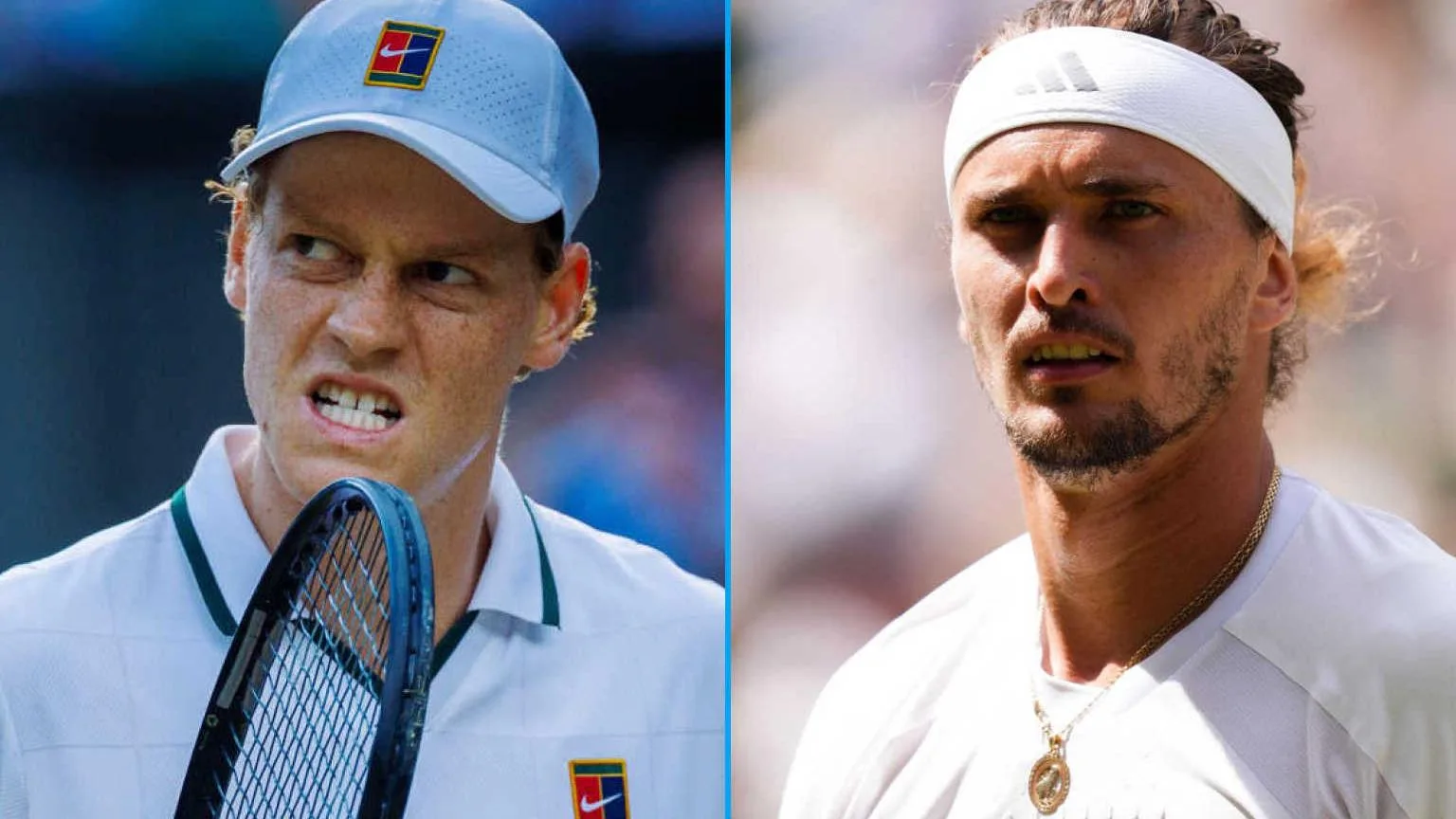
Reports from Italy suggest Jannik Sinner may not play the Asian swing at all, with the issue now centered on how he and his team choose to map out the rest of the season. Former Italian player Stefano Pescosolido, now an analyst for Sky Sports Italia, outlined the possibility that Sinner could bypass the entire stretch and return later in the autumn.
“There are two options: Beijing and Shanghai, or starting with the indoor tournaments,” said Pescolido. “Last year’s Chinese ATP Masters 1000 tournament saw some tricky conditions, and he withdrew due to cramp.
“He might skip the Asian leg and return via Vienna, to be ready for the ATP Finals, in order to plan for the following year as effectively as possible.”
Sinner is presently expected to be the top seed at the China Open, where he is also the defending champion. If he takes part, he would begin as the clear player to beat, despite arriving with an injury.
If he does step away from the event, Alexander Zverev would move to the top seed position at the ATP 500 tournament and would become the leading title contender. The German has already benefited this season when top names were absent from major events, winning Roland Garros without Carlos Alcaraz and then capturing a Sinner -less US Open to become a two-time Grand Slam champion.
A withdrawal would also reshape the race to world No 1. Sinner would lose 500 ranking points if he does not contest the China Open, while Zverev would be defending only 60 points after reaching the quarterfinals in 2025.
The draw would still include Felix Auger-Aliassime, Daniil Medvedev, Flavio Cobolli, Alex de Minaur, Novak Djokovic, and Jakub Mensik, but Zverev has already shown in 2026 that he can handle strong opposition among the rest.
He has never won the China Open, although he has reached the semifinals three times. He was beaten by Nick Kyrgios in 2017, Stefanos Tsitsipas in 2019, and Medvedev in the 2023 season. Another title run would give him a new first in his career.

Alcaraz leads Europe into Laver Cup bid with strong record over Team World

Taylor Fritz on the strain of a heavy calendar: missing mandatory events brings a real cost

Sinner Asian swing uncertainty puts Zverev on alert in Beijing

Alcaraz Confronts On‑court Microphones During US Open Practice Ahead of Opelka Match

Raducanu Arrives at US Open With Momentum After Strong Hard‑Court Swing