ATP Tour
Alcaraz US Open return remains uncertain after wrist layoff
Alcaraz’s US Open return is still unclear after a wrist injury and more missed tournaments.

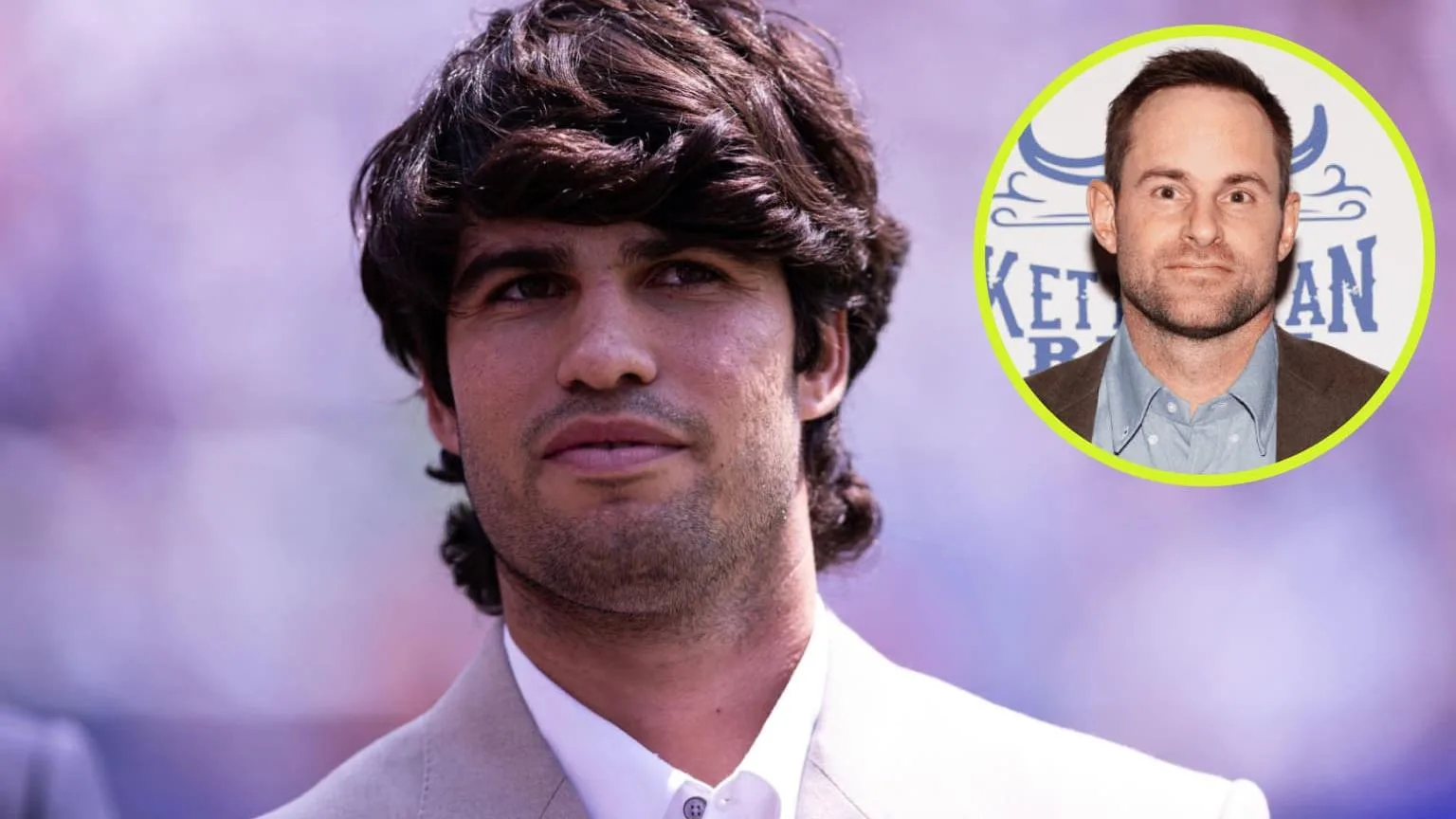
Carlos Alcaraz’s comeback remains one of the central questions heading toward the US Open, with his return still unresolved after a wrist injury sustained at the Barcelona Open in April. The Spaniard first hurt the wrist in the opening round against Otto Virtanen, and the issue has kept him out for five months.
That absence has already ruled him out of the rest of the clay season and the entire grass-court stretch, including his Wimbledon title defence. He had been expected to re-enter the schedule on the North American hard courts, with the Canadian Open and the Cincinnati Open both on his planned path, but he has since withdrawn from those events as well.
The US Open is now his next listed tournament, though his participation at Flushing Meadows is far from guaranteed. Andy Roddick addressed the situation on his Served podcast and suggested the scale of the challenge could make a first-round return especially difficult.
“No one’s going to want to hear this, I think it’s really hard to come back and have your first tournament be three out of five sets,” said Roddick.
“I think the US Open’s in doubt. And I don’t know, I’m not a doctor. This isn’t one of those ones where I come on and say I have some information.
“It’s just when you’re taking your time and you’ve been so diligent about being safe and not being irresponsible, that risk comes back, all of a sudden he’s in a five setter first round of the US Open.
“That would be counter to everything that he has done so far with taking his time and being patient with his injury. If you don’t know where your wrist is at or let’s say iyou think it’s 100%.
“But the first time you play an extended format and it’s four hours, it’s going to feel some kind of way. Anytime you come back from an extended injury, you play that first game, you go in and your team sits down and goes, ‘How did it feel? How is it different? How are we going to go about this?’
“Having those conversations after playing an hour and 20 minutes in Cincinnati versus potentially having to play, you know, seven five-setter in 14 or 15 days, I think it’s different. Now, if anyone can do it and just jump in mid-stream, it is Carlos.
“But it would just be counter to the way that they’ve gone about this injury, at least outside. I think I’d be surprised if he just rocked up and played the US Open now.
“Again, I have no information right or maybe it’s just I’m close but let’s be extra cautious and I will be ready to go at the US Open.
“That’s certainly an option also and I hope that’s I would love nothing more than to be dead wrong on this thing. It’s just outside looking in in a perfect scenario. You want to go kick some rust off and kind of see where you’re at.”
Alcaraz and Jannik Sinner could both arrive at the US Open without having played a North American hard-court warm-up event. Sinner is also managing an injury, with the knee issue he has been nursing back in Italy ahead of the tournament.




Analytics & Stats ATP Tour
Zverev Arrives at Laver Cup With Europe’s Title Bid in Focus
Zverev arrives at the Laver Cup with Team Europe aiming to reclaim the trophy in London.
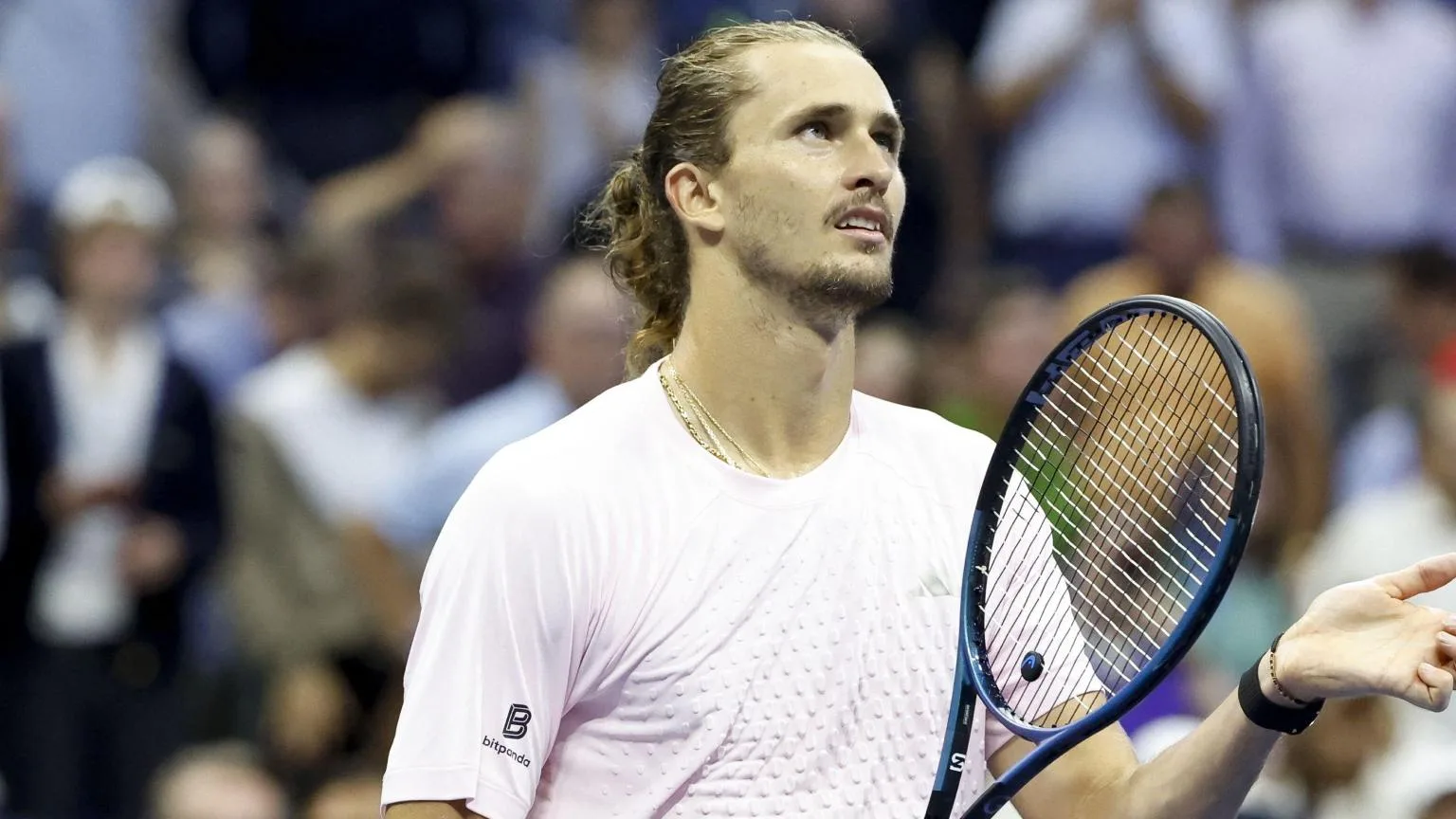
Alexander Zverev has already reached the Laver Cup as he continues a packed 2026 season, and his attention has quickly shifted to Team Europe’s attempt to reclaim the trophy.
The German has been a constant presence on the men’s tour this year, a run that has helped him take advantage of injuries to Carlos Alcaraz and Jannik Sinner. That consistency has also carried him to the biggest results of his career, with Zverev winning Roland Garros and the US Open to claim his first two Grand Slam titles. He is now close to Sinner’s world No 1 ranking.
For the moment, though, the Laver Cup is the immediate target. Team Europe were beaten by Team World at the 2025 event in San Francisco, and Zverev is determined to help put things right.
He has long been one of the event’s most familiar figures, and he explained why the format continues to appeal to him while practicing at the tournament.
Speaking during his practice sessions at the tournament, Zverev said: “I love the competition. I’ve been part of all the European teams that have won the Laver Cup.
“Of course, we want to bring the Laver Cup back to Europe and try to win it. I think we have the best players in the world here. It’s special to be on a team with them and to build a strong team. We will do everything to win this weekend.”
His record at the event helps explain that attachment. Since the Laver Cup began in 2017, Zverev has made seven appearances, more than any other player. He has won the competition five times, more than anyone else, and also owns the most singles wins, the most singles points and the most points overall.
Zverev’s career Laver Cup record stands at 9-7, a 56% winning rate. Over the years, he has shared the team environment with players such as Roger Federer and Carlos Alcaraz, and has beaten Frances Tiafoe and Milos Raonic in singles.
This year, he will line up alongside Alcaraz, Rafael Jodar, Casper Ruud, Jakub Mensik, and Flavio Cobolli under Yannick Noah and Tim Henman. Their opponents will be Team World, coached by Andre Agassi and Pat Rafter, with Taylor Fritz, Alex de Minaur, Learner Tien, Brandon Nakashima, Alexander Bublik, and Francisco Cerundolo in the squad.
The tournament is scheduled for The O2 Arena in London from September 25th to 27th, with singles and doubles matches spread across the weekend.
ATP Tour
Zverev’s breakthrough season rewrites a long-running story
Zverev’s breakthrough year has changed the narrative after Noah recalled his doubts and frustration.
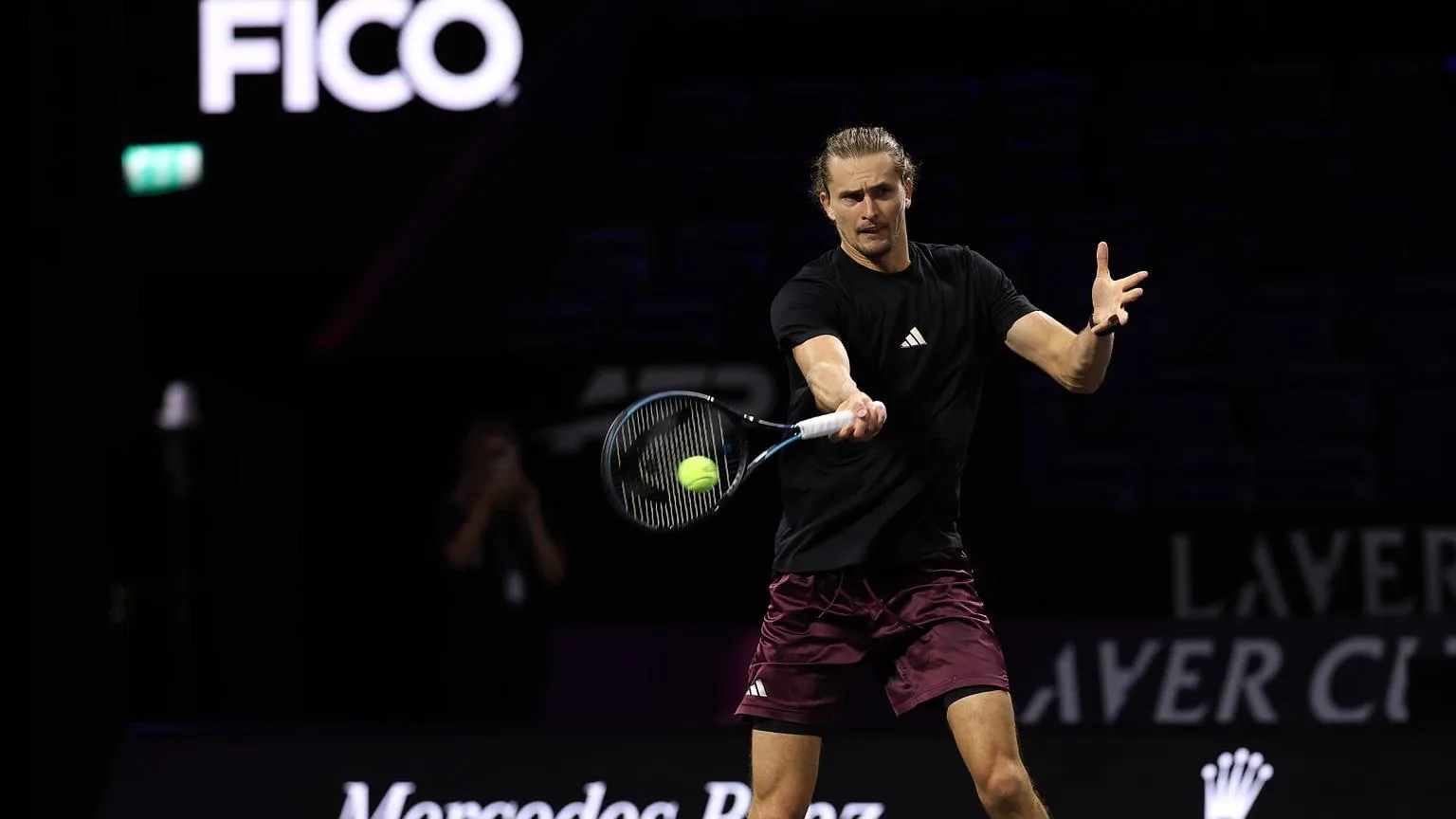
Alexander Zverev has finally put an end to years of frustration by winning two Grand Slam titles in 2026, a development that left Yannick Noah reflecting on how uncertain the German once felt about ever getting there.
Zverev first lifted a major trophy at the French Open in June, then reinforced that achievement by beating Ben Shelton in the US Open final earlier this month. After so many seasons of falling short against Roger Federer, Rafael Nadal and Novak Djokovic, it had sometimes appeared that the next wave of champions, Jannik Sinner and Carlos Alcaraz, would keep the door closed as well.
Noah, who captained Team Europe at last year’s Laver Cup in San Francisco, said Zverev was not in a strong place mentally at the time. The German went on to lose the event’s decisive match to Taylor Fritz, and Noah suggested confidence was part of the issue.
“This guy tried so hard, kept coming back, you know, he’s coming up against Nadal, then he’s coming up against Djokovic and then he’s coming again and it’s Roger,” began Noah, speaking on an episode of the Off Court with Greg Rusedski podcast that will be released on Thursday.
“Then it’s Alcaraz and it’s Sinner, but he kept coming back and suddenly it’s paid off. I was really happy when he won the French Open and then so happy to see his face when he won the US Open. He was like a little child and he didn’t even know he had won at the end.”
Noah expanded on the mood he sensed during that Laver Cup campaign, describing a player who was battling frustration but never stopped pushing.
“Last year he was not in a good place because I could tell that he was getting a little frustrated,” stated the 1983 French Open champion.
“He was tired of trying too hard. But he just kept trying. I think he showed so much resilience over the ten years. He has been No 2, No 3 and he always kept trying. As a player, this is something that you have and as a coach, as a parent. You always say, keep trying, never give up, never give up. But sometimes it’s very hard.
“And it was very hard on Sascha. I got some quality time with him when I say, you know, keep trying, your time will come. But you’re not sure. You hope. You’re trying to be positive about this. You’re trying to be optimistic, but you don’t know.
“And then all of a sudden you when I see him win, when I saw him win the French, I was happy for him because he deserved it. He’s worked so hard for these moments.”
Zverev and Alcaraz now sit at the centre of Noah’s Team Europe plans for the Laver Cup in London, which begins on Friday as they aim to respond to last year’s loss to Team World.
ATP Tour ATP Tour News
Alcaraz relishes London return and hails Zverev ahead of Laver Cup
Alcaraz returns to London at Laver Cup and praises Zverev as he continues his comeback.
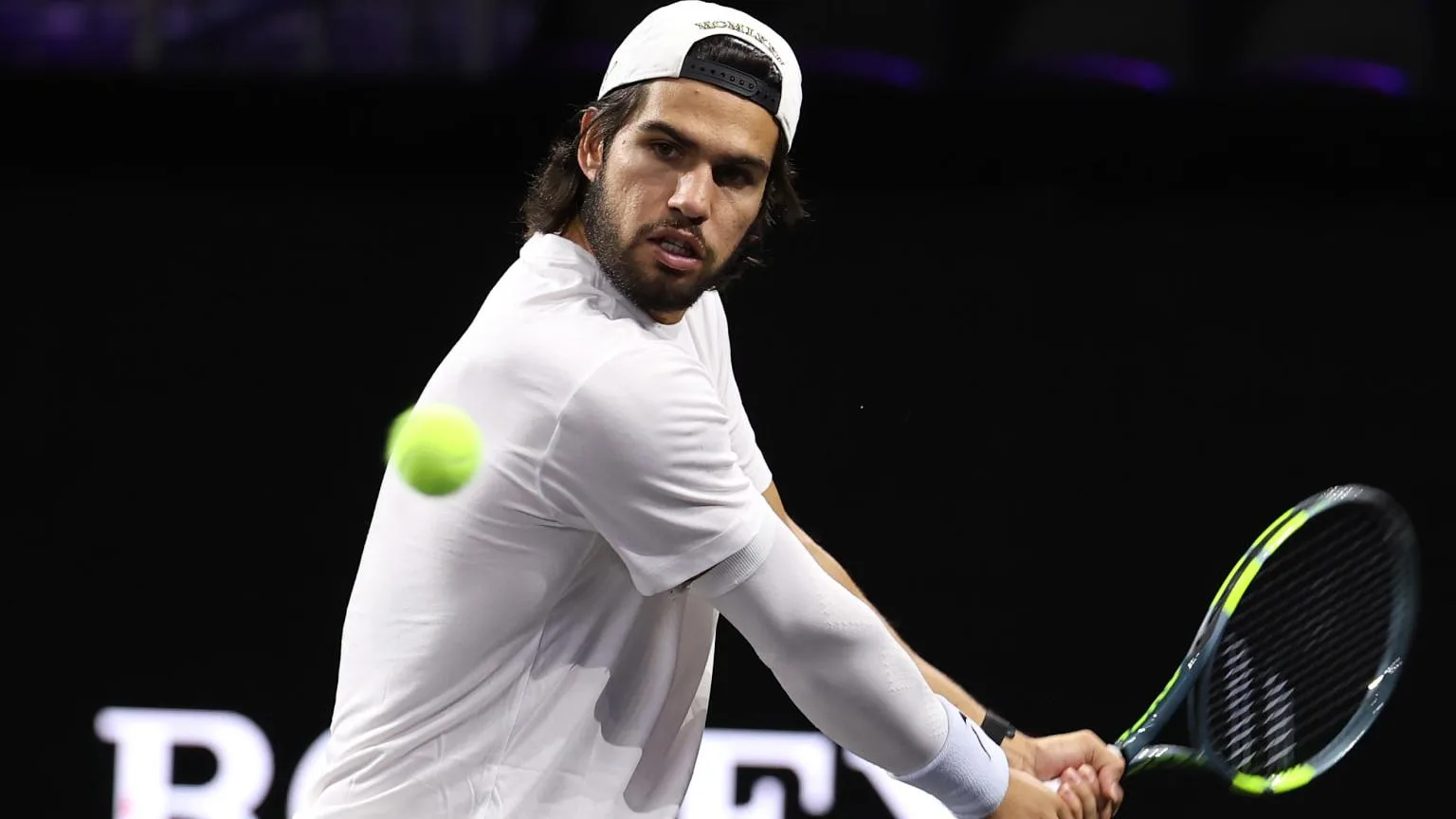
Carlos Alcaraz has said he is ready to make up for lost time as he prepares for his first matches in London in 2026 at the Laver Cup this week, while also offering a striking verdict on one of his European team-mates.
The Spaniard was forced to sit out the grass-court swing in England, missing planned appearances at Queen’s Club and Wimbledon after suffering a wrist injury at the Barcelona Open in April. He returned at the US Open last month, a comeback that many viewed as a surprise, and produced five strong performances before falling in an epic quarter-final to Ben Shelton.
His next stop is Team Europe at the Laver Cup, where he will line up alongside newly crowned US Open champion Alexander Zverev. Zverev had previously praised Alcaraz as ‘amazing’ after they played together in an earlier edition of the event, but this time it was Alcaraz who returned the compliment.
“I agree that he is probably the best player in the world right now,” Alcaraz said of Zverev.
“Having him by my side and on our team, it’s going to be a great weapon to have and we are going to use it.
“I missed lifting the (Laver Cup) trophy last year, so I’m going to do whatever it takes this year.
“The US Open was a great test for me and I can’t wait to play here.”
Alcaraz was beaten by Team World’s Taylor Fritz in last year’s Laver Cup and has made clear that he wants to put that right if they meet again in London.
“He destroyed me last year,” added Alcaraz with a smile. “If I play against him, I will be down with it and I will be ready, for sure.
“It’s great to be back in London. I missed it this year, so it’s going to be the first time I am touching London this year, so I’m excited.
“It’s my first time playing at the 02 Arena and it feels great to be here. It’s a super beautiful stadium and I can’t wait to see it packed and hear the atmosphere from the people.”
Although Alcaraz has faced criticism for playing too many exhibition events, this year’s Laver Cup offers him a useful setting to continue his comeback after the wrist problem. The best-of-three format, with no ranking points on offer, should suit his return while the event also brings a significant appearance fee.
The competition begins on Friday and finishes with the final session at the 02 Arena on Sunday.

Zverev Arrives at Laver Cup With Europe’s Title Bid in Focus

Alex Eala opens Singapore challenge against Prozorova as ranking gains loom

Zverev’s breakthrough season rewrites a long-running story

Raducanu Arrives at US Open With Momentum After Strong Hard‑Court Swing

Alcaraz Confronts On‑court Microphones During US Open Practice Ahead of Opelka Match