Facts & Stats
Alcaraz says he has missed everything as he prepares for US Open return
Alcaraz says he has missed everything as he prepares to return at the 2026 US Open.

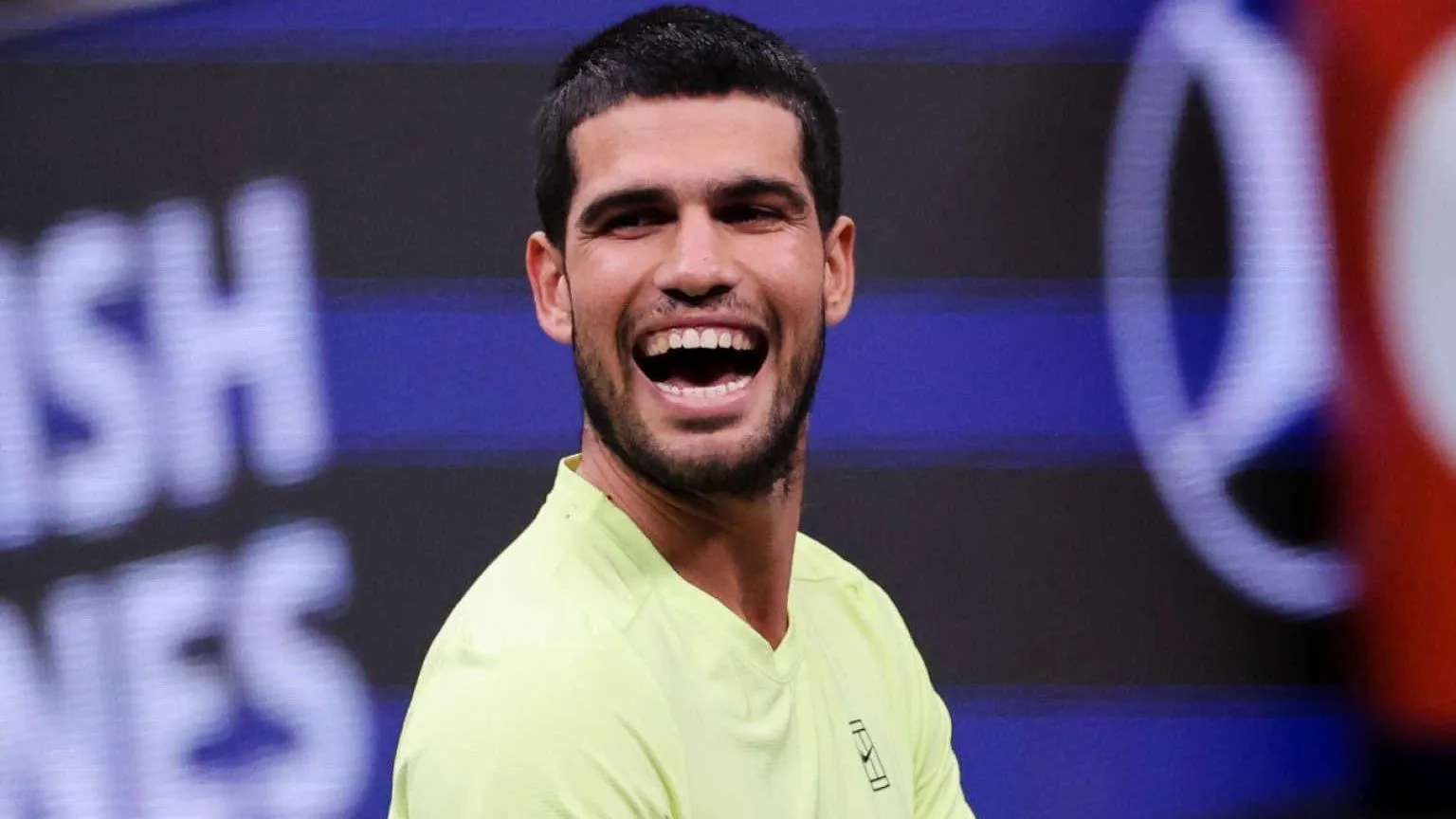
Carlos Alcaraz has spoken openly about how much he has missed competitive tennis as he readies himself for a return at the 2026 US Open.
The Spanish star confirmed last week that he will come back from more than four months out with a right wrist injury to compete in New York. His most recent match came at the Barcelona Open in April, where he picked up the injury that forced him to miss both Roland Garros and Wimbledon this summer.
On Sunday, Alcaraz took to the practice courts at Flushing Meadows for the first time this year, working in front of spectators in Louis Armstrong Stadium. After the session, he gave a brief interview and said the return carried a deep emotional charge.
“After a couple of months recovering from my injury, I miss everything. I miss this place, I miss the crowd, I miss the ball kids,” said the 23-year-old.
He added that being back in New York felt like the right setting for his comeback. “I think I couldn’t have started at a better place than here, so I feel very grateful. I’m just happy.”
Alcaraz also acknowledged that entering a Grand Slam after such a long absence was not straightforward. “Yeah, I mean, it is a very special tournament for me. It’s a Grand Slam, best of five.
“So yeah, as I said, after more than four months, coming back at a Grand Slam wasn’t an easy decision, but I just tried to put everything to be ready for this tournament.”
The world No 3 is the defending US Open champion after beating Jannik Sinner in the 2025 final to claim his second title at the USTA Billie Jean King National Tennis Center.
He is also scheduled to team up with Serena Williams in the US Open mixed doubles event, which takes place on Tuesday and Wednesday. The singles events at Flushing Meadows run from Sunday 30 August to Sunday 13 September.




Facts & Stats Features
Eight first-time WTA singles champions have emerged in 2026, led by Alex Eala
Eight first-time WTA singles champions have emerged in 2026, led by Alex Eala.
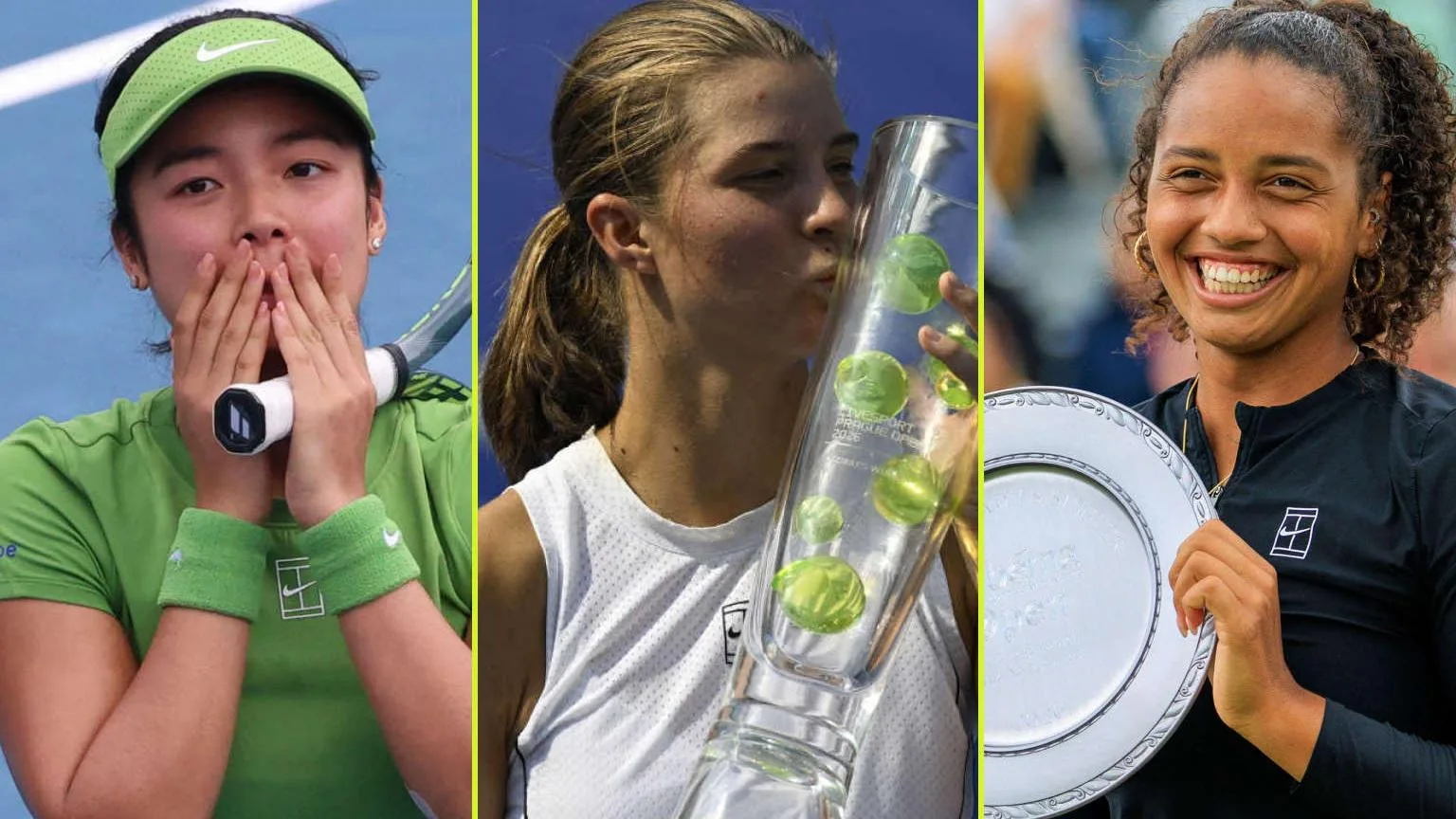
With nine months of the 2026 season complete, the WTA Tour has already produced eight first-time singles champions. Alex Eala is among them, while Kristina Liutova stands out as the youngest player on the list.
So far, 29 different players have lifted singles trophies this year. Elena Rybakina, Aryna Sabalenka and Mirra Andreeva share the lead with three titles apiece, but the list of winners also includes eight players claiming their maiden tour crowns.
Sara Bejlek began the year’s run of new champions in Abu Dhabi. Just seven days after turning 20, she came through qualifying and beat a string of strong opponents before defeating top seed Ekaterina Alexandrova 7-6 (7-5), 6-1 in the final.
Cristina Bucsa followed in Merida, where the Spaniard was 28 years and 59 days old when she completed her breakthrough. After reaching her first final in Hong Kong, she improved on that result by defeating Jasmine Paolini in the semi-finals and then Magdalena Frech in three sets.
Petra Marcinko, the 2022 Australian Open girls’ singles champion, reached her first final in Rabat and needed only one set on the way to victory after Anhelina Kalinina retired at 6-2, 3-0.
Robin Montgomery then produced a striking run at Libema. Starting the event ranked No 484, she came through qualifying and became the fifth lowest-ranked player to win a WTA Tour title. The final ended by walkover after Barbora Krejcikova withdrew.
Lilli Tagger became the first teenager to win a tournament in 2026, and the first player born in 2008 to win a WTA singles title. The Austrian converted her second chance in a tour final by beating Diana Snigur in Prague.
Liutova, aged 16 years and 181 days, collected several notable firsts in Memphis. She became the first player born in the 2010s to win a singles title and the youngest champion since Coco Gauff in 2019, before defeating Darja Vidmanova 1-6, 6-1, 6-3 in the final.
Eala’s triumph in Washington DC carried similar significance. After finishing runner-up in her first WTA Tour final at Eastbourne in 2025, she finally joined the winners’ circle, beating Jessica Pegula 4-6, 6-4, 6-0 for the title.
Diane Parry closed the latest chapter in Mexico, where the unseeded Frenchwoman defeated Elise Mertens 6-4, 0-6, 6-3 to complete her first tour title run.
Facts & Stats
Rybakina moves into commanding position in WTA Finals race after US Open title
Rybakina’s US Open win puts her atop the 2026 WTA Finals race and in position

Elena Rybakina has strengthened her grip on the year-end No 1 battle after winning the 2026 US Open, while Alex Eala continues to sit inside the top 15 of the Race to the WTA Finals.
Rybakina earned the New York title by defeating Aryna Sabalenka 6-4, 5-7, 6-2 in the final. The victory gave her a first US Open crown and the third Grand Slam title of her career.
Her progress to the semi-finals at Flushing Meadows had already guaranteed a major ranking shift. At that stage, she secured enough points to move past Sabalenka and claim the world No 1 ranking for the first time.
The Race to the WTA Finals determines the eight players who gather the most ranking points across 2026 and qualify for the season-ending event, scheduled for Indian Wells, United States, from 8 to 15 November. If a Grand Slam champion from the current year finishes between ninth and 20th in the race, that player earns the eighth and final place in the field.
The top two positions remain unchanged at the summit, with Rybakina now on 7,492 points and Sabalenka on 6,485. Jessica Pegula and Coco Gauff have both moved up one place after reaching the US Open semi-finals, rising to third and fourth respectively.
Mirra Andreeva has slipped from third to fifth after her quarter-final run, while Elina Svitolina, Karolina Muchova and Linda Noskova continue in sixth, seventh and eighth.
Below the cutoff line, Marta Kostyuk is ninth and Iga Swiatek sits 10th. Sorana Cirstea has climbed two places to 11th, and Iva Jovic has moved up to 14th after reaching the fourth round. Eala remains 15th after making the third round.
Rybakina is also the reigning WTA Finals champion, having collected a record-breaking $5,235,000 for last year’s title.
ATP Tour Facts & Stats
Rybakina topples Sabalenka to join the WTA’s exclusive No 1 club
Rybakina ends Sabalenka’s run and joins the small group of active WTA world No 1s.
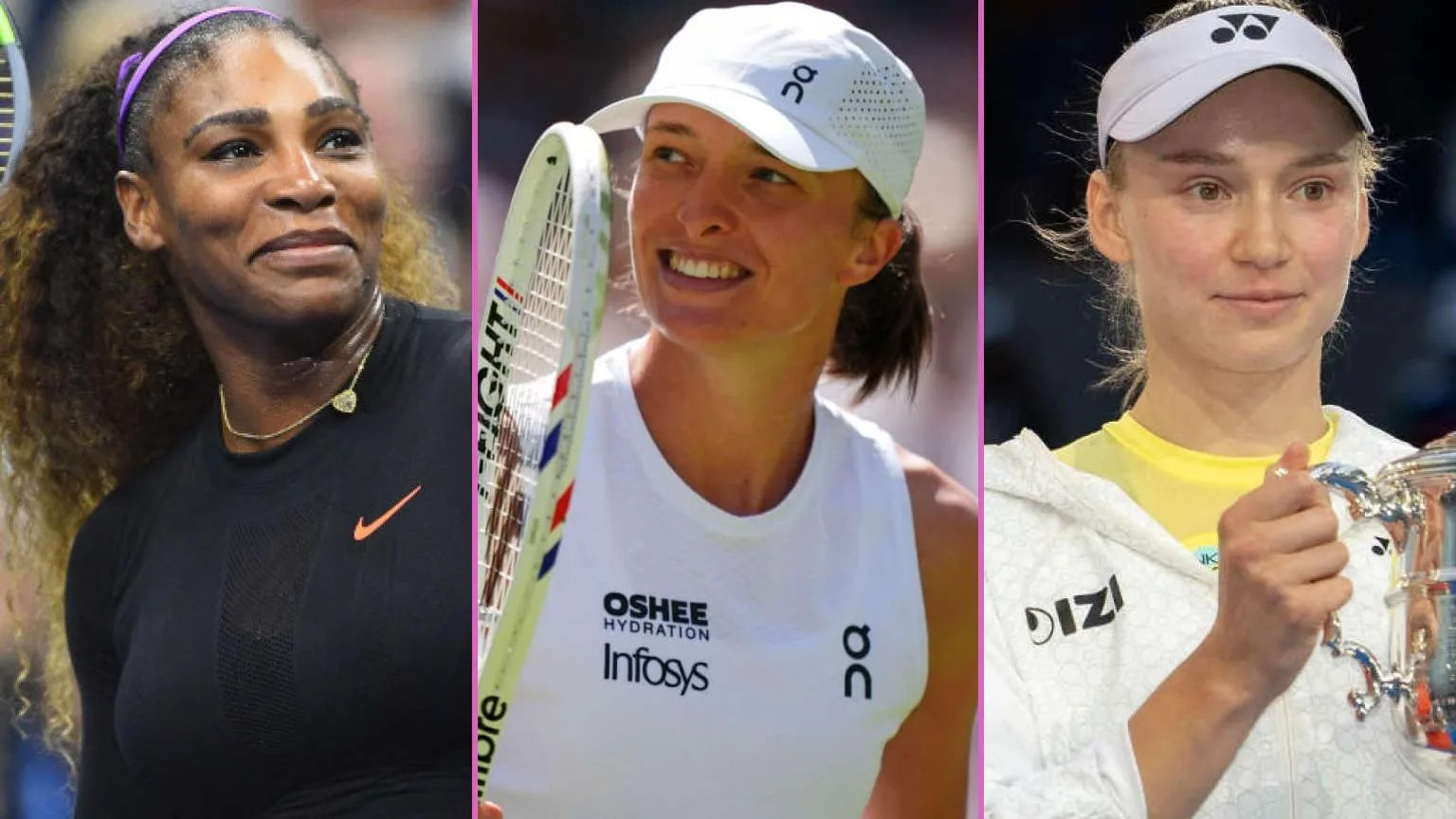
Elena Rybakina has brought Aryna Sabalenka’s extended stay at the top of the WTA Rankings to an end, moving into the world No 1 position and becoming the 30th player to reach the summit.
Sabalenka had controlled the top spot for a significant stretch, starting her second spell on 21 October 2024 and remaining there for 99 consecutive weeks before Rybakina pushed her down to No 2 after the US Open.
The breakthrough makes Rybakina the first player from Kazakhstan to climb to No 1 in the world. Her rise was confirmed after reaching the semi-finals at Flushing Meadows, and she then added the season-ending Grand Slam in New York, building a strong cushion over the Belarusian.
Rybakina’s ascent also changes the shape of the list of former No 1s still active on tour. There are now seven WTA players who have held the top ranking and remain competing.
*Although Victoria Azarenka has not officially retired, she is currently listed as inactive by the official WTA website with her last official match at the 2025 US Open.
At the top of that active group is Rybakina herself, whose time at No 1 has only just begun and is set to continue for at least a couple of months thanks to a lead of more than 2,000 points over Sabalenka.
Karolina Pliskova is next with eight weeks at No 1. She remains the only active player to have reached world No 1 without winning a Grand Slam, despite runner-up finishes at the US Open in 2016 and Wimbledon in 2021.
Venus Williams holds 11 weeks at the summit, spread across three short spells in 2002. Naomi Osaka follows with 25 weeks, while Sabalenka’s total stands at 107 weeks, placing her 10th on the all-time list.
Iga Swiatek has collected 125 weeks, good for seventh all-time, while Serena Williams leads the way with 319 weeks. Her record includes eight separate stints at No 1, and her place at the top remains unmatched in the current group.

Zverev Arrives at Laver Cup With Europe’s Title Bid in Focus

Alex Eala opens Singapore challenge against Prozorova as ranking gains loom

Zverev’s breakthrough season rewrites a long-running story

Raducanu Arrives at US Open With Momentum After Strong Hard‑Court Swing

Alcaraz Confronts On‑court Microphones During US Open Practice Ahead of Opelka Match