Alcaraz-Shelton sets new US Open late-finish mark
Alcaraz and Shelton pushed the US Open into record territory with a match ending at 3:35am.

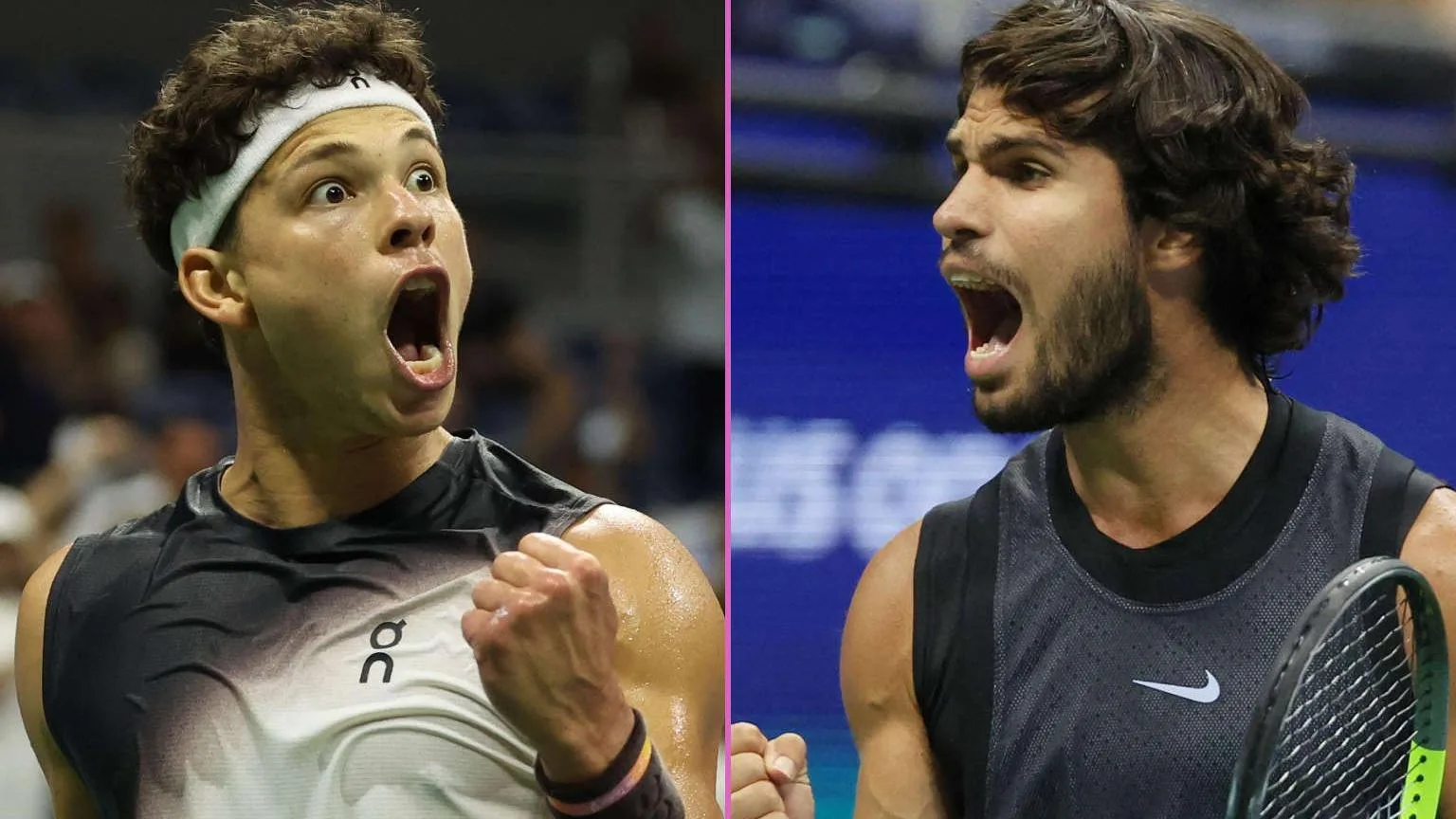
The 2026 US Open produced a new benchmark for lateness after Carlos Alcaraz and Ben Shelton finished their quarter-final deep into Wednesday morning in New York.
Tuesday on Arthur Ashe Stadium was already a demanding day before the night session even began. Aryna Sabalenka and Linda Noskova opened with a two-hour and 22-minute contest, followed by Frances Tiafoe and Alex Michelsen, whose last-eight match lasted four hours and 39 minutes. Jessica Pegula and Emma Navarro then spent two hours and 21 minutes on court, further stretching the schedule at Flushing Meadows.
By the time defending champion Alcaraz and eighth seed Shelton walked out, the clock had reached 23:05. With many seats already empty, the fans who remained still got a match worthy of the setting. The two pushed each other for more than four hours in a contest that kept going long after midnight.
The old US Open mark had belonged to Alcaraz and Jannik Sinner, whose 2022 quarter-final ended at 2:50am after five sets. That was surpassed midway through the fifth set when the clock struck 2:51am, and the pair kept going beyond 3am. Shelton finally closed out a 6-7 (5-7), 6-1, 6-3, 1-6, 7-6 (10-7) victory at 3:35am.
That result now stands as the latest finish in US Open history. The Alcaraz-Sinner match sits second, while Alexander Zverev and Tomas Etcheverry’s 2:35am finish from 2024 is now third.
At the majors, the longest finish remains Lleyton Hewitt and Marcos Baghdatis at the 2008 Australian Open, when their match ended at 4:38am. Andy Murray and Thanasi Kokkinakis played until 4:05am in 2023 at the season-opening Grand Slam. In men’s tennis overall, the record is still held by Zverev and Jenson Brooksby, who finished at 4:55am at the 2022 Mexican Open in Acapulco. The only other match to finish after 4am was a Davis Cup doubles contest between the United States and Italy, with Jack Sock and Sam Querrey completing their win against Simon Bolleli and Fabio Fognini at 2:04am in 2019.

1000
Andreeva and Zheng bank identical US Open rewards after quarter-final runs
Andreeva and Zheng left the US Open quarter-finals with 430 points and $780,000 each.
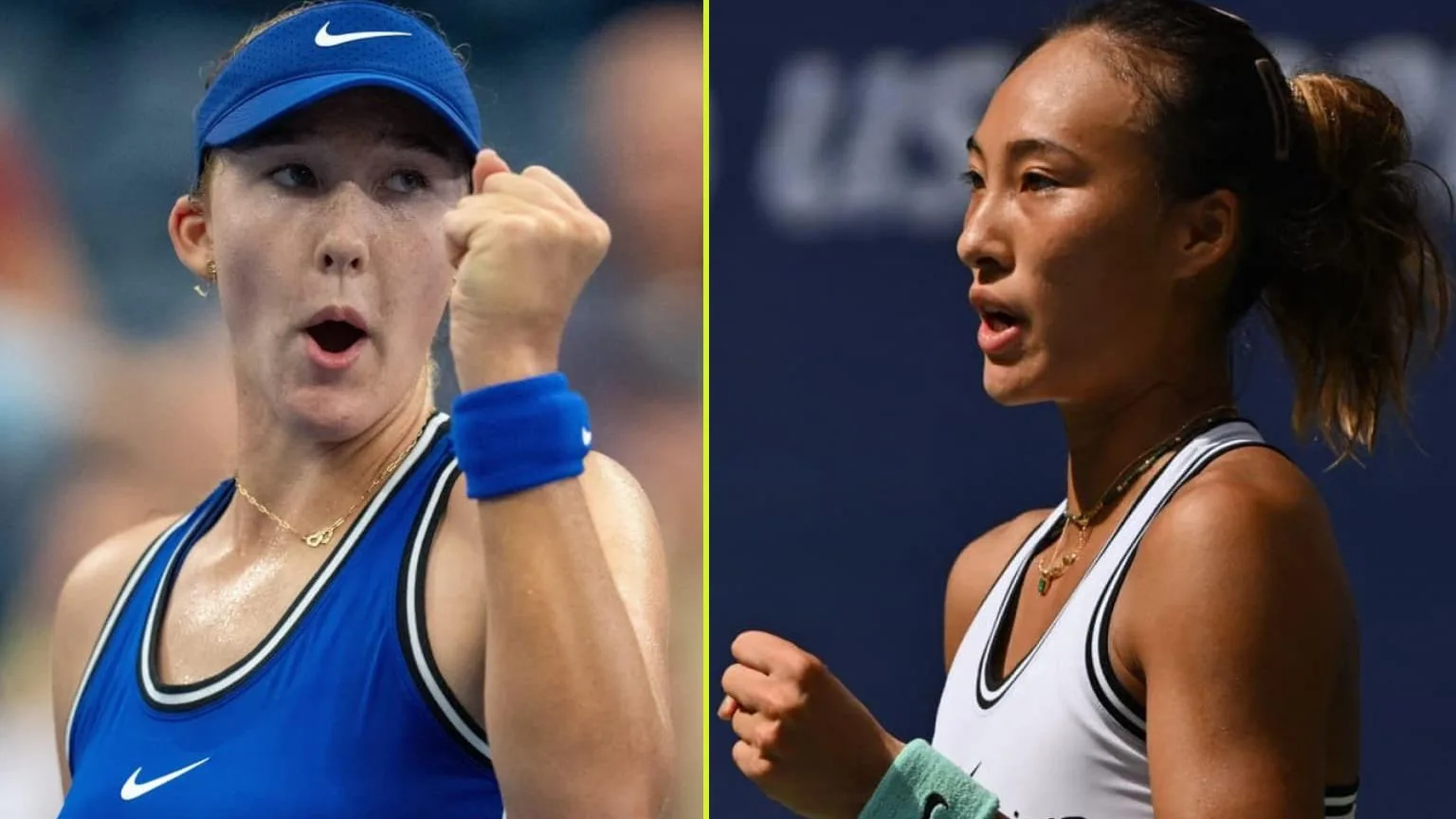
Mirra Andreeva and Qinwen Zheng both saw their 2026 US Open campaigns end in the quarter-finals, but their runs still brought significant gains in ranking points, prize money and live ranking position.
Zheng, who once reached world No 4 and is now ranked 121st, fell 3-6, 6-1, 6-4 to second seed Elena Rybakina on Wednesday. Her path to the last eight included victories over Kristina Liutova, Yulia Putintseva, Madison Keys and Iga Swiatek, as well as three qualifying wins to get into the main draw in New York. That result marked her third appearance in the quarter-finals at Flushing Meadows.
Andreeva’s run ended one round later in the draw after fifth seed Coco Gauff beat her 2-6, 7-6(7), 6-2 in the fourth and final women’s quarter-final. The 19-year-old Russian had earlier defeated Janice Tjen, Eva Lys, Nikola Bartunkova and Anastasia Potapova to reach her first US Open semi-final.
Despite the defeats, both players earned 430 WTA ranking points for making the quarter-finals at the year’s final major. Andreeva started the tournament at a career-high No 5 and remains fifth in the Live WTA Rankings, moving up by 300 points to 5,743. Zheng climbed sharply from No 121 to 52nd in the Live Rankings after adding 470 points to reach 1,083.
The financial return was identical as well. Andreeva and Zheng each collected $780,000 for reaching the final eight at Flushing Meadows.
US Open 2026 WTA ranking points breakdown: First Round 10, Second Round 70, Third Round 130, Fourth Round 240, Quarter-finals 430, Semi-finals 780, Finalist 1300, Champion 2000.
US Open 2026 WTA prize money breakdown: First Round $190,000, Second Round $190,000, Third Round $290,000, Fourth Round $480,000, Quarter-finals $780,000, Semi-finals $1.45 million, Finalist $2.8 million, Champion $5.5 million.
Tennis News.
Andreeva reflects after painful US Open quarter-final loss to Gauff
Andreeva reviewed missed chances, emotions, and Gauff’s patience after the US Open defeat.
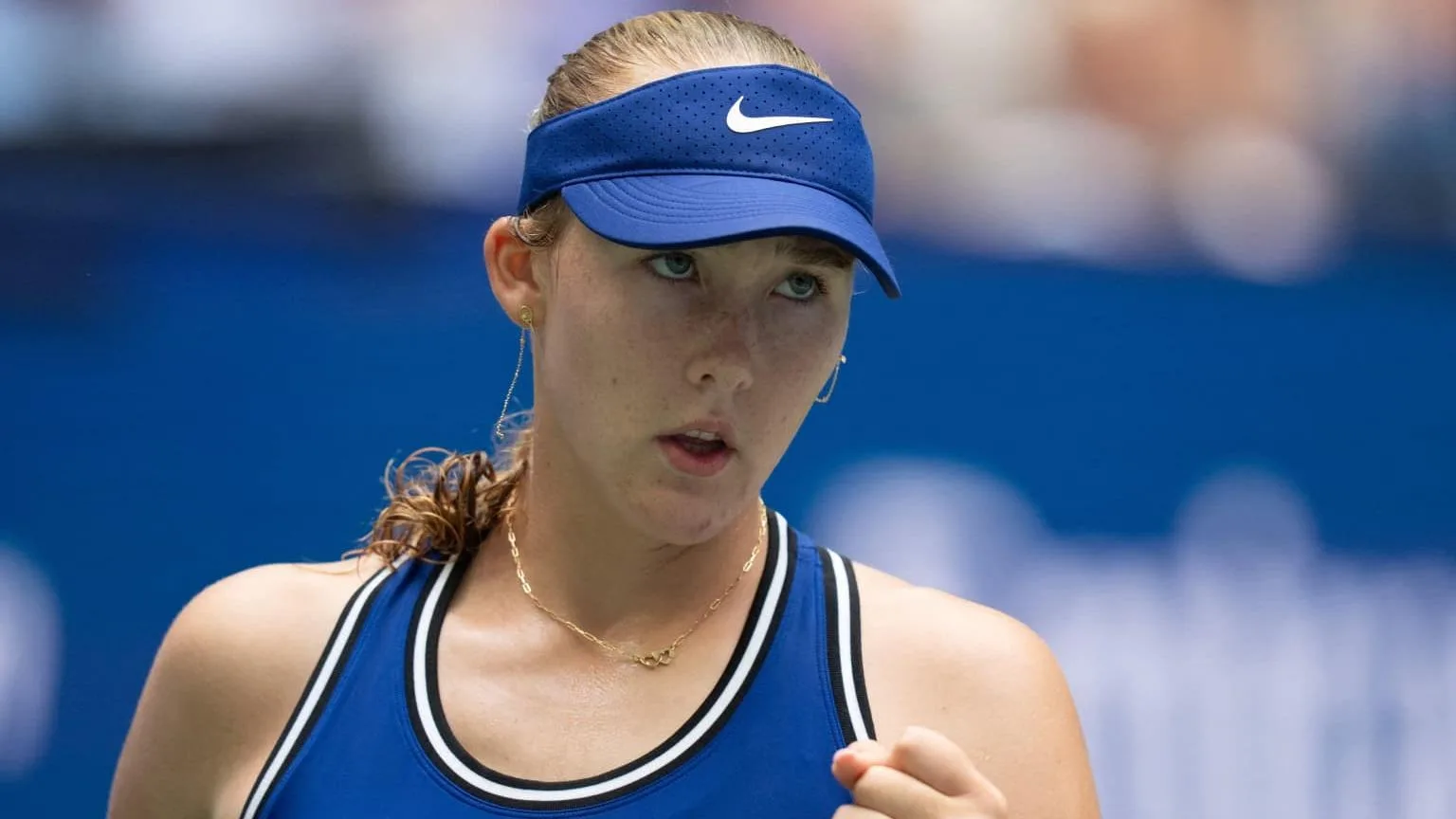
Mirra Andreeva left Arthur Ashe Stadium with mixed emotions after a hard-fought three-set loss to Coco Gauff in the quarter-finals of the 2026 US Open.
The world No. 5 was defeated 6-2, 6-7(7), 2-6 by the fourth-ranked American on Wednesday in what was the 19-year-old Russian’s first quarter-final appearance at the tournament. Andreeva had her chances in the second set, but she could not convert match points at 6-5 and 7-6 in the tiebreak. The result extended her career record against Gauff to 0-6.
Andreeva had entered the event with ambitions of adding a second Grand Slam title to the French Open crown she won earlier in 2026. Gauff, meanwhile, continues her pursuit of a third major title and a second US Open championship.
Speaking afterward, Andreeva said the key lesson was to take more chances when the match was on her racquet.
Q. You had the match in a winning position a couple of times. Just looking back, what are some things you wish you could have done differently when you had that momentum and the edge?
ANDREEVA: Maybe risk more, I guess. I think at that moment I kind of just wanted to play, you know, wanted to make a rally a longer point. So I think that if I maybe would have gone for something more risky to see what would have happened, maybe that would be the only thing that I would change.
She also described Gauff as a difficult opponent because of the American’s patience and ability to extend rallies.
Q. You guys have had some good battles. What makes her so tough to face?
ANDREEVA: I think she’s just more patient than me in a way that, you know, at some moments she makes less mistakes, and obviously she gets a lot of balls back, which I think after, I’m the one that’s trying to rush and make more mistakes than her. So, I think something to also see and take into account for the next matches that I’ll play against her.
Andreeva said she felt less nervous than usual and tried to attack early, but admitted that the match shifted once Gauff raised her level. She also said she was unsure, in the immediate aftermath, whether there were specific positives to carry forward from the tournament.
On her emotions, she acknowledged the importance of body language while explaining why frustration surfaced late in the match.
1000
Gauff shows composure after Andreeva’s quarter-final unraveling
Gauff advanced after a tense win over Andreeva and defended her rival’s racket throw.
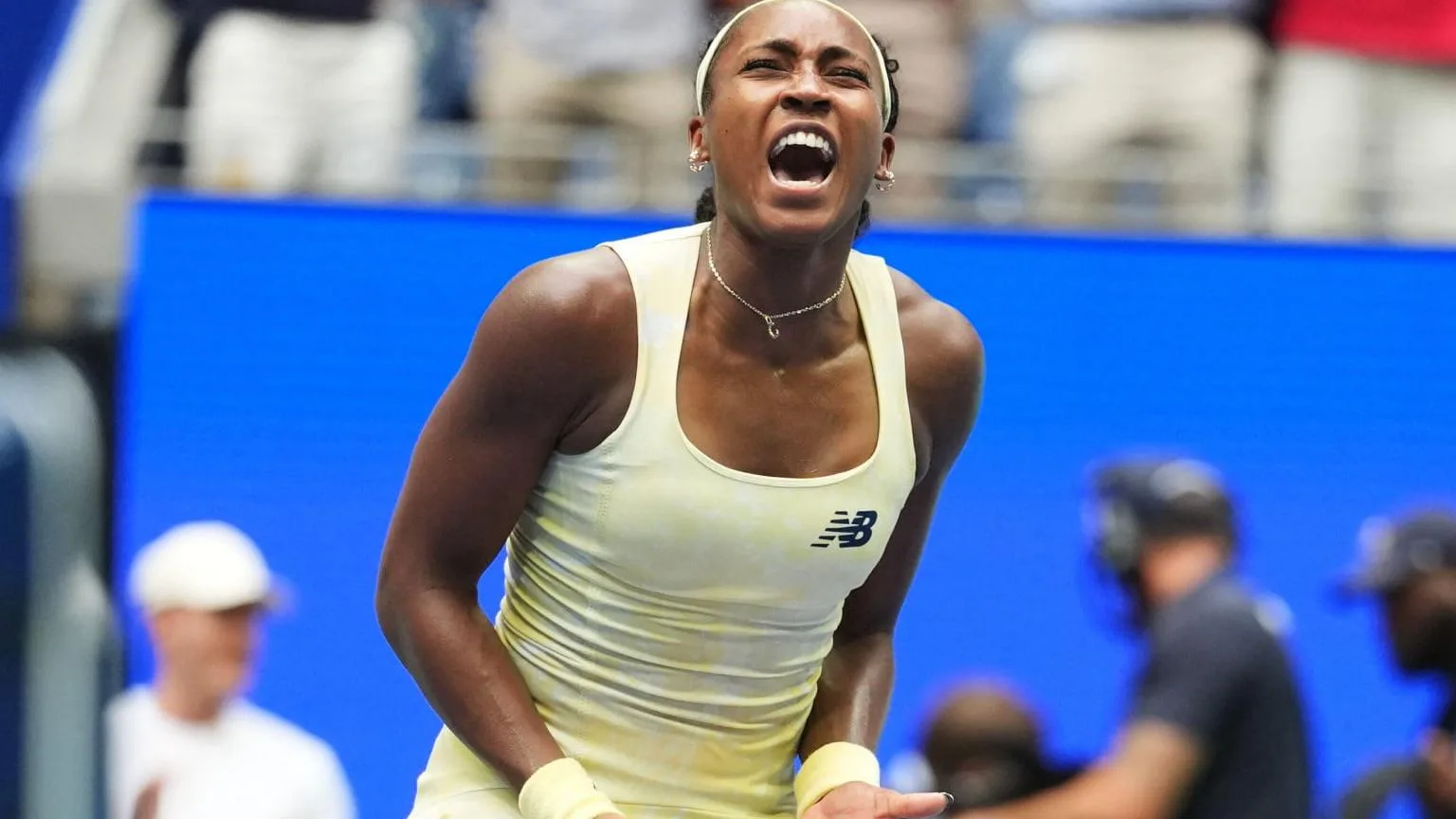
Coco Gauff advanced through a tense US Open quarter-final and then moved quickly to defend Mirra Andreeva after the Russian teenager reacted in frustration during the closing stages of a match that swung sharply in the American’s favor.
The women’s draw had already produced a full set of three-set quarter-finals, and that pattern continued when Elena Rybakina defeated Zheng Qinwen 3-6, 6-1, 6-4 before Gauff and Andreeva took over on Arthur Ashe Stadium.
For long stretches, neither player found stable form. The match was filled with mistakes and repeated lapses in rhythm, but Andreeva appeared to have control when she held two match points in the second-set tie-break. Gauff survived that escape act, then steadied herself while Andreeva’s game fell apart in the deciding set. The result was a 2-6, 7-6(7), 6-2 victory for Gauff in front of an animated home crowd.
“I just had to reset,” Gauff said. “I came out at the start, not feeling the ball, giving her too many free points.
“Mirra was playing a great level, but when I went to the restroom after the first set, honestly I was thinking about Frances Tiafoe and how he came back yesterday.
“We all want to do well in front of this crowd. I was trying to leave the court with no regrets, I didn’t know what outcome would come. You guys really helped pull me through.”
Gauff was later asked about Andreeva throwing her racket in anger in the final set, an action that nearly sent it toward a cameraman. Even so, Gauff rejected the idea that the teenager should have been disqualified.
“Honestly, I didn’t really see any negative reaction except for one racket throw at the changeover,” stated Gauff.
“I felt like she was calm pretty much most of the match. I don’t know what the camera picked up, but I didn’t see any bad behaviour.
“If anything, at the beginning of the match, I was showing the most frustration.
“It’s normal. In the game, I could feel more tension as she started throwing in more errors. I mean she had one throw, but I may probably have done the same if I was in her position.”
Tim Henman said the contest was defined by nerves rather than quality. “It was amazing to watch, because you’ve got two brilliant players capable of playing some amazing tennis who through serving issues and errors became so tight and so nervous,” Henman told Sky Sports.
“The ball speed deteriorated, and went down and down. But that’s the beauty of tennis. It’s about keeping the ball on the island and cutting out unforced errors.
“That is going to be a very difficult defeat for Andreeva to get over, having had match points in the second set. But she will learn so much from it. She’ll be incredibly disappointed.”
Gauff will next face soon to be newly crowned world No 1 Rybakina for a place in the US Open final.

Andreeva and Zheng bank identical US Open rewards after quarter-final runs

Andreeva reflects after painful US Open quarter-final loss to Gauff

Gauff shows composure after Andreeva’s quarter-final unraveling

Alcaraz Confronts On‑court Microphones During US Open Practice Ahead of Opelka Match

Raducanu Arrives at US Open With Momentum After Strong Hard‑Court Swing