1000
Rybakina’s exchange with Vukov draws attention during US Open quarter-final
Rybakina’s exchange with Vukov overshadowed the start of her quarter-final against Zheng.

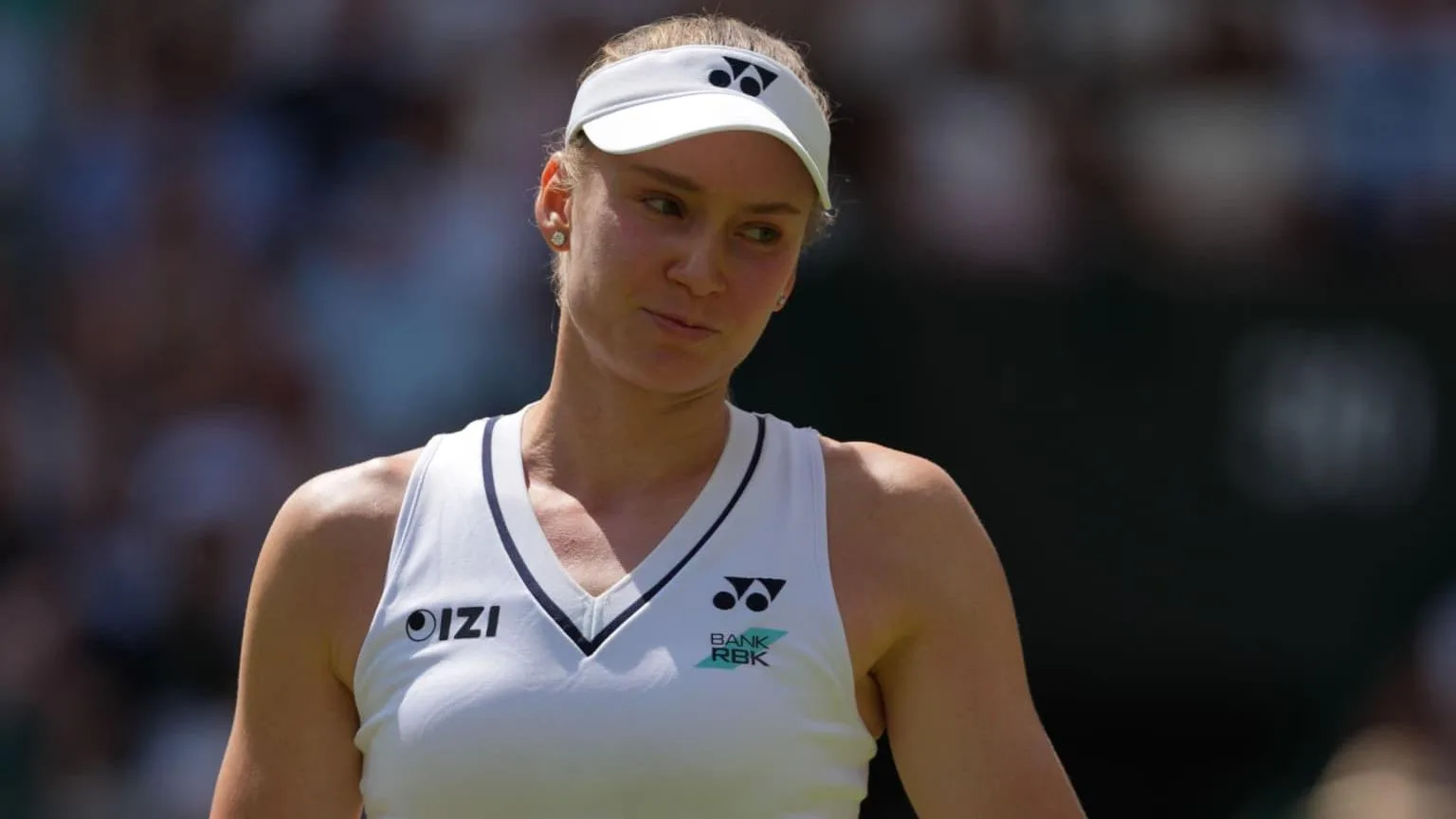
Elena Rybakina’s US Open quarter-final against Qinwen Zheng carried more than the usual stakes. A victory would not only send her into the semi-finals, it would also leave her with a chance to move to world No 1 and reach the final.
Instead, the opening set went badly for Rybakina. Zheng took it 6-3, and the Kazakh’s body language on Arthur Ashe Stadium was clearly troubled when the Chinese player stepped away for a toilet break.
From commentary, the match also became notable for the conversation between Rybakina and coach Stefano Vukov. Tim Henman described it as an ‘animated discussion’ during Sky Sports Tennis coverage of the US Open, with both voices rising even though the exact words were hard to hear.
Naomi Cavaday offered further context, explaining that the exchange reflected Rybakina’s frustration with what she was being asked to do. “Well this has been the dynamic from quite early on in the match. Clearly Rybakina’s not happy with what she’s being told to do and is essentially saying ‘it’s not working,’” revealed Cavaday.
She added: “One of the issues that we heard midway through the first set was her feeling like she was being pulled around. Her coach, Stefano Vukov said, ‘You’re allowing her to open up the angle’. I think we heard a little bit more about that there Tim. She’s saying it’s easy for Zheng to take her wide.
Henman agreed that the tactical discussion was intense. “Yeah, and I think coach Vukov was saying do the same. If she’s trying to drop back in the court you can play the short angles to open it up and also on second serve. And also on serve, he was saying ‘You’ve got to be alert. You’ve got to be ready to move your feet if Zheng goes for that faster second serve, so plenty of things to think about for Rybakina.
Cavaday also pointed to earlier examples of similar exchanges working in Rybakina’s favour. “If we think back to the Australian Open and actually Vukov was giving a lot of information to Rybakina in the semi final and the final and really helped her to turn those matches around,” she revealed.
“She was down in that final to Sabalenka and she was able to recover it. But she was taking on board the information. That was a bit of a battle between the two of them, but it seems like she just isn’t buying what he’s trying to tell her.”
Henman finished by underlining the tension. “It sounded more like an argument than a discussion. She’s obviously frustrated. Let’s not forget she had five break points and didn’t take any of them, so it’s going to be interesting to see how she responds.”
Rybakina then appeared to absorb the message, moving ahead 3-0 in the second set.

1000
Rusedski urges US Open to address late-night scheduling after Shelton-Alcaraz thriller
Rusedski says the US Open must find a solution after Shelton-Alcaraz finished at 3:33am in New York.
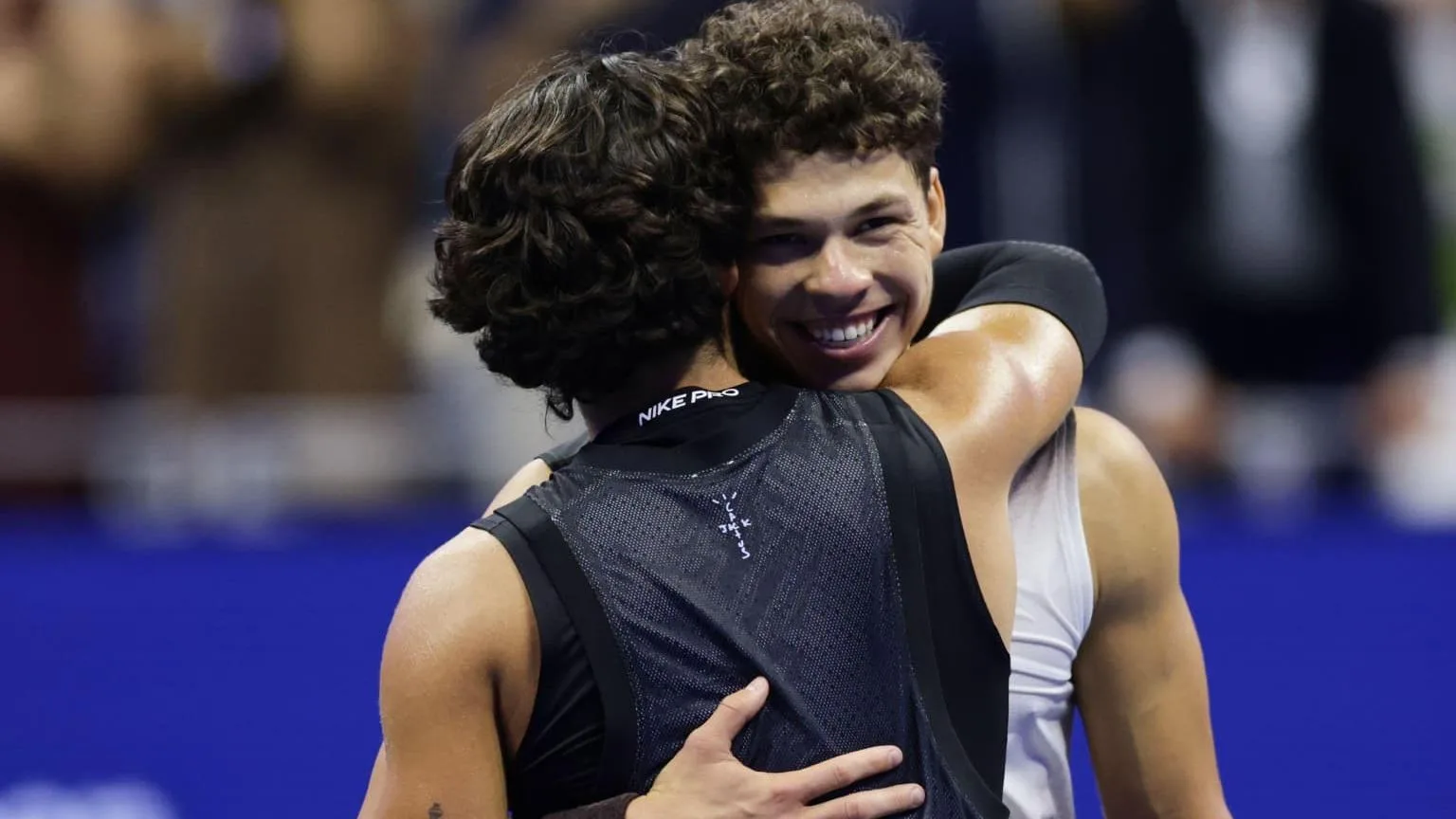
Former world No. 4 Greg Rusedski has pressed the US Open to rethink its scheduling after the quarter-final between Ben Shelton and Carlos Alcaraz created a fresh controversy.
Shelton came through a dramatic five-set battle, winning 6-7(5), 6-1, 6-3, 1-6, 7-6(7) in 4 hours and 28 minutes in Arthur Ashe Stadium. The match did not finish until 3:33am in New York, setting a new US Open record for the latest-ever conclusion.
Speaking on his Off Court With Greg Rusedski podcast, the 1997 US Open runner-up said the tournament needs a better answer to nights like this.
“There has to be some sort of solution,” said the 1997 US Open runner-up.
He then outlined possible ways the event could reduce the risk of such extreme finishes. “I mean, the question mark [is] what do you do? Do you put one on Arthur Ashe [Stadium]. Do you put one on [Louis] Armstrong [Stadium] and sell two tickets at the same time for the quarter-finals?
“Because now that we’re in the semi-final stage, it’s really easy to organise everything, and this happened to be the longest day because every match went the distance.
“And I think that’s the the other option is you put the quarters, one on Louis Armstrong, one on Arthur Ashe, and you start them at the exact hour where [it’s] 7, 7:30, especially in the men’s singles, and then you figure out, or you put one men’s [and] one women during the day, and you mix it up that way and you find a solution.
“Finishing off at three o’clock in the morning, by the time Ben finishes his recovery and gets back to the hotel at 6 am… good luck getting to sleep as well.
“And after you’ve done your massage, your treatment your eating, no practice, complete day off.
“And it gives Frances Tiafoe a little bit of an advantage in that respect, because when they come out the next day for the semis on Friday, recovery is going to be difficult. It’s not going to be easy.”
1000
Rusedski identifies Alcaraz tactical error after Shelton ends US Open run
Rusedski says Alcaraz’s deep return position may have cost him against Shelton in New York.
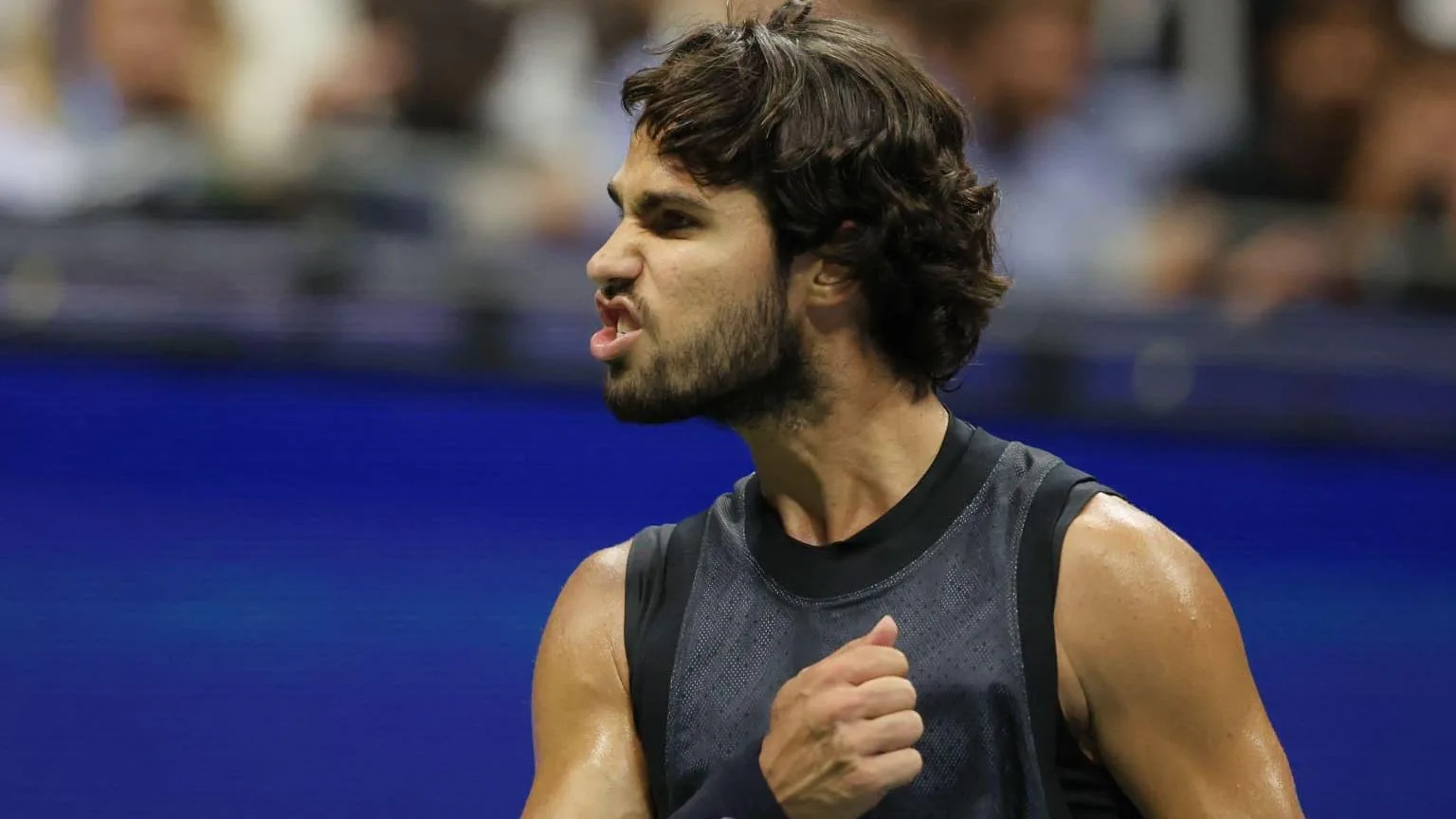
Carlos Alcaraz’s quarter-final exit at the US Open has been framed as a contest decided by margins, and Greg Rusedski believes one of those margins was tactical. Ben Shelton outlasted Alcaraz 6-7(5), 6-1, 6-3, 1-6, 7-6(7) at Flushing Meadows to claim his first victory over the Spanish star and the biggest win of his career so far.
Alcaraz had his chances in a gripping final-set tiebreak, leading 5-3 and later 6-5, but he could not close out a match that lasted four hours and 28 minutes and ended at 3:33am on Wednesday. The world No 3 was the reigning US Open champion and was chasing a third title in New York, along with an eighth Grand Slam crown overall.
The 23-year-old was also appearing in only his first tournament back after the right wrist injury he suffered at the Barcelona Open in April. Speaking on his Off Court With Greg Rusedski podcast, Rusedski said Shelton’s willingness to attack the net made a clear difference.
“Carlos, you saw how far back he was on the return of serve, and Ben was willing to come forward, serve and volley, the movement, the volleys look good,” said the 1997 US Open finalist.
“Thank God we have someone who comes to the net. If you want to stay on the baseline against Alcaraz, you’re going to be second best almost every time.
“We thought he (Alcaraz) was playing well enough to win, but Shelton proved us wrong and deserves to be back in the semi-finals.”
Rusedski then said Alcaraz may have given Shelton too much freedom by standing deep on return.
“I think it was a little bit of a tactical mistake,” said Rusedski.
He added that the deeper position reduced time pressure on Shelton and allowed him more choices off serve, while also noting that Alcaraz’s long absence may have played a part in the narrow finish.
1000
Navarro and Noskova exit US Open quarter-finals with ranking gains
Navarro and Noskova fell in three-set US Open quarter-finals, but both gained ranking points and prize money.
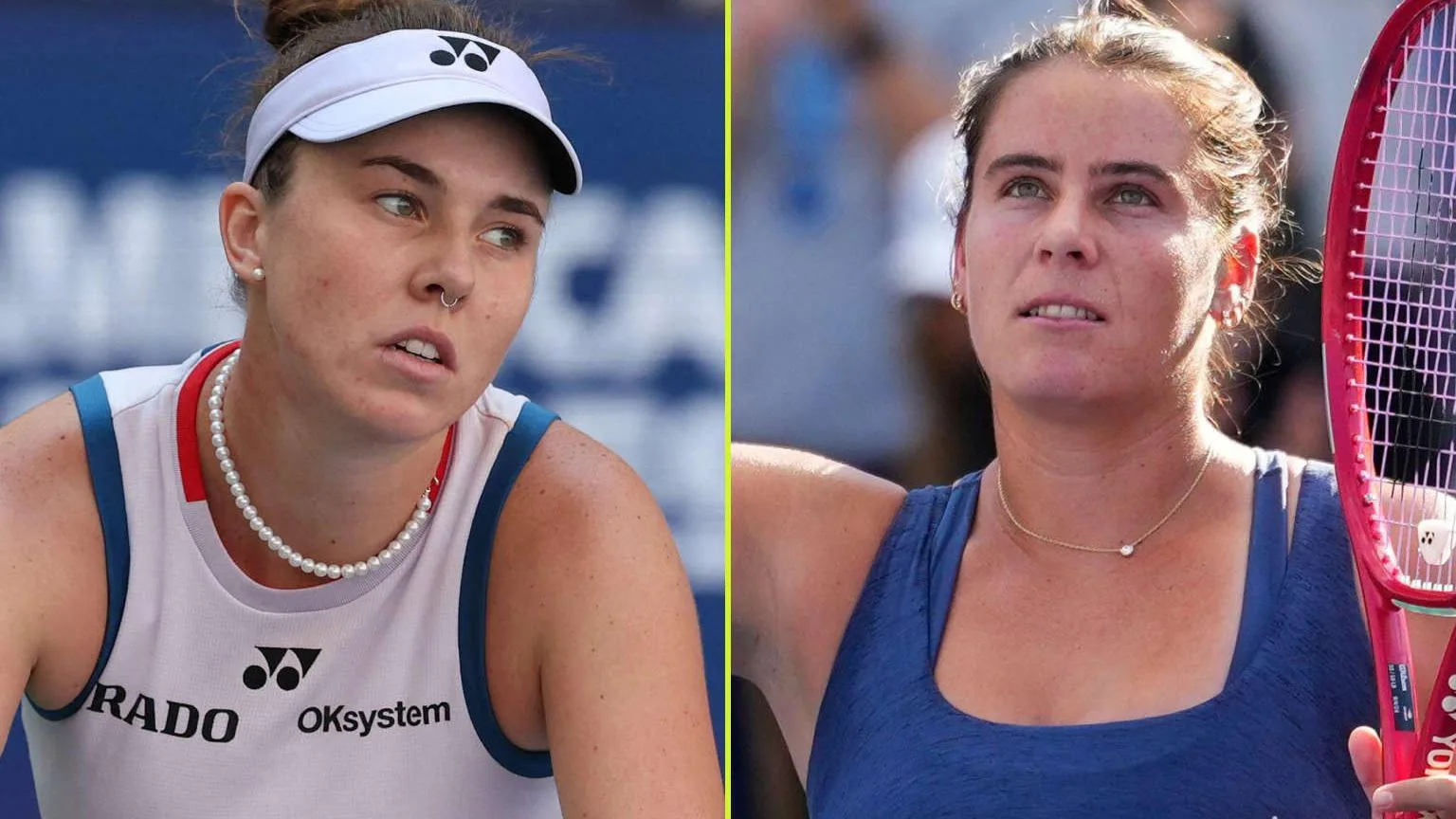
Emma Navarro and Linda Noskova both saw their 2026 US Open title bids end in the quarter-finals, yet each still leaves New York with useful ranking points after strong runs.
Both players pushed their matches to three sets before falling. Navarro, who was involved in an all-American contest, led early in the deciding set after breaking in game three to move 2-1 ahead, but Jessica Pegula recovered to win 6-3, 4-6, 3-6. Noskova also seized control in the final set, moving 4-2 up after a break in game five, but world No 1 Aryna Sabalenka responded to complete a 7-6 (7-1), 3-6, 7-6 (10-7) victory.
“After these matches when you’re so close… it kind of reminds you of where you are standing,” Noskova said after the defeat. “I will just try to keep going, you know. I feel great on court, which is always my main point, and ranking doesn’t really matter.”
Noskova did not move up the rankings, but her week in New York still marked a step forward. Her previous best at Flushing Meadows had been a third-round appearance, so reaching the quarter-finals represented new ground. She began the tournament at a career-high No 6 and will stay there, while remaining 415 points behind Mirra Andreeva, who could still extend that gap.
The WTA’s rolling 52-week system means players lose the points they earned in the same event 12 months earlier. Noskova had 130 points to defend from a round-of-32 result in 2025, and the 430 points for reaching the last eight leaves her 300 points better off. Navarro was in the same position, also defending 130 points and earning 430, so she will likewise add 300 points to her tally. The 25-year-old has already climbed four places in the Live WTA Rankings to No 24.
There is also a financial boost for both. Noskova had earned $6,693,489 in 2026 before the US Open, with her career total standing at $11,254,108. After reaching the quarter-finals, she adds $780,000. Navarro, who had 2026 earnings of $1,038,485 and a career total of $6,679,094 before the tournament, will also take home $780,000.

Rybakina’s exchange with Vukov draws attention during US Open quarter-final

Shelton’s breakthrough over Alcaraz keeps US Open charge alive

Rusedski says Alcaraz made a key tactical error in Shelton defeat

Alcaraz Confronts On‑court Microphones During US Open Practice Ahead of Opelka Match

Raducanu Arrives at US Open With Momentum After Strong Hard‑Court Swing