Alex Eala’s Asian Games commitment creates a likely Beijing absence
Eala’s Asian Games decision may force her to skip Beijing and risk WTA penalties.


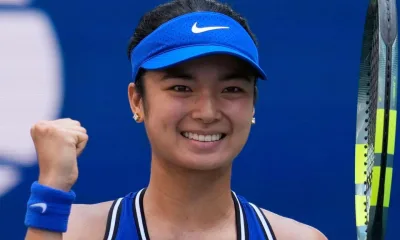
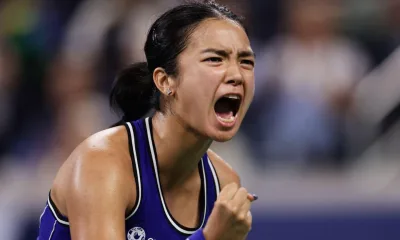
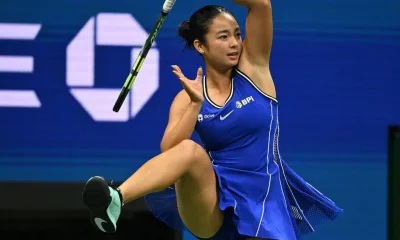
Alex Eala is still competing at the 2026 US Open, but her post-major calendar already contains one notable decision. The Filipina player has been confirmed for the 2026 Asian Games in Nagoya, Japan, a choice that shapes the final stretch of her season.
The Philippine Tennis Association Secretary General, John Rey Tiangco, made the announcement and spoke warmly about Eala’s willingness to take on the commitment despite a packed schedule. He said: “We’re very excited; it’s confirmed that she is playing the Asian Games.
“We’re very grateful to Alex. She really has a tight schedule. In fact, after the US Open, she’s going to Singapore to play in a WTA 500, and right after Singapore, she has to fly to Nagoya.
“And there are other simultaneous events with the Asian Games, but she chose to play for the flag. Very proud, very happy that she can represent the Philippines.”
The tennis competition at the Asian Games will be staged from 27 September to 3 October, placing it directly against the 2026 China Open, which runs from 30 September to 11 October. As a result, Eala is expected to miss the WTA 1000 event in Beijing.
That absence could leave her vulnerable to sanctions under the WTA Tour’s mandatory tournament rules. The four Grand Slams and the 10 WTA 1000 events are classed as mandatory, while players are also expected to contest at least six WTA 500 events. In practical terms, many players are required to reach a minimum of 20 tournaments across the season, or 21 if they qualify for the WTA Finals.
Penalties for missing mandatory events can include ranking point losses and fines. The WTA can also apply a zero-pointer, which removes points from another event to keep a player within the required total. However, exemptions are usually available for injuries, other valid medical reasons, or personal matters, which means Eala could still be granted an exception because of the Asian Games.




ATP Tour News
Auger-Aliassime exits US Open after physical setback against Khachanov
Auger-Aliassime’s US Open ended in round two after dizziness and illness derailed him against Khachanov.

Felix Auger-Aliassime’s 2026 US Open run ended sooner than expected, with the Canadian bowing out in the second round after a physical problem took over in his loss to Karen Khachanov.
Given his form this season, the third seed arrived in New York with real ambitions. He had reached the quarter-finals at both the French Open and Wimbledon, and last year he advanced to the semi-finals at Flushing Meadows. That background made him one of the names many expected to contend for the title.
Instead, his meeting with Khachanov shifted away from tennis and toward how he was feeling physically. Auger-Aliassime took the opening set in a tiebreak, but after that his condition worsened and he was never able to recover. Khachanov finished the match with a 7-6 (7-5), 3-6, 2-6, 2-6 result.
“I mean it’s tough to talk about anything else than how I felt physically after a set and a half I just couldn’t yeah couldn’t … [didn’t] feel well and was dizzy and seeing spots and yeah, couldn’t recover,” he explained.
“I thought maybe it would pass, but it didn’t. So that’s the end of the tournament for me and now back to the drawing board.”
He said he had not felt unwell before stepping on court. “No. I’ve never felt quite like that. I’ve had cramps before I felt, you know, tired towards the end of matches, but in a normal way.
“This was abnormal a little bit and there were no signs in the last couple of days and no signs this morning as well. So yeah, I’m not sure. I’m going to run some tests and see what comes out of it.”
Even as he trailed heavily in the fourth set, he resisted the idea of retiring. “When I lost the third set, no, because I was thinking maybe I take a break, maybe in 20 minutes I feel better, but obviously it wasn’t the case,” the world No 4 said.
“Not much you can do, you know, hydration, supplementation, but then if it doesn’t go away, I mean, the guy keeps on winning points.
“So, by the time it was three, three love, four love, I was okay, let’s finish the match. Let’s see. But I didn’t want to retire at that point.
He added: “Karen’s a great player. Look, I cannot beat I mean, him or or anybody in this draw feeling the way I felt today. So, if I cannot move, I mean, we’re not talking about tennis here.
“It’s unfortunate. I wish we were talking about tennis. I wish that I had been beaten and we were talking about what I could have done better tennis-wise, but it’s not the case.”
Alcaraz and Williams Leave Their Mark on Revamped US Open Mixed Doubles
Williams praised Alcaraz after their mixed doubles run and looked ahead to her US Open return.
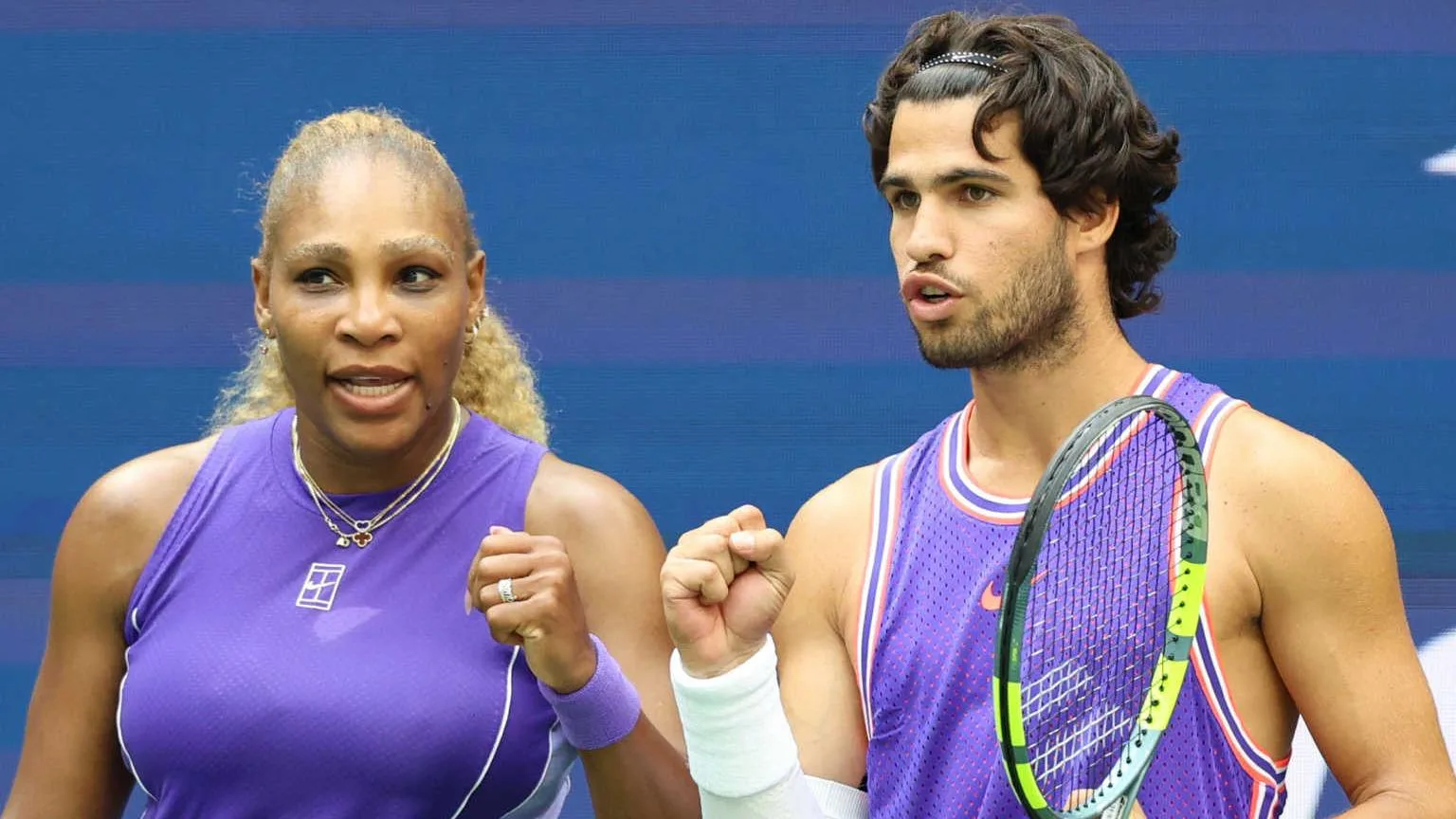
Carlos Alcaraz and Serena Williams emerged as the main draw in the second edition of the reworked US Open mixed doubles competition. Their pairing gave the event instant visibility and also provided Alcaraz with his first competitive appearance since he injured his wrist at the Barcelona Open in April.
The Grand Slam champions opened with a win over Erin Routliffe and Lloyd Glasspool, but their run came to an end in the quarter finals after defeat to Belinda Bencic and Flavio Cobolli. Even so, the partnership captured the imagination of fans, who were clearly taken with the chance to see two of tennis’s biggest names sharing the court.
Williams has now spoken about the experience and made clear that she relished the opportunity. In an interview with Elle before her doubles return at the US Open alongside Venus Williams, she was asked about linking up with Alcaraz in mixed doubles.
“Carlos is such an incredible player, but he also brings so much joy to the court,” said the 23-time Grand Slam champion. “He has this amazing energy—he’s competitive, obviously, but he’s always smiling and having fun.
“As a partner, you feel that. He makes you want to raise your level, but at the same time he keeps things loose, which I really appreciate. And I have to say, having that speed on your side of the net is pretty nice.”
Both players remain in action at the US Open, though in separate events. Alcaraz has won his opening two singles matches, beating Roman Safiullin and Jaime Faria, and is now due to play Wu Yibing in the third round.
Williams, meanwhile, is set to continue her doubles comeback with her sister at her home major. The Williams sisters will face Maya Joint and Chan Hao-ching, the 14th seeds.
Williams already knows Joint well enough, having played her in the first round of Wimbledon singles, which was her first singles match in nearly four years. That match on Centre Court went the full distance, before the Australian took the decider 6-3.
Now Williams has a chance to meet Joint again as she returns to the US Open for the first time since 2022, when she lost in the third round to Ajla Tomljanović. She will start as the underdog, even with her strong record at her home Grand Slam.
Governing Bodies Grand Slam
Alex Eala’s US Open leap shows how quickly her game has changed
Alex Eala’s US Open run reflects a major rise in serve, return, and confidence this season.
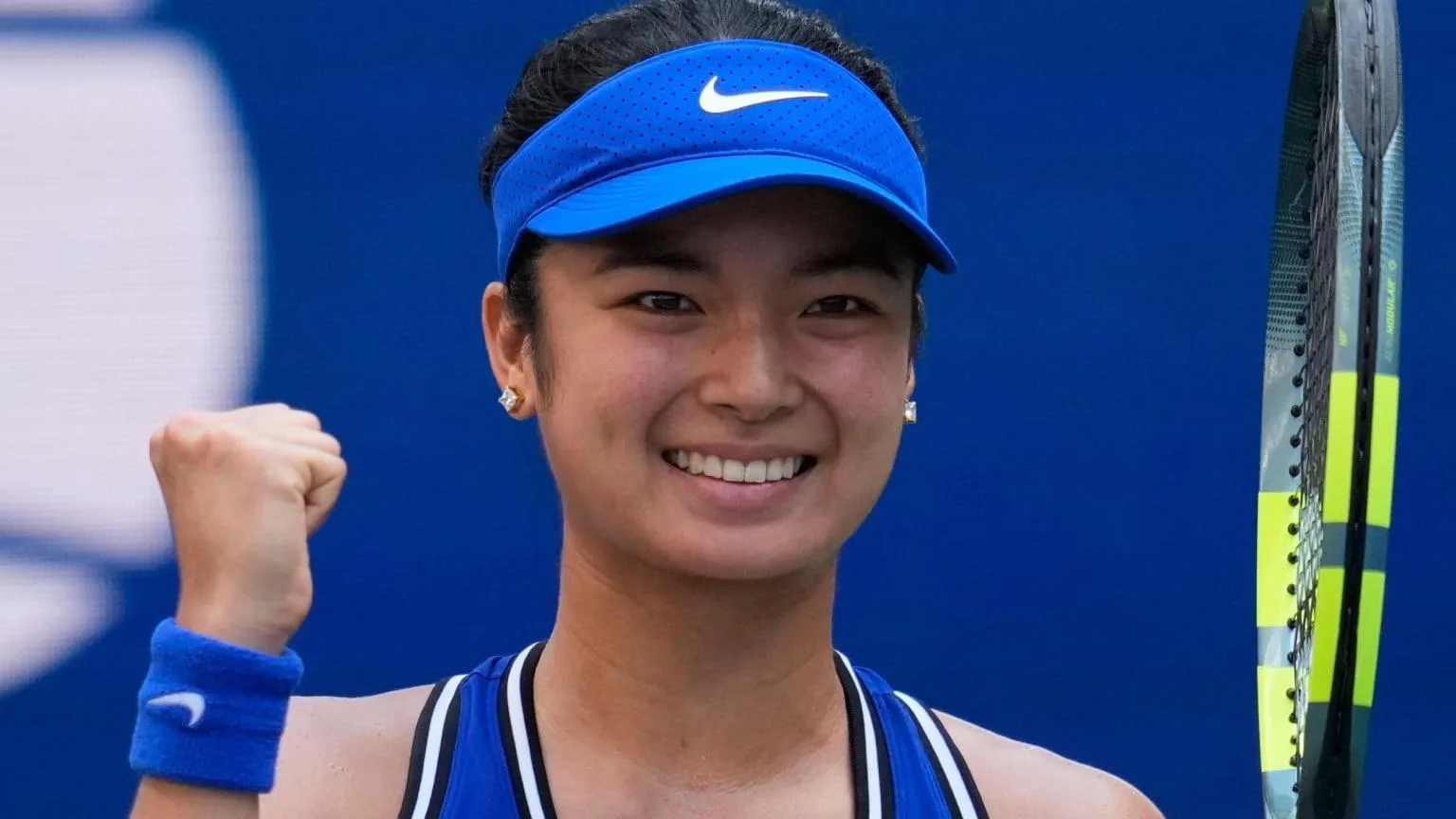
Alex Eala’s first win at the US Open marked a defining step in the rise of one of the WTA Tour’s most watchable young players.
On a lively Grandstand court, the 2022 US Open junior girls’ singles champion and world No 70 became the first Filipina to appear in the women’s singles draw at Flushing Meadows. She did it in dramatic fashion, recovering from a double break down in the third set to beat No 14 seed Clara Tauson and set off scenes of celebration.
That result underlined Eala’s growing appeal, although her campaign was stopped in the next round by Cristina Bucsa. Any thought that she might immediately push deep into the second week disappeared with that defeat, but the broader picture has still changed sharply.
A year ago, Eala was still very much a player in development, with her education under coach Joan Bosch at the Rafael Nadal Academy in Mallorca only in its early stages. Now, she has reached the third round at the US Open for the first time, and the difference is obvious.
The biggest gains have come in her serve. It was a clear weakness only months ago, especially for a player of her size and build, but she has added pace and improved her placement. Her second serve now carries more threat in key moments, and rivals who used to expose that part of her game are having a harder time doing so.
Her backhand has also become more complete. Already a lively shot, it now comes with more variation and sharper angles, making it particularly effective on return. Top players have been pushed onto the defensive quickly, while lower-ranked opponents have also struggled to absorb the pace from both wings.
In her second-round win over Oleksandra Oliynykova, Eala showed further signs of maturity by stepping inside the court and taking the ball early. That approach neutralised a looping tactic designed to disrupt her rhythm.
“What I think she has improved on is adding pace to her game,” declared former British No 1 Laura Robson on Sky Sports.
“She has always been able to take the ball early, but I think especially on the forehand side she is ripping it more than ever and it’s made the biggest difference on the faster surfaces. It’s a bit more lively, and she gets a bit more purchase on it.”
Eala is still at an early point in her career, and there is more to add. Even so, she already has enough tools to trouble the best players in the game, and her progress has made her one of the more compelling stories of the tournament.

Auger-Aliassime exits US Open after physical setback against Khachanov

Alex Eala’s Asian Games commitment creates a likely Beijing absence

Alcaraz and Williams Leave Their Mark on Revamped US Open Mixed Doubles

Alcaraz Confronts On‑court Microphones During US Open Practice Ahead of Opelka Match

Raducanu Arrives at US Open With Momentum After Strong Hard‑Court Swing