Masters National Bank Open WTA
Two Breakthroughs in Canada: Victoria Mboko and Ben Shelton Win Their First 1000-Level Titles
Mboko and Shelton turned breakthrough weeks in Canada into their first Masters 1000 titles. 2025 Now

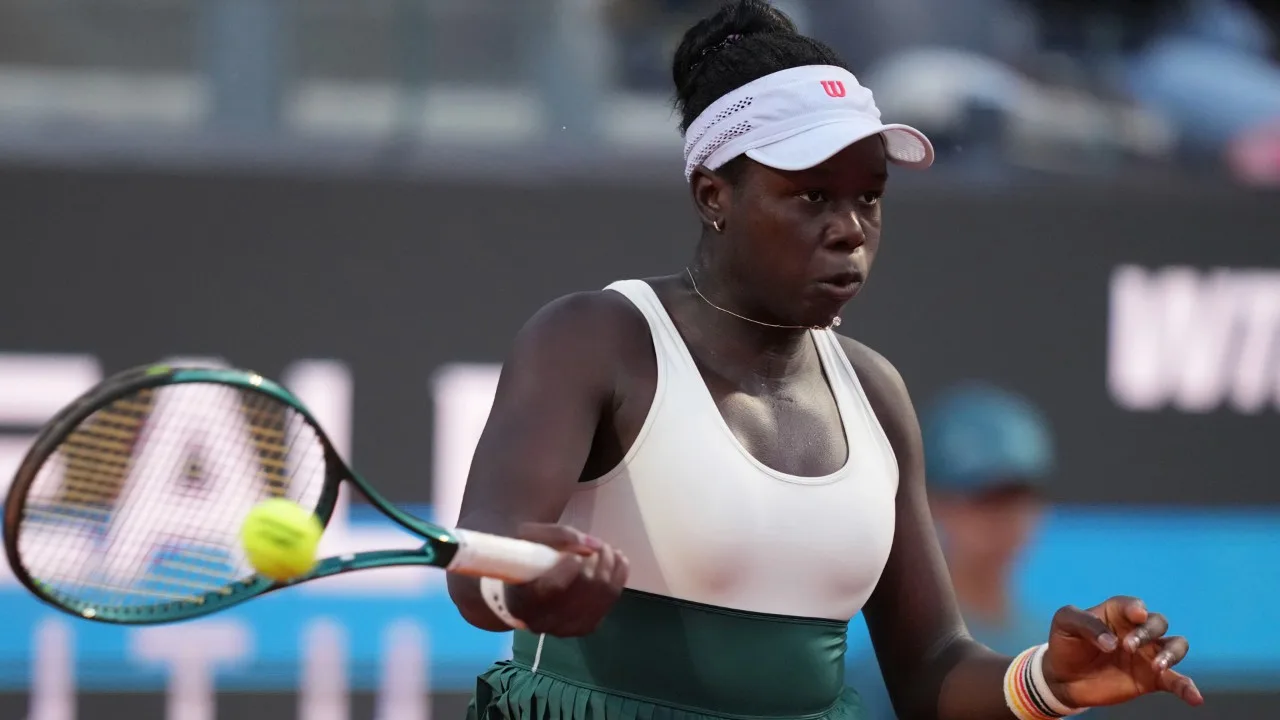
It is rare to witness such clear improvement across weeks at the highest level. At the National Bank Open in Montreal and Toronto two young players, 18-year-old Victoria Mboko and 22-year-old Ben Shelton, elevated their games round after round and did not stop until each had a 1000-level title.
Mboko’s run in Montreal carried the urgency of a storybook week. A wild card in her first WTA 1000 event, she began 2025 largely unknown outside the ITF circuit. She left with victories over Sofia Kenin, Coco Gauff, Elena Rybakina and Naomi Osaka, and a leap from No. 85 to No. 24. Mboko is now the highest-ranked Canadian on either tour, ahead of No. 26 Leylah Fernandez, No. 28 Felix Auger-Aliassime, No. 30 Denis Shapovalov and No. 35 Gabriel Diallo.
Her game showed new power and reliability. She led the tournament in aces, traded heavy shots with Rybakina and Osaka, and repeatedly recovered from slow starts. On handling first-set deficits she said, “When I kind of go into the match, I always think of sets as, like, checkpoints,” and “I kind of try to switch my mindset as much as possible and kind of switch up how I go about things when I’m playing the match. I think whenever I play the second set, I feel like I put a lot more emphasis in my movement and my defending skills and what I’m supposed to do on court, and I try to sharpen up and clean up a lot of my mistakes.”
Osaka acknowledged the week’s emotion: “Thanks, I guess,” and later, “This morning I was very grateful. I don’t know why my emotions flipped so quickly, but I’m really happy to have played the final. I think Victoria played really well. I completely forgot to congratulate her on the court. Yeah, I mean, she did really amazing.”
Shelton’s title in Toronto was different in tone but equal in consequence. He showed a more complete game than in his early years, surviving three third-set tiebreakers and beating Top 10 opponents Taylor Fritz and Alex de Minaur. Two passages in the final crystallized his week: a rally of drop shots and backhand winners to turn a set, and an opening run in the third-set tiebreak. Shelton credited a tactical shift: “Karen was bullying me around the court,” and described moving forward to redirect and flip momentum. “It’s been a long week,” Shelton said. “Not an easy path, not an easy week by any means. I was clutch, I was resilient, a lot of qualities that I like to see in myself.”
Shelton could break into the Top 5 after Cincinnati with a deep run at the Masters 1000 event.




Cincinnati Open
Gauff backed over Sabalenka in US Open title debate
Isner and Croft back Gauff over Sabalenka for the US Open title race this year.
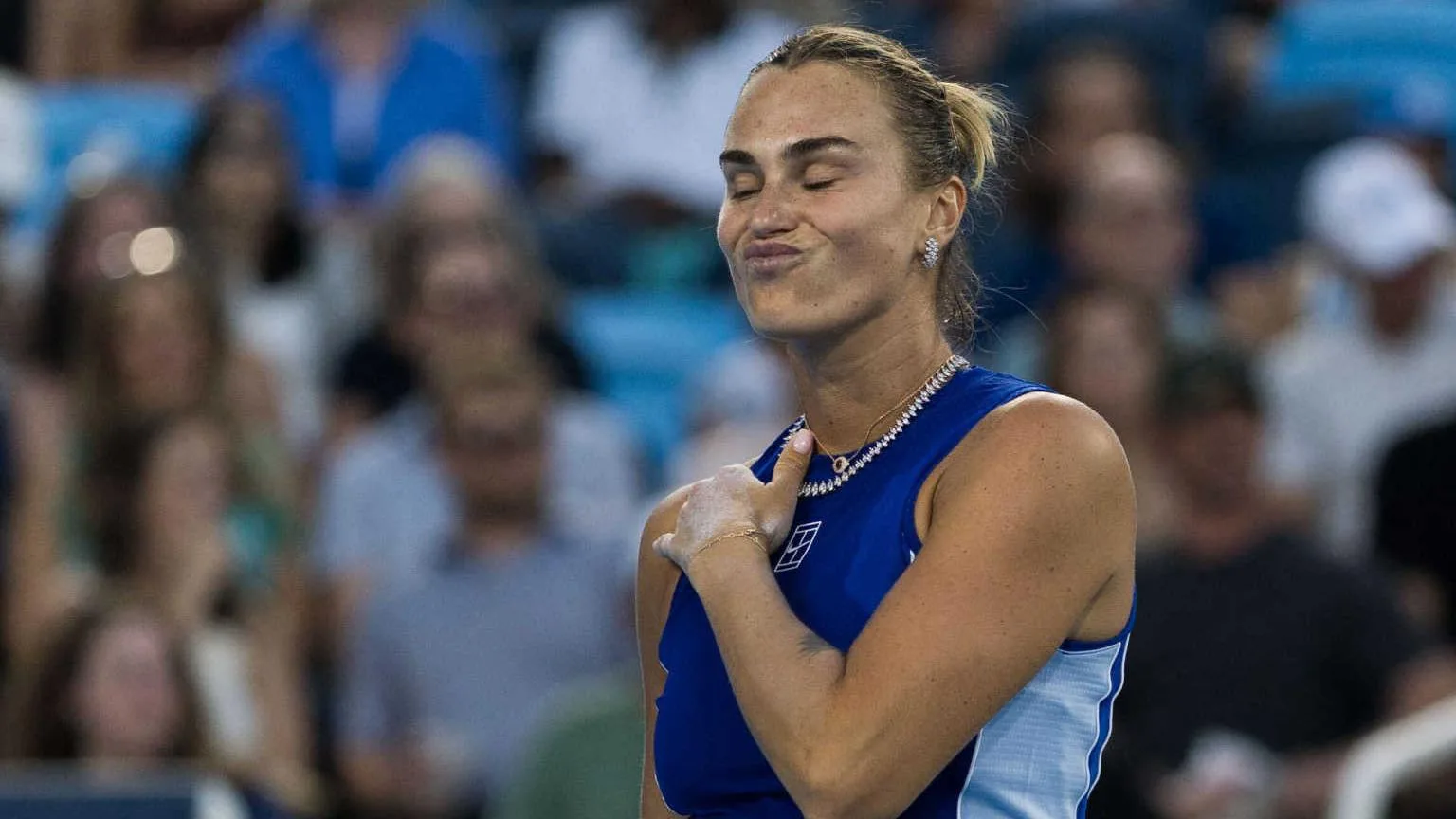
John Isner and Annabel Croft have both leaned away from world No 1 Aryna Sabalenka in the race for the US Open women’s singles crown, instead naming former champion Coco Gauff as the player to beat.
Sabalenka has arrived in New York after a difficult stretch, with only one semi-final from her last six tournaments, that run coming at the Berlin Open. A year ago, though, she lifted the US Open trophy for a second straight time after defeating Amanda Anisimova 6-3, 7-6(3) in the final.
This time, the Belarusian begins against Camila Osorio, while Anna Kalinskaya and Iga Swiatek sit elsewhere in her quarter of the draw. Her recent results have also allowed Elena Rybakina to cut into the lead, with the gap now down to 434 points in the live WTA rankings.
Isner, speaking on a recent episode of the Nothing Major podcast, said Gauff should be viewed as the favourite even if the betting markets point elsewhere. He and co-host Steve Johnson both highlighted the American’s form, which includes a run to the semi-finals of the Canadian Open and then a title in Cincinnati two weeks later.
“I really think she is [the favourite],” said Isner about Gauff.
“I think Sabalenka is the betting favourite, but last year Coco went into the US Open with not a lot of confidence and a lot of serve issues. That stuff has seemingly been put to rest right now.
“Her first and second round matches last year in New York were the most tension-filled matches that you could possibly imagine.
“She is coming into this one with a lot more confidence, so for me it is Coco Gauff that is the favourite.”
Johnson echoed that view, stressing the depth of the field while still placing Gauff near the top of it.
“Back in the spring, when Aryna Sabalenka completed the ‘Sunshine Double’ by winning at Indian Wells and the Miami Open, she was just so dominant,” Croft told The Times.
But the former British No 1 said recent defeats had affected Sabalenka’s presence on court, arguing that the aura around her has diminished. Croft also pointed to Gauff’s improved forehand and serve, along with her straight-sets win over Jessica Pegula in the Cincinnati final, as reasons to favour the American in New York.
Cincinnati Open
Coco Gauff’s serve work pays off as Cincinnati win lifts US Open outlook
Gauff’s serve doubts eased in Cincinnati, giving her confidence before the US Open.
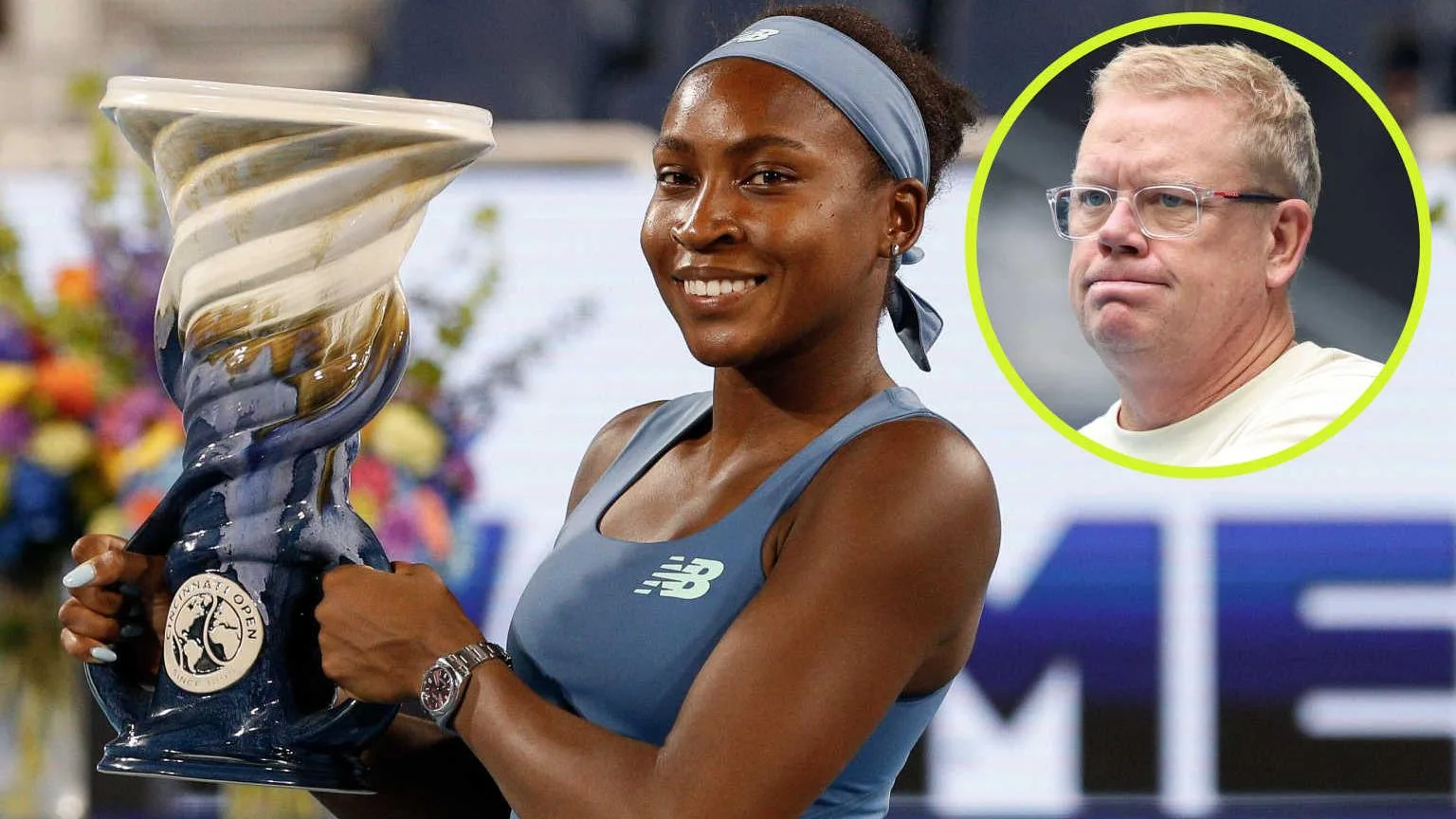
Just more than half a year ago, Coco Gauff was openly questioning whether the serve changes she had been making were helping at all. By the time she reached the Cincinnati Open final, the picture looked very different, with the American finding clarity and confidence at the right time before the US Open.
Gauff’s serve has been one of the most closely watched parts of her game, and the issue came into sharp focus during her Dubai Tennis Championships semi-final against Elina Svitolina in February. After dropping the first set, she double faulted at 2-2 [15-15] in the second and turned to biomechanics coach Gavin MacMillan with clear frustration: “I’ve been doing everything you’ve wanted for the last six months, and it’s gotten not better at all, bro.”
MacMillan had joined her team before the 2025 US Open with the specific aim of improving that area of her game. At the time, Gauff felt the work was not producing results. That changed in Cincinnati, where there was little reason to discuss the serve after she beat Jessica Pegula 6-2, 6-4 in the final and committed only one double fault across the match.
In comments to WTATennis.com, the two-time Grand Slam champion acknowledged how difficult that Dubai moment had been, while also stressing that the work is moving in the right direction.
“That was a tough moment for me, and I felt bad after I said it, but they’re understanding people [laughing]. They knew it was out a frustration, but that was a tough moment because I was like, ‘Bro, we’ve been working on it and it’s not getting better.’
“It was getting better, honestly, but it just didn’t feel like it in that moment. After the match, my coach said ‘No, you’re in the right track,’ especially JC [Faurel] because he’s been with me through the worst of my serve, and now he’s on the better half, better side of it.
“He says the double faults aren’t the same. Obviously they’re still double faults, but he’s like ‘You’re just improving.’ That gave me a good confidence that one day I will find it, and I feel now, I know that I can find it even if I throw two or something in a game. I know that I’m capable of finding Plan A again and at some point in the match.”
Twelve months ago, Gauff was in a far less comfortable place, losing in the first round at Wimbledon before making the decision to replace Matt Daly, who had joined her team in September 2024 and later guided her to the 2025 French Open title, with MacMillan. There was no immediate turnaround, as she then fell in the fourth round at the US Open.
This year feels different. Speaking after her Cincinnati victory in Ohio, she said: “I think last year, I was just frustrated with my game and I felt like I was declining. It’s not something any player wants to feel”
“You always want to feel like you’re getting better or, at the worst, just plateauing. So last year I was in a weird predicament. I made sudden decisions that most people probably wouldn’t do before a Slam, but I think it was worth it. I feel like it’s night and day where I am from last year to now.”
ATP Tour News Cincinnati Open
Djokovic fitness concern grows after mixed doubles and Cincinnati setbacks
Djokovic’s US Open build-up has been complicated by health concerns and a short Cincinnati stay.
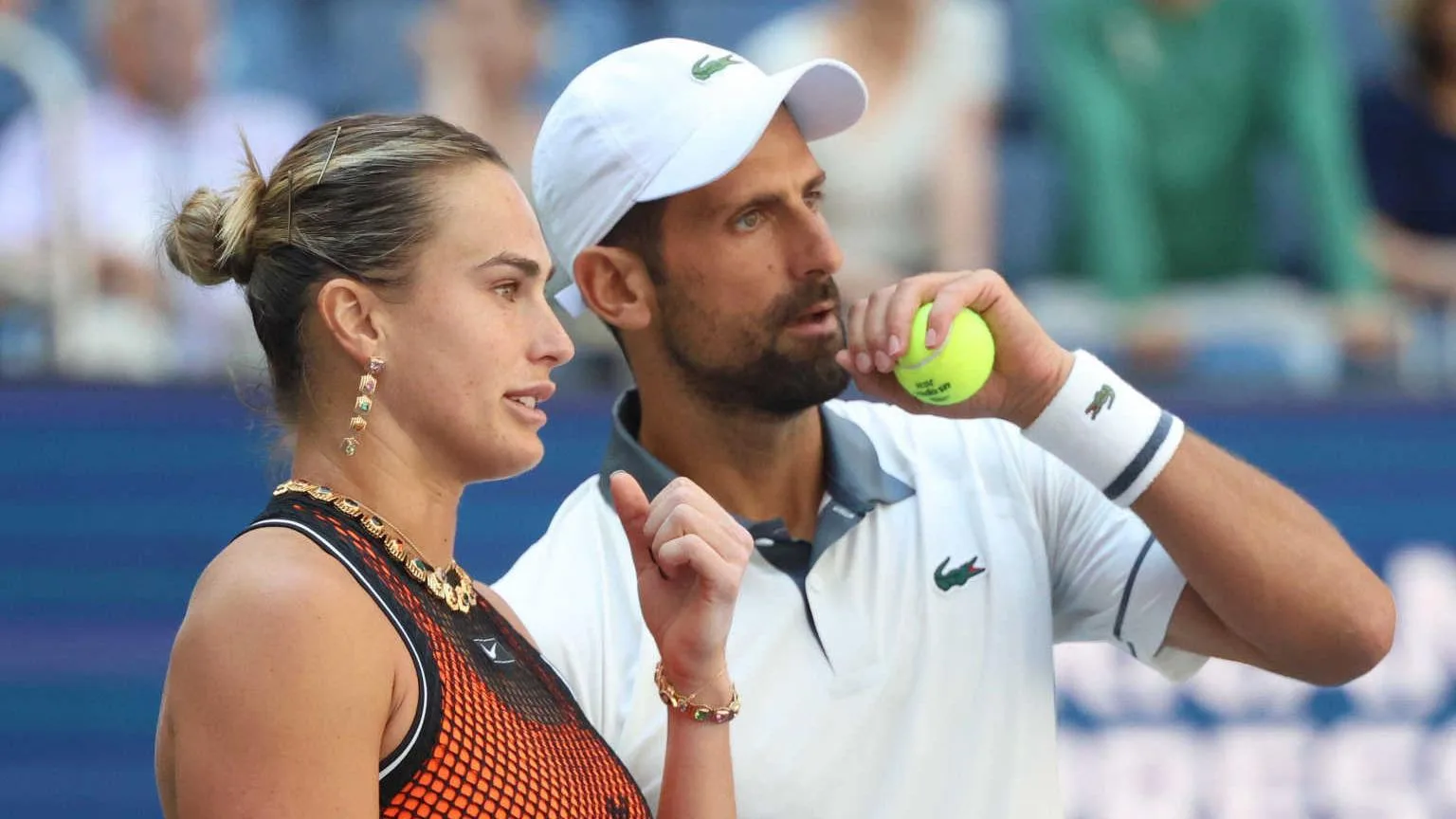
Novak Djokovic’s build-up to the US Open has become more uneasy after a difficult stretch that left questions about his condition before singles play begins.
The 24-time Grand Slam winner has played sparingly in recent months, a pattern he has chosen in order to focus his energy on the majors. In a rare adjustment, he entered the Cincinnati Open and returned there for the first time since winning the title in 2023.
That stay was brief. Djokovic lost in the round of 64 to Thiago Agustin Tirante, and after the match, the 39-year-old, who vomited mid-match and required medical attention, said he was dealing with “a lot of issues”.
“It’s just a condition that I have, health-wise, that has been bothering me for the past couple of years. A lot of issues, especially when it is humid and it is hot,” he explained.
“I did anticipate it, but there are all these things, like nerves and everything involved that make it worse, and that’s what happened.”
Djokovic then continued into the mixed doubles event with Aryna Sabalenka. The top seeds were beaten 4-1, 1-4, [2-10] by Henri Patten and Katerina Siniakova on Arthur Ashe on Tuesday.
His day did not end there. A practice match against Zizou Bergs later in the day was cut short after 40 minutes, with Djokovic trailing 3-0 when he called it off. There were no signs of injury, but he did appear fatigued after the earlier competitive outing.
Djokovic is scheduled to return to the practice courts at Flushing Meadows on Wednesday and is set to take on Alexander Zverev at 15:00 local time. He still has time to recover before the singles main draw begins on Sunday 30 August, with first-round matches spread across three days.
Seeded fourth, Djokovic can only face defending champion Carlos Alcaraz or top seed Alexander Zverev in the semi-final or final. Last year, he lost to Alcaraz in straight sets in the semi-final.

Alcaraz return comes with uncertainty as Rusedski backs Safiullin to test him

Djokovic adds a final Ashe Stadium hit before US Open opener

Alex Eala’s rise fuels major US Open interest as opening match awaits

Alcaraz Confronts On‑court Microphones During US Open Practice Ahead of Opelka Match

Raducanu Arrives at US Open With Momentum After Strong Hard‑Court Swing