
Analytics & Stats WTA
US Open seedings headed into Cincinnati: Sabalenka secure, several spots still unsettled
Sabalenka poised as top seed; seedings set by Aug 18 ranking cutoff with spots unsettled. Final week.

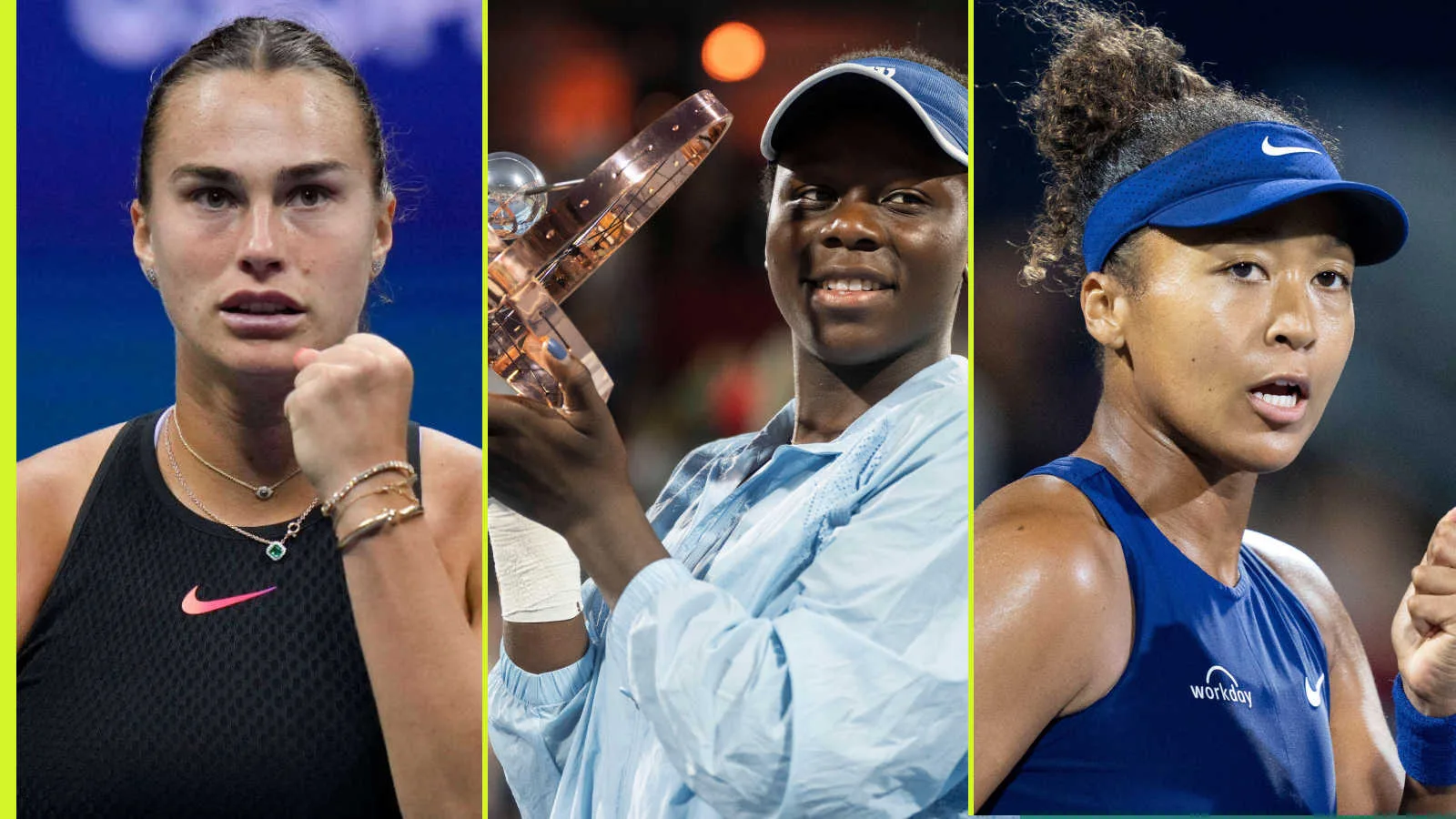
Defending champion Aryna Sabalenka is all but certain to headline the 2025 US Open seedings as the field approaches the final ranking cutoff. Thirty-two players will be seeded at the Grand Slam, with positions determined by the WTA Rankings on August 18. The Cincinnati Open is the last opportunity to earn points before that cutoff.
Sabalenka leads the Live Rankings by 3,400 points over Coco Gauff and is therefore assured of the top seed. Gauff and Iga Swiatek remain in direct contention for second seed. “Reigning French Open champion Gauff has the upper hand as the Pole will have to win the tournament to move ahead of the American in the WTA Rankings after the Cincy tournament.” Mirra Andreeva, Jessica Pegula, Madison Keys, Amanda Anisimova, Jasmine Paolini, Elena Rybakina and Emma Navarro complete the current top 10 in the Live Rankings, though all remain active in Ohio and changes are possible.
Injury withdrawals have altered the projected list. World No 7 Zheng Qinwen has withdrawn from the US Open with an elbow injury and No 12 Paula Badosa is out with a back injury. Their absences push players below them up the order and open two places for those currently outside the top 32.
Two players who have risen into near-certainty for a seed are Victoria Mboko and Naomi Osaka, the Canadian Open finalists. “Just a month ago, Mboko was not in the running to be seeded at the US Open as she was outside the top 80 in the rankings, but her fairytale title run at her home WTA 1000 event has resulted in a 61-place surge to No 24 while Osaka is one place behind her after jumping 24 places.” With Zheng and Badosa not playing, Mboko is set to be seeded 22nd and Osaka 23rd, although both are not competing in Cincinnati and the order could still shift.
The final seeding places are hotly contested. Mccartney Kessler (28), Dayana Yastremska (29), Leylah Fernandez (30), Anna Kalinskaya (31) and Emma Raducanu (32) currently occupy the last five projected spots. Fernandez is in particular danger after exiting Cincinnati, and Raducanu faces Sabalenka in the third round in Cincy; a defeat would make her vulnerable if those below pick up wins. There remains the possibility of further withdrawals from the top 30 before the draw is final.
- Aryna Sabalenka
- Coco Gauff
- Iga Swiatek
- Mirra Andreeva
- Jessica Pegula
- Madison Keys
- Amanda Anisimova
- Jasmine Paolini
- Elena Rybakina
- Emma Navarro
- Elina Svitolina
- Karolina Muchova
- Ekaterina Alexandrova
- Clara Tauson
- Belinda Bencic
- Daria Kasatkina
- Ludmilla Samsonova
- Beatriz Haddad Maia
- Elise Mertens
- Linda Noskova
- Diana Shnaider
- Victoria Mboko
- Naomi Osaka
- Sofia Kenin
- Jeļena Ostapenko
- Marta Kostyuk
- Magdalena Frcch
- Mccartney Kessler
- Dayana Yastremska
- Leylah Fernandez
- Anna Kalinskaya
- Emma Raducanu




Analytics & Stats ATP French Open
Auger-Aliassime Records 100th Week Inside ATP Top 10
Auger-Aliassime reaches his 100th week in the ATP Top 10; he is currently ranked No. 5. Milos Raonic
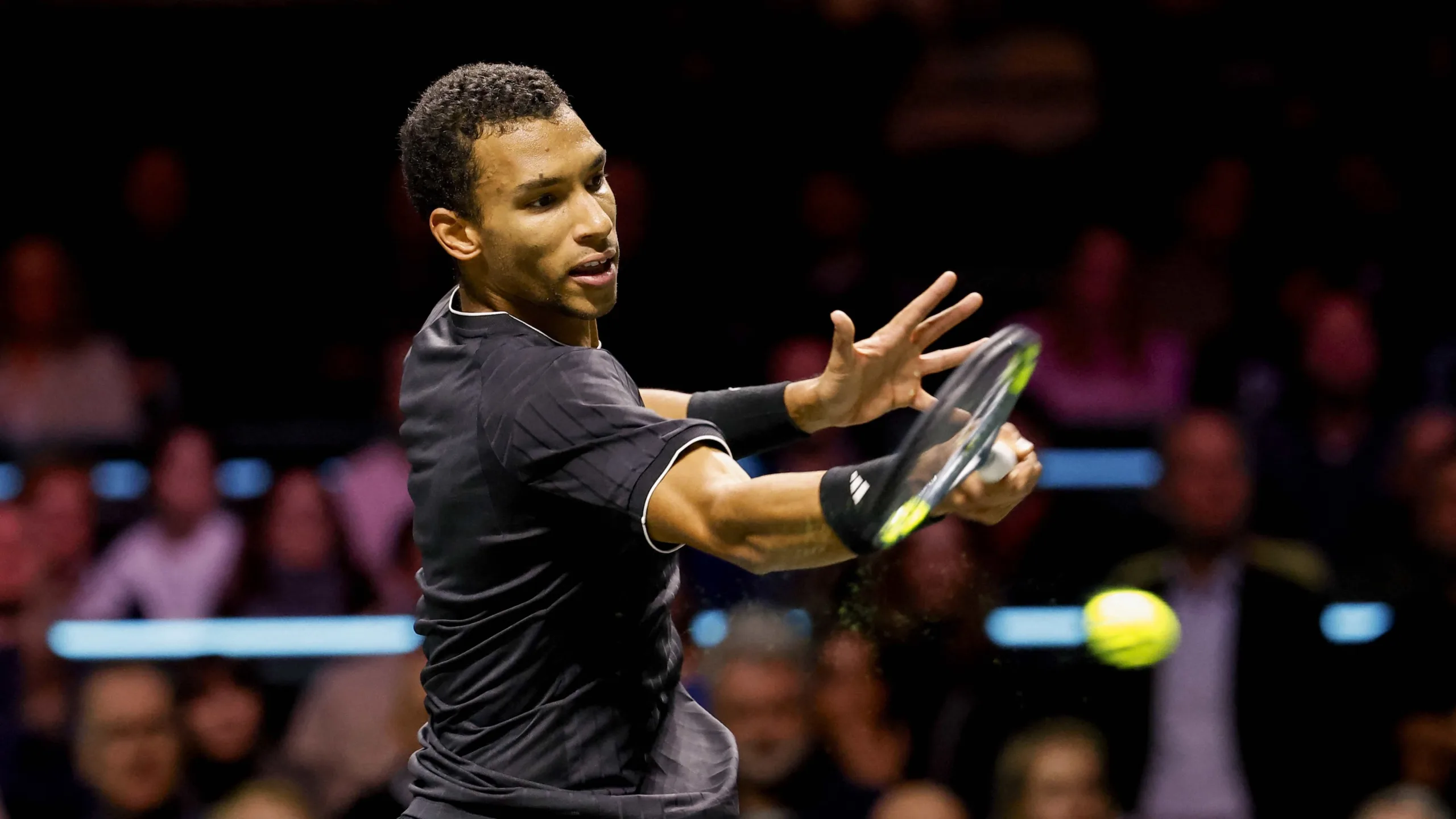
Felix Auger-Aliassime is celebrating his 100th career week inside the ATP Top 10 as the clay-court major approaches. The Canadian has reached the milestone in four separate stints: November 15th to 21st, 2001 (one week), January 10th to September 11th, 2022 (35 weeks), October 17th, 2022 to June 11th, 2023 (34 weeks) and October 27th, 2025 to present (30 weeks and counting).
Auger-Aliassime is currently at his career-high ranking of No. 5 and joins a small group of players born in the 2000s to accumulate triple-digit weeks in the elite. The draft notes he reached the mark “after exactly who you’re thinking.”
The milestone places him among the longest-serving Canadians to reach the Top 10. He becomes the second Canadian to log that many weeks at the top of the rankings, following Milos Raonic, who spent 151 weeks in the Top 10 across the 2013, 2014, 2015, 2016 and 2017 seasons. Denis Shapovalov is the only other Canadian to have reached the ATP Top 10, spending 10 weeks there across 2020 and 2021.
The pattern of Auger-Aliassime’s tenure in the Top 10—multiple returns to the group rather than a single continuous stretch—highlights his resilience and consistency at the highest level. As Roland Garros nears, the 100-week marker is a reminder of his standing on the ATP Tour and of the depth of Canadian men’s tennis in this period.
Analytics & Stats Grand Slam
28 Numbers for Aryna Sabalenka on Her 28th Birthday
Sabalenka turns 28: 28 statistics from No.1 weeks to Grand Slam titles and tie-break records. Today!
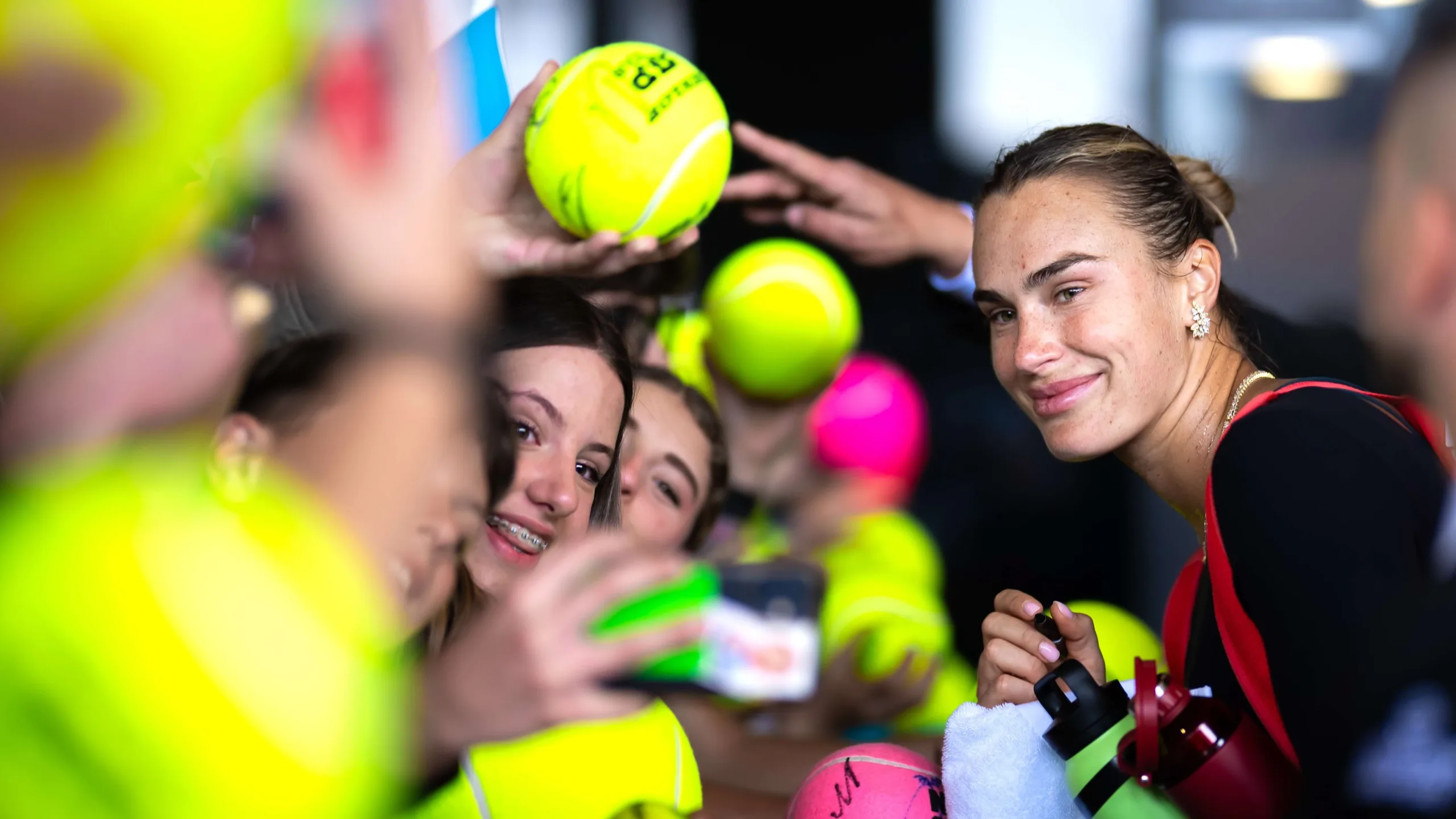
Aryna Sabalenka turns 28 and this profile assembles a number for each year of her life drawn from the milestones listed below.
1 — The No. 1 ranking, which she will hold for an 89th and 90th career week during Rome over the next two weeks.
2 — Two year-end No. 1 finishes, in 2024 and 2025. She is one of only 13 players to finish No. 1 in back-to-back years in WTA history.
3 — One of three women this century to be No. 1 every week of a calendar year, joining Serena Williams and Ashleigh Barty after doing so in 2025.
4 — Four Grand Slam titles, all on hard courts: two Australian Open trophies (2023, 2024) and two US Open crowns (2024, 2025).
5 — Five straight Top 5 year-end finishes from 2021 to 2025, the only woman to finish the last five years in a row in the Top 5.
6 — Six straight Top 10 year-end finishes when including her No. 10 in 2020; the only woman with six consecutive Top 10 year-end placings.
7 — Reached the last seven hard-court major finals in a row, a run beginning at the 2023 Australian Open; the last woman to do seven in a row on hard courts was Martina Hingis.
8 — Won her first eight Grand Slam quarterfinal matches in a row, the second woman in the Open Era to do so after Chris Evert.
9 — Reached nine finals in 2025, the most on the women’s tour that year, and won a tour-leading four titles.
10 — Owns the 10th-longest streak at No. 1 in WTA history, secured this week with her 81st consecutive week at the top.
11 — The 11th-most career weeks at No. 1 with this week being her 89th overall; 11 WTA 1000 titles, including two already this year.
12 — Surpassed 12,000 ranking points for the first time in her career last summer, reaching a career-high 12,420 after Wimbledon.
13 — Reached the quarterfinals or better at the last 13 majors she has played, a run dating to the 2022 US Open; 12 of those were semifinals or better.
14 — Reached 14 career Grand Slam semifinals and has won seven of her last eight Grand Slam semifinals.
15 — Earned more than $15 million in prize money in 2025 alone, $15,008,519, a single-season WTA record.
16 — Three 15-match winning streaks in her career have each been snapped before 16; most recently she had six match points to break the run but did not.
17 — Reached the quarterfinals or better at her last 17 tournaments in a row, a streak beginning last February.
18 — Won 18 consecutive sets at the US Open at one point between her third-round match in 2024 and the 2025 semifinals; the only sets she lost in those two events were to Ekaterina Alexandrova and Jessica Pegula.
19 — Won 19 tie-breaks in a row during the 2025 season, the Open Era record for most consecutive tie-breaks won by a woman.
20 — Won her last 20 Grand Slam tie-breaks in a row, the Open Era record for any player at Grand Slams, surpassing Novak Djokovic’s 19.
21 — Her last straight-set defeat at a major came 21 majors ago at the 2020 US Open to Victoria Azarenka, 6-1, 6-3.
22 — Posted a 22-3 overall tie-break record in 2025, the most tie-break wins by a woman in a single season in the Open Era.
23 — Broke into the Top 5 at age 23 after winning her first Madrid title in 2021, defeating Barty in the final.
24 — Has 24 career titles, 21 on hard courts and three on the clay of Madrid (2021, 2023, 2025).
25 — Reached No. 1 for the first time at age 25 after her run to the 2023 US Open final; won 25 consecutive sets at the Australian Open from 2023 to 2025.
26 — Owns a 26-2 record this year; both losses were narrow, including a match where she led Elena Rybakina 3-0 in the third set of the Australian Open final and a match where she had six match points against Hailey Baptiste in Madrid.
27 — Spent her full 27th year ranked No. 1, all 365 days from May 5, 2025 to May 4, 2026.
Analytics & Stats ATP Grand Slam
Carlos Alcaraz at 23: the numbers that define his early career
At 23, Alcaraz already has seven majors, eight Masters 1000s, a Career Grand Slam and 15 big titles.
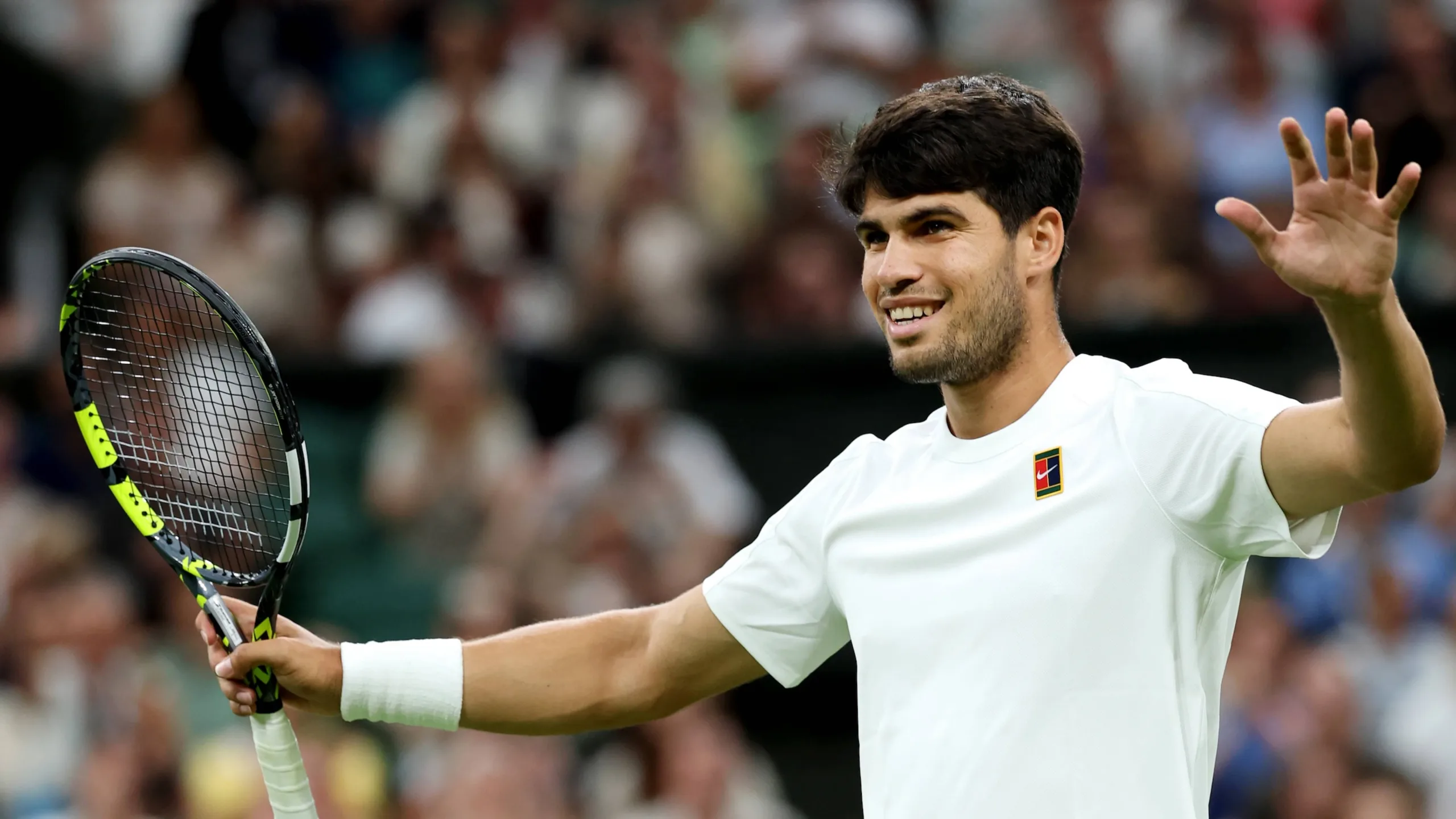
“Feliz cumpleaños, Carlitos!”
Carlos Alcaraz turns 23 with a résumé few players achieve over an entire career. The following numbers, drawn from his first 23 years, outline how quickly he has climbed the sport.
1. No. 1 — he first reached the top ranking as a 19-year-old in 2022, the first and still only teenager to do so since the rankings began in 1973.
2. Two year-end No. 1 finishes, in 2022 and 2025.
3. Three match points saved in the Roland Garros final last year; he recovered from 3-5, 0-40 in the fourth set to beat Jannik Sinner, 4-6, 6-7 (4), 6-4, 7-6 (3), 7-6 (2), becoming the first man in the Open Era to save three match points to win a major final.
4. $64,997,598 in career prize money, the fourth-most in ATP history behind Novak Djokovic, Rafael Nadal and Roger Federer.
5. Five — he won his first five Grand Slam finals in a row, second in the Open Era only to Federer.
6. A 6-2 career record against reigning world No. 1s (1-1 vs Djokovic at No. 1, 5-1 vs Sinner at No. 1).
7. Seven Grand Slam titles: Australian Open (2026), Roland Garros (2024, 2025), Wimbledon (2023, 2024) and US Open (2022, 2025). He is the youngest man to reach seven majors.
8. Eight Masters 1000 titles, the second-youngest man to reach that total after Nadal.
9. Nine ATP 500 titles and a 16-match winning streak at ATP 500 events, with Queen’s Club and Tokyo last year and Doha this year.
10. He ended Djokovic’s 10-year, 45-match winning streak on Centre Court by winning the 2023 Wimbledon final, 1-6, 7-6 (6), 6-1, 3-6, 6-4.
11. Eleven hard-court and 11 clay-court titles, plus four grass-court titles including two Wimbledons.
12. A 12-match winning streak in five-setters; he is 15-1 in five-set matches, the lone loss to Matteo Berrettini at the 2022 Australian Open.
13. Surpassed 13,000 ranking points for the first time after the Australian Open this year, reaching a career-high 13,650.
14. Titles in 14 countries: Argentina, Australia, Brazil, China, Croatia, France, Italy, Japan, Monaco, Netherlands, Qatar, Spain, UK and USA.
15. Fifteen career big titles (seven majors, eight Masters 1000s); runner-up at the 2024 Olympics and the 2025 ATP Finals.
16. Made a winning ATP Tour debut at 16, beating Albert Ramos-Vinolas in Rio de Janeiro in 2020, 7-6 (2), 4-6, 7-6 (2).
17. Seventeen Top-10 wins in 2025 (17-4 vs Top 10 that year).
18. Broke into the Top 10 at 18 on April 25, 2022.
19. First Grand Slam title at 19 at the 2022 US Open.
20. A perfect 20-0 record in Grand Slam first-round matches.
21. $21,354,778 earned in 2025, the second-highest single-season prize money total in ATP history behind Djokovic’s $21,646,145 in 2015.
22. Completed the Career Grand Slam at 22 with the Australian Open this year, the youngest man ever to do so.

Auger-Aliassime Reaches Career-High No. 4 After Breakthrough at Roland Garros

Emilio Nava takes Neckarcup title after Luka Mikrut withdraws from final

Flavio Cobolli’s Roland Garros run vaults him into ATP Top 10

Alcaraz Confronts On‑court Microphones During US Open Practice Ahead of Opelka Match

Raducanu Arrives at US Open With Momentum After Strong Hard‑Court Swing

Cervara: Ending an eight‑year partnership with Medvedev was necessary to change the energy
-
 ATPFrench OpenGrand Slam2 months ago
Roland Garros 2026 Preview: Why Jannik Sinner Arrives as the Heavy Favorite
-
 ATPFrench OpenGrand Slam2 months ago
Djokovic upbeat on Roland Garros fitness as he aims for 25th major
-
 French OpenGrand Slam2 months ago
Roland Garros 2026 Women’s Draw Sets Up Potential Sabalenka–Gauff Semifinal