Grand Slam Roland Garros WTA
Coco Gauff’s 2025: Clay Dominance, New Coaching and a Top-3 Finish
Gauff won Roland Garros, led Team USA to United Cup, won Wuhan and finished 2025 at world No. 3 2025


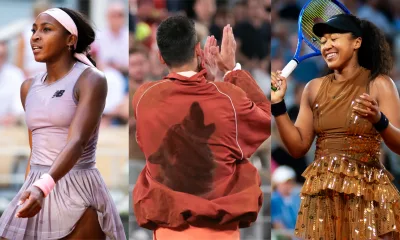
Coco Gauff closed 2025 with momentum built on an exceptional clay season and a second Grand Slam title. She won 17 of her last 19 matches on clay, reached back-to-back finals in Madrid and Rome, and then captured the Roland Garros crown, her second major. She was the first American, male or female, to win on the terre battue in a decade.
The year also featured team and tour successes. Gauff helped lead Team USA to the United Cup title in January, added a WTA 1000 singles trophy in Wuhan in the fall, and recorded another WTA 1000 victory in doubles in Canada alongside McCartney Kessler. Those results kept her near the top all season: the 21-year-old finished the year at No. 3 for the third straight year, becoming the youngest woman to finish in the Top 3 for three straight years this century.
Gauff has continued to tinker with her support staff in search of incremental gains. After working with grip specialist Matt Daly last year, she turned late in the season to biomechanics expert Gavin MacMillan this year. Her adjustments have focused on tightening the serve and cutting down double faults as she tries to add consistency to an already versatile game.
“I feel like I’m constantly trying to evolve and get better,” Gauff said . “It’s not anything against the coaches I worked with—I can still be at the top and want to get better.”
Now established as a perennial Top 3 player, Gauff enters the new season still positioned behind Aryna Sabalenka and Iga Swiatek but within reach of both. The coming months will test whether the technical tweaks and new coaching input can be integrated to mount a fresh challenge for more major titles or a run at the world No. 1 ranking.




ATP Tour News Grand Slam
Swiatek’s US Open run ends as Zheng completes remarkable comeback
Swiatek’s US Open run ended as Zheng recovered from 5-0 down to claim a 7-5, 6-3 win.
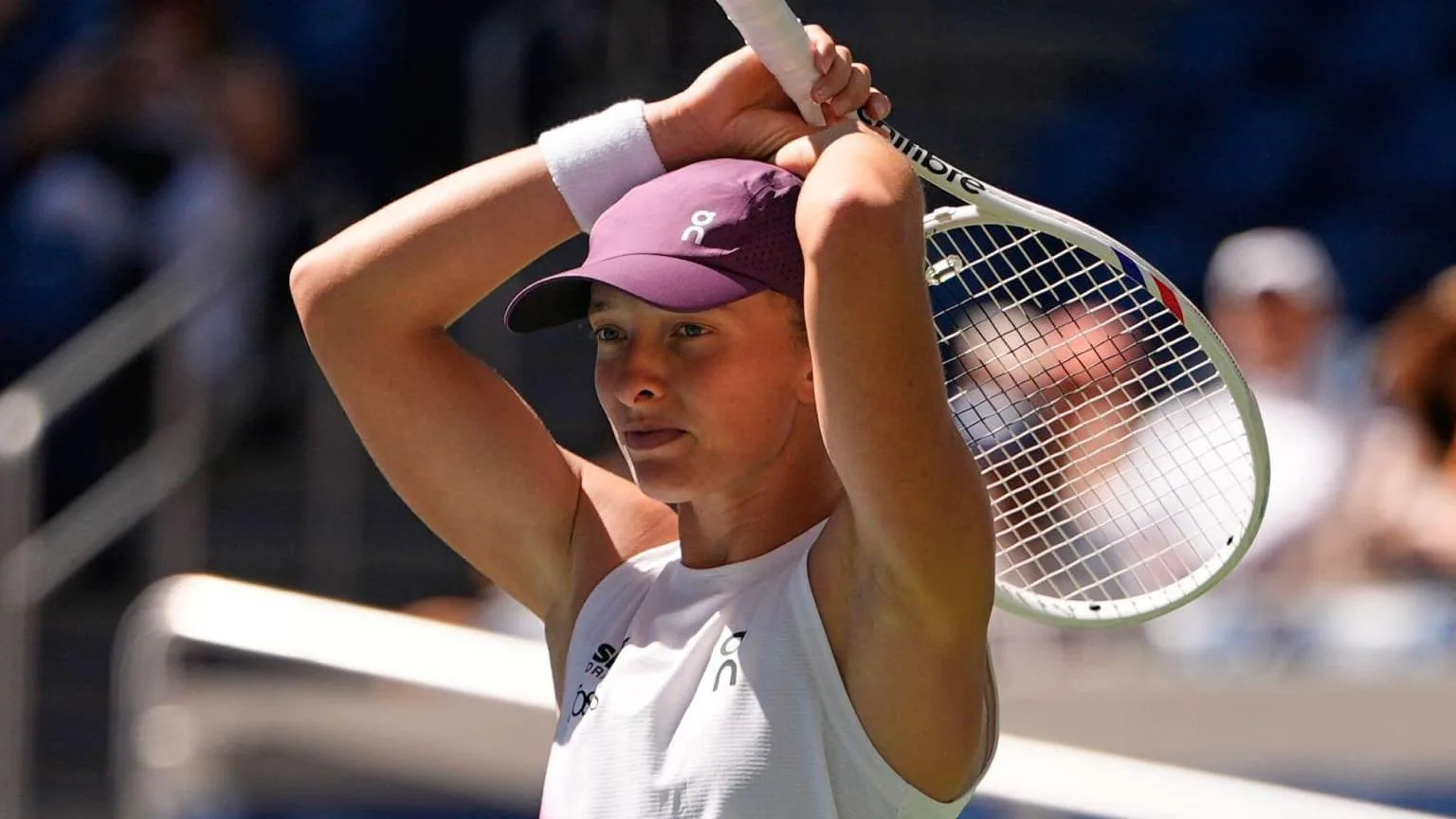
Iga Swiatek’s US Open campaign was halted on Monday after qualifier Qinwen Zheng turned the match around in impressive fashion.
The eighth seed had moved through the event without dropping a set before the round of 16 at Flushing Meadows, and she appeared in complete control when she opened up a 5-0 lead in the first set. But Zheng, the 2024 Australian Open runner-up, refused to let the set slip away. She won seven of the next seven games to seize the opener 7-5.
From there, the Chinese player held firm against any response from the six-time major champion and closed out a 7-5, 6-3 victory. The result continues a striking pattern for Zheng, whose fightback qualities have already defined her run in New York. In the previous round, she had recovered from 5-0 down and saved a match point in the final set to defeat Madison Keys in round three.
Swiatek’s defeat also brings to an end a four-year stretch in which she had won at least one Grand Slam each season. Her major titles in that span included the French Open and US Open in 2022, further Roland Garros triumphs in 2023 and 2024, and her first Wimbledon crown last year.
Her 2026 Grand Slam record now shows quarter-final exits in Australia, the fourth round at the French Open and the US Open, plus a third-round loss at Wimbledon.
The defeat carries ranking and financial consequences in New York. The total prize fund at this year’s US Open is a record $108million, with the singles champions in both draws set to receive $5.5m. Swiatek’s fourth-round finish earns her $480,000 and 240 ranking points. She drops to ninth in the WTA Tour rankings on 4,619 points, while Zheng moves on to 52nd. In the WTA Tour Race, Swiatek sits 11th on 3,584 points and could miss the WTA Tour Finals in Indian Wells later this year. Zheng rises to 42nd on 1,018 points.
ATP Tour News Grand Slam
Tomljanovic identifies the part of Alcaraz’s game most impacted by wrist issue
Tomljanovic says Alcaraz’s serve still reflects the wrist issue more than his forehand.
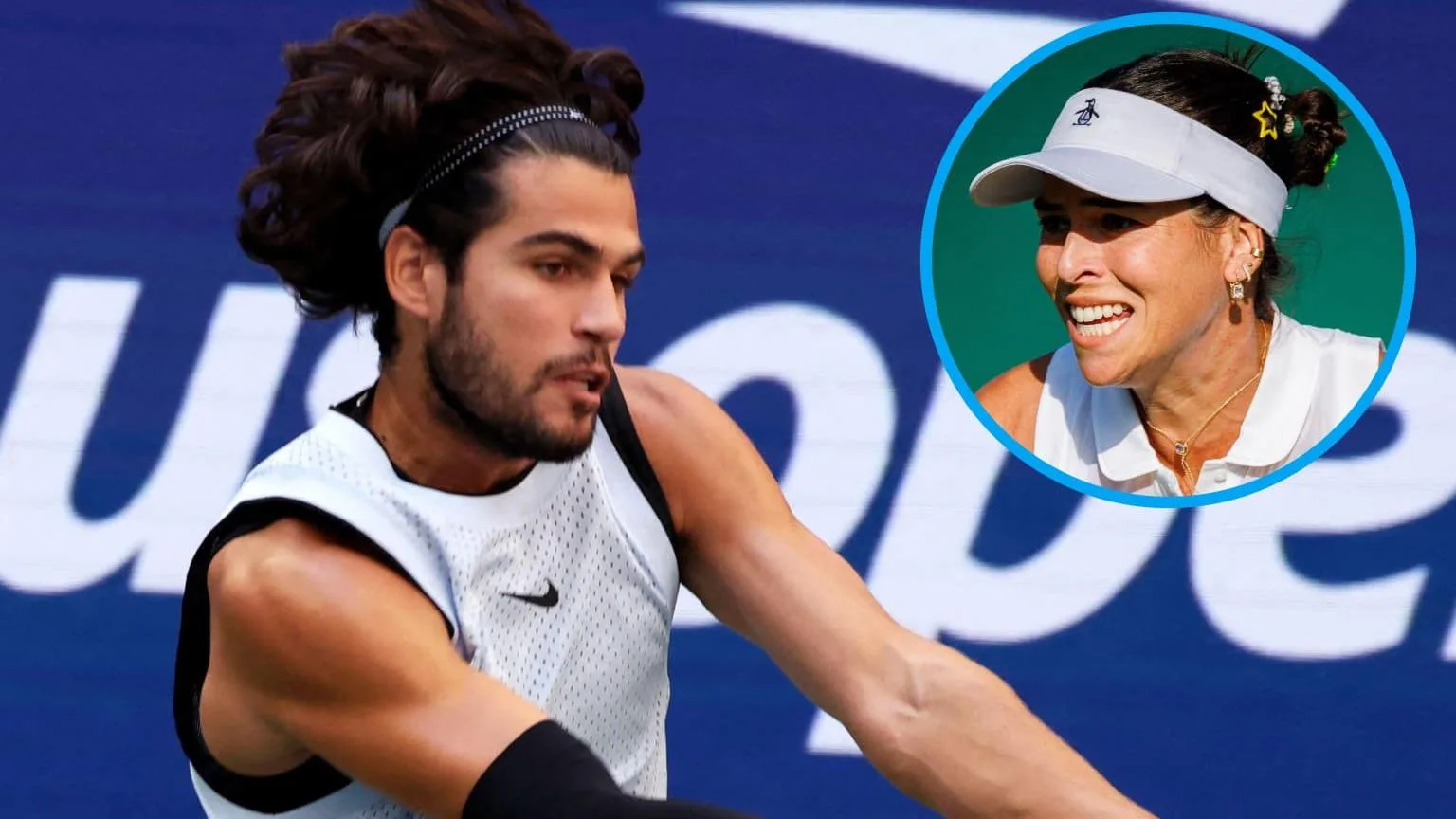
Ajla Tomljanovic has singled out the area of Carlos Alcaraz’s game she believes has been most influenced by his wrist injury, even as the Spaniard continues to look increasingly settled at the US Open.
Alcaraz returned to competition in New York after more than four months away with a wrist problem. He first eased back through the mixed doubles before quickly finding his rhythm in singles, where his form has sharpened with each round at Flushing Meadows.
The seven-time major winner has conceded only one set in the tournament, that coming against Jaime Faria in the second round. On Sunday, he produced another strong display to defeat 20th seed Tommy Paul 6-4, 6-3, 6-4.
Afterwards, the former world No 1 said, “I played my game. I tried to play my style. Tommy is such a talented player. His shots are pretty dangerous and sometimes it is really difficult to control the ball when it comes to you. I just tried to be ready for a battle and tried to be aggressive all the time.
“I tried not to let him stay [high up] on the court and I think I did pretty well to put so much pressure on return games, which for me helped a lot to play relaxed, to play calm and think clearly. I’m really happy with the performance today.”
Against Paul, Alcaraz struck three aces to four, landed 75% of his first serves, won 72% of those points, and collected 44% of return points. He also finished with 33 winners compared with Paul’s 18.
Alcaraz later said he felt he was back to full physical power, and he now moves on to face Ben Shelton in the quarter-finals.
Tomljanovic, speaking on the Big T podcast, suggested the forehand may already be back to an even higher level, while the serve still appears affected. She said, “It’s really impressive to me that apparently Carlos is hitting it harder than pre injury, whereas his serve hasn’t yet gotten to the miles per hour that we’ve seen pre injury.
“So clearly it tells us that the wrist issue must have been more present on the serve.”
Brad Gilbert was more encouraged by what he has seen, pointing to signs that Alcaraz is improving both physically and mentally as he trusts the wrist again.
Grand Slam
Federer’s belief, Tsitsipas’ mission and the future of the one-handed backhand
Federer backed the one-hander as Tsitsipas tried, and failed, to keep its major streak alive.
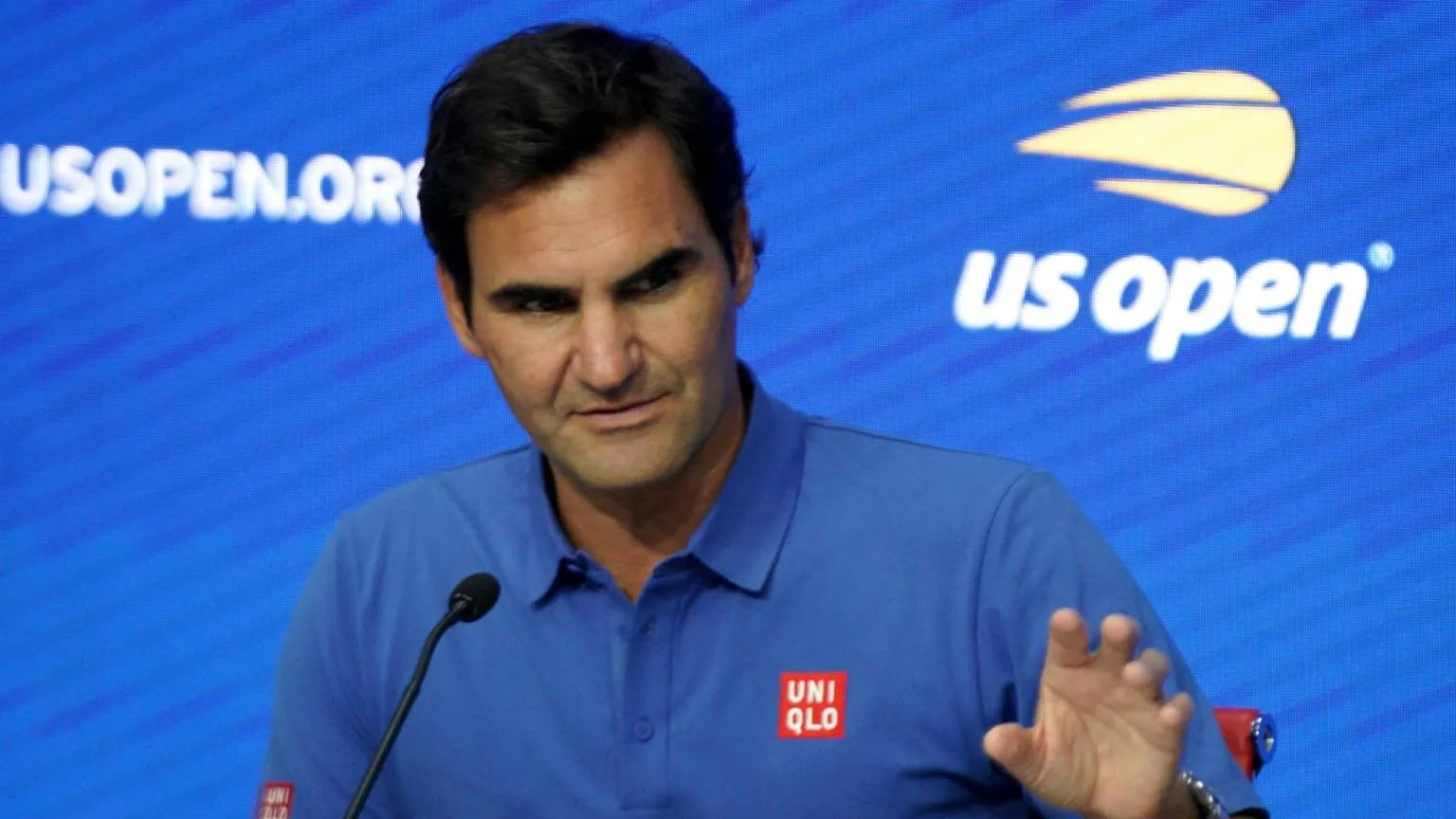
Roger Federer stood among the last great exponents of the single-handed backhand just as the two-hander became the dominant force in the sport. Stan Wawrinka carried that style forward for years after Federer stepped away, and Stefanos Tsitsipas, Denis Shapovalov and Lorenzo Musetti still keep it visible today, though few younger players are emerging behind them.
Going into this year’s US Open, one striking sequence remained intact: in every season since the first Wimbledon in 1877, at least one man with a one-handed backhand has reached a major semi-final.
Before Federer played an exhibition at Arthur Ashe Stadium late last month, the 20-time major champion spoke about his wish that the shot would survive. He told reporters, “My coaches when I was growing up, I would say, were 90% one-handers. I think when your coach is a one-handed tennis player, you will be most likely be a one-handed tennis player, too. Nowadays, the coaches are probably mostly double-handed players, and it’s just easier to teach a kid to have two hands on the backhand side.
“Back in the day, I used to do 50/50 on volleys and net play and baseline game. Before my time, it was probably more like 80% net play and 20% baseline drills, but now it’s like 90/10 for the baseline.
“I still believe the one-handed backhand isn’t over,” before joking, “I’ll pass on my wisdom to Musetti.”
Musetti and Shapovalov both exited in the second round in New York, leaving Tsitsipas as the lone hope to preserve the streak. The Greek reached the fourth round at Flushing Meadows for the first time in his career, and ahead of his last-16 match against Ben Shelton, the 28-year-old wrote, “I’ve got a 150-year streak to save.”
That hope did not last. Shelton overpowered the unseeded Tsitsipas 6-2, 6-3, 6-4 on Sunday night.
Before the tournament, Tsitsipas called the single-handed backhand a “dinosaur going extinct”. Musetti, meanwhile, said two-handed backhands “offer an advantage in modern tennis”. Federer said he was “hopeful” the shot was not finished, but the direction of the game suggests otherwise, with children increasingly taught the two-hander from the start.
For the one-hander to remain part of the sport’s future, it may need a new generation willing to defend it.

Swiatek’s US Open run ends as Zheng exposes tension and a rare season setback

Swiatek’s US Open run ends as Zheng completes remarkable comeback

Rusedski backs Eala as elite returner, but the numbers tell a more complicated story

Alcaraz Confronts On‑court Microphones During US Open Practice Ahead of Opelka Match

Raducanu Arrives at US Open With Momentum After Strong Hard‑Court Swing