
Governing Bodies ITF Player News
Tennis Kenya accepts mistake after viral W35 wildcard performance
Tennis Kenya says a wildcard for Hajar Abdelkader was wrongly granted after a viral 37-minute match.

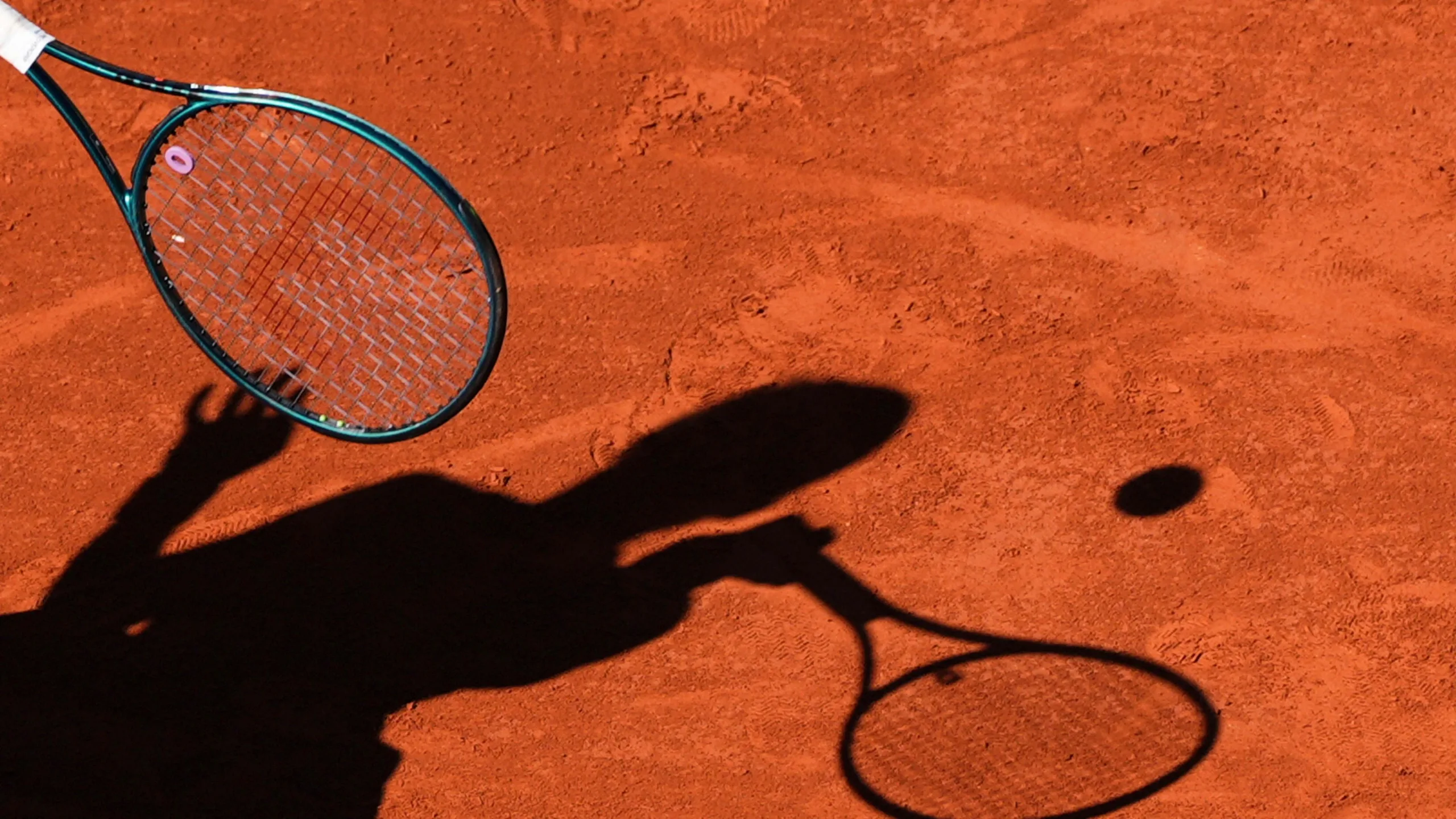
Tennis Kenya has acknowledged an error in awarding a main-draw wildcard after video of Hajar Abdelkader’s performance at an ITF W35 event drew widespread attention.
The 21-year-old Egyptian lost her first-round match 6-0, 6-0 in 37 minutes, winning three points. The match footage showed persistent serving problems, including 20 double faults, and at one point she appeared to need direction on where to stand to serve.
Tennis Kenya, which is hosting the W35 tournament, issued a statement addressing concerns about the decision to grant the wildcard. The organization’s statement said it was “aware of concerns” raised about Abdelkader’s participation.
“In hindsight, Tennis Kenya acknowledges that this wildcard should not have been granted. The federation has taken note of this experience and will ensure that such an extremely rare occurrence never happens again,” it said in a statement Thursday.
The federation explained the circumstances that produced the available slot. “The slot became available following a short notice withdrawal by the originally awarded main draw wildcard recipient, who opted into the qualifying draw,” the statement said. “At the time, Ms Abdelkader was the only other player who had requested a wildcard, and the decision was taken on the information provided and in the interest of maintaining a full and balanced draw while supporting the development of tennis in Africa.”
Tennis Kenya added that the wildcard had been issued based on information provided by the player. “In this instance, Ms Abdelkader indicated that she had an appropriate level of competitive playing experience, and the wildcard was issued based on the information provided.”
The federation indicated it will use this episode to review procedures around discretionary entries. The match has prompted debate about wildcard standards and the balance between developing regional players and preserving competitive integrity at professional events.

Governing Bodies Grand Slam
Tennis and Motherhood: Seven Players Rewriting the Rules of the Tour
Seven top players have combined motherhood with elite tennis, helping reshape the WTA landscape. now
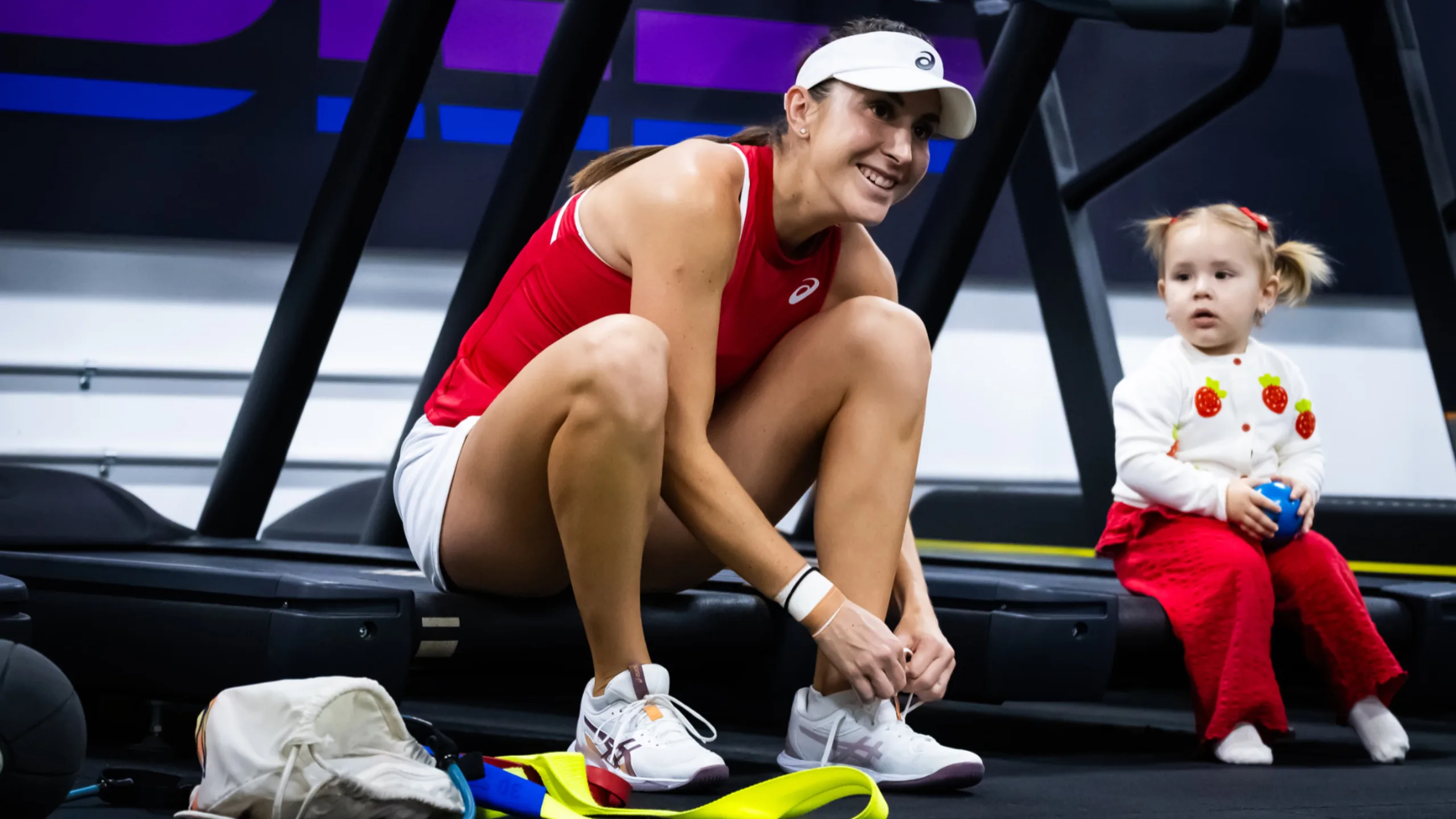
Motherhood no longer signals the end of a professional tennis career. Over the past several years a group of high-profile players have combined elite competition with family life, returning to form and pushing for structural changes on the tour.
Naomi Osaka returned to the WTA Tour in 2024 after giving birth to her daughter, Shai, in July 2023. Her comeback included runner-up finishes in Auckland and Montreal last season.
“She likes to watch my practices on FaceTime, which is new. She’ll call and we’ll put (the phone) on the chair. It’s so cute because I can hear her saying, ‘Go mommy, go!’ on the sidelines.
“Things like that make me realize how much older she’s getting and how she’s developing.”
Elina Svitolina came back in April 2023 after giving birth to daughter Skai in October 2022, whom she shares with Gaël Monfils. Months after her return she won her first title as a mother in Strasbourg and has continued strong form, including an Auckland title this year a year after Monfils won the ATP trophy at the same event.
“Motherhood has given me a whole new level of motivation. Now, I’m not just playing for myself—I’m playing for my daughter, showing her that women can chase their dreams and succeed.
“It’s also helped me put things in perspective—when I step on the court, I give it my all, but at the end of the day my family is my greatest victory.”
Taylor Townsend, who welcomed her son AJ in 2021, became the first mother in women’s tennis history to reach world No. 1 in doubles. Since becoming a mom she has won Wimbledon 2024 and the Australian Open 2025 in doubles with Katerina Siniakova, and her 2026 season has produced titles at Indian Wells, Miami and Madrid as well as her first WTA singles final in Austin.
“Being a working mom, it’s not easy. Coming back with trophies kind of just shows that it was worth it.”
Caroline Wozniacki retired in 2020 to start a family with David Lee, welcoming Olivia and James, returned to the tour in 2023 and stepped away again after announcing the arrival of baby Max in 2025.
“My family is the most important thing to me, but at the same time, I love winning… I think sometimes that mom guilt comes out, but I try and manage it as well as I can.”
Angelique Kerber stepped away after giving birth to daughter Liana in February 2023, returned in 2024 for a farewell season that ended with a quarterfinal run at the Paris Olympic Games, and in 2025 welcomed her second child, Ben, closing her playing career.
“I still love tennis but first and foremost, I’m a mother with my whole heart. There’s a little person in my life that is far more important than tennis.”
Victoria Azarenka, who gave birth to son Leo in 2016 when the tour offered no maternity leave protections, returned and became an advocate for mothers on tour. The WTA now provides paid maternity leave, parental assistance and fertility treatment support.
“When I became pregnant, the immediate question was: Can I come back? I was in the Top 5, and I still had doubts. There were no rules to support players in my situation.
“Players now have the chance to extend their career and plan their futures differently. It’s no longer just ‘before family’: they can have a family and keep competing.”
Belinda Bencic returned late in 2024 after giving birth to daughter Bella and quickly reestablished herself among the sport’s elite. In 2026 Bencic joined Svitolina as one of two mothers simultaneously ranked inside the WTA Top 10.
College Tennis Governing Bodies
NCAA to Allow Pre-Enrollment Prize Money After $2.02M Settlement Led by Brantmeier and Joint
NCAA settles for $2.02M, ending pre-enrollment prize-money caps after lawsuit by Brantmeier and Joint
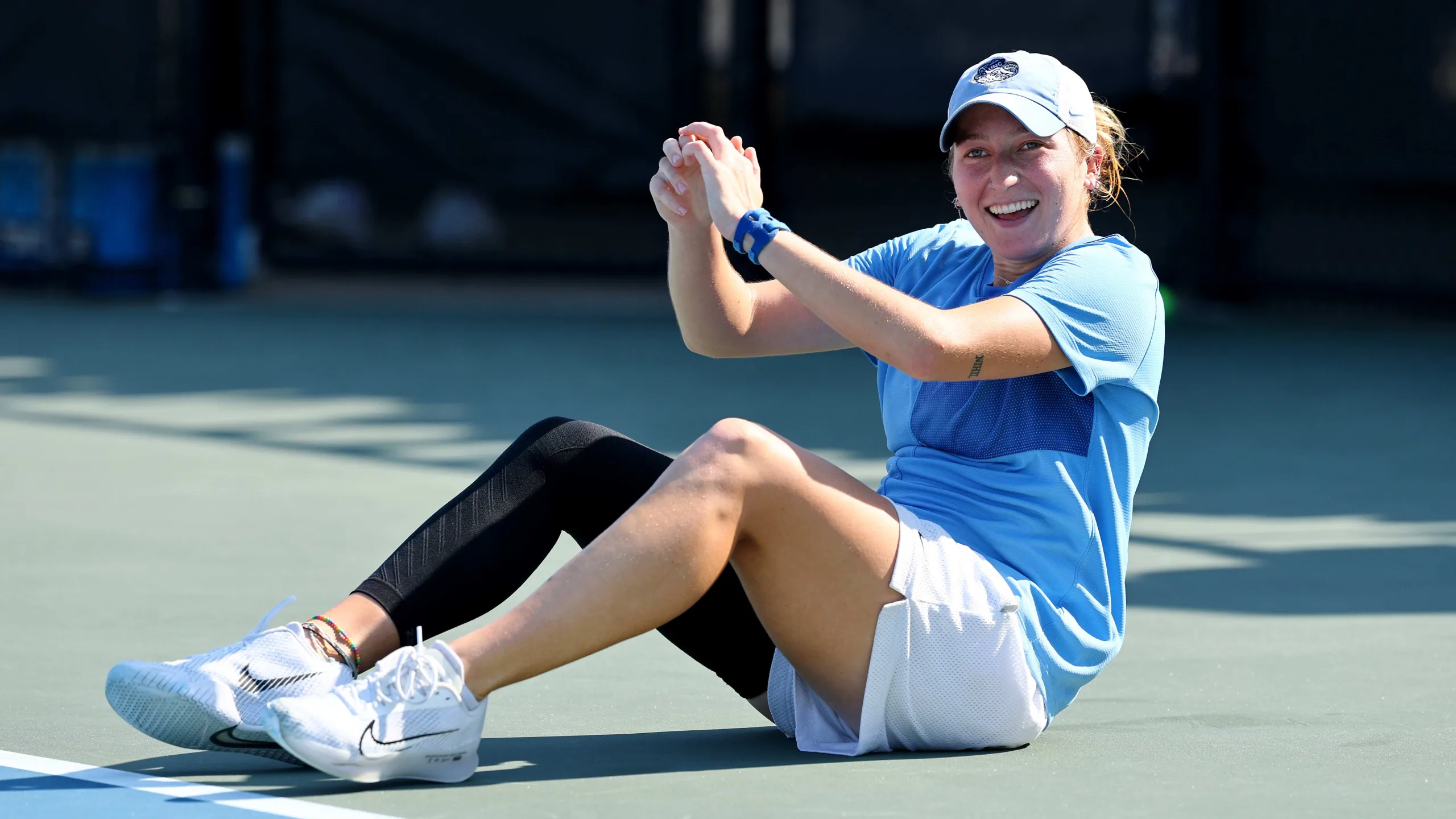
The NCAA has agreed to a proposed $2.02 million federal class-action settlement that removes prior limits on prize money for athletes before college enrollment. The settlement, led by co-plaintiffs Reese Brantmeier and Maya Joint, will allow athletes in all sports to accept prize earnings without the previous restrictions that once capped tennis players at retaining $10,000.
Brantmeier first filed an antitrust claim in 2024 after losing most of the $48,913 she earned at the 2021 US Open and missing the 2022 fall season when the NCAA questioned certain expenses she submitted from that tournament. Joint likewise lost most of the $147,000 she earned from a second-round showing at the 2024 US Open ahead of entering the University of Texas. The plaintiffs say Joint followed protocols and later turned professional in December.
The settlement was filed in the U.S. District Court for the Middle District of North Carolina. It contains injunctive relief that the plaintiffs say will benefit future generations of student-athletes across all sports by striking down restrictive prize-money rules that applied prior to enrollment.
“The proposed settlement is an extraordinary outcome for the Classes and the injunctive relief obtained will positively impact future generations of student-athletes,” the plaintiffs declared in a brief.
For college tennis specifically, the change ends a longstanding barrier for players navigating the transition from junior and professional circuits into collegiate competition. The agreement represents a notable revision to NCAA policy that affects how incoming student-athletes may manage earnings earned before they become enrolled.
Analytics & Stats Finals Governing Bodies
Evonne Goolagong’s unnoticed weeks at world No. 1 restored to the record
A 1976 rise to WTA No. 1 by Evonne Goolagong was missed until records were found in 2007. Confirmed.
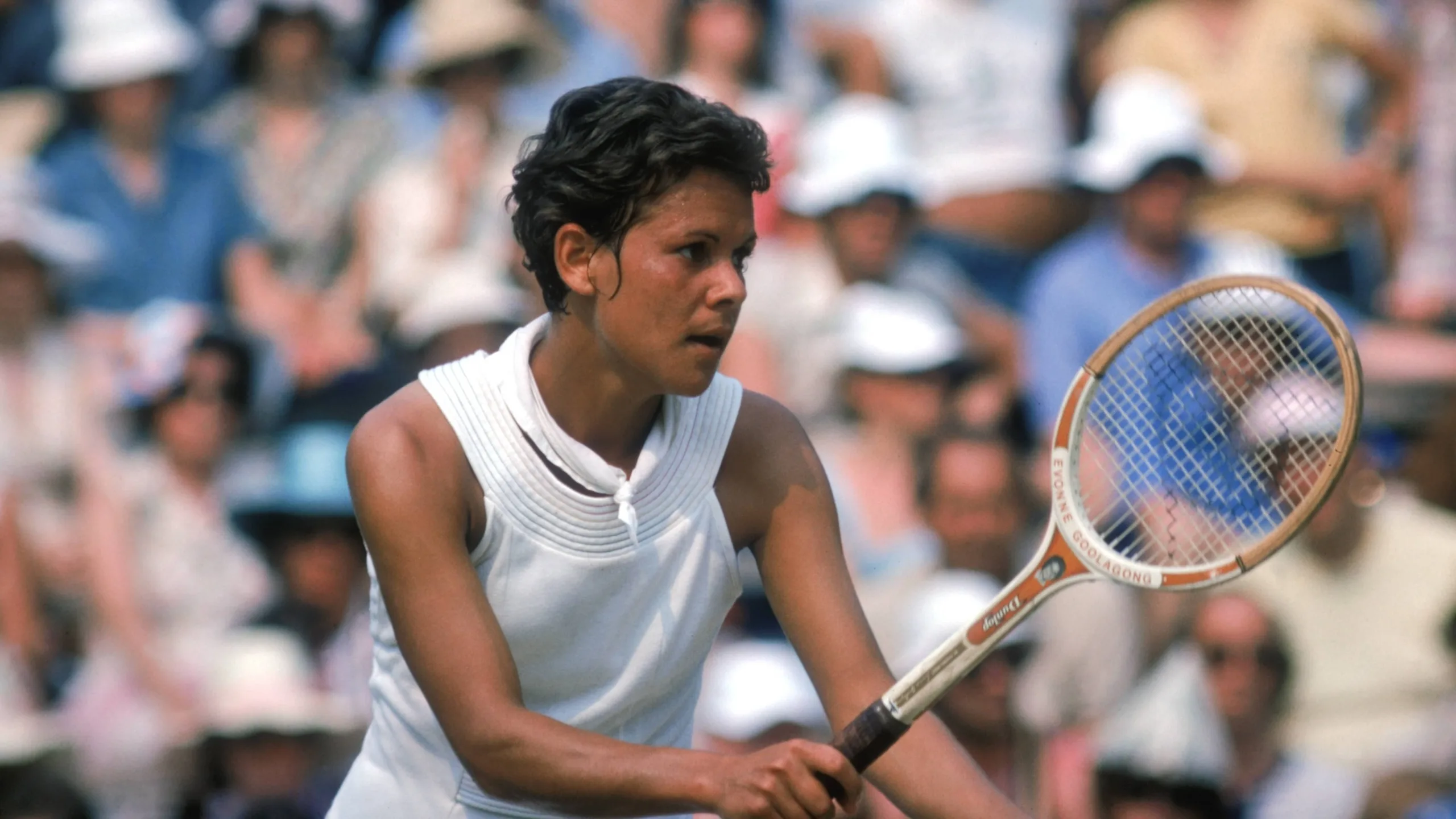
On April 26, 1976, Evonne Goolagong reached the top of the WTA rankings after winning the Virginia Slims Championships, the tournament now called the WTA Finals. That milestone went unrecognized at the time and remained absent from official lists until 2007, when missing paper records were uncovered in the WTA’s rankings archive.
The rankings in 1976 were calculated every two weeks. A review of the recovered documents showed Goolagong had overtaken Chris Evert for the No. 1 position for two weeks from April 26 to May 9, 1976. Although she had been recorded later as the 16th player ever announced as WTA No. 1, the corrected history establishes she was actually the second woman to hold the top spot, after Evert.
“I’m very proud of the achievement,” Goolagong told the Associated Press in 2007. “I was on a roll for that stretch in 1976. It was a great surprise to hear after all these years.” The WTA presented her with a No. 1 trophy in 2007, 31 years after the ranking change and 24 years after her retirement from the tour.
The ranking system was still new then, having been introduced five months earlier in November 1975. “Unfortunately our record-keeping wasn’t perfect in those early days of women’s tennis and our ranking system was viewed as a means of just accepting tournament entries,” then-WTA CEO Larry Scott said at the time. “It wasn’t until the early 1980s that the media and players started to pay attention to the changes in the rankings during the year as opposed to only the end-of-season rankings.”
The corrected entry adds to Goolagong’s distinguished resume: seven Grand Slam singles titles, including four Australian Opens (1974, 1975, 1976 and 1977), Roland Garros in 1971, and Wimbledon in 1971 and 1980. She won her final two majors—the December 1977 Australian Open and Wimbledon in 1980—as a mom, one of only three women in the Open Era to do so alongside Margaret Court and Kim Clijsters, and the only mother to win Wimbledon in that era.

Draper’s route back takes an unexpected detour before the US Open

Tsitsipas’ Gstaad win strengthens call to move on from Apostolos

Holger Rune’s return comes with injury caution and a new racket question

Alcaraz Confronts On‑court Microphones During US Open Practice Ahead of Opelka Match

Raducanu Arrives at US Open With Momentum After Strong Hard‑Court Swing

Cervara: Ending an eight‑year partnership with Medvedev was necessary to change the energy
-
 ATPFrench OpenGrand Slam2 months ago
Moise Kouame Breaks Through at Roland Garros, Channels Djokovic in Win Over Marin Cilic
-
 ATPFrench OpenGrand Slam2 months ago
Arthur Fils withdraws from Roland Garros before opener with Stan Wawrinka
-
 ATPFrench OpenGrand Slam2 months ago
Casper Ruud endures heat and cramps to prevail in five sets at Roland Garros