
ATP Australian Open Grand Slam
Fritz cites short off-season and knee recovery for sluggish start at Australian Open
Fritz advanced in four sets, blamed a four-week off-season and gave an update on his knee.

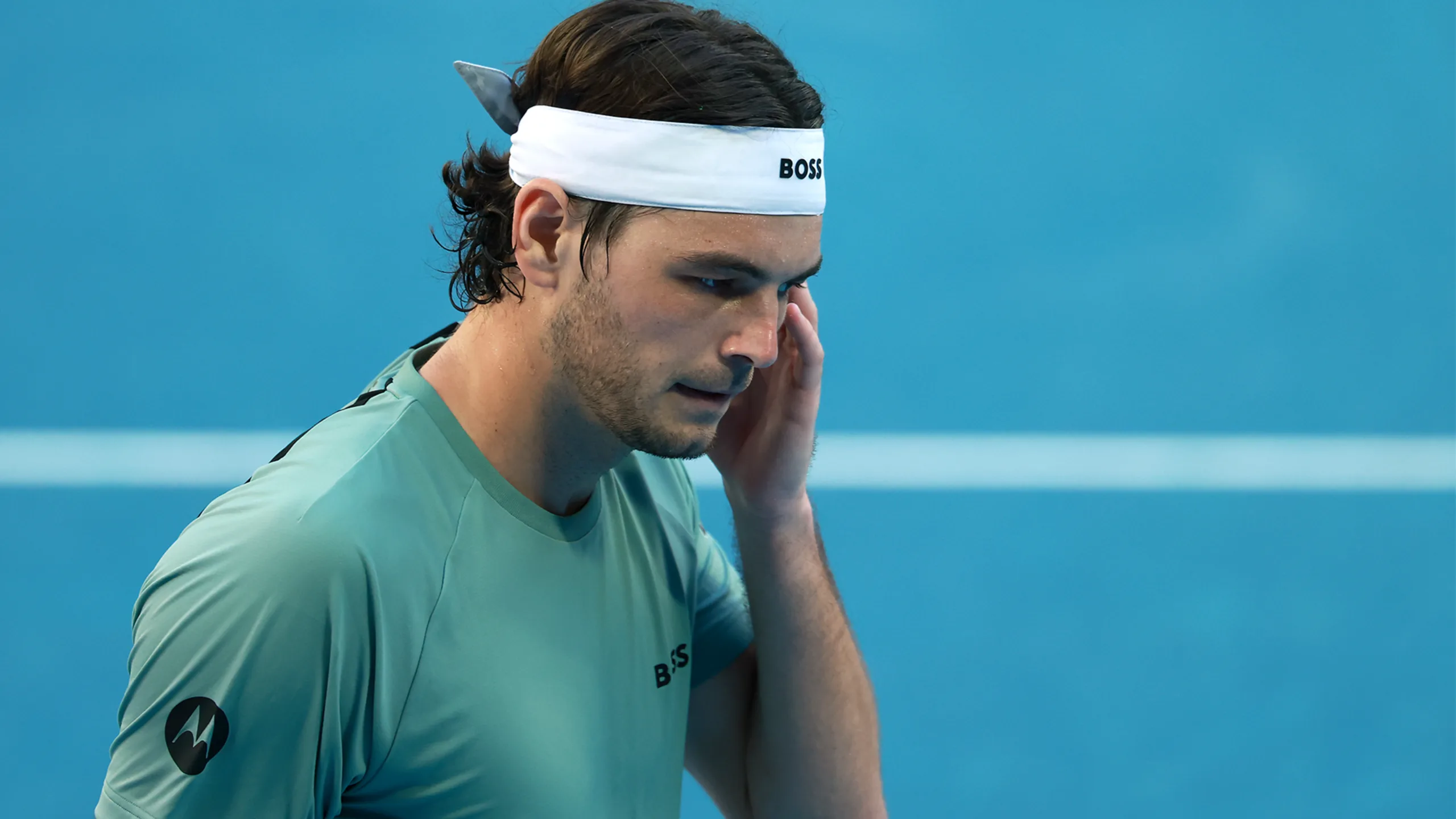
Taylor Fritz opened the season carrying a knee issue and suggested the brief off-season is contributing to a spate of early injuries at the Australian Open. He moved into the second round with a 7-6 (5), 5-7, 6-1, 6-3 victory over Valentin Royer but acknowledged he did not arrive at full strength.
“Maybe the season is too long, I don’t know,” Fritz said sarcastically after advancing past Valentin Royer, 7-6 (5), 5-7, 6-1, 6-3. “Maybe four weeks isn’t enough to fully get healthy of all injuries.
“You know, it is what it is. You know, I think I laid a lot of groundwork in the off-season to get healthy. But at the same time the off-season is so short, you need to be like training hard in the off-season or else you come into the year feeling like you’ve not played enough matches or had enough time on court, which is very much how I feel.
“Yeah, I mean, it’s tough when, you know, we have an off-season that kind of forces you where you have to be healthy in it to train or else you’re kind of in a bad spot to start the season. It’s not the best situation.”
Fritz, the No. 9 seed, said he played more freely after the second set and that the match length tested his fitness after a United Cup campaign in which the knee was visibly affected.
“When I came out for the third, I was just much more calm and relaxed and my mind was just working a lot more clearly,” the No. 9 seed said in his post-match press conference. “I felt like just my decision-making was so much better.
“I knew what shots to hit. I wasn’t, like, going over in my head as I’m hitting a shot what I should do like I was the first two sets. I just felt very, like, calm and confident. I really felt like myself the last two sets.”
On his physical status ahead of a second-round meeting with Vit Kopriva, Fritz gave a cautious update.
“There’s been some pretty big improvements in my knee,” Fritz confirmed. “That was the goal to start feeling that about a little over two months into this, the program of strengthening the tendon. But, you know, I’m way better than I expected to be after how I felt my first week or so in Australia. Yeah, I didn’t expect to be able to play, I guess, the physicality and the length of the match I played today and actually not have my knee feel like awful right now. It’s really promising.
“But unfortunately, there were some other injuries that popped up this week kind of when I was getting ready, which sucks. I don’t want to get into it too much. I might talk about it after the tournament. But I’m kind of just having to feel it as I go because it’s something I’ve dealt with before, so I, you know, am familiar with it.”
Fritz also described a familiar off-court ritual with fellow Americans during the event. “It makes sense in Australia, because it’s like we start the year, there’s some time before the tournament,” Fritz said. “You know, a lot of us haven’t seen each other because of off-season and stuff like that. So, you know, we always do it here.
“I don’t have every American guy’s number. And there’s new guys that come up. So, I put six or seven of the guys in the group chat, and everyone is invited. I’m getting the big table.”




ATP French Open Grand Slam
Auger-Aliassime Reaches Career-High No. 4 After Breakthrough at Roland Garros
Auger-Aliassime rises to No. 4 after best Roland Garros run, tying second-highest Canadian rank. Now
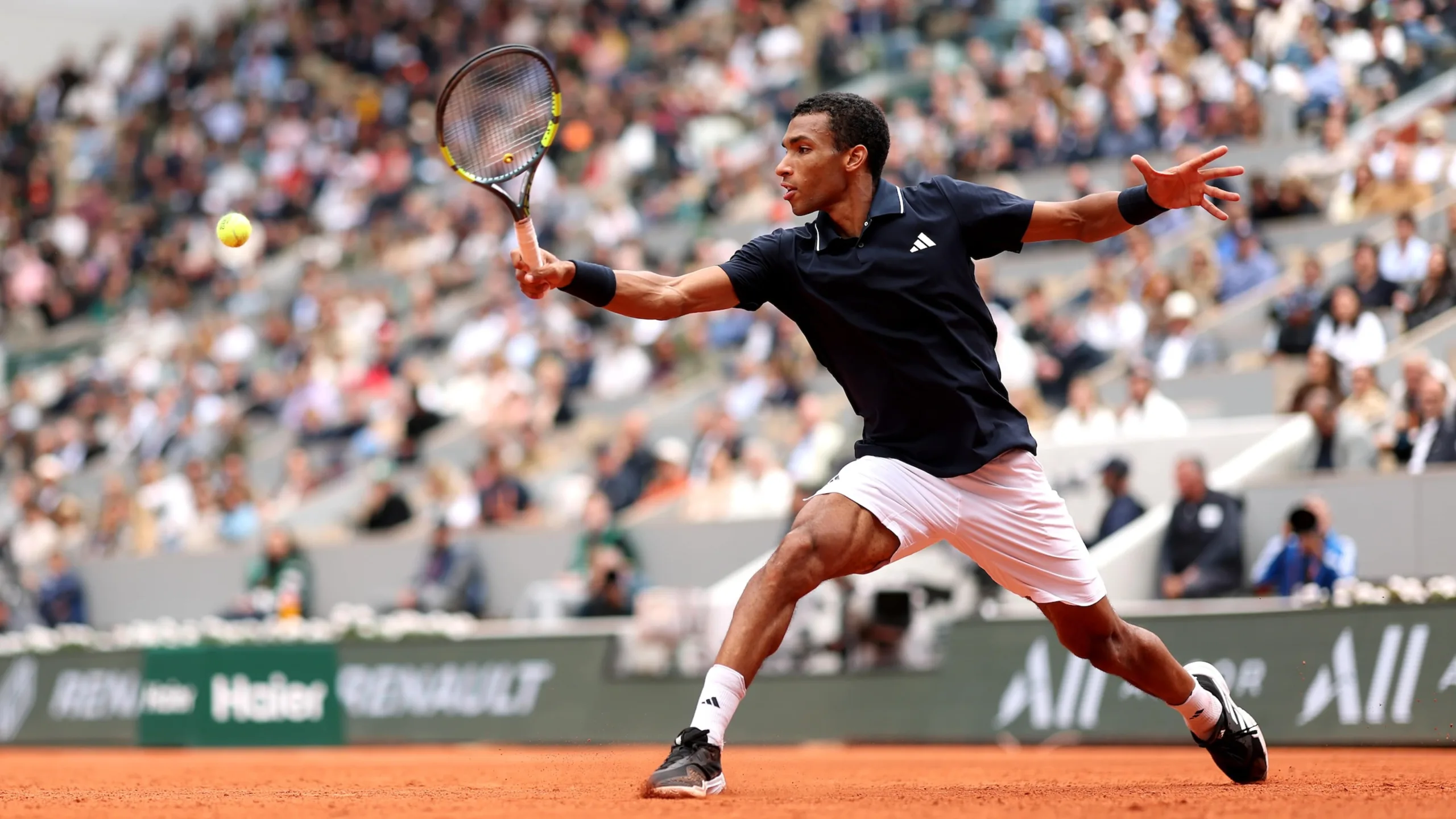
Felix Auger-Aliassime moved to a career-high No. 4 in the ATP rankings following his deepest run at Roland Garros, where the 25-year-old reached the quarterfinals for the first time before losing to eventual finalist Flavio Cobolli. The result completed a personal Grand Slam milestone: having previously reached the quarterfinals or better at the Australian Open, Wimbledon and the US Open, he became the first Canadian man to reach the quarterfinals or better at all four majors in his career.
The rise from No. 6 to No. 4 surpasses his prior best of No. 5 and places him tied for the second-highest-ranked Canadian in ATP or WTA rankings history. The only other Canadians to reach the top four are Milos Raonic and Bianca Andreescu. Raonic went as high as No. 3 in 2016, following his run to the Wimbledon final that year, and Andreescu peaked at No. 4 in 2019 after winning the US Open.
Canadian tennis has seen seven players reach the top 10 in either ATP or WTA history, with official rankings available since 1973 for the ATP and 1975 for the WTA.
Auger-Aliassime still has ground to cover to move higher in the standings. He is 2,865 points behind the current world No. 3, Alexander Zverev, with the rankings showing Zverev at 7,305 points and Auger-Aliassime at 4,440.
The Canadian will shift his focus to grass. He begins his grass-court season this week at the ATP 250 event in ‘s-Hertogenbosch, entering as the No. 1 seed. After a first-round bye he will open against either Hubert Hurkacz or Marton Fucsovics.
The new ranking reflects a season of important progress for Auger-Aliassime and cements his place among the highest-ranked Canadians in modern tennis history.
ATP Challenger 100 Neckarcup
Emilio Nava takes Neckarcup title after Luka Mikrut withdraws from final
Emilio Nava won the 2026 Neckarcup after Luka Mikrut withdrew from the final with shoulder pain. (1)
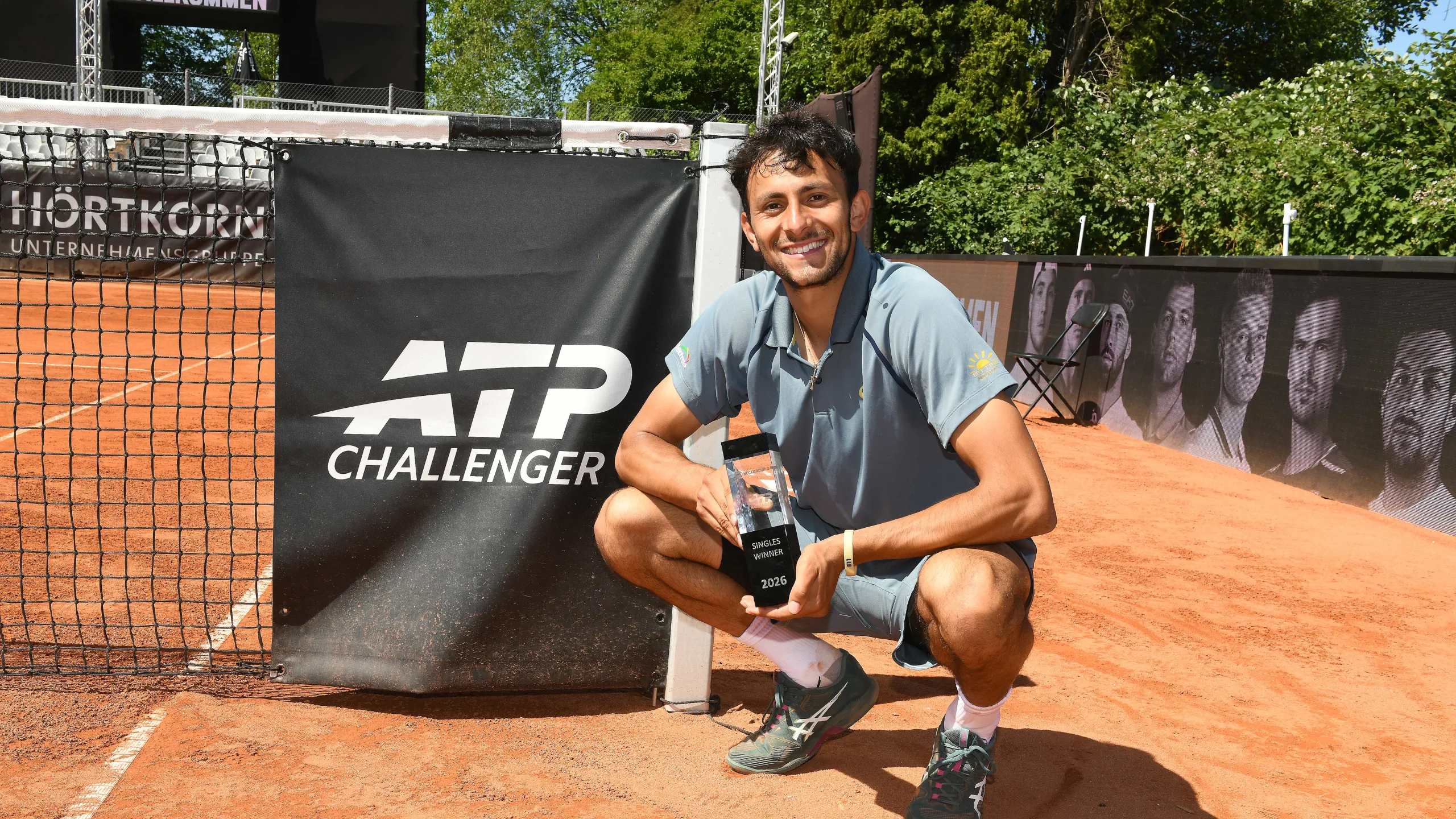
Emilio Nava was awarded the 2026 Neckarcup title after Luka Mikrut withdrew from the final with a shoulder injury, handing the American his seventh ATP Challenger trophy and his first of the season.
The 24-year-old arrived in Bad Rappenau as the second seed and produced one of the tournament’s sharper displays in the semifinals, a 6-1, 6-4 win over Henri Squire that lasted 58 minutes. After that victory Nava said: “Henri had an off day today, while everything worked for me.”
Sunday’s championship match never began after Mikrut addressed the Centre Court crowd and detailed his condition. “I have severe pain in my shoulder. I tried everything with the physios, the doctor, and pain medication,” the Croatian explained. “But I was worried that playing a match could make it even worse. To beat Emilio, I would need to be at 150 percent, not just 100. I wouldn’t have been able to do that today.”
Nava acknowledged mixed feelings on lifting the trophy. “It’s a bittersweet feeling today,” Nava admitted after lifting the trophy. “But this tournament has been fantastic. The organization is outstanding, and this was definitely one of the most enjoyable weeks of the year for us. I always love playing in Germany.”
The title continues the upward trajectory Nava has built since winning four Challenger trophies in 2025. “It was definitely my best season so far and I’m proud of what I achieved,” he said during the week. “Winning four Challenger titles is something special. But I still think my real breakthrough at ATP Tour level is ahead of me. These things don’t happen overnight.” Now World No. 87, Nava was also candid about the strength of American men on tour. “We’re just good players,” Nava joked. “Look at guys like Ben Shelton, Taylor Fritz, Tommy Paul, Frances Tiafoe, Brandon Nakashima and Alex Michelsen. They’re all doing great. We get along well, but we’re also extremely competitive. We push each other every day to become better players.”
Nava splits training between Buenos Aires and Florida. “My coach is from Spain and my physio is Argentinian, so naturally I spend a lot of time around Spanish-speaking people,” he explained. Off court he said, “I love video games. Right now, I’m playing a lot of Battlefield. I also enjoy going to the beach, relaxing and spending time with friends.” He added lighter moments from the week: “We played Frisbee in the park, spent time playing video games indoors, and shared a lot of laughs with the team and the other players.” Asked about celebration plans, he laughed: “I wish there was a big party,” he laughed. “But I’ll have dinner with my team and treat myself to some ice cream.”
Nava leaves Germany with 100 ATP ranking points and €23,700 in prize money. Tournament officials praised the level of play but noted attendance was low across eight days. “The level of tennis between world rankings 100 and 200 is outstanding,” said tournament manager Metehan Cebeci. “The week was sunny, rainy, emotional and exciting,” Tournament Director Mine Cebeci said. “And on finals day, I think we can all be very satisfied.”
ATP French Open Grand Slam
Flavio Cobolli’s Roland Garros run vaults him into ATP Top 10
Flavio Cobolli entered the ATP Top 10 after his first Grand Slam final at Roland Garros. New ranking
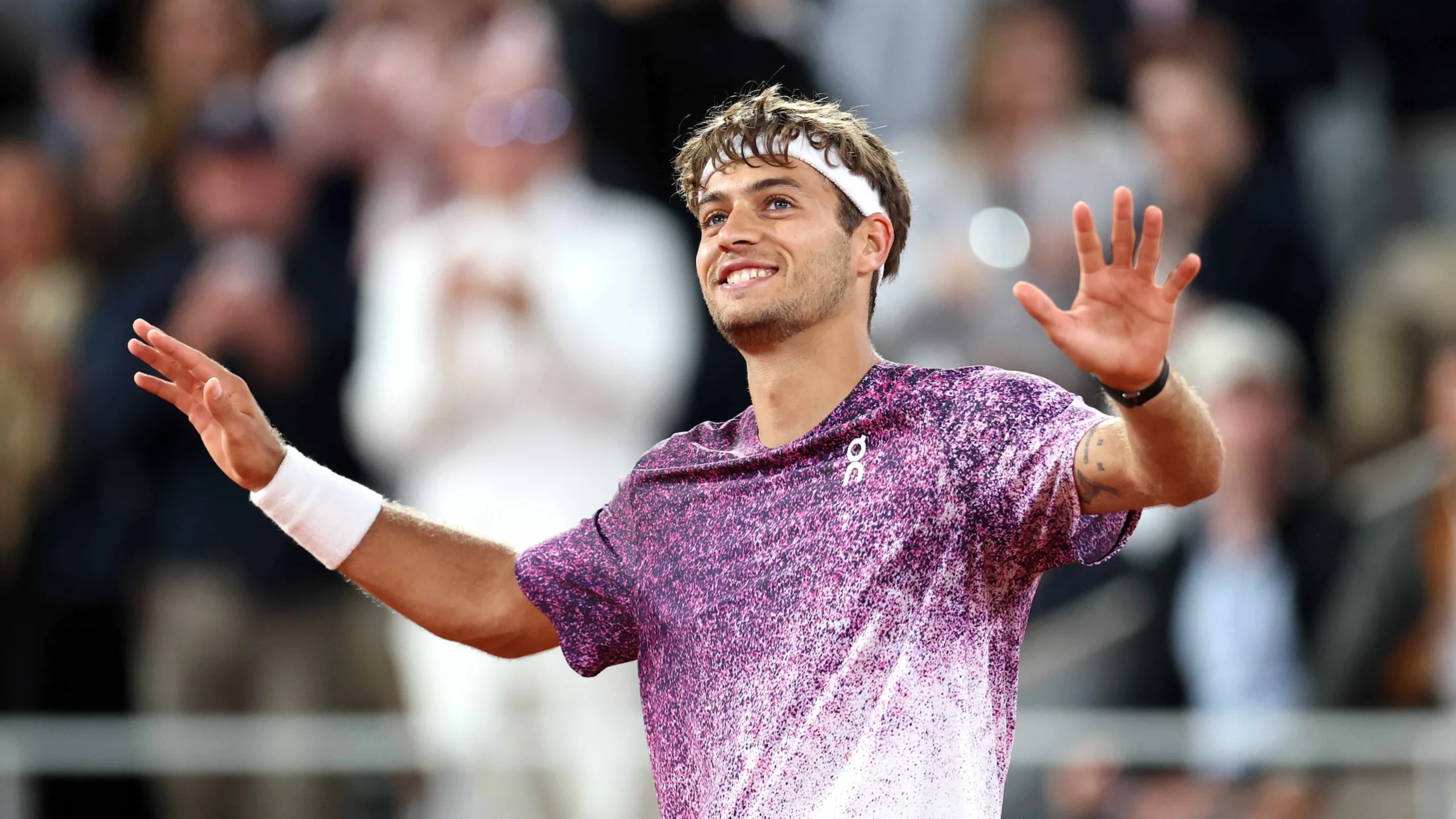
Flavio Cobolli’s breakthrough at Roland Garros produced a major ranking milestone. The 24-year-old reached his first Grand Slam semifinal and final in Paris and, despite losing the title match to Alexander Zverev in a five-set battle, climbed from No. 14 to No. 10 in the latest ATP rankings, marking his Top 10 debut.
Cobolli is the seventh Italian to enter the ATP Top 10 since the rankings began in 1973. He is also only the second Italian man in the past 50 years to contest the Roland Garros final, joining last year’s runner-up, Jannik Sinner. Born in 2002, Cobolli is the fifth man born in 2002 or later to reach the Top 10, following Carlos Alcaraz and Holger Rune, who were both born in 2003, and Lorenzo Musetti and Ben Shelton, who were both born in 2002.
The route to the final carried complicated circumstances. Cobolli advanced to the title match after countryman Matteo Arnaldi withdrew before their semifinal due to illness. Cobolli reflected on the day with mixed emotions: “When [Arnaldi] came to me almost one hour ago, I almost cried,” he said. “It’s something that you don’t expect at all. I was ready to play this match. When he came, I was completely sad for him.
“But at the same time, of course I’m really happy for the result that I reached this week. My dad also came to me right before him, and we had a big hug together with the whole team for achieving the Top 10. Every time that I make the best ranking, we all together have a big hug. We did the same routine as always.
“Yeah, now I’m sad and happy at the same time.”
Arnaldi, 25, leaps from No. 104 to No. 34 after reaching his first Grand Slam semifinal, moving to within four spots of his 2024 career-high of No. 30. Matteo Berrettini also recorded a significant rise, moving from No. 105 to No. 48 after reaching his first Grand Slam quarterfinal since 2022 on the terre battue. For the former No. 6, it was his first appearance at Roland Garros since 2021, following four years marked by injury and illness withdrawals.

Auger-Aliassime Reaches Career-High No. 4 After Breakthrough at Roland Garros

Emilio Nava takes Neckarcup title after Luka Mikrut withdraws from final

Flavio Cobolli’s Roland Garros run vaults him into ATP Top 10

Alcaraz Confronts On‑court Microphones During US Open Practice Ahead of Opelka Match

Raducanu Arrives at US Open With Momentum After Strong Hard‑Court Swing

Cervara: Ending an eight‑year partnership with Medvedev was necessary to change the energy
-
 ATPFrench OpenGrand Slam2 months ago
Roland Garros 2026 Preview: Why Jannik Sinner Arrives as the Heavy Favorite
-
 ATPFrench OpenGrand Slam2 months ago
Djokovic upbeat on Roland Garros fitness as he aims for 25th major
-
 French OpenGrand Slam2 months ago
Roland Garros 2026 Women’s Draw Sets Up Potential Sabalenka–Gauff Semifinal