1000 ATP BNP Paribas Open
Draper tweaks serve and survives three-set opener to defend Indian Wells crown
Draper changed his service motion and edged Bautista Agut in three sets to open title defense today.

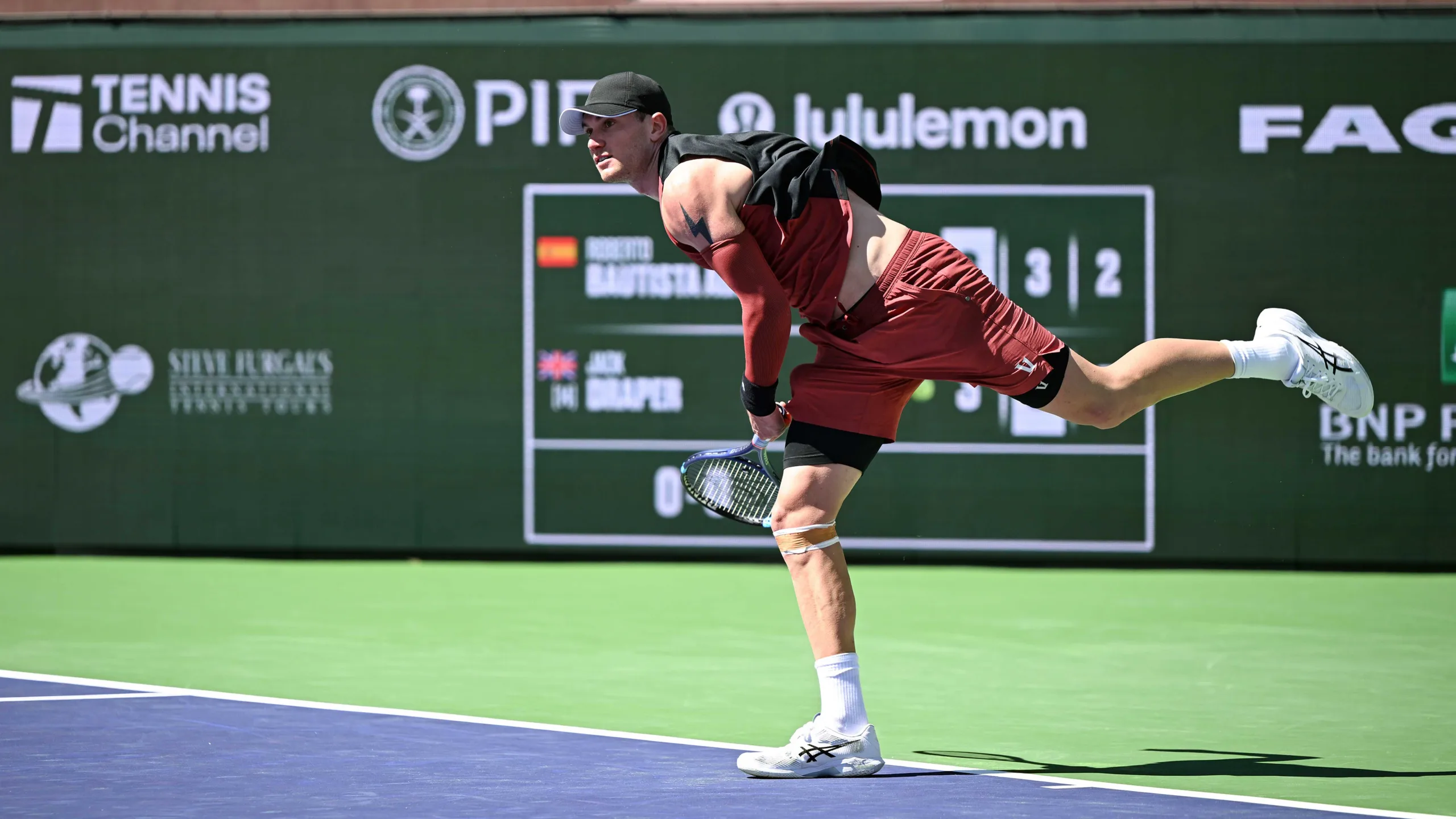
Jack Draper opened his BNP Paribas Open title defense with a determined comeback, beating Roberto Bautista Agut 3-6, 6-3, 6-2 to reach the third round. Back on tour after an eight-month layoff, the No. 14 seed showed progress as he settled into the match and closed strongly to secure the victory.
The 24-year-old missed most of the 2025 season and the start of 2026 because of a left-arm injury, described as bone bruising on his serving arm. He played just one match after 2025 Wimbledon — a win over Federico Gomez in the first round at the US Open before withdrawing — and withdrew from this year’s Australian Open. Draper has since returned at Davis Cup, where his straight-sets victory over Viktor Durasovic (No. 329) helped Great Britain to a 4-0 win over Norway. He also won one match in Dubai, beating Quentin Halys before losing in three sets to Arthur Rinderknech.
A major change in Draper’s comeback has been a revised service motion. The new motion adopts a platform stance in place of the pinpoint stance he used previously, a shift intended to favor stability and balance rather than maximum power. The adjustment was overseen by coach Jamie Delgado, and Draper has also switched to natural gut strings.
“Most of it was just reflecting on my injury, to be honest,” Draper said. “I had a couple of arm injuries the last couple of years. Obviously, the one that I just had was very complex, very long, and so I had to make decisions to help my recovery. That was one of them.”
He explained the intent behind the changes: “It wasn’t about getting more power or more spin. I didn’t need any of that,” he explained. “I was at a stage with my injury where I needed to do everything I could to help my arm recover and be where I need to be.”
On Saturday Draper served 57 percent first serves to Bautista Agut’s 81 percent, but won 88 percent of points when his first serve landed and saved six of seven break points. Reflecting on match play, Draper said: “I think the one thing that maybe is taking a little bit of time is the consistency in what I’m dealing with, especially on the match court. Obviously practice is different. I feel like I have been practicing pretty well for a long time,” Draper told press in Indian Wells.
“I think the more time I actually spend on court, the better. I don’t want to be obviously playing three-set matches, but I think, for instance, today is my first Masters 1000 back. I’ve been off the tour for eight months, and so it’s been difficult getting back into it…
“I think today helped me, actually playing three sets and being able to stay out there.”
Draper will face No. 19 seed Francisco Cerundolo in the third round; Cerundolo leads their head-to-head 2-0.
© Matt Fitzgerald




1000
Navarro and Noskova exit US Open quarter-finals with ranking gains
Navarro and Noskova fell in three-set US Open quarter-finals, but both gained ranking points and prize money.
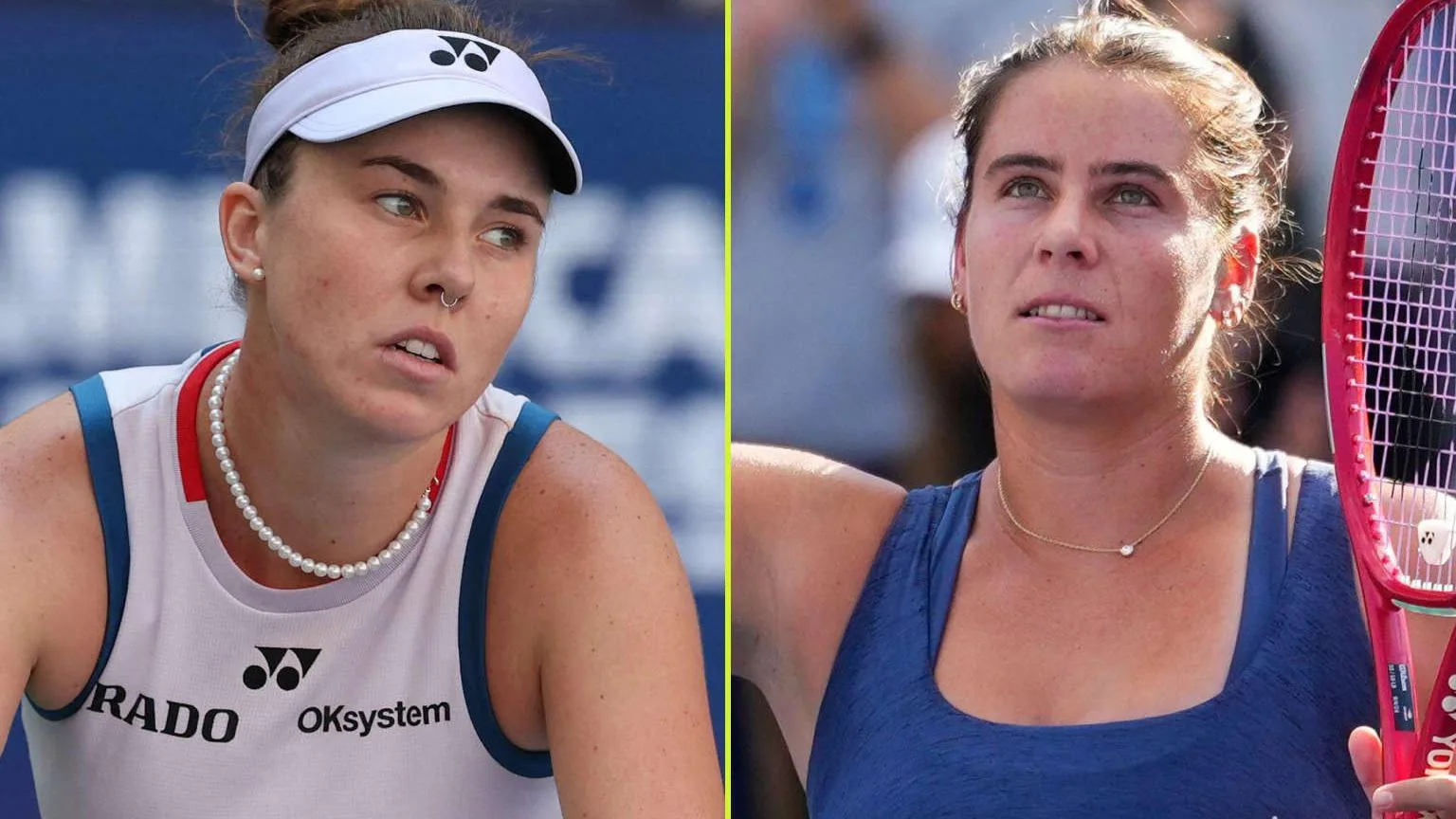
Emma Navarro and Linda Noskova both saw their 2026 US Open title bids end in the quarter-finals, yet each still leaves New York with useful ranking points after strong runs.
Both players pushed their matches to three sets before falling. Navarro, who was involved in an all-American contest, led early in the deciding set after breaking in game three to move 2-1 ahead, but Jessica Pegula recovered to win 6-3, 4-6, 3-6. Noskova also seized control in the final set, moving 4-2 up after a break in game five, but world No 1 Aryna Sabalenka responded to complete a 7-6 (7-1), 3-6, 7-6 (10-7) victory.
“After these matches when you’re so close… it kind of reminds you of where you are standing,” Noskova said after the defeat. “I will just try to keep going, you know. I feel great on court, which is always my main point, and ranking doesn’t really matter.”
Noskova did not move up the rankings, but her week in New York still marked a step forward. Her previous best at Flushing Meadows had been a third-round appearance, so reaching the quarter-finals represented new ground. She began the tournament at a career-high No 6 and will stay there, while remaining 415 points behind Mirra Andreeva, who could still extend that gap.
The WTA’s rolling 52-week system means players lose the points they earned in the same event 12 months earlier. Noskova had 130 points to defend from a round-of-32 result in 2025, and the 430 points for reaching the last eight leaves her 300 points better off. Navarro was in the same position, also defending 130 points and earning 430, so she will likewise add 300 points to her tally. The 25-year-old has already climbed four places in the Live WTA Rankings to No 24.
There is also a financial boost for both. Noskova had earned $6,693,489 in 2026 before the US Open, with her career total standing at $11,254,108. After reaching the quarter-finals, she adds $780,000. Navarro, who had 2026 earnings of $1,038,485 and a career total of $6,679,094 before the tournament, will also take home $780,000.
1000
Sabalenka keeps title focus as ranking pressure mounts
Sabalenka says a US Open three-peat matters more than the No 1 ranking race.
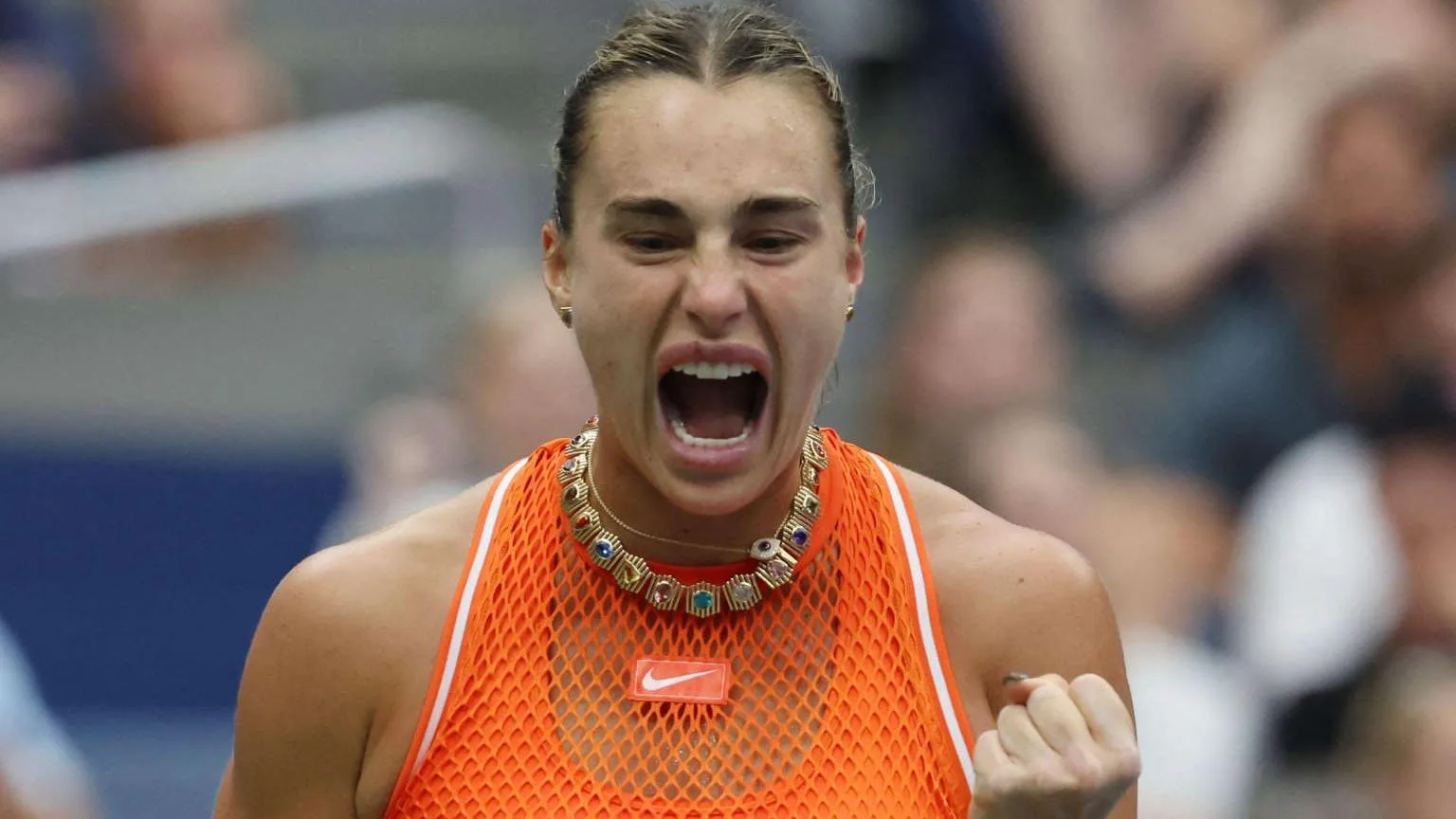
Aryna Sabalenka’s place atop the rankings could be decided by Elena Rybakina, but the defending champion says her attention is elsewhere as the US Open enters its decisive phase.
Rybakina would move to world No 1 if she defeats Zheng Qinwen in the quarter-finals in New York, yet Sabalenka has made clear that the chase for a third straight title at Flushing Meadows matters more to her than the ranking picture. A recent dip in form has allowed Rybakina to close in, but Sabalenka continues to speak in terms of a “three-peat” rather than the No 1 race.
Her title defence stayed alive with a dramatic 7-6(1), 3-6, 7-6(7) victory over Wimbledon Linda Noskova in a gruelling match on Arthur Ashe Stadium. Afterward, Sabalenka was asked whether she would be content with a third US Open crown even if it meant finishing the tournament outside the top spot.
“Of course. I’ll be more than happy. Three-peat… sounds great,” she said.
“I’m just super happy that I put myself in the position where I have chance to go for the three-peat, even though I’m still far away from that.
“I’m super happy to put myself in a position for a three-peat, even though I’m a long way from that.”
Sabalenka also reflected on how close the contest came to turning against her. “I’m really happy the way I finished the match with a second serve ace,” she added. “I’m happy that I stayed aggressive throughout the whole match and trusted my shots.
“At some point in the third set, she was definitely serving better than me. But I was able to focus point by point and build something. I played with great intensity and that gave me so much confidence that I can still get the win in this match.”
Sabalenka is now on an 18-match winning run at the US Open, and if she reaches 20, she will be celebrating again on Saturday.
1000
Greg Rusedski offers serve help to Alex Eala after recent rise
Rusedski praised Eala’s rise but singled out her serve, offering help.
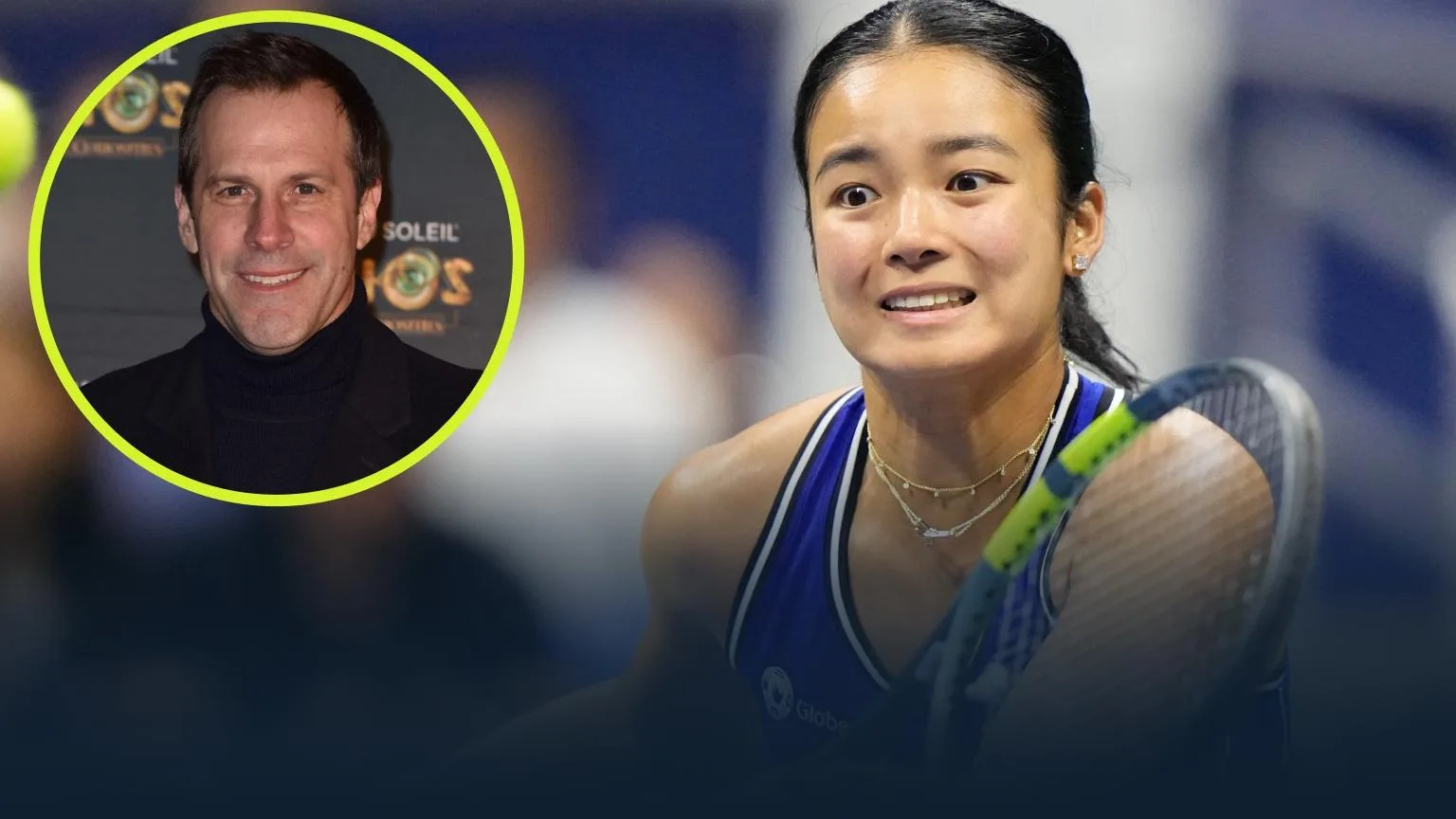
Alex Eala has been one of the sharpest performers on the tour lately, yet her serve remains the part of her game that draws the most attention. It is markedly slower than much of the WTA Tour, which has often left her leaning on the quality of her return to stay alive in matches.
That issue came up on a recent episode of Off Court with Greg, where Greg Rusedski said he would be keen to help Eala improve that side of her game. His assessment was direct, pointing to technical details he believes are holding the serve back.
“If I’m looking at her serve, I think her elbow position and throwing position need to get better, as well as the way she starts the motion, because there’s not enough tilt, in my opinion, especially with the front shoulder and the back shoulder,” said Rusedski about Eala’s serve.
He added that the setup is too rigid and explained why that matters for the motion and power production.
“So it’s too square. And when you’re square, it’s really hard. You’d never throw a ball like that. For me, that’s the first thing I’d work on, because if you can change that angle, which isn’t that difficult a thing to do, but it’s making it a habit that takes a little bit longer, then she can use the explosiveness of the elbow to throw and loosen up the wrist on the serve, which would definitely get her a few MPH.
“I’d love to have a crack at it. I don’t know if I’d ever be invited to do so. But during the offseason, that would be something I would be very interested in doing because if she gets the serve, it just opens up everything.”
Eala is currently working with Joan Bosch, whom she met at the Rafael Nadal Academy, while she has also been training recently with Toni Nadal.
Rusedski brings a coaching background of his own. After retiring in the mid-2000s, he worked as a development coach for the Lawn Tennis Association from 2007 to 2016, then became Great Britain Junior Davis Cup captain. He worked with Kyle Edmund and also spent time with Heather Watson and Johanna Konta. He had a brief spell with Victoria Azarenka between July and September 2024, and this year he also worked with Giovanni Mpetshi Perricard after his split with Francisco Roig.

Late US Open finish draws criticism after Shelton-Alcaraz marathon

Shelton tops Alcaraz in late-night US Open classic

Alcaraz exit extends a remarkable US Open streak without repeat men’s champion

Alcaraz Confronts On‑court Microphones During US Open Practice Ahead of Opelka Match

Raducanu Arrives at US Open With Momentum After Strong Hard‑Court Swing