Fashion Met Gala
Williams sisters and Osaka channel couture at Met Gala under ‘Fashion is Art’
Venus, Serena and Naomi translated ‘Fashion is Art’ at the Met Gala with symbolism and crystals now.

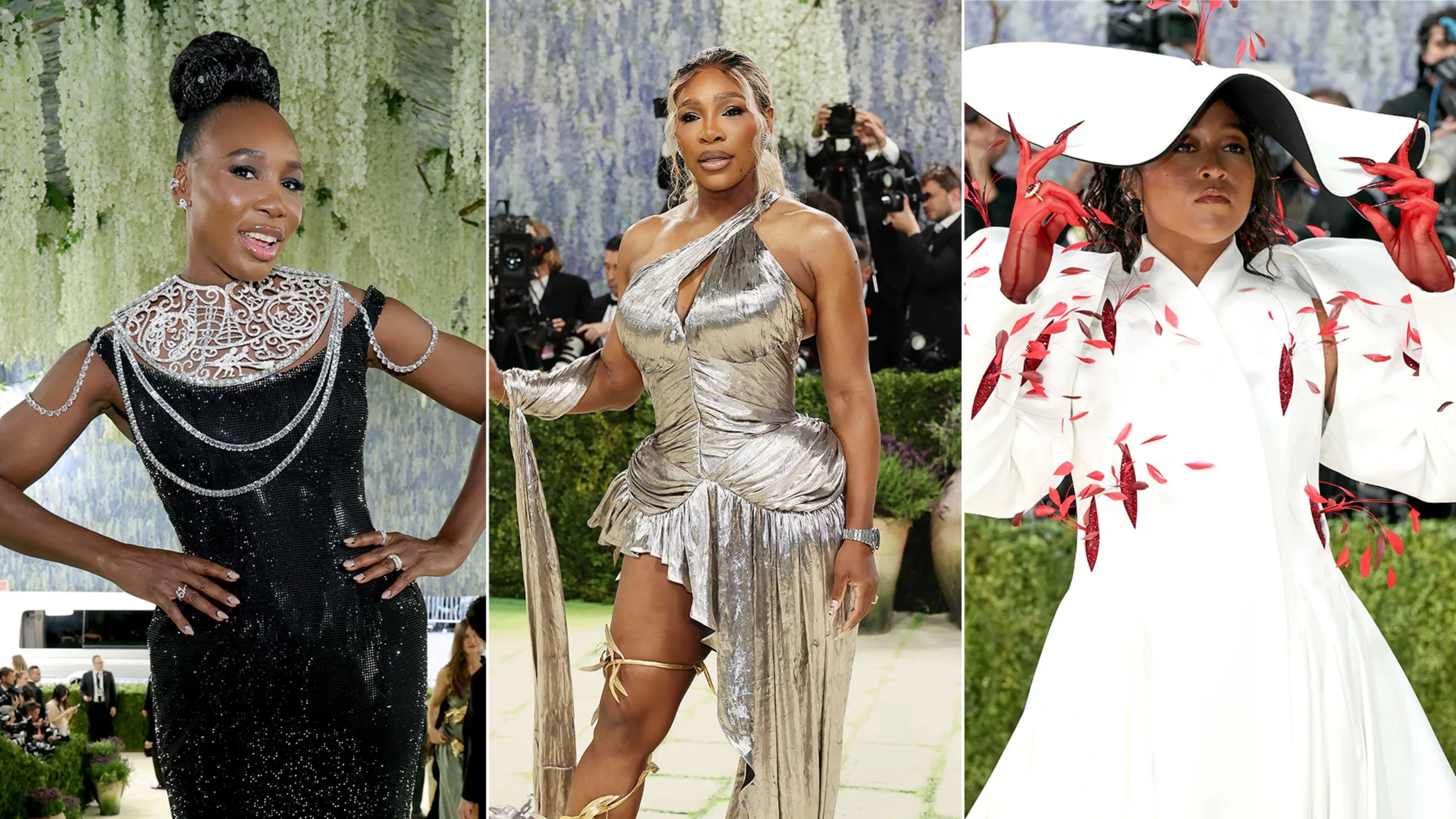
Three tennis figures turned the Met Gala red carpet into a study of costume as expression, each offering a distinct answer to the evening’s “Fashion is Art” directive. Venus Williams served as an honorary co-chair and arrived in a custom black Swarovski gown with a pearl neck plate that referenced a 2022 portrait commissioned by the National Portrait Gallery and Wimbledon’s famous Venus Rosewater Dish. She said the adornment carried layered meaning: “There’s a lot of symbolism,” she said. Elements in its construction, she added, represented her parents, her heritage and the Watts Towers that signify southern California. She told Vogue it was an “incredible honor” to serve in the ceremonial role as co-chair and to represent tennis, a spot that her sister Serena, Osaka, and Roger Federer held previously.
Serena Williams opted for a metallic statement, dressed head-to-toe in silver by Marc Jacobs and wearing David Yurman jewels. Her presence underscored the way fashion and tennis careers have long intersected for the former champion.
Naomi Osaka brought a theatrical two-piece by Robert Wun, the same couturier who helped her generate attention earlier in the season. Appearing at the event for the first time since she co-chaired herself five years ago, the former world No. 1 stepped out first in an ivory coat trimmed with red feathers and an oversized wide-brimmed hat by Awon Golding. She removed the coat to reveal a sparkling red dress set with four shades of Swarovski crystals. Vogue reported that the look took more than 3,200 hours of work to complete and that it represented “the shedding of the skin and the human anatomy.”
Venus framed her role as both personal and representative of the sport: “When I got the call, I could hardly believe it,” she said. For the three women, the Met Gala offered a chance to translate courtside style and personal history into crafted attire that treated clothing as sculpture and storytelling.

Fashion French Open Grand Slam
Sabalenka powered into Roland Garros second round amid heat and heavy jewelry
Sabalenka advanced at Roland Garros in heat, sporting an all-black Nike look and lavish jewelry. now
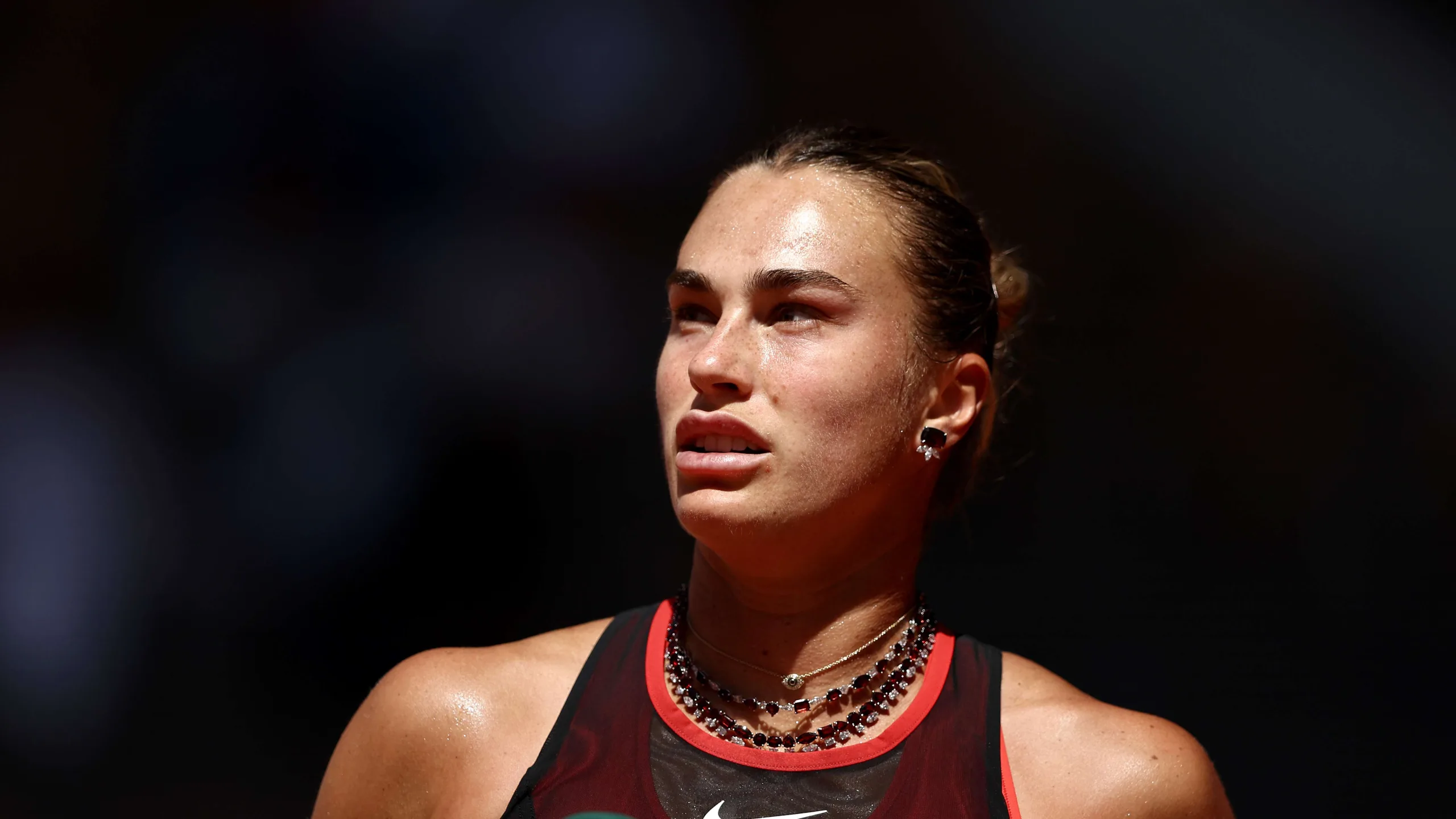
World No. 1 Aryna Sabalenka advanced to the Roland Garros second round with a 6-4, 6-2 victory over Jessica Bouzas Maneiro on Tuesday. The match itself proved routine for the top seed, but attention extended beyond the scoreline as a Paris heat wave and an elaborate jewellery set drew notice.
Sabalenka previewed the on-court look on social media, wearing a layered Nike fit that paired breathable black mesh over a red performance dress, with red accents at the neckline and on her nails. “I don’t like to take it easy, you know. I like to challenge myself!” Sabalenka laughed when asked about her on-court look.
She defended the choice of black in warm conditions. “The dress is super light, like, I don’t feel the dress on me,” she explained. “I was thinking it’s going to be super hot wearing black, but it doesn’t feel like black color on me, so I feel really comfortable.”
The most talked-about element of the outfit was the jewellery commissioned from sponsor Material Good. Sabalenka wore a stack of three necklaces and an earring set made from “over 200 carats of garnets and 23 carats of diamonds,” a design inspired by the red clay courts. On Tuesday she wore two of the necklaces on court.
“I don’t really feel the heaviness of it, but I can imagine how it looks from the outside,” Sabalenka said. “I feel pretty comfortable.
“For me, it’s important to look good. If I feel good looking-wise, I perform better and I feel great.”
Last year’s finalist is applying that approach while managing expectations after mixed clay-court form. She reached the quarterfinals in Madrid, where she lost to Hailey Baptiste, and exited in the third round in Rome to Sorana Cirstea. That sequence, combined with life as world No. 1, has added pressure heading into the clay-court major.
Sabalenka also said she relies on her entourage for support and security as she travels with valuable pieces. “I have my fiance! He’s like kind of like my security,” she laughed. “I have my team. I have Jason and my physio who does Jujitsu, so I feel pretty secure walking around.”
ATP Fashion Media
Alcaraz on Vanity Fair Cover: Clay, Couture and the Sinner Rivalry
Alcaraz covers Vanity Fair’s sports issue, blending tennis, fashion and his rivalry with Sinner. Now
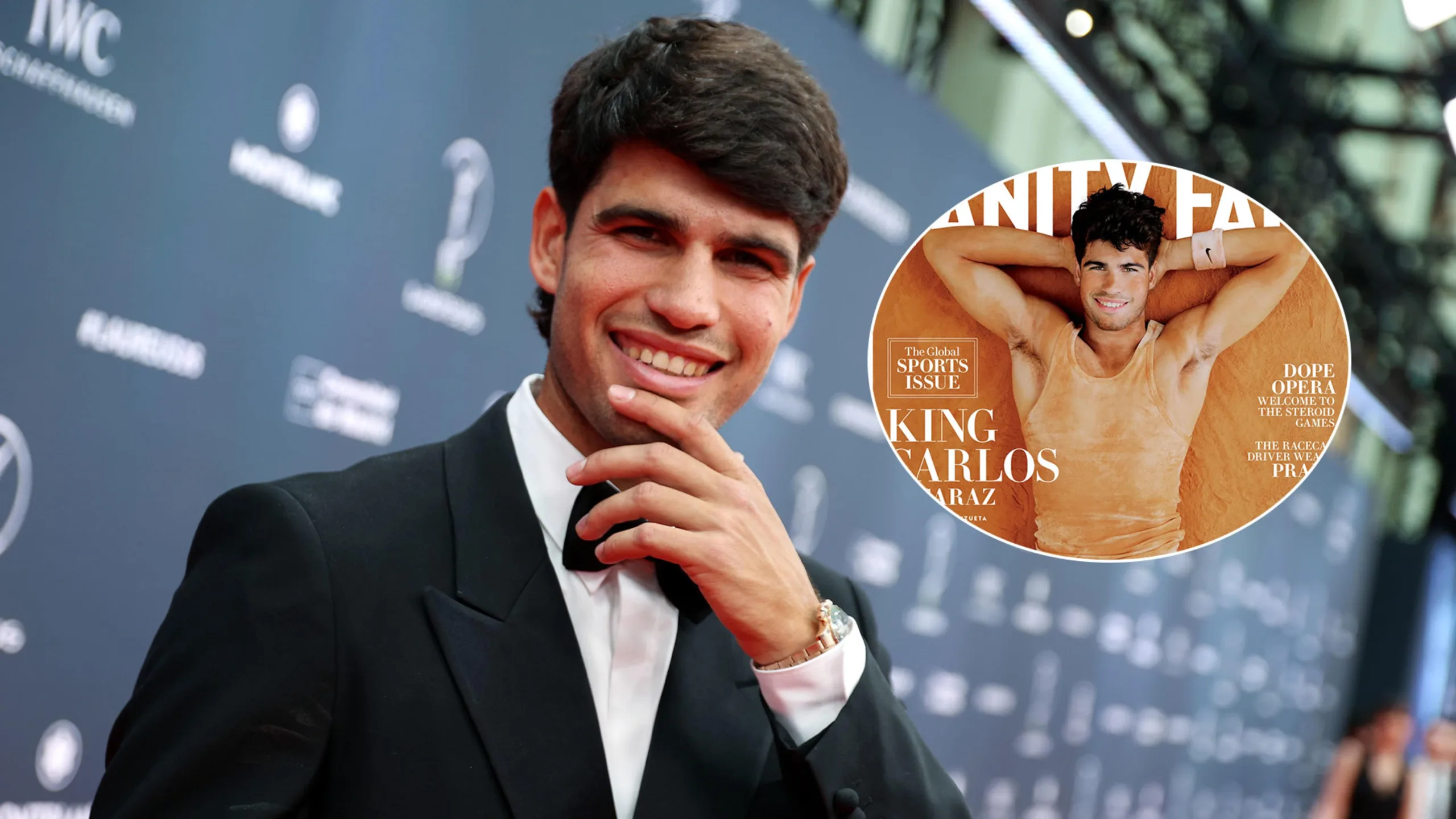
Carlos Alcaraz occupies Vanity Fair’s first dedicated global sports issue in a feature that pairs high fashion with the sport’s most discussed rivalry. The profile notes that a wrist injury could keep him out for much of the clay-court season, yet the imagery and story underline how closely the player remains tied to the clay and to tennis culture.
Photographer Ethan James Green shot images of Alcaraz layered in orange clay dust in Miami, styling him in Louis Vuitton, Nike, and Rolex. The feature by José Criales-Unzueta is headlined “King of the Court: Carlos Alcaraz on ‘Living the Dream Life’ and His Rivalry With Jannik Sinner,” and it frames Alcaraz’s commercial presence alongside his on-court achievements.
“What makes Carlos so captivating is the emotion he brings to the game: joy, spontaneity, genuine artistry,” says Pharrell Williams, men’s creative director of Louis Vuitton, in the piece. The story places Alcaraz beside athletes A’ja Wilson and Kylian Mbappé to illustrate sport’s cultural and financial reach.
The profile devotes substantial space to Alcaraz’s dynamic with Jannik Sinner, a pairing already nicknamed “Sincaraz” and presented as the spiritual successor to the Federer, Nadal and Djokovic era. On their relationship, Alcaraz is clear: “We’re showing the world that we can be on court and give our best, and try to do the most possible damage to the other while playing, try to beat each other, and then, off court, just be two guys who get along really well,” he says. “We help each other give our best.”
He adds: “We are fighting for the same goal, but there’s no need to hate each other because we want the same thing,” adding: “When you are competing at this level, having a close friendship is complicated. It can be done. I’m all for it.”
While he accepts flattering comparisons to past greats, Alcaraz concludes that “we’ve reached a point in which comparisons are over.” The Vanity Fair piece captures both the commercial shimmer and the competitive intensity surrounding one of tennis’s leading figures.
Fashion Media Met Gala
Venus Williams Transforms Met Gala Look into a Statement on Women’s Sports Science
Venus Williams used her Met Gala ensemble to highlight a 6% gap in women’s sports science. Research.
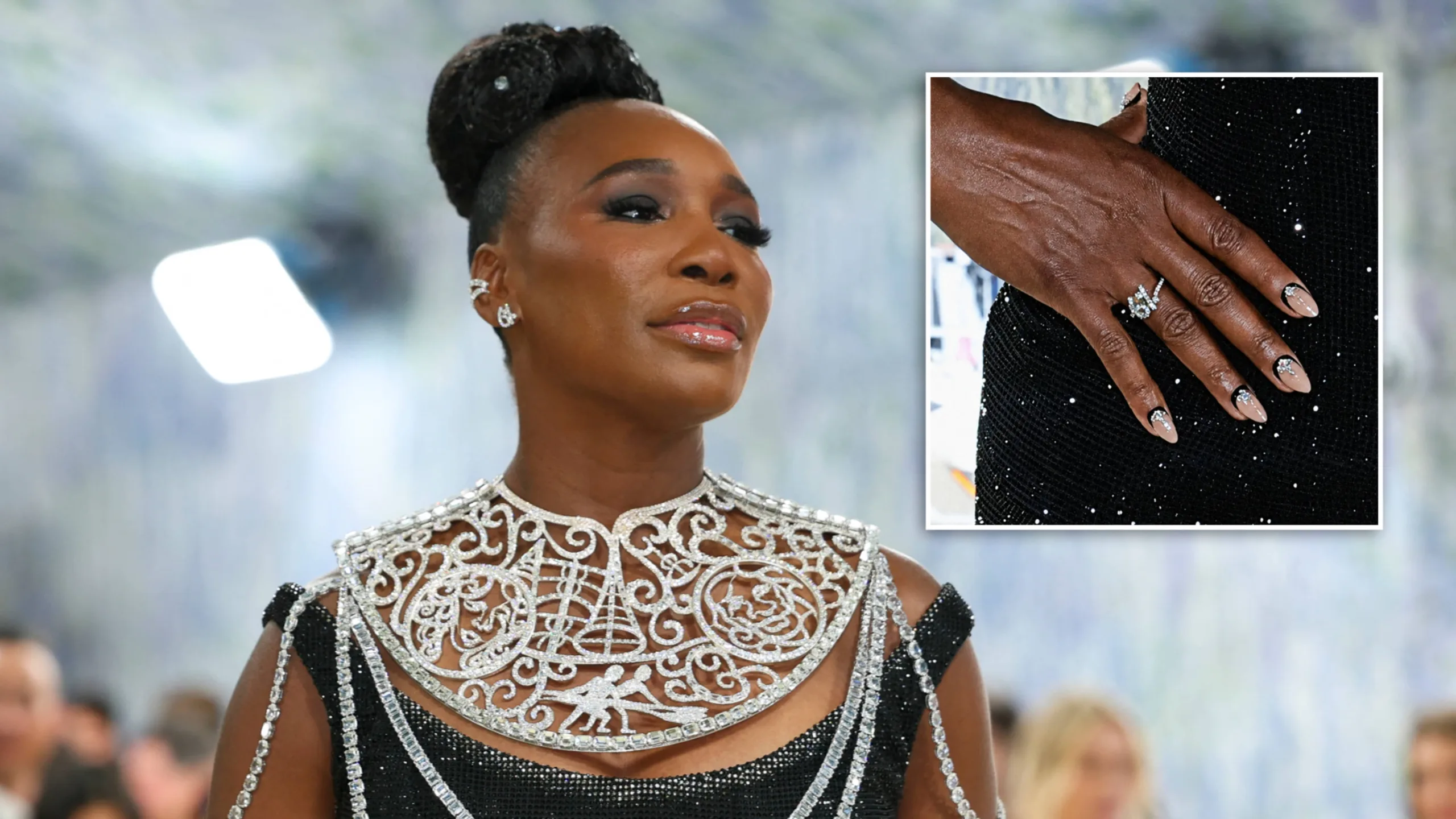
Venus Williams brought deliberate symbolism to the 2026 Met Gala, using her couture look to draw attention to a gap in sports research. Co-chairing the event alongside Beyoncé, Nicole Kidman, and Anna Wintour, the seven-time Grand Slam champion translated her own portrait, “Venus Williams, Double Portrait” by Robert Pruitt, into wearable art.
The design drew directly from Pruitt’s 2022 portrait, commissioned by the National Portrait Gallery for the Smithsonian Institution’s Portrait of a Nation Gala. In the painting an older Venus faces a younger version of herself; the older figure wears the Wimbledon trophy as a necklace, while the younger stands in a black dress surrounded by strands of her signature white beads. That imagery was echoed in a fully couture black gown featuring a structured corset and sculpted hips and in a sterling silver statement necklace modeled after the Venus Rosewater Dish.
Swarovski Global Creative Director Giovanna Engelbert explained the creative starting point. “For Venus Williams, the starting point was her portrait by Robert Pruitt in which she wears a necklace carrying deep personal meaning a tribute to her family, her roots in Compton, and the people and places that shaped her,” she wrote. “Together, we chose to recreate that necklace as faithfully as possible, translating its symbolism into Swarovski crystal while protecting the spirit and intent of the original piece.”
More than 4,000 Swarovski zirconia and crystals were used in the creation, and the necklace was hand-set with 3,800 stones by two master goldsmiths. Beyond surface glamour, the jewelry contained a specific message: earrings, rings, and other pieces spelled out “6%,” calling attention to the share of global sports science research focused exclusively on women.
The statement coincided with the launch of Gatorade’s Body of Science, a multi-year global research initiative led by the Gatorade Sports Science Institute, with Venus serving as its first ambassador. “This work is so important because it’s not just about me, it’s about the women who come after me,” Venus said. “For decades, we’ve pushed our bodies to the limit based on research designed for men.” The initiative will study women’s needs across life stages and key physiological moments, including the menstrual cycle, pregnancy, and perimenopause.

Zverev Arrives at Laver Cup With Europe’s Title Bid in Focus

Alex Eala opens Singapore challenge against Prozorova as ranking gains loom

Zverev’s breakthrough season rewrites a long-running story

Raducanu Arrives at US Open With Momentum After Strong Hard‑Court Swing

Alcaraz Confronts On‑court Microphones During US Open Practice Ahead of Opelka Match