
Finals French Open Grand Slam
Qualifier Maja Chwalinska Becomes First to Reach Roland Garros Final in Open Era
Maja Chwalinska, world No. 114, became the first qualifier to reach a Roland Garros final. She is 24.

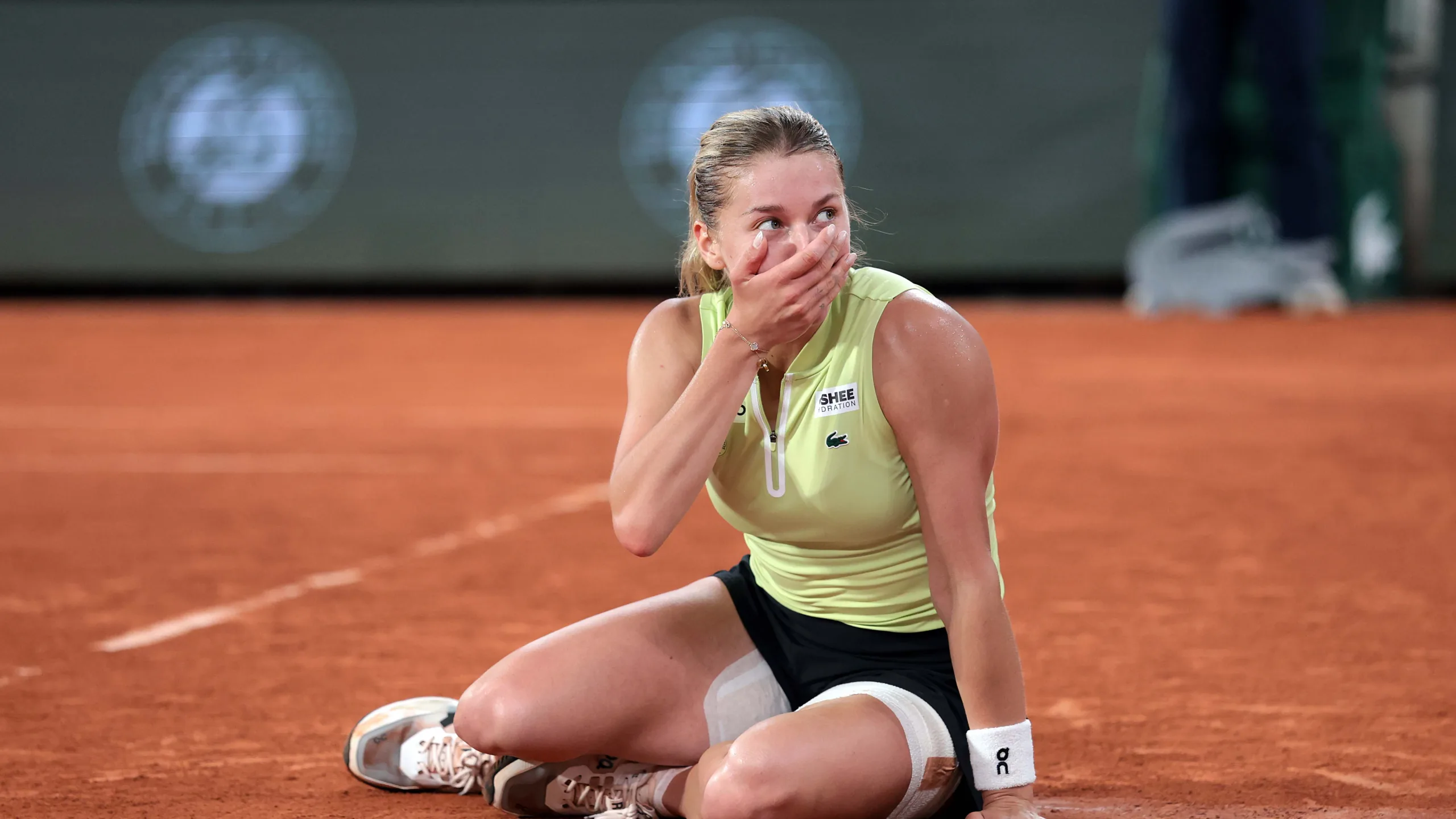
Maja Chwalinska advanced to the Roland Garros final on Thursday, completing a run from qualifying to within one match of a major title. The world No. 114 defeated fellow left-hander Diana Shnaider 7-6 (4), 6-4 to become just the second women’s qualifier in Open Era history to reach a Grand Slam final and the first to do so at Roland Garros.
Chwalinska, 24, produced a composed performance in a high-quality contest. After losing a break advantage in the opening set, she saved two break points to hold for 6-5, then took control of the tiebreak by winning the final five points. The Pole struck 32 winners while committing 17 unforced errors. Shnaider finished with a 33-to-36 winners-to-unforced-errors ratio.
The momentum carried into the second set, where the pair traded breaks before Chwalinska secured a third return game to move ahead. After two hours and seven minutes, the victory belonged to the qualifier.
“I mean, like a dream honestly. I don’t know what’s going on,” she said on court afterwards in Paris. “I don’t know what to say. I’m just very happy.”
This is only Chwalinska’s third main-draw appearance at a major; her previous two were at 2022 Wimbledon and the 2025 Australian Open. With the title match still to come, she has the chance to complete one of the most unlikely Grand Slam runs of the season. Should she defeat Mirra Andreeva in Saturday’s championship match, she would join Emma Raducanu as a qualifier to capture a major trophy.
Chwalinska’s run from the qualifying competition to the championship match is a rare achievement in modern tennis and adds a compelling chapter to this year’s event.

Finals French Open Grand Slam
Siniakova, Townsend secure Roland Garros title and chase team Career Grand Slam
Siniakova and Townsend captured Roland Garros, their third different major, and target a Career Slam.
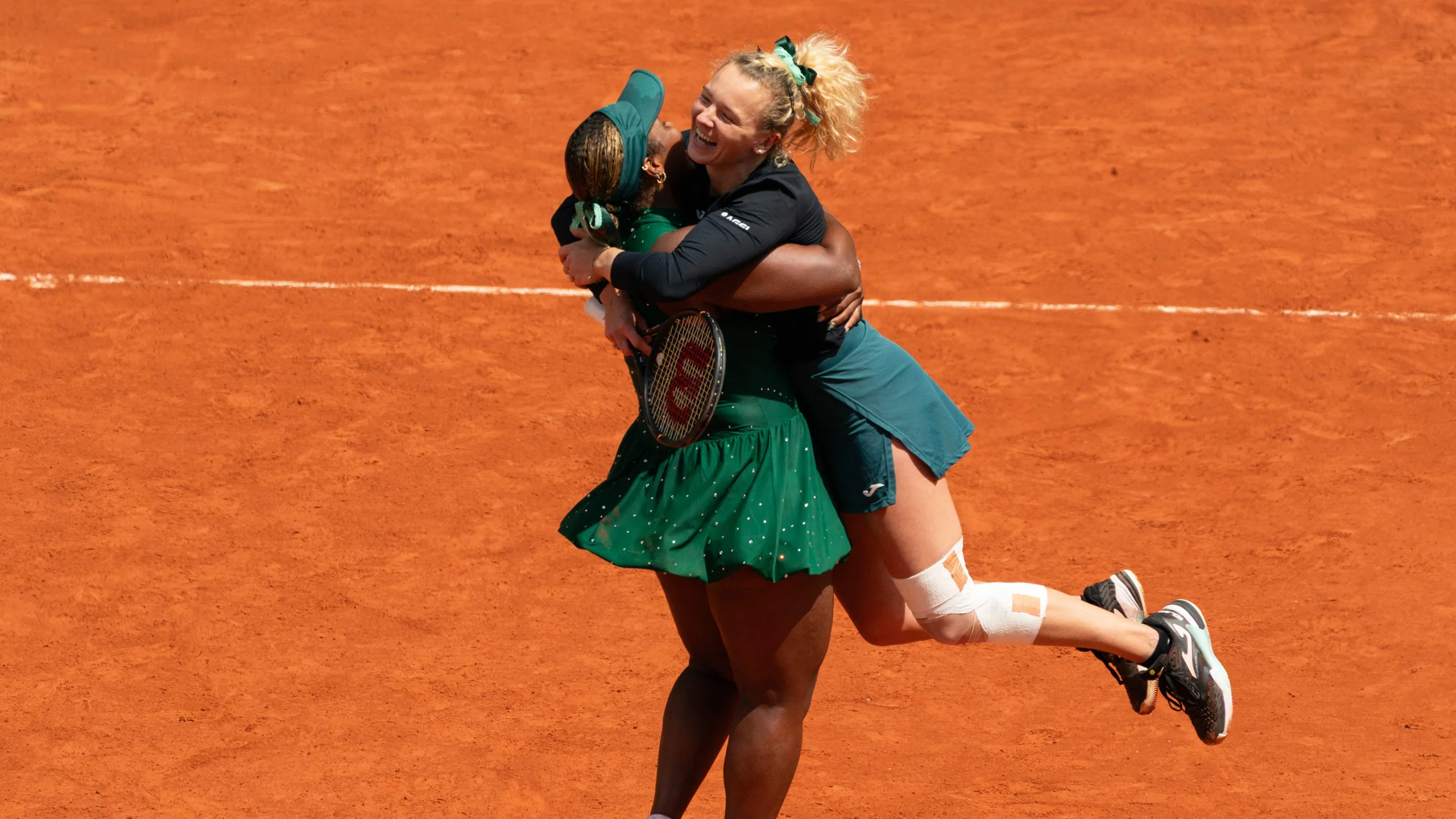
Top seeds Katerina Siniakova and Taylor Townsend returned to Grand Slam victory with a straight-sets win at Roland Garros, beating second-seeded Anna Danilina and Aleksandra Krunic 6-2, 7-5. After falling behind 4-1 in the second set, the top seeds rallied to claim the clay-court major and register their third different major trophy together.
The Paris title follows their triumphs at 2024 Wimbledon and the 2025 Australian Open, leaving the pair with an opportunity to complete a team Career Grand Slam in New York later this year. Townsend reflected on what the American major would mean, saying, “For me the US Open would mean everything for me to be able to win that. I’ve gotten close several times as well. Lost to (Katerina) the first time,” Townsend smiled when speaking to press.
Siniakova was emotional after the victory as the duo collected their seventh team title. For the Czech, who already has a Career Golden Slam with Barbora Krejcikova, this marked her 11th Grand Slam crown in women’s doubles. Four of those titles have come at the clay-court major with three different partners.
Speaking about their partnership, Siniakova said, “The game of me and Taylor is totally different. I think for the opponents it’s also really tricky, because we can change it, and we can play almost anything we want. We can just do it during the game. I’m just really glad that we kind of work on everything and play anything, because then it’s also making it easier for us.”
The pair have been in strong form across the spring, winning four of the last five events they contested, with earlier titles at Indian Wells, Miami and Madrid. For Townsend, time away from her five-year-old son Adyn is a challenge she willingly accepts. “Of course, winning a title in a Grand Slam, it’s amazing. My dad, he was like, ‘I taped the ceremony, so I’ll show it when he wakes up.’ For (Adyn) to be able to see me succeeding, it means a lot to me, but also to be able to bring back lessons and things that I’ve learned and to come back a better person really drives and motivates me a lot,” Townsend said.
Finals French Open Grand Slam
Mirra Andreeva wins first Grand Slam, defeats Maja Chwalinska in Paris final
Mirra Andreeva, 19, won her first Grand Slam at Roland Garros, beating Maja Chwalinska 6-3 6-2. (RG)
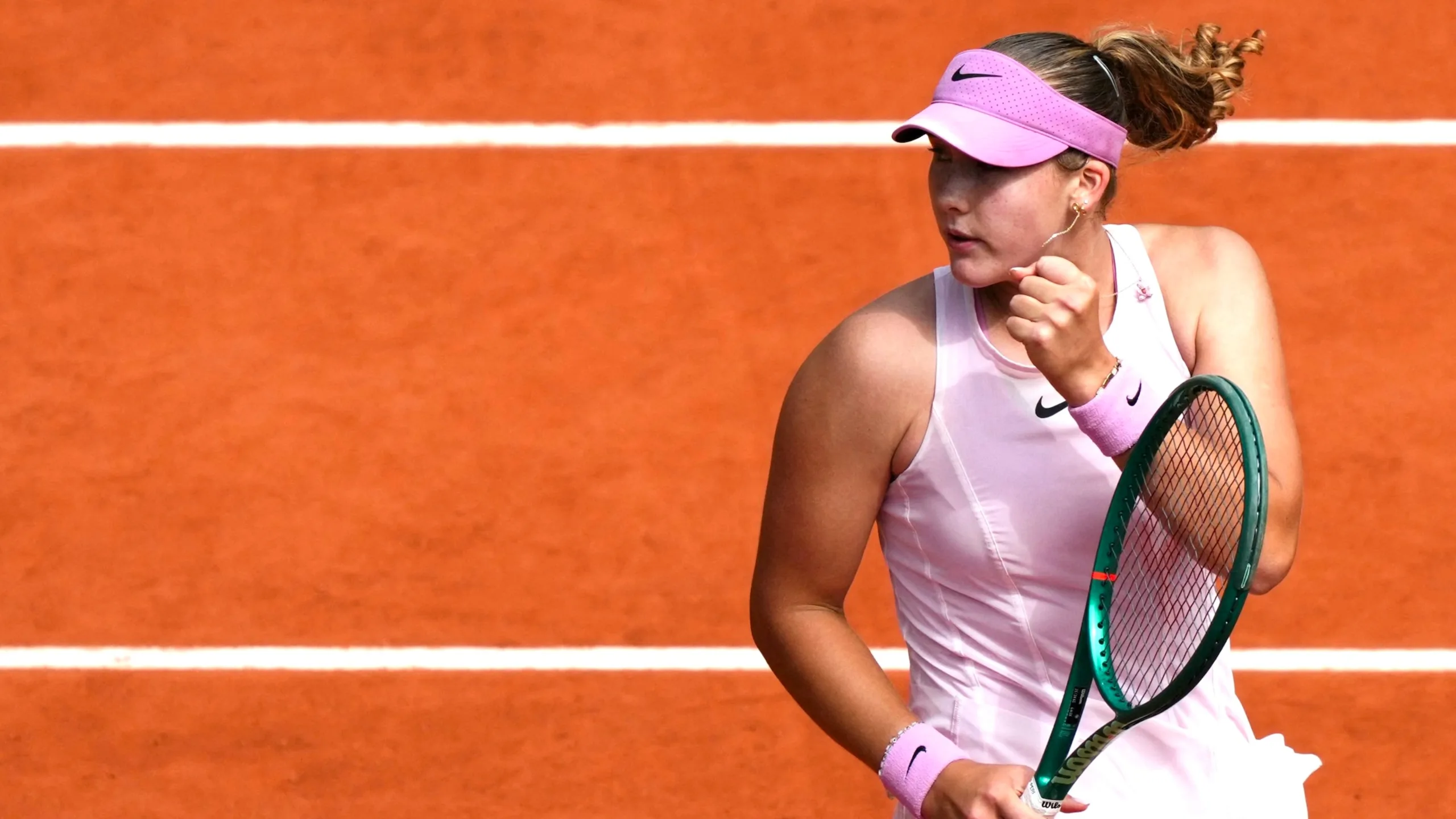
Mirra Andreeva closed a remarkable fortnight at Roland Garros by defeating Maja Chwalinska 6-3, 6-2 to claim her first Grand Slam title.
The 19-year-old lifted the Coupe Suzanne Lenglen and became the first teenager to win the French Open since 2020, when Iga Swiatek prevailed at 19. Because Andreeva is the younger of the two 19-year-olds, she is the youngest woman to win Roland Garros since 1992. That year an 18-year-old Monica Seles took the title in Paris, the third of three consecutive French Open victories for Seles after wins in 1990 and 1991 at ages 16 and 17.
Andreeva’s straight-sets victory ended the extraordinary run of qualifier Maja Chwalinska, who had rewritten the tournament’s history en route to the final. Chwalinska became the first qualifier, female or male, to reach the Roland Garros final in the Open Era. Ranked No. 114 in the WTA standings, she also became the lowest-ranked player to reach the title match on the terre battue in WTA rankings history.
The final scoreline reflected Andreeva’s control through the match, and the result marks a major milestone in her career with a first Grand Slam crown. The victory places her in a select group of teenagers who have won at Roland Garros and revives historical comparisons because of her age relative to past champions.
Chwalinska’s run, from the qualifying draw to the championship match, was an unprecedented breakthrough for a player outside the top 100 and will be noted in the record books alongside the tournament’s longstanding traditions. Andreeva’s win adds a new chapter to Roland Garros history and confirms a changing landscape among the game’s youngest champions.
Finals French Open Grand Slam
Unexpected Roland Garros final pits Mirra Andreeva against qualifier Maja Chwalinska
Mirra Andreeva faces qualifier Maja Chwalinska in an unexpected final; tactics and nerves decide now
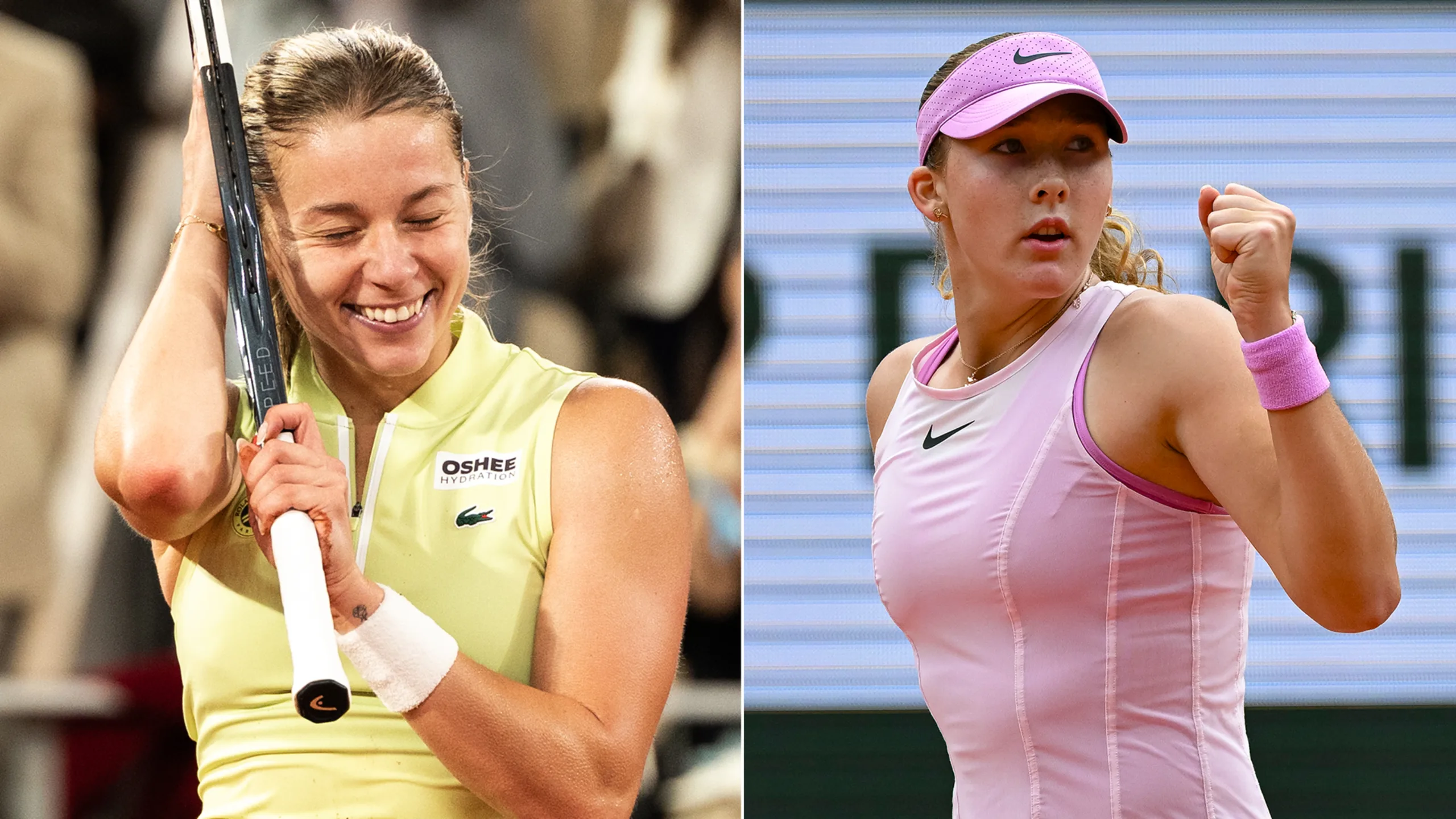
The women’s final at Roland Garros arrives without any of the four players many expected to contend. The tournament’s top four — Aryna Sabalenka, Elena Rybakina, Iga Swiatek and Coco Gauff — did not reach the semifinals, leaving room for two first-time major finalists to meet.
Mirra Andreeva arrived as a dark horse. At 19 she has long been a mix of talent and volatility: capable of sublime form but not yet proven across a full Grand Slam run. In Paris she has found a new level. Since the fourth round Andreeva has leaned on a powerful serve and extended groundstrokes, combining pace, depth, spin and net clearance to construct a near-impenetrable baseline position. In her last two matches she steamrolled Sorana Cirstea and Marta Kostyuk, arriving in the title match in dominant form.
Across the net stands Maja Chwalinska, a qualifier ranked 114th who until this run was scarcely on many radars. The 24-year-old, 5-foot-5, with a loopy, underpowered serve, took attention after beating Zheng Qinwen and Elise Mertens by identical 6-4, 6-0 scores. She has also been noted for a moment earlier in the season when she placed an ice bag on Iga Swiatek’s head. Chwalinska admitted the run has been a surprise. “It’s definitely a big surprise for me, and I didn’t expect it,” she said after reaching the quarterfinals. Reflecting on her semifinal, she added, “I honestly don’t know what was going on in my head,” and described her reaction as shock.
The matchup will be a first meeting and the first major final for both players. They share baseline instincts, two-handed backhands and a reliance on topspin, but their methods diverge. Andreeva presses with relentless power and consistency; Chwalinska relies on variation — high loopy balls, side-spinning slice, sudden backhand drops and precise passing shots — to create openings. Andreeva acknowledged the novelty: “It’s going to be very entertaining, very interesting, as well, because obviously I have never played against her.”
Two questions loom: will nerves influence either player on Chatrier, and can Chwalinska’s loops and chops and drops disrupt Andreeva’s current groove? The answers will determine who lifts the unexpected trophy.

Sinner’s serve numbers reveal a mixed picture despite his dominance

Alcaraz injury concerns deepen after World Cup final appearance

Philippoussis says tennis needs Alcaraz as comeback target nears

Alcaraz Confronts On‑court Microphones During US Open Practice Ahead of Opelka Match

Raducanu Arrives at US Open With Momentum After Strong Hard‑Court Swing

Cervara: Ending an eight‑year partnership with Medvedev was necessary to change the energy
-
 ATPFrench OpenGrand Slam2 months ago
Djokovic upbeat on Roland Garros fitness as he aims for 25th major
-
 French OpenGrand Slam2 months ago
Sabalenka credits communication and recovery in focused Roland Garros preparation
-
 ATPFrench OpenGrand Slam2 months ago
Moise Kouame Breaks Through at Roland Garros, Channels Djokovic in Win Over Marin Cilic