Grand Slam Player News Wimbledon
Amanda Anisimova vows to return stronger after being ‘frozen’ with nerves during Wimbledon final defeat
Anisimova showed resilience by completing her on-court interview after the final.

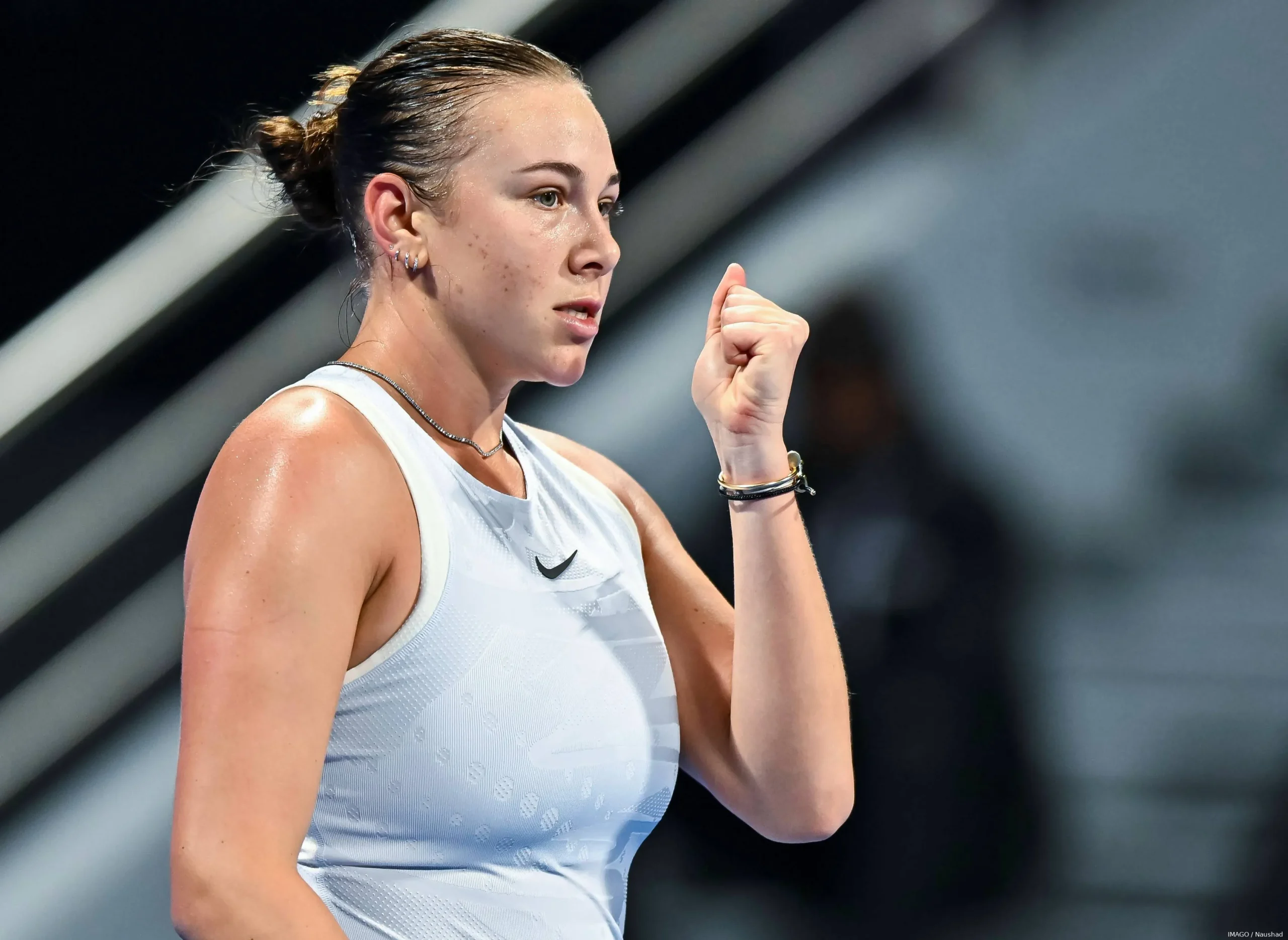
It was billed as the Wimbledon women’s final that no one expected, it finished as a match that American rising star Amanda Anisimova will want to forget.
The 23-year-old always knew she was up against it, playing in her first grand slam final against a five-time major champion who has seemingly reinvented her game on grass.
But even the biggest Iga Świątek fan would never have predicted the 6-0, 6-0 thrashing that played out on Centre Court on Saturday.
The demolition job took less than an hour. It was also the first time since 1911 that a Wimbledon women’s final was won without the champion dropping a single game.
Everything went wrong for Anisimova, while everything went right for Świątek. The perfect storm, with two very different outcomes for either player.
“I think I was a bit frozen there with my nerves and maybe the last two weeks I got a bit tired,” a very poised Anisimova told reporters during her post-final press conference.
“It was a bit tough to digest, obviously, especially during and right after. It’s not how I would have wanted my first grand slam final to go.
“I think I was a little bit in shock after as well, but I told myself I’ll definitely come out stronger after this.”
Despite the heavy defeat in the final, we must not forget the incredible tournament that Anisimova has had at SW19 this year.
No one really tipped the world No. 12 for a title run on the grass, there were simply too many better players, with too much experience in this competition.
But as the big names dropped out of the women’s draw, Anisimova kept getting closer to her maiden grand slam final.
Then came a semifinal against world No. 1 Aryna Sabalenka. Ask Anisimova today and she might say she wished her tournament ended after that brilliant win.
The American showed everything that is great about her game against Sabalenka: Her booming backhand drawing gasps from the Centre Court crowd who started to fall in love with the youngster.
But, in truth, none of that form was on display during Saturday’s final. Her serve was left wanting and 28 unforced errors just demonstrated what state of mind she was in.
In her post-match comments, Anisimova said how she had struggled with the heat during the semifinal and thought that maybe could have caused her level to drop in the final.
She also said she felt fatigue during her warmup, but didn’t want to take anything away from her opponent’s “incredible” performance.
Showing courage in defeat
Straight after the match, Anisimova somehow mustered the courage to conduct her on-court interview, something that has become tradition at Wimbledon over the decades.
After brushing away the tears, she managed to speak so eloquently about what must have felt like one of the most difficult moments of her career.
But while she explained how she simply “ran out of gas” in the final, the love she showed her family and friends in the player’s box spoke volumes about the journey she’s been on.
In 2023, Anisimova stepped away from the sport, deciding not to touch her racket for months while she combatted what she described as burnout.
The time away from tennis was to help her own mental health, which had suffered after several seasons on the hamster wheel that is the professional tennis tour.
If bouncing from hotel to hotel is not enough, each tennis match is like a psychological game of chess. It’s no wonder that teenage prodigies, like Anisimova was, can quickly get tired of it all.
During the break, Anisimova said she learned a lot about herself, spending time with the people she loves and exploring new hobbies, one of which was art.
In 2024, she returned and set out proving people wrong.
After her semifinal win at Wimbledon, Anisimova told reporters that people had said she would never reach the top of tennis again after taking such a long break.
She previously said it was a “special” feeling to show how wrong doubters were at SW19 this year.
“My fighting spirit has gotten me to the final today,” she said as her tournament came to an end.
“It wasn’t me playing perfect. There were matches where I struggled and I wasn’t playing to my full potential, but I think just me staying focused and fighting my way through certain moments and focusing and also lifting myself up and trying to not get negative on myself was the most important thing.”
No one needs to tell Anisimova that there will be brighter moments in her career to come.
If anything, this tournament has shown her game is good enough to reach a grand slam final while still having plenty of areas to improve – and that’s exactly what she’s promised to do going forward.
First, though, the more important things. Anisimova vowed to spend some much-needed time with her family and friends after they showed so much support throughout the tournament.
Whatever comes next in her career, though, you get the sense it will be driven from the feeling she felt on Centre Court during this year’s final.
“There’s a lot of improvement,” she said. “If anything, I think it’s more experience for me on how to handle nerves. It’s my first grand slam final, so at least I have that experience now.”

ATP Tour News Grand Slam
Rusedski urges patience after Djokovic’s early US Open exit
Rusedski says Djokovic’s slump is recent and urges patience after his painful US Open defeat.
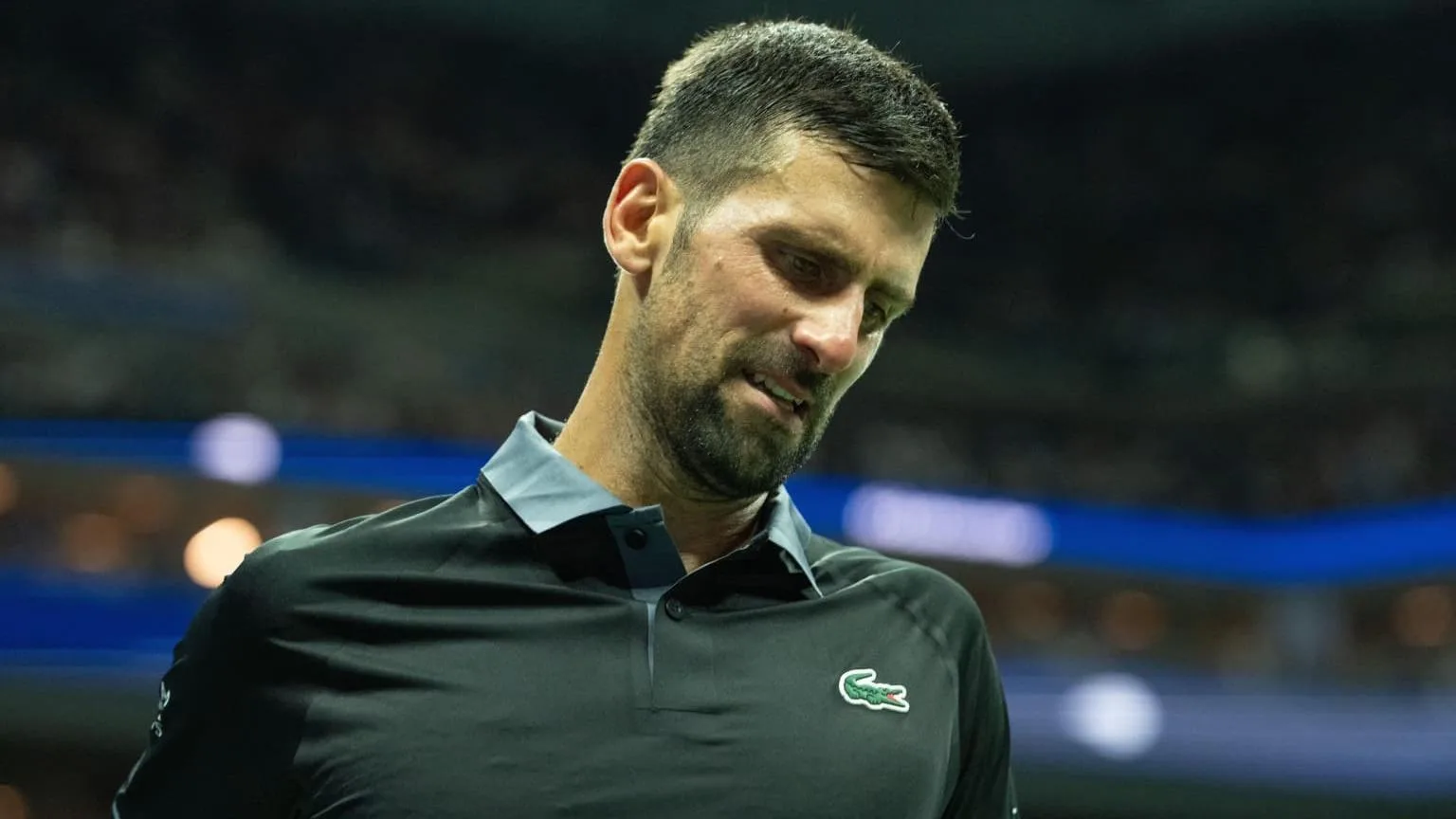
Greg Rusedski has urged observers not to rule out Novak Djokovic after the Serbian endured his earliest Grand Slam departure in two decades.
The 39-year-old was beaten in five sets by Mariano Navone on Sunday, a match that left him visibly distressed on Arthur Ashe Stadium as he fought back tears and vomited into a bin while his body seemed to give way.
Djokovic entered the US Open among the leading contenders for the title. With world No 1 Jannik Sinner sidelined by injury and Carlos Alcaraz only just returning from a wrist issue, the 24-time major winner had strong reason to believe the draw could open up for him. Instead, the Argentine held firm to win 7-6 (7-5) 5-7 4-6 6-2 6-1.
Afterward, Djokovic gave a sobering account of the physical problems he has been managing. “I think it was obvious that it was an awful feeling for me on the court,” said the fourth seed. “It’s something that I’ve been carrying, unfortunately, pretty much every match this year: vomiting, throwing up, a serious issue there.
More US Open News
ATP Rankings: How many points did Novak Djokovic drop at US Open, how much prize money did he earn?
All 21 withdrawals from 2026 US Open as three-time Grand Slam finalist joins growing list
“Then my whole body starts to collapse, cramping and pain. The back just gave up in the end, and shoulder, and I couldn’t close it out.”
Djokovic added, “ I don’t know [how I can solve the problem]. I don’t want to go into too much detail right now. I’m just trying to understand what’s going on and how much longer I can keep going like this.”
Rusedski pointed to Djokovic’s run to the Australian Open final, where he beat Sinner, and his place in the Wimbledon semi-finals as reasons for restraint. Speaking on Off Court, he argued that two straight defeats, in Cincinnati and at the US Open, should not define the bigger picture.
He said on Off Court, “Well, we’ve only seen the deterioration really this US Open and in Cincinnati. Wimbledon, we didn’t see anything. He still made the semis. In the heat in Australia, he made the finals.
“So you’re talking about this deterioration. It’s all relative, isn’t it? It’s only been the last few weeks since Wimbledon. Most people’s careers would have been set up for life. Finals of Australia, semis of Wimbledon. That’s a pretty good season for most human beings. So let’s not write him off quite yet.
“And if the body still allows him to do what he needs out there, let’s keep him in the game as long as, as long as he can be there. So that’s the balance. Will he physically be able to sustain and will he be satisfied going out earlier at the very biggest events in the world? This is a little bit of a shock.
“It’s a bad draw for him as well, the opening round. We talked about it in the lead up to the US Open saying he was in a tough section and we all knew he had a difficult opener, especially having had no form from Cincinnati and losing early.”
Rusedski also suggested that Djokovic’s reduced schedule may be part of the issue. At the same time, he noted that the depth across the game has become far more demanding, especially from the first round onward.
“I think the issue is, two out of three sets, no problem. But if you look at his preparation, he’s not being able to get enough matches. And you know, when [Roger] Federer was at his peak, he played 12 tournaments a year, but he’d win seven of those tournaments. Novak nowadays, the depth is a lot stronger,” he said.
“So if you look like from say three to 20, it’s probably slightly weaker, but then you go from 10 to 100 and the depth is brutal. So from the first round, you’ve got to show up. If you’re not at your best from the beginning, it makes life much more difficult.
“The question for me is, if he plays more two out of three set tournaments, that’s going to get him great preparation for the slams. So it’s a chicken and egg. Will the body allow him to play those matches and those tournaments?
“So let’s see if he can get it back. And as he said, if he plays two or three set matches, there’s still tournaments he can win and he can still win more events. And he still loves the love he’s getting from the fans.”
Grand Slam
US Open opens with Djokovic shock, Eala momentum and McEnroe backlash
Djokovic’s shock exit, Eala’s rise and McEnroe criticism headline a striking US Open opening.
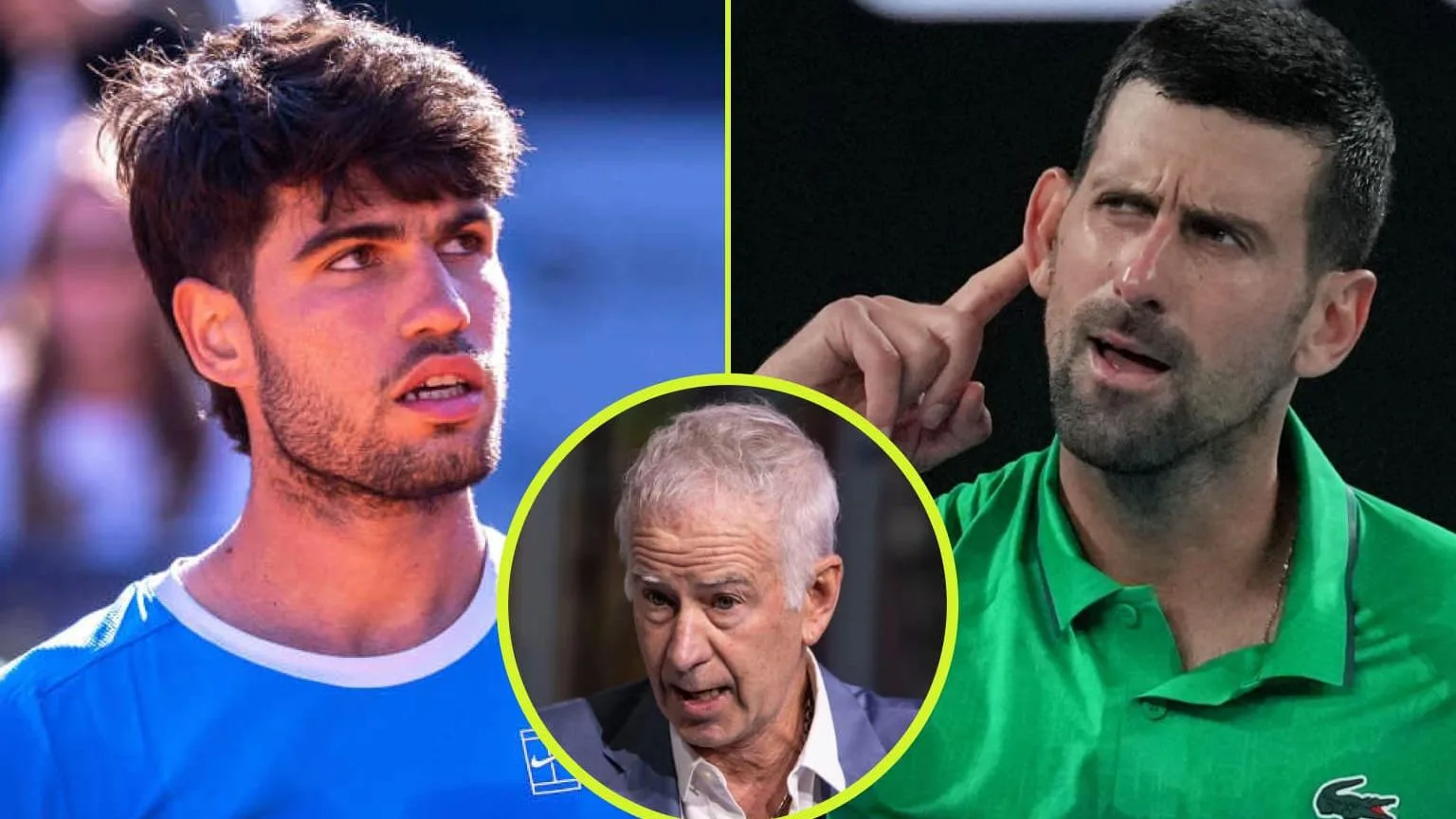
The final Grand Slam of 2026 has started with plenty to talk about, even before the main draw settled into rhythm. Roger Federer’s return to Flushing Meadows for an exhibition alongside Andy Roddick, John McEnroe and Andre Agassi added early theatre, while Karolina Muchova and Jakub Mensik captured the US Open mixed doubles title. Carlos Alcaraz also featured in the event, partnering Serena Williams.
Away from the celebratory moments, Stan Wawrinka’s entry into the tournament became a concern after he initially missed out on a wildcard, only to receive one later following an injury withdrawal. That sequence raised questions that could not be brushed aside.
The biggest on-court headline, though, came from Novak Djokovic’s surprise first-round defeat. Mariano Navone pushed through in five sets to hand the 39-year-old his first opening-round major exit since 2006. Djokovic was visibly shaken and later described the physical problems he has been battling. He said, “ It’s something that I have been carrying pretty much every match this year – vomiting, throwing up. And then my whole body starts to collapse basically, cramping and pain – the back just gave up in the end and shoulder, and I couldn’t close it out.”
Asked whether he had learned more about the issue, he added: “I don’t know [how I can solve the problem]. I don’t want to go into too much detail right now. I’m just trying to understand what’s going on and how much longer I can keep going like this.”
Alex Eala also continued to dominate the conversation. The 21-year-old has surged into the top 20 and drawn huge attention, with Andy Roddick saying she is “creating a movement”. Annabel Croft went further, saying Eala is building an “aura” that makes opponents take notice.
John McEnroe then faced criticism after his remarks following Navone’s win were judged by many to be disrespectful.
Elsewhere, Jessica Pegula advanced, Daniil Medvedev won comfortably, Luca Van Assche beat Cameron Norrie, Barbora Krejcikova lost, and Venus Williams fell to Sofia Kenin as rain interrupted several matches.
ATP Tour News Grand Slam
McEnroe criticised after comments following Navone’s Djokovic upset
McEnroe’s remarks after Navone beat Djokovic at the US Open sparked criticism online.

John McEnroe has faced heavy criticism after his reaction to Mariano Navone’s surprise win over Novak Djokovic at the US Open appeared dismissive to many viewers.
Djokovic, a 24-time Grand Slam champion, was overcome during his five-set defeat on Arthur Ashe Stadium on Sunday, breaking down in tears and vomiting into a bin as the match slipped away. The fourth seed suffered his first opening-round loss at Flushing Meadows, and it marked the first time he had exited in the opening round of a Grand Slam since 2006.
After losing 7-6 (7-5) 5-7 4-6 6-2 6-1, Djokovic said, “I think it was obvious that that it was an awful feeling on the court for me. I don’t want to take too much out of Mariano’s win. Congrats to him, he’s a nice guy and a fighter – but I didn’t enjoy myself.
“It’s something that I have been carrying pretty much every match this year – vomiting, throwing up. And then my whole body starts to collapse basically, cramping and pain – the back just gave up in the end and shoulder, and I couldn’t close it out.”
The discussion soon shifted to McEnroe, whose remarks after Navone’s breakthrough drew a strong backlash on social media. Rather than focusing on the Argentine’s biggest career victory, the seven-time major winner noted that Navone would be heading to Court 21 in the next round, where he will meet Stan Wawrinka or Matteo Berrettini.
“You’ll be playing your second round on Court 21. We wish you the best. And he is going to have to try and play with that effort and intensity but enjoy the moment, young man,” said McEnroe.
That clip was then shared by Awful Announcing, prompting a wave of criticism from tennis fans. One user wrote, “McEnroe’s entire attitude towards Navone was despicable from the jump.” Another said, “Completely disrespectful. The Novak glazing was unbearable.” A further comment read, “John McEnroe is such a loser. Navone earned the biggest win of his life and immediately gets this said about him,” while another argued that world No 42 Navone, who has reached a career high of 29, should have been put on Arthur Ashe for McEnroe’s comments alone.
Others said they were “so f****** tired” of the pundit and former player, and one reaction said it was, “long past time for McEnroe to go away.” Some suggested he was trying to be funny but missed the mark. Incidentally, there isn’t a Court 21 at Flushing Meadows.

Roddick weighs in on Djokovic’s physical breakdown after US Open exit

Rusedski urges patience after Djokovic’s early US Open exit

US Open opens with Djokovic shock, Eala momentum and McEnroe backlash

Alcaraz Confronts On‑court Microphones During US Open Practice Ahead of Opelka Match

Raducanu Arrives at US Open With Momentum After Strong Hard‑Court Swing