
Grand Slam Wimbledon WTA
Slices, sabbaticals and a strong team key to SW19 success?
More WTA takeaways from a wild 2025 Wimbledon Championships.

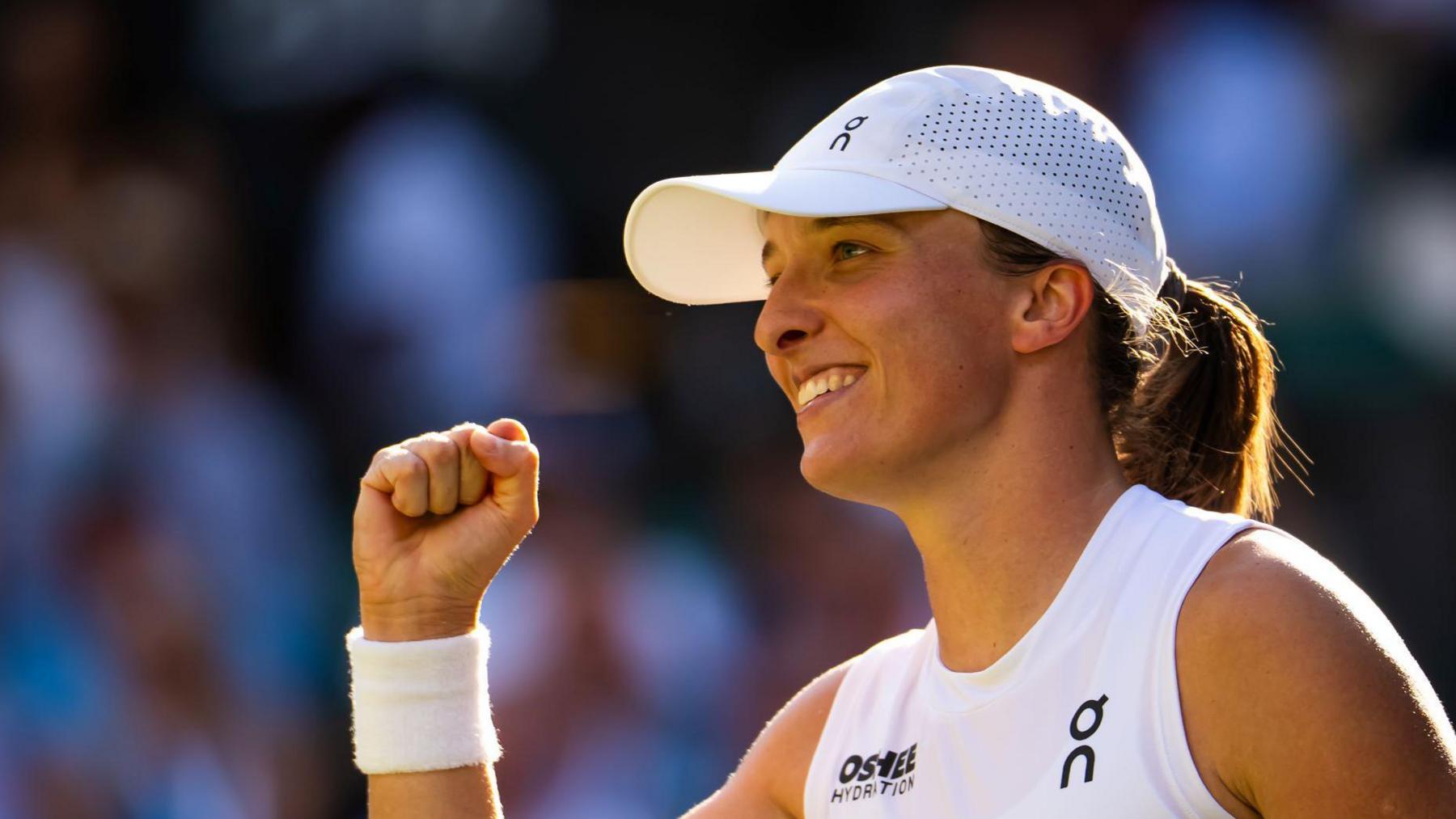
Should There Be Planned Sabbaticals?
For decades, the common path in women’s tennis was that a promising young player would dive headfirst into the pro tour. But as we’ve seen quite often, the circuit’s physical and emotional demands can rapidly leave a player frustrated and world-weary.
Wimbledon revealed that there might be alternative ways to build a far more sustainable career. As a start, nine women who’d played college tennis were in the main draw. Given that improvements in physical training have made it possible for players to compete well past the age of 30, there’s now far less need to dash into the pros. Perhaps time in college can help an ambitious young player learn many other life skills that will prove valuable over the long haul. NCAA champions Emma Navarro and Danielle Collins have each spoken about the value of attending college, from collaborating with others to living life as something other than a self-absorbed and enabled tennis prodigy.
There are also other ways to stay refreshed. Though semifinalist Belinda Bencic never showed signs of burnout, maternity leave gave her a chance to finetune her focus. “I think what I try sometimes in the household, in the tennis court, being a mom, I think you just have to let some things go. You have to compromise,” she said during Wimbledon. “I don’t practice as much as I used to. I still try to do the best on the practice court and on the match court. I feel like I am more productive because I have less time.”
Anisimova’s mental health break has also proven helpful. “Now, every tennis player will want to make eight months off,” Evert said on ESPN just after Anisimova beat Sabalenka in the semis. Evert, already number one in the world as a teenager, subsequently wisely paced herself in the late ‘70s with a few sabbaticals from the winter circuit.
College tennis. Coursework. Parenthood. Mental health. Consider each of these exiles a gap year from the harsh demands of singular competition. Why not make them a programmed part of the pro journey?
Teams Have Different Leaders
Many years ago, players traveled by themselves. Then came a trickle of a posse – parent, friend, coach. Now, thanks largely to increases in prize money, players throughout the ranks can afford to be joined at tournaments by much larger support teams. And though the coach is theoretically the most important member of the team, recent developments have proven that’s not always the case. In the late stages of Federer’s career, Pierre Paganini, his fitness coach, was arguably the most essential Team Roger member.
Consider the central role played for years by psychologist Daria Abramowicz on Swiatek’s team. At Wimbledon, Anisimova credited her physiotherapist, Shady Solemani, for many of her physical improvements. This eclectic range of leaders has shown that there’s an intriguing and creative aspect to how players go about building and working with their teams. Why not have the nutritionist be the leader? The meditation expert? The literature teacher? None of these possibilities is stated as a joke.
Stop Treating Underspin Like It’s Rodney Dangerfield
Like a tropical storm, there come those moments at a major when a player ranked outside the top ten will shake up the normal weather pattern by employing such tactics as taking pace off the ball, drop-shotting frequently, or hitting with some variation of underspin, slice, or sidespin. Recall Fabrice Santoro, the man Pete Sampras nicknamed “The Magician.” Then there’s doubles genius Hsieh Su-wei and Tatjana Maria, who on the eve of Wimbledon carved up four top tenners to win the title at Queens Club.
At Wimbledon, the dazzling disruptor was Laura Siegemund, who defeated Australian Open champion Madison Keys and then severely tested Sabalenka before losing a three-set quarterfinal. Invariably, the word “junk” surfaced — a passive-aggressive expression of mild regard, spiced with disdain, as if a player like Siegemund were more court jester than serious contender. Why? Was it “junk” when such beloved major champions as Ashleigh Barty and Roger Federer knifed their slice backhands? Further back, ask Rod Laver how he felt about Ken Rosewall’s sliced drive of a backhand.
A few slices even made cameo appearances during crucial stages of matches won by Sabalenka and Anisimova. When will the time come for coaches to build these tools in their players less as late-stage add-ons and more as operating system essentials?




ATP French Open Grand Slam
Auger-Aliassime Reaches Career-High No. 4 After Breakthrough at Roland Garros
Auger-Aliassime rises to No. 4 after best Roland Garros run, tying second-highest Canadian rank. Now
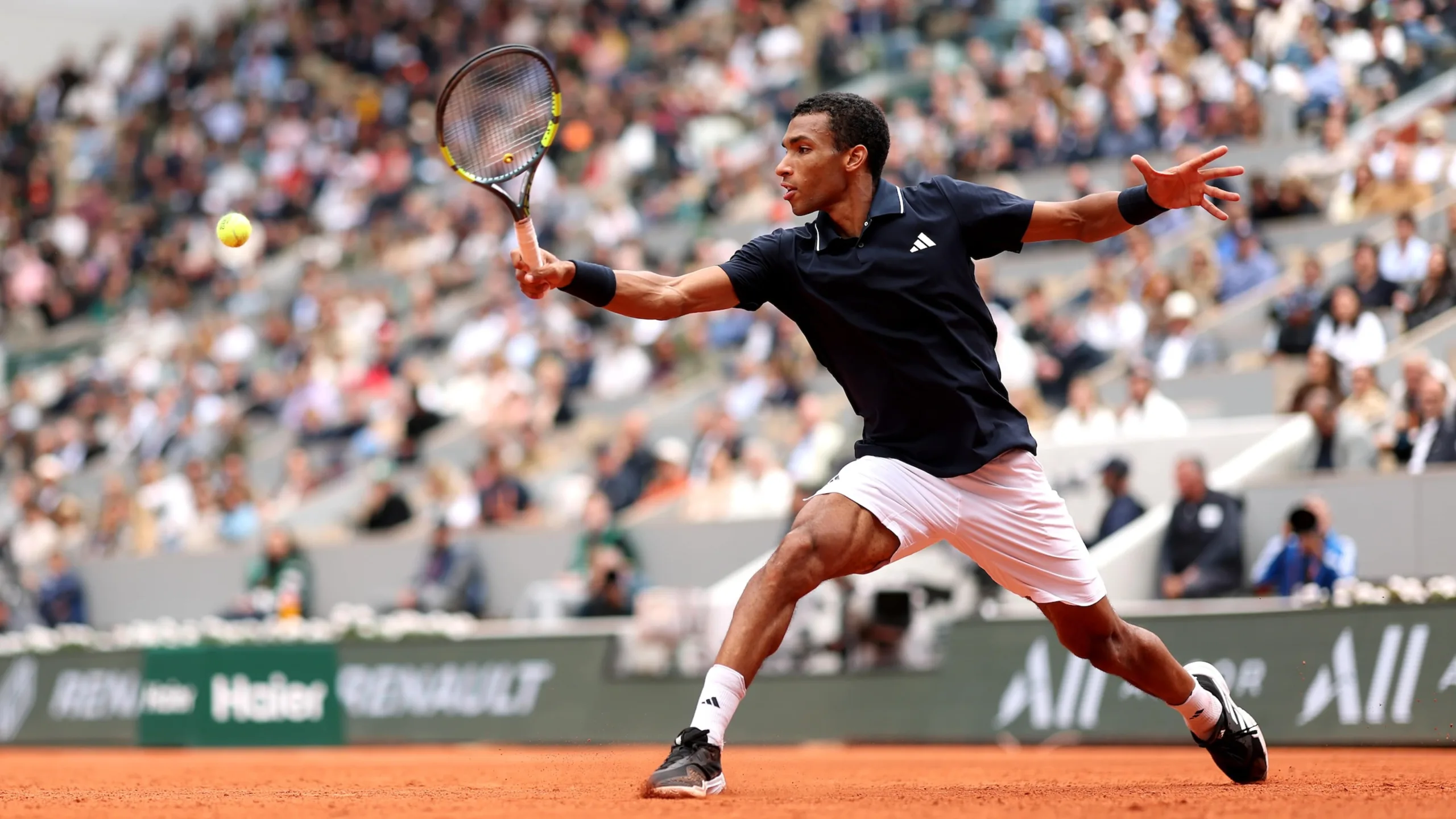
Felix Auger-Aliassime moved to a career-high No. 4 in the ATP rankings following his deepest run at Roland Garros, where the 25-year-old reached the quarterfinals for the first time before losing to eventual finalist Flavio Cobolli. The result completed a personal Grand Slam milestone: having previously reached the quarterfinals or better at the Australian Open, Wimbledon and the US Open, he became the first Canadian man to reach the quarterfinals or better at all four majors in his career.
The rise from No. 6 to No. 4 surpasses his prior best of No. 5 and places him tied for the second-highest-ranked Canadian in ATP or WTA rankings history. The only other Canadians to reach the top four are Milos Raonic and Bianca Andreescu. Raonic went as high as No. 3 in 2016, following his run to the Wimbledon final that year, and Andreescu peaked at No. 4 in 2019 after winning the US Open.
Canadian tennis has seen seven players reach the top 10 in either ATP or WTA history, with official rankings available since 1973 for the ATP and 1975 for the WTA.
Auger-Aliassime still has ground to cover to move higher in the standings. He is 2,865 points behind the current world No. 3, Alexander Zverev, with the rankings showing Zverev at 7,305 points and Auger-Aliassime at 4,440.
The Canadian will shift his focus to grass. He begins his grass-court season this week at the ATP 250 event in ‘s-Hertogenbosch, entering as the No. 1 seed. After a first-round bye he will open against either Hubert Hurkacz or Marton Fucsovics.
The new ranking reflects a season of important progress for Auger-Aliassime and cements his place among the highest-ranked Canadians in modern tennis history.
ATP French Open Grand Slam
Flavio Cobolli’s Roland Garros run vaults him into ATP Top 10
Flavio Cobolli entered the ATP Top 10 after his first Grand Slam final at Roland Garros. New ranking
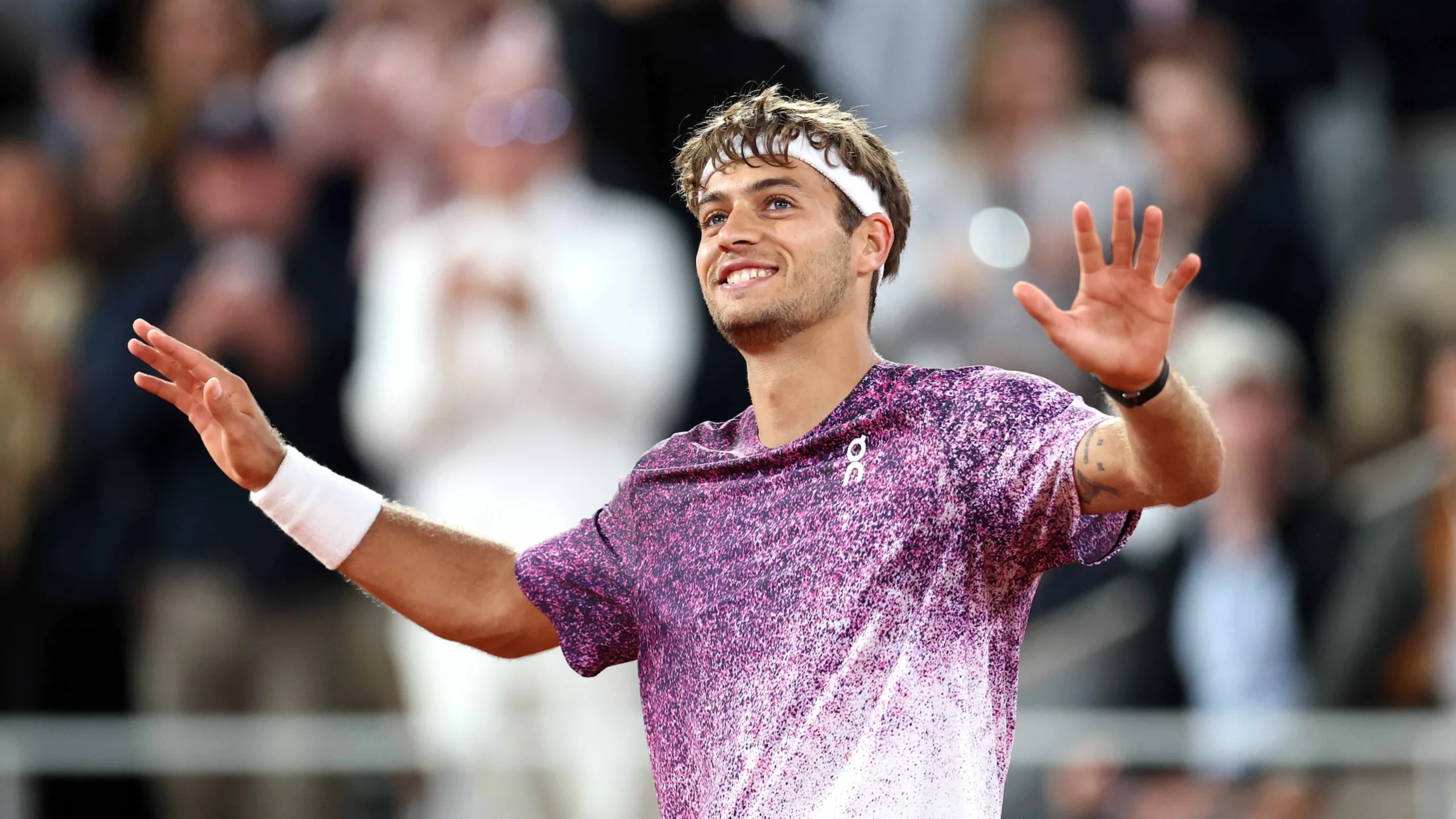
Flavio Cobolli’s breakthrough at Roland Garros produced a major ranking milestone. The 24-year-old reached his first Grand Slam semifinal and final in Paris and, despite losing the title match to Alexander Zverev in a five-set battle, climbed from No. 14 to No. 10 in the latest ATP rankings, marking his Top 10 debut.
Cobolli is the seventh Italian to enter the ATP Top 10 since the rankings began in 1973. He is also only the second Italian man in the past 50 years to contest the Roland Garros final, joining last year’s runner-up, Jannik Sinner. Born in 2002, Cobolli is the fifth man born in 2002 or later to reach the Top 10, following Carlos Alcaraz and Holger Rune, who were both born in 2003, and Lorenzo Musetti and Ben Shelton, who were both born in 2002.
The route to the final carried complicated circumstances. Cobolli advanced to the title match after countryman Matteo Arnaldi withdrew before their semifinal due to illness. Cobolli reflected on the day with mixed emotions: “When [Arnaldi] came to me almost one hour ago, I almost cried,” he said. “It’s something that you don’t expect at all. I was ready to play this match. When he came, I was completely sad for him.
“But at the same time, of course I’m really happy for the result that I reached this week. My dad also came to me right before him, and we had a big hug together with the whole team for achieving the Top 10. Every time that I make the best ranking, we all together have a big hug. We did the same routine as always.
“Yeah, now I’m sad and happy at the same time.”
Arnaldi, 25, leaps from No. 104 to No. 34 after reaching his first Grand Slam semifinal, moving to within four spots of his 2024 career-high of No. 30. Matteo Berrettini also recorded a significant rise, moving from No. 105 to No. 48 after reaching his first Grand Slam quarterfinal since 2022 on the terre battue. For the former No. 6, it was his first appearance at Roland Garros since 2021, following four years marked by injury and illness withdrawals.
French Open Grand Slam
Maja Chwalinska vaults to No. 21 after surprise run to Roland Garros final
Maja Chwalinska rises from No. 114 to No. 21 after reaching the Roland Garros final. into the Top 25
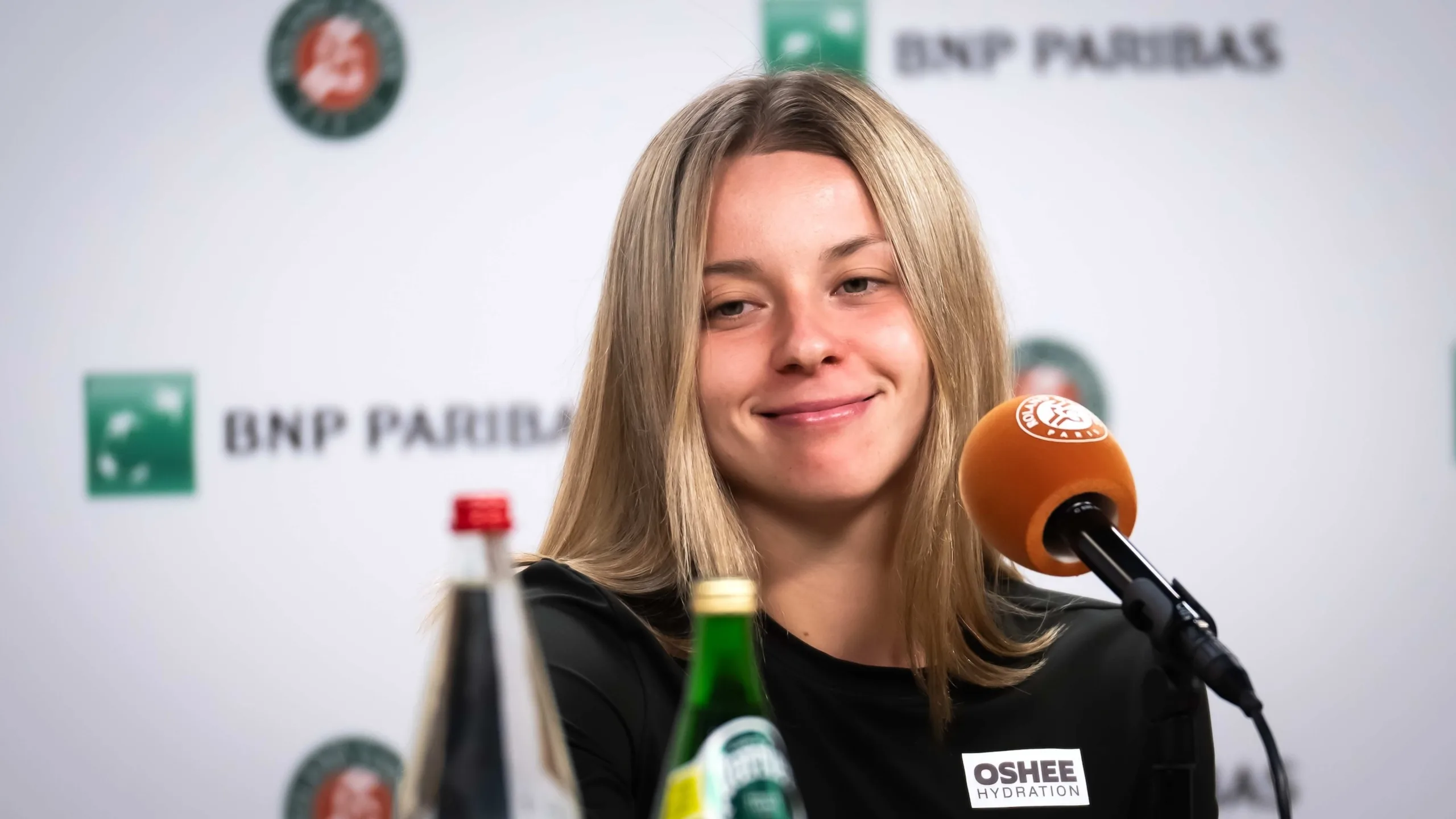
The new WTA rankings produced a major leap for Maja Chwalinska, who climbs from No. 114 to No. 21 after reaching the first Grand Slam final of her career at Roland Garros. The 24-year-old from Poland achieved a sequence of breakthroughs during the clay-court major.
Her run was historically improbable. Chwalinska became the lowest-ranked woman to reach the Roland Garros final in the WTA rankings era, which dates to 1975. She was also only the second player in the Open Era, woman or man, to advance to a Grand Slam final as a qualifier, following Emma Raducanu.
Before the tournament she had never beaten a Top 50 opponent. At Roland Garros she defeated four Top 50 players en route to the title match: Elise Mertens, Maria Sakkari, Anna Kalinskaya and Diana Shnaider. The result smashed her previous career-high of No. 113 and delivered several milestone debuts — Top 100, Top 50, Top 40 and Top 30 — with her ranking finishing just shy of the Top 20.
Asked after the final about the gap in level between the elite and those outside the Top 100, she said: “I know many, many great players that are ranked outside Top 100,” she said. “You know, it’s such a thin line now. I feel like a lot of things need to click, but yeah, for sure there so many great players. Yeah, I wish them all the best. I hope that my story these last days was inspiring for them, and I’ll see them in the—let’s say—Top 50 now.”
With few ranking points to defend until September, there is scope for further gains through the summer. Chwalinska plans a break before returning for the grass season. “I’m not going to play anything before grass, that’s before Wimbledon, that’s for sure. I definitely need some time to recharge,” she said. “Even before Roland Garros, I said that I need vacation after the tournament. So now it’s three weeks that I’m kind of like—not waiting, because I wanted to be here, but I just knew in the back of my head that I’m going for the vacation after French Open.
“Yeah, definitely need some time to recharge.”
The French Open champion, Mirra Andreeva, moves from No. 8 to No. 6, her best ranking this season and one spot shy of the career-high No. 5 she reached last year.

Auger-Aliassime Reaches Career-High No. 4 After Breakthrough at Roland Garros

Emilio Nava takes Neckarcup title after Luka Mikrut withdraws from final

Flavio Cobolli’s Roland Garros run vaults him into ATP Top 10

Alcaraz Confronts On‑court Microphones During US Open Practice Ahead of Opelka Match

Raducanu Arrives at US Open With Momentum After Strong Hard‑Court Swing

Cervara: Ending an eight‑year partnership with Medvedev was necessary to change the energy
-
 ATPFrench OpenGrand Slam2 months ago
Roland Garros 2026 Preview: Why Jannik Sinner Arrives as the Heavy Favorite
-
 ATPFrench OpenGrand Slam2 months ago
Djokovic upbeat on Roland Garros fitness as he aims for 25th major
-
 French OpenGrand Slam2 months ago
Roland Garros 2026 Women’s Draw Sets Up Potential Sabalenka–Gauff Semifinal