Grand Slam US Open WTA
Pegula regroups off court and marches into US Open quarterfinals
Pegula battled midseason doubts, found clarity off court, and reached the US Open quarterfinals….


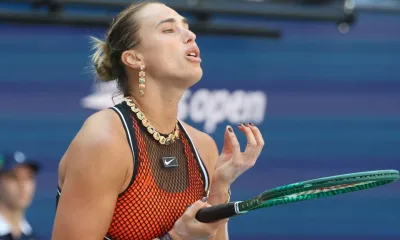
Jessica Pegula arrived at the final major of the season carrying summer frustrations but has steadily repaired her form en route to the quarterfinals, not dropping a set in Flushing Meadows. At her pre-tournament news conference she summed up her feelings plainly: “Really excited to be back,” the 2024 finalist said last Friday, fresh off a run to the semifinals in the revamped mixed doubles event. “Excited to get going here.”
A week later the No. 3 seed offered a more candid assessment of her preparation. “I felt terrible,” the No. 3 seed confessed on Sunday. “I had a practice Wednesday, and I literally—I think I hit with [Aryna] Sabalenka. She killed me. I was playing terrible.
“Then we went out for a second hour, and I stopped like halfway through the hour and was, like, ‘I’m done, like, this isn’t good. I don’t know why I’m out here practicing.’”
Pegula’s form last summer was impressive: she won a WTA 1000 title at the National Bank Open and reached back-to-back finals in Cincinnati and the US Open, falling only to Sabalenka in those matches. This season she added a third title in Bad Homburg but then lost in the first round at Wimbledon. The run of results that followed left her without consecutive hard-court wins entering the US Open, with three-set defeats by Leylah Fernandez, Anastasija Sevastova and Magda Linette.
The switch from mixed doubles back to singles compounded the challenge. “It was hard, because that was the day after the mixed finish, so we were switching to different balls, and I was a little frustrated,” Pegula explained. “The day was really cold and windy. I was, like, ‘Yeah, I’m done for today. So, I kind of walked off the court, like, not very happy.’” She and friends then tried an escape room to shift perspective. “I was feeling like, I need to just chill and stop getting so frustrated and overthinking all these practices,” Pegula reasoned.
That reset has coincided with clinical singles play in New York. After a 6-1, 6-2 victory over Ann Li she said, “Very good match I think for me today. Probably the best match, honestly, I’ve played since, like, before Wimbledon I feel like from the start to finish. So that was encouraging. I was just hitting the ball, doing everything well, executing my strategy very well and, yeah, got through it pretty quick.”
The win was her 41st of the year, and Pegula credited a mid-career overhaul of fitness and nutrition following hip surgery for her current consistency. “Everyone asks how I’m so consistent,” mused Pegula. “It’s because I’ve been able to stay relatively healthy and been able to play a lot of tennis.
“That was always my issue when I was younger is I couldn’t stay healthy…After my hip surgery, I definitely had kind of this, like, awakening moment where, one, rehab sucks and I was, like, ‘I cannot do this again. I have to do everything in my power to stay healthy, or else I’m never going to give myself a chance to go out there and compete.’
“So, I really reworked my fitness, my nutrition. It wasn’t that I was doing anything wrong before. I don’t think I was the most professional in the sense that I didn’t understand, like, all of the things I had to be doing or needed to be doing…Nowadays you see 13, 14-year-old girls. It’s still instilled. They have a whole team. They have a physio. They have rehab. They have programs. I don’t know. I missed that gap or window or whatever it was! I just didn’t realize how much more I could be doing.
“So, I definitely kind of had a rude awakening after that to be, like, okay, I really need to focus on this and invest in myself.”




Grand Slam
US Open opens with Djokovic shock, Eala momentum and McEnroe backlash
Djokovic’s shock exit, Eala’s rise and McEnroe criticism headline a striking US Open opening.
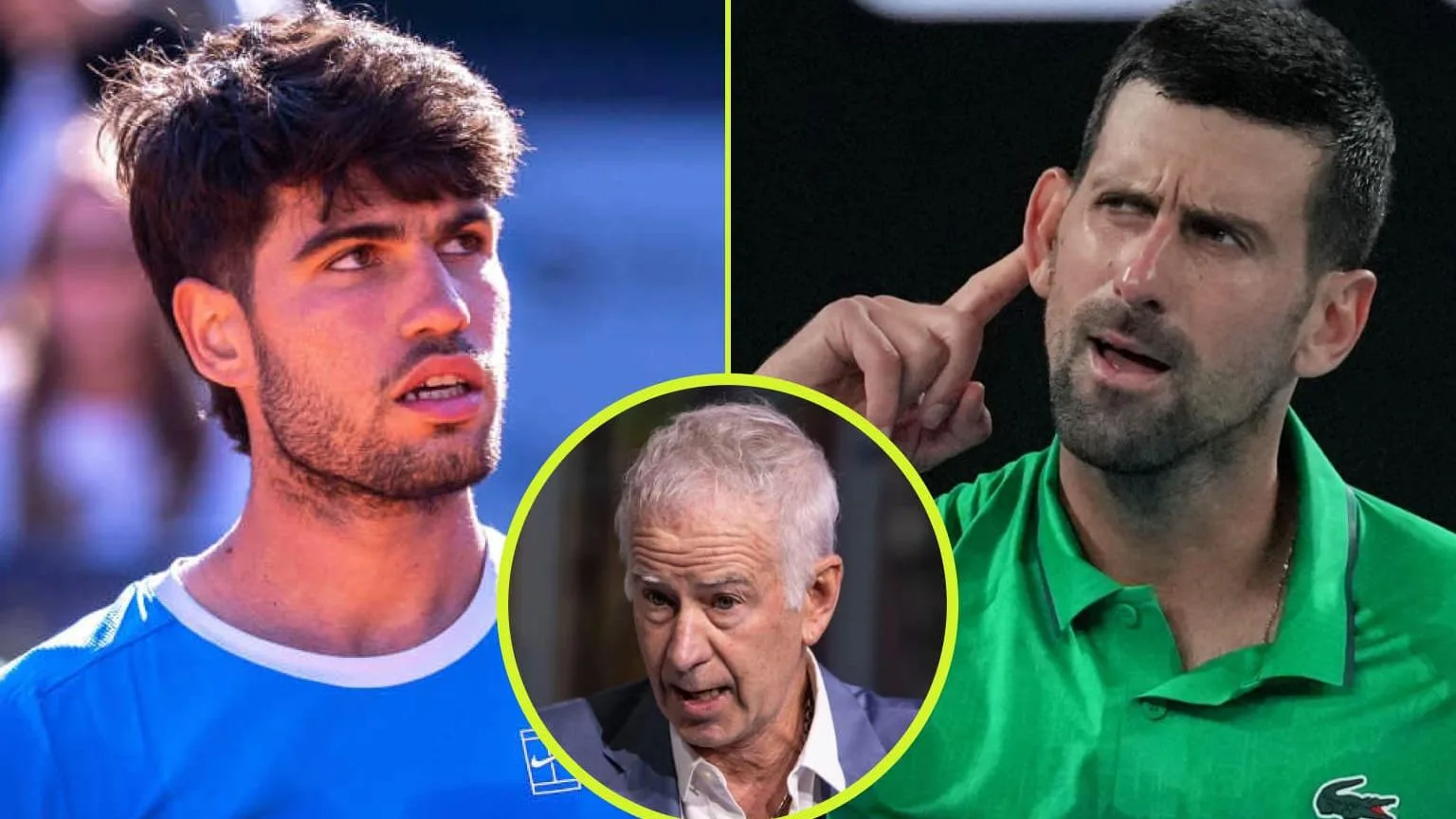
The final Grand Slam of 2026 has started with plenty to talk about, even before the main draw settled into rhythm. Roger Federer’s return to Flushing Meadows for an exhibition alongside Andy Roddick, John McEnroe and Andre Agassi added early theatre, while Karolina Muchova and Jakub Mensik captured the US Open mixed doubles title. Carlos Alcaraz also featured in the event, partnering Serena Williams.
Away from the celebratory moments, Stan Wawrinka’s entry into the tournament became a concern after he initially missed out on a wildcard, only to receive one later following an injury withdrawal. That sequence raised questions that could not be brushed aside.
The biggest on-court headline, though, came from Novak Djokovic’s surprise first-round defeat. Mariano Navone pushed through in five sets to hand the 39-year-old his first opening-round major exit since 2006. Djokovic was visibly shaken and later described the physical problems he has been battling. He said, “ It’s something that I have been carrying pretty much every match this year – vomiting, throwing up. And then my whole body starts to collapse basically, cramping and pain – the back just gave up in the end and shoulder, and I couldn’t close it out.”
Asked whether he had learned more about the issue, he added: “I don’t know [how I can solve the problem]. I don’t want to go into too much detail right now. I’m just trying to understand what’s going on and how much longer I can keep going like this.”
Alex Eala also continued to dominate the conversation. The 21-year-old has surged into the top 20 and drawn huge attention, with Andy Roddick saying she is “creating a movement”. Annabel Croft went further, saying Eala is building an “aura” that makes opponents take notice.
John McEnroe then faced criticism after his remarks following Navone’s win were judged by many to be disrespectful.
Elsewhere, Jessica Pegula advanced, Daniil Medvedev won comfortably, Luca Van Assche beat Cameron Norrie, Barbora Krejcikova lost, and Venus Williams fell to Sofia Kenin as rain interrupted several matches.
ATP Tour News Grand Slam
McEnroe criticised after comments following Navone’s Djokovic upset
McEnroe’s remarks after Navone beat Djokovic at the US Open sparked criticism online.

John McEnroe has faced heavy criticism after his reaction to Mariano Navone’s surprise win over Novak Djokovic at the US Open appeared dismissive to many viewers.
Djokovic, a 24-time Grand Slam champion, was overcome during his five-set defeat on Arthur Ashe Stadium on Sunday, breaking down in tears and vomiting into a bin as the match slipped away. The fourth seed suffered his first opening-round loss at Flushing Meadows, and it marked the first time he had exited in the opening round of a Grand Slam since 2006.
After losing 7-6 (7-5) 5-7 4-6 6-2 6-1, Djokovic said, “I think it was obvious that that it was an awful feeling on the court for me. I don’t want to take too much out of Mariano’s win. Congrats to him, he’s a nice guy and a fighter – but I didn’t enjoy myself.
“It’s something that I have been carrying pretty much every match this year – vomiting, throwing up. And then my whole body starts to collapse basically, cramping and pain – the back just gave up in the end and shoulder, and I couldn’t close it out.”
The discussion soon shifted to McEnroe, whose remarks after Navone’s breakthrough drew a strong backlash on social media. Rather than focusing on the Argentine’s biggest career victory, the seven-time major winner noted that Navone would be heading to Court 21 in the next round, where he will meet Stan Wawrinka or Matteo Berrettini.
“You’ll be playing your second round on Court 21. We wish you the best. And he is going to have to try and play with that effort and intensity but enjoy the moment, young man,” said McEnroe.
That clip was then shared by Awful Announcing, prompting a wave of criticism from tennis fans. One user wrote, “McEnroe’s entire attitude towards Navone was despicable from the jump.” Another said, “Completely disrespectful. The Novak glazing was unbearable.” A further comment read, “John McEnroe is such a loser. Navone earned the biggest win of his life and immediately gets this said about him,” while another argued that world No 42 Navone, who has reached a career high of 29, should have been put on Arthur Ashe for McEnroe’s comments alone.
Others said they were “so f****** tired” of the pundit and former player, and one reaction said it was, “long past time for McEnroe to go away.” Some suggested he was trying to be funny but missed the mark. Incidentally, there isn’t a Court 21 at Flushing Meadows.
Grand Slam
Pegula weighs in on Alcaraz’s US Open comeback plan
Pegula on Alcaraz’s US Open return, his injury layoff, and why the timing may work.
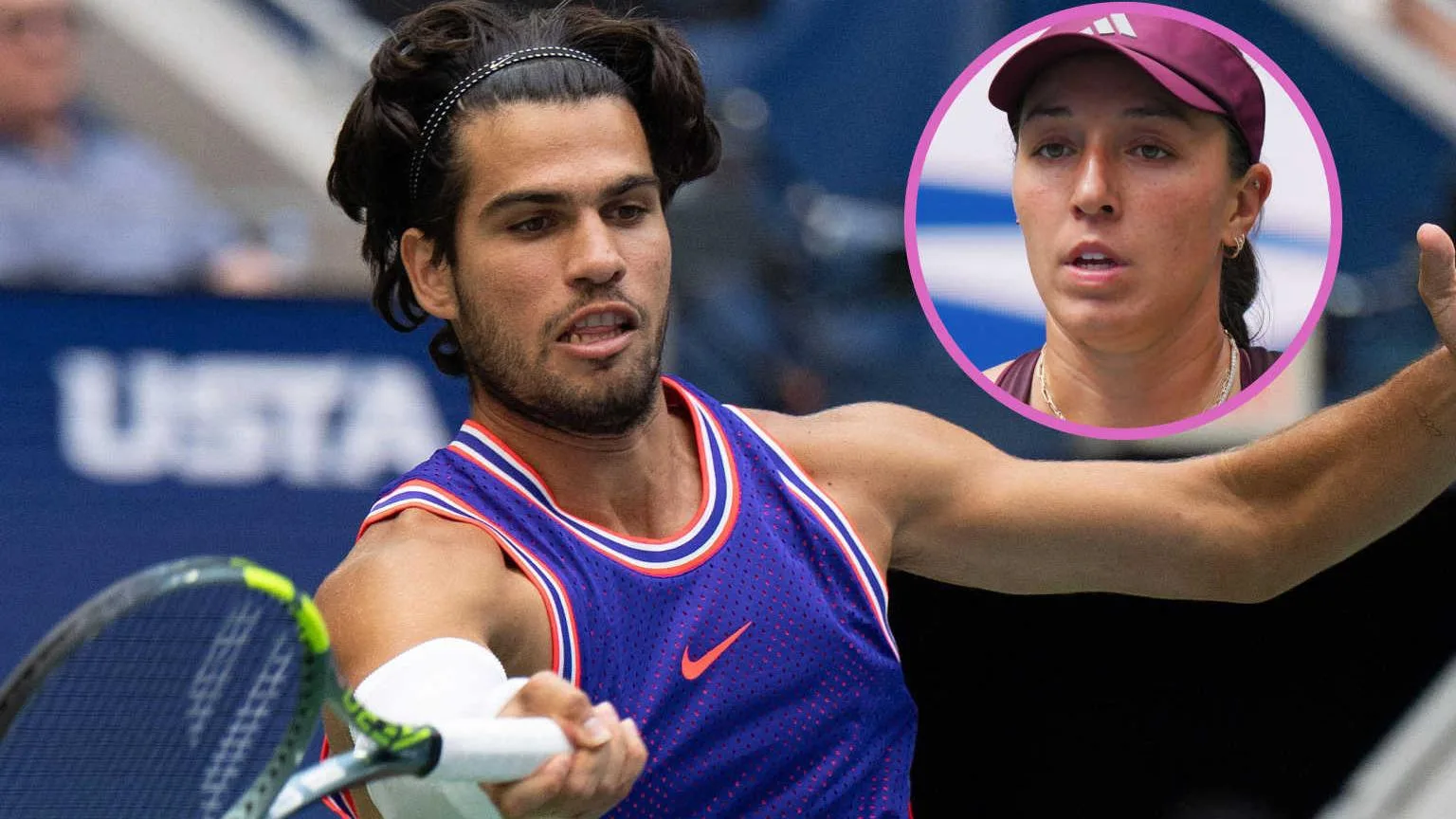
Jessica Pegula suggested that Carlos Alcaraz’s choice to return from injury at the US Open may have been carefully planned by his camp.
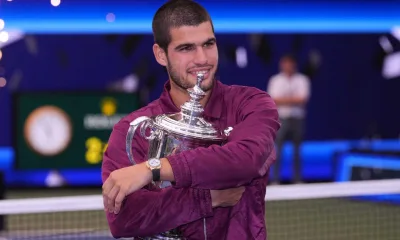
Alcaraz has been out for four months after a wrist injury suffered at the Barcelona Open. Now he is set to step back into competition at Flushing Meadows, a decision that drew attention because a Grand Slam is an unusual place to restart after such a long break. Even so, the Spaniard says he believes he is ready to defend his title in New York.
“It is possible [to win it],” the seven-time major champion – who faces Roman Safiullin in the first round – said during his pre-tournament press conference.
“I think a lot of people have shown it. [Roger] Federer, [Rafael] Nadal, many people have shown that you can win a Grand Slam after having been injured for a long time or having had a very serious injury. So we’re going to try to hold on to that belief that I can too.”
Pegula, the world No 3, said she was initially surprised that he skipped Cincinnati but still chose to enter the US Open. She explained that the format may make the decision more workable for a player of his level.
“I think I was a little surprised that he didn’t play Cincy but then still played here [in the US Open] because of that. I was like, ‘Wow, that’s that’s a tough thing to do.’ But I think that he’s kind of a special player.
“Obviously, I think it maybe also a little bit different for the men, three out of five. I do think that it gives a little bit more leeway for him to work his way into matches where if it’s two out of three for, like for the women, I mean, that to me is a little bit tougher because you lose the first set and you come out a little rusty, you’re like, ‘Oh my gosh, like if I don’t win the second set, I’m out.’
“And so I think the men having more time with a three-out-of-five is probably something that makes me think, ‘okay, maybe it makes a little bit more sense for him to do that.
“But yeah, he’s a special player. I mean, he’s a super charismatic, friendly, outgoing person. I think that he’s going to feed off of the energy no matter what. I mean, I don’t think he’s forgotten how to play tennis, and I think if he can win his first couple of rounds, he’s going to find his form very, very fast.”

US Open opens with Djokovic shock, Eala momentum and McEnroe backlash

Atmane’s US Open loss sparks debate over cramp treatment and medical timeouts

McEnroe criticised after comments following Navone’s Djokovic upset

Alcaraz Confronts On‑court Microphones During US Open Practice Ahead of Opelka Match

Raducanu Arrives at US Open With Momentum After Strong Hard‑Court Swing