
Analytics & Stats ATP Grand Slam
A compromise for long Slams: keep five sets but try no-ad scoring
US Open spate of five-set marathons sparks debate: keep best-of-five but consider no-ad scoring. now

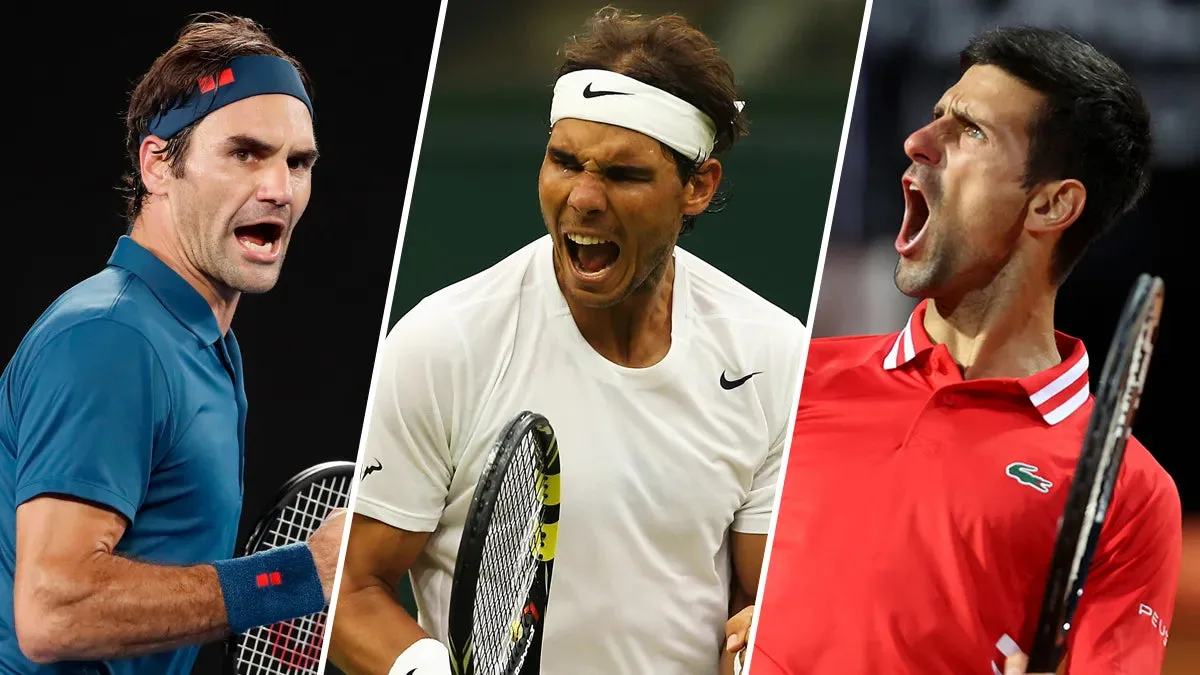
This US Open delivered an unusually heavy load of five-setters, and the consequences were plain. Three players, Flavio Cobolli, Kamil Majchrzak, and Daniel Altmaier, retired on Saturday after winning marathons on Thursday. Tommy Paul seemed to run out of gas after playing his second wee-hour five-setter in a row. The player who beat him, Alexander Bublik, then experienced a similar collapse against Jannik Sinner.
The long-running argument over whether men should keep best-of-five at the majors continues. As one observer put it when hearing best-of-five called “the ultimate test in tennis,” the response is often, “So why don’t the women get to take the same test?”
Still, many regard five-set Slams as sacrosanct. They have produced epic, defining moments and have not, historically, shortened careers or led to an obvious rash of retirements. Yet the modern game is more physical, equipment is more advanced, and prolonged baseline warfare can turn best-of-five into four-hour battles of attrition. Even winners can be so spent that they are compromised for the next match.
One proposal to ease the load while preserving the format is to adopt no-ad scoring. Eliminating deuce games caps the maximum points in a game at seven and thus limits the maximum number of points in a set. Shorter matches mean less cumulative wear and tear. The strategy and winner-take-all aspect of the no-ad point would add another element of suspense to matches and could make long fifth sets easier for fans to watch.
The Roland Garros final between Sinner and Carlos Alcaraz underlines the issue: they played 56 games and 352 points in those games, plus 33 more points in three tiebreakers. They played “at least five deuce games,” and the first game went to five deuces. No-ad would have made that final shorter, though by how much is a question worth answering.
No-ad is not new to the sport. The author played it in high school and college in the early 1990s, and the college game has more recently returned to no-ad. Change in tennis often needs a champion and a pathway through junior and lower-level events to build acceptance. The question is whether no-ad could be that pathway to protect players while keeping five-set drama intact.




Analytics & Stats Player News Tennis Coaching
Gauff leans into topspin and pace with a simple mantra: trust and accelerate
Gauff trusts more racquet-head speed, using topspin and pace to improve her serve and forehand more.
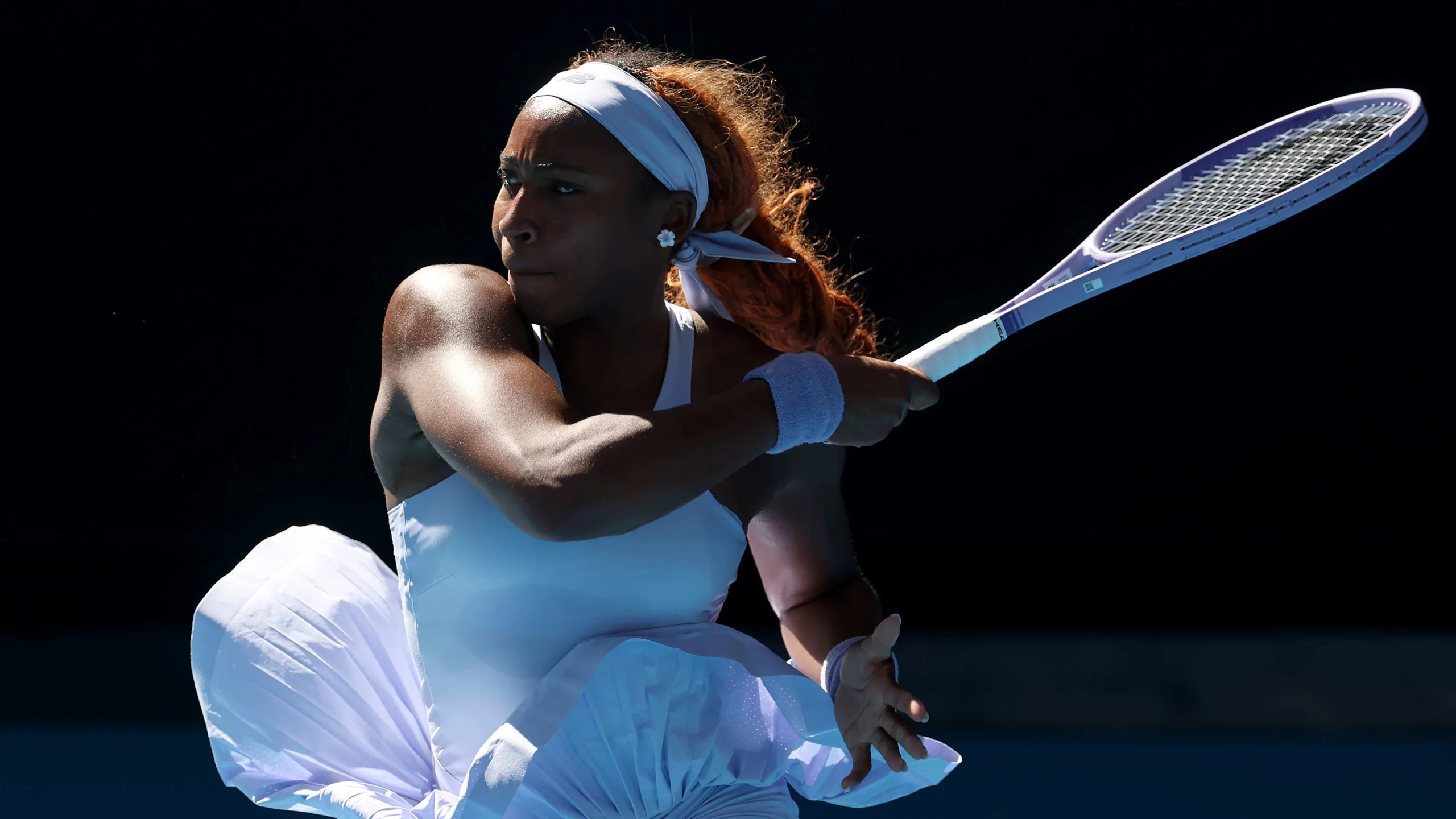
For nearly the first hour of her second-round match on Friday, Coco Gauff watched Hailey Baptiste play the way Gauff has been trying to play. Baptiste, a longtime junior friend ranked 67 spots behind Gauff and with 11 fewer titles, captured the first set 6-3 by snapping serves into the corners and following them with inside-out forehands struck with pace and heavy topspin.
“She was dictating a lot, especially on her forehand side,” Gauff said of that opening set. “I was just trying my best to neutralize that.”
Gauff’s path back was not to outgun Baptiste in raw power. “I thought I served better in the second and third set, got more first serves in,” she said, and, “Overall I think just trying to put her on the back foot and not me being on the back foot.” She lost the opening set but answered with a 6-0 second set and closed 3-6, 6-0, 6-3.
Gauff entered the match less smooth in certain areas: she hit her serve five m.p.h. slower, produced 12 fewer winners and committed six more double faults than her opponent. Still, she turned it by running, cutting her unforced errors to 22 against Baptiste’s 38, attacking with her backhand and winning 83 percent of her first-serve points. At a tense 30-30 late in the third, she finished a rally with an inside-out forehand winner.
She accepts that the serve and forehand will be inspected and insists progress is gradual. “I think at this point I have the right motion,” Gauff said after beating Baptiste. “I feel like I’m working on the right things. Now it’s just trying to, I guess, erase old demons and actually do it.” “There was moments today I was definitely nervous, and I felt like I’m getting better with each match dealing with that on those pressure moments.”
As one legendary player put it: “Racquet-head speed is your friend.” Gauff has rediscovered that topspin and faster racquet-head speed can coexist. “For me, I just felt like I had to hit flatter to hit bigger,” she says. “I’ve always thought for some reason in my head that hitting shape was more defensive, and I realized that you can be really offensive and aggressive hitting with shape,” says Gauff, using “shape” to mean spin and arc. The biggest change for Gauff in 2026, she says, is “just trusting and accelerating.” She will next face Grand Slam finalist Karolina Muchova, with the potential third-round meeting against Mirra Andreeva awaiting the winner.
Analytics & Stats Player News WTA
Anisimova Enters WTA Top 3 and Becomes the New American No. 1
Amanda Anisimova rises to No. 3 in the WTA rankings and becomes the top American player. ©Prange2025
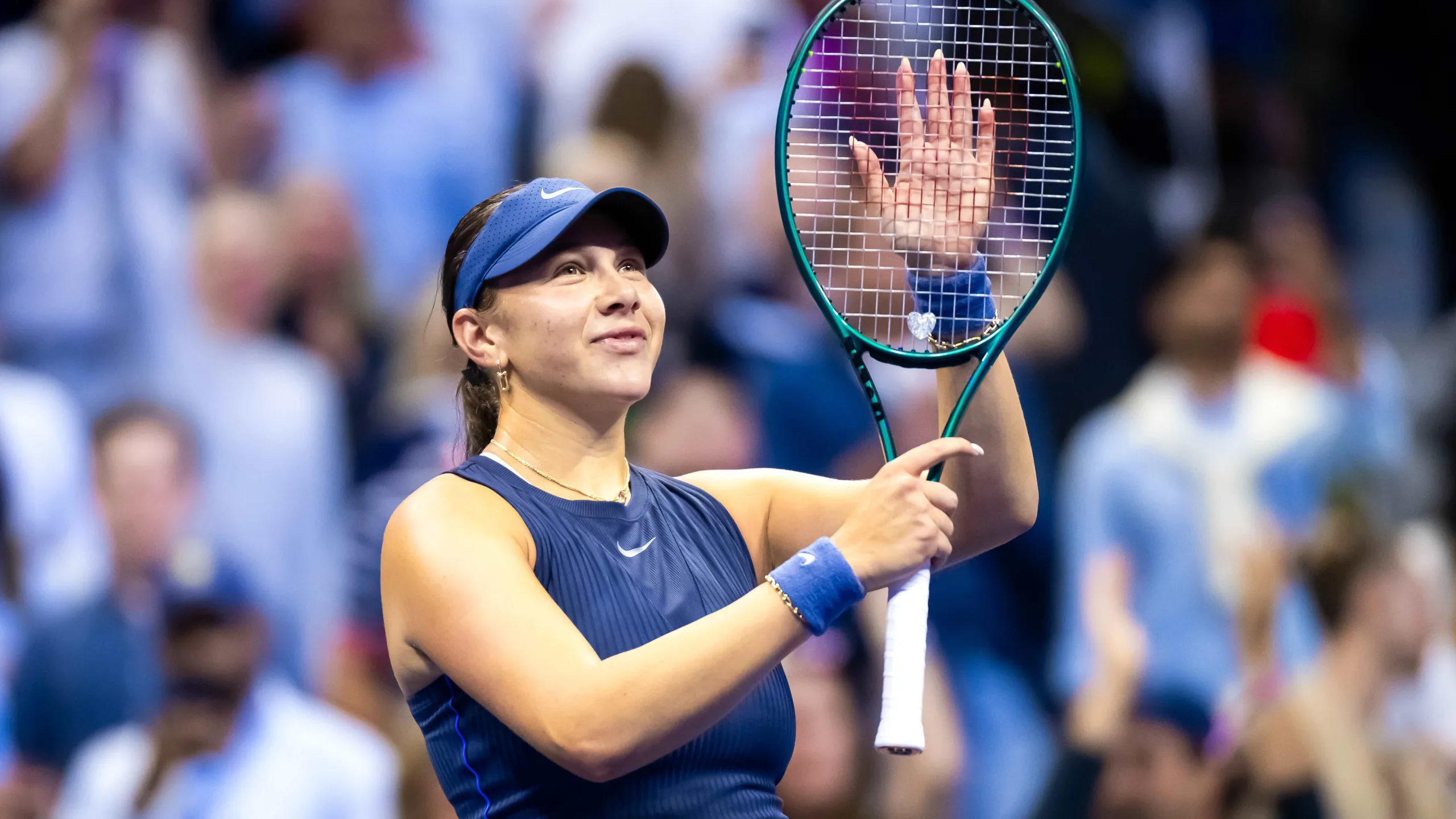
Amanda Anisimova rises to a career-high No. 3 in the latest WTA rankings, marking her first appearance inside the Top 3 and establishing her as the top-ranked American player. She moves up from No. 4 while Coco Gauff drops from No. 3 to No. 4, a swap driven by this week’s points adjustments.
There were no tournaments last week, but points from Week 1 of 2025 have dropped off the rankings. Anisimova remains on 6,287 ranking points. Gauff’s total falls from 6,763 to 6,273 after last year’s United Cup results are removed. The net effect places Anisimova ahead of Gauff and makes her the highest-ranked American on either the ATP or WTA lists; Gauff is now the second-highest-ranked American.
Anisimova’s climb carries additional historical notes. She becomes just the third player born in the 2000s to reach the Top 3 in WTA history, and the fifth player born in that decade to achieve a Top 3 ranking across either the WTA or ATP. She is also the 15th American woman to reach the Top 3 since WTA rankings began in 1975. For context, 11 American men have reached the Top 3 since ATP rankings were introduced in 1973.
Other notable ranking changes this week include Linda Noskova moving from No. 13 to a personal best of No. 12. Clara Tauson slips from No. 12 to No. 14; Noskova lost her second match in Brisbane a year ago while Tauson won the Auckland title at the same time last season. Cristina Bucsa makes her Top 50 debut, rising from No. 51 to No. 50. Anastasia Potapova drops from No. 50 to No. 55; Bucsa lost in the first round in Brisbane last year while Potapova reached the third round.
© 2025 Robert Prange
Analytics & Stats Player News WTA
Hsieh Su-wei at 40: Four decades distilled into 40 defining numbers
Hsieh Su-wei turns 40: 40 milestones from No. 1 doubles weeks to Grand Slam and tour titles. Today!
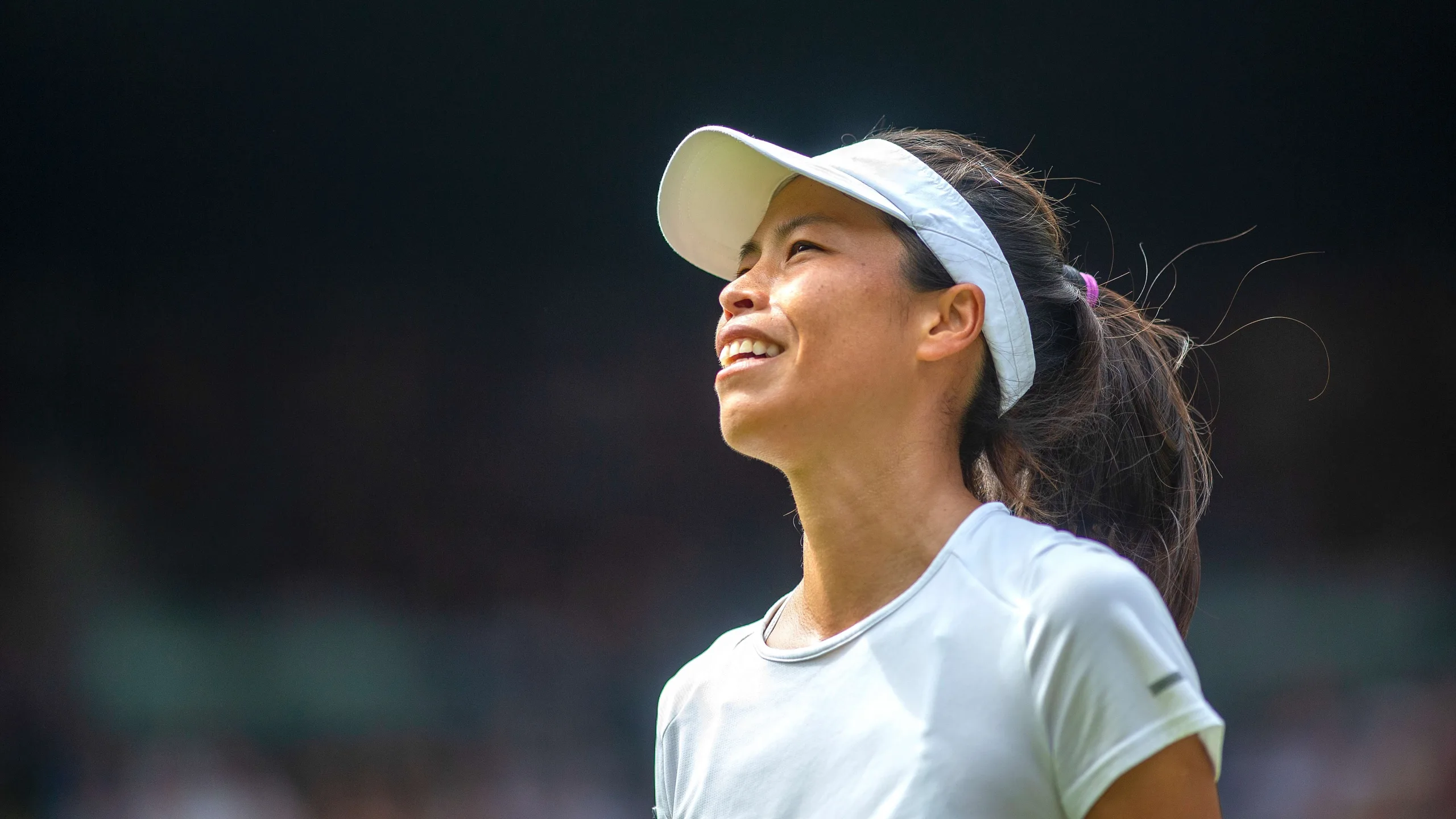
Hsieh Su-wei celebrates her 40th birthday with a resume few peers can match. A concise selection of career milestones captures the arc of a player who has excelled in doubles, enjoyed late-career singles highlights and returned to the tour with sustained success.
She first reached No. 1 in doubles on May 12, 2014, becoming the first Taiwanese player to reach the top spot in tennis in either women’s or men’s, singles or doubles. She claimed two Grand Slam mixed doubles titles at the Australian Open and Wimbledon in 2024 alongside Jan Zielinski; those were their first and third tournaments together. Her three WTA singles titles came in 2012 (Kuala Lumpur and Guangzhou) and 2018 (Hiroshima).
Hsieh has won Grand Slam women’s doubles titles with four different partners: two with Peng Shuai, and one each with Barbora Strycova, Elise Mertens and Wang Xinyu. She has five Wimbledon titles, including four in women’s doubles (2013 with Peng, 2019 with Strycova, 2021 with Mertens and 2023 with Strycova) and one mixed in 2024 with Zielinski.
Her WTA Finals record features six appearances and a title in 2013 with Peng; she reached the semifinals in 2025 with Jelena Ostapenko. Across Grand Slams she owns seven women’s doubles majors, plus two mixed doubles majors. Indian Wells stands out among her 13 WTA 1000 doubles titles, winning it four times in 2014 (with Peng), 2018 (with Strycova), 2021 and 2014 (with Mertens).
Other highlights: she has 36 doubles wins in 2025 (36-18), 37 career tour-level doubles titles (35 women’s, two mixed), and 40 career tour-level titles overall (three singles, 35 women’s doubles and two mixed). She spent 59 weeks at No. 1 in doubles and is one of only 18 women to log 50 or more weeks at the top. Her Top 10 and Top 15 singles victories mostly arrived in her 30s, including her first Top 10 singles win at Roland Garros in 2017 and a landmark win over reigning No. 1 Simona Halep at Wimbledon in 2018.
Early markers include a perfect 30-0 start below tour level at 15 in 2001 and her first Grand Slam doubles title at Wimbledon in 2013. She retired from singles in 2024 after Miami. Hsieh is the top seed in doubles in Brisbane this week alongside Jelena Ostapenko.

From Fans to Contenders: Iva Jovic and Learner Tien’s Indian Wells Homecoming

Sabalenka in Gucci: front row at Gucci’s Fall 2026 show ahead of BNP Paribas Open

Gauff vs. Pegula: Who Arrives in Better Shape for Indian Wells 2026?

Alcaraz Confronts On‑court Microphones During US Open Practice Ahead of Opelka Match

Raducanu Arrives at US Open With Momentum After Strong Hard‑Court Swing

Cervara: Ending an eight‑year partnership with Medvedev was necessary to change the energy
-
 ATPAustralian OpenGrand Slam2 months ago
Australian Open announces record A$111.5 million prize pool for 2026
-
 ATPUnited CupWTA2 months ago
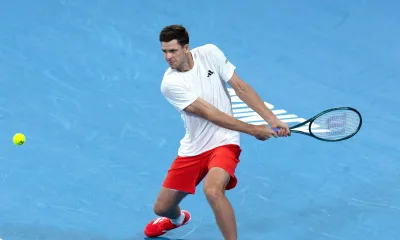
Hurkacz edges Zverev in straight sets in United Cup return
-
 ATPPlayer NewsWTA2 months ago
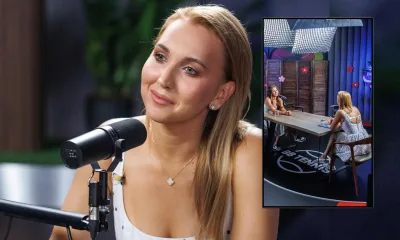
Vesnina rejects claim that podcast aired unapproved Kudermetova anecdote about Rune