Masters Miami Open
Gauff survives three-set test from friend Parks to reach Miami Open fourth round
Gauff edged friend Alycia Parks in a rollercoaster match to reach the Miami Open fourth round Sat 26

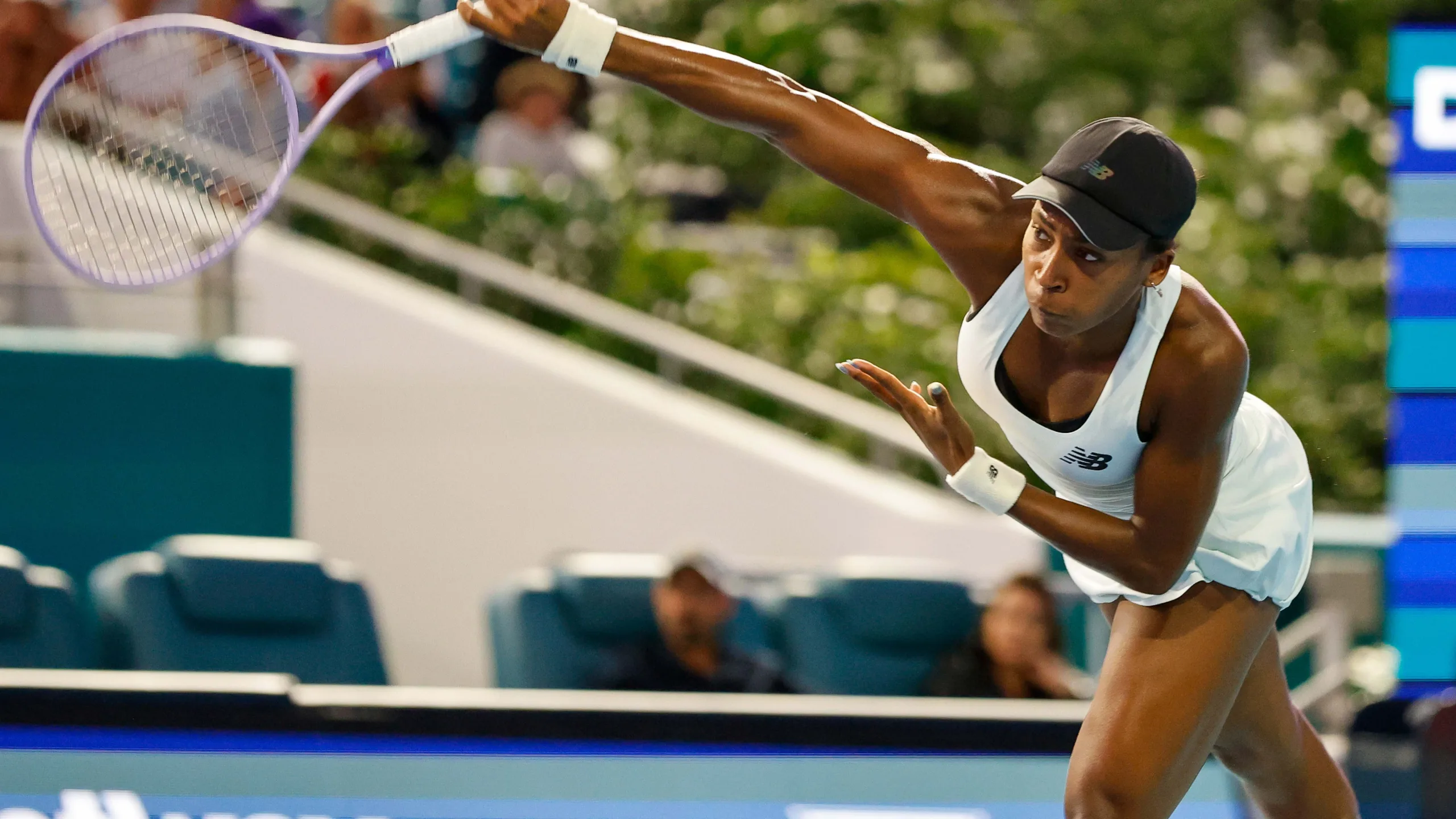
Coco Gauff recovered from a slow start and physical concerns to beat good friend Alycia Parks 3-6, 6-0, 6-1 and advance to the Miami Open fourth round. The No. 4 seed lost a tight first set after Parks broke twice, then shifted the match with increased aggression to take the second set to love and surrender only one game in the decider.
Gauff had been managing “something nerve-related” in her forearm that forced her to retire at Indian Wells, and she also admitted to feeling the “nerves” of playing at home. The match required her to set friendship aside to move on in the tournament.
“It’s definitely funny… You have to win because you’re playing against each other,” Gauff told press afterward. “But in the middle of the match, I was thinking, ‘Oh this would be a great win for her! Taking me out of the equation,’” she added, laughing.
“But then you turn back on your competitive mode and you’re like, Okay I gotta win.”
Both players were born in Atlanta and have strong South Florida connections. Parks, 25, is from Port St. Lucie and Gauff, 22, is from Delray Beach. They said they have known each other since “like seven or eight years old” and moved through the same junior circles. Saturday evening at Hard Rock Stadium saw mutual friends in the stands for only the pair’s second professional meeting; their first encounter came at the 2024 Australian Open, where Gauff won 6-0, 6-2.
Parks, ranked No. 105, put pressure on Gauff’s serve in the opening set and showed the benefits of regular work with Serena Williams, training with her “probably three times a week” when Williams is home. Gauff described Parks as unpredictable but said timely adjustments made the difference.
“She was playing really well, and she’s one of those people that’s hit or miss sometimes,” Gauff explained. “You’re just stuck in the fine line of being aggressive, and just making her play.
“I think I got too stuck on the other end of it, and in the second and third sets I just tried to be aggressive when I could. I made some adjustments on the return, and I think that made a difference.”




China Open
Keys misses Beijing as China Open withdrawals climb
Keys withdraws from Beijing as the China Open withdrawal list rises to nine.
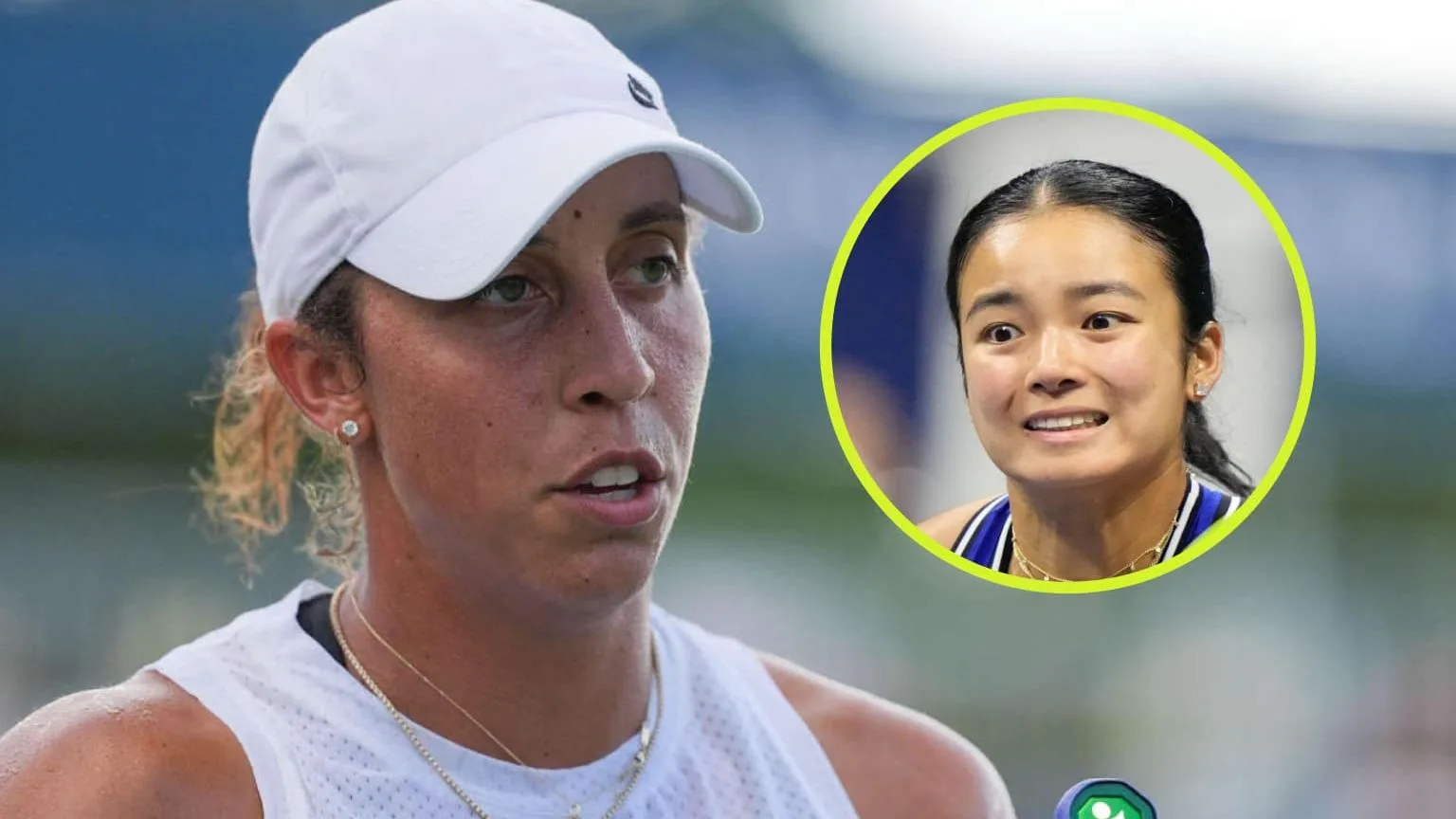
Madison Keys will not appear at the China Open, taking the tournament’s withdrawal count to nine.
The former Australian Open champion has had a difficult period since the US Open, where she let a 5-0 final-set lead against Qinwen Zheng disappear in the third round. In the aftermath, the 31-year-old was emotional in her post-match press conference and said she has been dealing with a longer-running struggle.
Keys told reporters, “I just feel like I’ve kind of been struggling for a while now, and I feel like I was able to kind of play through it for a bit. I’m sure everyone could kind of see that I was struggling a little bit, but inside it felt probably even bigger than that.
“Some weeks are easier than others, and this week is obviously one of the harder ones just because you care so much. Yeah, I’m going to have to make some sort of changes.”
She also pushed back on pregnancy speculation, saying, “I f people could stop assuming and or asking me if I am pregnant, that would be super fun. That’s like the number one comment I keep getting, post US Open.”
Keys has been replaced in Beijing by Paula Badosa. The WTA 1000 event begins on 30 September and still includes Elena Rybakina, Aryna Sabalenka, Jessica Pegula, Coco Gauff, Mirra Andreeva, Linda Noskova and Iga Swiatek.
Alex Eala has also withdrawn because of a clash with the Asian Games. She is seeking a WTA exemption so she can represent the Philippines at the competition in Japan, which runs from 27 September to 3 October. If she does not receive it, she faces a fine and points penalty.
McCartney Kessler has ended her 2026 season early after what she called a “physically demanding” campaign. She plans to step back, let her body “heal”, and return in 2027.
Rybakina’s Achilles issue remains another concern. It has already ruled her out of the Billie Jean King Cup Finals this week, although she has not withdrawn from the China Open.
Cincinnati Open
Gauff backed over Sabalenka in US Open title debate
Isner and Croft back Gauff over Sabalenka for the US Open title race this year.
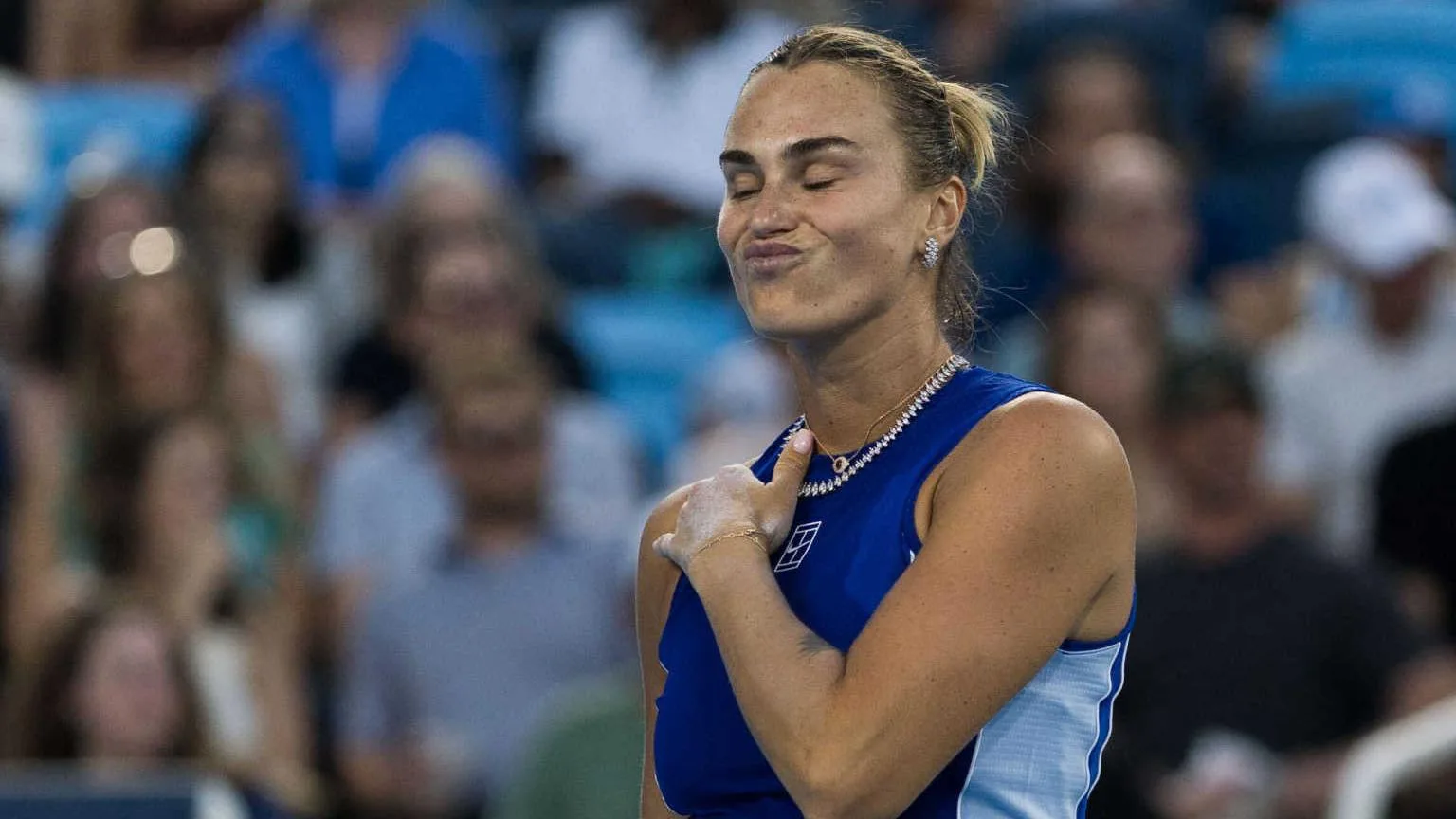
John Isner and Annabel Croft have both leaned away from world No 1 Aryna Sabalenka in the race for the US Open women’s singles crown, instead naming former champion Coco Gauff as the player to beat.
Sabalenka has arrived in New York after a difficult stretch, with only one semi-final from her last six tournaments, that run coming at the Berlin Open. A year ago, though, she lifted the US Open trophy for a second straight time after defeating Amanda Anisimova 6-3, 7-6(3) in the final.
This time, the Belarusian begins against Camila Osorio, while Anna Kalinskaya and Iga Swiatek sit elsewhere in her quarter of the draw. Her recent results have also allowed Elena Rybakina to cut into the lead, with the gap now down to 434 points in the live WTA rankings.
Isner, speaking on a recent episode of the Nothing Major podcast, said Gauff should be viewed as the favourite even if the betting markets point elsewhere. He and co-host Steve Johnson both highlighted the American’s form, which includes a run to the semi-finals of the Canadian Open and then a title in Cincinnati two weeks later.
“I really think she is [the favourite],” said Isner about Gauff.
“I think Sabalenka is the betting favourite, but last year Coco went into the US Open with not a lot of confidence and a lot of serve issues. That stuff has seemingly been put to rest right now.
“Her first and second round matches last year in New York were the most tension-filled matches that you could possibly imagine.
“She is coming into this one with a lot more confidence, so for me it is Coco Gauff that is the favourite.”
Johnson echoed that view, stressing the depth of the field while still placing Gauff near the top of it.
“Back in the spring, when Aryna Sabalenka completed the ‘Sunshine Double’ by winning at Indian Wells and the Miami Open, she was just so dominant,” Croft told The Times.
But the former British No 1 said recent defeats had affected Sabalenka’s presence on court, arguing that the aura around her has diminished. Croft also pointed to Gauff’s improved forehand and serve, along with her straight-sets win over Jessica Pegula in the Cincinnati final, as reasons to favour the American in New York.
Cincinnati Open
Coco Gauff’s serve work pays off as Cincinnati win lifts US Open outlook
Gauff’s serve doubts eased in Cincinnati, giving her confidence before the US Open.
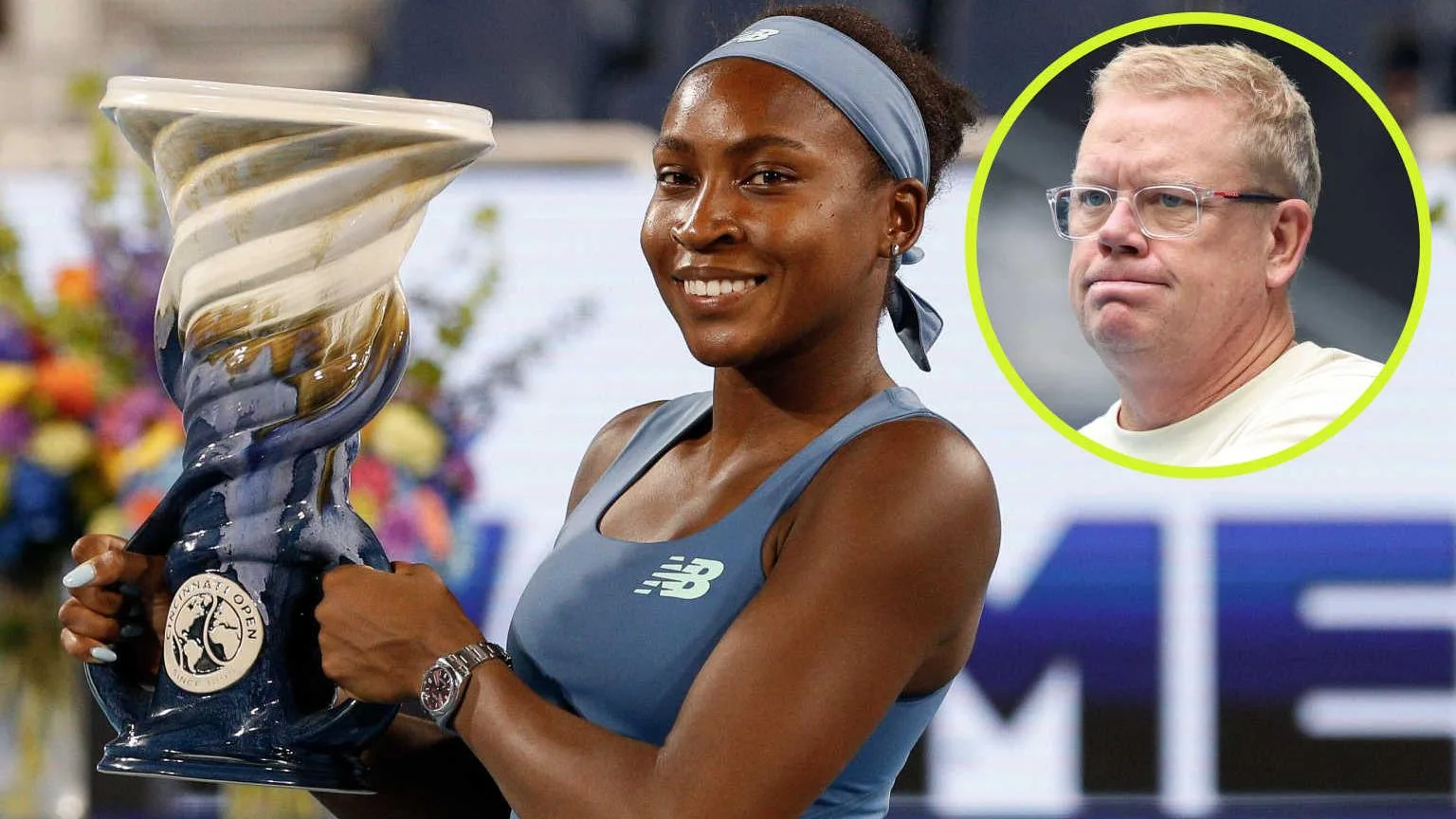
Just more than half a year ago, Coco Gauff was openly questioning whether the serve changes she had been making were helping at all. By the time she reached the Cincinnati Open final, the picture looked very different, with the American finding clarity and confidence at the right time before the US Open.
Gauff’s serve has been one of the most closely watched parts of her game, and the issue came into sharp focus during her Dubai Tennis Championships semi-final against Elina Svitolina in February. After dropping the first set, she double faulted at 2-2 [15-15] in the second and turned to biomechanics coach Gavin MacMillan with clear frustration: “I’ve been doing everything you’ve wanted for the last six months, and it’s gotten not better at all, bro.”
MacMillan had joined her team before the 2025 US Open with the specific aim of improving that area of her game. At the time, Gauff felt the work was not producing results. That changed in Cincinnati, where there was little reason to discuss the serve after she beat Jessica Pegula 6-2, 6-4 in the final and committed only one double fault across the match.
In comments to WTATennis.com, the two-time Grand Slam champion acknowledged how difficult that Dubai moment had been, while also stressing that the work is moving in the right direction.
“That was a tough moment for me, and I felt bad after I said it, but they’re understanding people [laughing]. They knew it was out a frustration, but that was a tough moment because I was like, ‘Bro, we’ve been working on it and it’s not getting better.’
“It was getting better, honestly, but it just didn’t feel like it in that moment. After the match, my coach said ‘No, you’re in the right track,’ especially JC [Faurel] because he’s been with me through the worst of my serve, and now he’s on the better half, better side of it.
“He says the double faults aren’t the same. Obviously they’re still double faults, but he’s like ‘You’re just improving.’ That gave me a good confidence that one day I will find it, and I feel now, I know that I can find it even if I throw two or something in a game. I know that I’m capable of finding Plan A again and at some point in the match.”
Twelve months ago, Gauff was in a far less comfortable place, losing in the first round at Wimbledon before making the decision to replace Matt Daly, who had joined her team in September 2024 and later guided her to the 2025 French Open title, with MacMillan. There was no immediate turnaround, as she then fell in the fourth round at the US Open.
This year feels different. Speaking after her Cincinnati victory in Ohio, she said: “I think last year, I was just frustrated with my game and I felt like I was declining. It’s not something any player wants to feel”
“You always want to feel like you’re getting better or, at the worst, just plateauing. So last year I was in a weird predicament. I made sudden decisions that most people probably wouldn’t do before a Slam, but I think it was worth it. I feel like it’s night and day where I am from last year to now.”

Zverev Arrives at Laver Cup With Europe’s Title Bid in Focus

Alex Eala opens Singapore challenge against Prozorova as ranking gains loom

Zverev’s breakthrough season rewrites a long-running story

Raducanu Arrives at US Open With Momentum After Strong Hard‑Court Swing

Maestrelli Triumphs in Bergamo, Claims Challenger Title and Career‑High Ranking