
ATP Masters Miami Open
The Big T Episode 13: Golden Glizzy, Swiatek’s split, Fonseca’s tests and Jovic’s climb
Episode 13 of The Big T examines Miami highlights: Golden Glizzy, Swiatek split, Fonseca and Jovic..

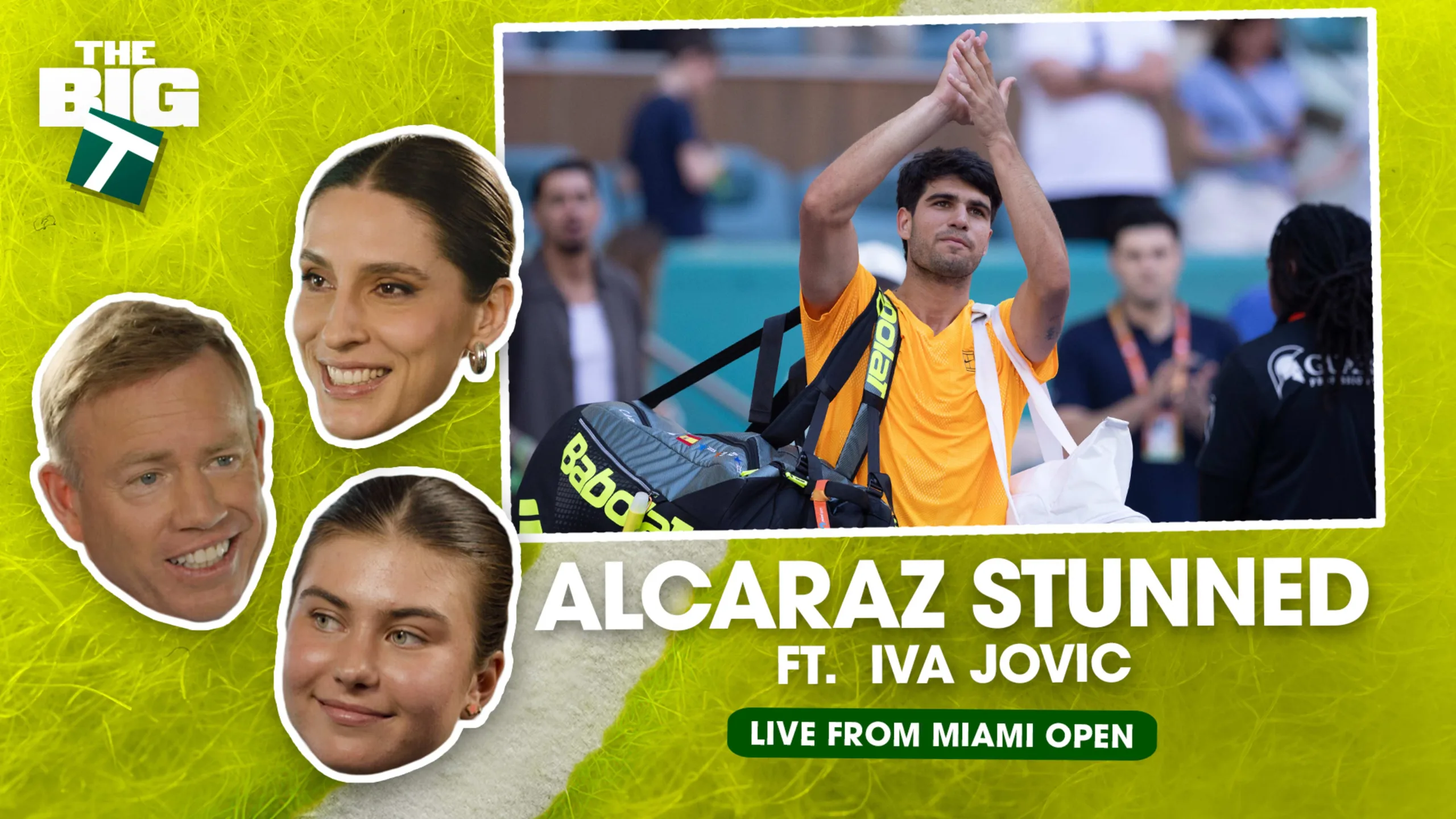
Episode 13 of The Big T podcast turned its attention to a wide range of Miami Open talk, from an extravagant concession item to shifts in the top ranks and the progress of emerging players.
First, the culinary curiosity. For $100, fans could buy an Australian Wagyu sausage topped with crème fraîche, Golden Goat Caviar and edible gold flakes, a creation dubbed the Golden Glizzy. Hosts Andrea Petkovic and Mark Petchey weighed in on the dish and the tournament atmosphere in the episode.
On the women’s side, the conversation focused on Iga Swiatek. Less than a year after claiming her first Wimbledon title with a 6-0, 6-0 final, Swiatek has split with coach Wim Fissette. The six-time Grand Slam champion is 13-9 in her last 22 matches and has not reached a semifinal since last September in Seoul. Her opening-round loss to compatriot Magda Linette in Miami appeared to prompt the change.
Petkovic reflected on that decision in the episode: “Sometimes, I’m connected to witchcraft,” she began, “because I predicted last year that Iga was going to win Wimbledon … and last year I was on a show in Germany, and they asked me to give my hottest take about tennis. And I said I think Wim Fissette and Iga Swiatek will not make it through Indian Wells-Miami.
“It was just an intuition that came upon me.”
Joao Fonseca’s two straight-set losses to Jannik Sinner (7-6, 7-6 at Indian Wells) and Carlos Alcaraz (6-4, 6-4 in Miami) were framed as valuable tests for the 19-year-old. Petkovic said, “That is the ideal scenario for a young guy like him,” Petkovic says of the 19-year-old. “He can now go back home, look at the tape of the matches and say, this is where they are still better, or this is what I still need to work on—and come on the clay and absolutely crush.”
Petchey added context and a note of caution: “This was a great learning curve, for him to play those two stars,” Petchey agreed. He also warned Fonseca’s many fanatics with another comment: “I still feel as though we need to temper our enthusiasm, of how quickly he may be in the world’s Top 10, and really in amongst it against Carlos and Jannik. I think it’s going to take 18 months to two years before he’s comfortably feeling—particularly in a best-of-five—that he’s got a realistic shot of winning.”
The episode also highlighted 18-year-old Iva Jovic, who rose from No. 191 at the 2025 Australian Open by winning the USTA Wild Card Playoff and later reached the Australian Open quarterfinals, moving into the Top 20. Jovic said simply, “I love talking, in general,” says another teenage tennis sensation, Iva Jovic. She reflected on travel and growth: “I’ve done a lot of great training, and played some tough matches after Australia, but I think I learned a lot from it. I’m happy with where I’m at.” She added a candid note about life off court: “I’m a little bit clumsy, and all over the place outside of the court,” she admitted. “I lose everything, that’s my thing—I can’t keep track of my things. I oversleep sometimes, I’ve overslept on match days!
“Hopefully one day, I can be as responsible and mature as I sound.”
Episode 13 is available on major streaming platforms for listeners who want the full discussion and extra segments.



ATP French Open Grand Slam
Auger-Aliassime Reaches Career-High No. 4 After Breakthrough at Roland Garros
Auger-Aliassime rises to No. 4 after best Roland Garros run, tying second-highest Canadian rank. Now
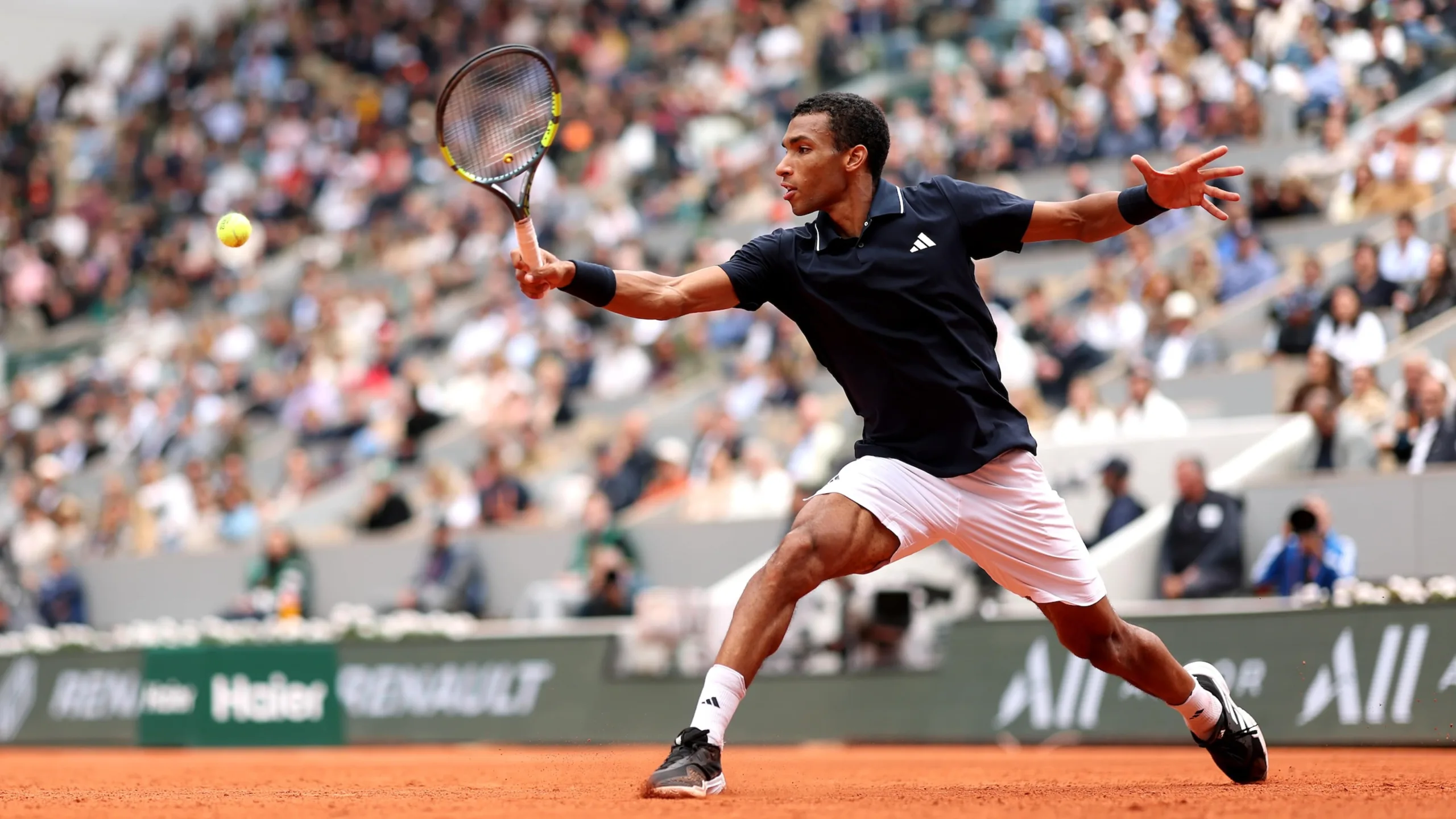
Felix Auger-Aliassime moved to a career-high No. 4 in the ATP rankings following his deepest run at Roland Garros, where the 25-year-old reached the quarterfinals for the first time before losing to eventual finalist Flavio Cobolli. The result completed a personal Grand Slam milestone: having previously reached the quarterfinals or better at the Australian Open, Wimbledon and the US Open, he became the first Canadian man to reach the quarterfinals or better at all four majors in his career.
The rise from No. 6 to No. 4 surpasses his prior best of No. 5 and places him tied for the second-highest-ranked Canadian in ATP or WTA rankings history. The only other Canadians to reach the top four are Milos Raonic and Bianca Andreescu. Raonic went as high as No. 3 in 2016, following his run to the Wimbledon final that year, and Andreescu peaked at No. 4 in 2019 after winning the US Open.
Canadian tennis has seen seven players reach the top 10 in either ATP or WTA history, with official rankings available since 1973 for the ATP and 1975 for the WTA.
Auger-Aliassime still has ground to cover to move higher in the standings. He is 2,865 points behind the current world No. 3, Alexander Zverev, with the rankings showing Zverev at 7,305 points and Auger-Aliassime at 4,440.
The Canadian will shift his focus to grass. He begins his grass-court season this week at the ATP 250 event in ‘s-Hertogenbosch, entering as the No. 1 seed. After a first-round bye he will open against either Hubert Hurkacz or Marton Fucsovics.
The new ranking reflects a season of important progress for Auger-Aliassime and cements his place among the highest-ranked Canadians in modern tennis history.
ATP Challenger 100 Neckarcup
Emilio Nava takes Neckarcup title after Luka Mikrut withdraws from final
Emilio Nava won the 2026 Neckarcup after Luka Mikrut withdrew from the final with shoulder pain. (1)
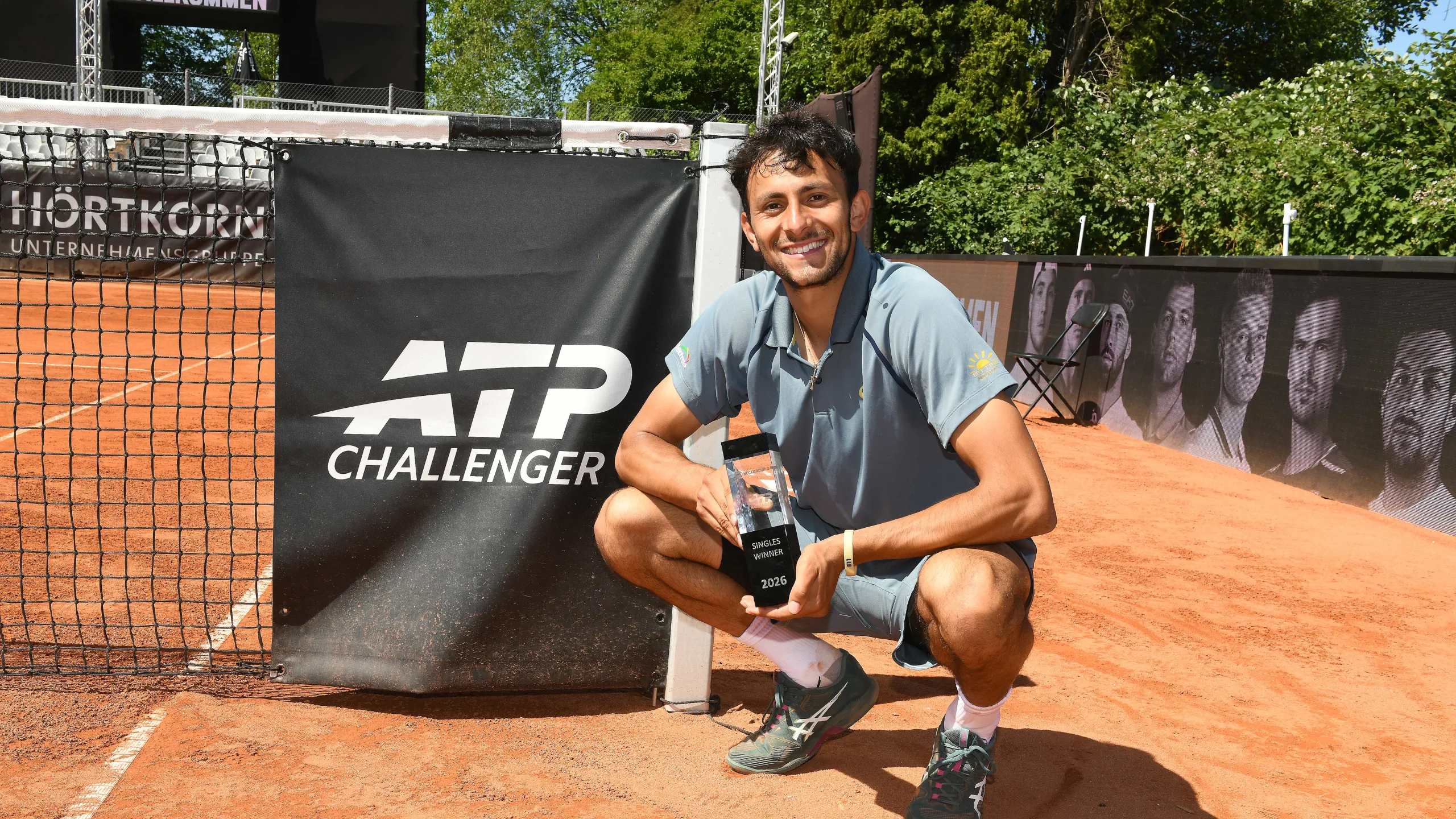
Emilio Nava was awarded the 2026 Neckarcup title after Luka Mikrut withdrew from the final with a shoulder injury, handing the American his seventh ATP Challenger trophy and his first of the season.
The 24-year-old arrived in Bad Rappenau as the second seed and produced one of the tournament’s sharper displays in the semifinals, a 6-1, 6-4 win over Henri Squire that lasted 58 minutes. After that victory Nava said: “Henri had an off day today, while everything worked for me.”
Sunday’s championship match never began after Mikrut addressed the Centre Court crowd and detailed his condition. “I have severe pain in my shoulder. I tried everything with the physios, the doctor, and pain medication,” the Croatian explained. “But I was worried that playing a match could make it even worse. To beat Emilio, I would need to be at 150 percent, not just 100. I wouldn’t have been able to do that today.”
Nava acknowledged mixed feelings on lifting the trophy. “It’s a bittersweet feeling today,” Nava admitted after lifting the trophy. “But this tournament has been fantastic. The organization is outstanding, and this was definitely one of the most enjoyable weeks of the year for us. I always love playing in Germany.”
The title continues the upward trajectory Nava has built since winning four Challenger trophies in 2025. “It was definitely my best season so far and I’m proud of what I achieved,” he said during the week. “Winning four Challenger titles is something special. But I still think my real breakthrough at ATP Tour level is ahead of me. These things don’t happen overnight.” Now World No. 87, Nava was also candid about the strength of American men on tour. “We’re just good players,” Nava joked. “Look at guys like Ben Shelton, Taylor Fritz, Tommy Paul, Frances Tiafoe, Brandon Nakashima and Alex Michelsen. They’re all doing great. We get along well, but we’re also extremely competitive. We push each other every day to become better players.”
Nava splits training between Buenos Aires and Florida. “My coach is from Spain and my physio is Argentinian, so naturally I spend a lot of time around Spanish-speaking people,” he explained. Off court he said, “I love video games. Right now, I’m playing a lot of Battlefield. I also enjoy going to the beach, relaxing and spending time with friends.” He added lighter moments from the week: “We played Frisbee in the park, spent time playing video games indoors, and shared a lot of laughs with the team and the other players.” Asked about celebration plans, he laughed: “I wish there was a big party,” he laughed. “But I’ll have dinner with my team and treat myself to some ice cream.”
Nava leaves Germany with 100 ATP ranking points and €23,700 in prize money. Tournament officials praised the level of play but noted attendance was low across eight days. “The level of tennis between world rankings 100 and 200 is outstanding,” said tournament manager Metehan Cebeci. “The week was sunny, rainy, emotional and exciting,” Tournament Director Mine Cebeci said. “And on finals day, I think we can all be very satisfied.”
ATP French Open Grand Slam
Flavio Cobolli’s Roland Garros run vaults him into ATP Top 10
Flavio Cobolli entered the ATP Top 10 after his first Grand Slam final at Roland Garros. New ranking
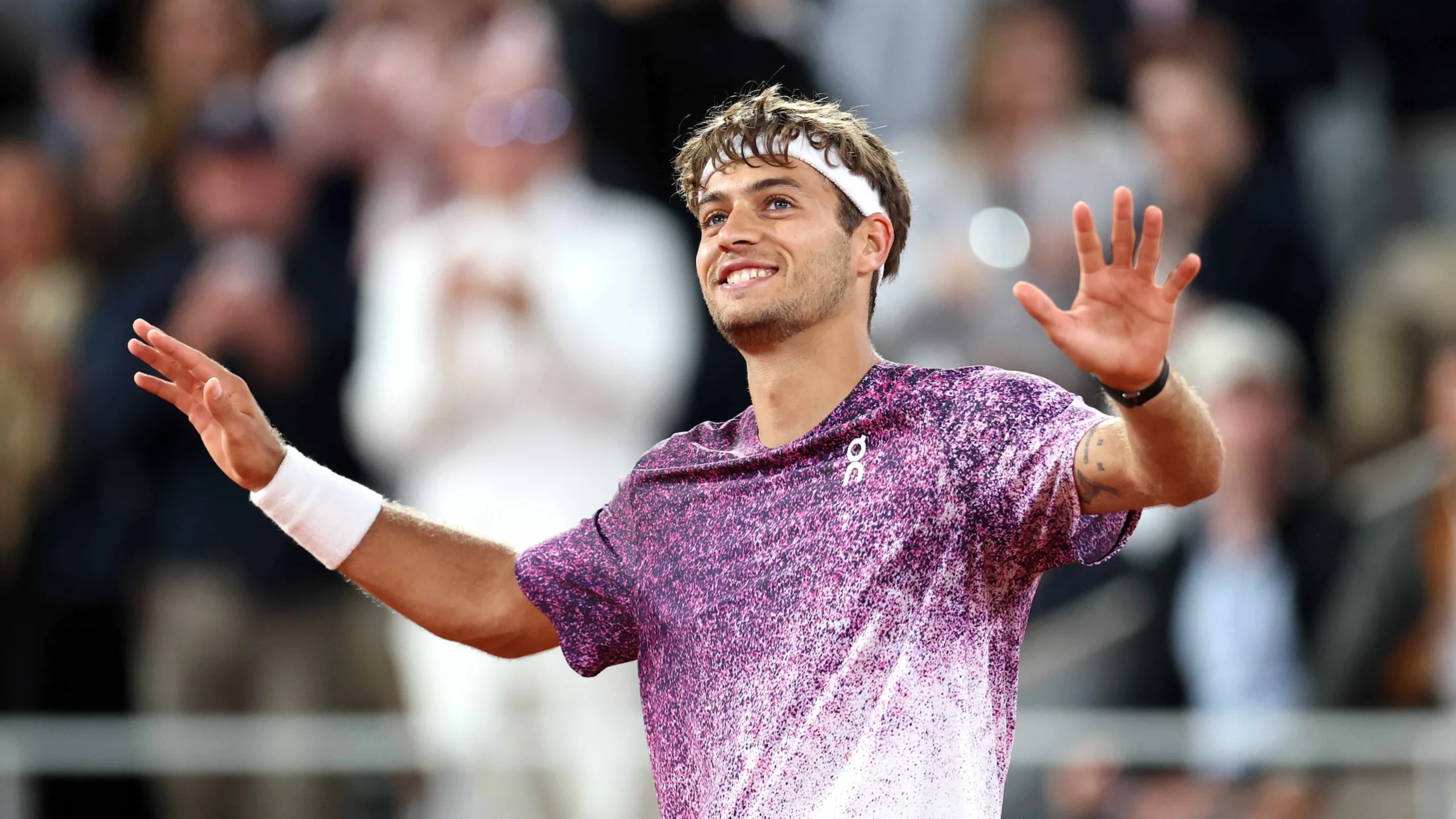
Flavio Cobolli’s breakthrough at Roland Garros produced a major ranking milestone. The 24-year-old reached his first Grand Slam semifinal and final in Paris and, despite losing the title match to Alexander Zverev in a five-set battle, climbed from No. 14 to No. 10 in the latest ATP rankings, marking his Top 10 debut.
Cobolli is the seventh Italian to enter the ATP Top 10 since the rankings began in 1973. He is also only the second Italian man in the past 50 years to contest the Roland Garros final, joining last year’s runner-up, Jannik Sinner. Born in 2002, Cobolli is the fifth man born in 2002 or later to reach the Top 10, following Carlos Alcaraz and Holger Rune, who were both born in 2003, and Lorenzo Musetti and Ben Shelton, who were both born in 2002.
The route to the final carried complicated circumstances. Cobolli advanced to the title match after countryman Matteo Arnaldi withdrew before their semifinal due to illness. Cobolli reflected on the day with mixed emotions: “When [Arnaldi] came to me almost one hour ago, I almost cried,” he said. “It’s something that you don’t expect at all. I was ready to play this match. When he came, I was completely sad for him.
“But at the same time, of course I’m really happy for the result that I reached this week. My dad also came to me right before him, and we had a big hug together with the whole team for achieving the Top 10. Every time that I make the best ranking, we all together have a big hug. We did the same routine as always.
“Yeah, now I’m sad and happy at the same time.”
Arnaldi, 25, leaps from No. 104 to No. 34 after reaching his first Grand Slam semifinal, moving to within four spots of his 2024 career-high of No. 30. Matteo Berrettini also recorded a significant rise, moving from No. 105 to No. 48 after reaching his first Grand Slam quarterfinal since 2022 on the terre battue. For the former No. 6, it was his first appearance at Roland Garros since 2021, following four years marked by injury and illness withdrawals.

Auger-Aliassime Reaches Career-High No. 4 After Breakthrough at Roland Garros

Emilio Nava takes Neckarcup title after Luka Mikrut withdraws from final

Flavio Cobolli’s Roland Garros run vaults him into ATP Top 10

Alcaraz Confronts On‑court Microphones During US Open Practice Ahead of Opelka Match

Raducanu Arrives at US Open With Momentum After Strong Hard‑Court Swing

Cervara: Ending an eight‑year partnership with Medvedev was necessary to change the energy
-
 ATPFrench OpenGrand Slam2 months ago
Roland Garros 2026 Preview: Why Jannik Sinner Arrives as the Heavy Favorite
-
 ATPFrench OpenGrand Slam2 months ago
Djokovic upbeat on Roland Garros fitness as he aims for 25th major
-
 French OpenGrand Slam2 months ago
Roland Garros 2026 Women’s Draw Sets Up Potential Sabalenka–Gauff Semifinal