
Masters National Bank Open WTA
Madison Keys Overcomes Match Points to Reach Montreal Quarterfinals
Madison Keys saves two match points to reach Montreal quarterfinals, marking her third comeback in 2025.

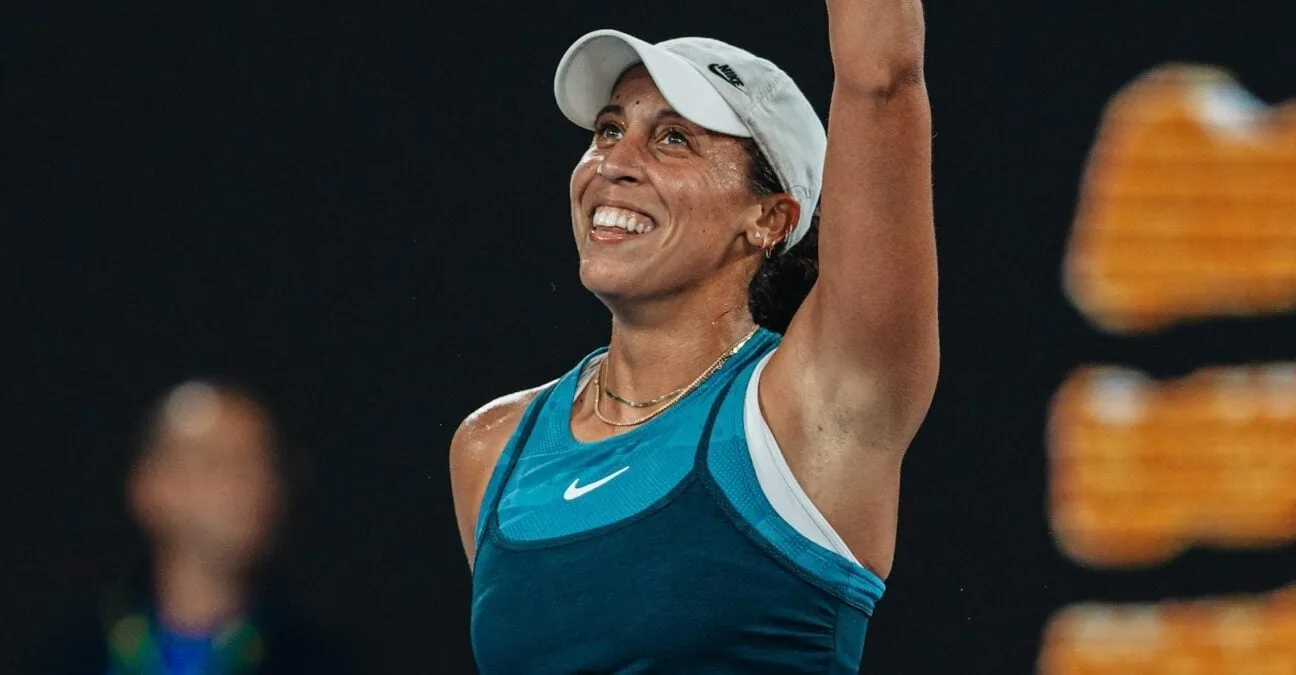
Madison Keys, the Australian Open champion, demonstrated remarkable resilience to advance to the quarterfinals of the National Bank Open in Montreal. The American, seeded sixth, saved two match points in a gripping final set against No. 11 seed Karolina Muchova, prevailing 4-6, 6-3, 7-5. This is Keys’s first time reaching the last eight in Montreal since her 2016 final appearance.
In 2025, Keys has now remarkably rallied from match points down three times, including her wins over Iga Swiatek at the Australian Open semifinals and Sofia Kenin in the third round at Roland Garros. Reflecting on her latest win, Keys said, “I’m really happy to get that win. She’s such a great player and she’s always such an opponent to go up against, and to be able to, after losing the first set, and even being match point down, being able to figure it out, it’s always a great day.”
The match extended over two hours and 20 minutes, with Keys showing boldness under pressure at critical moments. After missing a chance to break Muchova at 2-2 in the deciding set, Keys pushed on. When facing match point after a double fault, she struck a precise forehand on the first ball, then forced Muchova out wide to erase that first match point. On the second match point, Keys’ strong first serve ignited a missed return from Muchova, turning the tide decisively.
Keys then dominated by winning 10 of the last 12 points to complete the comeback, improving her head-to-head record against Muchova to 2-0 despite not having met since 2019.




ATP Madrid Open Masters
Fonseca adjusts to fresh pressure as Rafael Jodar’s surge reshapes the field
Fonseca confronts fresh pressure as Jodar’s meteoric ascent and Madrid result redraws the spotlight.
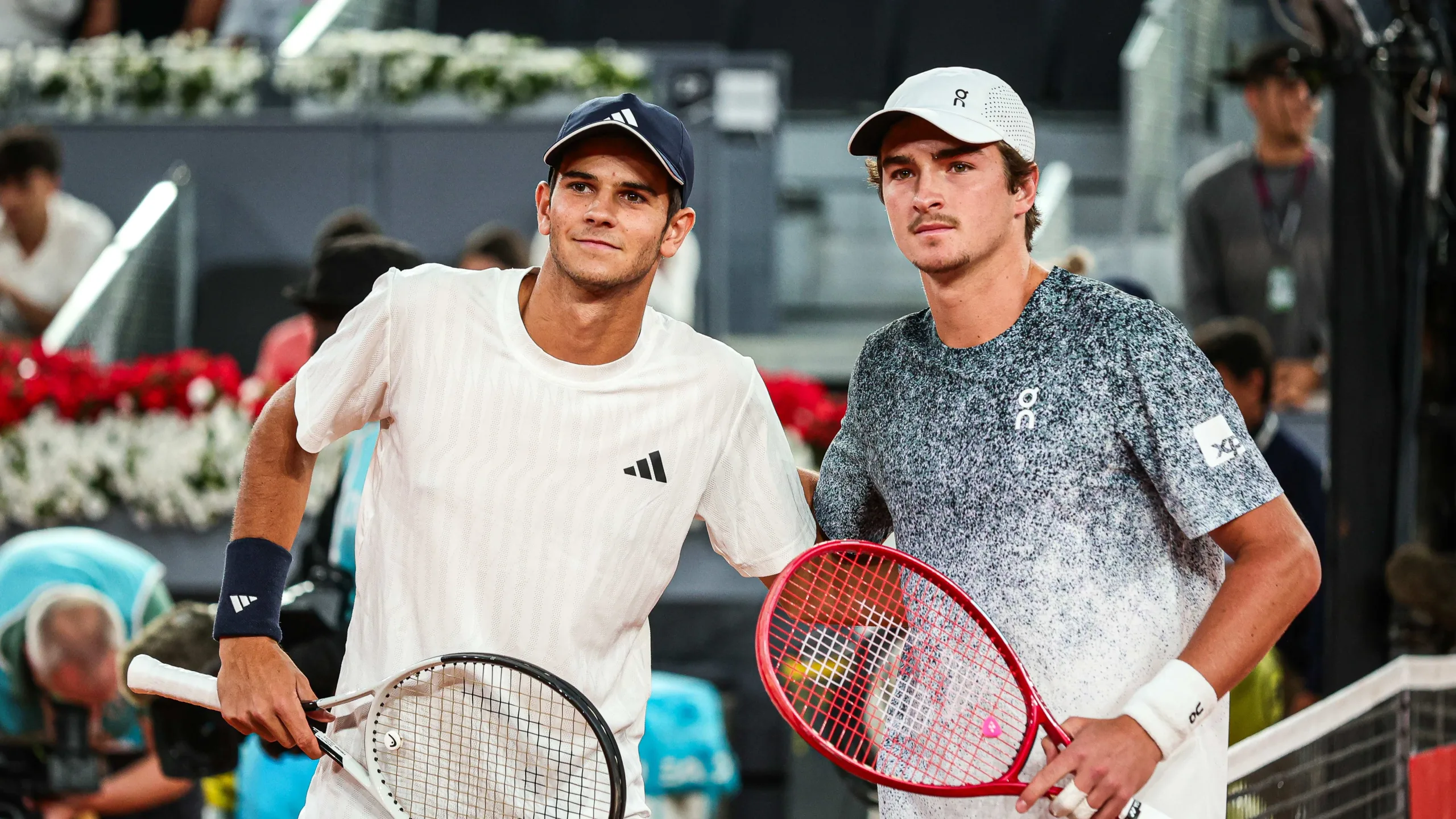
Two teenagers whose careers have tracked close together have suddenly tilted the ATP conversation. Joao Fonseca, once the unquestioned beneficiary of rising hype, is confronting a new dynamic as Rafael Jodar, 19, charges into the spotlight.
Jodar vaulted from a Jan. 1 ranking of No. 165 to his current No. 29, won his first ATP Tour title and beat Fonseca in the third round at Madrid. That win left Jodar one spot above Fonseca on the rankings computer, a small but telling indicator of momentum.
Fonseca has struggled with a lingering back injury and a sophomore wobble this season yet remains focused on improvement. “I’m young and doing great, but to reach my dream, I need to focus on my routine, my day by day,” Fonseca told the ATP’s media team a year ago in May. He has tried to temper expectations as well: “I would be happy if, well, if I make good results, if I play good matches. Even if I lose. . . My mentality now, [is] that I need to [see] every match as an opportunity to learn.”
The two players share striking parallels. Both were born a month apart in 2006, each won one junior Grand Slam at the US Open (Fonseca in 2023, Jodar in 2024) and both received recruitment to the University of Virginia. Fonseca skipped freshman orientation and turned pro; Jodar played one season at UVA, posting a 19-3 singles record and helping the Cavaliers to the NCAA quarterfinals.
Fonseca’s form has been uneven in 2026. He lost in the first round of the Australian Open to Eliot Spizzirri, won only one match across the Buenos Aires and Rio spring events, then recovered some rhythm with three wins at Indian Wells. His clay season has been solid if unspectacular. After the Madrid match he smashed a racquet for the first time in ATP play, apologized on social media and described the reaction as the “Jodar effect,” or, as he put it more simply, “pressure.”
Respect between them is genuine. “He possesses all the qualities to become an extraordinary player,” Fonseca said after their meeting, and Jodar returned the sentiment: “He’s a very young player, a great player. So, yeah, I wish him the best of luck for the rest of the season and for his career.” Fonseca remains steady in outlook: “Everyone has their time,” Fonseca said in Monte-Carlo. “My time will come. I’m doing great… (Let’s) keep with this routine, keep with this mentality to work quietly and hard. But yeah, I think the expectations are going to come.”
ATP Italian Open Masters
Tien Enters ATP Top 20 After Rome; Jodar Joins Top 30 and Secures Roland Garros Seed
Learner Tien moves into the ATP Top 20 after Rome; Rafael Jodar cracks the Top 30 and earns a seed..
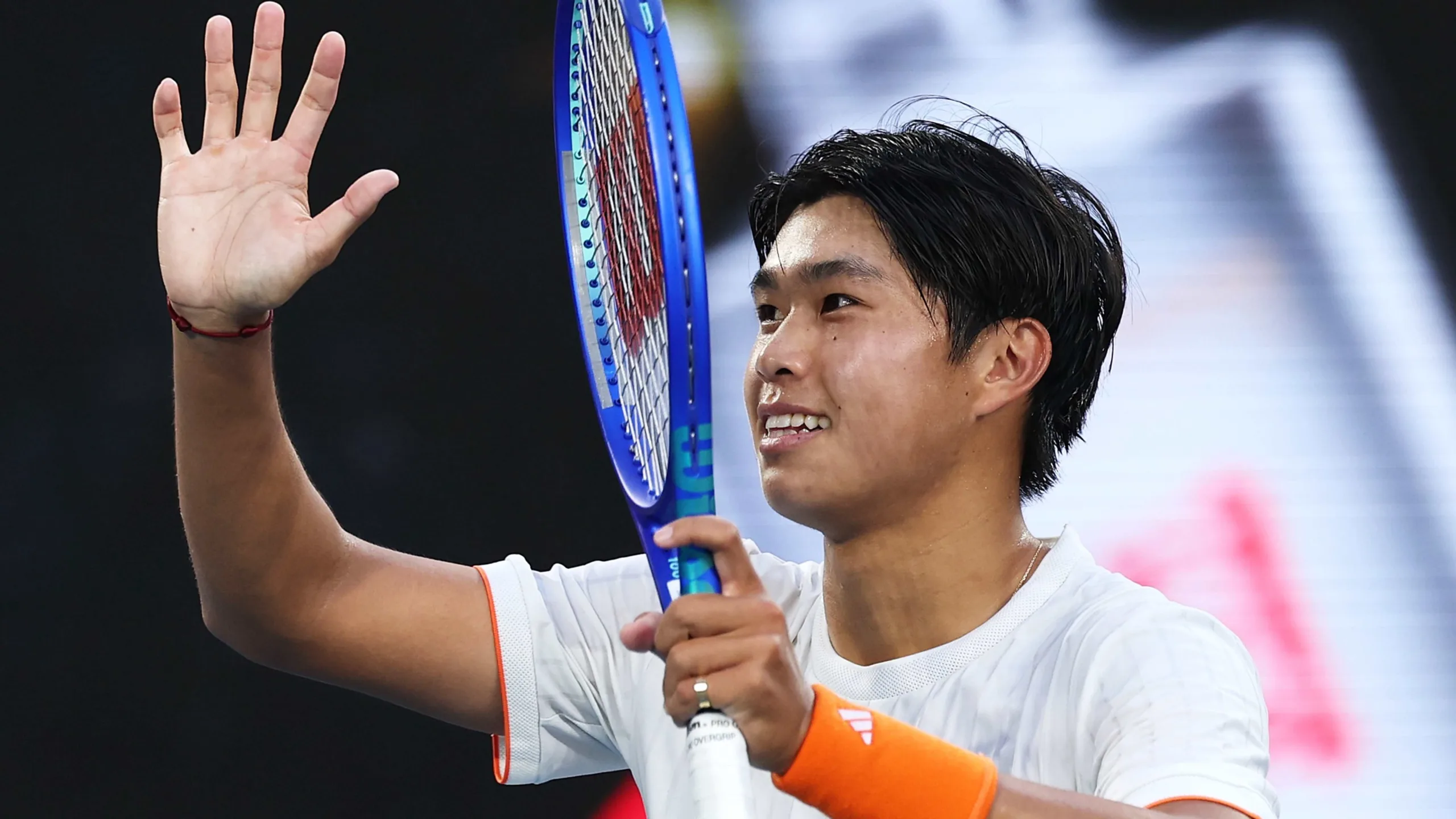
American Learner Tien has climbed into the ATP Top 20 after reaching the fourth round in Rome. The 20-year-old Californian moved from No. 21 to No. 20 following his best Masters 1000 result on clay. That run marked the first time in his career he has won back-to-back matches on the surface.
Tien’s most notable previous results have come on hard courts, including his first ATP title in Metz last year and another ATP final in Beijing last year. His best Grand Slam showing came with a quarterfinal at the Australian Open earlier this year, and his best Masters 1000 result before Rome was a quarterfinal at Indian Wells earlier this year. He is now finding form on different surfaces and has little to defend for the remainder of the clay season or even the grass season.
On the U.S. leaderboard, Tien is the No. 3-ranked American man behind Top 10 players Ben Shelton (No. 6) and Taylor Fritz (No. 8). Frances Tiafoe (No. 21) and Tommy Paul (No. 26) round out the U.S. men’s Top 5.
Spanish teenager Rafael Jodar also made a significant leap, rising from No. 34 to No. 29 to register his Top 30 debut and clinch a seed for Roland Garros. Jodar has moved from outside the Top 100 to inside the Top 30 in this clay-court season alone. He left Miami with his Top 100 debut and went 15-3 on clay, winning his first ATP title in Marrakech, reaching the semifinals in Barcelona and posting back-to-back quarterfinals in Madrid and Rome.
The 19-year-old is now the highest-ranked teenager on the ATP list, narrowly ahead of fellow 19-year-old Joao Fonseca at No. 30. They are the only two teenagers in the ATP Top 100. Jodar will be making his career debut at Roland Garros next week.
Two other Rome standouts climbed the rankings: Luciano Darderi rose from No. 20 to No. 16 after reaching his biggest career semifinal, surpassing his prior career-high of No. 18 and guaranteeing a Top 16 seed for Roland Garros; and Casper Ruud jumped from No. 25 to No. 17 after reaching the final in Rome, also securing a Top 16 seed in Paris given No. 2-ranked Carlos Alcaraz and No. 11-ranked Lorenzo Musetti’s injury withdrawals.
ATP Italian Open Masters
Late-match clarity: How Sinner and Svitolina closed Rome with decisive plays
Late pressure yielded clarity: Sinner and Svitolina turned tense moments into Rome titles. In Paris.
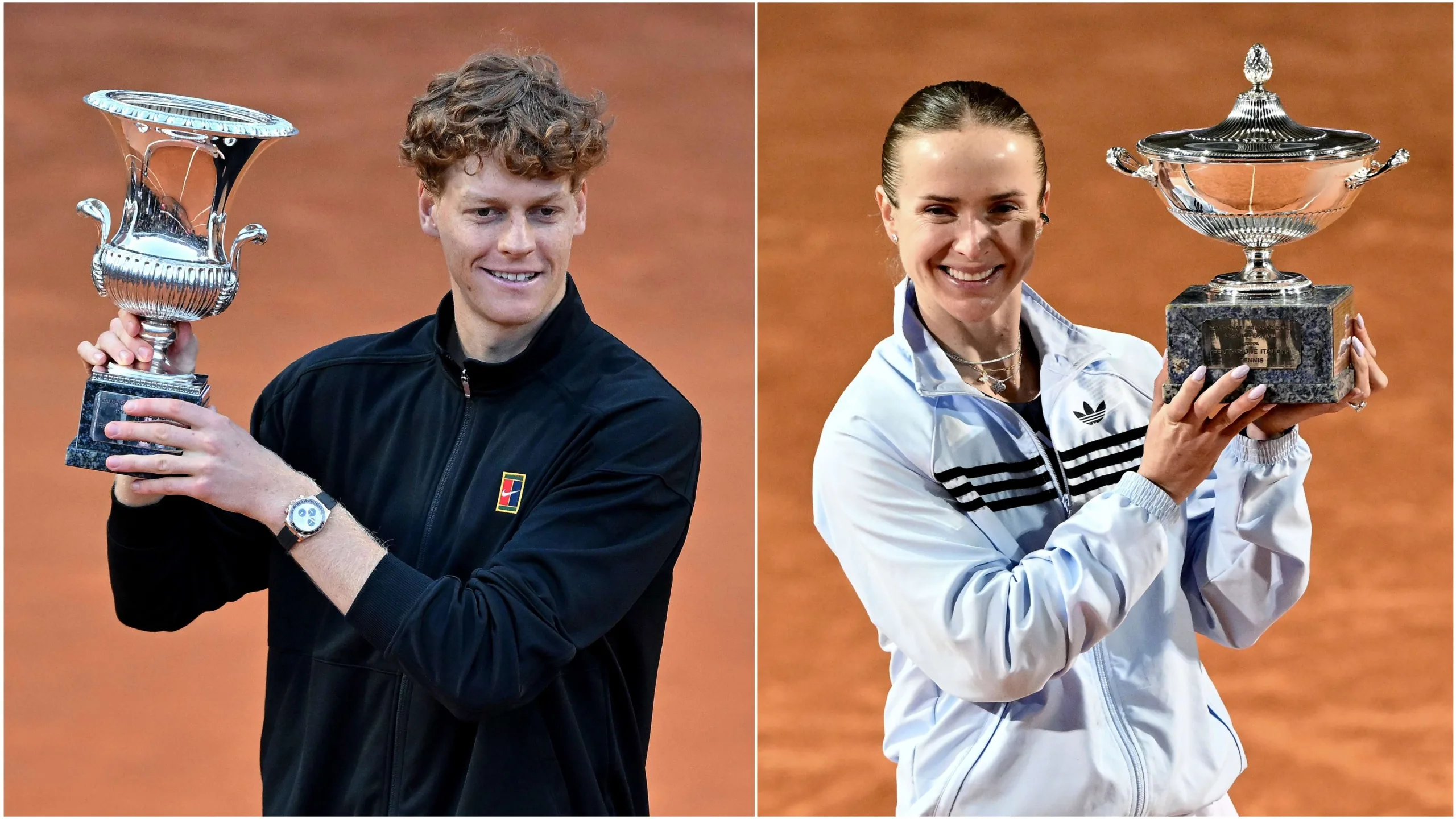
Two finals, two defining moments. In Rome, Elina Svitolina and Jannik Sinner each wrapped long title runs with a single late-match flash that encapsulated their tournaments.
Svitolina’s decisive sequence arrived at 4-2 in the third set against Coco Gauff, as she chased an insurance break. Gauff seemed to have the point after moving Svitolina from sideline to sideline, but Svitolina scrambled, tracked down a backhand, crossed to retrieve a forehand and then crossed again to hit a backhand pass from outside the doubles alley for a winner. That same willful desperation and relentless energy powered three-set wins over No. 3 seed Iga Swiatek, No. 2 seed Elena Rybakina and, moments later, fourth-seeded Gauff. Her final, a 6-4, 6-7 (3), 6-2 victory, delivered a third Rome title, eight years after her previous one.
“It’s just the fighting spirit that I have,” Svitolina, 31, said. “I try to bring it in the important moments. Sometimes when your opponent is playing great, you need to be ready for fighting.” She credited a mid-year training block for sharpening her game: “It was important to prioritize my fitness, my kind of strength, because in such a busy schedule, don’t have so much time to train physically,” Svitolina said. “I really had a good eight days of training. Completely switched off from tennis. I think I feel more refreshed.”
Sinner’s defining moment came late in the second set of the final against Casper Ruud. Serving at 4-3, 30-30, he was under pressure but answered with a blistering forehand that turned defense into attack and finished the rally with an inside-out winner. Sinner had been tight early but produced the shotmaking that characterized his spring run of five straight Masters 1000 titles. After his 6-4, 6-4 win he reflected on the occasion: “This was the 50th year since an Italian won,” a relieved Sinner said. “There was a lot of tension on both sides, it was not perfect tennis from both of us, but I’m really happy. An incredible past two and a half months. I try to put myself in the best possible position every time and do the best I can. Not every day is simple.”
Sinner also acknowledged the physical toll and the team that helped him: “Physically very very tough, big thanks to my physical team, I’ve had with me all year long, trying to keep up my body,” Sinner said. “They’re as important as the tennis coaches”
Both champions converted pressure into the precise plays that won them Rome.

Auger-Aliassime Reaches Career-High No. 4 After Breakthrough at Roland Garros

Emilio Nava takes Neckarcup title after Luka Mikrut withdraws from final

Flavio Cobolli’s Roland Garros run vaults him into ATP Top 10

Alcaraz Confronts On‑court Microphones During US Open Practice Ahead of Opelka Match

Raducanu Arrives at US Open With Momentum After Strong Hard‑Court Swing

Cervara: Ending an eight‑year partnership with Medvedev was necessary to change the energy
-
 ATPFrench OpenGrand Slam2 months ago
Roland Garros 2026 Preview: Why Jannik Sinner Arrives as the Heavy Favorite
-
 ATPFrench OpenGrand Slam2 months ago
Djokovic upbeat on Roland Garros fitness as he aims for 25th major
-
 French OpenGrand Slam2 months ago
Roland Garros 2026 Women’s Draw Sets Up Potential Sabalenka–Gauff Semifinal