Analytics & Stats ATP
Courier’s theory: Why Djokovic might push past 2025 for one more Australian return
Courier feels Djokovic may delay retirement to return to Australia and finish with dignity. in 2026.

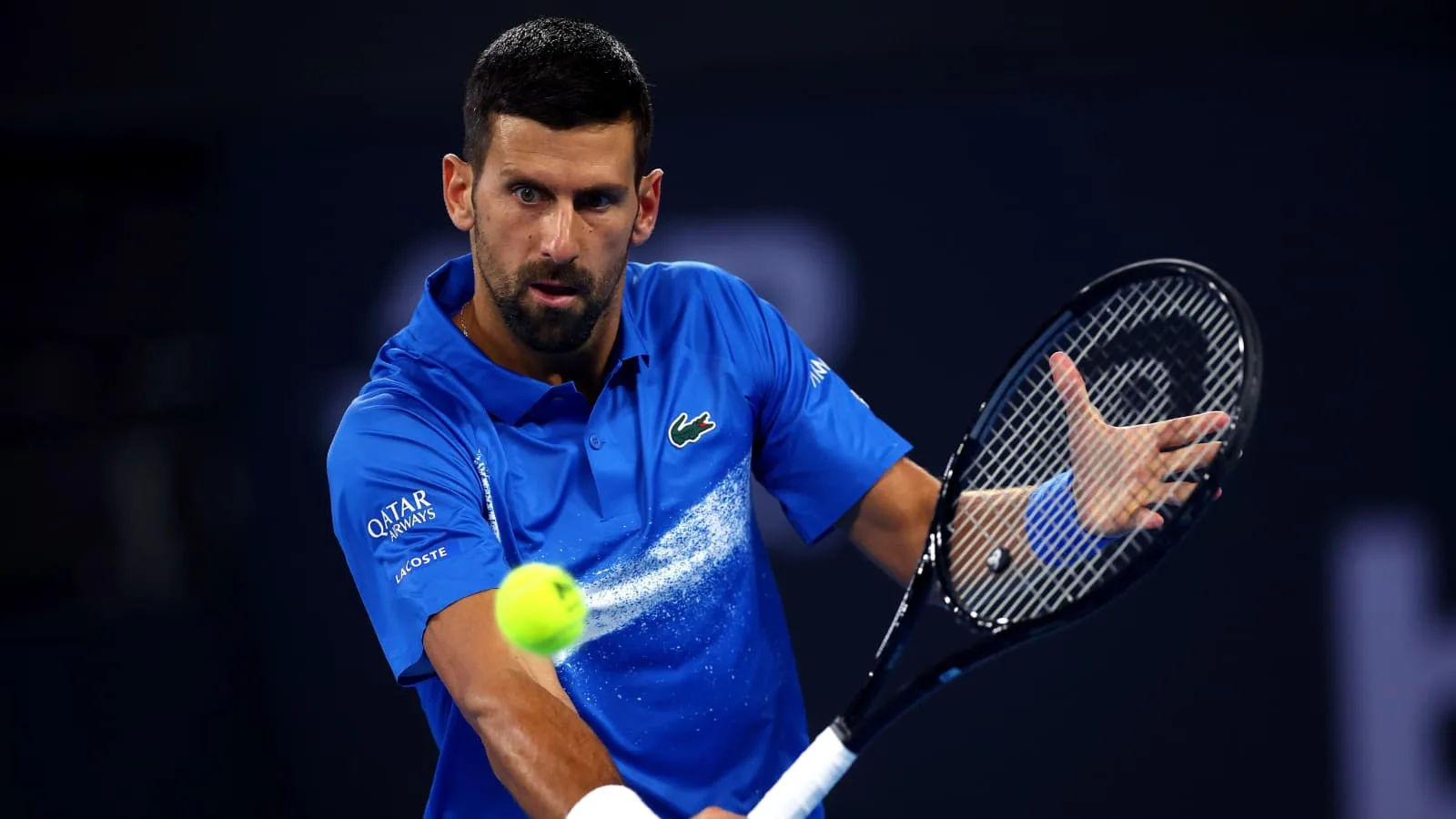
Novak Djokovic’s plans for retirement have been a recurring subject through much of 2025. Former world No 1 Jim Courier offered a reason why the Serbian may not finish this year, suggesting a final trip to Australia could change his timeline.
Djokovic, 38, has limited his schedule this season, skipping most ATP Tour events and concentrating on Grand Slams. That selective approach delivered strong results: the most successful male player of all-time reached the semi-finals of the first three majors this season despite a lack of match practice. Djokovic has been open about his motivation, saying his career extension is driven by one objective: “to win a 25th Grand Slam title and claim the record for the most major title wins.” He added, “Biological age is not something that I guess you can reverse,” said Djokovic. “I still feel like I have a game left in me, you know to play at the highest level.
“As I said before several times, as long as I have that feeling of really that that level is still alive, I feel like I want to keep going and I want to keep pushing myself to see whether I can have a shot at another Slam.
“I’m asking myself questions, of course, more nowadays than I have ever before in terms of, how long do I want to keep going at this level? How do I want to approach my schedule to kind of extend my career?”
“I might get a little bit more philosophical again when I finish the tournament, but I’ll try to focus on the next challenge here.”
Courier, watching Djokovic beat Jan-Lennard Struff to reach the US Open quarter-finals, pointed to the Australian Open episode last January as a possible reason to continue. He said: “My personal feeling, and it’s not rooted in any facts, just feelings,” said Courier. “My feeling is that Djokovic had such a bad taste in his mouth leaving his most successful tournament when he had to stop playing because he was seriously injured in the semi-finals.
“He played a competitive set against (Alexander) Zverev, lost it and then shook hands. Then he, the ten-time champion, was booed off court and it was Zverev who had to defend his honour in a post-match interview. It was not well done by the crowd.
“So my view is he would want to go back and play Australia at least one more time and get a proper send off. That’s what I want for him. I don’t know if that’s what he wants.
“Can you imagine (Roger) Federer playing at Wimbledon, he had to default and the fans boo him? Can you imagine? The same with (Rafa) Nadal at Roland Garros. “Ten times that Djokovic has won that tournament in Australia. No one is even close. It was wild.”
If Djokovic lifts a 25th major at the US Open final, an immediate retirement announcement would not surprise many. If he loses — whether in the quarter-final to Taylor Fritz, a potential semi against Carlos Alcaraz, or a final with Jannik Sinner — the debate over his next step will only intensify.




Analytics & Stats Media
Kyle Edmund weighs in on the injury toll in tennis
Kyle Edmund discusses why tennis injuries keep rising, pointing to physical demands and balls.
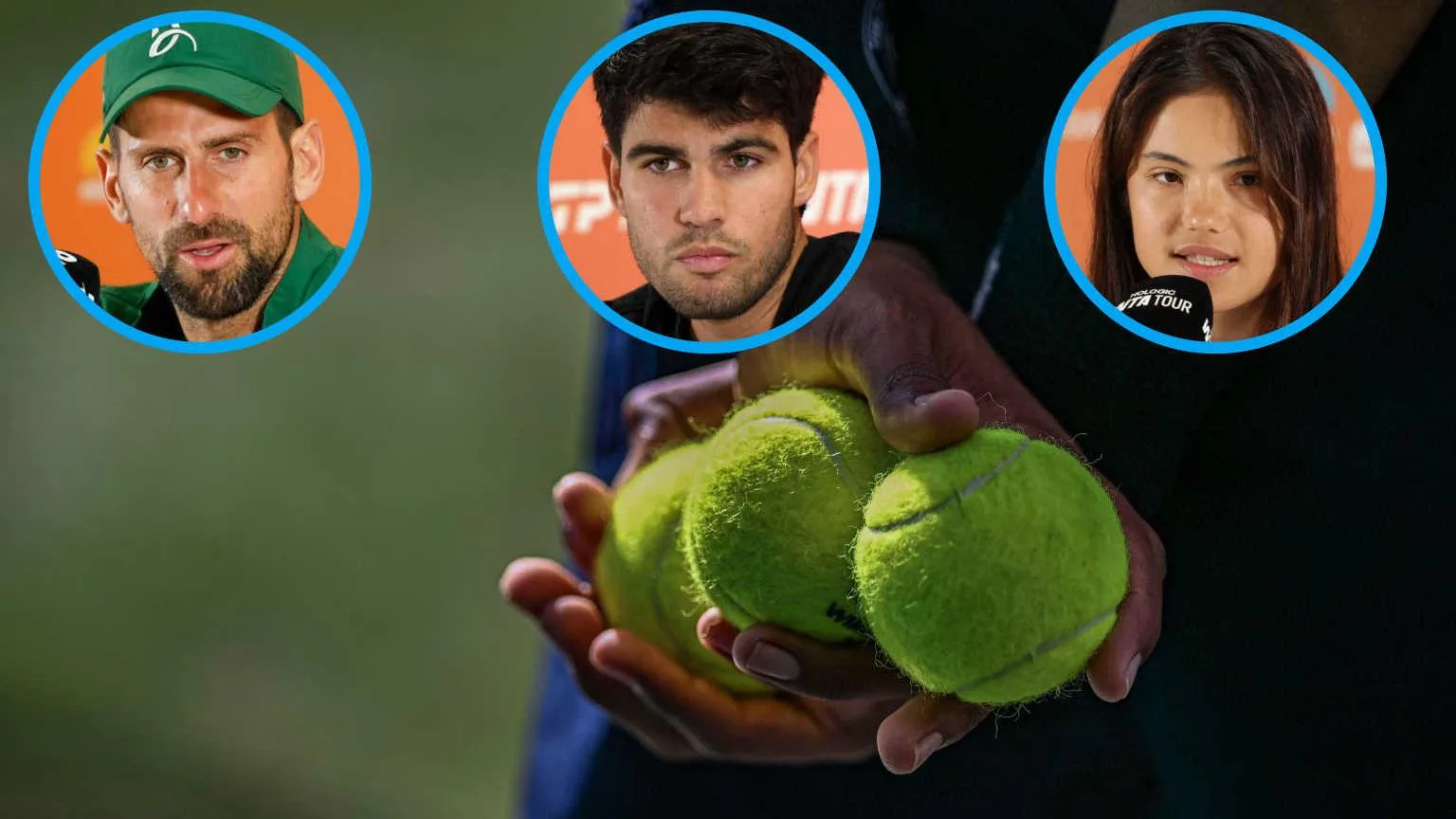
Former British No 1 Kyle Edmund has spoken about the possible reasons behind tennis’s mounting injury problems in an interview with Tennis365.
The issue has been impossible to ignore across both tours in 2026, with players repeatedly forced out of major events. Before Wimbledon’s main draw even began, 18 players had withdrawn across the men’s and women’s entry lists. Among those who have already spent extended periods sidelined in recent months are Carlos Alcaraz, Jack Draper, Emma Raducanu, Victoria Mboko and Lorenzo Musetti.
Edmund knows the physical strain of the sport as well as anyone. He retired in August 2025 at the age of 30 after a career interrupted by serious injury setbacks, and he said the modern game places a greater load on players than it did in the past.
“I think there’s no doubt the game is more physical, certainly being on the tour and speaking to ex-players… the demands, the way people are moving is physical,” said Edmund, who achieved a career-high ranking of world No 14
He also pointed to the packed schedule and the structure of the season as major contributors to the strain on bodies.
“There’s chat about the calendar, more days at the tournaments, the extended Masters events. [There’s] probably less downtime between the tournaments, so you don’t have time to do physical blocks to build your body up throughout the year. You’re very much maintaining.
“So apart from the off-season, you’re just maintaining throughout the year, and to maintain and do training where you’re just, not trying to increase your fitness, but just cope with the demands for 11 months of the year, can be a challenge.”
Edmund, who reached the semi-finals at the 2018 Australian Open, added that the balls used on tour may also be linked to more arm and wrist problems.
“There’s another thing: the balls. I don’t have stats with the balls, but the arm injuries, the wrist injuries… I had a wrist injury at the back end of my career. I never had any wrist injuries before… I don’t what that was,” said the two-time ATP Tour title winner.
“I was obviously coming back from a knee injury, so it might’ve just been I wasn’t ready for the demands of playing match after match.”
His view is echoed by several leading names. Novak Djokovic, Daniil Medvedev, Alcaraz and Raducanu have all complained about the balls used on the tours in recent years, with Djokovic saying: “That’s probably the biggest difference I can notice, compared to maybe 10, 15 years ago. It’s the balls.”
In February 2025, Alcaraz said: “I think last year there were many injuries, many players with elbow or shoulder issues. It needs to change. I know they will change it.
“Every week, practically every week, we have different balls, different conditions, so it’s complicated to adapt to them.”
Analytics & Stats ATP French Open
Auger-Aliassime Records 100th Week Inside ATP Top 10
Auger-Aliassime reaches his 100th week in the ATP Top 10; he is currently ranked No. 5. Milos Raonic
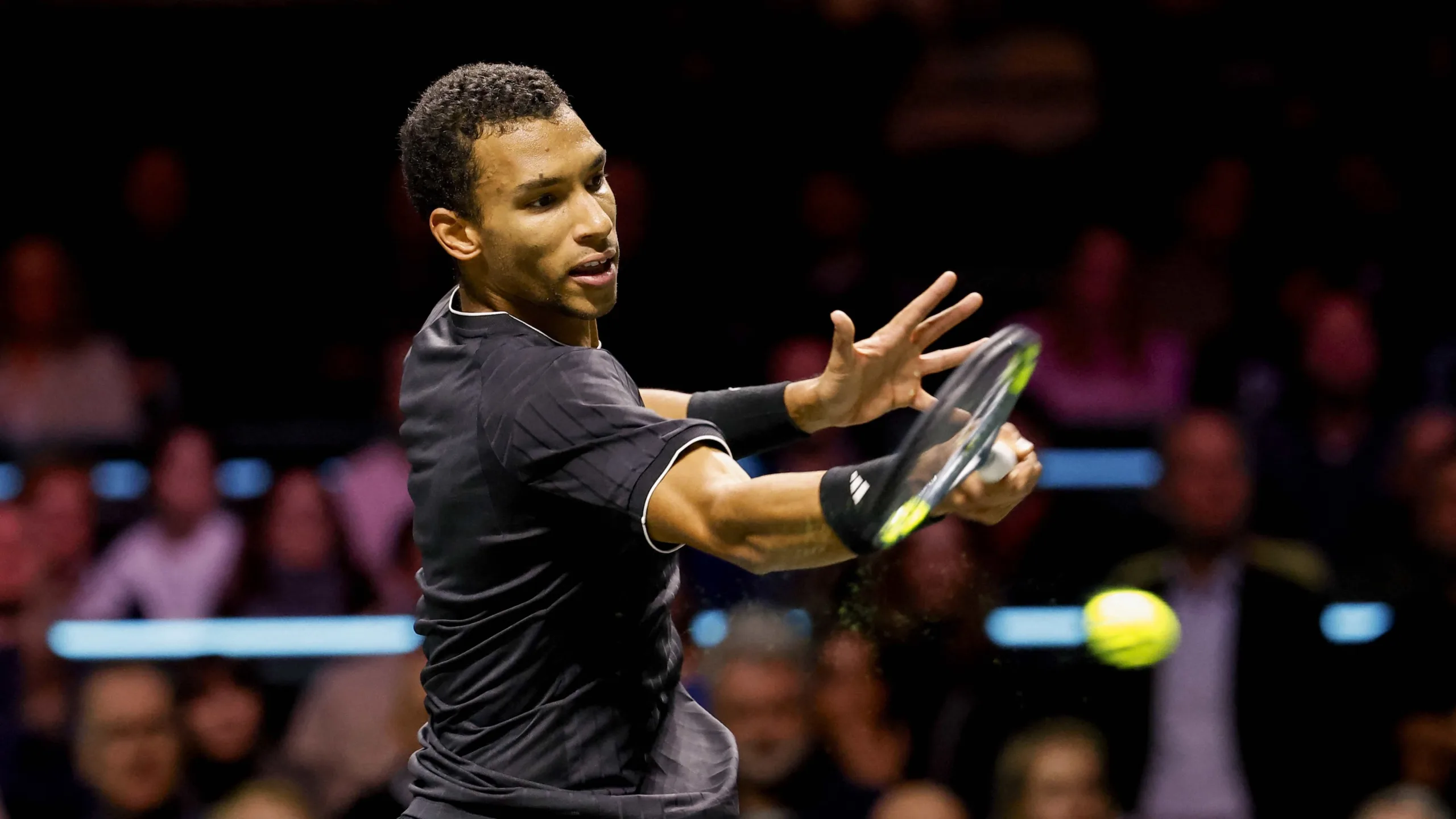
Felix Auger-Aliassime is celebrating his 100th career week inside the ATP Top 10 as the clay-court major approaches. The Canadian has reached the milestone in four separate stints: November 15th to 21st, 2001 (one week), January 10th to September 11th, 2022 (35 weeks), October 17th, 2022 to June 11th, 2023 (34 weeks) and October 27th, 2025 to present (30 weeks and counting).
Auger-Aliassime is currently at his career-high ranking of No. 5 and joins a small group of players born in the 2000s to accumulate triple-digit weeks in the elite. The draft notes he reached the mark “after exactly who you’re thinking.”
The milestone places him among the longest-serving Canadians to reach the Top 10. He becomes the second Canadian to log that many weeks at the top of the rankings, following Milos Raonic, who spent 151 weeks in the Top 10 across the 2013, 2014, 2015, 2016 and 2017 seasons. Denis Shapovalov is the only other Canadian to have reached the ATP Top 10, spending 10 weeks there across 2020 and 2021.
The pattern of Auger-Aliassime’s tenure in the Top 10—multiple returns to the group rather than a single continuous stretch—highlights his resilience and consistency at the highest level. As Roland Garros nears, the 100-week marker is a reminder of his standing on the ATP Tour and of the depth of Canadian men’s tennis in this period.
Analytics & Stats Grand Slam
28 Numbers for Aryna Sabalenka on Her 28th Birthday
Sabalenka turns 28: 28 statistics from No.1 weeks to Grand Slam titles and tie-break records. Today!
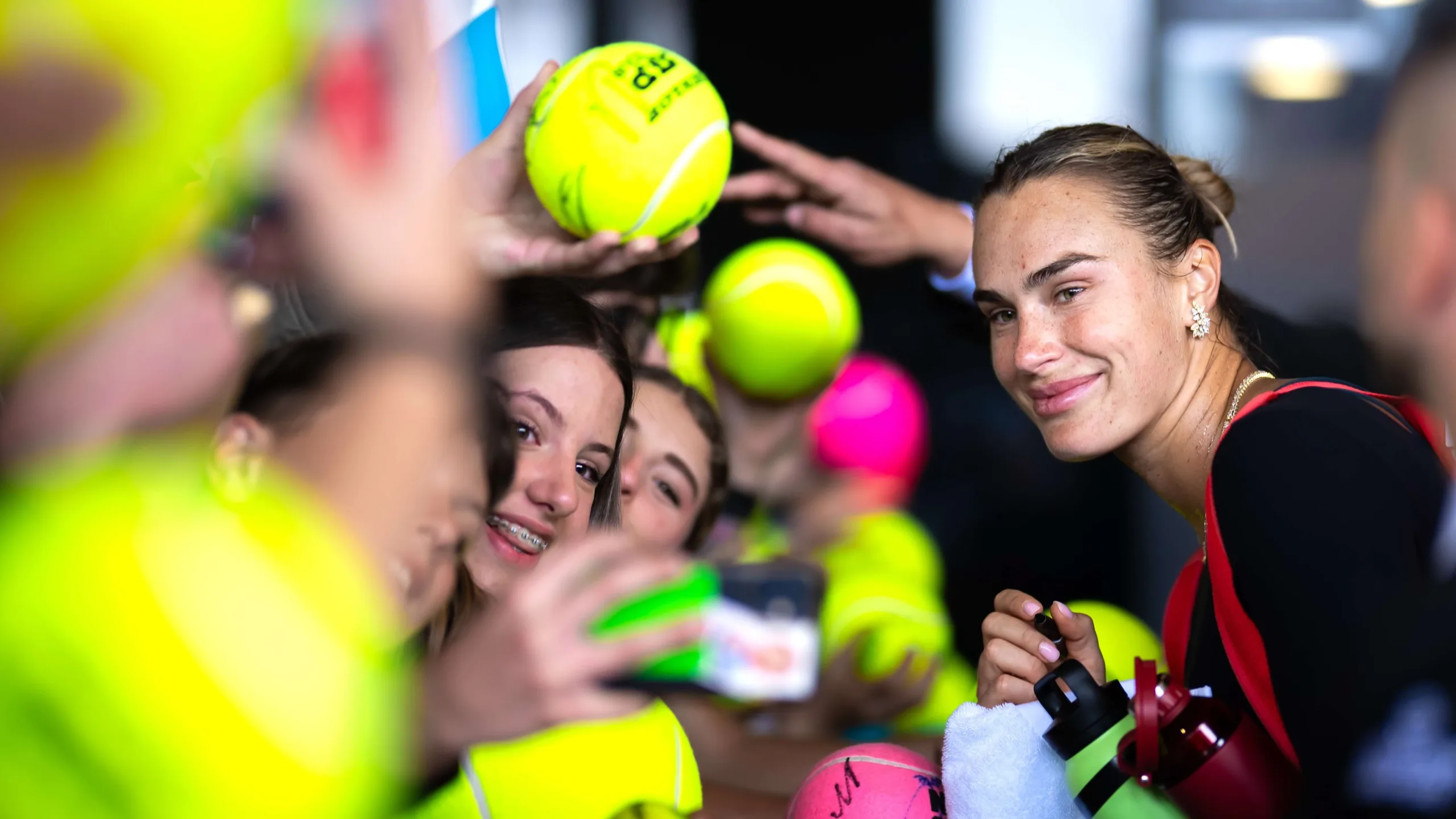
Aryna Sabalenka turns 28 and this profile assembles a number for each year of her life drawn from the milestones listed below.
1 — The No. 1 ranking, which she will hold for an 89th and 90th career week during Rome over the next two weeks.
2 — Two year-end No. 1 finishes, in 2024 and 2025. She is one of only 13 players to finish No. 1 in back-to-back years in WTA history.
3 — One of three women this century to be No. 1 every week of a calendar year, joining Serena Williams and Ashleigh Barty after doing so in 2025.
4 — Four Grand Slam titles, all on hard courts: two Australian Open trophies (2023, 2024) and two US Open crowns (2024, 2025).
5 — Five straight Top 5 year-end finishes from 2021 to 2025, the only woman to finish the last five years in a row in the Top 5.
6 — Six straight Top 10 year-end finishes when including her No. 10 in 2020; the only woman with six consecutive Top 10 year-end placings.
7 — Reached the last seven hard-court major finals in a row, a run beginning at the 2023 Australian Open; the last woman to do seven in a row on hard courts was Martina Hingis.
8 — Won her first eight Grand Slam quarterfinal matches in a row, the second woman in the Open Era to do so after Chris Evert.
9 — Reached nine finals in 2025, the most on the women’s tour that year, and won a tour-leading four titles.
10 — Owns the 10th-longest streak at No. 1 in WTA history, secured this week with her 81st consecutive week at the top.
11 — The 11th-most career weeks at No. 1 with this week being her 89th overall; 11 WTA 1000 titles, including two already this year.
12 — Surpassed 12,000 ranking points for the first time in her career last summer, reaching a career-high 12,420 after Wimbledon.
13 — Reached the quarterfinals or better at the last 13 majors she has played, a run dating to the 2022 US Open; 12 of those were semifinals or better.
14 — Reached 14 career Grand Slam semifinals and has won seven of her last eight Grand Slam semifinals.
15 — Earned more than $15 million in prize money in 2025 alone, $15,008,519, a single-season WTA record.
16 — Three 15-match winning streaks in her career have each been snapped before 16; most recently she had six match points to break the run but did not.
17 — Reached the quarterfinals or better at her last 17 tournaments in a row, a streak beginning last February.
18 — Won 18 consecutive sets at the US Open at one point between her third-round match in 2024 and the 2025 semifinals; the only sets she lost in those two events were to Ekaterina Alexandrova and Jessica Pegula.
19 — Won 19 tie-breaks in a row during the 2025 season, the Open Era record for most consecutive tie-breaks won by a woman.
20 — Won her last 20 Grand Slam tie-breaks in a row, the Open Era record for any player at Grand Slams, surpassing Novak Djokovic’s 19.
21 — Her last straight-set defeat at a major came 21 majors ago at the 2020 US Open to Victoria Azarenka, 6-1, 6-3.
22 — Posted a 22-3 overall tie-break record in 2025, the most tie-break wins by a woman in a single season in the Open Era.
23 — Broke into the Top 5 at age 23 after winning her first Madrid title in 2021, defeating Barty in the final.
24 — Has 24 career titles, 21 on hard courts and three on the clay of Madrid (2021, 2023, 2025).
25 — Reached No. 1 for the first time at age 25 after her run to the 2023 US Open final; won 25 consecutive sets at the Australian Open from 2023 to 2025.
26 — Owns a 26-2 record this year; both losses were narrow, including a match where she led Elena Rybakina 3-0 in the third set of the Australian Open final and a match where she had six match points against Hailey Baptiste in Madrid.
27 — Spent her full 27th year ranked No. 1, all 365 days from May 5, 2025 to May 4, 2026.

Roddick and Isner expect a lively Eala-Jovic battle in the US Open third round

Alcaraz Keeps Silence of Doubters Growing After Smooth Passage at the US Open

Rusedski draws Nadal and Sinner parallels as Eala’s US Open run continues

Alcaraz Confronts On‑court Microphones During US Open Practice Ahead of Opelka Match

Raducanu Arrives at US Open With Momentum After Strong Hard‑Court Swing