
Hamburg Ladies & Gents Cup WTA WTA 125
Quevedo’s steady climb: from Gran Canaria title to Hamburg final at 19
Quevedo, 19, moved to Spain, won the ITF W100 in Gran Canaria and reached the Hamburg final. in 2025


Nineteen-year-old Kaitlin Quevedo arrived in Hamburg as the top seed and produced a week of composed, aggressive tennis that carried her to the final, where she finished as runner-up. The result followed the biggest title of her young career and reinforced a steady rise on the pro circuit.
Born in Naples, Florida, Quevedo carries dual roots. Her choice to base herself in Spain two years ago and to change her sporting nationality has been central to her progress. “Since I was born, I have double nationality,” she says. “Two years ago, I moved to Spain and started to train at TEC Carles Ferrer Salat Academy in Barcelona. When I went there, I got the opportunity by the Federation, and I changed my nationality. At this moment, I was looking for change, and it was great timing.”
Now ranked World No. 156, with a career high of No. 152 earlier this month, Quevedo has collected nine ITF World Tennis Tour titles. Her most notable win came in August at the ITF W100 DISA Gran Canaria-Maspalomas. “It was incredible,” she recalled. “I never felt such emotions when I won the final. I had confidence when I arrived at the tournament and I really wanted to win it. I went match by match, as you never know what happened. Every day I had a lot of support. My family was there. I really felt like being at home. It was such a good environment, just insane.”
Back in Hamburg she found a favorable setting. “I played here last year,” she said with a smile. “I like the club, the courts, the tournament and the organization. It fits my game style well. We knew how everything was and I am excited to be back.”
Quevedo describes her tennis as evolving around power and intensity. “Definitely physical,” she explained. “I am starting to become more aggressive as well. I like to build the point, to play heavy, open the court and to step in. I am working on going more to the net. I feel like I have all the shots and slowly becoming more aggressive as well.”
She acknowledges the jump from juniors, where she was once world No. 5, to the pro tour is demanding. “For sure, just getting more experience and playing as many tournaments and matches as possible against the best players,” she said. “With every match I learn something, evolve and keep improving. The good thing is, I keep… playing bigger tournaments against even better players. They push you more. They show you what you really have to work on.”
Based in Barcelona, she still values family time in the Canary Islands. “I am not that often in Gran Canaria, as it is a three-hour flight and it’s not that you go there just over the weekend. I go a few times a year. For sure, for Christmas. When I have time, I really love to go there and spend time with my family and enjoy the food.”
Off court she combines study and recovery. “To be honest, I just really like tennis,” she laughed. “But I am studying right now about nutrition. Of course, I also like to spend time with my friends and family.”
Her aims are clear and ambitious. “I want to finish inside the Top 150 this season. I am almost there. Next year, I will have the chance to play all the Grand Slams, and my dream is to play against the best players and become No. 1.”

ATP Challenger 50 Hamburg Ladies & Gents Cup
Tournament director Björn Kroll on the Hamburg Ladies & Gents Cup: crowds, format and the venue’s future
Kroll on Hamburg Cup: strong attendance, combined format praised, venue future uncertain – update
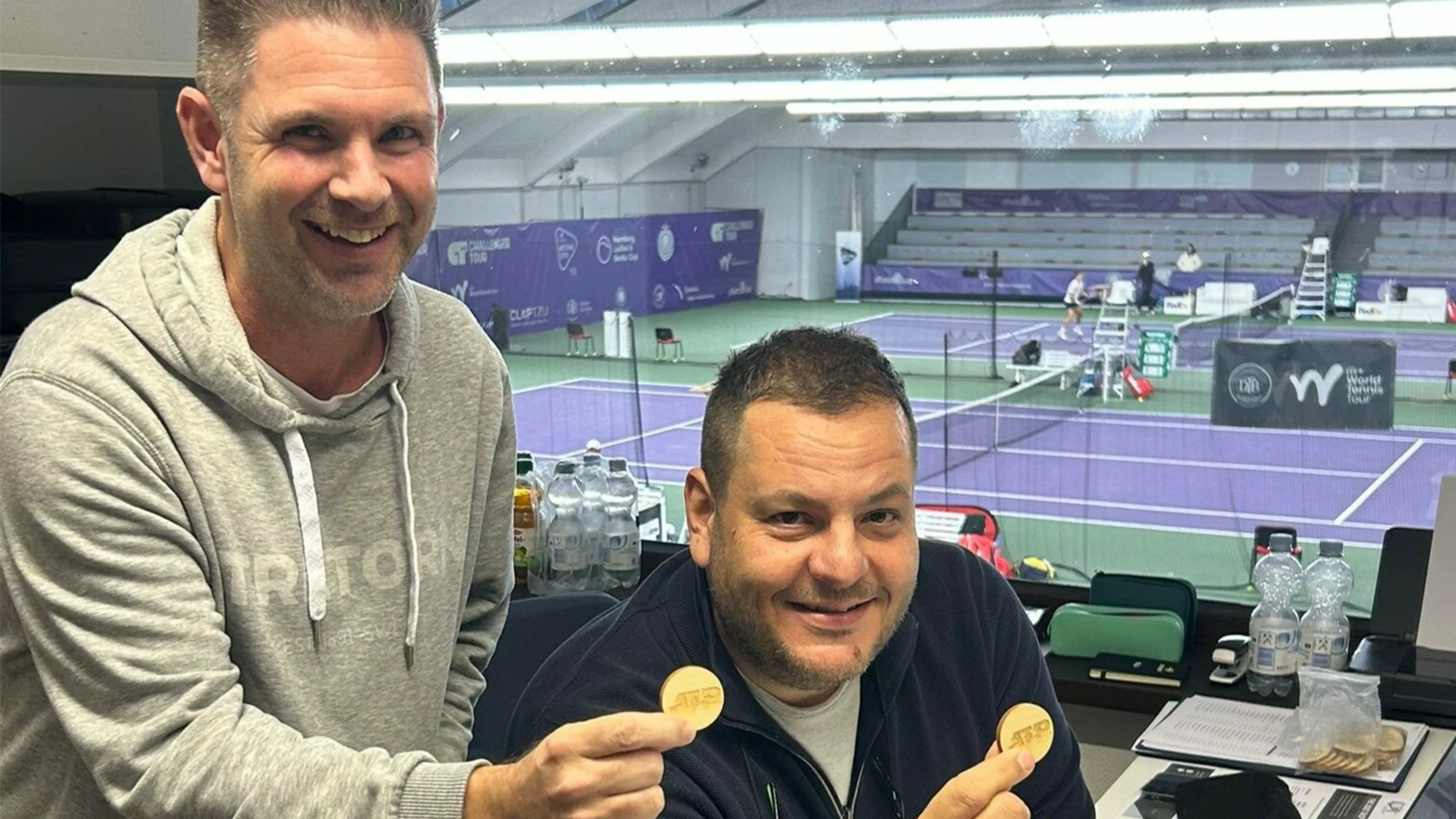
During semifinal Saturday of the Hamburg Ladies & Gents Cup, tournament director Björn Kroll reviewed the 2025 ATP Challenger 50/ITF W75 combined indoor event staged at the Hamburg Tennis Association facilities. He reflected on the event’s turnout, the experience of running a combined tournament and the uncertain future of the hall.
Mirra Andreeva’s elder sister Erika won Hamburg’s women’s event, upsetting top seed Kaitlin Quevedo in a straight-sets final.
BJÖRN KROLL: “The conclusion is very positive. It was extremely crowded—during the first few days, it was almost impossible to get through the entrance area, which is fantastic. That’s certainly also because many German players were competing—not only young talents but also experienced names like Mona Barthel and Cedrik-Marcel Stebe. It’s a great mix. Of course, players like Justin Engel, our defending champion Henri Squire, or local favorite Tessa Brockmann attract a lot of fans who are eager to see how our German players perform against international professionals at this level.”
Kroll said the combined format brought energy to the week and that organizers had acted on player feedback from previous years.
BJÖRN KROLL: “I think everyone involved finds it much cooler when it’s a combined event. The atmosphere is better and there’s simply more going on. I know that not all players feel the same way, but as long as there are no restrictions for them, it’s fine. After all, at the Grand Slams men and women also play together. We are, of course, a smaller indoor event, so we have to make a few compromises here and there. We took the players’ feedback from previous years seriously and improved several aspects. This year, we didn’t receive any negative feedback at all.”
On how the tournament compares within the Challenger landscape, Kroll noted the advantages and limits of using a federation-owned hall.
BJÖRN KROLL: “I’ve been to many Challenger events around the world, and there’s a huge range in quality. For instance, in Quimper or Rennes in France, they have light shows and the whole setup feels like an ATP 500. But I’ve also been to Challengers where you’d think our local club championships are better organized. It’s true that most events take place in rented arenas or clubs. Our advantage is that the tournament is held in our own federation hall—meaning we have full control. The downside is, of course, space. We had to rent additional courts to ensure a smooth schedule. I don’t think there are many combined events like ours left under such conditions.”
He also warned that rising ATP standards increase costs and complexity.
BJÖRN KROLL: “We have to distinguish between ATP and ITF events. The ATP’s requirements have increased tremendously in recent years. You receive a detailed manual that specifies everything—down to how many kilos of laundry a bag must hold. Since I also work at major ATP and WTA tournaments, I can compare, and the expectations are becoming very similar. You sometimes wonder why, and the explanation is that the ATP wants tournaments to become more professional. That makes sense, but it also means higher costs and more organization. Many tournament directors are struggling to keep up.”
BJÖRN KROLL: “With the ITF, it’s not as extreme; the requirements have increased, but at a reasonable pace. The ATP’s expectations, however, are very high, and that’s making it harder for many events to survive. Additionally, there’s a growing focus on hosting more tournaments in Asia and Saudi Arabia. It’ll be interesting to see how that develops.”
On the venue’s prospects, Kroll did not rule out change.
BJÖRN KROLL: “Most likely not at this venue. A lot is changing here. The hall is very old, even under monument protection, and quite run-down. The Hamburg Tennis Association is currently discussing what needs to be done during this winter season. Our goal is to move the tournament outdoors in the summer as a combined event. There are different options, but we’d like to keep two or three tournaments in Hamburg and Schleswig-Holstein.”
ATP Challenger 50 Hamburg Ladies & Gents Cup
From U.S. College Courts to Challenger Success: Tim Ruehl’s Season and New Hometown Event
Ruehl won Hamburg doubles with Geerts, his second Challenger title; he plans a small hometown event.
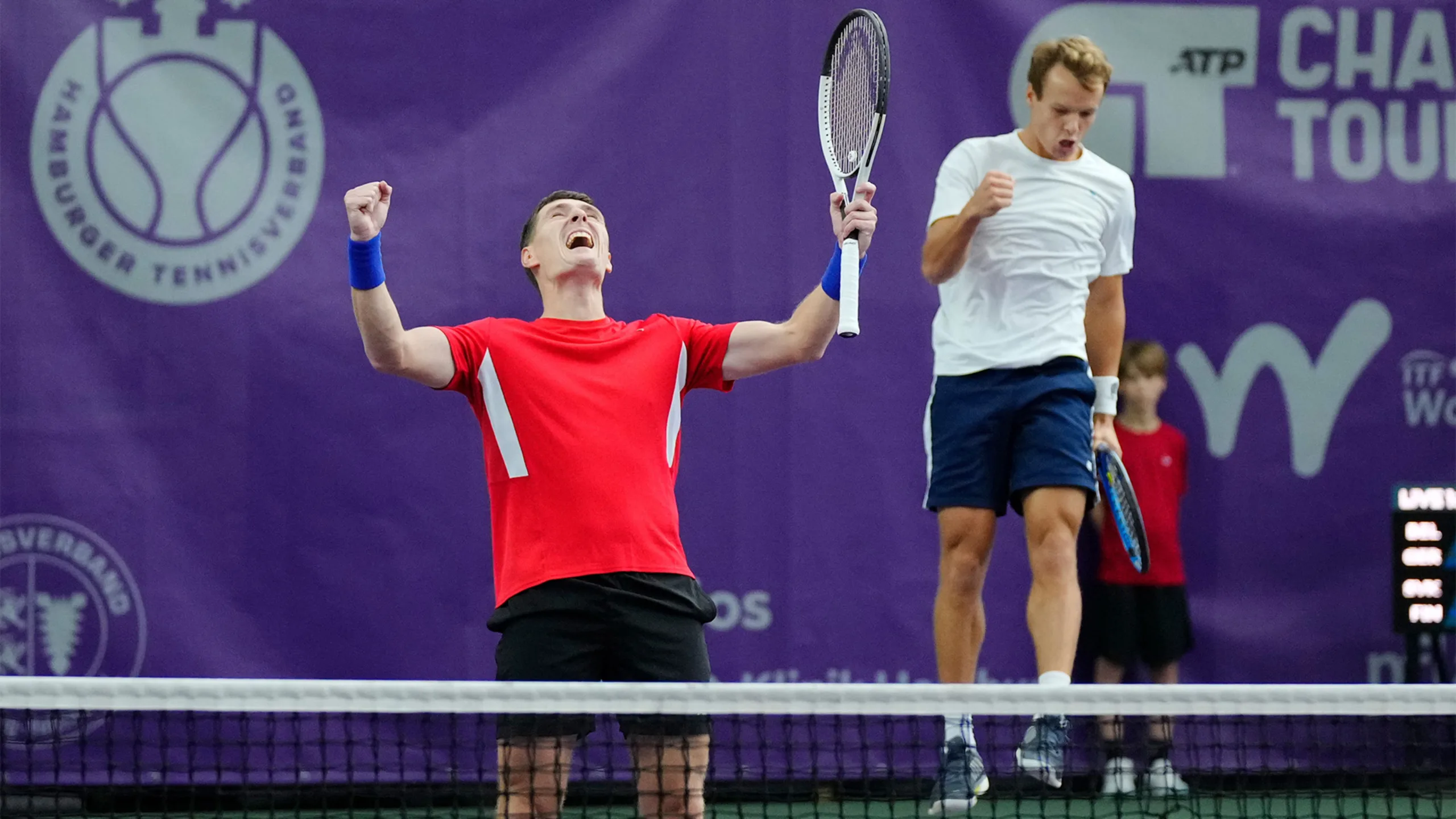
Tim Ruehl finished the season on a high note after claiming the doubles title at the Hamburg Ladies & Gents Cup in late October alongside Michael Geerts. The victory at the ATP Challenger 50 hard-court event in Hamburg was Ruehl’s second Challenger doubles crown this year, following the pair’s earlier triumph at the Dutch Tennis Open in Bunschoten.
Reflecting on the week in Hamburg, Ruehl said: “It was overall a very positive week. We had a tough draw but started strong and handled our matches well. The final was very close again, but in the end, we maybe got one or two more returns in the court, and that made the difference.” The 27-year-old from Waldshut-Tiengen has climbed steadily to a career-high doubles ranking of world No. 161 this season.
Ruehl and Geerts have a partnership rooted in their college days in the United States. “We’ve known each other for a long time and played together at Arizona State University,” Ruehl explained. “He’s strong from the baseline, and I feel more comfortable at the net, so we complement each other well. We’ve also spent a lot of time together off the court, which makes it special.”
Before turning professional Ruehl spent five years in the U.S., earning a Bachelor’s degree in Business Administration from Arizona State University and a Master’s in Supply Chain Management at Texas Christian University in Fort Worth. He credits the college route and his coach Peter Pfannkoch for shaping his development. “I wasn’t a bad junior, but there were definitely better players,” he said. “My coach Peter Pfannkoch advised me to take the college route. At first, I was skeptical, but it turned out to be the right decision. I learned a lot about independence and how to deal with pressure, especially in a team setting.”
Based back in Waldshut-Tiengen near the Swiss border, Ruehl trains without a permanent coach and relies on support from his father, a former competitive player. Off court he is a certified nutritionist who enjoys cooking. “I have to eat gluten-free, so my go-to dish is a chicken pan with potatoes and vegetables—simple but good,” he said. Looking ahead, Ruehl hopes to finish the year strongly and is preparing a new national doubles event in his hometown, the Schlatter Open, to be held December 19–21 with €15,000 in prize money plus hospitality. “At the start of the year, that was the target, and I’ve managed to achieve it and solidify it with this title. Now Patrick Zahraj and I are heading to the U.S. for three weeks. Let’s see what more we can do. Overall, I’m very satisfied and want to end the season on a high note.”

Auger-Aliassime Reaches Career-High No. 4 After Breakthrough at Roland Garros

Emilio Nava takes Neckarcup title after Luka Mikrut withdraws from final

Flavio Cobolli’s Roland Garros run vaults him into ATP Top 10

Alcaraz Confronts On‑court Microphones During US Open Practice Ahead of Opelka Match

Raducanu Arrives at US Open With Momentum After Strong Hard‑Court Swing

Cervara: Ending an eight‑year partnership with Medvedev was necessary to change the energy
-
 ATPFrench OpenGrand Slam2 months ago
Roland Garros 2026 Preview: Why Jannik Sinner Arrives as the Heavy Favorite
-
 ATPFrench OpenGrand Slam2 months ago
Djokovic upbeat on Roland Garros fitness as he aims for 25th major
-
 French OpenGrand Slam2 months ago
Roland Garros 2026 Women’s Draw Sets Up Potential Sabalenka–Gauff Semifinal