125 ATP Open Quimper Bretagne Occidentale
Van Assche Rebuilds Form with Quimper 125 Crown; Jacquet Prevails in Bahrain
Van Assche claimed his fifth Challenger title in Quimper; Jacquet triumphed in Manama’s Bahrain Open

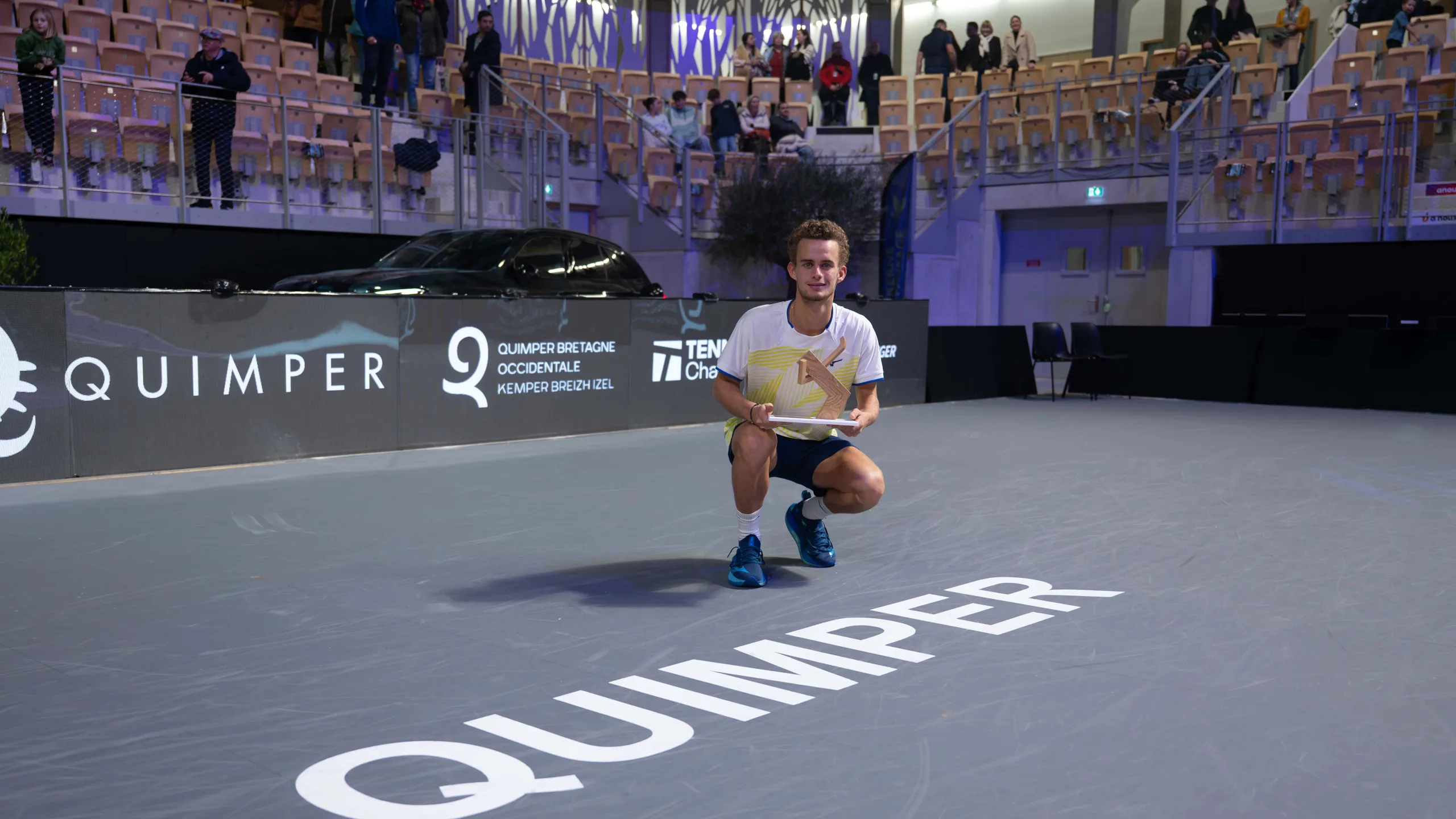
Luca Van Assche used the Open Quimper Bretagne Occidentale to arrest a run of mixed results and collect his fifth ATP Challenger title. The 21-year-old Frenchman rallied from a set down to beat Swiss alternate Remy Bertola 3–6, 6–1, 7–5 in the final of the ATP Challenger Tour 125 indoor event. The match lasted two hours and three minutes; Van Assche struck nine aces, won 80 percent of his first-serve points and broke serve three times to complete the victory.
Ranked No. 165, Van Assche had earlier dismantled defending champion Sascha Gueymard Wayenburg in a near three-hour semifinal. The Quimper success is his first title of the season and the 10th time a Frenchman has won this tournament. He earned €30,460 in prize money and 125 ATP ranking points.
Van Assche’s career arc has been shaped by early junior success and steady transition to the pro game. He reached junior world No. 1 and won the 2021 Roland Garros boys’ singles title, defeating Arthur Fils in the final. He broke into the Top 100 in April 2023 at age 18 and had already secured three Challenger trophies by that time. He has also competed at the 2023 and 2024 Next Gen ATP Finals. His endurance has been a hallmark: he famously saved two championship points to defeat Ugo Humbert in the longest ATP Challenger final at Pau in 2023, a match that lasted three hours and 56 minutes.
Born in Woluwe-Saint-Lambert to a Belgian father and an Italian mother, Van Assche moved to France as a child and began playing tennis at four in Aix-en-Provence. He trained at Pôle France in Poitiers at age 12 and continues his studies in mathematics at Paris Dauphine University. He speaks French, Italian and English and is nicknamed “Lucho.”
During the Quimper trophy presentation he thanked new coach Sébastien Villette, noted his father had travelled from Paris to be present and acknowledged the crowd’s support. “I did a very good junior’s career. It was good for me. I have gained a lot of experience. It helped me a lot for my senior’s career, but I am still young. I learn every day at every tournament,” Van Assche said during a tournament in Valencia two years ago.
At the Bahrain Open in Manama, 24-year-old Kyrian Jacquet captured the title, beating Luca Nardi 7-5, 3-6, 6-4. The world No. 128 converted five of nine break-point opportunities and prevailed in two hours and 13 minutes after victories over Christopher O’Connell, Yannick Hanfmann, Jacob Fearnley and Mattia Bellucci.




1000 125
Sabalenka’s frustration spills over after US Open press exchange
Sabalenka bristled after a media question and doubled down on her criticism of online detractors.
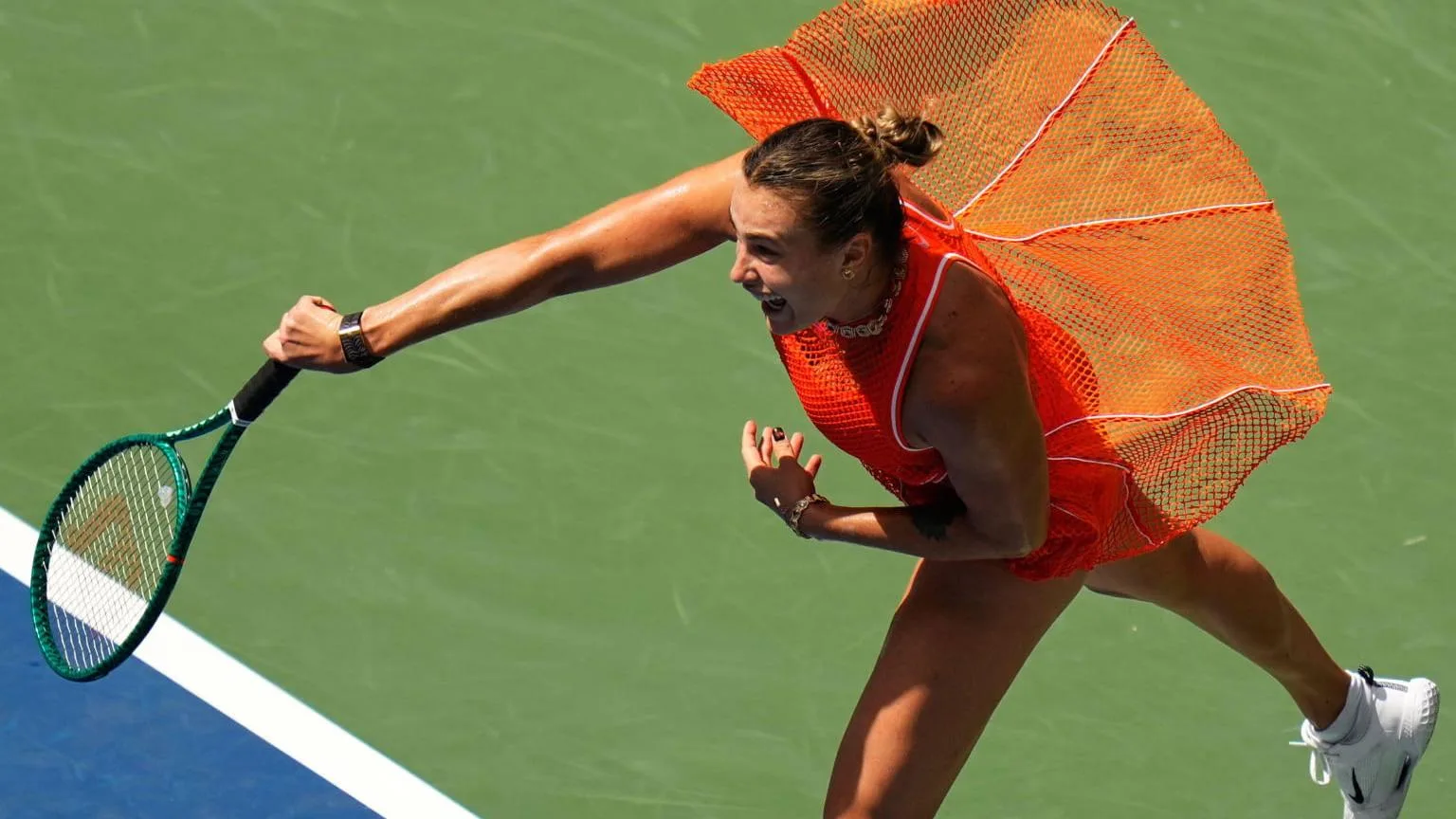
Aryna Sabalenka’s irritation finally surfaced after her second-round match at the US Open, where questions around her off-court commitments and focus brought a sharp response from the world No. 1.
The setting was a familiar one. Grand Slam tennis asks players to move through a relentless schedule of press obligations, including interviews after every match, media day appearances before the tournament and, for those who reach the final stages, repeated encounters with reporters over more than two weeks. Many players have long made clear they would rather not have to do it.
Sabalenka, however, has been especially sensitive to recent scrutiny. In the days before the US Open, she had taken part in several sponsor product launches in New York, and she did not react warmly to suggestions that her commitment to training had been called into question. She appeared to view one line of questioning as an unfair insinuation about partying before a major event.
“Are you guys like a joke? Party is fun. Like, why would you even say that? Why would you even think about that? Like what kind of question is that? Like just because I posted like some activities with brands and you think that I’ve been fighting, not training.”
When the reporter tried to clarify the point, Sabalenka replied, “You literally said that. Next question. Oh, yeah. I wasn’t serious before that. Next question.”
Her frustration did not begin there. Earlier in the tournament, she was asked on Sky Sports whether criticism affects her, and she answered in blunt fashion. “Honestly, it took me a little while to shut down those noises. It’s always going to be people who support your choices, people who go against that, people who love you, who hate you. And I’m like, I’m so tired of those miserable haters.
“So I decided to stay really, you know, stay strong with myself and trust the process, trust myself, trust with my choices, with my taste, and whatever. And whoever loves me, they’re going to be there for me no matter what.
“Haters? Honestly, I don’t want to curse here right now, but they can go and have fun with their own lives
“Whatever people are saying on the internet, I heard they probably didn’t like it.”
The wider criticism intensified after she agreed to play Nick Kyrgios in the ‘Battle of the Sexes’ match last December. For now, though, Sabalenka appears determined to carry that edge with her in New York as she chases another US Open title.
125
Roddick pushes back on US Open ticket price criticism
Roddick says US Open ticket outrage misses the real issue: resale prices and secondary market dynamics.
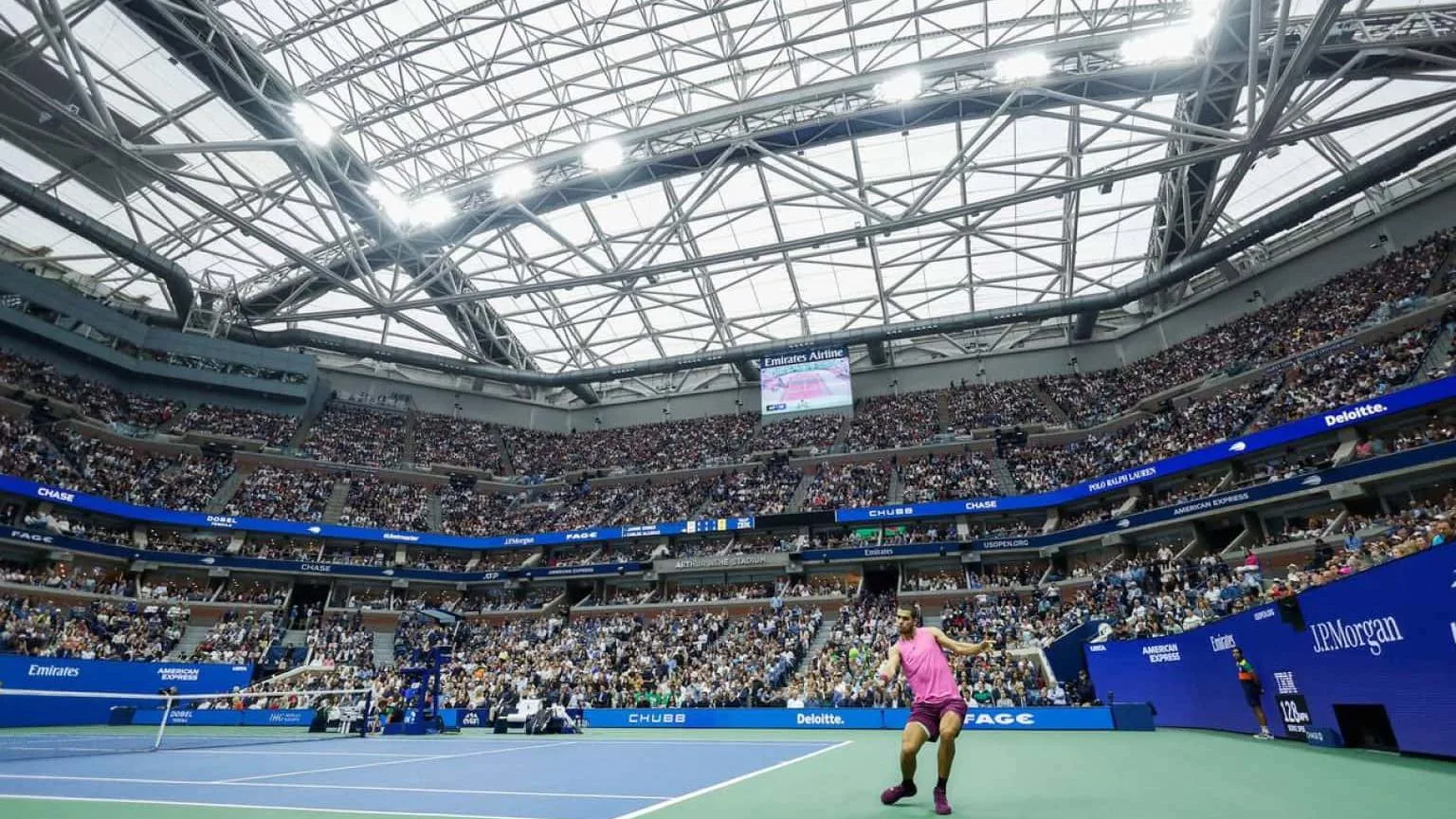
Former champion Andy Roddick says the reaction to this year’s US Open ticket prices has been misdirected, arguing that the loudest criticism is missing how the market works.
Attention around the men’s final at Arthur Ashe Stadium intensified after the top ticket price passed $20,000. The resale market has since driven that figure even higher, with listings reaching $34,944.18. That eye-catching number has prompted fresh debate about affordability, but Roddick insisted the USTA is not the party benefiting from those prices.
“Smart people are getting on an opinion that benefits themselves, right?” said Roddick on his podcast.
“They do this without mentioning secondary marketing and how the pricing actually works once it’s out of the USTA’s hands—which you have to go through.
“So listen, just have a nuanced argument. Is it overpriced? Is it too expensive? Hell yes, completely agree on that. Absolutely, we’re not arguing that it’s not. This sucks.
“But to say the USTA are charging these prices is categorically false. The issue here is the ticket resale market.”
Former British No 1 Greg Rusedski also addressed the surge, describing resale prices as “crazy” and questioning how many fans could realistically absorb the cost of attending with another ticket added on top.
“You gotta buy two tickets and bring a date for you, so it will be an expensive night if you are buying on the resale market,” said Rusedski on his podcast.
“It’s crazy what some people will pay for tickets, but I guess it’s supply and demand. And you know, you are in New York City, which is one of the most expensive cities on the planet at the moment, especially with inflation.
“So there are some wealthy individuals who can manage to do those things, but I’m quite shocked by those prices. I’m glad I don’t have to pay for tickets when I go to the US Open.
“There’s got to be some balance for the fans and prices of tickets. If you’re charging that much money for people, and you know, people’s wages haven’t gone up at that rate. So they still have to make it affordable so you can have your regular fan get in there and not put themselves in debt or put themselves in these situations. And that’s where you gotta find the balance.
The USTA is not collecting those inflated resale sums, with secondary sellers and companies like Ticketmaster benefiting instead from tickets initially bought at face value.
1000 125
Sabalenka keeps No 1 as Cincinnati reshapes the WTA race
Sabalenka stays No 1, but Cincinnati results sharpen the WTA rankings race behind her.
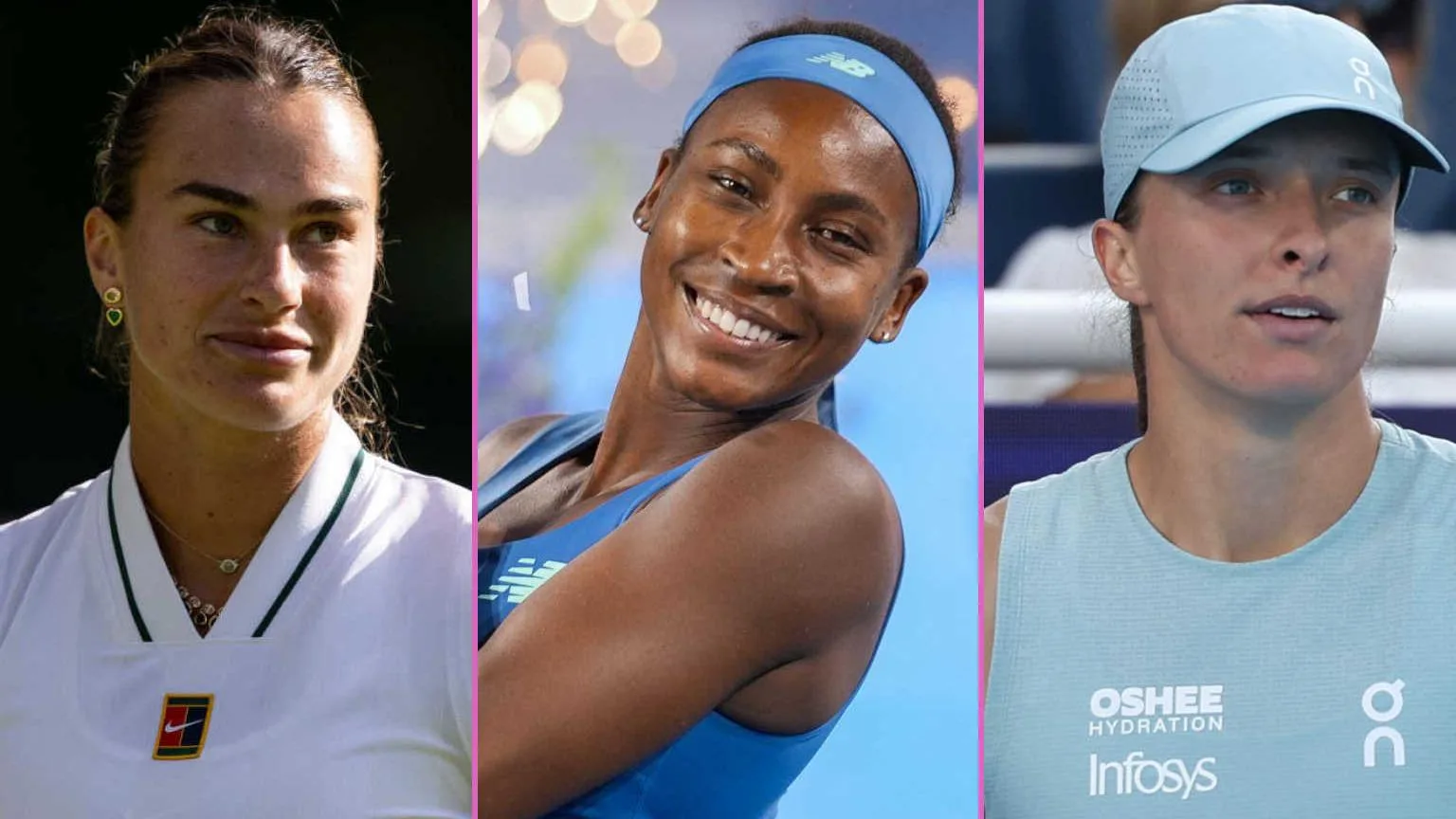
Aryna Sabalenka has held onto the No 1 position in the WTA Rankings, but the latest update has tightened the race behind her after major moves from Jessica Pegula, Coco Gauff and Alex Eala, while Iga Swiatek and Jasmine Paolini both slipped.
Sabalenka has been under sustained pressure since the French Open, with Elena Rybakina close enough to challenge since June. That threat remained alive in Cincinnati, where Sabalenka’s fourth-round exit meant a place in the final would have protected her No 1 ranking. Instead, the two-time Grand Slam winner reached the quarter-final before a leg injury forced her to retire against Swiatek.
As a result, Sabalenka will still lead the field into the US Open, though her cushion is down to 434 points. Rybakina still has a major opportunity ahead in New York, where the four-time Grand Slam winner is the defending champion and will drop 2,000 points.
The pressure on Rybakina has grown as well. Pegula sits 876 points behind in third after finishing runner-up in Cincinnati, while Gauff is another 561 points back after lifting the title in Ohio.
Further down the list, Wimbledon champion Linda Noskova climbs two places to a career-high No 6. Swiatek is the biggest faller inside the top 10, dropping three places to No 8 after defending points from Cincinnati but losing in the semi-final to Pegula.
There were also positive moves for Iva Jovic, Sorana Cirstea and Alex Eala, with Jovic and Eala both reaching career-best rankings. Paolini, unable to compete this year because of injury after finishing runner-up to Swiatek in 2025, falls five spots to No 20.
Sara Bejlek was one of the standout performers in Cincinnati, beating Sabalenka in the fourth round and Madison Keys in the quarter-final before losing to Gauff. The Czech youngster rises six places to a new high of No 29.
Elsewhere in the top 100, several players recorded new highs, while Katie Boulter’s rise and Emma Raducanu’s drop have left Boulter as British No 1.

Alcaraz and Williams Leave Their Mark on Revamped US Open Mixed Doubles

Alex Eala’s US Open leap shows how quickly her game has changed

Sabalenka’s frustration spills over after US Open press exchange

Alcaraz Confronts On‑court Microphones During US Open Practice Ahead of Opelka Match

Raducanu Arrives at US Open With Momentum After Strong Hard‑Court Swing